


Healthcare YouTube marketing in India: the 2026 pillar guide for clinics, hospitals, and specialty groups
The complete pillar guide to healthcare YouTube marketing in India for 2026 — how the four pillars (agency, strategy, video, branding) connect, how YODA's 6-step workflow runs a channel, how the three ranking races (YouTube search, Google web, AI Overview) actually work, specialty-fit examples, and the full topic map of every insight in this cluster.
No pitch. Written root-cause diagnosis. AI-powered, healthcare only.
Direct answer
The complete pillar guide to healthcare YouTube marketing in India for 2026 — how the four pillars (agency, strategy, video, branding) connect, how YODA's 6-step workflow runs a channel, how the three ranking races (YouTube search, Google web, AI Overview) actually work, specialt...
TL;DR
Healthcare YouTube marketing in India is at an inflection point. Patients now watch video before they book, hospitals now compete for AI Overview citations that quote video transcripts, and Meta ad costs have risen enough that video is no longer the "later" channel — it is the compounding asset most clinic marketing budgets are underweight on. This pillar guide is the anchor for everything ICG has published on healthcare YouTube marketing. It sets the frame, walks the four pillars, explains the 6-step workflow ICG runs at scale, unpacks the three ranking races a healthcare channel is actually competing in, and closes with a full topic map to every insight in this cluster.
 yoda/02-aio-lab-rank-checker.png" alt="YODA AIO Lab Rank Checker — daily monitoring of AI Overview citation status for every tracked healthcare query" loading="lazy" decoding="async" style="width:100%;height:auto;display:block;">
If you are a clinic owner, hospital marketing head, or specialty group leader trying to figure out what YouTube should do for you in 2026 — this is the piece to read first, and to refer back to as you go deeper into any of the linked topics.
Who this pillar is for and what it will and will not do for you
This pillar is for four buyers. First, the clinic founder who is running a YouTube channel that has plateaued and cannot tell whether the plateau is a strategy problem, an execution problem, or a wrong-channel problem. Second, the hospital marketing head evaluating whether to keep video in-house or hire a healthcare YouTube marketing agency. Third, the specialty group leader (IVF, oncology, cardiac, orthopaedic) who needs the compounding trust asset video builds because the sales cycle for a serious procedure is measured in weeks not clicks. Fourth, the agency-side marketing lead who has been asked to build a video capability and needs to see what a mature healthcare-specific approach looks like.
What this pillar will do — give you the framing, the workflow, the ranking model, and the pointer to every deeper piece in the topic cluster. What it will not do — turn you into a video producer overnight, or promise "viral" outcomes (a word that carries almost no operational meaning for a healthcare channel, as covered later).

The four pillars of healthcare YouTube marketing
Everything ICG does on YouTube ladders to one of four pillars. Each pillar corresponds to a different type of search intent and a different type of buyer question. Getting these four pillars mapped correctly is what separates a clinic channel that compounds from one that stays flat despite steady upload activity.
Pillar A · Money — Healthcare YouTube Marketing Agency. Bottom of funnel. The buyer is a clinic or hospital evaluating who to hire for their YouTube channel. Queries look like "healthcare youtube marketing agency India," "youtube marketing for doctors India," "video marketing agency for hospitals." The intent is commercial evaluation. Content in this pillar exists to convert an evaluating buyer into a booked demo. ICG's Healthcare YouTube Marketing Agency service page is the flagship for this pillar.
Pillar B · Tactical — YouTube Strategy for Healthcare. Middle of funnel. The buyer is a marketing lead figuring out how to actually run a channel — what to post, when to post, how to think about thumbnails, what to measure. Queries look like "youtube strategy for doctors," "how to grow a hospital youtube channel," "youtube seo for healthcare." Content in this pillar builds authority and captures buyers earlier in their thinking. The YouTube SEO for doctors guide anchors this pillar.
Pillar C · Broad — Video Marketing for Healthcare. Top of funnel. Wider audience — buyers who have not yet decided that YouTube specifically is the answer. Queries look like "video marketing for clinics," "healthcare video content," "medical video advertising." This pillar reaches earlier-stage buyers and cross-sells adjacent needs (Meta ads, website video, patient education video).
Pillar D · Trust — Healthcare Branding on Video. The reputation and E-E-A-T layer. This pillar covers patient trust, comment ORM, doctor credential signalling, testimonials done compliantly, and NMC-safe messaging. The Patient trust on YouTube guide anchors this pillar.
Every piece of content ICG publishes on YouTube — for our own channel, for a client, or in this insights cluster — is tagged to one of these four pillars. A piece that does not fit under any pillar is a piece that probably should not be made.
The three ranking races a healthcare channel is actually in
 Meta Catalyst IQ SLC Framework view scoring Meta Ads accounts across Setup, Learning and Compounding phases with per-phase health metrics" width="1200" height="675" loading="lazy" decoding="async" style="width:100%;height:auto;display:block;">
Most healthcare marketing teams think of YouTube ranking as a single race — the video appears higher or lower in YouTube search results. That framing is 30% of the picture. A healthcare video in 2026 is competing in three separate ranking races, each with different rules and each with different levers.
Race 1: YouTube search rankings. The classic race. Ranking factors are watch time, retention curve, click-through rate on the thumbnail, engagement (likes, comments, saves), and the channel's topical authority in the query cluster. Winning this race puts the video in front of people who typed a query into YouTube itself — high commercial intent for procedure-related queries.
Race 2: Google web organic rankings for video results. A separate race. Google's web SERP shows video results, especially for queries where the user is likely to benefit from video (procedures, "what to expect," "recovery timeline," "before-and-after" queries — the last with heavy compliance caveats). The ranking model here is Google's web algorithm, not YouTube's, and the levers are different — page context (video embedded on a page that itself ranks), schema markup, video sitemap presence, and the crawlable transcript.
Race 3: Google AI Overview citations that reference video. The newest race and the fastest-growing one. When Google's AI Overview produces an answer to a healthcare query, it increasingly cites video sources for procedure and process questions. Getting cited requires structured intro sentences that state the factual claim cleanly, chapter markers that segment the video, factual density in the first 60 seconds, and — for healthcare specifically — clear credential signalling that Google's AI systems can attribute the claim to a qualified source. Covered deeply in Get cited in AI Overviews for healthcare YouTube and the three ranking races deep-dive.
These three races share some inputs — the raw video quality, the transcript, the topic — but the winning tactics diverge quickly. A video that ranks #1 on YouTube search may not appear at all in AI Overview citations. A video that gets consistently cited by AI Overviews may have modest YouTube search traffic because the AI is answering the query without sending the click. Both outcomes are legitimate — but a strategy that only optimises for one race leaves the other two on the table.
The YODA 6-step workflow that runs this at scale
YODA is the platform ICG built to run healthcare YouTube channels. This section is the overview; the full walkthrough with a sample dermatology channel is in the YODA 6-step workflow guide.
Step 1 — Overview and Setup. Connect sources (YouTube channel, Google Analytics if there is a website, Google Search Console for the domain, Meta ad account if relevant). Pull 12 months of historical data. Set benchmarks — the channel's own targets, the healthcare specialty benchmark set, the business goals. Perform the first paid-vs-organic split. Typical setup time: 45-90 minutes.
Step 2 — Diagnostics. Cluster all existing videos by topic. Classify by format (Explainer, Myth-vs-Fact, Testimonial, Q&A, Procedure). Break traffic sources by surface (YouTube search, Suggested, Browse, External, Direct, Notifications). Map retention curves. Trace the funnel from view to consult booking. Split geography. Build audience cohorts. This is the biggest step by module count — about 12 of YODA's 40+ modules live here.
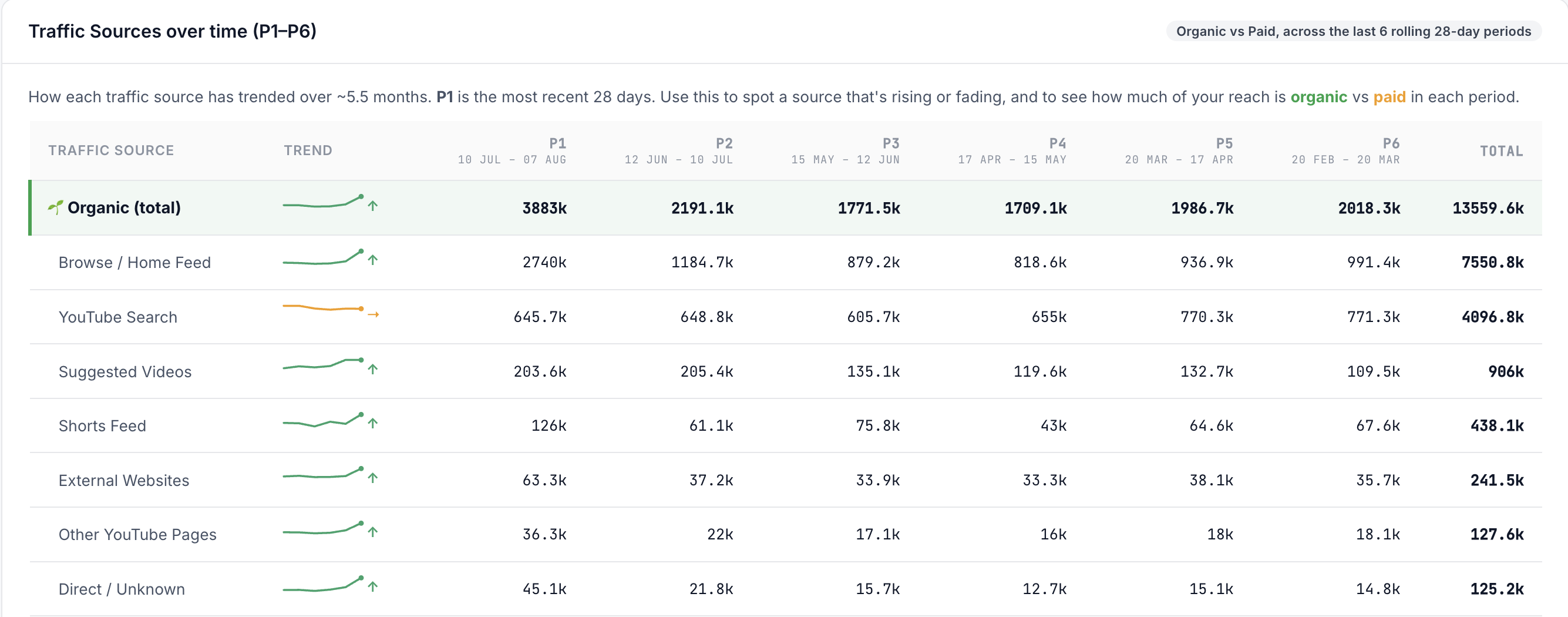
Step 3 — Strategy. Take the Diagnostics output and produce the next 90 days of decisions. Trending Topics module. Content Planner (specific video briefs with titles, targets, hooks, script outlines). Ad-Spend Picks (which organic Winners deserve modest paid reinforcement). Action Plan (a prioritised, owner-assigned task list for the marketing team and the ICG delivery team).
Step 4 — Optimisation. Improve what is already published. SEO Lab (title, tag, description, chapter recommendations for every existing video). AIO Engine (score every video for AI Overview citation readiness and produce the specific fixes). Distribution (playlist, pinned position, embed strategy for each video). Thumbnail A/B testing. Impact tracking. This is where YODA's writeback capability engages — improvements get pushed to YouTube directly via API.

Step 5 — Reputation (ORM). Audience Voice (cluster every comment across the channel by theme). Comment Sentiment (surface negative and spam for immediate response). Audience Profile (build the picture of the typical viewer). This step runs continuously in the background between weekly strategy cycles.
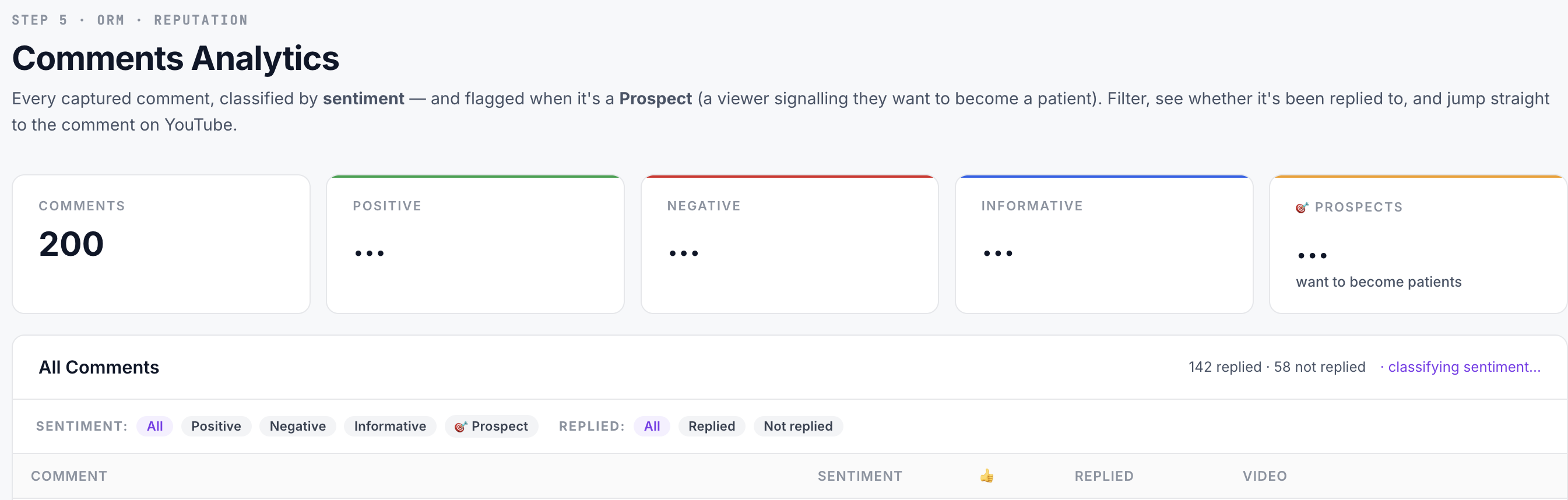
Step 6 — Competitor Intel. Compare the channel against a selected peer set — 5-8 similar-size Indian healthcare channels plus 2 aspirational larger channels. Surface content gaps and format opportunities. Feed the Decision Engine that produces the weekly top-5 actions.
The workflow is designed to compound — Diagnostics feeds Strategy, Strategy feeds Optimisation writebacks, Optimisation's impact feeds back into next-cycle Diagnostics, Reputation surfaces content demand that feeds next-cycle Strategy, Competitor Intel calibrates aspirational benchmarks.
Specialty fit — what works for which clinic type
Not every specialty benefits from YouTube in the same way. The four axes that determine specialty fit are — how much visual explanation the procedure benefits from, how long the consideration cycle is, how much patient trust building matters, and how strict the compliance perimeter is.
Dermatology and hair transplant clinics — very strong YouTube fit. Visual, considered decision, high trust dependency, moderate compliance perimeter (ASCI on comparative claims and outcome guarantees). Winning formats: Myth-vs-Fact, Procedure Explainer, patient journey (with explicit consent). Sample: the Lumina Skin & Hair Clinic case walked through in the YODA workflow guide.
IVF and fertility — strong YouTube fit with a stricter compliance perimeter. Very long consideration cycle (often 6-12 months from research to first cycle). Extremely trust-dependent. Strict compliance perimeter (ART Act on success rate claims, PC-PNDT on sex determination content). Winning formats: process explainers, doctor Q&A, cost transparency, emotional support content. See IVF video consultation conversion impact.
Multi-specialty hospitals — strong fit but requires disciplined channel architecture. The temptation is to put everything on one channel; the discipline is to organise by playlist and department so search and recommendations do not scatter. Winning formats: department introductions, physician profiles, procedure explainers, patient journey stories. See Hospital video marketing India 2026.
Dental chains — very strong fit. Visual, considered for anything beyond routine cleaning, moderate compliance perimeter. Multi-location coordination challenge — one channel or channel per city.
Cardiac and orthopaedic — strong fit but the audience skews older, so distribution mix leans harder on Google web organic results and less on YouTube's Suggested surface. Compliance perimeter is strict on procedure outcome claims.
Oncology — high-trust, high-empathy fit. Formats lean toward patient support content, treatment explainers, "what to expect" series, survivor stories with careful consent handling.
Diagnostic labs — moderate YouTube fit; the natural surface for lab discovery is Google Business Profile more than YouTube. Video plays a supporting role — health literacy content, "what your test result means" explainers, brand credibility rather than direct lead generation.
General physician / family medicine clinics — variable fit. Depends on the specific practice's content ambition and the doctor's comfort on camera. When there is a doctor willing to be the on-camera face and speak to common patient questions, the fit is strong.
What to actually measure and what to ignore
The healthcare video conversation is polluted by vanity metrics. Views, subscribers, and likes are the ones marketing decks show; they are not the ones a serious channel is optimised for. See Vanity metrics in healthcare video for the deeper dive.
Metrics that matter. Organic views (paid subtracted). Discovery Organic — the impressions × CTR on the three discovery surfaces (Search, Suggested, Browse) where YouTube's ranking systems actually place the video. Retention curve — where viewers drop off. Consult clicks — description CTA click-through to WhatsApp or the booking page. Consult conversion — clicks that turn into booked, kept, and paid consultations, tracked through to the practice management system where possible.
Metrics that are ambiguous. Subscriber count — subscribers matter less than active subscribers who watch new uploads. Comments — quality of comment interaction matters more than quantity. Likes — a weak signal on YouTube's current ranking model.
Metrics that mislead. Blended views (organic + paid together, presented as a single number). "Viral" moments (see promoted vs viral). Cross-channel view counts (a video hitting a spike because someone shared it in a group chat is not the same as the video building an audience). Impressions on their own — the metric is impressions times CTR times retention times funnel action, not impressions alone.
The first 90 days of a serious healthcare channel
For a clinic starting a serious YouTube effort, the first 90 days are the calibration window. Nothing rushed, nothing "viral," everything focused on installing the workflow discipline that will let the channel compound over the following 12 months.
Days 1-14: Setup and audit. If a channel already exists, audit it — every video gets a state assignment via YODA. If starting fresh, set up the channel, brand it, connect analytics, and plan the first 6 videos in the primary content cluster the clinic wants to be known for.
Days 15-45: Publish and observe. Publish the first 6 videos at a defined cadence (weekly is typical). Do not touch performance for two weeks after each publish — YouTube's ranking systems need time to place the video. After 30 days, look at each video's Diagnostics data cleanly.
Days 46-75: Optimise. Apply the SEO Lab and AIO Engine recommendations to the first 6 videos. Push writebacks. A/B test thumbnails on the weakest CTR videos. Add chapter markers everywhere they are missing.
Days 76-90: Strategy for quarter 2. With 90 days of data, YODA's Strategy step produces a real content plan for the next 90 days — trending topics, ad-spend picks on the strongest organic performers, content planner for the next 12 uploads.
The temptation across every day of these 90 is to declare something a failure or a success too early. The first video that gets 800 views instead of 8,000 is not a failure — it is a data point. The first video that spikes to 40,000 views because it caught a Suggested placement is not a strategy — it is luck to be studied and understood.
In-house versus agency and when to switch between them
A clinic starting out will almost always begin in-house — a doctor with a phone, a lightly-edited first upload, a WhatsApp CTA in the description. That is the correct start. Hiring an agency on day one before the clinic has any content instinct produces channels that feel corporate and convert poorly.
The switch to agency-supported operation typically happens when one of three things is true. First — the doctor's time is being consumed by editing, SEO, and thumbnail work that has nothing to do with medicine, and that time has an opportunity cost the clinic can no longer absorb. Second — the channel has plateaued and the clinic team cannot diagnose why. Third — the clinic wants to expand into paid promotion, cross-channel distribution, or a serious content calendar that in-house capacity cannot sustain.
Covered deeply in In-house versus agency for clinic YouTube management and How to choose a healthcare YouTube marketing agency.
Compliance that cannot be skipped on a healthcare channel
Every healthcare YouTube channel in India operates inside a specific compliance perimeter. Getting this wrong is not a marketing risk — it is a licensing risk for the doctor. The five frameworks that matter most on YouTube:
The NMC Ethics Code 2026 — the National Medical Commission's rules on doctor advertising. Patient testimonials on video require explicit written consent, cannot be presented as clinical evidence, and cannot make outcome guarantees. Comparative claims ("best" without proof) are prohibited.
The DPDP Act 2023 — video content that identifies a patient constitutes personal data. Consent is required, retention is time-bound, and data subject rights (including the right to erasure) apply. The consent workflow needs to be documented per video.
The PC-PNDT Act 1994 — for fertility, gynaecology, and radiology channels, no sex-determination-related content. This is criminal-jurisdiction, not civil-jurisdiction.
The ART Act 2021 — for fertility clinics, no unsubstantiated success rate claims. Any success rate stated on video must be sourceable to the clinic's actual clinical audit.
The ASCI Guidelines 2022 — the Advertising Standards Council of India's rules on comparative and superiority claims. "Best in the city" is not defensible without a substantiation basis. "Award-winning" needs a real, verifiable award.
See HIPAA-equivalent consent for patient testimonials on YouTube India for the video-specific compliance workflow.
The full topic map of this cluster
This pillar links out to 30+ deeper insights across the four pillars. The current topic map:
Agency evaluation (Pillar A). How to choose a healthcare YouTube marketing agency. What a healthcare YouTube agency delivers monthly. Cost of YouTube marketing for doctors in India. Healthcare YouTube agency comparison India 2026. DIY tools vs managed agency. In-house vs agency.
Strategy and workflow (Pillar B). YouTube SEO for doctors. YODA 6-step workflow. The three ranking races. Best time to post. Shorts vs long-form. YouTube Analytics vs Search Console. Video format comparison. Turning patient questions into content.
Video and reach (Pillar C). Rethinking viral. Scale-up playbook. Organic vs paid. Promoted vs viral. Which video deserves ad budget. Five states a video moves through. Thumbnail CTR. Website videos in Search Console.
Trust and ORM (Pillar D). Patient trust and E-E-A-T. Comments as focus group. Consent for testimonials. Vanity metrics. Benchmarks: what good looks like. Who watches clinic videos.
AI Overview and cross-race. Get cited in AI Overviews. The vidIQ / TubeBuddy alternative for healthcare. YODA vs vidIQ. YODA vs TubeBuddy. YODA vs Morningfame. YODA vs Social Blade.
Specialty deep-dives. How a doctor channel generates consultations. Hospital video marketing India. IVF video consultation conversion. 142 consults in 90 days case study.
The platform ICG uses to run this at scale: YODA
ICG runs healthcare YouTube marketing for clinics, hospitals, and specialty groups using YODA — our AI-native healthcare YouTube marketing platform. YODA sits on top of a channel's data and does four things no dashboard does: it separates organic from paid views at every step (so a promoted video can never masquerade as organic growth), it gives decisions not dashboards (every video gets a state + next action), it writes back to YouTube directly (improved titles, tags, descriptions, chapters applied straight to the platform), and it tracks the three rank races — YouTube search, Google web, and Google AI Overview citations.
YODA runs the full 6-step workflow — Overview, Diagnostics, Strategy, Optimisation, Reputation (ORM), and Competitor Intel — with 40+ analysis modules organised under those steps. ICG's managed YouTube service uses YODA end-to-end. See the Healthcare YouTube Marketing pillar guide for the full scope, or the Healthcare YouTube Marketing Agency service page for engagement details.
Book a YODA demo on WhatsApp → or request a free healthcare YouTube channel audit →
Related reading
- YODA 6-step workflow explained for healthcare agencies
- The three ranking races: YouTube, Google web, AI Overview
- How a doctor YouTube channel generates consultations
- Hospital video marketing India 2026
- Healthcare YouTube marketing agency service page
FAQ
How much should a clinic budget for a serious YouTube channel in 2026? The floor is the doctor's time — 2-3 hours per week for the on-camera face. Beyond that, an in-house-run channel with a part-time editor might run ₹40,000-80,000 per month all-in. An agency-supported channel starts around ₹1.5-2.5 lakh per month depending on cadence and format mix. Elevation-tier channels for hospital chains run higher.
How long before a healthcare YouTube channel starts producing measurable consults? First measurable consults typically arrive between month 2 and month 4 with disciplined execution. Compounding kicks in around month 6-9 as accumulated topical authority and Suggested placements build. See the 142 consults in 90 days case study for a specific example.
Should we run one channel per doctor or one channel per clinic? For most single-specialty clinics, one channel per clinic with the primary doctor as the on-screen face works best. For multi-doctor practices where each doctor has a strong personal following, personal channels can outperform. For hospitals, always one hospital channel with department playlists — never one channel per department.
Are YouTube Shorts worth the time for a healthcare channel? Yes, but not as the primary format. Shorts are a discovery mechanism that funnels viewers to long-form. The long-form video is what converts. Full breakdown in Shorts vs long-form.
What is a "good" retention curve for a healthcare video? For a 6-10 minute Explainer, healthy is 40-55% at video midpoint. For a Myth-vs-Fact video, healthy is 55-70% because the format itself hooks harder. For a Testimonial, healthy is lower — 30-40% — because the audience is often watching only the segment relevant to their situation.
Do we need a professional videographer to start? No. The doctor with a phone and a well-lit room outperforms a corporate video shoot with the doctor visibly uncomfortable. Production quality matters, but authenticity and clarity of message matter more in early months.
Can we repurpose YouTube content into Meta and Instagram Reels? Yes and you should. The clip strategy is central to distribution — every long-form video should produce 2-4 Shorts and 1-2 Reels. Cross-platform amplification is covered in the scale-up playbook.
What is the biggest mistake healthcare channels make? Uploading inconsistently. A channel that publishes weekly for 8 weeks then goes dark for 6 weeks then resumes is worse than a channel that publishes every 10 days without fail. YouTube's ranking systems reward cadence discipline.
Should we optimise for YouTube search or Google AI Overview citations? Both — they are not mutually exclusive. Optimising the first 60 seconds of every video for factual density and structured claims serves both races. The chapter markers and description schema that help AI Overview citation also help YouTube search retention.
How does ICG's YouTube service differ from a general marketing agency's video offering? Three specifics. First, YODA — the underlying platform is healthcare-calibrated, not a generic dashboard. Second, the compliance perimeter is enforced on every writeback and every content recommendation. Third, the outcome the service is measured against is consults booked and paid, not views or subscribers.
Book a free 30-minute Brand & Growth Diagnostic.
It's a working session, not a sales pitch — you leave with a written root-cause analysis you can act on, whether or not you engage ICG.
Questions readers ask
about this topic.
The three platforms
behind every ICG engagement.
Beacon
CAPI middleware that fixes Event Match Quality, translates CRM statuses to Meta-standard events, dedups across channels.
Agency OS
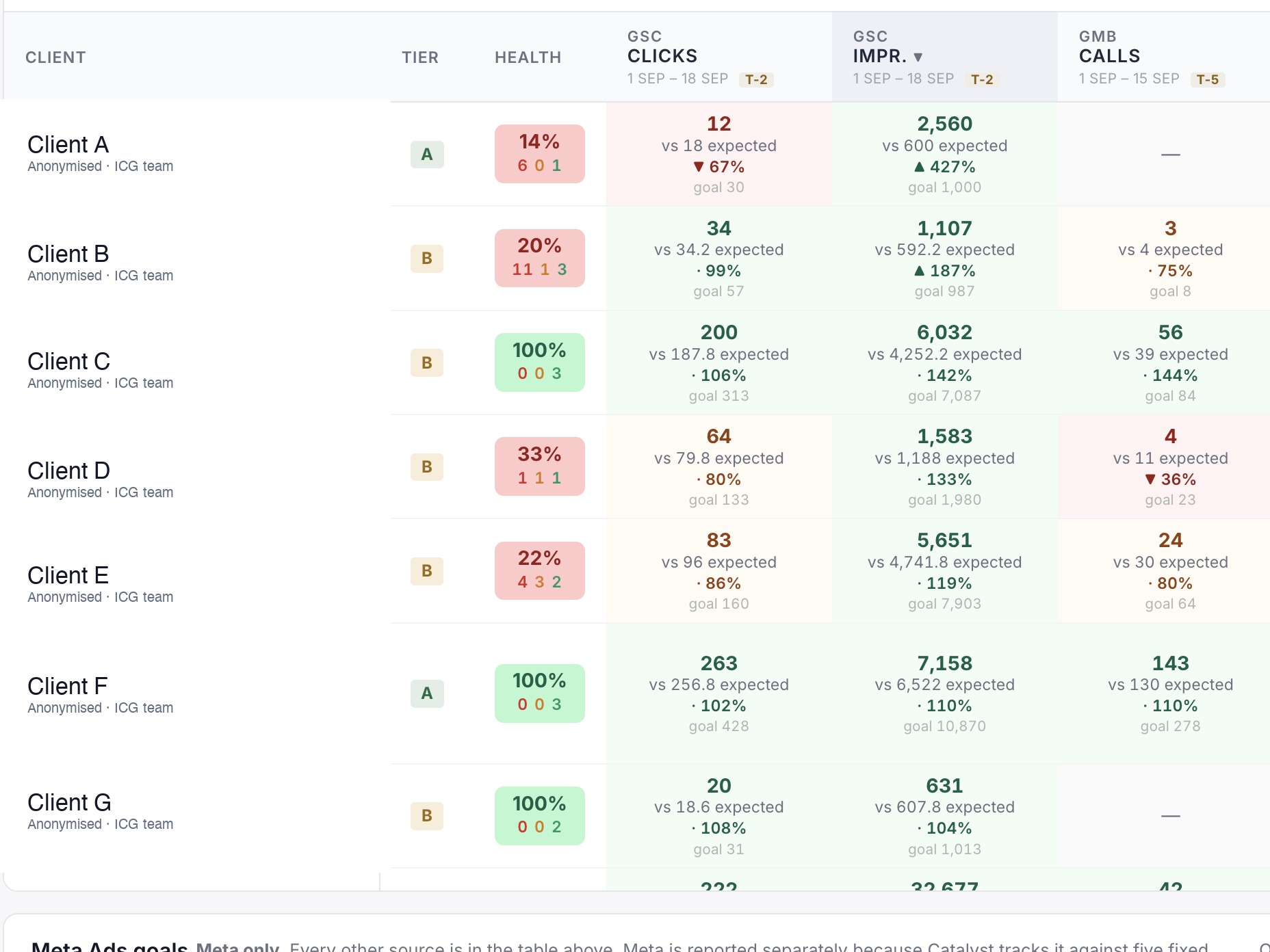
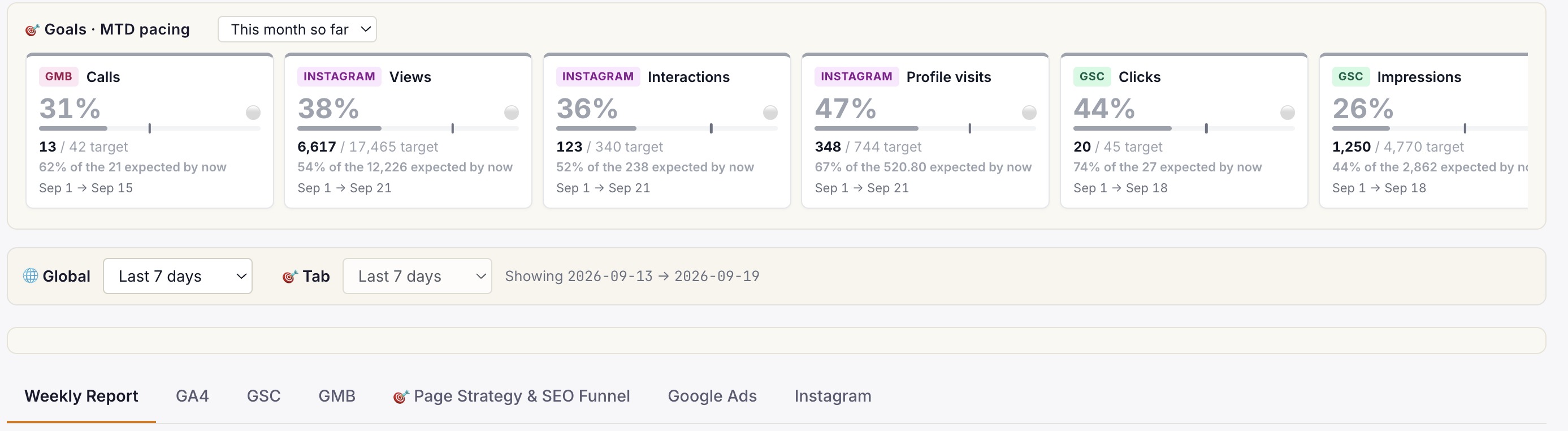
Live client dashboard. GSC, GA4, Google Ads, Meta Ads, IVR calls in one view. Login anytime, not monthly.
Phoenix
Clinic revenue intelligence over your PMS. Daily action queue: Prevent Loss, Maintain & Engage, Grow Revenue. Multi-centre rollout.
Or book a free 30-min audit to see all three in action on your account.
Healthcare brands
that already run on ICG.
A representative slice of the 150+ healthcare brands ICG has delivered for across India. Most engagements remain under NDA.


What ICG clients say · on video.
"Scale up of organic channels and business consulting. ICG has absolute domain authority in their field."
"Working with ICG transformed how we acquire IVF patients in Gurgaon. They understand the fertility journey from inquiry to consult..."
"What Ichelon accomplished — they got all my ideas and worked over 3-4 months to create an amazing, super-customised website."
Need help operationalising this?
Every ICG service is healthcare-only, NMC + DPDP-aware, and built around the patient-research patterns that drive Indian healthcare growth in 2026.
Every practice welcome — packages from ₹20,000/mo.
Goals-Driven engagements · Performance-Linked Payout Models available
More from
ICG.
Five trends shaping Indian healthcare marketing through 2027: AI-first patient research, Conversions API adoption, ABDM discovery, the AEO w...
Healthcare AIO is the discipline of getting your clinic or hospital cited inside Google AI Overviews, ChatGPT and Perplexity answers — not j...
Conversational-search advertising places brand messages inside AI chat answers — ChatGPT, Perplexity, Copilot — rather than beside a results...
Stop guessing.
Book a Diagnostic.
30 minutes. Free. With the AI-powered healthcare-only marketing agency 150+ brands already run on. No slides, no pitch, no hard close.


