


The best time to post on YouTube for healthcare in India 2026: by specialty, weekday, geography, and audience type
The honest data-backed answer to when Indian healthcare channels should publish on YouTube — patterns by specialty (dermatology, IVF, dental, hospital), by weekday, by geography (Tier 1 vs Tier 2), by audience type (patients vs doctors vs marketing directors), and how YODA's scheduling framework decides posting time per video.
No pitch. Written root-cause diagnosis. AI-powered, healthcare only.
Direct answer
The honest data-backed answer to when Indian healthcare channels should publish on YouTube — patterns by specialty (dermatology, IVF, dental, hospital), by weekday, by geography (Tier 1 vs Tier 2), by audience type (patients vs doctors vs marketing directors), and how YODA's sche...
TL;DR

"When should we post" is one of the top three questions healthcare marketing teams ask when they start using YODA. The confident single-line answers people repeat — "Tuesday 6 PM," "Sunday morning is best," "always evening" — are almost all wrong for Indian healthcare, because they are copied from creator-culture playbooks written for entertainment and lifestyle channels. Healthcare audience behaviour is different. This piece walks the honest patterns we see across the healthcare channels YODA runs — patterns that vary by specialty, weekday, geography, and audience type — and closes with the scheduling framework YODA uses to decide the specific slot for a specific video.
Why a single "best time" does not exist for healthcare
The premise behind "the best time to post" is that YouTube's algorithm rewards videos that get a burst of watch time in the first 60-90 minutes, and that burst is easier to get when the target audience is actively on the platform. Both parts are broadly true. The problem is that "the target audience" for a healthcare channel is not a single audience — it is a stack of at least four different audiences with different daily rhythms.
A dermatology channel's audience is different at 11 AM (marketing team members researching for the clinic they work at, doctors between patients) than at 8 PM (patients researching their own condition after work). An IVF channel's audience skews to weekend mornings (couples watching together). A hospital channel's audience for a cardiac video skews to late morning weekdays (adult children researching on behalf of a parent). Trying to optimise for a single "best time" collapses these distinct audiences into one and produces mediocre placement for all of them.
The correct question is not "when is the best time to post" — it is "when is the best time to post this specific video, given who its primary audience is and where they are watching from." YODA's Distribution module inside Optimisation answers that question per video.
The four audience clocks that shape healthcare YouTube timing
Every healthcare video has a primary audience. Four audience clocks show up repeatedly across the channels YODA runs.
Clock 1: The active patient researching their own condition. Peak window is 7:00 PM to 10:30 PM IST on weekdays, and 9:00 AM to 12:30 PM on weekends. Behaviour — after-work personal research, often on a phone in bed or at the kitchen table. Weekend mornings are the "I have time to properly look into this" window.
Clock 2: The primary caregiver (adult child, spouse) researching on behalf of a family member. Peak is 10:30 AM to 12:30 PM and 3:00 PM to 5:00 PM on weekdays. Behaviour — a working-age adult researching a parent's condition during a break in their own workday. This audience skews slightly older and more Tier 1 city-based.
Clock 3: The healthcare marketing decision-maker (agency-evaluating buyer). Peak is 11:00 AM to 4:00 PM on weekdays, Tuesday to Thursday, with a secondary peak 8:00 PM to 10:00 PM on Sundays. Behaviour — clinic marketing heads and hospital marketing directors researching agencies, tools, and case studies during their working day. This audience is the primary target for the Pillar A (money) videos.
Clock 4: The doctor / medical professional watching peer or educational content. Peak is 6:00 AM to 8:00 AM (early morning), and 10:00 PM to 11:30 PM (late evening). Behaviour — reading and watching between clinical duties and family time. Weekends are unpredictable because clinical schedules vary.
A single video usually targets one of these four clocks. Occasionally a video targets two — for instance a fertility clinic's IVF cost breakdown video may target Clocks 1 (patient) and 3 (marketing buyer researching what "good" content in this space looks like). The publishing decision has to pick the primary clock and optimise for it.
Specialty patterns — what we actually see across our channels
Dermatology and hair transplant. Patient audience dominates. Best publish windows are Sunday 10:00 AM, Wednesday 8:30 PM, and Friday 9:00 PM. Female-skewed audience for many dermatology topics adds Tuesday morning 10:30 AM to the mix (a documented pattern in the demo Lumina Skin & Hair Clinic channel).
IVF and fertility. Couples watching together, weekend-heavy. Best windows are Saturday 10:00 AM to 12:00 PM and Sunday 11:00 AM. Weekday evening 8:00 PM to 9:30 PM is the secondary window when one partner researches solo.
Dental (implants, cosmetic). Working-age adult audience, decision-making window on weekday evenings. Best is Tuesday 8:00 PM, Thursday 9:00 PM. Sunday morning secondary for family decisions.
Cardiac and orthopaedic. Adult-child caregivers researching on behalf of older parents. Best is weekday 11:00 AM to 3:00 PM. Sunday morning also strong for the "family decision made together" pattern.
Oncology. High-stakes decision, extended consideration. Best is weekday evenings 7:30 PM to 10:00 PM and Sunday afternoon 2:00 PM to 5:00 PM. Weekend mornings underperform for oncology because families often use weekend mornings for other activities and reserve heavy research for afternoons.
Multi-specialty hospital brand content. Working-hour weekdays (10 AM to 5 PM) for marketing-buyer and referral-doctor audiences; weekday evenings for patient-facing brand content.
Ophthalmology. Weekday morning 10:00 AM to 12:00 PM and Sunday morning 10:00 AM. Skew to older audience shifts timing earlier than skin or dental.
Paediatrics. Sunday morning 9:00 AM to 11:00 AM is dominant (parents planning healthcare decisions on weekends). Weekday 9:30 AM to 11:30 AM is a strong secondary (stay-at-home parents and work-from-home parents).
Every one of these is a starting hypothesis, not a rule. The correct discipline is to publish, observe, and refine per channel. The patterns above describe where we typically start.
Weekday patterns that hold across specialties
Certain weekday patterns hold reasonably consistently across healthcare specialties in Indian audiences.
Monday underperforms. Audiences are catching up on their week, less inclined toward research and consideration content. Educational healthcare videos published on Monday tend to see 15-25% lower first-week views than the same video published Tuesday-Thursday.
Tuesday through Thursday are the strongest weekdays for most healthcare content targeting patients and caregivers. Wednesday 8:00-9:30 PM is often the single strongest weekday slot we see.
Friday evening and Saturday morning are transitional — Friday evening works for entertainment-adjacent content and for patient-education videos that read as "settling in for the weekend to look into this." Saturday morning is the shift to weekend-family-decision mode.
Sunday is the strongest single day for high-consideration healthcare videos (IVF, cardiac, oncology) targeting family-decision audiences. Sunday morning 9:00-11:30 AM and Sunday evening 7:30-9:00 PM are both strong windows.
Avoid major festival days and long weekends for anything requiring active consideration. Views arrive lower and slower because attention is elsewhere. YODA's Distribution module accounts for the Indian festival calendar automatically.
Geography — Tier 1 vs Tier 2 vs Tier 3 timing shifts
Timing shifts noticeably by the geographic centre of a channel's audience.
Tier 1 metro audiences (Mumbai, Delhi, Bangalore, Chennai, Hyderabad, Pune, Kolkata) — evening peak is later, around 8:30-10:30 PM. Weekend morning peak is later, around 10:30 AM. Later dinner and later bedtime patterns shift the entire evening window right by 60-90 minutes compared to Tier 2 audiences.
Tier 2 city audiences (Jaipur, Lucknow, Ahmedabad, Bhopal, Chandigarh, Coimbatore, Vadodara, etc.) — evening peak is earlier, 7:30-9:30 PM. Weekend morning starts earlier, 8:30-10:00 AM. Overall daily rhythm sits about an hour earlier than Tier 1.
Tier 3 audiences and rural — evening peak is earlier still, 7:00-9:00 PM. Weekend patterns similar to Tier 2 but with a stronger Sunday morning skew and weaker Friday evening.
Diaspora audiences (UAE, US, UK Indian audiences) — a channel with meaningful diaspora watch time (often the case for IVF, cosmetic dermatology, dental, and cardiac channels serving medical-tourism-adjacent audiences) needs to consider the diaspora time zones. UAE audiences are 90 minutes behind IST — their weekend morning peak is 12:00 PM to 2:30 PM IST. UK audiences are 4.5-5.5 hours behind IST. US audiences are 9.5-13 hours behind IST. The disciplined approach is to check the channel's geographic split in YODA's Diagnostics step before deciding a publish slot for a video with strong diaspora relevance.
Audience type shifts the window sharply
Beyond geography and specialty, the specific audience type of a specific video shifts the optimal publish slot.
Videos targeting patients directly. Evening weekday and weekend morning windows dominate (see Clock 1 above).
Videos targeting family caregivers. Weekday morning-to-early-afternoon window (Clock 2).
Videos targeting healthcare marketing buyers (agency-evaluation content). Weekday working hours, Tuesday-Thursday (Clock 3). Publishing at 11:00 AM on a Wednesday puts the video in the feed of a marketing lead who is looking for exactly this content at their desk.
Videos targeting referring doctors or medical peers. Early morning weekday (6:30-7:30 AM) and late evening (10:00-11:00 PM) (Clock 4). These windows are counterintuitive for creator-culture playbooks but reflect how working doctors actually watch content.
Videos targeting hospital administrators or CFOs (rare on YouTube but occasionally the target for enterprise-tier content). Weekday afternoon 2:00-4:00 PM. Sunday 8:00-10:00 PM as secondary — for high-consideration decisions being reviewed at the weekend.
The YODA scheduling framework — how a specific slot gets chosen for a specific video
YODA's Distribution module inside the Optimisation step assigns a publish slot to every scheduled video using a specific four-input model.
Input 1: Primary audience clock. The content brief tags each video with its primary audience — patient, caregiver, marketing-buyer, doctor-peer. This selects the base weekly rhythm.
Input 2: Geographic centre of gravity. Diagnostics tells YODA where the channel's audience actually watches from. If 68% of watch time comes from Tier 1 metro cities, the scheduling shifts to Tier 1 windows. If a diaspora share is meaningful, the schedule accounts for that time zone overlap.
Input 3: Specialty pattern. The specialty benchmark set inside YODA carries the observed peak windows for that specialty (dermatology vs IVF vs oncology, etc.). This narrows the window further.
Input 4: Channel-specific historical peaks. Overlaying all of the above is the channel's own observed pattern from the last 90 days. A channel where past videos have consistently outperformed on Wednesday 8:30 PM gets that window preserved even if the specialty benchmark suggests Thursday 9:00 PM would be equivalent.
The output is a specific publish slot for the specific video, with the reasoning stored in the writeback log so the marketing team can inspect and override if they disagree.
For channels not yet running YODA, the manual version of this is to keep a spreadsheet of past videos with publish timestamp, primary audience tag, and first-week Discovery Organic performance. After 20-30 videos the pattern becomes clear enough to schedule from.
What to do when two videos in the same week target different audience clocks
A common scenario — the content plan for the week has two videos, one targeting patients and one targeting marketing buyers. Both slots would ideally be in the peak window for their respective audience. In a single week that means one video on Wednesday 11:00 AM (marketing buyer) and one on Wednesday 8:30 PM (patient) — or one on Wednesday 11:00 AM and one on Sunday 10:00 AM.
YouTube's algorithm does not penalise a channel for publishing two videos in a week; it does penalise a channel for publishing two videos back-to-back that end up competing with each other for the same Suggested placements. The specific discipline is — space videos targeting the same audience by at least 4 days. Two patient-facing videos on Tuesday and Wednesday will cannibalise each other. Two videos targeting different audiences can be closer together.
What timing does and does not fix
Timing is a lever, not the lever. The relative gain from perfectly-timing a video versus mistiming it by 4-6 hours is typically 15-30% on first-week Discovery Organic. That matters. What matters more is thumbnail CTR (2-4x range), retention curve (2-3x range), and topical fit (5-10x range at the extreme).
A perfectly-timed publish of a video with a weak thumbnail and off-topic hook will underperform a mistimed publish of a video with a strong thumbnail and tight topical fit. Do not spend 8 hours agonising over the slot for a video whose thumbnail took 20 minutes. YODA's Optimisation step ranks the improvement opportunities across all four inputs — timing, thumbnail, hook, and topical alignment — so the team spends effort where it moves the needle most.
The platform ICG uses to run this at scale: YODA
ICG runs healthcare YouTube marketing for clinics, hospitals, and specialty groups using YODA — our AI-native healthcare YouTube marketing platform. YODA sits on top of a channel's data and does four things no dashboard does: it separates organic from paid views at every step (so a promoted video can never masquerade as organic growth), it gives decisions not dashboards (every video gets a state + next action), it writes back to YouTube directly (improved titles, tags, descriptions, chapters applied straight to the platform), and it tracks the three rank races — YouTube search, Google web, and Google AI Overview citations.
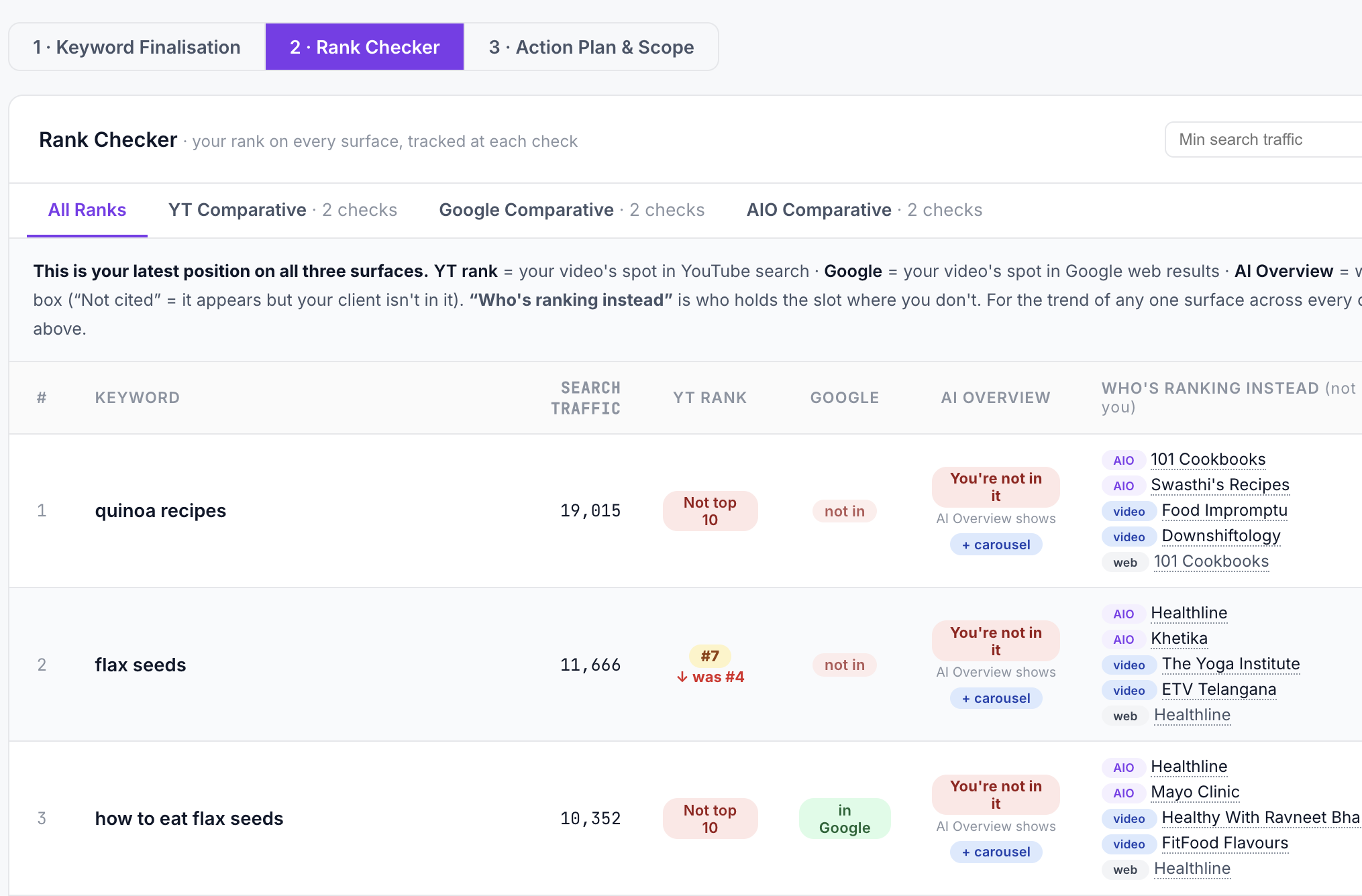
YODA runs the full 6-step workflow — Overview, Diagnostics, Strategy, Optimisation, Reputation (ORM), and Competitor Intel — with 40+ analysis modules organised under those steps. ICG's managed YouTube service uses YODA end-to-end. See the Healthcare YouTube Marketing pillar guide for the full scope, or the Healthcare YouTube Marketing Agency service page for engagement details.
Book a YODA demo on WhatsApp → or request a free healthcare YouTube channel audit →
Related reading
- Healthcare YouTube marketing pillar guide 2026
- YouTube Shorts vs long-form for healthcare clinics
- Who watches healthcare clinic videos
- Healthcare YouTube benchmarks 2026
- YODA 6-step workflow
FAQ
Is there a single best time to post that works for every healthcare channel? No. The best time varies by specialty, primary audience, geographic centre of gravity, and channel-specific historical patterns. Wednesday 8:30 PM IST is a strong starting hypothesis for patient-facing dermatology and dental content in Tier 1 metro-heavy channels. It is not the answer for every channel.
Does YouTube's algorithm actually reward timing? Indirectly. The algorithm rewards early watch time and CTR. Publishing when the target audience is active makes those early metrics easier to hit, which surfaces the video into more Suggested placements. The direct algorithmic effect is not "posting at 8 PM helps" but "getting 200 watch hours in the first 6 hours helps," and posting at the audience's active window makes that easier.
Should we publish on major festival days? Generally no. Views arrive lower and slower because audience attention is elsewhere. Exception — festival-relevant health content (heat-stroke safety around Holi, air-quality-and-lungs content around Diwali) can benefit from publishing 5-7 days before the festival when relevant searches spike.
What about scheduling videos to publish at 3 AM to catch a specific time zone? Fine, but be honest about which time zone you are catching. A 3 AM IST publish is 4:30 PM in California and 5:30 PM in New York — sensible for a channel with meaningful US Indian diaspora audience. Not sensible for a Delhi-audience clinic channel.
Does day-of-week matter more than time-of-day? For healthcare, roughly equally. A perfectly-timed Wednesday video will outperform a perfectly-timed Monday video, and the day-of-week effect is often larger than the +/- 2 hours around the peak window.
How does YODA decide the publish slot for a specific video? Four inputs — the video's primary audience clock, the channel's geographic centre, the specialty benchmark pattern, and the channel's own historical peaks. The Distribution module outputs a specific slot with the reasoning stored in the writeback log.
Should we test different times or commit to a schedule? Test in the first 90 days when you have low channel history. After 90 days and 12-20 videos, commit to the pattern the data has revealed. Continual timing experiments after that point produce noise, not learning.
What is the biggest timing mistake healthcare channels make? Copying entertainment-creator advice (weekend late night, midnight publishes, "before dinner" slots). None of those match Indian healthcare audience behaviour for most specialties.
What if we publish and no one watches in the first hour — should we panic? No. Healthcare videos often have slower first-hour velocity than entertainment content because the audience is not "hanging out" on YouTube — they are searching for specific information. The first 72 hours of Discovery Organic tells the honest story; the first hour is noise for most healthcare videos.
Can we publish more than one video per week? Yes, up to 2-3 per week is sustainable for most channels. Beyond that, quality visibly drops. If two videos target the same audience clock, space them by at least 4 days to avoid cannibalising each other's Suggested placements.
Book a free 30-minute Brand & Growth Diagnostic.
It's a working session, not a sales pitch — you leave with a written root-cause analysis you can act on, whether or not you engage ICG.
The three platforms
behind every ICG engagement.
Beacon
CAPI middleware that fixes Event Match Quality, translates CRM statuses to Meta-standard events, dedups across channels.
Agency OS
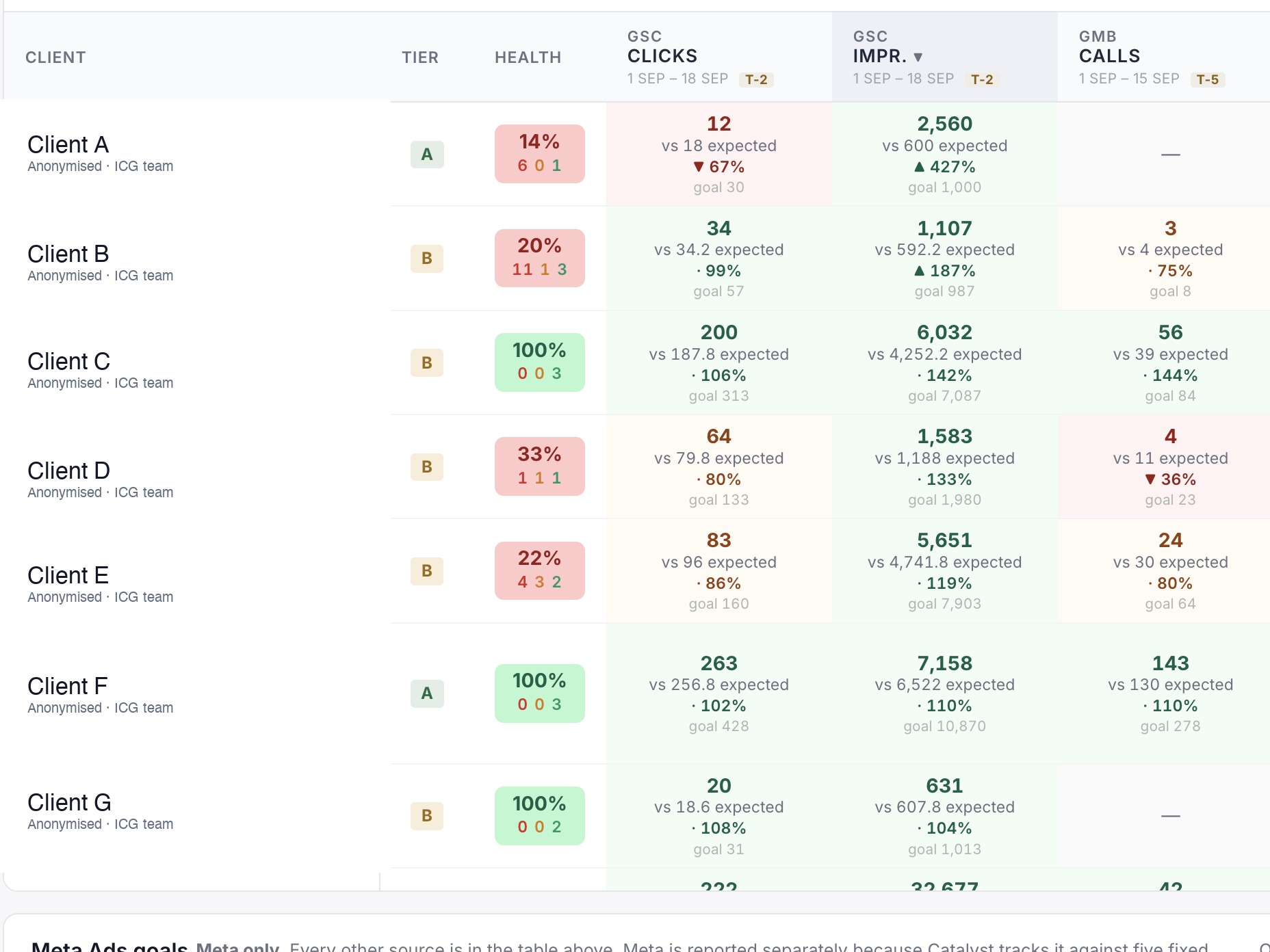
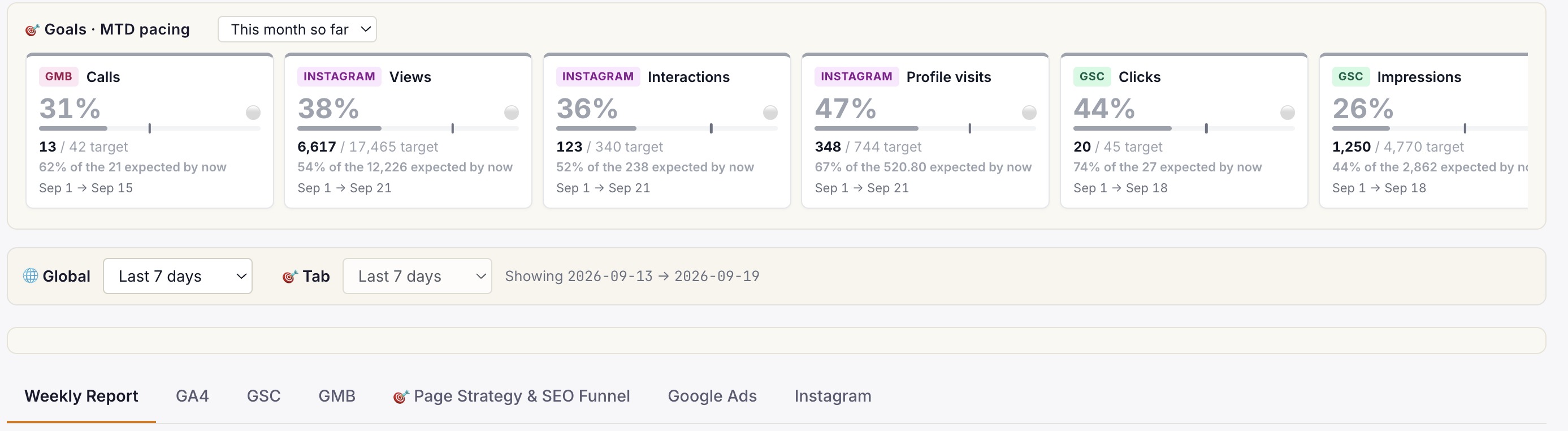
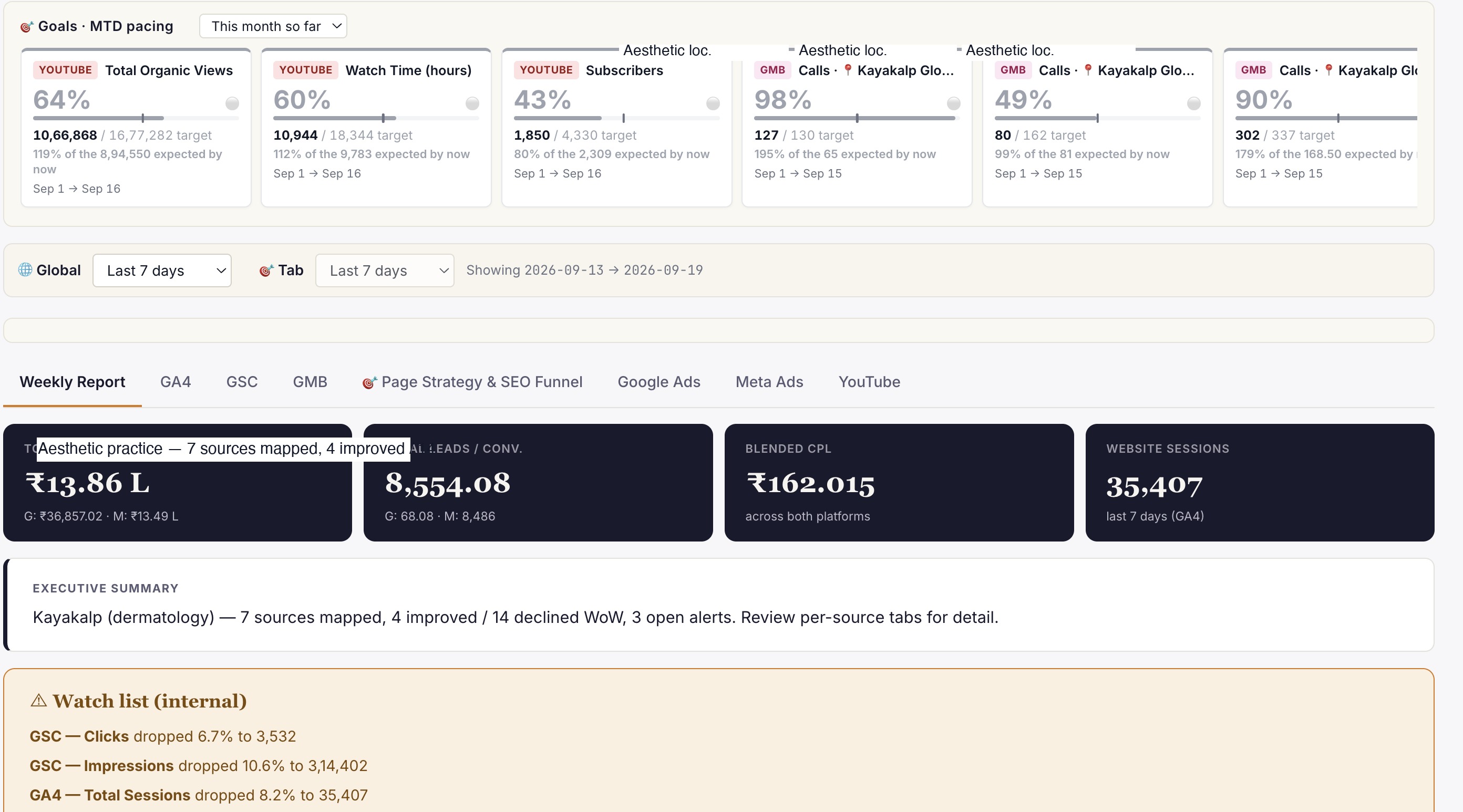
Live client dashboard. GSC, GA4, Google Ads, Meta Ads, IVR calls in one view. Login anytime, not monthly.
Phoenix
Clinic revenue intelligence over your PMS. Daily action queue: Prevent Loss, Maintain & Engage, Grow Revenue. Multi-centre rollout.
Or book a free 30-min audit to see all three in action on your account.
Healthcare brands
that already run on ICG.
A representative slice of the 150+ healthcare brands ICG has delivered for across India. Most engagements remain under NDA.


What ICG clients say · on video.
"Scale up of organic channels and business consulting. ICG has absolute domain authority in their field."
"Working with ICG transformed how we acquire IVF patients in Gurgaon. They understand the fertility journey from inquiry to consult..."
"What Ichelon accomplished — they got all my ideas and worked over 3-4 months to create an amazing, super-customised website."
Need help operationalising this?
Every ICG service is healthcare-only, NMC + DPDP-aware, and built around the patient-research patterns that drive Indian healthcare growth in 2026.
Every practice welcome — packages from ₹20,000/mo.
Goals-Driven engagements · Performance-Linked Payout Models available
More from
ICG.
Five trends shaping Indian healthcare marketing through 2027: AI-first patient research, Conversions API adoption, ABDM discovery, the AEO w...
Healthcare AIO is the discipline of getting your clinic or hospital cited inside Google AI Overviews, ChatGPT and Perplexity answers — not j...
Conversational-search advertising places brand messages inside AI chat answers — ChatGPT, Perplexity, Copilot — rather than beside a results...
Stop guessing.
Book a Diagnostic.
30 minutes. Free. With the AI-powered healthcare-only marketing agency 150+ brands already run on. No slides, no pitch, no hard close.


