


Patient Testimonial Videos on YouTube in India: What the NMC Guidelines Allow (2026)
Under the NMC guidelines of 6 October 2026, doctors may not use patient testimonial videos for promotion, and consent does not make them lawful (Explanation V; paras 6.2, 8.1(v), 8.1(xi)). What remains: anonymised educational cases with consent, and doctor-led educational video.
No pitch. Written root-cause diagnosis. AI-powered, healthcare only.
Direct answer
Under the NMC guidelines of 6 October 2026, doctors may not use patient testimonial videos for promotion, and consent does not make them lawful (Explanation V; paras 6.2, 8.1(v), 8.1(xi)). What remains: anonymised educational cases with consent, and doctor-led educational video.
TL;DR

Patient testimonial videos on YouTube are one of the most misunderstood formats in Indian healthcare marketing. Since the NMC's advertising guidelines of 6 October 2026, the position is clear: a doctor may not use patient testimonials to promote their practice, in any format, and a signed consent form does not change that (para 3.2, Explanation V; paras 6.2, 8.1(ii), 8.1(v) and 8.1(xi)). What remains possible is narrower: anonymised cases used for scientific or educational purposes with consent, and educational video led by the doctor.
This page deals with video specifically. For the full rules on testimonials, patient stories and before-after photos across all channels, see NMC rules on patient testimonials and before-after photos. For the compliant alternative on YouTube, see NMC guidelines for doctors on YouTube, and for the complete rulebook, our guide to the NMC advertising guidelines 2026.
Updated 8 October 2026 to the National Medical Commission's Guidelines on Ethical Advertising and Public Communication by Hospitals/Medical Institutions and Registered Medical Practitioners (public notice No. R-13014/01/2024-Ethics, dated 6 October 2026, in force immediately). Paragraph numbers in this article refer to those guidelines. General information, not legal advice.
The frameworks that govern patient video content on YouTube
India has no single framework equivalent to the US HIPAA Privacy Rule. Several separate frameworks each cover part of the ground, and any video featuring a patient has to clear all of them.
The NMC advertising guidelines (6 October 2026). They apply to registered medical practitioners and to hospitals and medical institutions, read with the IMC (Professional Conduct, Etiquette and Ethics) Regulations 2002. They treat audio-visual, social-media and platform-based promotional content as advertising (para 3.2), and they deal with testimonials directly. The detail is in the next section.
Digital Personal Data Protection Act 2023. A video showing an identifiable patient is processing of personal data and needs a lawful basis, usually consent that is free, specific, informed and given by clear affirmative action. Para 7.6 of the NMC guidelines points to the DPDP Act 2023 and Rules 2025 and the IT Act 2000.
Specialty laws. Fertility and gynaecology channels also have to respect the Pre-conception and Pre-natal Diagnostic Techniques Act 1994 (no advertising of pre-natal sex determination) and the Assisted Reproductive Technology (Regulation) Act 2021. These apply on top of the NMC guidelines.
ASCI's advertising code also expects any claim in an advertisement, including one implied through a patient's words, to be substantiated.
What the NMC guidelines say about patient testimonials
| Provision | What it says | What it means for patient videos |
|---|---|---|
| Para 3.2, Explanation V | No RMP or institution may solicit, procure or cause to be published fake, paid or misleading testimonials or endorsements. An RMP shall not request or share patient testimonials for professional promotion on social media. | A doctor may not commission, post or reshare patient testimonial videos on YouTube or other social media. |
| Para 8.1(ii) | No solicitation or self-promotion; no use of name, image, voice or testimonial for promotion; no engaging a third party to market medical services. | A testimonial video made by an agency for the doctor is still the doctor's promotion (see also para 4.4). |
| Para 8.1(v) | No promotional case presentations, before-after photos, celebrity patients or success stories, except for scientific or educational purposes with anonymised consent. | "Success story" videos are out. Anonymised, consented case material for genuine education is the narrow exception. |
| Para 8.1(xi) | No celebrity, influencer, patient or employee testimonials; commercial relationships disclosed; no third party used to do indirectly what is prohibited. | Routing patient videos through an influencer or a "patient community" page does not make them permissible. |
| Para 6.2 | Consent does not make a prohibited testimonial or before-and-after lawful. | A comprehensive consent form is necessary for any patient appearance, but it cannot rescue a testimonial. |
| Paras 6.4, 7.4 | Identifying features must be blurred or cropped; no identifiable patient data (names, faces, anomalies). | Educational case material must be genuinely anonymised. |
| Para 7.2(b) | No synthetic patients, testimonials or endorsements. | AI-generated "patient" videos are barred outright. |
In practice: a video in which a patient recounts their treatment and speaks well of the result is a patient testimonial, and using it on the practice's YouTube channel to promote the practice is prohibited. The restriction is on the practitioner's and institution's use of testimonials. It does not stop a patient speaking about their own experience on their own channel.
What remains possible is genuinely educational content that does not promote the practitioner or the institution: anonymised case discussion for scientific or educational purposes, with consent (para 8.1(v)), and health-awareness content led by the doctor in their own name and designation (paras 5.1 and 8.2(iii)). Read the full text in the official NMC notice, and take legal advice on any borderline case.
DPDP Act 2023 and video as personal data
A video with an identifiable face or voice is personal data, and publishing it on YouTube is processing that needs a lawful basis. This applies to the narrow cases where a patient may still appear, such as an anonymised educational case where some identifying element remains, or a patient taking part in a public-health awareness programme.
Valid consent is stricter than the loose forms many clinics use. It must be freely given (not conditional on treatment), specific (naming the purpose), informed (the patient understands what will be published, where, for how long and who can see it), and given by clear affirmative action. A signed, purpose-specific form works; a line buried in an admission form does not.
The patient can withdraw consent at any time, and the clinic must then stop processing, which for YouTube means taking the video down. Any patient-inclusive video is therefore operationally fragile: the clinic cannot promise it will stay up.
Health data is sensitive in any practical sense, and video of a patient in a healthcare setting deserves the highest level of care.
Fertility and gynaecology channels
Fertility and gynaecology clinics face extra limits. The PC-PNDT Act 1994 prohibits advertising pre-natal sex determination, so nothing on the channel should discuss it or could be read as offering it. The Ministry of Health and Family Welfare guidance makes clear that even awareness content in this area needs care.
The ART Act 2021 governs assisted reproduction clinics. Combined with the NMC bar on success stories (para 8.1(v)) and on guaranteed or unrealistic outcomes (paras 8.1(iii) and 8.1(vi)), a patient video saying "we tried three cycles and finally had a baby" is an implied success claim that should not appear. Fertility channels should stick to educational content that features no identifiable patients.
What clinics can and cannot show on video
The permitted set is narrower than many marketing teams assume, but it is still substantial.
Can show: the facility (exterior, interior, equipment areas without identifiable patients), as factual information (para 8.3); clinicians explaining conditions and treatments in their own name and designation without promoting the employer (para 8.2(iii)); demonstrations on anatomical models or simulations; general explanations of conditions, treatments and recovery without any patient being identifiable; the practical side of a visit (booking, insurance, what to bring); registration details and qualifications of named doctors (para 3.2, Explanations III and IV).
Cannot show: patients recounting their treatment as an endorsement (Explanation V; paras 8.1(ii), 8.1(xi)); before-and-after images or success stories presented as promotion (para 8.1(v)); celebrity patients (para 8.1(v)); AI-generated patients or testimonials (para 7.2(b)); success-rate claims or guaranteed outcomes (para 8.1(iii)); anything offered to a patient in exchange for appearing (para 8.1(x)); anything suggesting sex-selection services.
Needs care and legal review: anonymised case discussion for genuine education, with consent and identifying features removed (paras 6.4, 8.1(v)); awareness programmes with patient advocacy groups that do not promote any practitioner or clinic (para 5.1).
What a consent form must cover for permitted patient content
For the narrow set of patient-inclusive content that is still permitted (anonymised educational cases, awareness programmes), a consent form should cover:
- The parties: the patient, the institution, who is filming, and the channel where it will appear.
- The content: what will be filmed or used, where, when, and with whom.
- The purpose: stated as scientific or educational, not promotional. If the honest purpose is promotion, no consent form makes it permissible (para 6.2).
- Anonymisation: how the patient's face, voice, name and other identifying features will be removed (paras 6.4, 7.4).
- Distribution: which platforms, whether it may be edited or excerpted, and for how long.
- The patient's rights: to withdraw at any time and have the content removed, to review the edit before publication, to request changes, and to receive a copy.
- Data protection: what data is collected, how it is stored, who can access it, and the patient's rights under the DPDP Act.
- Voluntariness: an explicit statement that care does not depend on agreeing, that nothing is offered in return, and that refusal has no consequence.
- Signatures: the patient (and guardian for minors), a witness from the institution, and the treating clinician.
A form missing any of these should not be relied on.
US HIPAA practice vs Indian rules: where US templates fail
In the US, practices commonly publish patient testimonials with a HIPAA authorisation, and before-and-after imagery is widespread in cosmetic and dental marketing. Agencies working across both markets sometimes bring those templates to Indian clients. They do not transfer.
A HIPAA authorisation is not a DPDP Act consent. More importantly, no consent form addresses the NMC bar on testimonials and before-after content for promotion (Explanation V; paras 8.1(v), 8.1(xi)), because consent does not make them lawful (para 6.2). Indian clinics should build their content plan from the Indian rules upwards and treat any imported US workflow as something to discard, not adapt.
The alternative that works: doctor-led educational video
The compliant alternative is educational video led by the clinician that answers the questions a testimonial would have answered, without featuring a patient at all.
A doctor explaining "what patients often ask about recovery from this procedure" covers what recovery feels like, how long it takes and what to expect, with none of the testimonial problems. Para 8.2(iii) allows lectures and talks on public health through electronic media in the doctor's own name and designation, provided they do not promote the employer, and para 5.1 allows educational content that does not promote personal practice or solicit patients. It also carries the expertise signal of a named clinician (see our piece on YouTube E-E-A-T for Indian healthcare) and does not depend on a consent that can be withdrawn. The full approach is in NMC guidelines for doctors on YouTube.
This is the default for the healthcare channels ICG manages: educational content anchored on named clinicians, no patient testimonials, and no identifiable patients anywhere on the channel.
The platform ICG uses to run this at scale: YODA
ICG runs healthcare YouTube marketing for clinics, hospitals and specialty groups using YODA, our AI-native healthcare YouTube marketing platform. YODA sits on top of a channel's data and does four things: it separates organic from paid views at every step, it gives decisions, not dashboards (every video gets a state and a next action), it writes back to YouTube directly (titles, tags, descriptions and chapters), and it tracks three rank races: YouTube search, Google web, and Google AI Overview citations.
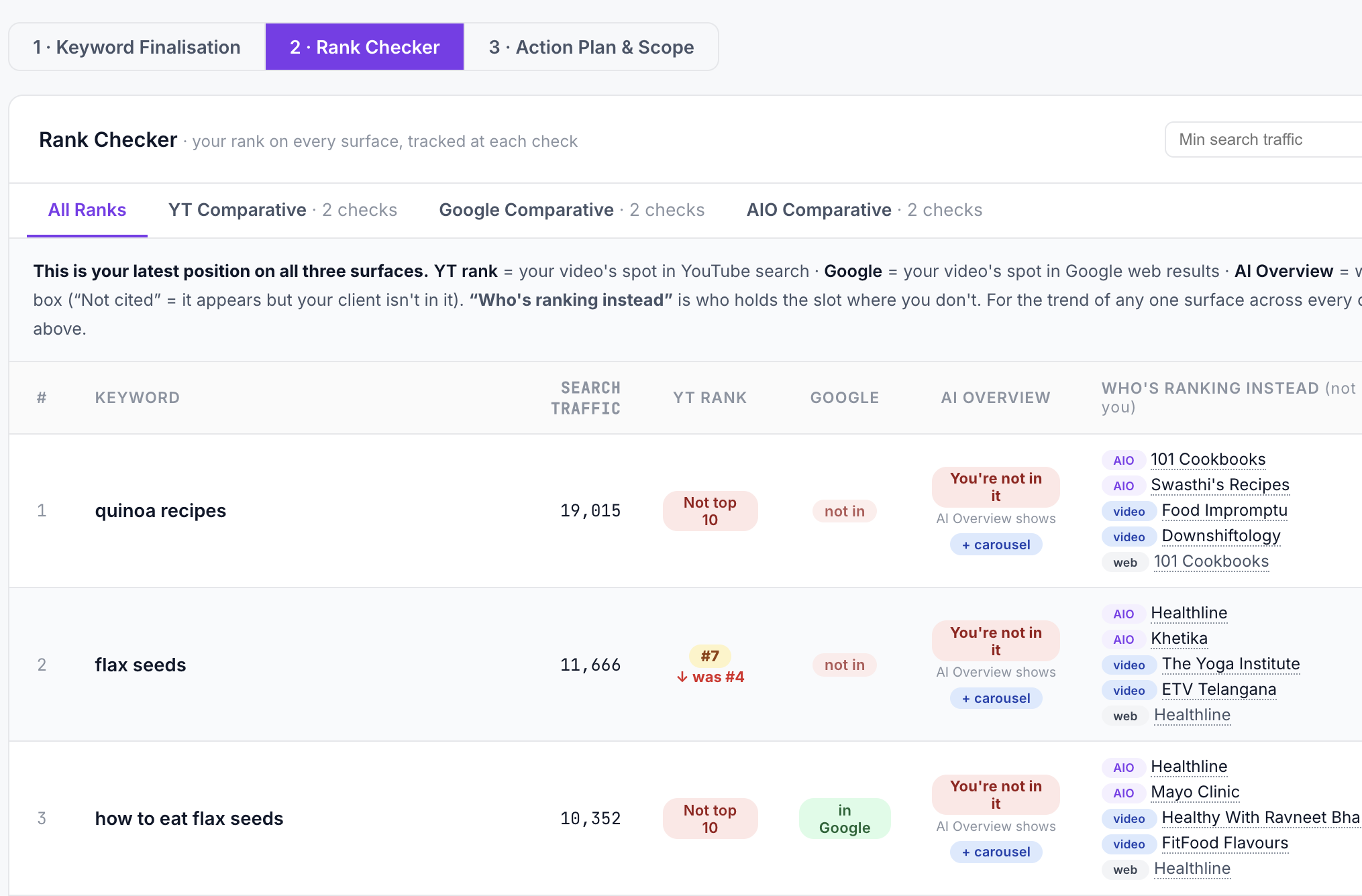
YODA runs a 6-step workflow (Overview, Diagnostics, Strategy, Optimisation, Reputation, and Competitor Intel) with 40+ analysis modules. ICG's managed YouTube service uses YODA end-to-end. See the Healthcare YouTube Marketing pillar guide for the full scope, or the Healthcare YouTube Marketing Agency service page for engagement details.
Book a YODA demo on WhatsApp → or request a free healthcare YouTube channel audit →
Related reading
- Healthcare YouTube marketing pillar guide 2026
- Patient trust and YouTube E-E-A-T for Indian healthcare
- Google reviews and the NMC guidelines
- E-E-A-T signals for Indian healthcare clinics
- Healthcare YouTube marketing agency service page
ICG runs YouTube programmes for the clinics it supports alongside local SEO and reputation. For the review side, see our Google review strategy for Indian clinics.
How ICG works within these guidelines
ICG is a healthcare marketing agency. Our clients are hospitals, clinics and medical institutions, which may publish factual, objective and verifiable information about themselves (paras 8.3 and 9.1). For individual doctors, ICG supports only genuinely educational content in the doctor's own name and designation (para 8.2(iii)). For doctors and their practices, we run patient-education-driven campaigns: awareness content that helps patients understand their condition and their options, published in the doctor's own name and designation (para 8.2(iii)) and kept free of the self-promotion that para 8.1(ii) bars.
The work is education-first and runs across six channels:
- Awareness content on YouTube. Doctor-led educational videos on public health and disease awareness, in the doctor's own name and designation, without promoting the employer organisation (para 8.2(iii)). See YODA and YouTube marketing for healthcare.
- Research articles and blogs that help patients understand their options: information shared in the normal course, not promotion (para 3.2, Explanation I). See healthcare content marketing, ICG research reports and healthcare SEO.
- Expert answers on Reddit and Quora from named, disclosed accounts. No anonymous or fake posts, no undisclosed commercial relationships and no manufactured engagement (paras 8.1(xi) and 8.1(xii)). See Reddit and Quora programmes.
- Awareness campaigns on Meta, run from the hospital's or clinic's own page, with no discounts, offers, free procedures or other inducements (paras 8.1(x) and 8.3). See Meta advertising for hospitals and clinics.
- NMC-compliant Google Ads landing pages: factual departments, services and facilities, with no "best", "No.1", "100% success", "painless" or "guaranteed" claims (paras 8.1(iii) and 8.1(ix)). See Google Ads for hospitals and clinics.
- "Learn More" instead of "Book Now" on patient-facing pages, so that a page informs rather than solicits (paras 8.1(ii) and 8.3(ii)).
All six rest on three kinds of content: scientific (evidence-based, checked by a qualified clinician), persona-based (written for the questions a specific patient group asks) and consumer-based (built from how people search, compare and decide). AI-assisted drafts go through human medical review, and AI-generated content that is published carries an AI source mark (para 7.2). We do not publish patient testimonials, before-and-after images or superiority claims, and we never buy, incentivise or gate reviews.
Free NMC compliance check. We review a hospital's or clinic's website, Google Business Profile and social channels against the October 2026 guidelines and send back a written list of fixes.
See what the check covers · Request the check · Book a 30-minute call
General information, not legal advice. Source: NMC public notice No. R-13014/01/2024-Ethics, 6 October 2026.
Book a free 30-minute Brand & Growth Diagnostic.
It's a working session, not a sales pitch — you leave with a written root-cause analysis you can act on, whether or not you engage ICG.
Questions readers ask
about this topic.
The three platforms
behind every ICG engagement.
Beacon
CAPI middleware that fixes Event Match Quality, translates CRM statuses to Meta-standard events, dedups across channels.
Agency OS
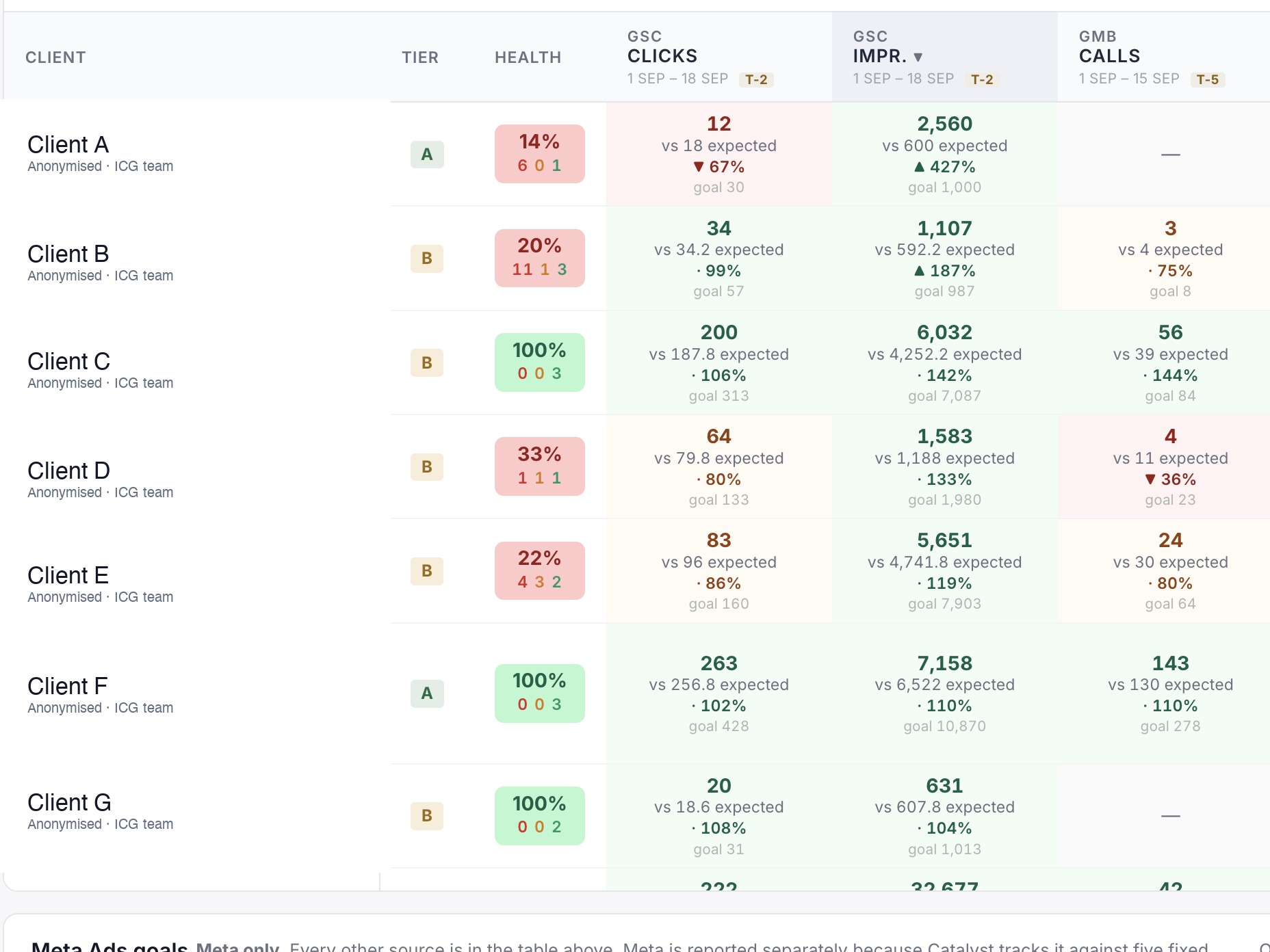
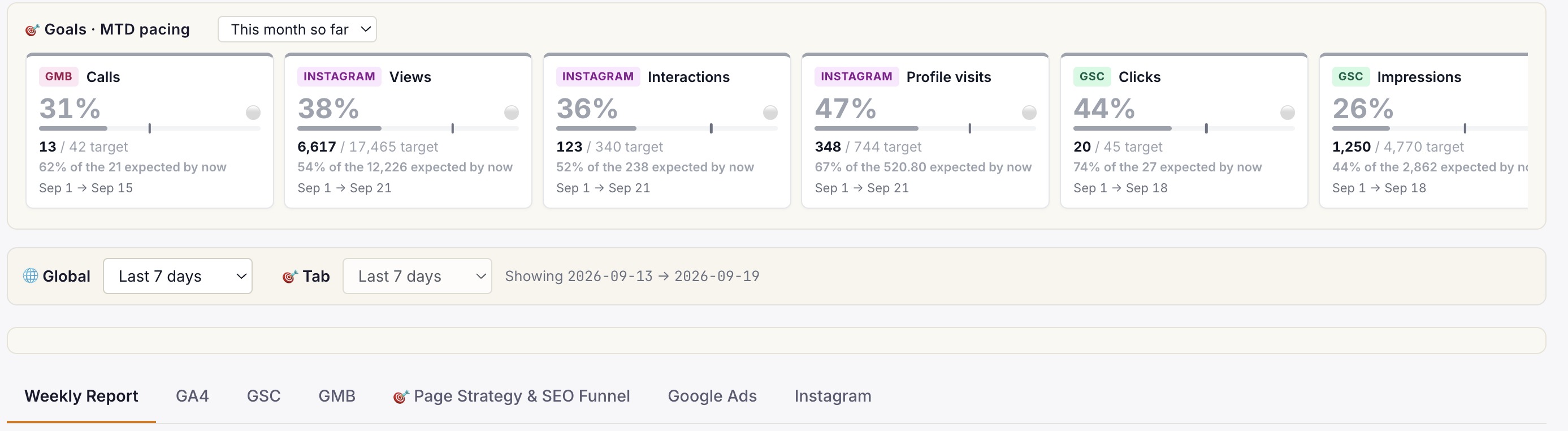
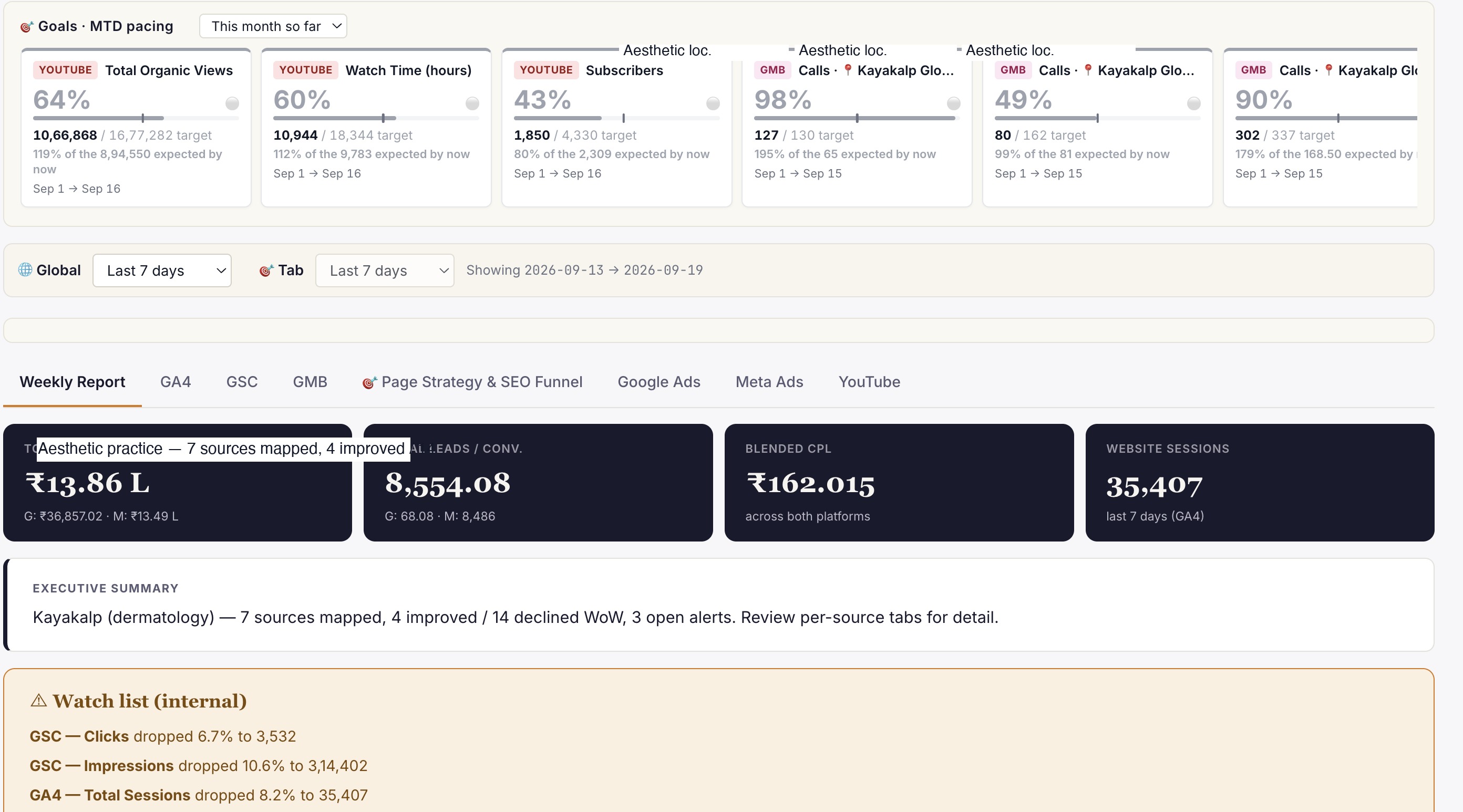
Live client dashboard. GSC, GA4, Google Ads, Meta Ads, IVR calls in one view. Login anytime, not monthly.
Phoenix
Clinic revenue intelligence over your PMS. Daily action queue: Prevent Loss, Maintain & Engage, Grow Revenue. Multi-centre rollout.
Or book a free 30-min audit to see all three in action on your account.
Healthcare brands
that already run on ICG.
A representative slice of the 150+ healthcare brands ICG has delivered for across India. Most engagements remain under NDA.


What ICG clients say · on video.
"Scale up of organic channels and business consulting. ICG has absolute domain authority in their field."
"Working with ICG transformed how we acquire IVF patients in Gurgaon. They understand the fertility journey from inquiry to consult..."
"What Ichelon accomplished — they got all my ideas and worked over 3-4 months to create an amazing, super-customised website."
Need help operationalising this?
Every ICG service is healthcare-only, NMC + DPDP-aware, and built around the patient-research patterns that drive Indian healthcare growth in 2026.
Every practice welcome — packages from ₹20,000/mo.
Goals-Driven engagements · Performance-Linked Payout Models available
More from
ICG.
Five trends shaping Indian healthcare marketing through 2027: AI-first patient research, Conversions API adoption, ABDM discovery, the AEO w...
Healthcare AIO is the discipline of getting your clinic or hospital cited inside Google AI Overviews, ChatGPT and Perplexity answers — not j...
Conversational-search advertising places brand messages inside AI chat answers — ChatGPT, Perplexity, Copilot — rather than beside a results...
Stop guessing.
Book a Diagnostic.
30 minutes. Free. With the AI-powered healthcare-only marketing agency 150+ brands already run on. No slides, no pitch, no hard close.


