


Three ranking races for healthcare YouTube: YouTube search, Google web, and AI Overviews — 2026 framing
Every healthcare YouTube video runs in three separate ranking races at the same time — YouTube in-app search, Google web search (blue link plus video carousel), and Google AI Overview citation. The three races reward different signals. This is the framing that decides which race you compete in for which query, and how to compete on all three.
No pitch. Written root-cause diagnosis. AI-powered, healthcare only.
Direct answer
Every healthcare YouTube video runs in three separate ranking races at the same time — YouTube in-app search, Google web search (blue link plus video carousel), and Google AI Overview citation. The three races reward different signals. This is the framing that decides which race...
TL;DR

Three separate ranking races decide whether a healthcare YouTube video ever reaches the patient who is looking for its answer — YouTube's in-app search, Google web search (both the blue-link result and the video carousel), and Google AI Overview citation. The three races reward different signals, respond to different optimisations, and matter to different degrees depending on which query the video targets. Most healthcare channels operate as though they are running one race — usually the YouTube in-app one — and lose most of their addressable audience to competitors who compete on all three. This guide is the framing that ICG uses to build video strategy for clinics inside the healthcare YouTube marketing service, with the specifics operationalised through YODA's SEO Lab and AIO engine described in the healthcare YouTube pillar guide. Getting the three-race framing right is the single largest lever for compounding video visibility.

The three races defined
Race One is YouTube in-app search. A patient opens the YouTube app on their phone, types "adult acne treatment", and sees a ranked list of videos. This is the race healthcare channels understand best. Ranking here depends on YouTube's internal signals — CTR on impression, average view duration, session watch time, subscriber contribution, engagement (likes, comments, shares), and topical authority of the channel on the query.
Race Two is Google web search. A patient opens Chrome, types "adult acne treatment", and Google returns a page with blue-link results, a video carousel, People Also Ask, and increasingly an AI Overview at the top. The video carousel and the individual video results inside the blue links are where YouTube videos compete. Google's web algorithm applies different signals here — page relevance to the query, page authority, freshness, structured data (VideoObject schema on any embedding page), and the video's YouTube-side signals treated as an input.
Race Three is Google AI Overview citation. Google generates an AI answer at the top of the search results for many health queries and cites a small number of sources — often three to six. Being cited is not a ranking position; it is inclusion in a curated source set. Signals are structural (schema, FAQ, transcript, quotable definitions), authoritative (E-E-A-T signals on the source page and author), and topically precise (the source answers the specific question the AI is answering, in language the AI can lift).
Race One: YouTube in-app search
YouTube's in-app search is the highest-volume video discovery surface for patients who are already in browse-and-watch mode. It rewards videos that keep viewers watching — session watch time is the north-star metric YouTube optimises for.
Signals that move ranking here:
1. Click-through rate at impression — thumbnail and title strength. 3-8% is typical for a specialist medical channel; above 8% is exceptional.
2. Average view duration and average percentage viewed — the video needs to hold attention through the first 30 seconds and again through the two-thirds mark. Dropoffs at these points signal weak content-fit.
3. Session watch time — YouTube tracks whether the viewer watches another video after this one. End-screens, cards, and playlist configuration matter.
4. Engagement rate — likes, comments, shares, subscribes. Comments carry weight beyond the raw count if they are substantive replies (patients asking follow-up questions).
5. Freshness and consistency — channels that publish weekly get faster ranking traction on new videos.
6. Topical authority — a dermatology-focused channel earns faster ranking on dermatology queries than a general-health channel, because YouTube's classifier has strong prior belief about the channel's topic-fit.
Optimisation for Race One is thumbnail-first, title-second, description-third, chapter-and-transcript-fourth. YODA's SEO Lab surfaces the specific signal decaying on each video and prescribes the intervention.
Race Two: Google web search
Google web search behaves differently from YouTube in-app search in three important ways.
First, the query language shifts. Patients searching on Google are more likely to type long-form questions ("why does my scalp itch after washing my hair") than the short queries typed inside YouTube ("scalp itch causes"). Videos that answer long-form questions in their title, chapters, and description have an easier time surfacing.
Second, Google factors in the embedding website page. A YouTube video embedded on a well-optimised clinic website page with a VideoObject schema block, transcript, and FAQ schema will often outrank the same video on YouTube's bare watch page for the same query. Google trusts the structured signal from an authoritative embedding page.
Third, Google surfaces videos in two distinct positions — inside a horizontal video carousel (usually near the top of results) and as individual blue-link results with a video thumbnail attached. The carousel selection is opaque and often includes videos from mid-authority channels ahead of large channels if the carousel-eligibility signals are stronger.
Optimisation for Race Two involves matching the video to a corresponding website page, publishing the VideoObject schema plus FAQ schema on that page, ensuring the page is indexed and has internal links from higher-authority pages on the site, and using long-form patient-question language in both the video title and the page H1.
Race Three: Google AI Overview citation
The AI Overview citation race is the newest and least understood of the three. Google's answer engine generates a synthesised answer at the top of the search results for many health queries, citing a small set of sources.
Citation is not ranking. A cited source can be anywhere from the top-ranked page to the fifth or sixth blue-link result on the classical page below the AI Overview. Being cited requires specific structural conditions:
1. Structured data — VideoObject schema, FAQPage schema, Article schema where relevant. Broken or missing schema materially lowers citation eligibility.
2. Quotable answers — 40-90 word standalone answers to specific patient questions, marked up in FAQ schema.
3. Full transcript — visible HTML transcript on the embedding page and human-edited SRT/VTT captions on YouTube. Auto-generated captions with medical-term errors hurt eligibility.
4. E-E-A-T signals — named author with credential (doctor byline with registration number), publisher identity, freshness signal (updated_at date), and reference-quality outbound links to authoritative sources like ICMR or MoHFW.
5. Topical precision — the page answers the specific question, in the language of the question, without burying the answer inside dense paragraphs.
Optimisation for Race Three is a co-ordinated effort across the video description, the website page, the schema markup, the transcript, and the author identity signals.
Which race matters for which query type
Not every query gives equal weight to the three races. Understanding which race matters most for which query type sharpens the strategy.
Deep-education queries ("how does IVF work", "what is PRP hair treatment") — all three races matter, with Race Two (Google web) and Race Three (AIO) increasingly dominant as patients research before booking.
Symptom queries ("what causes recurrent tonsillitis", "why is my hair falling out") — Race Three (AIO) is the highest-visibility surface, because Google increasingly wraps these queries in AI Overviews before the user sees any classical results.
Procedural queries ("what happens during a HydraFacial", "recovery time after laser hair removal") — Race One (YouTube in-app) matters most, because patients switch to YouTube specifically to watch procedure demonstrations and expectation-setting content.
Doctor-comparison queries ("best dermatologist near me for acne") — Race Two (Google web) dominates via the local pack and web results, with Race Three (AIO) increasingly surfacing curated doctor lists. YouTube in-app rarely surfaces for these.
How-to and self-care queries ("how to reduce dandruff at home") — Race One (YouTube in-app) and Race Three (AIO) split. Race Two surfaces videos in the carousel but often below written content.
Signals that differ across races
The most common strategic mistake is assuming a signal that helps one race helps all three. Some signals actually move in opposite directions across races.
Video length. YouTube in-app rewards longer videos (10-15 minutes) that hold viewers for the full session. Google web search often prefers shorter, more focused videos (3-8 minutes) that answer a specific question quickly. AI Overview citation is length-neutral but depends on the specific segment being quotable.
Title style. YouTube in-app rewards curiosity-driven and question-driven titles. Google web search rewards keyword-precise titles. AI Overview citation rewards titles that mirror the exact patient-question language.
Description depth. YouTube in-app treats the first 200 characters as the primary ranking signal. Google web reads more of the description and cross-references against the embedding page. AI Overview citation weighs the FAQ block on the embedding page more heavily than the video description.
Chapters. YouTube in-app uses chapters to improve retention. Google web surfaces chapters as "key moments" in search results. AI Overview citation uses chapters to identify quotable segments for time-stamped answer inclusion.
The consequence is that a video engineered for one race can underperform on the others. A well-run channel engineers the video for the highest-visibility race for its query type, then adds the structural elements the other races reward without breaking the primary optimisation.
How to compete on all three simultaneously
The playbook that consistently delivers visibility across all three races on a healthcare channel:
1. Identify the primary race per query using the query-type framing above. Optimise the video first for the primary race.
2. Publish the video on YouTube with title, thumbnail, chapters, and description tuned for Race One.
3. Embed the video on a matching clinic website page with VideoObject schema, FAQ schema, full transcript, doctor byline, and internal linking. This unlocks Races Two and Three simultaneously.
4. Upload human-edited captions to the YouTube video. This reinforces Races One and Three.
5. Test AIO citation weekly for the target query using YODA's AIO tracker. Iterate the FAQ answers and schema when citation is missing.
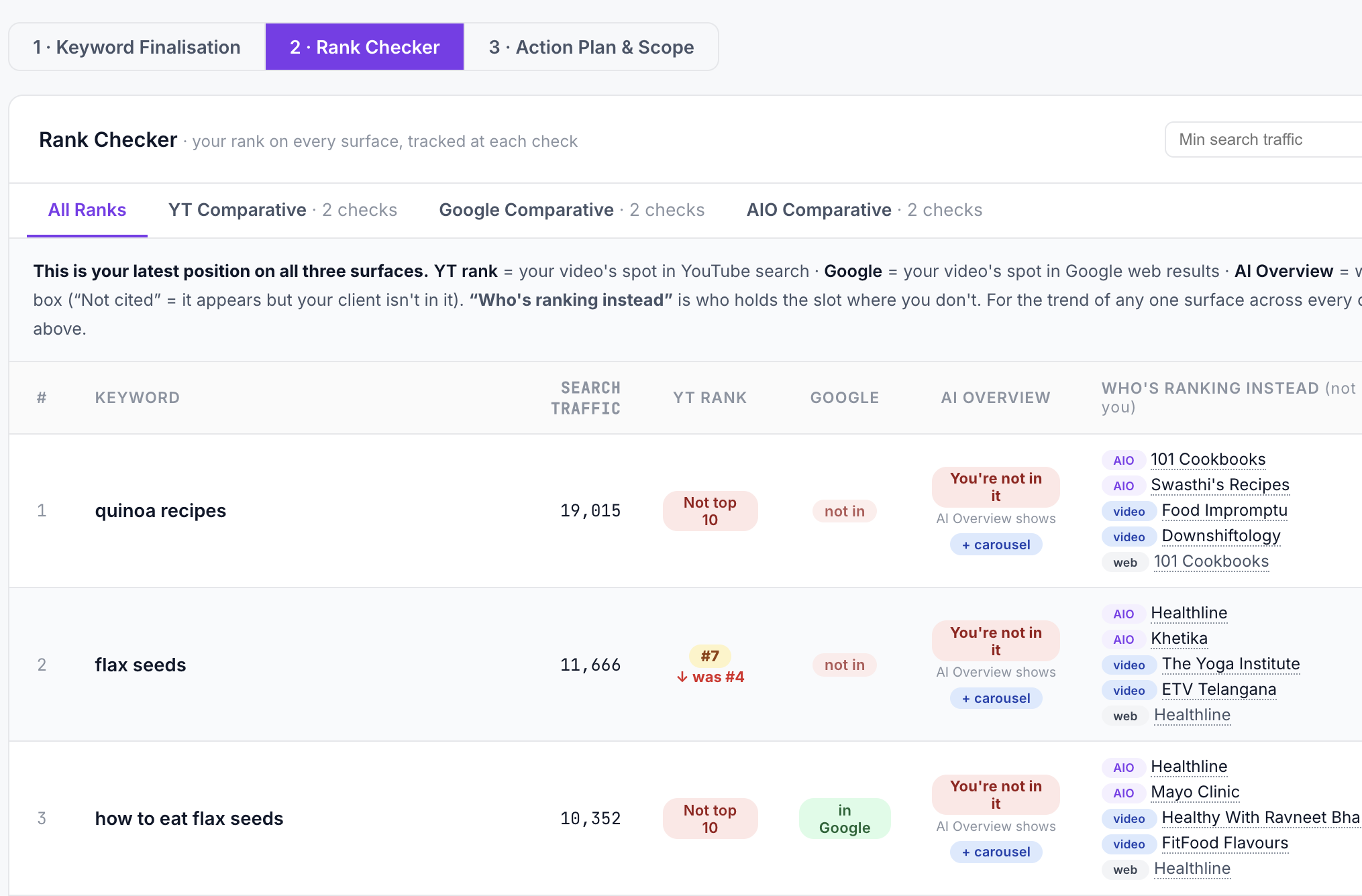
6. Track ranking on all three surfaces separately. A single "ranking" number is meaningless across races. YODA logs YouTube in-app rank, Google web rank (both carousel and blue link), and AIO citation state as three separate columns per query.
What changes when only one race is run
Most healthcare channels we onboard have been operating as though only Race One exists. The channel publishes, tracks YouTube analytics, and considers the video "successful" if it earns views inside YouTube. The videos are rarely embedded on the clinic website; when they are, the embedding page has no schema, no transcript, no FAQ block. Race Two and Race Three are effectively forfeited.
The visibility cost is substantial. For most healthcare specialties, Race One is one-third to half of the total addressable patient audience. Race Two and Race Three together account for the majority of patient discovery on the queries that lead to consultations.
When we bring a channel onto the full three-race operating model, the pattern is consistent — YouTube in-app performance holds steady, Google web search visibility begins climbing within 30-60 days as VideoObject schema starts working, and AI Overview citations start appearing within 60-120 days as Google's answer engine re-evaluates the newly-structured sources.
The platform ICG uses to run this at scale: YODA
ICG runs healthcare YouTube marketing for clinics, hospitals, and specialty groups using YODA — our AI-native healthcare YouTube marketing platform. YODA sits on top of a channel's data and does four things no dashboard does: it separates organic from paid views at every step (so a promoted video can never masquerade as organic growth), it gives decisions not dashboards (every video gets a state + next action), it writes back to YouTube directly (improved titles, tags, descriptions, chapters applied straight to the platform), and it tracks the three rank races — YouTube search, Google web, and Google AI Overview citations.
YODA runs the full 6-step workflow — Overview, Diagnostics, Strategy, Optimisation, Reputation (ORM), and Competitor Intel — with 40+ analysis modules organised under those steps. ICG's managed YouTube service uses YODA end-to-end. See the Healthcare YouTube Marketing pillar guide for the full scope, or the Healthcare YouTube Marketing Agency service page for engagement details.
Book a YODA demo on WhatsApp → or request a free healthcare YouTube channel audit →
Related reading
- Healthcare YouTube marketing pillar guide — the full channel operating manual
- YouTube SEO for doctors: rank videos where patients search
- Get cited in AI Overviews from a healthcare YouTube channel
- Verifying website videos are indexed in Google Search Console
- Healthcare YouTube marketing service — engagement details
FAQ
Are the three ranking races equally important for all healthcare specialties?
No. Deep-education specialties like IVF and oncology skew toward Races Two and Three. Aesthetic and procedural specialties like dermatology and cosmetic surgery skew toward Race One. Local-pack-driven specialties like dental and diagnostic centres depend more on non-video local SEO but still benefit from video presence on all three surfaces.
Can a video win Race Three without winning Race One?
Yes, routinely. AI Overview citation depends on structural signals more than on classical ranking position. Small channels with well-structured content earn citations ahead of large channels with weak structure.
Does winning Race Two require the video to be embedded on a website page?
Almost always. Google web search prefers to surface videos alongside high-quality embedding pages that carry VideoObject schema. Videos on bare YouTube watch pages can win Race Two for niche queries but lose to embedded videos on competitive queries.
How does the local pack interact with the three ranking races?
The local pack is a separate surface on Google web search that shows GBP profiles. Videos do not directly rank inside the local pack, but they appear in the video carousel alongside the local pack. Race Two visibility for a doctor's videos is a differentiator when the patient scrolls past the local pack.
Which race generates the most consultation flow?
Highly variable by specialty. For deep-education specialties, Race Three (AIO) and Race Two (Google web) together drive most attributed flow. For procedural and aesthetic specialties, Race One (YouTube in-app) is often the largest single source.
Do YouTube Shorts compete in the three races differently?
Shorts compete primarily in Race One (YouTube in-app, in the Shorts shelf and the main feed). Race Two visibility for Shorts is emerging but limited. Race Three (AIO citation) rarely surfaces Shorts because the shorter format lacks the quotable-depth AI answer engines require.
How long does it take to compete on all three races after starting from Race One only?
Typical timeline — Race Two visibility begins climbing within 30-60 days after VideoObject schema goes live on embedding pages. Race Three citations start appearing within 60-120 days after full structural stack (schema, FAQ, transcript, E-E-A-T signals) is in place across the video and embedding page. Fully mature operation takes 6-9 months.
Can Google AI Overview citation be gamed?
Not sustainably. Google's answer engine cross-references citation sources against E-E-A-T signals, publisher authority, and factual verification. Content-farm structural tricks earn short-lived citations that disappear on the next re-evaluation.
Does ranking on Google web search hurt YouTube in-app ranking or vice versa?
No. The two races run on independent algorithms with independent signal ingest. A video can top Race Two without moving Race One, and vice versa. YODA tracks the two ranks separately so trade-offs are visible.
What happens to the three-race framing if Google or YouTube change their algorithms?
The framing itself is robust to algorithm change because it is based on the distinct surfaces where patients discover content. The specific signals that move each race shift over time — YouTube's CTR weight, Google's schema handling, AI Overview citation criteria all evolve. YODA's SEO Lab and AIO engine track signal changes and update the recommended actions.
Book a free 30-minute Brand & Growth Diagnostic.
It's a working session, not a sales pitch — you leave with a written root-cause analysis you can act on, whether or not you engage ICG.
The three platforms
behind every ICG engagement.
Beacon
CAPI middleware that fixes Event Match Quality, translates CRM statuses to Meta-standard events, dedups across channels.
Agency OS
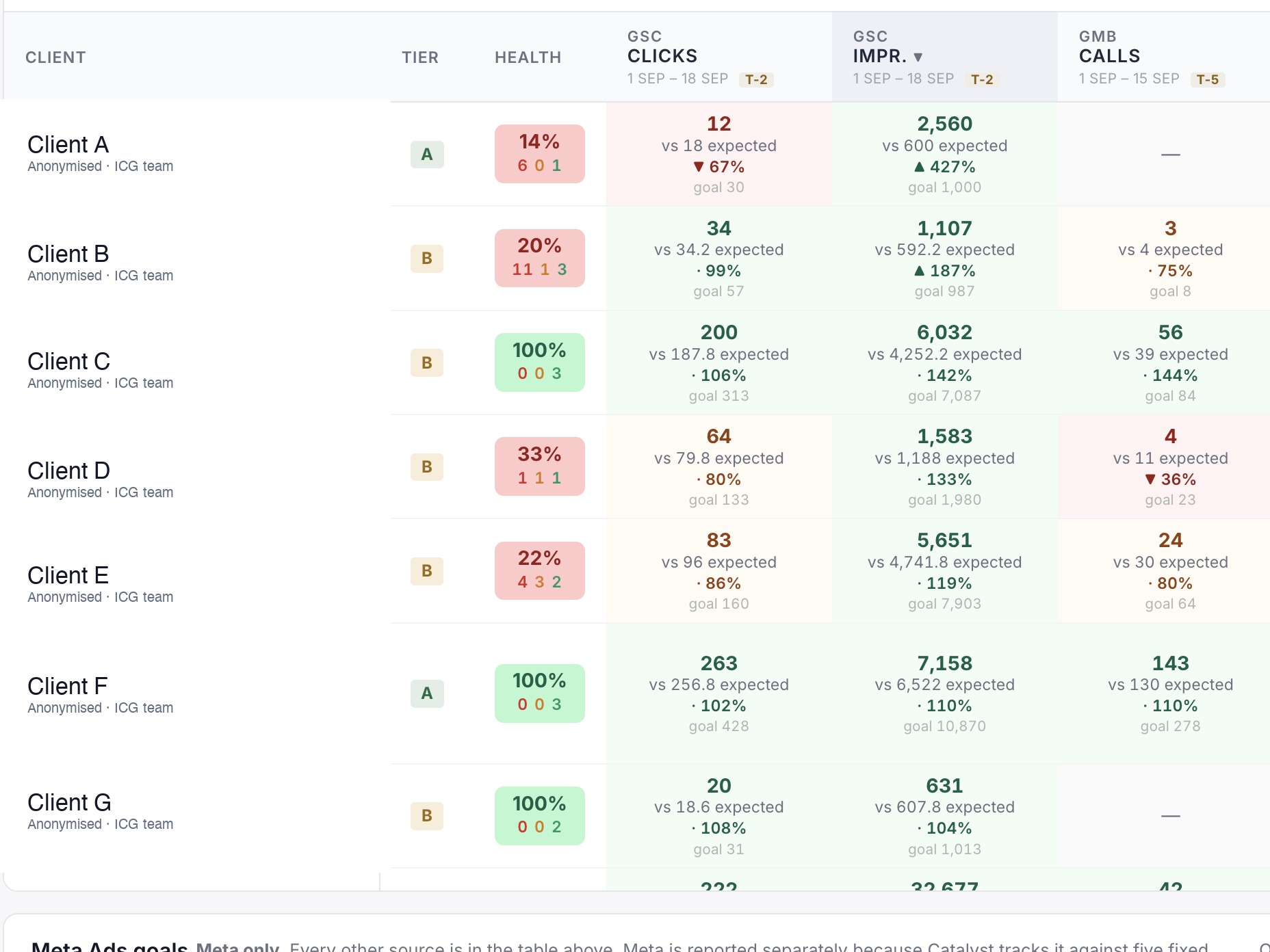
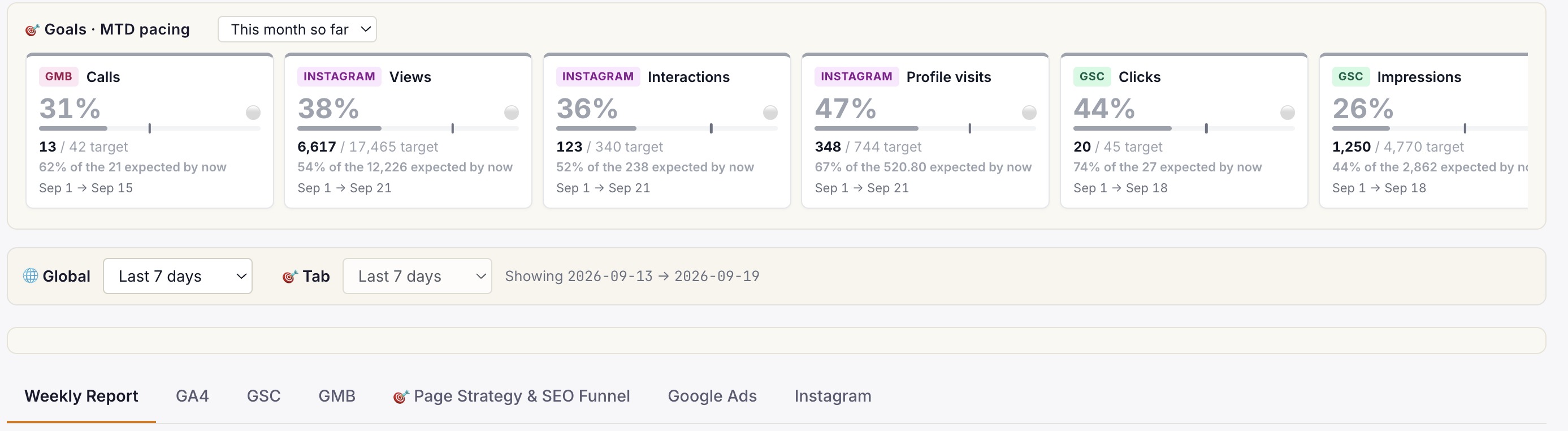
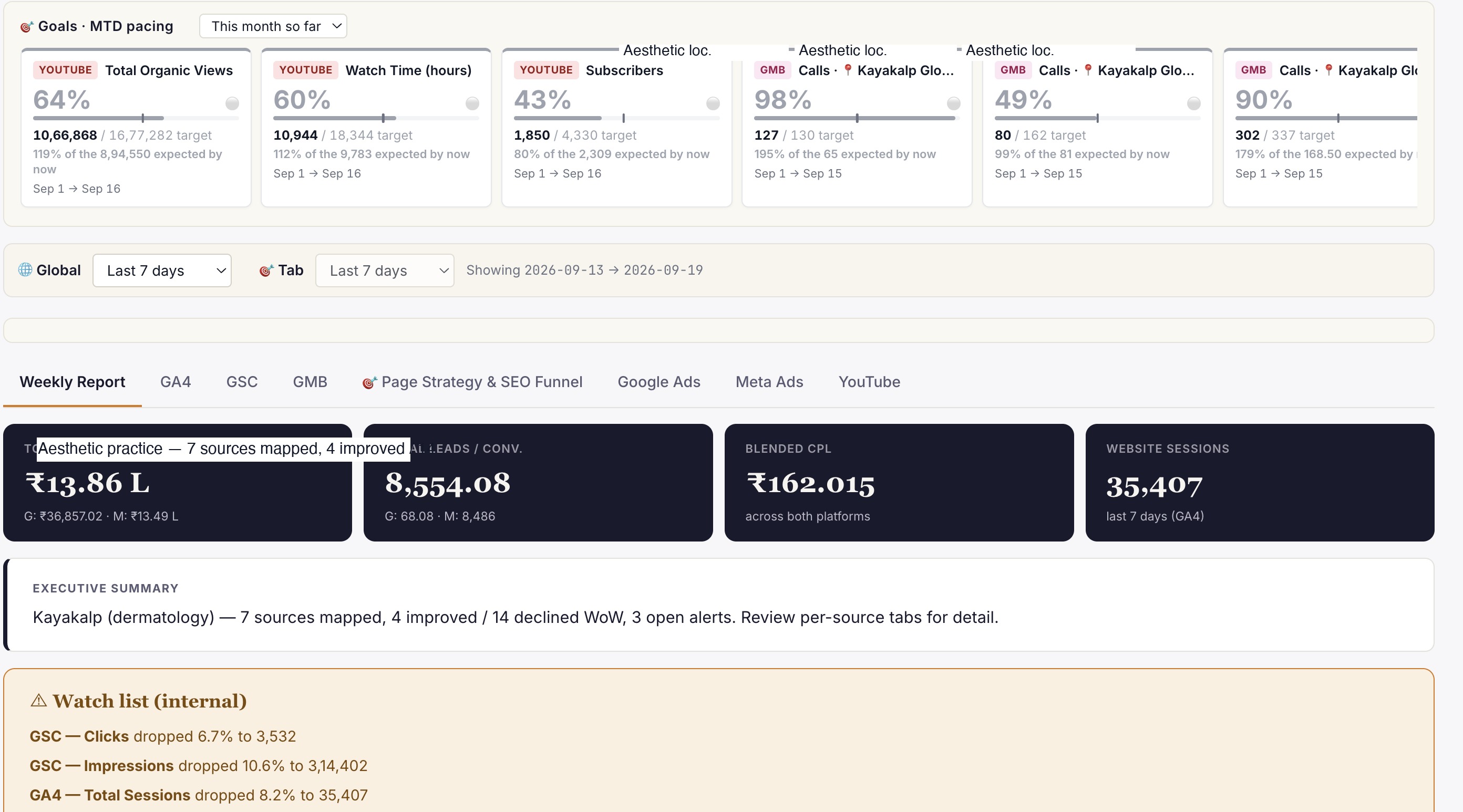
Live client dashboard. GSC, GA4, Google Ads, Meta Ads, IVR calls in one view. Login anytime, not monthly.
Phoenix
Clinic revenue intelligence over your PMS. Daily action queue: Prevent Loss, Maintain & Engage, Grow Revenue. Multi-centre rollout.
Or book a free 30-min audit to see all three in action on your account.
Healthcare brands
that already run on ICG.
A representative slice of the 150+ healthcare brands ICG has delivered for across India. Most engagements remain under NDA.


What ICG clients say · on video.
"Scale up of organic channels and business consulting. ICG has absolute domain authority in their field."
"Working with ICG transformed how we acquire IVF patients in Gurgaon. They understand the fertility journey from inquiry to consult..."
"What Ichelon accomplished — they got all my ideas and worked over 3-4 months to create an amazing, super-customised website."
The intelligence stack behind this playbook.
Every ICG engagement runs on the Search Intelligence Trifecta — Angryturtle for GMB, SIE for search and AI Overview, YODA for YouTube. Live product screens below.
Need help operationalising this?
Every ICG service is healthcare-only, NMC + DPDP-aware, and built around the patient-research patterns that drive Indian healthcare growth in 2026.
Every practice welcome — packages from ₹20,000/mo.
Goals-Driven engagements · Performance-Linked Payout Models available
More from
ICG.
Five trends shaping Indian healthcare marketing through 2027: AI-first patient research, Conversions API adoption, ABDM discovery, the AEO w...
Healthcare AIO is the discipline of getting your clinic or hospital cited inside Google AI Overviews, ChatGPT and Perplexity answers — not j...
Conversational-search advertising places brand messages inside AI chat answers — ChatGPT, Perplexity, Copilot — rather than beside a results...
Stop guessing.
Book a Diagnostic.
30 minutes. Free. With the AI-powered healthcare-only marketing agency 150+ brands already run on. No slides, no pitch, no hard close.


