


Healthcare ChatGPT Ads agency India — the first paid-media discipline built for conversational search
ChatGPT Ads reached India in mid-2026, and as of this writing no agency has claimed the healthcare vertical at scale. ICG runs a healthcare-only ChatGPT Ads practice: intent-stage bidding instead of keyword bidding, conversation-completion attribution instead of click attribution, and ad copy built clean against NMC Section 6, ASCI Chapter III, DPDP 2023, the ART Act, DCGI/UCPMP, and AYUSH from the first draft.
AI-first healthcare marketing agency · +91 81302 26224
What is ChatGPT Ads and why it matters for Indian healthcare in 2026
ChatGPT Ads — also called ChatGPT search ads or sponsored responses depending on which surface they appear in — are advertising units distributed through OpenAI's ad partner network and rendered natively inside a ChatGPT conversation. They arrived in India in mid-2026, following a staged rollout that began in the US and expanded market by market as OpenAI built out its advertiser tooling and its compliance review layer. Unlike a Google Ads unit, which sits above or beside organic results as a visually distinct block, a ChatGPT Ad is woven into the conversational response itself — either as part of the assistant's synthesised answer, tagged as sponsored, or as a follow-up citation the assistant surfaces once it has understood what the user is actually trying to accomplish.
This distinction matters more in healthcare than in almost any other category, because healthcare queries on ChatGPT are disproportionately research-heavy and multi-turn. A user does not type "IVF clinic Gurgaon" the way they would into Google. They open with something closer to "I'm 34, we've been trying for two years, what should our first step be" and the conversation unfolds from there — symptoms, options, costs, second opinions — often across eight or ten exchanges before a decision-relevant question appears. A brand that only thinks about ChatGPT Ads as "Google Ads but inside a chatbot" will build the wrong campaign, because the surface being bid on is a position inside an unfolding conversation, not a static results page.
For Indian healthcare specifically, three forces make 2026 the right entry point rather than a wait-and-see moment. First, patient behaviour has already moved — a meaningful share of pre-booking research now happens inside conversational AI tools rather than search engines, and that share is growing month over month, not plateauing. Second, the auction itself is young: fewer advertisers means lower costs and less competitive pressure on the intent buckets that will matter most in twelve months. Third, healthcare carries a compliance overlay that most categories do not — NMC, ASCI, DPDP, and specialty-specific rules like the ART Act for fertility — and getting that overlay right takes iteration. Brands that start now have a full compliance and creative learning cycle before the category gets crowded; brands that wait will be building compliant ad copy under competitive pressure, which is a worse position to build from.
It is worth being precise about what ChatGPT Ads are not. They are not a replacement for organic AI visibility — being cited by ChatGPT's own knowledge synthesis in an unpaid response is a separate discipline, closer to LLM optimisation than to paid media, and ICG treats it as a distinct service. ChatGPT Ads are a paid placement layered on top of that unpaid visibility question, purchased the way a Google Ads campaign is purchased: through an auction, against a budget, with measurable cost-per-outcome.
The mechanics of where the ad actually appears also matter for how a healthcare brand should think about creative. A sponsored response can surface as the primary answer to a user's question, clearly labelled, or as a secondary citation the assistant offers once it has already given its own synthesised answer and the user asks a natural follow-up like "who offers this near me." The second placement — the follow-up citation — is where ICG has seen the strongest performance for healthcare specifically, because by that point in the conversation the user has already accepted the informational premise (what IVF is, what the recovery involves) and is explicitly asking for a provider, which is a materially warmer moment than the first screen of a Google search.
India's healthcare consumer is also unusually well suited to this surface. A large share of first-time healthcare researchers in India — particularly in categories carrying social stigma, such as fertility, mental health, and dermatology — report being more comfortable asking a private AI assistant sensitive questions than searching openly or asking a friend for a referral. That comfort translates into longer, more detailed conversations than the same user would type into a search bar, which gives an advertiser far more qualifying signal to bid against than a three-word search query ever provided.
How the ChatGPT Ads auction actually works — intent-stage bidding, conversation-completion attribution
The single most important operational difference between ChatGPT Ads and every paid channel a healthcare marketer has run before is this: the auction does not price a keyword, it prices a stage in a conversation. In Google Ads, "IVF cost Gurgaon" is a fixed string with a fixed competitive set and a bid that moves with seasonality and competitor pressure, but stays anchored to that string. In ChatGPT Ads, the same underlying intent — a person trying to understand IVF cost in Gurgaon — can appear at multiple points in a conversation, and the price of appearing there changes sharply depending on how far along that conversation the user is.
Early in a conversation — a user asking "what is IVF" or "how does egg freezing work" — the intent signal is exploratory, the competitive set bidding on that moment is thin, and costs are correspondingly low. ICG's early campaign data across healthcare verticals shows these exploratory-stage placements costing a fraction of what the same brand would pay for a comparable Google Ads impression, because the platform is not yet confident the user will convert and prices the placement accordingly. As the conversation progresses — the user names a city, a budget, a timeline, or asks explicitly about booking a consultation — the platform's own intent model reclassifies the conversation into a higher-value bucket, and bids for appearing at that later stage can run six to twelve times higher than the exploratory-stage price within the same thread, because the platform now has strong evidence the next message could be a conversion.
This has a direct strategic implication: a naive campaign that bids flat across all stages of a healthcare conversation will either overpay chasing exploratory-stage impressions with no conversion likelihood, or underpay for late-stage impressions and lose them to a more sophisticated bidder. ICG builds every account around explicit intent buckets — typically three to twenty-plus per account depending on tier — each mapped to a stage of the buyer journey and bid independently, so that early-funnel awareness spend and late-funnel booking spend are never priced by the same rule.
Attribution follows the same logic and departs just as sharply from click-based measurement. A ChatGPT Ads conversion is credited on a conversation-completion event: the user reaches a defined outcome — submits a booking form, completes a lead-capture flow, or takes an equivalent action the advertiser has defined — inside or immediately following the conversation thread the ad appeared in. This is different from a click, which only confirms the user left the conversation and arrived somewhere; it says nothing about whether they did what the advertiser needed. Because ChatGPT users frequently continue a conversation after seeing a sponsored response rather than clicking through immediately, click-based attribution systematically undercounts ChatGPT Ads performance. ICG's accounts are instrumented to capture completion events natively, which is the only way to see the channel's real return.
Bid strategy has to account for one more mechanical wrinkle: within a single conversation, the same user may cross multiple intent buckets in sequence, and the platform's own intent classifier reassigns them in real time. A user who opened in the "what is IVF" exploratory bucket and, four turns later, asks about a specific clinic's availability has moved into a booking-adjacent bucket, and a well-built account needs its bid rules to follow that reclassification automatically rather than treating the entire thread as a single static audience. ICG configures intent-bucket bidding with this transition logic built in from account setup, rather than retrofitting it once a campaign has already burned budget on static, single-stage targeting.
A further consequence of conversation-completion attribution is that campaign performance data arrives with a longer, noisier tail than click-based channels. A completion event can register minutes or, in some cases, hours after the ad impression, as the user continues researching before acting. ICG's reporting cadence accounts for this lag explicitly — daily dashboards are treated as directional, and any bid or budget decision is made against a trailing seven-day completion window rather than same-day numbers, which prevents the account from over-reacting to incomplete data in the first days after a change.
Where ChatGPT Ads sits in a healthcare paid-media stack alongside Google Ads and Meta Ads
ChatGPT Ads is not a replacement channel — it is a third leg on a stool that, for most Indian healthcare brands, currently has two. Google Ads captures declared, keyword-typed intent: someone who already knows what they want and is searching for a provider. Meta Ads captures interrupted, scroll-based attention: someone who was not actively looking for healthcare but is receptive to a well-targeted prompt. ChatGPT Ads captures a third behaviour entirely — a user who is actively reasoning through a decision, asking follow-up questions, and revealing far more about their situation in the conversation itself than a Google search query or a Meta interest signal ever would.
This difference in behaviour translates into a difference in what each channel is good at measuring and good at converting. Google Ads excels at capturing bottom-of-funnel, already-decided intent — "book IVF consultation Gurgaon" — and the cost reflects that: it is the most expensive channel per click in most healthcare categories precisely because the intent is unambiguous. Meta Ads excels at volume and awareness at a lower cost per impression, but with a lower intent-to-conversion ratio, because most of the audience was not actively shopping. ChatGPT Ads sits in between on cost but ahead of both on the richness of intent signal available at the moment of the bid — the platform knows not just that someone is interested in IVF, but what specific concerns, timeline, and constraints they have articulated across the conversation.
In practice, ICG builds ChatGPT Ads as a complement rather than a substitute in the media mix, typically starting at 10-20% of a combined paid budget for a new engagement and scaling that allocation up as conversation-completion data proves out the channel's cost-per-outcome against the brand's existing Google and Meta benchmarks. This mirrors how ICG introduced Meta Ads into accounts that were previously Google-only: incremental testing against a held-out control, not a wholesale reallocation, because early-stage auction economics can look artificially favourable before competitive pressure normalises them.
There is also a structural interaction worth naming: strong performance in unpaid AI visibility — being cited organically by ChatGPT's own synthesis — tends to lower ChatGPT Ads costs for the same brand, because the platform's relevance scoring rewards advertisers whose landing experience and existing content already demonstrate authority on the topic being discussed. Brands running ICG's LLM optimisation work alongside ChatGPT Ads see this compounding effect directly; brands starting ChatGPT Ads with no prior AI-visibility groundwork pay a real premium in the first few months while that authority signal builds.
Budget sequencing across the three channels also differs by category. For high-ticket, high-consideration categories — IVF, bariatric surgery, cosmetic and aesthetic procedures — ICG typically sees ChatGPT Ads outperform Meta Ads on cost-per-booked-patient once an account has six to eight weeks of completion data, because the conversational research pattern maps unusually well onto how these decisions actually get made: over multiple sessions, with real back-and-forth reasoning, not an impulsive scroll-stop. For lower-consideration, higher-frequency categories — general dermatology, routine dental, diagnostics — Google Ads and Meta Ads continue to carry the larger share of the budget, with ChatGPT Ads used more narrowly to capture the subset of users doing deeper research before choosing a provider, such as second-opinion seekers or out-of-city patients evaluating options remotely.
Cross-channel measurement is where most hospital marketing teams underinvest, and it is the piece ICG treats as non-negotiable from day one of a ChatGPT Ads engagement. Without a shared attribution framework across Google, Meta, and ChatGPT Ads, budget decisions default to whichever channel's native dashboard looks best in isolation — and native dashboards from three different platforms, built on three different definitions of a "conversion," are not comparable without deliberate normalisation to a single, CRM-anchored metric: cost per booked, paying patient.
Pricing
Retainers from ₹20,000/month · Custom-scoped per engagement.
Compliance overlays that decide what a healthcare ChatGPT Ad can say
A ChatGPT Ad is still, legally, healthcare advertising, and every rule that applies to a hospital's hoarding or a clinic's Google Ads copy applies here with equal force — arguably more force, because the ad is embedded in a conversation the user trusts as neutral, which raises the bar for what counts as misleading. ICG's compliance review sits upstream of every piece of ad copy, not as a post-hoc check.
Prohibits advertising that claims superiority over other practitioners, guarantees outcomes, or uses before/after framing that implies a specific result. ChatGPT Ads copy is written to describe services and access — locations, specialties, appointment availability — never comparative or outcome claims. This is the single most common violation ICG catches in first drafts from in-house teams.
Governs substantiation for any health claim made in advertising, and applies to conversational ad copy exactly as it applies to a print ad. Every claim in a ChatGPT Ad — "advanced technology," "high success rate," "experienced team" — needs either substantiation on file or rewording into non-quantified, non-comparative language.
Governs how a lead's data is captured, stored, and used once a ChatGPT Ads conversation completes into a form submission. ICG's landing-page builds include DPDP-compliant consent language and data-retention practices as standard, not as an add-on, since conversation-completion attribution inherently involves passing conversation-derived data into the advertiser's CRM.
Applies specifically to fertility and IVF advertising, restricting claims around success rates and prohibiting advertising that could be read as inducing people toward specific treatment decisions. Fertility is one of the highest-intent, highest-value categories on ChatGPT Ads given how research-heavy fertility conversations are — and also the category where ICG applies the tightest compliance review.
Relevant wherever a healthcare ChatGPT Ad touches a branded pharmaceutical, device, or drug-adjacent claim rather than a service. ICG treats any pharma-adjacent healthcare account as requiring a separate compliance pass against the Uniform Code for Pharmaceutical Marketing Practices, distinct from the general NMC/ASCI review.
Apply to ayurveda, yoga, unani, siddha, and homoeopathy-adjacent healthcare brands running ChatGPT Ads, which carry their own advertising restrictions distinct from allopathic medicine rules. ICG reviews AYUSH accounts against the specific ministry guidance rather than defaulting to the NMC/ASCI framework built for allopathic providers.
The practical effect of this overlay is that healthcare ChatGPT Ads copy reads noticeably more restrained than ChatGPT Ads copy in categories like retail or travel — no superlatives, no implied guarantees, no comparative framing — and that restraint is precisely what keeps an account in good standing with both the platform's own policy team and India's regulatory bodies.
A subtlety specific to conversational ad copy is worth flagging separately from the static-copy rules above: because a ChatGPT Ad can appear as a follow-up to the assistant's own prior statement in the conversation, there is a real risk of the ad copy appearing to co-sign or amplify a claim the assistant made unprompted, even if the advertiser never wrote that claim. ICG reviews not just the ad copy in isolation but the plausible conversational contexts it could appear inside, specifically checking for scenarios where a compliant piece of ad copy could read as implicitly endorsing a non-compliant claim the model generated on its own. This is a genuinely new compliance surface that did not exist for static ad formats, and it is the reason ICG treats ChatGPT Ads compliance review as a distinct discipline from Google or Meta Ads review rather than applying the same checklist verbatim.
Every compliance-cleared ad unit is logged with its substantiation file, reviewer sign-off, and the date of review, so that if a platform policy query or a regulatory audit ever arrives, the brand has a documented trail rather than having to reconstruct the reasoning after the fact. This documentation discipline is standard across every ICG healthcare account regardless of channel, and it extends unchanged into ChatGPT Ads.
Landing-page discipline that converts ChatGPT-referred users
A user arriving from a ChatGPT Ads conversation has already had a multi-turn exchange, formed a specific question, and expects the destination to answer it immediately rather than make them re-explain themselves. A generic hospital homepage built for a Google search visitor — hero banner, navigation menu, a scroll before any specific answer appears — loses this visitor at a materially higher rate than a page built for the moment the visitor is actually in.
ICG builds ChatGPT-referred landing pages around the same machine-scannable structure that governs AI Overview and Perplexity citation: a direct, factual answer to the specific intent bucket the ad targeted, in the first screen, before any navigational chrome. If the ad targeted "IVF cost Gurgaon," the landing page opens with a specific cost range and what it includes, not a generic "welcome to our fertility centre" headline. This structure serves two audiences at once — the human visitor who wants their question answered immediately, and the next model (ChatGPT's own crawler, or a competing AI tool) that may cite this same page in a future unpaid conversation.
Structured markup reinforces this. Every ChatGPT-referred landing page ICG builds carries Speakable schema marking the passages most suited to voice or conversational read-back, and Person schema for the named doctor or specialist associated with the service, which strengthens the E-E-A-T signal that both traditional search and conversational AI systems weight when deciding what to surface or cite. This is not decorative markup — engagement and above accounts see measurably higher completion rates on pages carrying this schema versus pages without it, because the structured data reduces ambiguity for both the crawler and, indirectly, for how confidently ChatGPT itself frames a follow-up citation to the page.
The single next action on the page is deliberately narrow — one form, one WhatsApp link, one phone number — because a ChatGPT-referred visitor who has already invested several conversational turns in reaching a decision is unusually likely to convert if the path forward is obvious, and unusually likely to abandon if the page presents three competing calls to action and forces them to choose.
Page speed and mobile rendering carry outsized weight for this specific traffic source. A ChatGPT session is overwhelmingly a mobile, in-app-browser experience in India, and a landing page that loads slowly or renders awkwardly inside that in-app browser breaks the continuity the user has come to expect from the conversational flow they were just in — the transition from "assistant answering my question" to "clunky mobile page" is a jarring drop in experience quality that costs completions. ICG benchmarks every ChatGPT-referred landing page against a sub-two-second load target on a throttled mobile connection, and tests rendering specifically inside the in-app browser rather than relying on a standard desktop or Safari/Chrome mobile test alone.
Measurement — attributing ChatGPT Ads conversions across GA4 AI Assistant channel + backend CRM
GA4 introduced a dedicated "AI Assistant" default channel grouping to bucket traffic arriving from conversational AI tools — ChatGPT, Perplexity, Copilot, and similar — separately from organic search and direct traffic. This matters enormously for measuring ChatGPT Ads, because prior to this channel existing, ChatGPT-referred traffic was frequently misclassified as direct traffic (when the referral header was stripped) or generic referral traffic, which made the channel's true performance invisible inside standard reporting.
Across ICG's healthcare accounts, the AI Assistant channel converts at approximately 10.49% on defined key events — roughly double the rate ICG sees from organic search traffic, and around seventeen times the rate seen from direct traffic. This is not a fluke of small sample size; it reflects the underlying behavioural reality that a visitor arriving from a completed AI conversation has already done more qualifying than a visitor who typed a URL from memory or clicked an organic result cold. It is the core economic argument for why the channel deserves dedicated budget and a dedicated campaign structure rather than being folded into a generic "search" line item.
GA4 attribution alone is insufficient, however, because it stops at the form submission — it cannot confirm whether that lead became a paid, booked patient. ICG wires every ChatGPT Ads engagement into the client's backend CRM, most commonly AtomCRM for clients already on ICG's stack, so that a conversation-completion event in GA4 can be traced through to an actual booking, a kept appointment, and revenue. Without this closed loop, a brand can only optimise for lead volume, which is a weaker and sometimes misleading proxy — a channel can generate a high volume of low-quality leads that never convert to bookings, and only backend CRM data exposes that.
engagement and above receive a monthly reconciliation report that lines up GA4 conversation-completion events against CRM-confirmed bookings, cost per booked patient (not just cost per lead), and a comparison against the brand's Google Ads and Meta Ads cost-per-booking benchmarks — the number that ultimately decides how much budget shifts toward ChatGPT Ads in the following quarter.
Data hygiene at the point of CRM entry is where this closed-loop attribution most commonly breaks in practice. If front-desk or call-centre staff log a booking's source inconsistently — marking a ChatGPT-originated patient as "walk-in" or "referral" because the intake form did not capture the referring channel cleanly — the entire reconciliation report understates the channel's true return. ICG's setup work at every tier above Starter includes a UTM-and-source capture audit at the intake point, not just the ad platform, because attribution accuracy depends on the weakest link in the chain, and that link is frequently the front desk rather than the ad account.
Scale and engagements add a further layer: cohort-based lifetime value tracking, which follows a ChatGPT Ads-originated patient beyond the first booking to capture repeat visits, referrals they generate, and any secondary procedures — a more complete picture of channel value than first-booking cost-per-patient alone, and one that frequently shows ChatGPT Ads-originated patients skewing toward higher-value procedure categories, consistent with the channel's tendency to capture more deliberate, higher-consideration research behaviour.
First-mover economics — why the next 90-180 days matter
As of September 2026, no agency in India has claimed the healthcare vertical on ChatGPT Ads at scale, and the auction itself reflects that: healthcare-specific intent buckets are being bid by a small number of advertisers, which keeps costs low relative to where they will land once the category matures. This is not a permanent condition. New ad inventory types follow a predictable maturation curve — early advertisers get cheap, high-quality placements while the platform is still building out its advertiser base and its relevance scoring, and costs rise steadily as competitive density increases.
ICG's estimate, based on how comparable inventory types have matured on other platforms in the Indian market, is a 90 to 180 day window before healthcare-specific ChatGPT Ads auctions see meaningful competitive entry from other agencies and in-house teams. What a brand builds inside that window compounds in a way that is difficult to buy back afterward: conversation-history data that improves the platform's relevance scoring for that advertiser specifically, a compliance-cleared creative library that a later entrant has to build from scratch, and completion-rate benchmarks that inform bidding long after the initial cheap-inventory period ends.
The economics are straightforward. A brand entering now pays exploratory-stage prices to build the data and creative assets that a brand entering in month six will need to pay competitive-stage prices to acquire from a standing start. This is the same dynamic ICG's clients experienced with early Meta Ads adoption in Indian healthcare roughly a decade ago — the agencies and brands that moved early built cost and performance advantages that later entrants never fully closed.
There is a second, less obvious advantage to early entry specific to healthcare: compliance precedent. A brand that has already run a compliance-cleared campaign through a given intent bucket — say, IVF cost queries — has effectively established a working template the platform's policy team has already approved. Later entrants attempting similar copy face a policy review process informed by whatever precedent already exists, and an advertiser with a clean track record earns faster review turnaround over time. Brands entering after the category has already seen a handful of compliance disputes from other advertisers may face more conservative, slower policy review as the platform tightens its own healthcare-specific guidance in response.
What a 12-week ICG ChatGPT Ads engagement looks like — week by week
ICG structures every new ChatGPT Ads engagement, regardless of tier, as a 12-week build before settling into steady monthly management. This gives the account enough time to move through platform onboarding, compliance clearance, campaign launch, and enough live data to make a real scale decision, rather than judging the channel on the first two weeks of noisy performance.
Platform setup + compliance baseline
Advertiser account setup on OpenAI's ad platform, brand and specialty documentation submitted for review, NMC/ASCI/DPDP compliance baseline established for the specific verticals in scope, and existing GA4 property audited for AI Assistant channel readiness.
Intent-bucket mapping + landing-page build
Conversation intent buckets defined and mapped to funnel stage per vertical, ad copy drafted and passed through compliance review, and engagement-and-above landing pages built or adapted with machine-scannable structure, Speakable schema, and Person schema.
Campaign launch
Campaigns go live across defined intent buckets at conservative initial bids, conversation-completion tracking verified end-to-end into GA4 and CRM, and daily monitoring for early compliance or delivery issues.
Weekly optimisation
Bid adjustment per intent bucket based on early completion-rate data, underperforming buckets paused or rewritten, and creative testing begins across the highest-volume buckets.
Attribution hardening
CRM reconciliation report built out, cost-per-booked-patient calculated for the first time against six-plus weeks of data, and results benchmarked against the brand's existing Google Ads and Meta Ads cost-per-booking.
Scale decision
Formal review of which intent buckets and verticals justify increased media investment, tier-upgrade discussion if warranted, and transition into standing monthly management cadence.
Common failure patterns we've seen in the first six months of the channel
The channel is new enough that most of the failure patterns ICG has observed come from teams applying assumptions built on Google Ads or Meta Ads, which do not transfer cleanly. Four patterns show up repeatedly.
Flat bidding across conversation stages
Treating every impression the same regardless of where it falls in the conversation burns budget on exploratory-stage traffic that was never going to convert while underbidding the late-stage impressions that actually drive bookings.
Click-based attribution
Measuring the channel by click-through rate rather than conversation-completion events systematically undercounts performance and leads teams to prematurely conclude the channel "doesn't work" when it is actually the measurement that is broken.
Reused Google/Meta ad copy
Ad copy written for a search results page or a social feed reads awkwardly inside a conversational context and frequently trips compliance review because it was written without conversational-context nuance in mind.
No CRM closing the loop
Accounts without a backend CRM connection can only optimise for lead volume, which invites low-quality lead generation that looks good in a monthly lead-count report and terrible in actual booked-patient revenue.
A fifth, less common but more damaging pattern is compliance-driven account suspension — ad copy that violates NMC or ASCI guidance getting flagged by the platform's own review process, which can freeze an entire account, not just the offending campaign, while the issue is resolved. This is the single most avoidable failure mode, and the reason ICG runs compliance review as a mandatory gate before any copy goes live, at every tier.
A sixth pattern shows up specifically among brands migrating a large, previously successful Google Ads keyword list directly into ChatGPT Ads intent buckets, on the assumption that a keyword that converts well on Google will convert equally well as a conversational intent target. It usually does not, because a keyword captures what a user typed, not what they meant, and a conversation captures far more of the actual reasoning behind the query — which means a keyword-derived intent bucket is frequently mis-scoped, either too broad (catching exploratory conversations that never had booking intent) or too narrow (missing legitimate booking-stage conversations that never used the exact keyword phrase). ICG builds intent buckets from conversational transcripts and journey mapping specific to the channel, not from an existing Google Ads keyword export, even when a client's instinct is to reuse what already works elsewhere.
A seventh, subtler pattern is under-resourcing the compliance reviewer role once volume scales. A Starter account with three intent buckets and one specialty is straightforward to keep compliant with a lightweight review process. A Scale account running 20-plus buckets across four verticals, with weekly creative refreshes, generates a compliance review workload that a part-time or generalist reviewer cannot sustain without errors creeping in — which is precisely why ICG staffs a dedicated compliance reviewer into every Scale and Enterprise pod rather than treating compliance as a shared, ad-hoc responsibility across the account team.
Adjacent products — Angryturtle, YODA, Prism Pulse, AtomCRM
ChatGPT Ads performs better and is measured more completely when it sits inside a broader ICG stack rather than running in isolation, because several of the signals that determine ad cost and conversion quality are influenced by products outside the ad account itself.
Angryturtle — Google Business Profile
A strong, actively managed GBP presence improves local trust signals that carry into how confidently a ChatGPT-referred visitor completes a booking, and Angryturtle's DIY tier starts at Rs 999/- for brands not yet ready for full ChatGPT Ads investment.
YODA — YouTube
YouTube is an increasingly important citation source for AI answers, including within ChatGPT conversations. Brands running YODA alongside ChatGPT Ads build the kind of video-backed authority that strengthens both unpaid AI citation and paid ad relevance scoring.
Prism Pulse — Instagram analytics
Understanding which content and messaging themes perform on Instagram feeds directly into sharper ChatGPT Ads copy testing, since both channels are ultimately competing for the same patient attention and responding to similar messaging signals.
AtomCRM — attribution
The backend system that closes the loop between a GA4 conversation-completion event and an actual booked, paying patient. Without it, ChatGPT Ads can only be measured on lead volume, which is the weakest and most misleading available proxy for channel performance.
Brands running the full stack — Angryturtle, YODA, Prism Pulse, ChatGPT Ads, and AtomCRM together — see a compounding effect that is difficult to isolate to any single product: local visibility feeds AI-answer authority, video and Instagram signals feed both organic AI citation and paid ad relevance, and CRM data closes every one of those loops into a single, comparable cost-per-booked-patient number across channels. ICG structures multi-product engagements so each product's reporting rolls up into one dashboard rather than five disconnected ones, which is the difference between knowing a channel performed and knowing why it performed, and being able to reallocate budget with confidence rather than guesswork.
Who should NOT run ChatGPT Ads yet
The channel is not a fit for every healthcare brand today, and ICG says so directly rather than selling into a mismatch. Three categories of brand should wait.
Brands without a functioning backend CRM to close the attribution loop should build that foundation first — running ChatGPT Ads without it means optimising blind for lead volume rather than booked-patient outcomes, which tends to look like success on a monthly report and fail on the P&L. Single-doctor practices with fewer than roughly ten bookable slots a month rarely have the appointment capacity to absorb a dedicated paid channel profitably once management fees are accounted for; a simpler, lower-cost channel usually serves them better until the practice scales. And categories where compliance risk remains genuinely unresolved — unregulated stem-cell therapy, unproven regenerative treatments, and similar grey-zone offerings — should not advertise on any paid channel until the underlying regulatory position is clear, ChatGPT Ads included, because compliance exposure compounds faster on a new platform still calibrating its own review standards.
A fourth, more practical constraint is monthly media budget. ICG generally advises against a healthcare brand's first ChatGPT Ads test running below roughly Rs 30,000-40,000 in monthly managed media, because the auction needs a minimum volume of impressions and completions before its own intent classifier and the account's bid rules have enough data to optimise meaningfully — a test budget much smaller than that tends to produce statistically thin results that are hard to act on either way, wasting the calendar time of the test without answering the underlying question of whether the channel works for that brand.
None of these constraints are permanent. A brand without a CRM today can build one in parallel with a engagement ChatGPT Ads test and graduate into full attribution once both are in place; a single-doctor practice today may be a two- or three-doctor group in a year. ICG's benchmarking call is built to have this conversation honestly rather than defaulting every enquiry into a paid engagement — where the fit genuinely is not there yet, the right recommendation is to wait, and ICG says so.
Powered by our Trifecta · Angryturtle + SIE + YODA
Every ICG ChatGPT Ads engagement runs on top of the Trifecta — Angryturtle for the local-trust signal that shortens a ChatGPT-referred visitor's path to booking, SIE (Search Intelligence Engine) for AI Share of Voice and rank tracking that shows exactly how often a brand's own content gets cited inside conversational answers, and YODA for the video-and-AIO layer that strengthens both unpaid citation and paid relevance scoring. The screens below are live product views, not mockups.
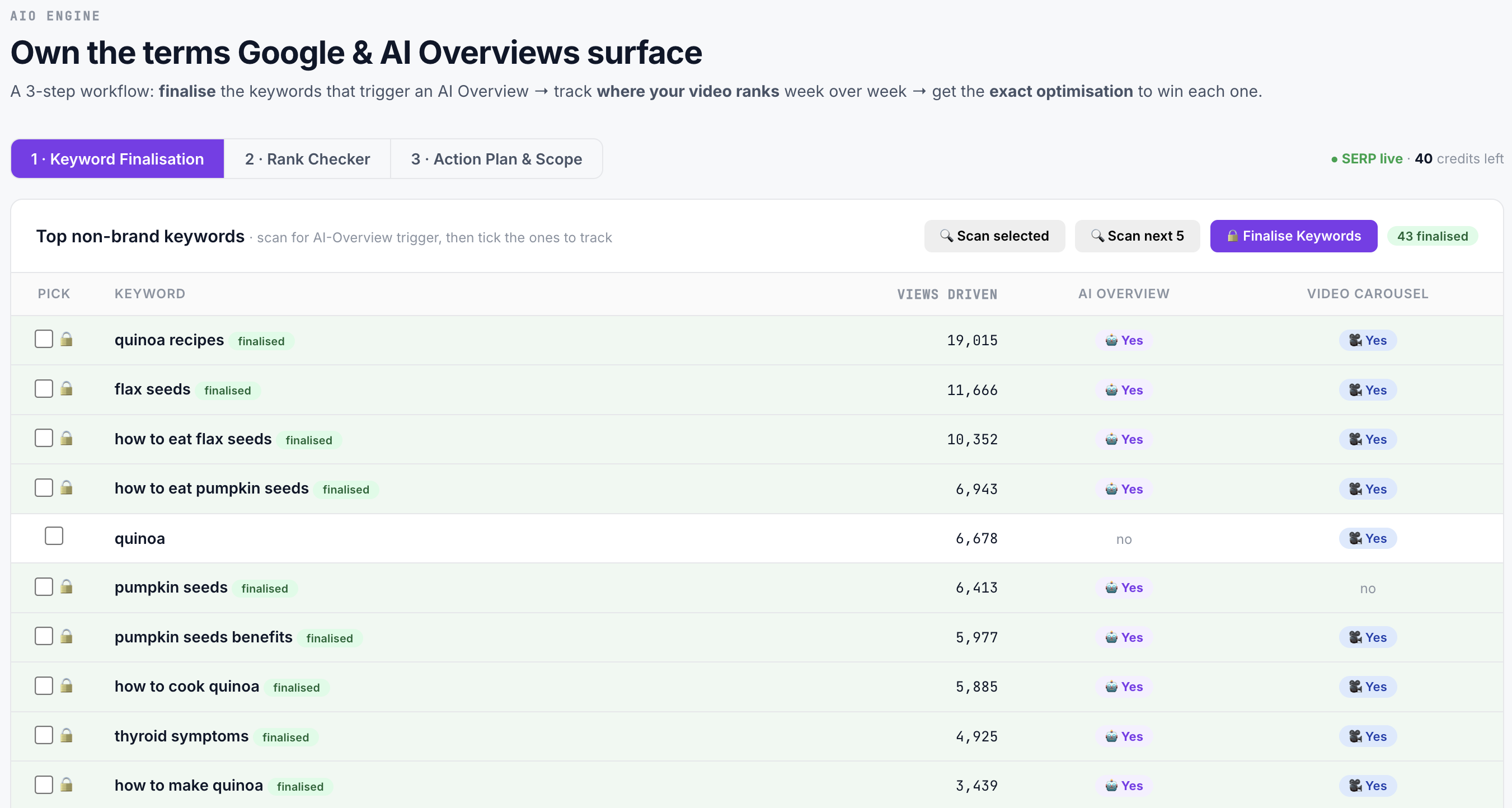
YODA → YODA's AIO Lab maps which healthcare topics are winning AI Overview and ChatGPT citations before ICG builds a paid campaign around the same intent buckets.
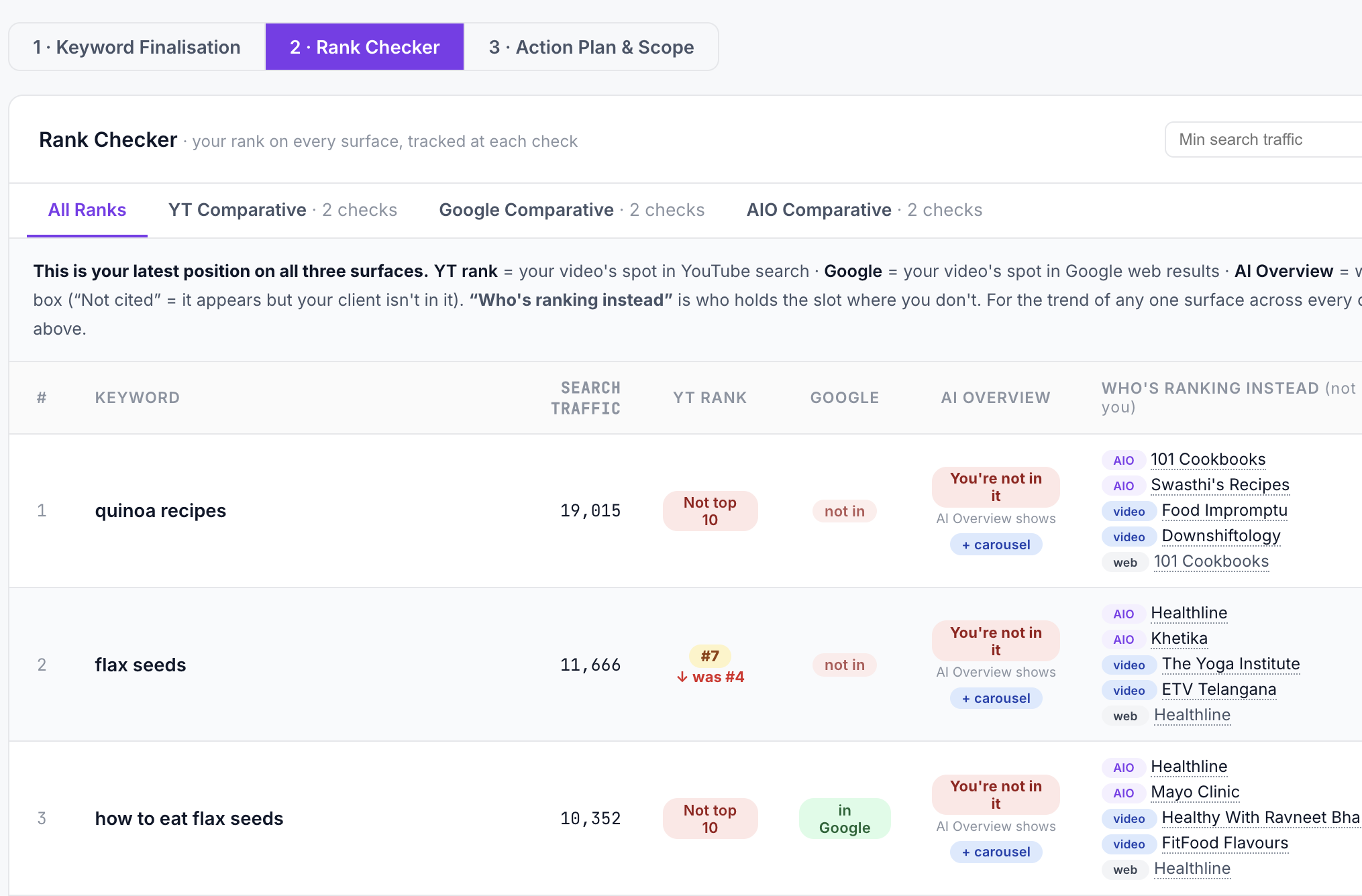
YODA → Tracking a healthcare brand's AI Overview and conversational-citation rank over time, alongside the ChatGPT Ads intent buckets it feeds into.
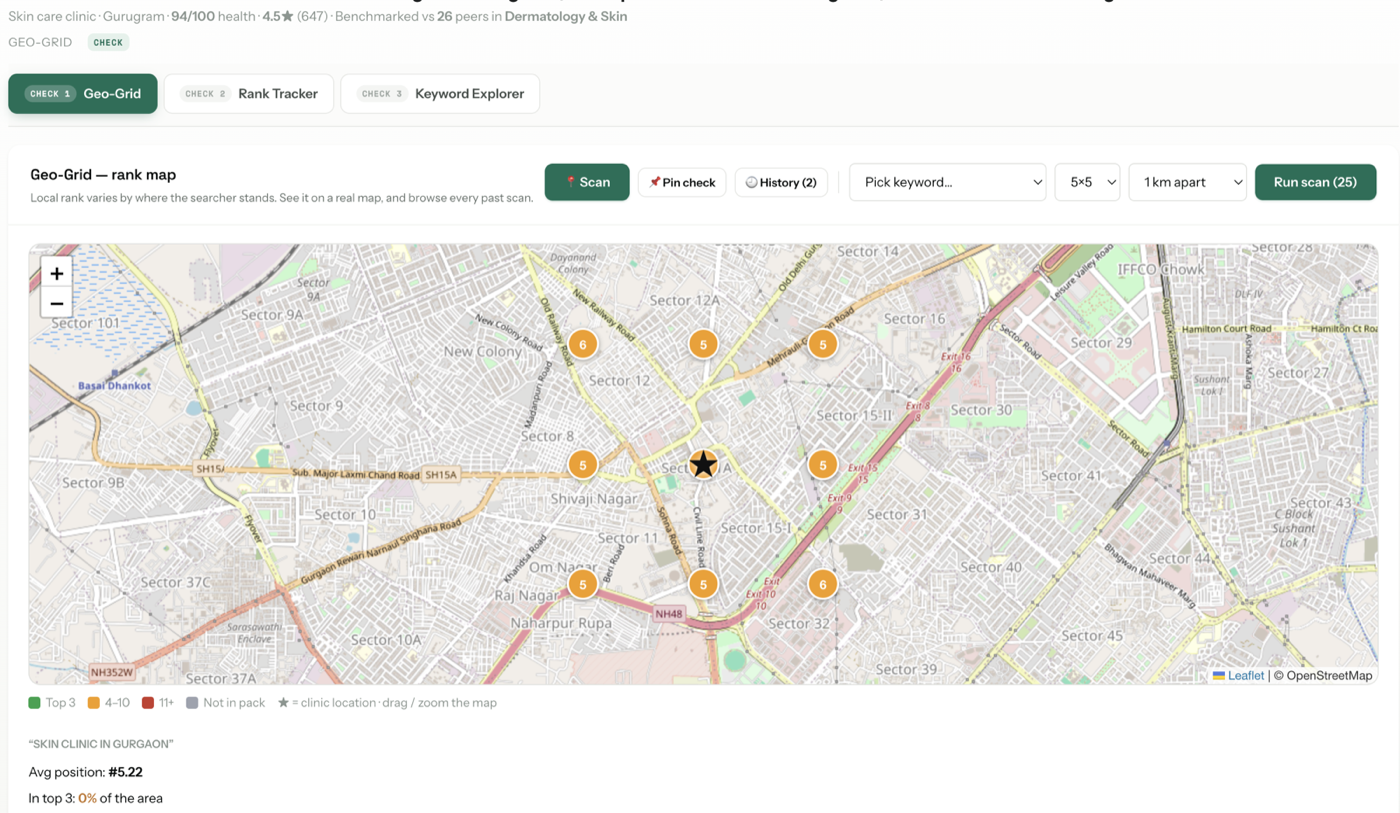
Angryturtle → Local GBP visibility across every neighbourhood grid in a city — the trust signal that shortens a ChatGPT-referred visitor's path from conversation to booked appointment.

Meta Catalyst IQ → Cross-channel creative and audience intelligence that feeds the same messaging themes ICG tests in ChatGPT Ads copy, kept compliant across every surface.
Trifecta reporting rolls up into one dashboard alongside ChatGPT Ads and AtomCRM data, so a brand sees cost-per-booked-patient across every channel rather than five disconnected native reports.

Claim the first-mover window on healthcare ChatGPT Ads
The auction is cheap today. It will not stay that way. Book a 30-minute benchmarking call and ICG will map your first intent-bucket structure and compliance baseline before your competitors even open an account.
ChatGPT Ads and LLM marketing in the nine-stage patient journey
- 0Foundations
- 1Demand gen
- 2Capture
- 3Lead quality
- 4Lead mgmt
- 5Scheduling
- 6Show-up
- 7Conversion
- 8Retention
It works in demand generation, inside the AI assistants patients now ask before they search. SIE tracks the sessions and enquiries those AI engines send. Our own software runs the work, and every stage is reported against a monthly target on Ichelon Agency OS.
See all nine stages and the tool behind each one →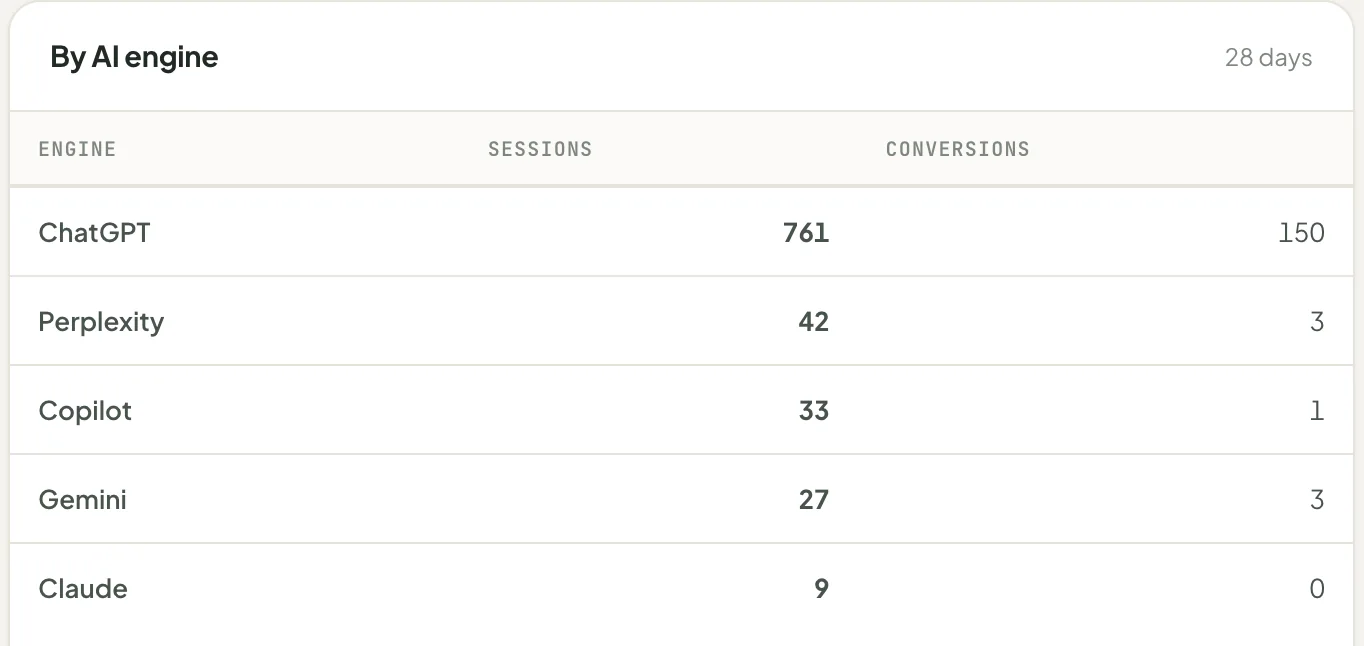
Frequently asked questions
What are ChatGPT Ads and when did they launch in India?
ChatGPT Ads are sponsored responses that appear natively inside ChatGPT conversations, distributed through OpenAI's ad partner network. They rolled out to India in mid-2026. Unlike a search-results banner, the ad surfaces as part of the assistant's answer or as a follow-up citation within the conversation itself.
How is ChatGPT Ads bidding different from Google Ads keyword bidding?
ChatGPT Ads bids peg to the stage of the conversation, not a static keyword. An early exploratory question ("what is IVF") carries a cheap bid; a late-stage, high-intent turn ("book IVF consultation Gurgaon this week") can cost 6-12x more within the same conversation thread, because the platform is pricing proximity to conversion, not a fixed search term.
How is a ChatGPT Ads conversion attributed?
Attribution runs on conversation-completion events rather than clicks. A lead is credited when a user completes a defined intent journey inside or immediately after the conversation — for example, reaching a booking page and submitting a form — not merely when they click through, which materially changes how cost-per-lead should be modelled versus click-based channels.
Can healthcare brands legally run ChatGPT Ads in India?
Yes, provided the ad copy and landing experience respect the same overlays that govern any healthcare marketing in India — NMC Section 6 (no result claims, no comparative superiority), ASCI Chapter III (no misleading health claims), DPDP 2023 (consent and data handling), the ART Act 2021 for fertility advertising, DCGI/UCPMP 2024 for anything pharma-adjacent, and AYUSH rules where relevant. The ad unit is new; the compliance obligations are not.
How much does a healthcare ChatGPT Ads engagement cost with ICG?
Retainers from ₹20,000/month · custom-scoped per engagement. All figures are inclusive of 18% GST and exclude the media spend itself unless stated.
What is the GA4 "AI Assistant" channel and why does it matter?
GA4 now buckets traffic arriving from conversational AI tools — ChatGPT, Perplexity, Copilot and similar — under an "AI Assistant" default channel grouping, separate from organic search and direct. Across ICG's healthcare accounts this channel converts at roughly 10.49% on key events, about twice the rate of organic search and around 17 times the rate of direct traffic, which is the underlying economic reason the channel deserves a dedicated paid strategy rather than being folded into generic "search" budgets.
Do ChatGPT Ads replace Google Ads and Meta Ads for a healthcare brand?
No. ChatGPT Ads sit alongside Google Ads and Meta Ads as a third paid channel with a distinct behavioural profile — users in a conversational, research-heavy mindset rather than a keyword-typed or scroll-interrupted one. Brands that reallocate their entire search budget into ChatGPT Ads on day one are usually making a mistake; the sound approach is incremental testing against a held-out control.
What makes a landing page "ChatGPT-ready"?
A ChatGPT-referred visitor has already had a conversation and arrives with a formed question. The landing page needs to answer that question in the first screen with short, factual, citable statements — the same machine-scannable structure that helps AI Overviews and Perplexity cite a page — plus Speakable and Person schema so the page itself is legible to the next model that crawls it, and a single, low-friction next action.
What specialities should NOT run ChatGPT Ads yet?
Brands without a functioning CRM to close the attribution loop, single-doctor practices with fewer than roughly 10 monthly bookable slots, and categories where compliance risk is unresolved (unregulated stem-cell or unproven regenerative therapies, for instance) should wait. The channel rewards volume and clean measurement; it punishes brands that cannot absorb either.
How long is an ICG ChatGPT Ads engagement and what happens in the first 12 weeks?
ICG structures the first engagement as a 12-week build: platform and compliance setup, intent-bucket mapping and landing-page build in weeks 1-4, live campaigns with weekly optimisation in weeks 5-8, and attribution hardening plus scale decisions in weeks 9-12. Ongoing management continues monthly against the same tier structure.
What adjacent products complement a ChatGPT Ads engagement?
ICG pairs ChatGPT Ads with Angryturtle for Google Business Profile visibility, YODA for YouTube (a growing citation source for AI answers), Prism Pulse for Instagram analytics, and AtomCRM for closing the attribution loop between a conversation-completion event and an actual booked, paid patient.
