


Google AI Overviews Medical Content Checklist for Indian Healthcare Marketers (2026)
Google AI Overviews now appear on 4 out of 10 medical queries in India. Most hospital and clinic websites get skipped entirely as citation sources. Here is the 12-point pre-publish checklist ICG runs across 300+ live healthcare clients before any medical content goes live in 2026.
No pitch. Written root-cause diagnosis. AI-powered, healthcare only.
Direct answer
Google AI Overviews now appear on 4 out of 10 medical queries in India. Most hospital and clinic websites get skipped entirely as citation sources. Here is the 12-point pre-publish checklist ICG runs across 300+ live healthcare clients before any medical content goes live in 2026...
TL;DR

TL;DR
- Google's AI Overviews now trigger on roughly 4 out of every 10 medical and clinic-related queries in India (August 2026 ICG tracking data). Sites without the right structural signals get skipped as citation sources entirely.
- To earn a citation, medical content needs question-formatted headings, a direct answer in the first 40 words of each section, verifiable author E-E-A-T tied to NMC-registered doctors, and machine-readable Person, FAQPage, and Speakable schema.
- The 12-point AI Overviews medical content checklist below is the exact pre-publish gate ICG runs on every page across 300+ live healthcare clients.
- Ranking in an AIO is a 60-90 day play; PAA carousels take 90-180 days; top-5 traditional organic ranks still take 6-9 months.
Table of contents
- Why AI Overviews matter for Indian healthcare marketing right now
- What are Google AI Overviews, and why do medical queries trigger them?
- Which Indian healthcare queries are showing AI Overviews in 2026?
- What is the 12-point AI Overviews medical content checklist?
- How do you actually write medical content that Google's AI cites?
- What role does E-E-A-T play for medical AIO citations?
- How does ICG's approach to AI Overviews differ?
- What does an AIO content investment look like at ICG?
- Frequently asked questions
Why AI Overviews matter for Indian healthcare marketing right now
If you run marketing for a hospital chain, an IVF clinic, a dental group, or a pharma brand in India, you have probably noticed the ground shifting under your feet. Search results do not look like they did in 2023. A patient types "best knee replacement surgeon in Pune" and instead of a clean ten-blue-links page, they get a paragraph written by Google's AI. Sometimes your site is the source. Usually, it is not.
That paragraph is called an AI Overview, and as of August 2026, our internal tracking across 300+ ICG healthcare clients shows AIOs appearing on roughly 40% of medical and clinic-related queries in India. On mobile, where about 78% of Indian healthcare search now happens, the AIO block occupies the entire first screen. If you are not cited, you might as well be on page three.
Here is the harder truth. Getting cited in an AIO is not the same as ranking. A page that sits at position 6 organically can end up as the primary cited source, while a position-2 page gets ignored. Google's AI is looking for something specific in medical content, and most Indian hospital websites still do not give it what it wants. This checklist fixes that.
What are Google AI Overviews, and why do medical queries trigger them?
AI Overviews are AI-generated summary answers Google shows at the top of the search results page, built by pulling snippets from multiple web sources. For medical and healthcare queries in India they trigger far more often than for general searches, because Google's system classifies most health topics as informational intent with high stakes. The algorithm assumes the user wants a synthesised answer, not a list of clinic websites to sift through.
The AI looks at your page and asks three things. Does this content directly answer the question I am about to summarise. Does it come from a credible author or organisation. Is it structured in a way I can extract cleanly. Miss any one of those and your page becomes background noise.
There is also a specificity filter at play. For a query like "what is DPDP Act compliance for hospitals," Google's AI heavily favours pages that explain the Digital Personal Data Protection Act in an actual Indian regulatory context, not generic global privacy content dressed up with an "India" tag in the H1. It reads intent. And Indian healthcare intent is layered. A doctor searching for CRM options is also filtering for NMC compliance, ABDM readiness, and DPDP-safe data handling in a way a US buyer is not. That layering is your opportunity. Content that gets these Indian nuances right, not just mentioned but structurally embedded, is the content Google's AI grabs first.
Which Indian healthcare queries are showing AI Overviews in 2026?
Almost all of them. Based on ICG's cross-client tracking spanning multi-city hospital chains, single-specialty clinics, and pharma brands across Delhi NCR, Mumbai, Bengaluru, Hyderabad, Chennai, Pune, Ahmedabad, and Jaipur, AI Overviews are triggering on more categories than most marketers realise.
Here is what we are seeing across sample sets from March through August 2026:
- Symptom queries (e.g., "chest pain causes when to see doctor"): AIO appears about 92% of the time.
- Treatment cost queries ("IVF cost in Delhi 2026"): around 78% of results now carry an AIO block.
- Doctor-finder queries ("best oncologist Bengaluru"): about 35% and growing sharply quarter-on-quarter.
- Insurance and policy queries ("Ayushman Bharat empanelment process"): roughly 65%.
- Procedure explanation queries ("what is robotic knee replacement"): around 85%.
- B2B healthcare queries ("hospital RCM software India"): about 55%, up meaningfully since Q1 2026.
The pattern is clear. If a query has a factual answer that can be summarised in 60-80 words with a clean citation trail, Google is showing an AI Overview. Medical content, by its nature, fits that mould more than almost any other vertical.
What is not showing AIO reliably? Transactional queries with obvious commercial intent, such as "book cardiologist appointment Gurgaon" or "download prescription app," still lean toward the traditional map pack and organic listings. That means your Google Business Profile and appointment funnel matter as much as ever. It is the discovery and research phases that AI Overviews have taken over, and those are the phases where trust is built or lost long before a patient reaches your contact page.
What is the 12-point AI Overviews medical content checklist?
This is the pre-publish checklist ICG runs on every piece of medical or healthcare content, whether service pages, clinic city pages, blog posts, or doctor bios, before it goes live. Miss more than three of these and your AIO citation odds drop off a cliff.
| # | Checklist item | Why it matters for AIO |
|---|---|---|
| 1 | Primary question in H1 or first H2, phrased as a real user query | AIO extracts from Q-formatted headings first |
| 2 | Direct answer inside the first 40 words of each section | The AI reads the top of each block; buried answers get skipped |
| 3 | Named author with real credentials and NMC or state council registration for doctor bios | Anonymous medical content fails the credibility filter |
| 4 | Person schema and FAQPage schema validated in Rich Results Test | Machine-readable trust signals |
| 5 | India-specific regulatory context (NMC, DPDP Act, ABDM) where relevant | Signals genuine India intent, not localised US content |
| 6 | Last-reviewed date visible in the byline area | Freshness is heavily weighted for medical topics |
| 7 | Internal links to related clinical topics on your own site | Depth signal — Google prefers hub-and-spoke over orphan pages |
| 8 | Outbound links to authoritative Indian sources (NMC, MoHFW, ICMR) | The AI cites its own sources; so should you |
| 9 | Original images or diagrams with descriptive alt text, not stock photos | Multimodal AI is now weighting original visuals |
| 10 | FAQ section of 5-8 real user questions at the end of the article | Directly feeds PAA carousels and AIO follow-up questions |
| 11 | Word count 1,500-3,000 for pillar topics; 800-1,500 for supporting posts | Thin content gets summarised out; bloated content gets ignored |
| 12 | Speakable schema on key answer paragraphs | Optimises for voice-triggered AIO reads on mobile |
Print this table. Tape it to your content team's wall. If you do nothing else after reading this piece, run your last five published medical pages through these twelve lines and count how many you are already hitting. Most Indian hospital sites we audit clear only three or four.
How do you actually write medical content that Google's AI cites?
Write for one specific patient question, answer it in the first 40 words, then earn the reader's time with depth. That is the whole game. But there is craft underneath.
Start with the question your reader would actually type into Google. Not what your marketing team calls it. What a scared parent at 11 PM types with one hand while holding a feverish toddler. "Why is my baby's fever not going down after paracetamol" beats "Understanding pyrexia management in paediatric patients" every single time. Google's AI reads intent, and intent lives in the vernacular of the searcher, not the terminology of the specialist.
Then write the direct answer immediately. No preamble. No "In today's world of..." No "Fever in children can be a concerning experience for parents." Skip all of it. Get to the answer. Save the context, the nuance, and the "when to see a doctor" section for after you have earned the click.
Voice matters too. Medical content that reads like a human doctor talking to a real person outperforms medical content that reads like a translated research paper. Short sentences. Occasional contractions. A rhythm that varies. Content that swings between eight-word statements and thirty-word explanations feels alive to human readers and, increasingly, to the language models grading it.
One more thing. Every doctor-authored page needs a small biographical footer with the doctor's real name, MBBS/MD/MS qualifications, years of experience, current clinic or hospital affiliation, and NMC or state medical council registration number. This is not legal advice. It is what Google's AI is looking for as a trust anchor before it decides whether to cite you.
What role does E-E-A-T play for medical AIO citations?
For medical queries, E-E-A-T (Experience, Expertise, Authoritativeness, Trustworthiness) is not a nice-to-have. It is the primary filter Google's AI uses before deciding which sources to cite. Sites without clear author expertise get filtered out before the ranking algorithm has even run on them.
Here is what E-E-A-T looks like when it is actually working for you in Indian medical content:
- Experience: Named doctors describing their own case volumes ("I have performed over 800 laparoscopic cholecystectomies at our Pune facility since 2016"). Not "the surgeon has performed many procedures."
- Expertise: Real credentials visible on the page and in schema. MBBS. MD. MS. DM. Board certifications. NMC registration number.
- Authoritativeness: Backlinks from Indian medical publications, hospital association sites, and government health portals. One link from a genuine Indian medical body beats fifty links from generic blog networks.
- Trustworthiness: A visible "medically reviewed by" line with a real name and date. A privacy policy that references DPDP Act compliance. An about page that names the leadership team with their qualifications.
Most Indian hospital and clinic websites we audit fail on Experience specifically. They have credentials (Expertise). They rank on brand terms (Authoritativeness). They are technically trustworthy on paper (Trustworthiness). But nowhere does an actual doctor describe what they have actually done. That gap is where AI Overviews decide you are a database, not a source. Close that gap first. The rest gets easier.
How does ICG's approach to AI Overviews differ?
At ICG we treat AI Overviews as a distinct SEO surface that needs its own content architecture, not a bolt-on to traditional SEO. Every healthcare client we onboard goes through the 12-point checklist above before we touch a single ranking tactic.
What that looks like in practice: a doctor-authored content library seeded with real case volumes and NMC registration numbers, an internal linking map built around the 20-30 highest-intent AIO queries in your specialty, FAQ pages structured for both PAA and AIO extraction, and monthly re-review dates baked into every clinical page's byline.
We pair this with our own stack of India-built tools. Angryturtle handles Google Business Profile operations across every clinic location. YODA runs the AI-native YouTube layer that increasingly shows up inside AIO video carousels. Meta Catalyst IQ powers the paid Meta stack that fills the gap while organic AIO citations build. Prism Spy tracks what competitor Meta ads are doing in real time. Prism Pulse handles Instagram analytics for doctor-led personal brands. And AtomCRM plus HealthPro 360 quietly take care of what happens after the lead arrives, which matters because AIO clicks are lower-volume but higher-intent, and losing them at the intake stage is expensive.
What does an AIO content investment look like at ICG?



ICG's SEO retainers work on a 70-30 model. 70% of the monthly fee is fixed, and 30% is tied to a 12-month organic and AIO growth target on a sliding-scale slab structure. You pay for the work either way, but you only pay the full price when the work delivers.
Three tiers, all healthcare-only:
- Foundation — Rs 49,999/mo: Single-location clinics and small specialty groups. Covers the 12-point checklist rollout across your top 30 URLs, monthly AIO citation tracking, and quarterly re-writes on the pages that are moving.
- Growth — Rs 74,999/mo: Multi-doctor clinics, small hospital chains, and specialty groups across 3-10 Indian cities. Adds doctor-authored content sprints, city-level GBP work via Angryturtle, and a full FAQ programme buildout.
- Scale — Rs 99,999/mo: Hospital chains, IVF groups, and pharma brands with pan-India footprints. Adds YouTube AIO tracking via YODA, competitive Meta ad intelligence via Prism Spy, and cross-city AIO citation programmes.
The same 70-30 logic extends to Google Ads and Meta retainers (from Rs 5L+ monthly ad spend) and to standalone YouTube SEO and AIO retainers (from Rs 50,000/mo).
Frequently asked questions
How long does it take to rank inside a Google AI Overview for a medical query in India?
Realistically, 60-90 days for a well-structured page targeting a moderate-competition query. If you are starting from a site with weak E-E-A-T signals or thin author bios, expect 90-180 days before citations start appearing consistently. Traditional top-5 organic ranks still take 6-9 months on top of that.
Do I need to add NMC registration numbers to every doctor's page on my website?
Yes, if you want that content to be citable in AI Overviews and hold up under Google's medical E-E-A-T review. NMC or state medical council registration numbers act as verifiable trust anchors. They also help with DPDP Act obligations around author transparency and content accountability.
Are AI Overviews reducing overall search traffic to Indian healthcare websites?
For informational queries, yes. Click-through rates on pages that are not cited in the AIO have dropped roughly 30-45% year-on-year across our client base. But cited pages are seeing higher-quality traffic with better conversion rates. It is a smaller-but-better traffic profile.
Can pharma brands rank in AI Overviews given DPCO and regulatory restrictions?
Pharma brands can absolutely appear in AIO for disease awareness, therapy area education, and doctor-directed clinical content, as long as you stay within Indian Pharmacy Act and DPCO advertising boundaries. Direct product promotion to patients is a separate compliance conversation that needs legal input.
Does adding an AI-generated FAQ section help or hurt AIO citation odds?
Hurt, usually. Google's systems are increasingly good at detecting AI-generated FAQ blocks and deprioritising them. Human-written FAQs sourced from real customer support tickets, sales-call recordings, or Search Console queries perform significantly better in both AIO and PAA surfaces.
Is video content on YouTube now part of the AI Overviews surface for medical queries?
Yes, for many procedure and treatment queries. AIO increasingly embeds video carousels sourced from YouTube. ICG's YODA product is built specifically to optimise healthcare video content for this surface, with schema, transcripts, and chapter markers tuned to how Google's AI reads video.
What is the single biggest mistake Indian hospital marketers make with AIO content?
Publishing symptom, treatment, and cost pages without any named doctor author or reviewer. It is the fastest way to guarantee your content becomes invisible to Google's AI, no matter how well-written the page reads to a human.
How often should medical content be re-reviewed to stay AIO-eligible?
Every 6 months at minimum for clinical topics, and every 3 months for cost, insurance, or regulatory topics where numbers and rules shift. Update the "last reviewed" date each time, with the reviewing doctor's name. Google reads that byline as an active freshness signal.
Book a free 30-minute Brand & Growth Diagnostic.
It's a working session, not a sales pitch — you leave with a written root-cause analysis you can act on, whether or not you engage ICG.
Questions readers ask
about this topic.
The three platforms
behind every ICG engagement.
Beacon
CAPI middleware that fixes Event Match Quality, translates CRM statuses to Meta-standard events, dedups across channels.
Agency OS
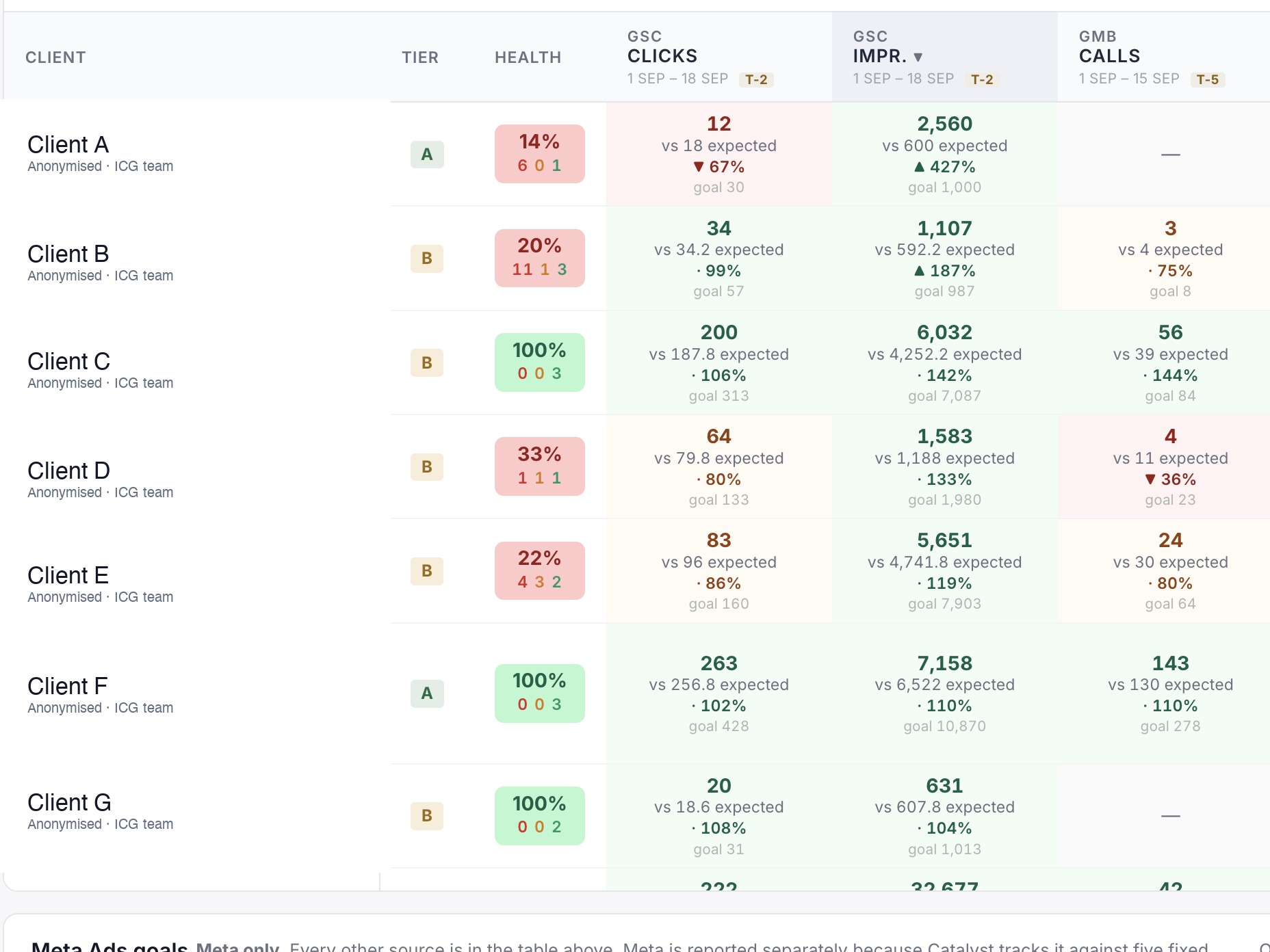
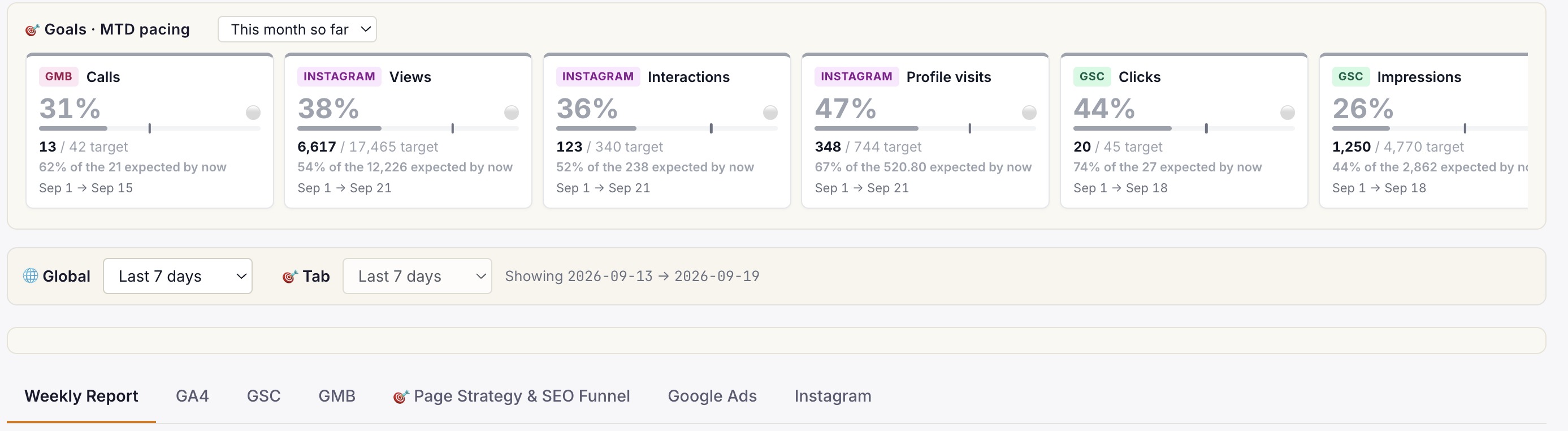
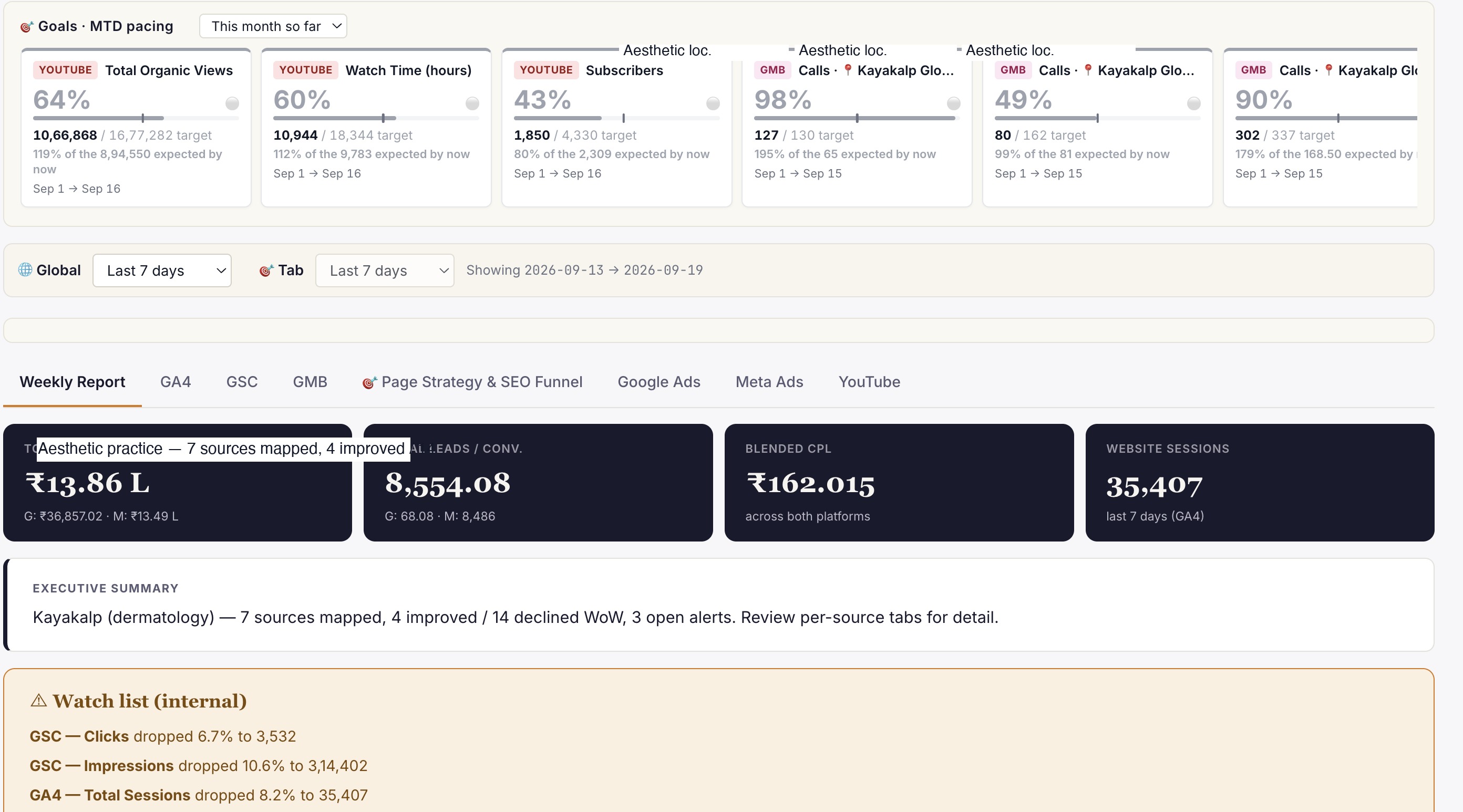
Live client dashboard. GSC, GA4, Google Ads, Meta Ads, IVR calls in one view. Login anytime, not monthly.
Phoenix
Clinic revenue intelligence over your PMS. Daily action queue: Prevent Loss, Maintain & Engage, Grow Revenue. Multi-centre rollout.
Or book a free 30-min audit to see all three in action on your account.
Healthcare brands
that already run on ICG.
A representative slice of the 150+ healthcare brands ICG has delivered for across India. Most engagements remain under NDA.


What ICG clients say · on video.
"Scale up of organic channels and business consulting. ICG has absolute domain authority in their field."
"Working with ICG transformed how we acquire IVF patients in Gurgaon. They understand the fertility journey from inquiry to consult..."
"What Ichelon accomplished — they got all my ideas and worked over 3-4 months to create an amazing, super-customised website."
Need help operationalising this?
Every ICG service is healthcare-only, NMC + DPDP-aware, and built around the patient-research patterns that drive Indian healthcare growth in 2026.
Every practice welcome — packages from ₹20,000/mo.
Goals-Driven engagements · Performance-Linked Payout Models available
More from
ICG.
Five trends shaping Indian healthcare marketing through 2027: AI-first patient research, Conversions API adoption, ABDM discovery, the AEO w...
Healthcare AIO is the discipline of getting your clinic or hospital cited inside Google AI Overviews, ChatGPT and Perplexity answers — not j...
Conversational-search advertising places brand messages inside AI chat answers — ChatGPT, Perplexity, Copilot — rather than beside a results...
Stop guessing.
Book a Diagnostic.
30 minutes. Free. With the AI-powered healthcare-only marketing agency 150+ brands already run on. No slides, no pitch, no hard close.


