


Organic vs paid YouTube views for healthcare channels: the uncomfortable truth Indian clinic owners rarely see in 2026
Organic vs paid YouTube views is where most Indian clinic YouTube reporting quietly breaks — paid views inflate headline numbers, promoted uploads get labelled viral, and clinic owners over-invest in the wrong content. This guide shows how paid subtracts from every metric that matters, what real organic growth looks like, and why YODA strips paid at every step.
No pitch. Written root-cause diagnosis. AI-powered, healthcare only.
Direct answer
Organic vs paid YouTube views is where most Indian clinic YouTube reporting quietly breaks — paid views inflate headline numbers, promoted uploads get labelled viral, and clinic owners over-invest in the wrong content. This guide shows how paid subtracts from every metric that ma...
TL;DR

Organic vs paid YouTube views for healthcare channels is the single most common source of misreading in Indian clinic YouTube marketing in 2026 — a video runs ₹40,000 of promoted spend, hits 180,000 views, and gets celebrated in the WhatsApp group as "our best video yet." Nobody strips out the paid traffic to see the organic performance underneath, which is often 3,000 to 6,000 views — a completely different picture with completely different strategic implications. This guide covers what paid views really are, how they distort every metric downstream, what genuine organic growth looks like month over month for an Indian healthcare channel, and why ICG's YODA platform subtracts paid at every step before any judgement is made about a video. Anchors back to the healthcare YouTube marketing service page.
What a paid YouTube view actually is on the Google Ads / YouTube Ads side
A paid view on YouTube is a view generated through Google Ads or the YouTube advertising surfaces — a TrueView In-Stream ad that the viewer chose not to skip and watched for at least 30 seconds, a TrueView Discovery ad that the viewer clicked into and watched, a Video Reach Campaign impression that counts as a view under Google's billing rules, or a Video Action Campaign click-through. In every case, money changed hands. A viewer did not organically discover the video by searching, being suggested it, or browsing to it — the advertiser paid Google to place the video in front of that viewer.
Paid views count in the video's total view number that appears everywhere the video is shown — on the video page, in the video overview inside YouTube Studio, in the channel's total view count, in the video's public view display. Google does not visually mark paid views as different from organic. The 180,000-view headline on the video overview blends 175,000 paid views and 5,000 organic views into an indistinguishable total.
Paid views also count in almost every downstream metric — total watch time, average view duration (calculated over the blended set), subscribers gained from the video, likes and shares. The only place YouTube cleanly separates them is under the traffic-source breakdown in YouTube Analytics, where "Advertising" appears as one of the sources. A team that does not proactively open that view is looking at completely blended numbers by default.
The cascade of distortions a single paid campaign produces across a channel
When ₹40,000 of paid spend produces 175,000 paid views on a single video, the downstream distortions extend beyond that video's own numbers.
The channel's total view count spikes. Anybody looking at the channel's "monthly views" trendline sees a step-change that has nothing to do with organic content strength. Next month, when the paid campaign ends, the trendline collapses and the team panics — "our channel is dying."
The video's average view duration gets blended between paid audiences (who typically retain worse than organic — they didn't choose to watch) and organic audiences (who typically retain better). If the paid audience averages 45 seconds of retention and the organic audience averages 2 minutes 30 seconds, the blended average shown in reporting is somewhere in the middle — misleading for both segments.
The video's subscriber-conversion rate looks weaker than it actually is on the organic segment. Paid audiences subscribe at 10% to 30% the rate of organic audiences for healthcare content. A blended subscriber-per-view ratio of 0.3% might look poor when the organic-only ratio is 0.9% — actually a strong performer.
Comparative video analysis breaks. A team looks at two videos side by side — one organic-only, one with heavy paid spend — and cannot fairly compare CTR, retention, or subscriber conversion because the promoted video's metrics are contaminated with paid-audience behaviour.
What real organic growth looks like month over month for a healthcare channel
Real organic growth for an Indian healthcare channel in 2026 is materially slower than the numbers most clinic owners have been told to expect. A channel that publishes 4 to 6 videos monthly, with proper SEO, thumbnails, and topic selection, and no paid promotion, typically sees organic view growth of 8% to 20% month over month during the first 12 months. Not 200% per month. Not 500% overnight because "one video went viral."
Subscriber growth on organic content typically runs at 0.5% to 2% of the previous month's organic views. A channel producing 25,000 organic monthly views is realistically gaining 125 to 500 subscribers monthly from organic activity alone. Faster growth is possible, but almost always attributable either to paid promotion (which should be labelled) or to a genuine breakout video (which is rare and usually recognisable in retrospect, not predictable in advance).
Consult and lead attribution from organic YouTube for a healthcare channel typically runs at 0.02% to 0.15% of organic views depending on the specialty and the call-to-action architecture. A channel producing 25,000 organic monthly views should expect 5 to 40 attributable consults per month, not hundreds. Higher numbers are possible with strong CTA architecture and specialty demand, but the arithmetic is bounded by baseline conversion rates that don't change dramatically.
When a clinic owner shares numbers that look 10x these ranges, the first diagnostic question is: how much of that is paid? Nine times out of ten the paid channel is doing the heavy lifting and the organic channel is quietly underperforming.
Common misconceptions clinic owners have about their own channel numbers
"That video went viral." Almost always, no. What actually happened: a paid campaign ran on the video for 6 to 8 weeks and produced most of the views. When paid ends, the "viral" video's view velocity drops to near-zero, which is the giveaway.
"Our channel is growing 50% month over month." Rarely. What actually happened: paid campaigns started running on multiple videos, and the monthly view total spiked. Organic growth in the same period is usually 10% to 20%, which is the sustainable number.
"Our CTR is 12%." Sometimes real, but often the number is calculated over blended paid + organic impressions where paid CTR on TrueView Discovery is artificially high because the viewer is choosing to click into the ad — different intent than an organic thumbnail impression.
"Our average view duration is 4 minutes." Sometimes real for organic. But if paid is 60% of views and the paid audience watches 45 seconds while organic watches 6 minutes, the blended 4-minute number is not a useful diagnostic for content quality.
"We're getting 50 leads a month from YouTube." Sometimes real. But if 45 of those 50 leads came in during the paid campaign week and 5 came in during the organic-only month before it, the channel is not producing 50 organic leads monthly — the paid spend is.
The clean workflow for separating organic from paid inside YouTube Studio
Inside YouTube Studio, the cleanest way to see organic-only performance is a two-step filter. Step one — open the Analytics tab for the channel or a specific video. Step two — open Traffic Source Types under the Advanced Mode, and either isolate everything except Advertising, or explicitly exclude Advertising from the view.
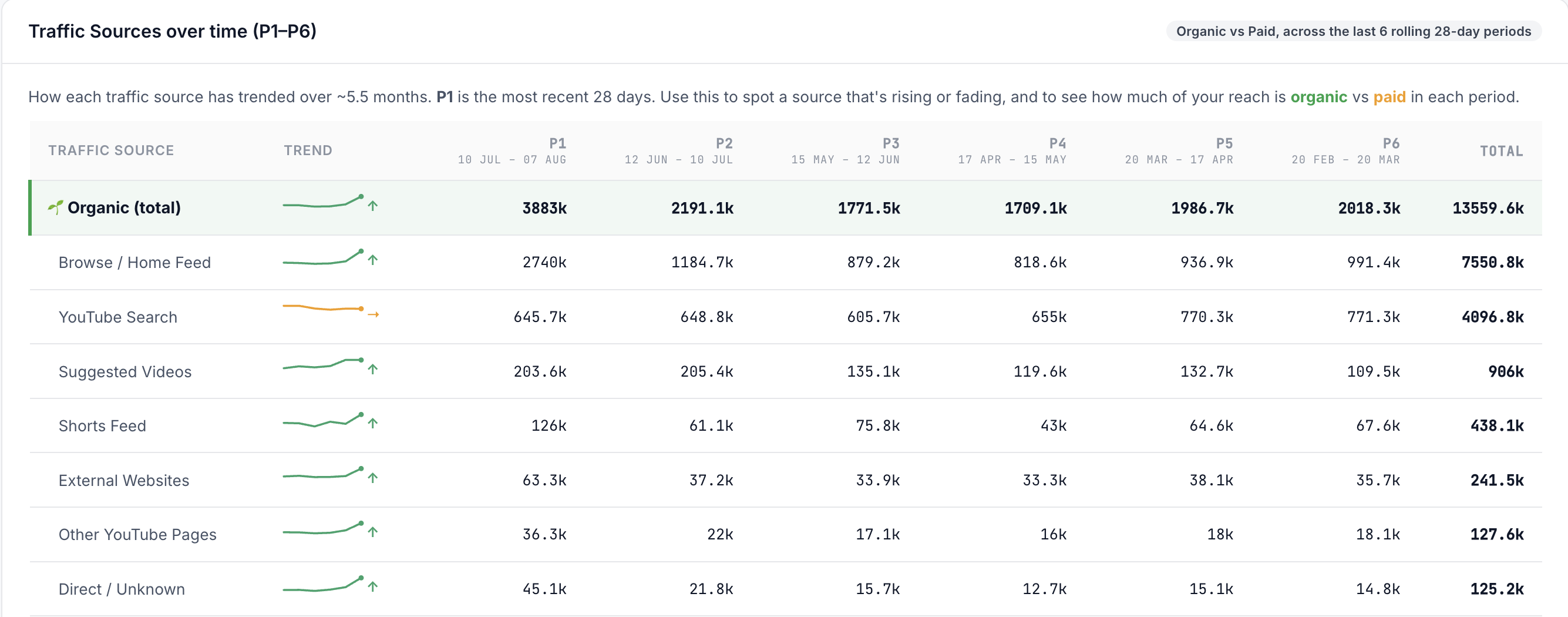
What appears when Advertising is excluded: the organic-only view count, organic-only watch time, organic-only average view duration, organic-only impressions and CTR, and organic-only traffic-source breakdown across YouTube search, Suggested, Browse, and External.
Do this for every video that has ever had a paid campaign attached to it. Do it monthly for the whole channel to see the organic trendline separately from the paid trendline. Report both numbers to stakeholders side by side — never a single blended headline.
For clinic owners without dedicated analytics staff, this discipline breaks down within 2 to 3 months because it requires proactive filter management every reporting cycle. Which is precisely why YODA's default state is organic-only with paid shown separately as an overlay.
Why YODA subtracts paid views at every step before any judgement is made
YODA's core architectural decision is that paid views are subtracted from every metric before any decision is generated. A video's "state" — the label YODA gives every video like Winner, Rising, Stalled, Declining — is calculated on organic-only performance. A video's "next action" — the recommended next step like "invest in follow-up content" or "rewrite the hook at 0:00-0:15" — is decided on organic-only signal.
The paid layer is shown separately as an overlay on the organic trend, so the marketing team can see how much of the total view lift is attributable to paid spend and whether the paid campaign is producing sufficient incremental lift to justify the cost. But paid never contaminates the organic diagnostic.
This changes the decisions dramatically. A video that looks like a Winner on blended numbers often reveals itself as Stalled on organic-only — meaning the paid spend was propping up a video with weak fundamentals, and the ₹40,000 spent to make it "look viral" would have produced better organic growth if invested in a different topic or format.
Conversely, a video that looks Stalled on blended numbers sometimes reveals itself as a Rising organic performer with a slow, healthy view curve — meaning it deserves more organic-side investment (better thumbnail, follow-up content, playlist inclusion) rather than being written off.
The compliance note for paid healthcare video content under NMC and ASCI
Paid promotion of healthcare video content in India in 2026 comes with a compliance layer that organic content does not. The National Medical Commission Ethics Code 2026 restricts advertising of medical services in ways that apply more strictly to paid placements than to organic content. The Advertising Standards Council of India guidelines require all substantiable claims in paid advertising to be independently verifiable.
Practical implications for a healthcare channel running paid YouTube ads. No treatment outcome claims in ad creative unless independently substantiated. No patient testimonials in ad creative without documented DPDP-Act-compliant consent. No sex-determination content in fertility or gynae ads under the PC-PNDT Act 1994. No unsubstantiated success-rate claims in ART clinic advertising under the ART Act 2021.
Organic content has more flexibility in tone and format than paid ad creative, though NMC still restricts patient testimonials and outcome claims on any medical marketing surface. When paid campaigns are running, ad creative should be reviewed by legal or compliance before spend goes live.
The platform ICG uses to run this at scale: YODA
ICG runs healthcare YouTube marketing for clinics, hospitals, and specialty groups using YODA — our AI-native healthcare YouTube marketing platform. YODA sits on top of a channel's data and does four things no dashboard does: it separates organic from paid views at every step (so a promoted video can never masquerade as organic growth), it gives decisions not dashboards (every video gets a state + next action), it writes back to YouTube directly (improved titles, tags, descriptions, chapters applied straight to the platform), and it tracks the three rank races — YouTube search, Google web, and Google AI Overview citations.
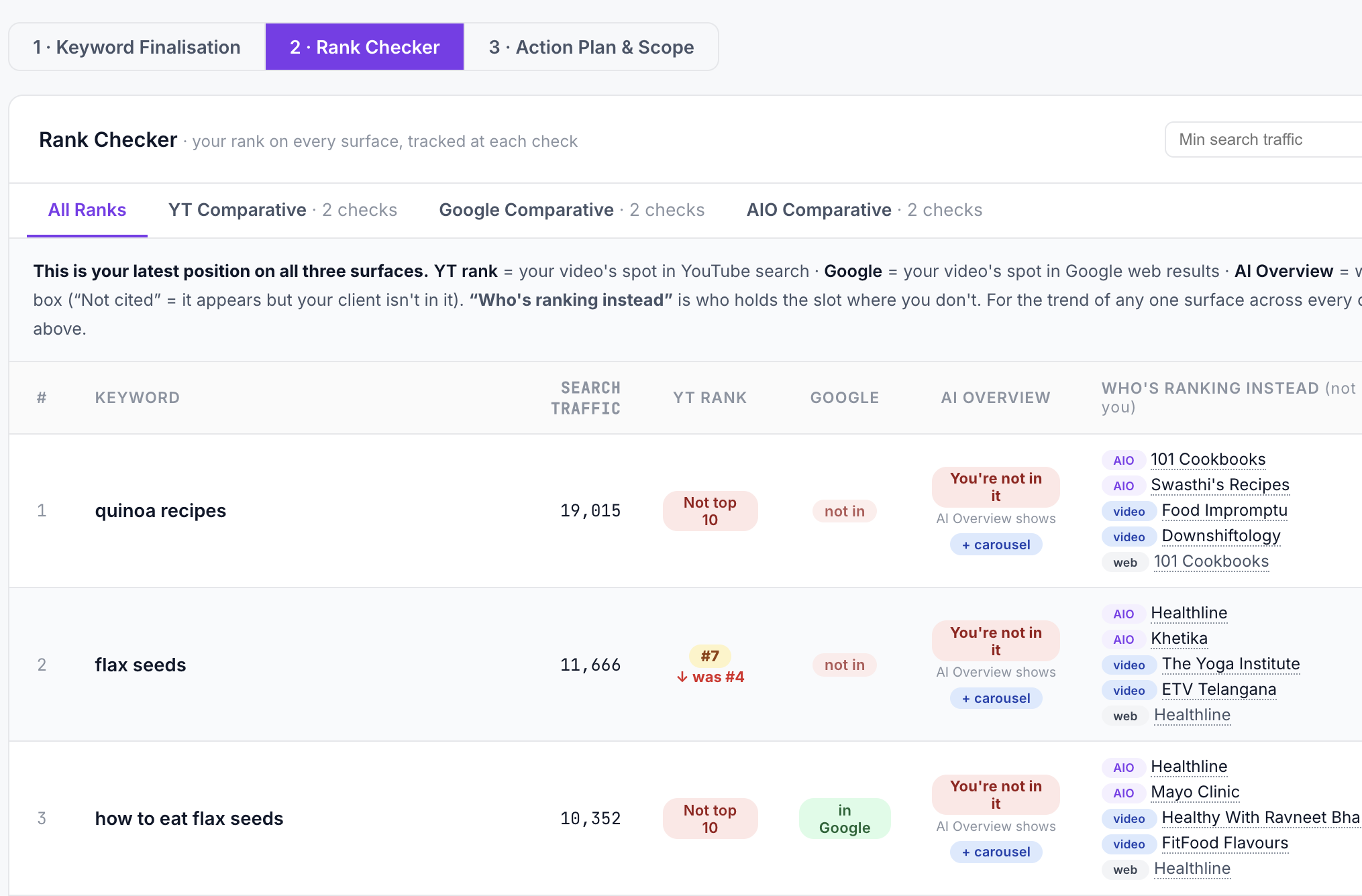
YODA runs the full 6-step workflow — Overview, Diagnostics, Strategy, Optimisation, Reputation (ORM), and Competitor Intel — with 40+ analysis modules organised under those steps. ICG's managed YouTube service uses YODA end-to-end. See the Healthcare YouTube Marketing pillar guide for the full scope, or the Healthcare YouTube Marketing Agency service page for engagement details.
Book a YODA demo on WhatsApp → or request a free healthcare YouTube channel audit →
Related reading
- Healthcare YouTube marketing pillar guide 2026
- YouTube views vs revenue for healthcare clinics
- YouTube vs Meta vs Google ROI for IVF clinics 2026
- YouTube Analytics vs Google Search Console for healthcare channels
- Healthcare YouTube marketing agency service page
FAQ
Does YouTube publicly label paid views on a video? No. The view count shown on a video's public page and inside YouTube Studio blends paid and organic. Only the Traffic Source breakdown in Analytics separates them via the Advertising source. There is no visual differentiation in the headline number.
Do paid views count toward YouTube subscriber milestones and monetisation eligibility? Views count toward eligibility thresholds, but watch time from paid sources historically has been excluded from Partner Program qualifying watch hours. Check YouTube's current Partner Program terms because these rules have been updated multiple times.
Do paid campaign viewers subscribe at the same rate as organic viewers? No. Paid audiences subscribe at meaningfully lower rates than organic audiences for healthcare content — typically 10% to 30% of the organic rate. If subscriber conversion is a KPI, blended reports will understate organic performance and overstate paid performance.
Should we ever promote a healthcare video with paid spend? Yes, when the goal is specific — reaching a defined audience for a specific patient education campaign, seeding a new video to build early watch history that helps the YouTube algorithm evaluate it, or driving traffic to a specific consult-booking landing page. Paid should never be the growth engine masquerading as organic strength.
How do we honestly report YouTube performance to a hospital board or founder? Two lines side by side — organic views this month and paid views this month, with a rolling 6-month trendline for each. Never a single blended headline number. Report subscriber growth attributable to organic separately from subscriber growth attributable to paid.
What's a healthy paid-to-organic ratio for a healthcare channel? Depends on lifecycle. A new channel building initial watch history might sustain paid at 60% to 80% of total views for 3 to 6 months. A mature channel in growth mode typically settles at 15% to 35% paid, with the majority of views coming from organic. Paid consistently above 60% on a mature channel usually means the organic content or SEO is underperforming.
Does YouTube's algorithm favour videos that have been promoted with paid ads? Not directly. The algorithm doesn't rank videos higher just because paid spend has been applied. It does respond to the underlying watch behaviour — retention, watch time, session watch time — that paid views generate. If paid audiences watch to completion, the algorithm reads that as positive engagement signal.
Can paid views negatively affect a video's organic ranking? Yes, in one specific scenario. If paid targeting is mismatched to the video's topic (delivering the wrong audience), the paid audience will drop off quickly, retention will collapse, and the algorithm will read that as low-quality engagement — which can suppress organic surfacing thereafter. Bad paid targeting is worse than no paid at all.
How long after ending a paid campaign do the metrics stabilise to show organic-only reality? Roughly 4 to 8 weeks. Delayed reporting attribution, second-order watch behaviour from viewers who saw the video during the campaign period, and algorithm re-evaluation all take a few weeks to work through. Measure organic-only performance in the 2nd or 3rd month after paid ends, not the week after.
Where do we see paid vs organic broken out in ICG's reporting? YODA's default view for every video and for the channel-level trendline shows organic-only as the primary line with paid shown separately as an overlay. Every state label (Winner, Rising, Stalled, Declining) and every recommended action is calculated on organic-only performance. Paid is always visible but never blended into the diagnostic.
Book a free 30-minute Brand & Growth Diagnostic.
It's a working session, not a sales pitch — you leave with a written root-cause analysis you can act on, whether or not you engage ICG.
The three platforms
behind every ICG engagement.
Beacon
CAPI middleware that fixes Event Match Quality, translates CRM statuses to Meta-standard events, dedups across channels.
Agency OS
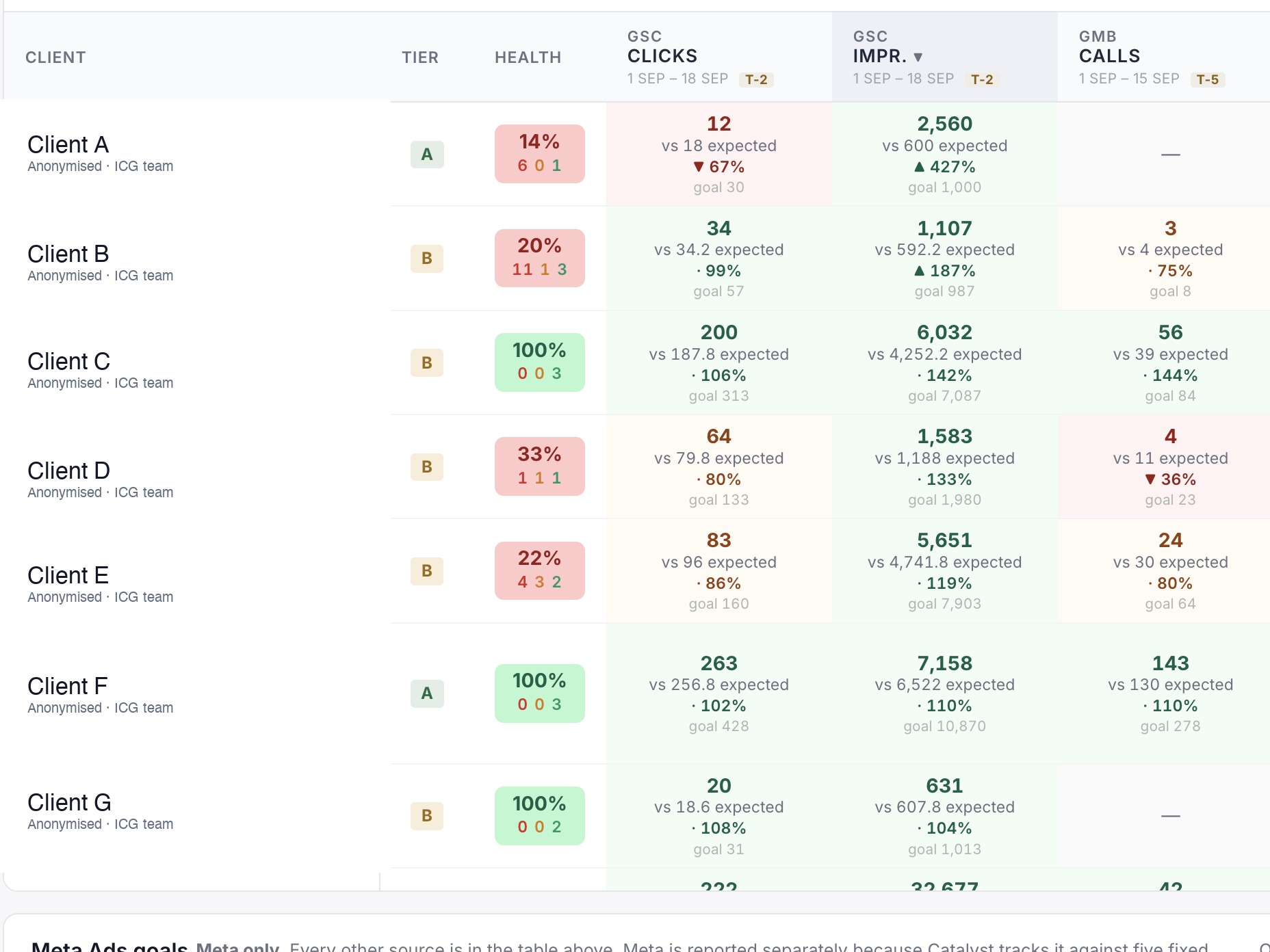
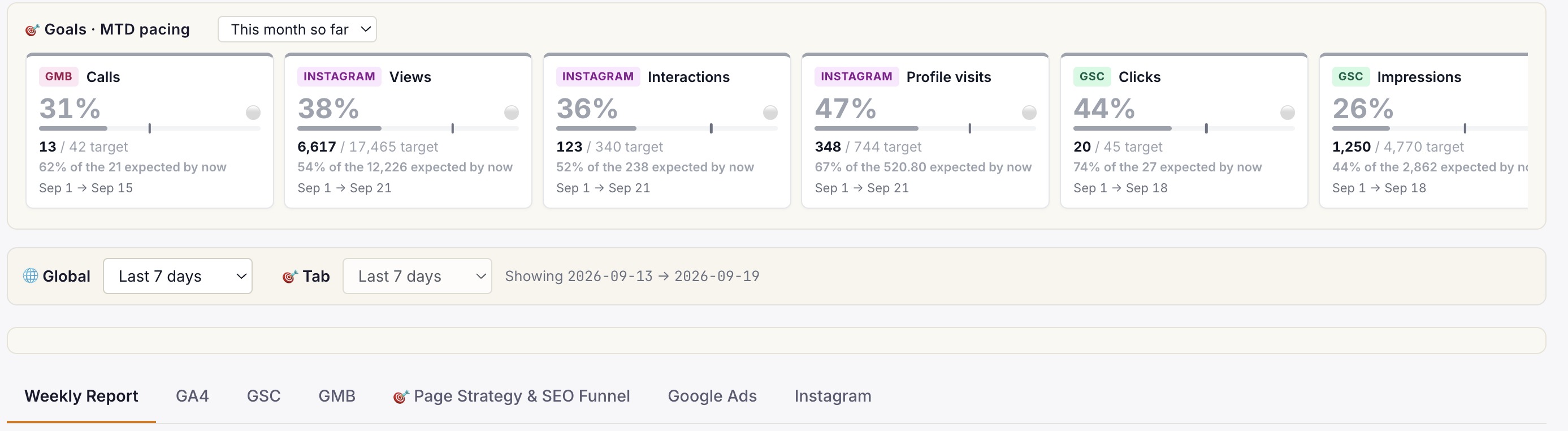
Live client dashboard. GSC, GA4, Google Ads, Meta Ads, IVR calls in one view. Login anytime, not monthly.
Phoenix
Clinic revenue intelligence over your PMS. Daily action queue: Prevent Loss, Maintain & Engage, Grow Revenue. Multi-centre rollout.
Or book a free 30-min audit to see all three in action on your account.
Healthcare brands
that already run on ICG.
A representative slice of the 150+ healthcare brands ICG has delivered for across India. Most engagements remain under NDA.


What ICG clients say · on video.
"Scale up of organic channels and business consulting. ICG has absolute domain authority in their field."
"Working with ICG transformed how we acquire IVF patients in Gurgaon. They understand the fertility journey from inquiry to consult..."
"What Ichelon accomplished — they got all my ideas and worked over 3-4 months to create an amazing, super-customised website."
Need help operationalising this?
Every ICG service is healthcare-only, NMC + DPDP-aware, and built around the patient-research patterns that drive Indian healthcare growth in 2026.
Every practice welcome — packages from ₹20,000/mo.
Goals-Driven engagements · Performance-Linked Payout Models available
More from
ICG.
Five trends shaping Indian healthcare marketing through 2027: AI-first patient research, Conversions API adoption, ABDM discovery, the AEO w...
Healthcare AIO is the discipline of getting your clinic or hospital cited inside Google AI Overviews, ChatGPT and Perplexity answers — not j...
Conversational-search advertising places brand messages inside AI chat answers — ChatGPT, Perplexity, Copilot — rather than beside a results...
Stop guessing.
Book a Diagnostic.
30 minutes. Free. With the AI-powered healthcare-only marketing agency 150+ brands already run on. No slides, no pitch, no hard close.


