


YouTube comments are the most under-used focus group in Indian healthcare marketing — and how to run them right
YouTube comments on Indian healthcare videos are the closest thing clinics have to a live patient focus group — surfacing fears, misinformation, unmet needs, and reputation risk in real time. This guide covers sentiment patterns to watch, misinformation risk, and NMC-safe reply framing for clinical channels.
No pitch. Written root-cause diagnosis. AI-powered, healthcare only.
Direct answer
YouTube comments on Indian healthcare videos are the closest thing clinics have to a live patient focus group — surfacing fears, misinformation, unmet needs, and reputation risk in real time. This guide covers sentiment patterns to watch, misinformation risk, and NMC-safe reply f...
TL;DR

YouTube comments on Indian healthcare videos are the most under-used focus group in the entire healthcare marketing stack, and the hospitals and specialty groups that treat the comment section as a genuine research surface — rather than a nuisance to be moderated — consistently outperform matched competitors on both content-market fit and reputation resilience. ICG runs comment monitoring for healthcare channels as a core part of our YouTube service alongside local SEO and reputation management, and the pattern is unambiguous: the comment section will tell you what patients are actually afraid of, what your competitors are getting wrong, and where misinformation is spreading, weeks before any survey or focus group would surface the same insight. Reading it well is a skill; ignoring it is a costly default.
Why comments outperform traditional focus groups for healthcare marketing insight
A traditional focus group of 8 patients costs anywhere from ₹50,000 to ₹2,00,000/- to convene, takes weeks to schedule, and produces a session recording that has to be transcribed and analysed. The insight window is narrow — one hour of moderated discussion, biased by the presence of a moderator and the social dynamic of the group.
A healthy healthcare YouTube channel with 20-50 videos receives dozens to hundreds of comments per month, unmoderated in the sense that the commenter is alone with the video, unpressured in tone, and self-selecting into the topics they actually care about. The sample is biased in different ways (comment-writers are not representative of view-only audiences), but the raw research value is genuine — patients tell you what they think a video missed, what fear the video did not address, what they are Googling next.
The specific insight categories that emerge repeatedly: fears the marketing team did not know existed, competitor mentions and comparisons ("I went to X clinic and they said the opposite"), pricing anxiety ("is this covered by insurance"), procedure-specific unknowns ("what happens after the first week"), and geographic gaps ("do you have a branch in [city]"). Each of these is a content brief, a service-line signal, or a competitive intelligence input that the marketing team can act on inside a week.
The sentiment patterns worth tracking on healthcare comments
Not every comment is worth engineering a response to, but the sentiment mix across a channel's comments is a leading indicator of both patient trust and content-market fit. The categories worth tracking separately:
Genuine questions — a viewer asking a clinical or logistical follow-up. These are gold: a well-answered question in the comment section produces both a satisfied commenter and a searchable long-tail response that helps future viewers. Comments-and-answered pairs also feed AI Overview extraction on some queries.
Personal story sharing — a viewer describing their own experience with the condition or procedure. These require careful handling — do not offer clinical advice on an individual case in a public comment, but acknowledge the share and route to a booking channel if appropriate.
Competitor comparisons — mentions of other clinics, other doctors, other cities. These are competitive intelligence and should be logged systematically, never engaged with combatively.
Misinformation — factually wrong claims about the condition, procedure, or medication being discussed. These need physician-approved correction because leaving them unaddressed on your channel implicitly endorses them.
Emotional distress signals — comments suggesting the viewer is in acute mental health distress or in a medical emergency. These require a specific escalation protocol every channel needs to have drafted in advance.
Spam and abuse — the moderation baseline, handled through YouTube's built-in filters plus manual review on any comment the filter lets through.
Recurring patient fears that surface in comments and what to do with them
Across the healthcare YouTube channels ICG manages, a consistent set of fears surfaces regardless of specialty, and hospitals that engineer content specifically to address these fears outperform those that stay in generic educational content. The recurring fear categories:
Cost and hidden charges. Patients repeatedly ask what the actual total cost will be after the "package" or "listed price" ends. Content that addresses cost transparently, including what is not covered and what typically drives cost variation, earns disproportionate trust and share behaviour. Even when the answer is "consultation required to price accurately", saying so plainly beats staying silent.
Pain and recovery time. Almost every procedure video generates comments asking how much the procedure will hurt and how long recovery genuinely takes. Marketing-toned content that minimises pain ("you will feel a slight discomfort") reads as untrustworthy; content that describes pain and recovery honestly earns more consultation bookings, not fewer.
Follow-up requirement uncertainty. Patients want to know how many visits, over how many months, at what cost, before they commit. Videos that lay out the full care journey outperform videos that only cover the primary procedure.
Second-opinion pressure. Many commenters describe having been told they need a procedure and wanting a second view before committing. Content that respects the second-opinion request — even encourages it — earns trust that converts weeks or months later when the patient decides to proceed.
Insurance and reimbursement. India's health-insurance landscape is genuinely confusing for patients, and channels that publish clear guidance on what typically qualifies for reimbursement under major insurers produce a strong retention and referral lift.
Misinformation risk and how to address it without amplifying it
Misinformation in comment sections is a genuine reputation and clinical risk. A comment on your video claiming that a treatment causes a specific harm it does not cause, or that a home remedy replaces a genuine intervention, is an implicit endorsement if it sits unanswered. But the response has to be careful — dunking on a misinformed commenter produces engagement but corrodes trust, and quoting the misinformation in the correction can amplify it.
The pattern that works: reply with the factual correction anchored in an authoritative Indian source (Ministry of Health and Family Welfare, Indian Council of Medical Research, or a named peer-reviewed reference), keep the tone neutral and non-combative, and where the misinformation is severe, pin your correction to the top of the comments so viewers see the corrected fact first.
For claims that are dangerous — recommendations against vaccines, promotion of unregistered treatments, dismissal of serious symptoms — YouTube's reporting mechanism exists and should be used, but do not rely on it alone. The correction and the pinned comment are what protect your channel's reputation and your patients.
NMC-safe reply framing for clinical comments — what you can and cannot say
The NMC's 2026 advertising guidelines restrict what a registered medical practitioner can say in public communication, and by extension what a channel operating under a clinician's name can say in comment replies. The safe framing on a case-specific clinical comment:
You can acknowledge the concern and provide general educational information already covered in the video. You can direct the commenter to book a consultation for a personalised assessment. You can point them to authoritative public health resources. You can, on general questions of clinical fact, provide a factual answer that any patient would find in a medical reference.
You cannot provide individualised clinical advice ("based on what you described, you should stop taking X"). You cannot claim outcomes ("we have the best success rate for this procedure"). You cannot promise anything about a specific patient's case. You cannot make unsubstantiated comparative claims about other clinics or other clinicians.
The safest template that covers most incoming clinical questions: "Thank you for the question. The video covers [X general point]. For a personalised assessment of your specific situation, please book a consultation — details in the description. This response is general educational information and not clinical advice."
Response cadence and who should be writing the replies
Response cadence is a genuine trust signal. Channels that reply to comments inside 24-48 hours consistently earn stronger engagement and repeat viewership than channels that leave comments unanswered for weeks. The economics of comment response are surprisingly favourable — most comments can be replied to in under a minute once a response template library exists.
Who writes the reply matters legally and reputationally. Marketing team can handle logistical replies (appointment scheduling, address queries, video suggestions, general encouragement). Clinical replies — anything touching medical fact, procedure detail, treatment recommendation — should be written or approved by a registered clinician on the channel's roster, and the reply should be signed with the clinician's name where appropriate.
The workflow that scales: the marketing team drafts responses using a bank of pre-approved templates, the clinician reviews and approves the clinical responses in a daily 15-minute batch, and the replies publish under a signature that names the reviewing clinician for the clinical ones and the "channel team" for the logistical ones. YODA's Reputation module surfaces the day's comments-needing-clinician-review as a single-screen review queue.
Pinned comments, heart reactions, and the community-signal layer
Beyond written replies, YouTube gives channel owners two lightweight community signals that materially move perceived channel warmth. The pinned comment sits above all other comments and is the single most-read piece of text after the video description — use it for the physician review credit, an FAQ redirect, or a highlighted response to a common question.
The channel-owner heart reaction shows on a commenter's reply and produces a genuine engagement boost — commenters who receive hearts return to comment more often, and channels that heart generously (on genuine positive comments and thoughtful questions, not on everything) see higher overall community engagement over 90-day windows.
Comment likes and dislikes matter too. Pinning a factual reply and having it upvoted by other viewers strengthens the community-signal loop and pushes the correct information higher in the comment sort order.
Turning comment insight into next quarter's content roadmap
The highest-value output of a well-monitored comment section is the content roadmap it generates. Every quarter, ICG's YODA workflow exports the comment corpus for a channel, clusters comments by topic and question type, and produces a ranked list of "questions asked more than three times that no existing video answers well". These become the next quarter's content briefs.
The typical shape of the output for a mid-sized specialty channel: 40-80 unique question themes surfaced from comments, of which 15-25 do not have a well-optimised video on the channel. Those become the priority content queue. The remaining themes either have adequate coverage or need better SEO on existing videos rather than new content.
This closed loop — publish, monitor comments, extract questions, publish videos answering those questions — is the fastest content-market fit loop available to a healthcare channel, and it costs far less than external market research to run.
The platform ICG uses to run this at scale: YODA
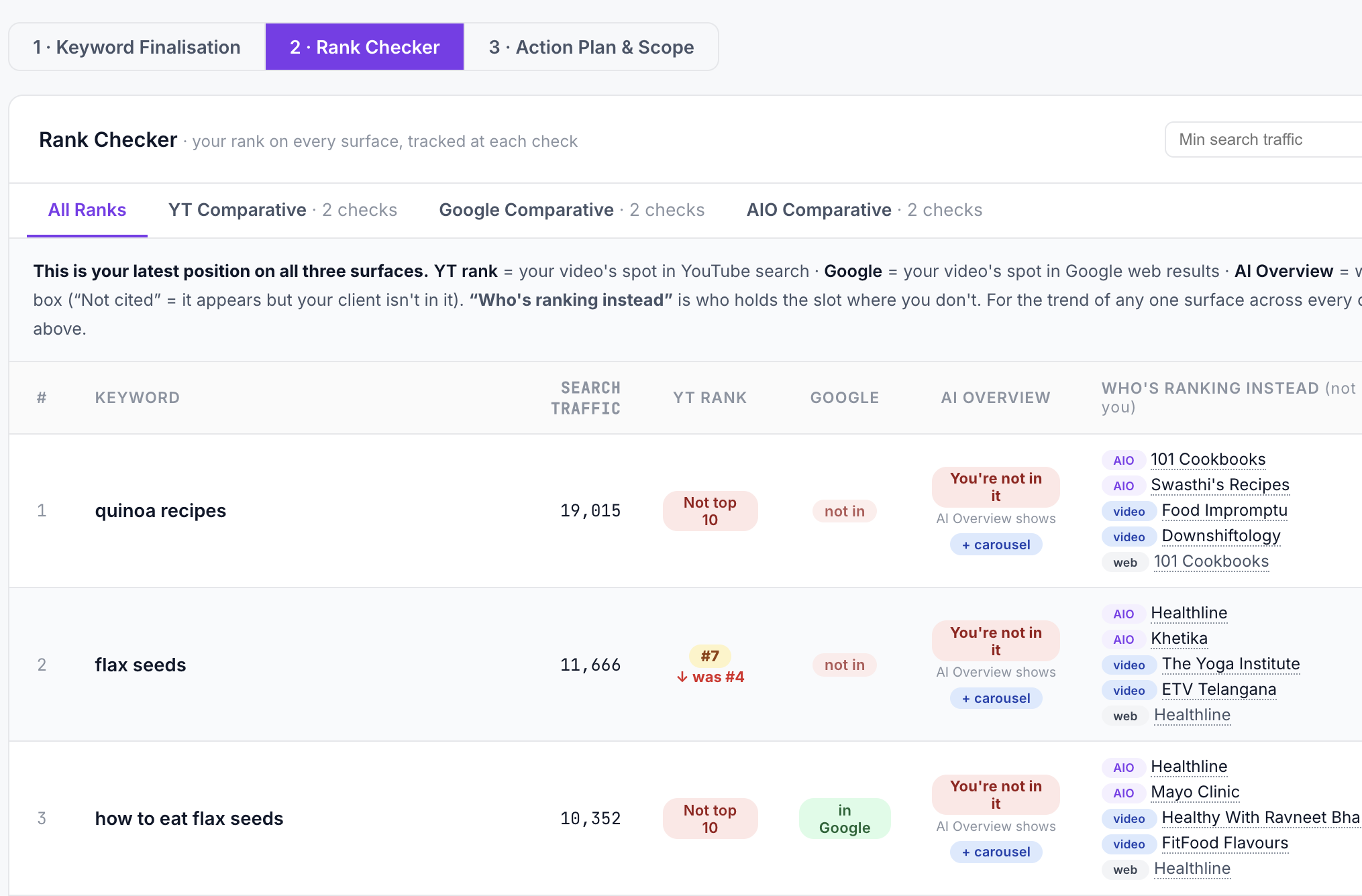
ICG runs healthcare YouTube marketing for clinics, hospitals, and specialty groups using YODA — our AI-native healthcare YouTube marketing platform. YODA sits on top of a channel's data and does four things no dashboard does: it separates organic from paid views at every step (so a promoted video can never masquerade as organic growth), it gives decisions not dashboards (every video gets a state + next action), it writes back to YouTube directly (improved titles, tags, descriptions, chapters applied straight to the platform), and it tracks the three rank races — YouTube search, Google web, and Google AI Overview citations.
YODA runs the full 6-step workflow — Overview, Diagnostics, Strategy, Optimisation, Reputation (ORM), and Competitor Intel — with 40+ analysis modules organised under those steps. ICG's managed YouTube service uses YODA end-to-end. See the Healthcare YouTube Marketing pillar guide for the full scope, or the Healthcare YouTube Marketing Agency service page for engagement details.
Book a YODA demo on WhatsApp → or request a free healthcare YouTube channel audit →
Related reading
- Healthcare YouTube marketing pillar guide 2026
- Patient trust and YouTube E-E-A-T for Indian healthcare
- Google review strategy for Indian healthcare (NMC-compliant)
- Removing fake reviews on Google for Indian healthcare
- Healthcare YouTube marketing agency service page
FAQ
Should we turn comments off on healthcare videos to avoid moderation risk? No. Comments-off signals a channel that is not confident in its content and removes one of the strongest E-E-A-T and community signals YouTube ranks on. Better to invest in a light moderation cadence than to disable comments.
How fast is fast enough for comment response on a healthcare channel? 24 to 48 hours for the first response is the target for most comments. Clinical questions can take longer if physician review is needed — a holding acknowledgment inside 24 hours followed by the substantive answer within 4 to 5 days is acceptable if the clinician's availability requires it.
Can we use AI to draft comment responses? For logistical replies, yes — with human review before publishing. For clinical replies, an AI draft is only acceptable as a starting point for a registered clinician's review; the published response has to reflect actual clinical judgment. Publishing AI-generated clinical advice directly is both a compliance and a reputation risk.
What do we do when a competitor's astroturfing shows up in comments — coordinated negative comments that look like real patients? Do not delete them if they are within YouTube's policy, because deletion often escalates. Reply factually with your side of the situation, log the pattern for evidence, and if the coordination is provable, report to YouTube through the platform's abuse-of-mass-reporting mechanism. Do not respond emotionally in-channel.
Does hiding a comment reduce the channel's ranking or engagement? Hidden comments do not count for engagement metrics but do not otherwise penalise the channel. Use hiding for spam and abuse; reserve deletion for clear policy violations. Genuine negative feedback should stay visible and be addressed publicly.
Are comments an SEO signal for YouTube search rankings? Indirectly, yes. Comment volume and reply activity feed into YouTube's engagement scoring, which contributes to search ranking within-channel and topic relevance for a video across the platform. High-quality comment sections outperform empty ones.

How do we handle comments in regional languages the moderation team does not read? Route through a bilingual reviewer or a translation workflow before responding. Skipping a comment because the language is unfamiliar is worse than a slower response — the commenter and any observers see the neglect.
Should the reviewing clinician's personal name appear on responses or just "the channel team"? Clinician name on substantive clinical responses (protects both the patient with a real accountability signal and the clinician with a documented professional response); "channel team" or a generic sign-off on purely logistical replies is fine.
What legal record should we keep of comment interactions? Screenshots of any interaction that touched clinical fact, plus the reviewing clinician's approval, kept for at least three years. Comment histories are recoverable from YouTube if needed, but a local record protects the practice if a comment is later deleted or edited.
How much does a comment-monitoring operation typically cost to run for a mid-sized specialty channel? A mid-sized channel receiving 100-300 comments per month typically needs 2-4 hours per week of marketing-team time plus 30-45 minutes per week of clinician review time. ICG's managed offering bundles this into the YouTube service delivery — pricing is on the service page.
Book a free 30-minute Brand & Growth Diagnostic.
It's a working session, not a sales pitch — you leave with a written root-cause analysis you can act on, whether or not you engage ICG.
The three platforms
behind every ICG engagement.
Beacon
CAPI middleware that fixes Event Match Quality, translates CRM statuses to Meta-standard events, dedups across channels.
Agency OS
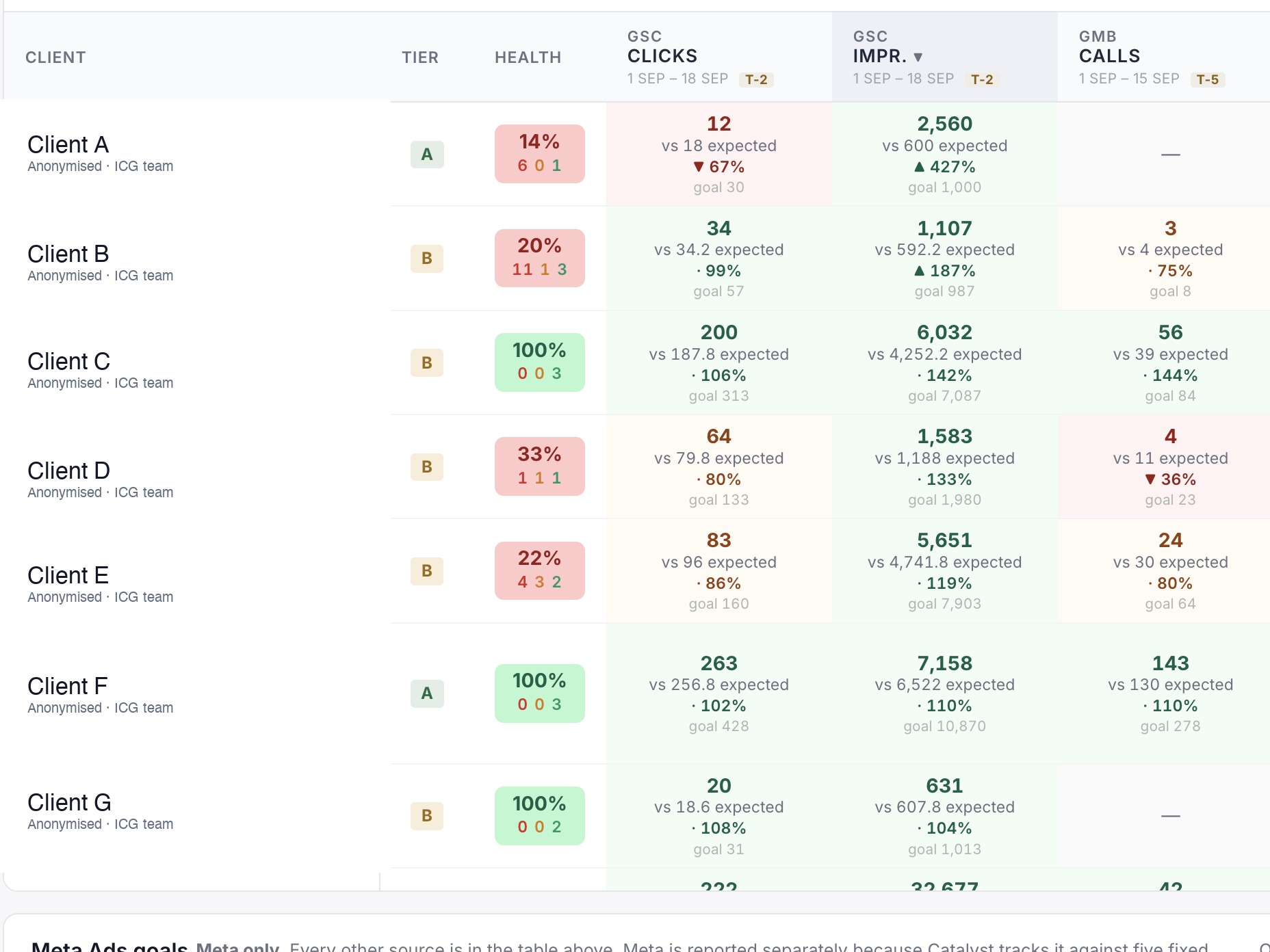
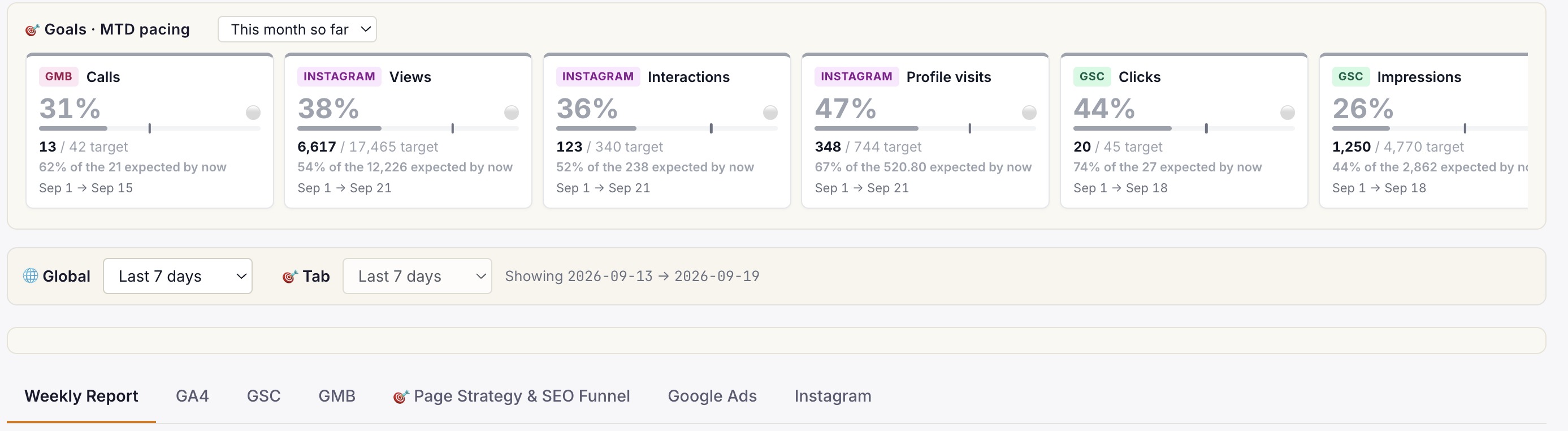
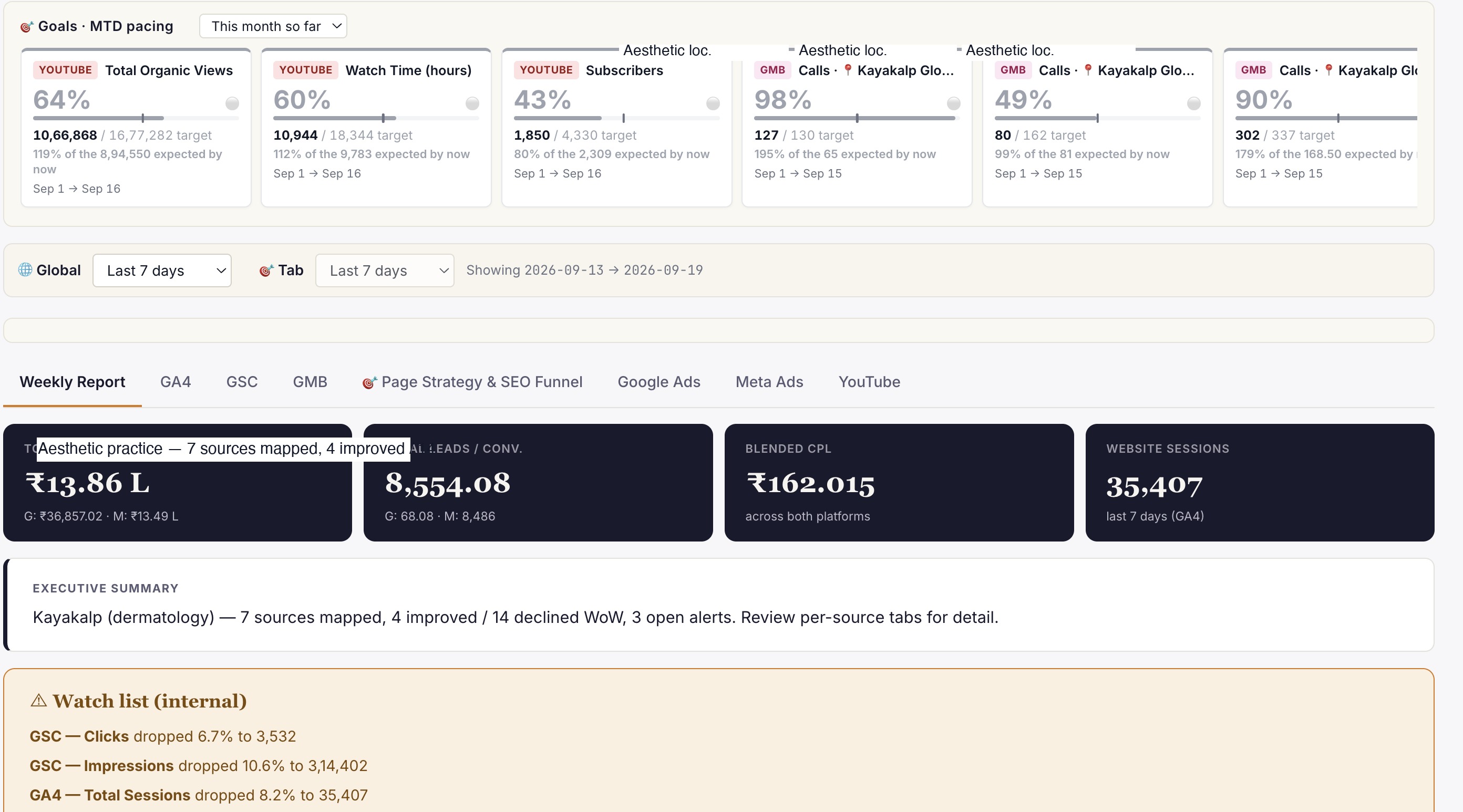
Live client dashboard. GSC, GA4, Google Ads, Meta Ads, IVR calls in one view. Login anytime, not monthly.
Phoenix
Clinic revenue intelligence over your PMS. Daily action queue: Prevent Loss, Maintain & Engage, Grow Revenue. Multi-centre rollout.
Or book a free 30-min audit to see all three in action on your account.
Healthcare brands
that already run on ICG.
A representative slice of the 150+ healthcare brands ICG has delivered for across India. Most engagements remain under NDA.


What ICG clients say · on video.
"Scale up of organic channels and business consulting. ICG has absolute domain authority in their field."
"Working with ICG transformed how we acquire IVF patients in Gurgaon. They understand the fertility journey from inquiry to consult..."
"What Ichelon accomplished — they got all my ideas and worked over 3-4 months to create an amazing, super-customised website."
The intelligence stack behind this playbook.
Every ICG engagement runs on the Search Intelligence Trifecta — Angryturtle for GMB, SIE for search and AI Overview, YODA for YouTube. Live product screens below.
Need help operationalising this?
Every ICG service is healthcare-only, NMC + DPDP-aware, and built around the patient-research patterns that drive Indian healthcare growth in 2026.
Every practice welcome — packages from ₹20,000/mo.
Goals-Driven engagements · Performance-Linked Payout Models available
More from
ICG.
Five trends shaping Indian healthcare marketing through 2027: AI-first patient research, Conversions API adoption, ABDM discovery, the AEO w...
Healthcare AIO is the discipline of getting your clinic or hospital cited inside Google AI Overviews, ChatGPT and Perplexity answers — not j...
Conversational-search advertising places brand messages inside AI chat answers — ChatGPT, Perplexity, Copilot — rather than beside a results...
Stop guessing.
Book a Diagnostic.
30 minutes. Free. With the AI-powered healthcare-only marketing agency 150+ brands already run on. No slides, no pitch, no hard close.


