HIPAA-safe Meta Ads for aesthetic practices — Personal Attributes, hashed audiences, Conversion API and the revoked-BAA workaround
A working reference for aesthetic practice owners, cosmetic surgeons, medspa growth heads and agency practice leads running Meta advertising campaigns under HIPAA. Written against the March 2024 Office for Civil Rights tracking-technology bulletin update, Meta's Personal Attributes and health-and-wellness policies, and the operational reality that Meta withdrew its HIPAA Business Associate Agreement years ago and has not restored it.

- Meta will not sign a HIPAA Business Associate Agreement for Meta Ads. This constraint applies across Meta Ads, Meta Business Manager, Instagram advertising and WhatsApp Business advertising. Every HIPAA-scoped program must operate a scrubbing perimeter between the practice's PHI environment and Meta.
- Meta's Personal Attributes policy prohibits ad copy that asserts or implies personal characteristics about the viewer — including medical conditions, appearance concerns, and specific procedure interests. Aesthetic copy calibrated to that policy is aspirational and category-level, not personal-condition addressed.
- Custom Audiences from customer lists use hashed SHA-256 matching. Hashing is not HIPAA de-identification, so the source list must either be built entirely from records with valid marketing authorizations, or be routed through the practice's BAA-covered environment for de-identification before the hash is generated.
- Conversion API (CAPI) is the primary HIPAA-scoped signal path. Server-to-server events with fully controllable payloads let the practice drop IP, referrer, procedure URLs and every other PHI-relevant field before Meta receives a hashed-identifier conversion with a generic event name.
- Meta ad review for aesthetic and cosmetic-medicine ads typically involves an escalated manual pass on top of the standard 24-hour automated screen. Building creative and landing pages that clear this review on the first pass is a technical craft, not a matter of trial and error.
- Dallas, Texas LLC
- US client team · Central Time (CST)
- 25+ US healthcare clients
- BAA signed with every client
- HIPAA compliance training across client and delivery teams
- Contracts and invoices in USD
-
 Primary Care · North Dallas, TXCase study →
-
 MedSpa · North Dallas, TX
-
 Skin Care · Beverly Hills, CA
-
 Dental · Christiansburg, VACase study →
-
 Pediatrics · Blacksburg, VACase study →
-
 Pediatric Dentistry · Blacksburg, VACase study →
-
 Dental · Roanoke, VACase study →
-
 Functional Medicine · Telehealth · USACase study →
“They were able to get all my ideas and work with me over a period of three to four months and create this amazing website. It's super customized, very modern, and it incorporates all the elements that I had wanted — the patient portal, nice pictures, a very interactive website, patient reviews. I would highly recommend their company to anyone who wants to make an excellent website.”
Meta’s revoked BAA — what changed and what did not
Meta, then Facebook, briefly offered a HIPAA Business Associate Agreement for a subset of its business products. The offering was withdrawn well before Cambridge Analytica and never restored. The operational consequence for the US aesthetic vertical is that Meta Ads must be treated as an out-of-BAA channel — a channel where every event that reaches Meta must have been sanitized of PHI before it crosses the boundary.
Under 45 CFR 164.502(e) and 164.504(e), a covered entity discloses PHI to a business associate only when a BAA is in place. Without a BAA, the disclosure is unauthorized. The March 2024 OCR tracking-technology bulletin update reinforced that IP address plus a condition-relevant URL is PHI when disclosed to a third-party tracker, and specifically named ad platform tracking as high-risk. Meta Pixel deployed on a HIPAA-scoped page that captures IP and procedure URL is therefore inside OCR's stated enforcement priorities.
Why the constraint does not remove Meta from the plan
Aesthetic practices generate a very high share of their qualified enquiry volume from Instagram and Facebook. The operational answer is not to abandon the channel — it is to redesign the data plane so Meta receives only the signals that are lawful to send. Custom Audiences from lawfully-collected consented lists, Conversion API from a server-side scrubbing perimeter, ad copy calibrated to Personal Attributes, and landing pages that keep the tracking event inside a first-party BAA-covered environment before it forks to Meta — that is the architecture.
Meta’s Personal Attributes rule — what it actually says and how aesthetic ads pass it
Meta's advertising standards prohibit content that asserts or implies personal attributes about the viewer. The list of restricted attributes is deliberately broad and specifically enumerates race, ethnicity, religion, beliefs, age, sexual orientation or practices, gender identity, disability, medical or genetic condition, financial status, membership in a union, criminal record, name, and other characteristics.
For aesthetic advertising, the interpretive weight lands on "medical or genetic condition," "physical or mental health," and personal appearance implications. Copy that reads "Are you tired of stubborn belly fat?" implies both a physical attribute of the viewer (they have stubborn belly fat) and a health concern (they are unhappy about it). Meta's classifier will reject that ad, and a manual review escalation will typically confirm the rejection.
Ad copy patterns that pass
- Category-level statement. "Explore body contouring at our Dallas medspa" — describes the service, not the viewer.
- Aspirational framing. "Refreshed, natural-looking skin, delivered by a physician-led team" — asserts the outcome offered, not the viewer's current state.
- Provider-led narrative. "Meet our Nurse Practitioner Rachel — twelve years of Botox and filler experience" — the copy is about the practice, not the viewer.
- Educational framing. "How Ultherapy compares to Morpheus8 for skin tightening — a physician explains" — the ad is education, and the viewer's interest is inferred, not asserted.
Ad copy patterns that fail
- "Are you unhappy with your acne scars?"
- "Struggling with weight loss? We can help."
- "Fix your under-eye bags today."
- "Do you have sagging skin?"
- "Concerned about your double chin? Book Kybella now."
Custom Audiences — hashed matching, HIPAA de-identification and the source-list problem
Custom Audiences from a customer list use SHA-256 hashing of the customer's email address, phone number and address. Meta compares the hash against its own hashed user graph and delivers matched impressions on the union set. The hashing is done in the browser or the upload tool before the data reaches Meta.
HIPAA de-identification is defined at 45 CFR 164.514(b) — the Safe Harbor list of 18 identifiers, or Expert Determination. A SHA-256 hash of an email address is not a Safe Harbor de-identification; the email is one of the 18 identifiers and the hash is a lossless one-way function that Meta can join. The regulatory value of hashing is transport confidentiality, not de-identification.
Two lawful paths for aesthetic Custom Audiences
- Path A — Consent-based. Build the source list entirely from patients and prospects who have signed a HIPAA marketing authorization under 45 CFR 164.508 that specifically authorizes disclosure of the identifier to Meta for advertising. Retain the authorization for six years. Suppress any record whose authorization has been revoked.
- Path B — De-identified inside the BAA perimeter. Route the source list through a de-identification pipeline inside the practice's BAA-covered infrastructure. The pipeline strips the 18 Safe Harbor identifiers and produces a de-identified match key (or none at all — a pure exclusion list). Only the de-identified output is used to build the Custom Audience.
Path A is the more common architecture in aesthetic vertical because the medspa or plastic surgery practice already collects marketing consents at intake. Path B is more common where the audience is built from a broader dataset — including insurance and hospital records — that predates modern marketing consent capture.
Conversion API — the primary HIPAA-scoped signal path
Meta Conversion API (CAPI) is a server-to-server events pipeline. The practice's servers, not the visitor's browser, send events to Meta. That architectural shift is what makes HIPAA-safe Meta measurement feasible — the payload is completely under the practice's control, so PHI-relevant fields can be dropped at the server before the event ever exists on Meta's side.
What a HIPAA-safe CAPI event looks like
- Event name. Generic — Lead, CompleteRegistration, Schedule. Never Botox_Lead or Filler_Schedule.
- User data. Hashed email or phone, SHA-256, no plain text. External ID optional and, if used, a random identifier not derived from the medical record number.
- Custom data. Value and currency for optimization. No content_ids or content_name that reveal treatment type.
- Event source URL. Rewritten at the server to a generic category page. Never the condition-specific slug the visitor actually saw.
- Client IP address. Dropped. Meta will still receive its own client-side IP from Pixel if Pixel is deployed; disable client-side Pixel on HIPAA-scoped pages if the risk model requires.
- Client user agent. Dropped or generalized to browser family without version.
- Referrer. Trimmed to domain, never full URL.
Meta ad review for aesthetic — the typical timeline and how to clear it first-pass
Standard Meta ad review runs an automated screen in under 24 hours. Aesthetic and cosmetic-medicine ads routinely receive an escalated manual review, which extends the timeline to 48-72 hours and occasionally longer. The manual reviewer applies the Personal Attributes policy, the health-and-wellness policy, the before/after imagery rules, and any active enforcement guidance for the vertical.
Building creative and landing pages that clear the first-pass review is a repeatable craft. The elements the reviewer checks are:
- Ad copy. No personal-attribute assertion or implication about the viewer.
- Ad imagery. No isolated body-part zoom with a "problem area" implication. Full-body or contextual imagery is preferred.
- Before-and-after in ads. Meta restricts before/after in the ad creative itself; the practice's own website may show it with appropriate consent and disclaimers.
- Landing page consistency. The landing page must not carry Personal Attributes copy either — a compliant ad that leads to a "Fix your wrinkles" landing page will get flagged on landing-page review.
- Health claims. Specific medical claims trigger additional review. Aspirational and category claims pass.
- Prescription products. Copy that names Botox, Juvéderm, Wegovy or Ozempic is scrutinized. Manufacturer brand names (Allergan, AbbVie, Galderma, Merz, Revance, Evolus, Novo Nordisk, Eli Lilly) may appear in a physician-context ad but not as consumer-directed pharmaceutical promotion.
What we found when we studied 555 US med spas on Google
Patients praise the care almost without exception. The one area where complaints outnumber praise is booking and communication, and that is where most med spas can win.
Full study · 555 US med spas across 20 metros · roughly ±4% nationally · review velocity and themes from a 115-spa subsample · verified against raw data.
Four decisions every HIPAA-scoped Meta Ads program must make
1. Disable client-side Pixel on HIPAA pages
Pixel on the homepage and top-of-funnel category pages is defensible. Pixel on procedure-specific slugs, symptom checkers, or authenticated patient pages is not. Route those pages through CAPI-only.
2. Personal Attributes-safe copy library
Every creative in rotation calibrated against the Personal Attributes standard. Category-level and aspirational, never condition-addressed. Landing pages consistent with the ad.
3. Consent-based Custom Audiences
Source list built from records with valid HIPAA marketing authorization, or de-identified inside the practice's BAA-covered environment before hashing. Suppression synced with revocation events.
4. CAPI with server-side PHI scrub
Server-side tag manager on a first-party subdomain. Drops IP, referrer, and condition context. Rewrites URL. Generalizes event name. Forwards only a hashed-identifier CAPI event.
Meta Lead Ads and WhatsApp — where HIPAA risk concentrates
Meta Lead Ads collect the lead payload inside Meta before the practice ever sees it. In a HIPAA-scoped context, that intake creates a disclosure risk — the visitor's name, phone, email, and any custom-question responses live inside Meta's environment before flowing to the practice's CRM. Without a BAA, that intake is exposed.
The safer pattern is to send Meta click-throughs to a first-party landing page hosted inside the practice's own infrastructure. The lead form on that page writes into the practice's BAA-covered CRM directly. Meta receives only a hashed-identifier CAPI conversion event afterwards.
WhatsApp Business advertising
WhatsApp Business is owned by Meta and does not sit under a HIPAA BAA. Ads that direct traffic to a WhatsApp thread create a channel where treatment communications may occur outside the BAA perimeter. Practices that want a WhatsApp presence should either restrict the thread to strictly appointment-logistics messaging with no PHI, or use a HIPAA-eligible provider (JaneApp, Zenoti, Boulevard, PatientEngage, Aesthetic Record) as the actual patient-communications channel and reserve WhatsApp for general enquiries.
Instagram Shopping, Reels ads and Advantage+ campaigns
Instagram Shopping surfaces and Advantage+ Shopping campaigns present the same architectural questions as the underlying Meta Ads platform, but with two additional considerations. First, Advantage+ leans heavily on Meta's own optimization signal, which means the practice has less direct control over which audience segments a given creative reaches — the calibration of Personal Attributes-safe copy and PHI-safe events becomes even more important because a single non-compliant asset can be surfaced at scale before manual review catches it. Second, Reels advertising is often a paid boost of an organic post; the boosted post inherits the ad-review workflow even when the underlying organic post was permissible. Practices should keep an internal register of which organic posts have been boosted and treat those posts as ads for compliance purposes throughout their boosted lifetime.
Where Meta compliance sits in the aesthetic marketing stack
Meta Ads compliance is one layer of a larger stack. A defensible aesthetic Meta program sits inside a federal-and-state envelope that also includes TCPA for any SMS follow-up, CAN-SPAM for email drips, ADA for landing-page accessibility, FTC for endorsements and material connections, FDA for any manufacturer-partnership content, and state medical boards for advertising claims. Miss any one layer and the program is exposed on that axis.
Backed by Ichelon Consulting US leadership
Every HIPAA-scoped Meta Ads engagement is reviewed by a senior member of the Leadership Team with visibility into CAPI rollouts, Personal Attributes review escalations, and the intersection with state medical board advertising rules.
Our own tools run inside every engagement
Ichelon Consulting US uses software built by our own product team. Practices can also use most tools on their own, billed in USD.
HIPAA-safe Meta Ads for aesthetic — common questions
Does Meta sign a HIPAA BAA for Meta Ads?
No. Meta withdrew its HIPAA BAA offering years ago and has not restored it. Every HIPAA-scoped Meta Ads program must build an external scrubbing perimeter before events reach Meta.
What is the Meta Personal Attributes policy?
Meta prohibits ads that assert or imply personal attributes about the viewer — including physical or mental health, medical conditions, and appearance concerns. Aesthetic copy calibrated to the policy is category-level and aspirational, not condition-addressed.
What ad copy passes Meta review for aesthetic services?
Category-level, aspirational, provider-led and educational framing pass. Personal-condition addressed copy fails. Draft creative from the Personal Attributes standard on day one rather than porting from paid search.
Can aesthetic practices use Custom Audiences?
Yes, with either consent-based lists (records with valid HIPAA marketing authorizations) or lists de-identified inside the practice's BAA-covered environment before hashing. Hashing alone is not HIPAA de-identification.
How does Conversion API work for HIPAA-safe aesthetic ads?
Server-to-server events with fully controllable payloads. The practice or a BAA-covered vendor drops IP, referrer, condition URLs and specific-procedure parameters before Meta receives a hashed-identifier CAPI event with a generic event name.
How long does aesthetic ad review typically take on Meta?
Standard automated screen under 24 hours; escalated manual review 48-72 hours. First-pass approval requires copy, imagery and landing-page consistency against the Personal Attributes policy.
Are Lead Ads HIPAA-safe for aesthetic practices?
Meta Lead Ads collect the lead payload inside Meta. Without a BAA, that intake creates a disclosure risk. The safer pattern is click-through to a first-party landing page inside the BAA-covered environment.
What about WhatsApp for patient outreach?
WhatsApp Business is not under a HIPAA BAA. Restrict WhatsApp threads to appointment-logistics messaging without PHI, or use a HIPAA-eligible provider (JaneApp, Zenoti, Boulevard, PatientEngage, Aesthetic Record) for sensitive traffic.
Can we still use client-side Meta Pixel anywhere?
Yes — on unauthenticated, non-condition pages such as the homepage, non-medical about pages and generic contact pages. Procedure slugs, symptom checkers and authenticated pages should route via CAPI-only.
How do we handle before/after content in Meta ads?
Meta restricts before/after in the ad creative itself; keep those assets on the practice's own website with appropriate consent and disclaimers under the FTC and state medical board guides. Ads may reference the transformation category without showing the imagery.
Scope your HIPAA-safe Meta Ads program
Book a 30-minute call with a senior member of the Leadership Team, email the US practice lead, or call the Dallas office. Retainers are custom-scoped per engagement · from $499/month, with Meta Ads compliance audits priced on scope.
Continue the compliance stack
-
Primary Care · North Dallas, TXCase study →
-
MedSpa · North Dallas, TX
-
Skin Care · Beverly Hills, CA
-
Dental · Christiansburg, VACase study →
-
Pediatrics · Blacksburg, VACase study →
-
Pediatric Dentistry · Blacksburg, VACase study →
-
Dental · Roanoke, VACase study →
-
Functional Medicine · Telehealth · USACase study →
“They were able to get all my ideas and work with me over a period of three to four months and create this amazing website. It's super customized, very modern, and it incorporates all the elements that I had wanted — the patient portal, nice pictures, a very interactive website, patient reviews. I would highly recommend their company to anyone who wants to make an excellent website.”
Meta Ads in the nine-stage patient journey
- 0Foundations
- 1Demand gen
- 2Capture
- 3Lead quality
- 4Lead mgmt
- 5Scheduling
- 6Show-up
- 7Conversion
- 8Retention
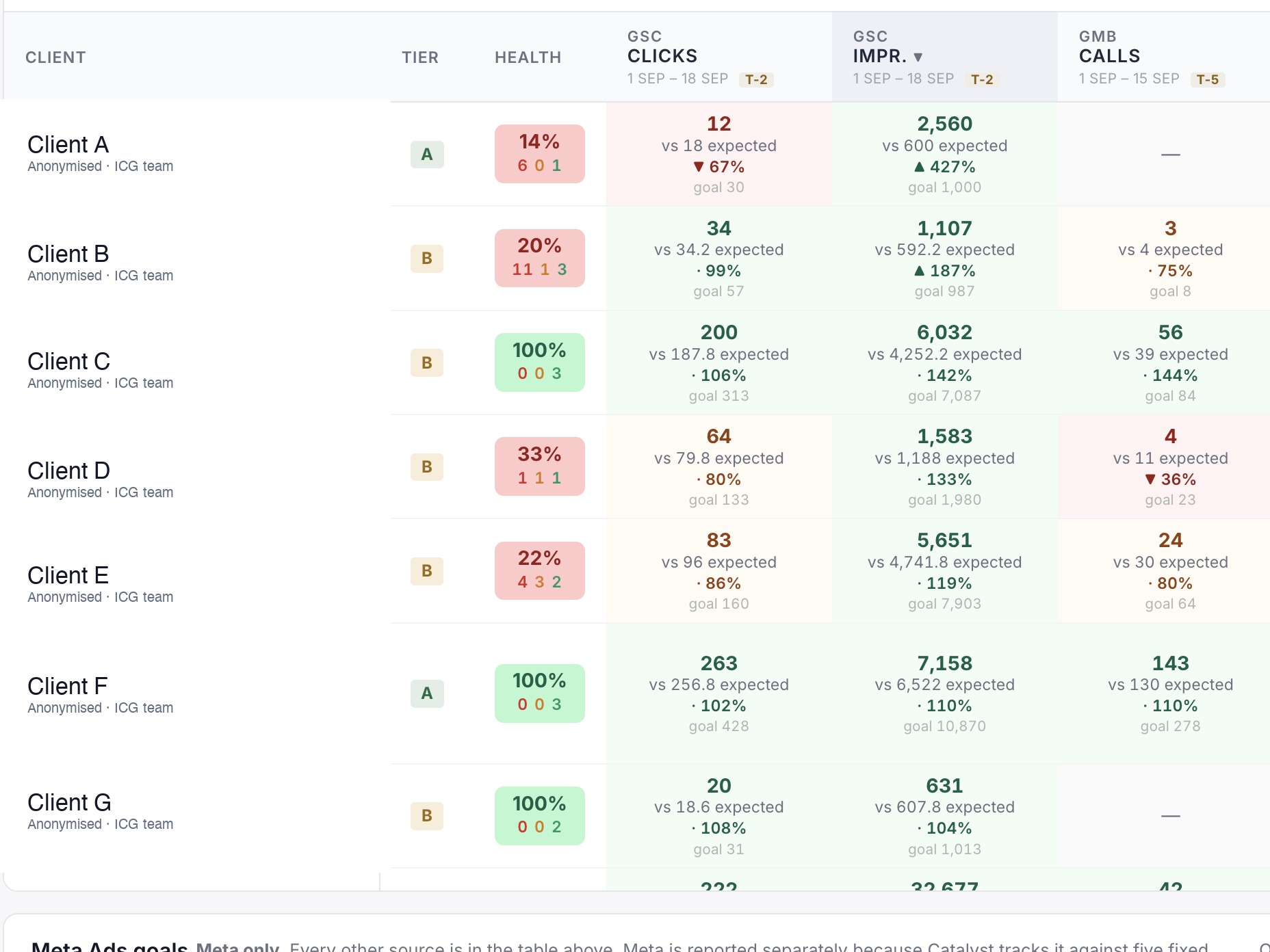
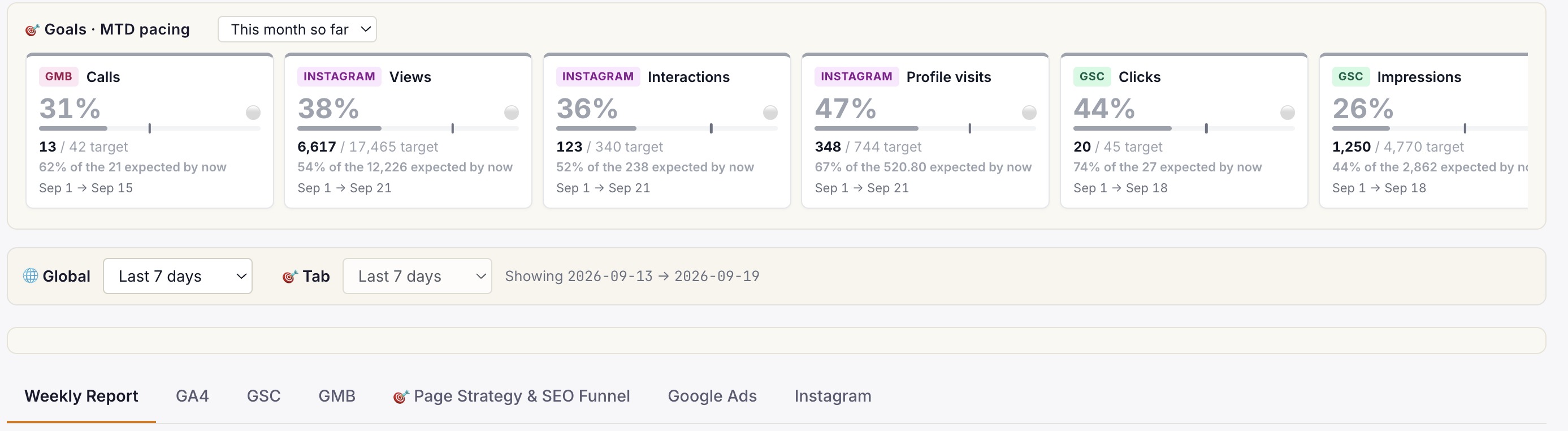
It works in demand generation, reaching patients before they search. Every lead it produces is screened before anyone calls. Our own software runs the work, and every stage is reported against a monthly target on Ichelon Agency OS.
See all nine stages and the tool behind each one →