


NMC-Compliant Medical SEO and Content (2026): An Education-First Framework
Under the NMC's October 2026 guidelines, normal-course health information is exempt but promotional search content is advertising. How hospitals and clinics build education-first SEO: titles, doctor directories, disclosure, AI marks and privacy.
No pitch. Written root-cause diagnosis. AI-powered, healthcare only.
Direct answer
Under the NMC's October 2026 guidelines, normal-course health information is exempt but promotional search content is advertising. How hospitals and clinics build education-first SEO: titles, doctor directories, disclosure, AI marks and privacy.
TL;DR

TL;DR
- The NMC's Guidelines on Ethical Advertising and Public Communication (public notice of 6 October 2026, in force immediately) count search-engine, platform-based, sponsored and AI-assisted promotional communication as advertising (para 3.2). Information given to the public in the normal course, without promotional intent or commercial benefit, is exempt (para 3.2, Explanation I). That exemption is the foundation of compliant medical SEO.
- Build two layers and keep them apart. An institutional layer, where a hospital or clinic publishes factual, objective and verifiable information about itself (paras 8.3 and 9.1). An education layer, where condition and procedure content informs patients without soliciting them (Explanation I, para 5.1, para 8.2(iv)).
- Safe patterns: factual service pages, condition education, factual price disclosure, accreditation and empanelment facts, process explainers, and a doctor directory with registration details. Unsafe: "best", "No.1", "top" or "painless" in titles and H1s (paras 8.1(iii) and 8.1(ix)), outcome guarantees, patient testimonials, before-after grids and doctor bios that read like sales copy.
- Every article that names a doctor must disclose the doctor's name, qualifications, registration status and SMC/NMR registration number (Explanation III and IV). AI-generated content that is published needs a source mark (para 7.2). Patient data stays out of content entirely (paras 7.4 and 7.6).
Updated 8 October 2026 to the National Medical Commission's Guidelines on Ethical Advertising and Public Communication by Hospitals/Medical Institutions and Registered Medical Practitioners (public notice No. R-13014/01/2024-Ethics, dated 6 October 2026, in force immediately). Paragraph numbers in this article refer to those guidelines. General information, not legal advice.
This is the owner page for education-first SEO and content in our NMC series. For the full clause-by-clause view of what doctors and hospitals may advertise, read the complete guide to the NMC advertising guidelines 2026. For what a hospital or clinic may publish about itself, see hospital and clinic advertising under the guidelines.
Table of contents
- Why NMC compliance is now an SEO problem, not just a legal one
- Which rules apply to medical content today?
- The education-first test: when content is not advertising
- Which content patterns are safe under the guidelines?
- How should you write H1s, title tags and meta descriptions?
- Author and doctor disclosure on every piece
- Doctor directory pages: what para 9.1 allows
- What replaces testimonials and case studies in SEO content?
- AI-assisted content and the para 7.2 source mark
- Patient privacy: paras 7.4 and 7.6, and the DPDP Act
- How the framework runs in practice
- The 70-30 fixed-variable model for compliance-first SEO
Why NMC compliance is now an SEO problem, not just a legal one
Direct answer: because the guidelines name search-engine and platform-based communication as advertising when it is promotional (para 3.2), and because Google's quality systems for medical topics already reward the same things the guidelines ask for: factual, attributed, source-cited content without exaggerated claims. A title tag that says "Best IVF Centre in Delhi with 95% Success Rate" now carries a regulatory problem as well as a quality problem.
The guidelines also close the old "the agency wrote it" gap. Publishing through an agency, platform or influencer does not absolve the doctor or the institution of content it authorised, commissioned, sponsored, adopted or knowingly permitted (para 4.4). Responsibility stays with the hospital or the registered medical practitioner (RMP) whose name is on the page.
For hospital marketing heads, the practical consequence is a sign-off layer before content goes live. Not a full legal review of every blog post, which would stop production, but an editorial checklist built on the clause language below. Money pages, blog bylines, doctor directory pages and Google Business Profile posts all go through it.
Which rules apply to medical content today?
Direct answer: the October 2026 guidelines, read with the Indian Medical Council (Professional Conduct, Etiquette and Ethics) Regulations 2002 and the NMC Act 2019 (paras 2.1(f) and 4.2). The 2002 Regulations remain the operative professional-conduct code; Chapter 6 of those Regulations covers unethical acts, including advertising. The 2023 RMP conduct regulations are not in force; the pillar guide explains that history.
This guide was first written around "Section 6" language. It now reflects the October 2026 guidelines, and every clause reference on this page is to a paragraph of those guidelines unless stated otherwise. For hospitals, the Clinical Establishments Act or the relevant State Act prevails where it irreconcilably conflicts with the guidelines (para 4.3).
The education-first test: when content is not advertising
Direct answer: content is outside the advertising definition when it is information given to the public in the normal course, without promotional intent or commercial benefit (para 3.2, Explanation I). Condition explainers, procedure guides and FAQ pages written to inform rather than to solicit sit here.
Four clauses make up the education-first base:
- Explanation I to para 3.2. Normal-course information without promotional intent or commercial benefit is exempt. The test is intent and effect, so a "condition explainer" that ends every paragraph with "book now" will not pass it.
- Explanation II to para 3.2. Factual information on equipment, technology, diagnostics or services is allowed, with no superiority, guaranteed-accuracy, guaranteed-outcome or comparative claims. This covers service pages and equipment pages.
- Para 5.1. RMPs may take part in health-awareness programmes and produce educational content, provided it does not promote their personal practice, does not solicit patients and is not monetised through promotional marketing.
- Para 8.2(iv). Health-education pamphlets in the clinic are permitted with no cure guarantee and no superiority claim. The same discipline is a sensible standard for downloadable patient guides.
A useful editorial question for every draft: would this page still make sense if the hospital's name were removed? If yes, it is probably education. If the page only works as a reason to choose this provider, it is advertising and must meet paras 8.1 and 8.3.
Which content patterns are safe under the guidelines?
Direct answer: six patterns stay clean while still ranking: factual service pages, condition education written for the general public, factual price disclosure, accreditation and empanelment facts, process explainers that describe what a treatment involves without promising outcomes, and a doctor directory that serves a patient-information function.
| Content pattern | Why it stays inside the guidelines | Example H1 |
|---|---|---|
| Factual service page | Describes procedure, duration, recovery and charges. No outcome promise (Explanation II; para 8.3). | Robotic knee replacement at [hospital name]: procedure, recovery timeline and charges |
| Condition education | Third-person, patient-neutral, sources cited from ICMR or peer-reviewed journals. Normal-course information (Explanation I). | Understanding polycystic ovary syndrome: the diagnosis pathway |
| Factual price disclosure | Charges are factual institutional information (para 8.3). Price disclosure must be factual and must not become an offer or inducement (para 8.1(x)). | IVF cycle charges at [clinic name]: what is included and what is not |
| Accreditation and empanelments | Accreditation status is listed in para 8.3. Insurance, CGHS or ESIC empanelment is verifiable. | Insurance networks and cashless empanelments at [hospital name] |
| Process explainer | Walks through what happens step by step. Educational, not promotional. | What happens in a first consultation for hair restoration |
| Doctor directory | Names, recognised qualifications, specialties, registration details and availability serving a patient-information function (para 9.1). | Orthopaedics department at [hospital name]: consultants and OPD timings |
What does not belong on any of these pages: "No.1", "best", "leading", "most trusted", "top" or "unmatched" (para 8.1(ix)); "100% success" or "painless" (para 8.1(iii)); fear or urgency copy (para 8.1(i)); discounts, coupons or free procedures (para 8.1(x)); and success rates presented as a promise (para 8.1(vi)).
How should you write H1s, title tags and meta descriptions?
Direct answer: build them around specificity (procedure, city, factual attribute) instead of adjectives. Para 8.1(iii) rules out "best doctor", "No.1", "100% success" and "painless" style claims. Para 8.1(ix) rules out "best", "No.1", "leading", "most trusted", "top" and "unmatched" unless the claim is objectively verifiable with a disclosed methodology, and 8.1(ix) binds hospitals as well as doctors.
The rewrite table our editorial team uses:
| Non-compliant title | Compliant rewrite |
|---|---|
| Best IVF Centre in Chennai: 95% Success Rate | IVF Treatment at [Clinic] Chennai: Protocols, Cycle Charges and Consultation |
| Top Orthopaedic Hospital in Pune | Orthopaedic Surgery at [Hospital] Pune: Departments, OPD Timings and Insurance |
| Delhi's No.1 Dental Clinic with Painless Implants | Dental Implants at [Clinic] Delhi: Procedure, Recovery and Charges |
| World-Class Cancer Care Ranked Best in India | Cancer Care at [Hospital]: Tumour Board, Departments and Multidisciplinary Team |
| Dr [Name], Best Cardiologist in Gurgaon | Cardiology Department at [Hospital] Gurgaon: Consultants and OPD Schedule |
The compliant versions carry more long-tail intent (procedure, city, charges, timings), which is what money-page traffic converts on. In our experience, H1 rewrites of this kind for IVF and orthopaedic clients have held or improved rank over a 90-day window. Meta descriptions follow the same rule: state what the page covers, not why the reader should choose the provider. Rankings or awards may be quoted only where the methodology is disclosed (para 8.1(ix)).
For a dental clinic, note that individual dentists are regulated by the Dental Council of India, not the NMC Act; see our dental clinic advertising guide.
Author and doctor disclosure on every piece
Direct answer: when a doctor posts on electronic media, the post must disclose the doctor's name, qualifications, registration status and SMC/NMR registration number (Explanation III). When a clinical establishment's post names an RMP, it must disclose the same details for that RMP (Explanation IV). For SEO content, that means the byline or medical-reviewer line carries registration details, not just "Dr [Name], MBBS".
A compliant author block for a clinician-reviewed article:
- Full name of the author and, where different, the medical reviewer
- Recognised qualifications
- Registration status and State Medical Council or NMR registration number
- Designation and department (factual, no adjectives)
- Date written and date last reviewed
- A note where AI assistance was material (para 7.2(c))
Named, credentialled authorship is also what Google's quality systems look for on medical topics. The disclosure requirement and the ranking signal point the same way. One limit applies: a doctor's educational content must not promote the doctor's personal practice or solicit patients (para 5.1), and a doctor's public-health talks are given in the doctor's own name and designation without promoting the employer (para 8.2(iii)). See educational YouTube for doctors under para 8.2(iii).
Doctor directory pages: what para 9.1 allows
Direct answer: a hospital website's doctor directory, listing names, recognised qualifications, specialties, registration details and availability, serves a patient-information function and is "materially distinct" from paid promotion (para 9.1). What it may not become is a promotional portrayal of an individual RMP (para 8.3).
The directory template we use has seven fields and nothing else:
- Full name and SMC or NMR registration number
- Recognised qualifications with awarding institution
- Current designation and department
- Years in clinical practice, stated as a number, not "decades of experience"
- Areas of clinical work, stated factually, not "specialist in miracle recoveries"
- Languages spoken and OPD schedule
- Peer-reviewed publications and society memberships
Leave out adjectives ("renowned", "celebrated"), patient counts, celebrity-patient references and review widgets attached to the doctor. On photographs: para 9.2 does not permit an RMP's photograph where it constitutes self-advertisement, so keep any directory photo to plain identification and do not reuse it in promotional creatives. A directory built this way still serves branded searches such as "Dr [name] OPD timings Gurgaon", because it answers the question the searcher is asking. For bios specifically, see how to write an NMC-clean doctor bio.
What replaces testimonials and case studies in SEO content?
Direct answer: process and condition content, not patient endorsements. RMPs may not use promotional cases, before-after photos, celebrity patients or success stories (para 8.1(v)), or patient testimonials (para 8.1(xi)). Patient consent does not make a prohibited testimonial or before-after image lawful (para 6.2). No RMP or institution may solicit, buy, procure or manipulate fake, paid or misleading reviews or testimonials (Explanation V).
What to publish instead:
- Process explainers. What happens at the first consultation, during the procedure, at discharge and at follow-up, written in general terms. No patient appears and no outcome is promised.
- Facility and department pages. Factual information on infrastructure, equipment and services (Explanation II; para 8.3), photographed without patients.
- Clinician-authored educational case discussion. The para 8.1(v) exception covers scientific or educational material with anonymised consent. Keep it in an educational context, remove identifying features (para 6.4; para 7.4) and never use it as a reason to choose the provider.
The detail on stories and images is in our guide to patient testimonials and before-after photos under the guidelines.
AI-assisted content and the para 7.2 source mark
Direct answer: AI-generated promotional campaigns for commercial interest are prohibited, and AI-generated content that is permitted must carry a source mark stating that it is AI-generated (para 7.2). Content must not be misleading (7.2(a)), must not use synthetic patients, testimonials or endorsements (7.2(b)), must disclose AI where material (7.2(c)), and any patient data fed to AI tools must follow privacy law (7.2(d)).
In an SEO workflow this means: AI may help with research and first drafts; a qualified clinician reviews clinical accuracy; the editor removes anything that reads as a claim; and where AI-generated text or images are published, the page carries a source mark. No AI-generated "patient" images or quotes, ever. More in our guide to AI content in healthcare marketing.
Patient privacy: paras 7.4 and 7.6, and the DPDP Act
Direct answer: content may not carry identifiable patient data (names, faces, anomalies) (para 7.4), and communication must follow the IT Act 2000 and the Digital Personal Data Protection Act 2023 with the 2025 Rules (para 7.6). For SEO teams, that changes three surfaces: lead and appointment forms, WhatsApp opt-ins and chatbot transcripts.
Changes we make on client sites:
- Every appointment form carries a short, plain-language consent line naming the purpose (booking) and how long the data is kept.
- Feedback forms separate consent for internal quality use from any other use, with two distinct checkboxes, never one blanket clause.
- WhatsApp opt-ins carry a documented opt-out and the grievance officer's contact.
- No patient details, case photographs or chat excerpts are copied into blog posts, FAQs or social content.
How the framework runs in practice
Every URL is tagged before it enters the SEO calendar: institutional (factual hospital or clinic information under paras 8.3 and 9.1), education (normal-course information under Explanation I and para 5.1), or doctor education (content in a doctor's own name and designation under para 8.2(iii)). Each layer has its own checklist. There is no layer for promoting an individual doctor.
- Angryturtle handles the Google Business Profile layer and flags superlative and success-rate phrasing before a post goes live. See GBP content under the guidelines.
- YODA runs educational YouTube for hospital and doctor channels, with titles and descriptions written to the same rules.
- Meta Catalyst IQ is the paid-ads engine; ad copy is screened against paras 8.1 and 8.3 before it enters an ad set. See Meta ad copy under the guidelines.
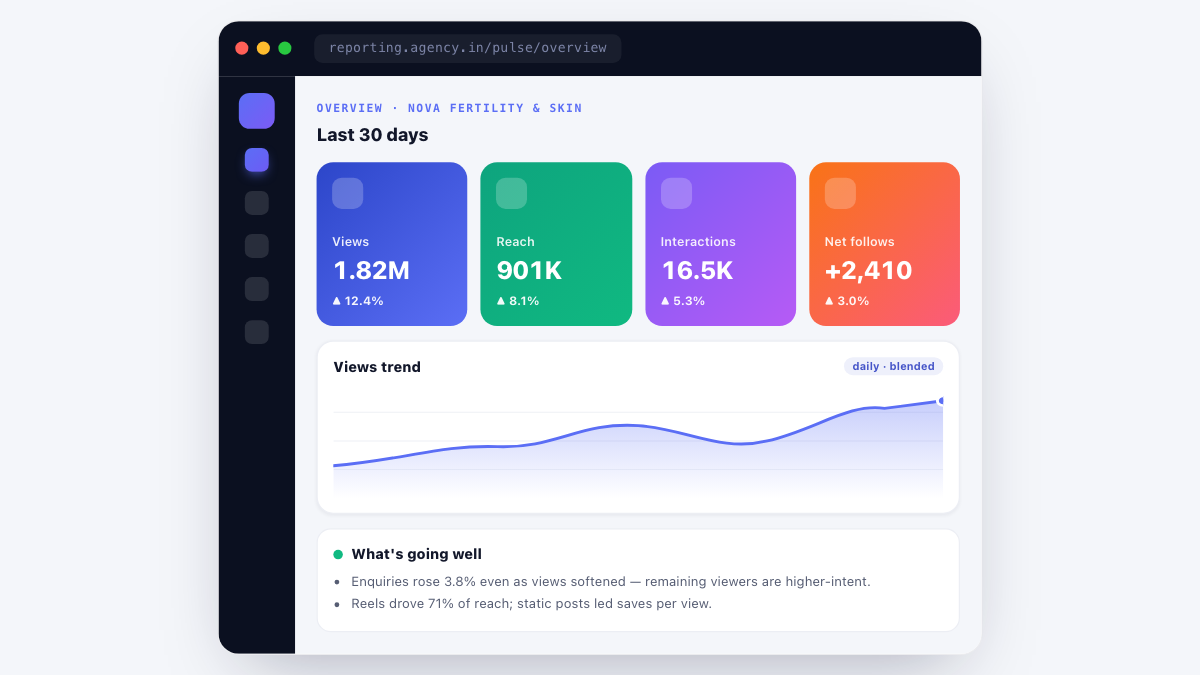
- Prism Spy and Prism Pulse cover Meta ad intelligence and Instagram analytics, so content teams can see which factual, educational formats work in their city and specialty.
- AtomCRM and HealthPro 360 hold the consent logs, retention timers and grievance-officer workflow for the privacy layer.
Hero pieces get a founder-led editorial pass before publication. For the writing-side checklist and phrase swaps, see medical content writing that passes a compliance review; for patient leaflets and guides, see patient education content under the guidelines.
AtomCRM (Rs 50,000/- setup + Rs 799/- per telecaller) and HealthPro 360 (Rs 14,999 per month) hold the DPDP layer. Consent logs, retention timers, grievance-officer workflow — so the marketing team is not doubling up as the compliance team.
The 70-30 fixed-variable model for compliance-first SEO



Direct answer: ICG's SEO retainers price the compliance layer as part of the fixed monthly component, so healthcare clients never have to choose between ranking hard and compliance exposure. Three tiers, with 70% of the fee fixed and 30% tied to a twelve-month organic outcome target on a sliding-scale slab.
- Foundation — Rs 49,999 per month. Compliance-audited money pages, monthly SEO execution, one product surface (usually Angryturtle for the GBP layer).
- Growth — Rs 74,999 per month. Adds YODA for YouTube AIO, expanded content calendar, and a quarterly NMC guidelines audit of every indexed URL.
- Scale — Rs 99,999 per month. Adds Meta Catalyst IQ for the paid layer, a dedicated compliance reviewer for hero content, and a monthly DPDP checkpoint.
The same 70-30 structure extends to Google Ads and Meta Ads (5L plus monthly budgets) and to YouTube SEO and AIO (50K plus monthly). This keeps agency and client incentives aligned — nobody gets paid for traffic that arrives via a compliance-fragile page.
Want your current pages checked first? Our free NMC compliance check reviews a hospital's or clinic's website, Google Business Profile and social channels against the October 2026 guidelines.
How ICG works within these guidelines
ICG is a healthcare marketing agency. Our clients are hospitals, clinics and medical institutions, which may publish factual, objective and verifiable information about themselves (paras 8.3 and 9.1). For individual doctors, ICG supports only genuinely educational content in the doctor's own name and designation (para 8.2(iii)). For doctors and their practices, we run patient-education-driven campaigns: awareness content that helps patients understand their condition and their options, published in the doctor's own name and designation (para 8.2(iii)) and kept free of the self-promotion that para 8.1(ii) bars.
The work is education-first and runs across six channels:
- Awareness content on YouTube. Doctor-led educational videos on public health and disease awareness, in the doctor's own name and designation, without promoting the employer organisation (para 8.2(iii)). See YODA and YouTube marketing for healthcare.
- Research articles and blogs that help patients understand their options: information shared in the normal course, not promotion (para 3.2, Explanation I). See healthcare content marketing, ICG research reports and healthcare SEO.
- Expert answers on Reddit and Quora from named, disclosed accounts. No anonymous or fake posts, no undisclosed commercial relationships and no manufactured engagement (paras 8.1(xi) and 8.1(xii)). See Reddit and Quora programmes.
- Awareness campaigns on Meta, run from the hospital's or clinic's own page, with no discounts, offers, free procedures or other inducements (paras 8.1(x) and 8.3). See Meta advertising for hospitals and clinics.
- NMC-compliant Google Ads landing pages: factual departments, services and facilities, with no "best", "No.1", "100% success", "painless" or "guaranteed" claims (paras 8.1(iii) and 8.1(ix)). See Google Ads for hospitals and clinics.
- "Learn More" instead of "Book Now" on patient-facing pages, so that a page informs rather than solicits (paras 8.1(ii) and 8.3(ii)).
All six rest on three kinds of content: scientific (evidence-based, checked by a qualified clinician), persona-based (written for the questions a specific patient group asks) and consumer-based (built from how people search, compare and decide). AI-assisted drafts go through human medical review, and AI-generated content that is published carries an AI source mark (para 7.2). We do not publish patient testimonials, before-and-after images or superiority claims, and we never buy, incentivise or gate reviews.
Free NMC compliance check. We review a hospital's or clinic's website, Google Business Profile and social channels against the October 2026 guidelines and send back a written list of fixes.
See what the check covers · Request the check · Book a 30-minute call
General information, not legal advice. Source: NMC public notice No. R-13014/01/2024-Ethics, 6 October 2026.
Book a free SEO diagnostic.
Hanuman Sihag's team runs a live crawl, checks technical health, cannibalisation, schema coverage and content gaps. 60 minutes, prioritised fix list.
Questions readers ask
about this topic.
The three platforms
behind every ICG engagement.
Beacon
CAPI middleware that fixes Event Match Quality, translates CRM statuses to Meta-standard events, dedups across channels.
Agency OS
Live client dashboard. GSC, GA4, Google Ads, Meta Ads, IVR calls in one view. Login anytime, not monthly.
Phoenix
Clinic revenue intelligence over your PMS. Daily action queue: Prevent Loss, Maintain & Engage, Grow Revenue. Multi-centre rollout.
Or book a free 30-min audit to see all three in action on your account.
Healthcare brands
that already run on ICG.
A representative slice of the 150+ healthcare brands ICG has delivered for across India. Most engagements remain under NDA.


What ICG clients say · on video.
"Scale up of organic channels and business consulting. ICG has absolute domain authority in their field."
"Working with ICG transformed how we acquire IVF patients in Gurgaon. They understand the fertility journey from inquiry to consult..."
"What Ichelon accomplished — they got all my ideas and worked over 3-4 months to create an amazing, super-customised website."
The intelligence stack behind this playbook.
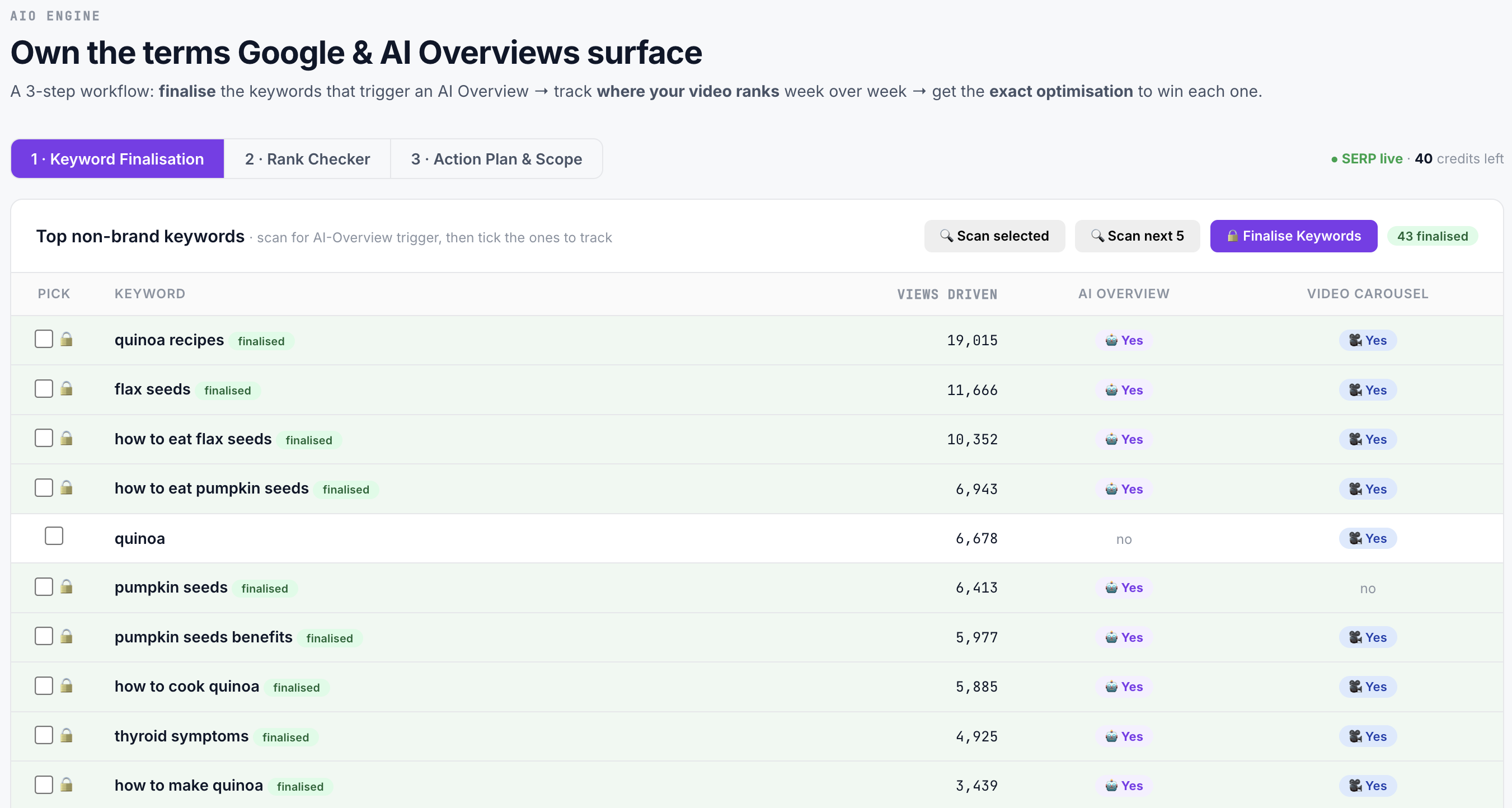
Every ICG engagement runs on the Search Intelligence Trifecta — Angryturtle for GMB, SIE for search and AI Overview, YODA for YouTube. Live product screens below.
Need help operationalising this?
Every ICG service is healthcare-only, NMC + DPDP-aware, and built around the patient-research patterns that drive Indian healthcare growth in 2026.
Every practice welcome — packages from ₹20,000/mo.
Goals-Driven engagements · Performance-Linked Payout Models available



More from
ICG.
Five trends shaping Indian healthcare marketing through 2027: AI-first patient research, Conversions API adoption, ABDM discovery, the AEO w...
Healthcare AIO is the discipline of getting your clinic or hospital cited inside Google AI Overviews, ChatGPT and Perplexity answers — not j...
Conversational-search advertising places brand messages inside AI chat answers — ChatGPT, Perplexity, Copilot — rather than beside a results...
Stop guessing.
Book a Diagnostic.
30 minutes. Free. With the AI-powered healthcare-only marketing agency 150+ brands already run on. No slides, no pitch, no hard close.


