


NMC Guidelines for Doctors on YouTube (2026): Educational Videos Under Para 8.2(iii)
The NMC guidelines of 6 October 2026 let doctors give public-health talks on YouTube in their own name and designation, without promoting their employer (para 8.2(iii)). Videos must educate, not solicit or be monetised through promotion, and must show name, qualifications and registration number.
No pitch. Written root-cause diagnosis. AI-powered, healthcare only.
Direct answer
The NMC guidelines of 6 October 2026 let doctors give public-health talks on YouTube in their own name and designation, without promoting their employer (para 8.2(iii)). Videos must educate, not solicit or be monetised through promotion, and must show name, qualifications and reg...
TL;DR

TL;DR
- The NMC guidelines of 6 October 2026 expressly allow doctors to give lectures or talks on public health through electronic media, in their own name and designation, without promoting their employer (para 8.2(iii)). YouTube is electronic media, so educational video is allowed ground.
- Para 5.1 sets the conditions: the content must not promote the doctor's personal practice, must not solicit patients and must not be monetised through promotional marketing.
- Every video needs the doctor's name, qualifications, registration status and SMR/NMR number (Explanation III). Testimonial videos, before-after footage, "book now" overlays, superlatives in titles, unlabelled AI elements and live surgery outside the NMC framework are out.
- ICG builds doctor-led educational video programmes for hospitals and clinics through YODA, with a compliance review before anything is published.
Updated 8 October 2026 to the National Medical Commission's Guidelines on Ethical Advertising and Public Communication by Hospitals/Medical Institutions and Registered Medical Practitioners (public notice No. R-13014/01/2024-Ethics, dated 6 October 2026, in force immediately). Paragraph numbers in this article refer to those guidelines. General information, not legal advice.
This is the main ICG guide to the NMC rules for YouTube and educational video. For Instagram, Facebook and LinkedIn, see NMC guidelines for doctors on social media; for the whole framework, the complete guide to the NMC advertising guidelines 2026.
Table of contents
- Why educational YouTube matters for Indian healthcare
- What do the NMC guidelines say about doctors on YouTube?
- What can't go into a doctor's video?
- AI-generated elements in medical video (para 7.2)
- Patients on camera and live surgery
- Which video formats work?
- How should a hospital structure a doctor-led YouTube channel?
- What does it cost?
- How do you know the videos are working?
- How ICG runs educational YouTube programmes
Why educational YouTube matters for Indian healthcare
Health searches on YouTube in India increasingly happen in Hindi, Tamil, Telugu, Bengali, Marathi and Malayalam, and people looking for "knee replacement recovery kitna time lagta hai" want a doctor explaining it calmly, not a slick advertisement.
Two shifts make video more important. First, Google's AI Overviews and other answer engines now pull short clips into answers to "how does this procedure work" or "what are the warning signs" queries. A cardiologist in Pune with 40 clear explainer videos is in the running for that surface. Second, people researching a condition now watch before they decide anything. Good educational video helps them understand their options, which is exactly what the guidelines encourage.
The same platform is also where most doctor-video compliance problems happen, because the habits of influencer video (hooks, testimonials, before-after reveals, "link in description to book") do not carry over to medicine. The rest of this guide is about doing educational video properly.
What do the NMC guidelines say about doctors on YouTube?
The Guidelines on Ethical Advertising and Public Communication by Hospitals/Medical Institutions and Registered Medical Practitioners, issued on 6 October 2026, are read with the Indian Medical Council (Professional Conduct, Etiquette and Ethics) Regulations 2002 and the NMC Act 2019 (paras 2.1(f), 4.2). Four provisions shape doctor video.
Para 8.2(iii): talks in your own name and designation
Among the exceptions to the advertising restrictions, para 8.2(iii) allows lectures or talks on public health through TV, radio and electronic media, in the doctor's own name and designation, without promoting the employer organisation. In practice:
- Own name and designation: introduce yourself as, for example, "Dr [Name], Consultant Cardiologist". Stating where you work as part of your designation is identification.
- Without promoting the employer: no hospital promo bumper, no "visit [Hospital] for the best cardiac care", no package prices, no "our hospital's new cath lab is the most advanced in the city".
- On public health: conditions, prevention, warning signs, how treatments work, what recovery involves, when to see a doctor.
Para 5.1: educational, not promotional
Doctors may produce educational content provided it does not promote their personal practice, does not solicit patients and is not monetised through promotional marketing. A video that teaches is fine. A video that ends with "book a consultation with me" is solicitation (para 8.1(ii)).
"Monetised through promotional marketing" is not defined further. The clear cases are sponsored segments, brand integrations, affiliate links and paid product mentions, which also run into the bar on product endorsements in para 8.1(iv). The guidelines do not specifically address YouTube's own ad revenue on an educational channel; if that matters to you, take advice before switching it on.
Explanation III: the disclosure line
Posts on electronic media must disclose the doctor's name, qualifications, registration status and SMR/NMR registration number (Explanation III to para 3.2). For YouTube, put it in the first lines of every description, in the channel's About section, and on a lower-third or end card. When a hospital channel features a doctor, the same disclosure applies to that doctor (Explanation IV).
Para 3.2: videos and Shorts are covered
Para 3.2 includes audio-visual and social-media communications in the definition of advertisement when they promote or solicit. Long-form videos, Shorts, live streams, community posts and thumbnails are all judged by the same test.
What can't go into a doctor's video?
- Testimonial videos. Explanation V bars a doctor from requesting or sharing patient testimonials or reviews for professional promotion on social media, and para 8.1(xi) bars patient, celebrity, influencer and employee testimonials. Consent does not change this (para 6.2). See patient testimonials and before-after photos.
- Before-after footage and success stories, except for scientific or educational use with anonymised consent (para 8.1(v)).
- Superlatives in titles, thumbnails and voiceovers. "Best cardiologist in Delhi", "India's top IVF success rate", "painless", "100% success" (paras 8.1(iii), 8.1(ix)). This is the most common problem on Indian doctor channels.
- Solicitation. "Book now" overlays, "call this number" end screens, "limited slots" (para 8.1(ii)).
- Offers. Discounts, free consultations or package prices used as inducements (para 8.1(x)).
- Product endorsements, including "the sunscreen I recommend" sponsored segments (para 8.1(iv)).
- Fear-based hooks and hidden risks. "This symptom will kill you" thumbnails; recovery videos that leave out complications (paras 8.1(i), 8.1(vi)).
- Bought views, subscribers or comments (para 8.1(xii)).
AI-generated elements in medical video (para 7.2)
Para 7.2 prohibits AI-generated promotional campaigns for commercial interest. Permitted AI-generated content must carry a source mark stating that it is AI-generated. It also sets four conditions: no misleading AI content, no synthetic patients, testimonials or endorsements, disclosure of AI where material, and patient data fed to AI tools must follow privacy law.
For a YouTube workflow, that means:
- AI voiceovers, AI avatars, AI-generated B-roll, animations and thumbnails carry an on-screen and description label such as "Contains AI-generated visuals".
- No AI "patients" describing symptoms or results, and no AI-cloned doctor voice saying things the doctor did not say.
- Scripts drafted with AI are checked by the doctor for clinical accuracy before recording.
- No patient records, scans or photographs go into AI tools unless that use is lawful under the DPDP Act 2023 (para 7.6).
More detail in AI content in healthcare marketing.
Patients on camera and live surgery
Para 7.4 bars identifiable patient data: names, faces, anomalies. Paras 6.1 to 6.4 allow patient information or images only where the law permits and with consent, and require identifying features to be blurred or cropped. A face, a voice, a distinctive tattoo, a hospital wristband or a ward board in the background can identify someone.
Consent filmed for one purpose does not cover another. Under the DPDP Act 2023 (para 7.6), consent must be specific to the use, and it can be withdrawn, so keep a record of what each person agreed to and a takedown process for when they change their mind. Even then, consent does not make a testimonial lawful (para 6.2).
Live surgery broadcasts follow the separate NMC framework for live surgery (para 7.5). Do not stream or post surgical footage on a public channel without checking that framework first. Recorded surgical teaching material belongs in professional settings, de-identified.
Which video formats work?
Four formats consistently earn watch time on Indian medical channels: long-form condition explainers (8 to 12 minutes), symptom-and-warning-sign Q&A (5 to 7 minutes), vernacular Shorts under 60 seconds, and aftercare videos for people already in treatment. A monthly live Q&A on general questions works only once a channel has an audience large enough to fill the comment queue, and it needs a moderator so no one receives individual advice in public.
The reason these win is simple. Health search on YouTube is intent-heavy and language-mixed. Someone asking about knee replacement recovery wants a doctor sitting still and talking for six minutes about the actual timeline, including what can go wrong. Make that, title and describe it accurately, and YouTube will keep recommending it next to related queries for a long time.
What does not work: hospital brand films with drone shots, boardroom testimonials and the doctor reading "our commitment to excellence" from a teleprompter. In our sample these hold viewers for seconds, and most of them would fail the guidelines anyway.
How should a hospital structure a doctor-led YouTube channel?
A workable structure: one long-form explainer a week, two Shorts cut from the same shoot, one video a month answering the commonest general questions from the comments, and a quarterly refresh of the About section, playlists and pinned comment. Total shoot time is about four hours a month.
Whose channel? On a hospital or clinic channel, the institution may present factual information about its departments and services (para 8.3), and doctors can lead educational videos in their own name and designation. Para 8.3 bars promotional portrayal of an individual doctor, so the channel should not become a showcase for one person. On a doctor's own channel, para 8.2(iii) applies: educate, and do not promote the employer.
Playlists. Fewer, deeper playlists work better. A dermatology channel with three playlists (Conditions Explained, Procedures Explained, Skincare Myths) concentrates watch time better than nine narrow ones.
Comments. Indian medical channels attract many "please help, my mother has..." comments. The right answer is never an individual clinical one. Pin a comment on every video: "This video is educational and does not replace a consultation. Please see a doctor about your own symptoms." Do not reply with diagnoses, prices or "DM us to book".
What does it cost?
Cost depends on how often you publish, how much editing each video needs, and whether there is a proper review layer. That review layer (clinical accuracy plus a compliance check against the guidelines) is the part not to cut.
An Indian clinic serious about YouTube should budget between Rs 50,000 and Rs 2,00,000 per month depending on production intensity and channel maturity. Under Rs 50,000 you can produce content but cannot sustain a compliance-review layer or measurement discipline. Above Rs 2,00,000, spend efficiency drops sharply unless you are running paid YouTube ads on top of organic.
ICG's YouTube retainers sit inside the same 70-30 fixed-variable pricing model we use for SEO and Meta Ads work. The three anchor packages are Foundation at Rs 49,999 per month, Growth at Rs 74,999 per month, and Scale at Rs 99,999 per month. 70% of the fee is fixed against a defined scope (weekly long-form, shorts, thumbnails, descriptions, compliance review, monthly report). The remaining 30% moves against a 12-month traffic and enquiry target agreed at the start, on a sliding scale so partial delivery earns partial variable rather than zero.
| Package | Monthly retainer | Long-form videos | Shorts | Best for |
|---|---|---|---|---|
| Foundation | Rs 49,999 | 2 per month | 4 per month | Solo doctor, new channel |
| Growth | Rs 74,999 | 4 per month | 8 per month | 2-4 doctor clinic, 6-24 month channel |
| Scale | Rs 99,999 | 4-6 per month | 12 per month | Multi-specialty clinic or hospital, 12+ month channel |
The variable portion matters more than the fixed. A pure fixed-fee retainer, which is what most Indian video agencies still offer, gives the agency zero incentive to fix a stalled channel in month seven. A 70-30 model forces both sides to keep asking whether the channel is actually producing enquiries, not just producing videos.
ICG uses AtomCRM (Rs 50,000/- setup + Rs 799/- per telecaller) to sit under the WhatsApp and call-back funnels, and HealthPro 360 (Rs 14,999 per month) as the RCM and EHR overlay for clinics that need to correlate YouTube-sourced enquiries with actual procedures billed six to twelve months later. The point is not the specific stack. The point is that if your YouTube programme is not connected to a CRM that can tell you which videos produced billed procedures, you will never know whether the channel is working.
How do you know the videos are working?
Judge educational video on whether it educates and is found:
- Watch time and retention: are people watching the explanation through?
- Search visibility: do the videos appear for the questions they answer, on YouTube and on Google?
- AI answer citations: how often the channel's videos are surfaced in Google's AI Overviews and other answer engines for target questions.
- Questions in comments: what people still do not understand, which becomes the next video.
For hospital channels, enquiries reaching the hospital through its own factual channels (its website, phone line and contact page) can be tracked in its CRM with UTM-tagged description links to educational pages. The videos themselves should not carry booking calls to action.
How ICG runs educational YouTube programmes
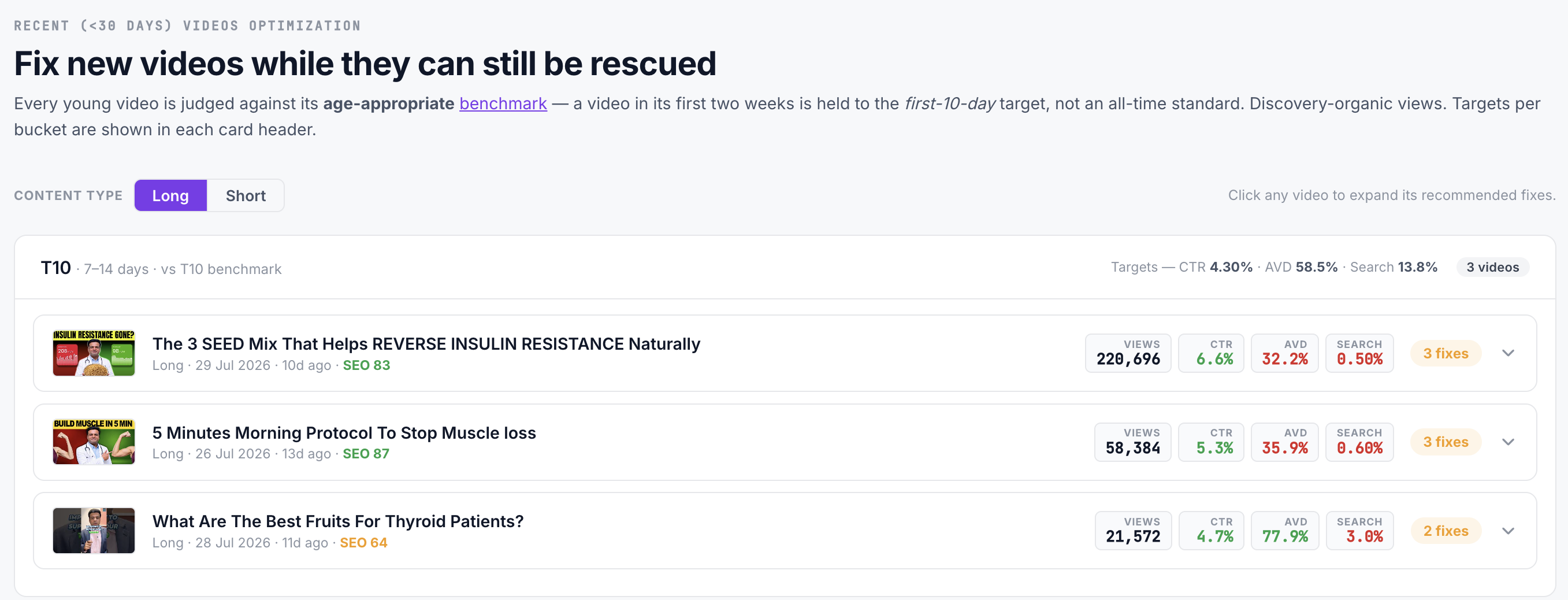
ICG builds doctor-led educational video programmes for hospitals and clinics through YODA, our AI-native YouTube system, with a compliance review between the shoot and publication. YODA's topic engine starts from the questions patients actually ask; the title generator refuses superlatives; the description templates include the Explanation III disclosure line and the educational disclaimer. Any AI-generated element is labelled under para 7.2.
Every long-form video goes through a named editor and a named compliance reviewer before it publishes; Shorts go through a shorter checklist. A monthly channel review flags weak retention and problem comments for action. The full service is described on YouTube marketing for healthcare.
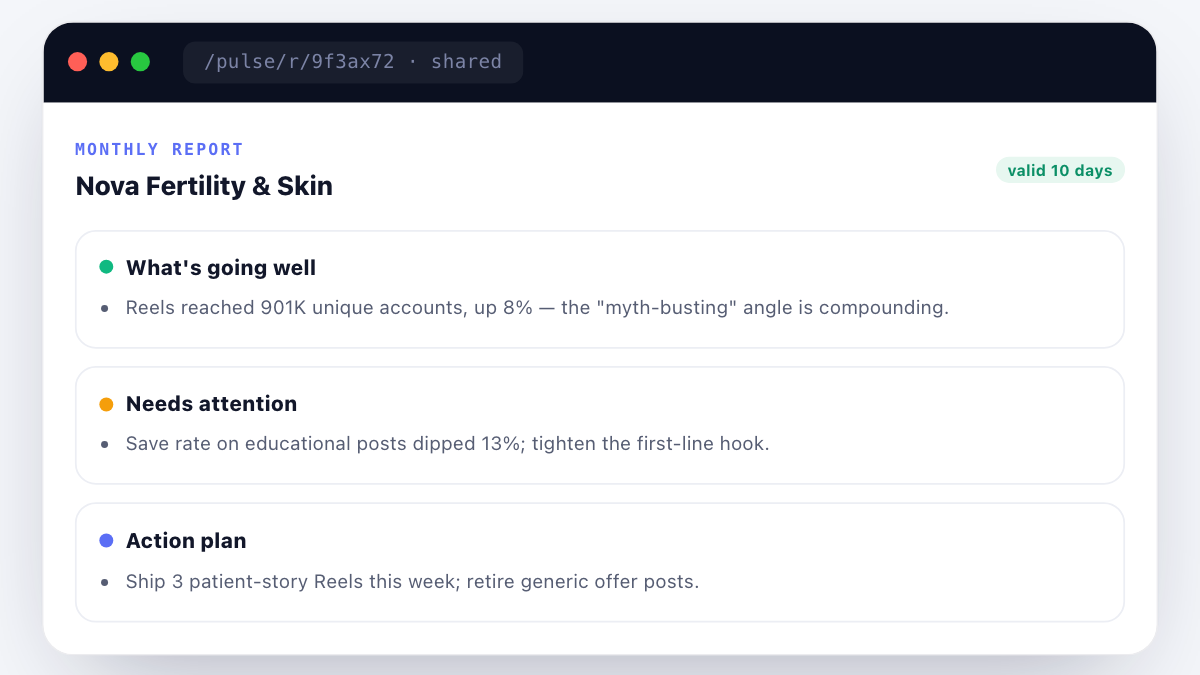
Footage can be reused across the hospital's other channels, for example in Google Business Profile posts through Angryturtle or Instagram Reels measured in Prism Pulse, as long as each reuse goes through the same review. If a hospital promotes videos with paid YouTube or Meta campaigns, the ad copy and thumbnail get a separate pass, and campaigns run from the hospital's own account, never as promotion for an individual doctor (para 8.1(ii)).



How ICG works within these guidelines
ICG is a healthcare marketing agency. Our clients are hospitals, clinics and medical institutions, which may publish factual, objective and verifiable information about themselves (paras 8.3 and 9.1). For individual doctors, ICG supports only genuinely educational content in the doctor's own name and designation (para 8.2(iii)). For doctors and their practices, we run patient-education-driven campaigns: awareness content that helps patients understand their condition and their options, published in the doctor's own name and designation (para 8.2(iii)) and kept free of the self-promotion that para 8.1(ii) bars.
The work is education-first and runs across six channels:
- Awareness content on YouTube. Doctor-led educational videos on public health and disease awareness, in the doctor's own name and designation, without promoting the employer organisation (para 8.2(iii)). See YODA and YouTube marketing for healthcare.
- Research articles and blogs that help patients understand their options: information shared in the normal course, not promotion (para 3.2, Explanation I). See healthcare content marketing, ICG research reports and healthcare SEO.
- Expert answers on Reddit and Quora from named, disclosed accounts. No anonymous or fake posts, no undisclosed commercial relationships and no manufactured engagement (paras 8.1(xi) and 8.1(xii)). See Reddit and Quora programmes.
- Awareness campaigns on Meta, run from the hospital's or clinic's own page, with no discounts, offers, free procedures or other inducements (paras 8.1(x) and 8.3). See Meta advertising for hospitals and clinics.
- NMC-compliant Google Ads landing pages: factual departments, services and facilities, with no "best", "No.1", "100% success", "painless" or "guaranteed" claims (paras 8.1(iii) and 8.1(ix)). See Google Ads for hospitals and clinics.
- "Learn More" instead of "Book Now" on patient-facing pages, so that a page informs rather than solicits (paras 8.1(ii) and 8.3(ii)).
All six rest on three kinds of content: scientific (evidence-based, checked by a qualified clinician), persona-based (written for the questions a specific patient group asks) and consumer-based (built from how people search, compare and decide). AI-assisted drafts go through human medical review, and AI-generated content that is published carries an AI source mark (para 7.2). We do not publish patient testimonials, before-and-after images or superiority claims, and we never buy, incentivise or gate reviews.
Free NMC compliance check. We review a hospital's or clinic's website, Google Business Profile and social channels against the October 2026 guidelines and send back a written list of fixes.
See what the check covers · Request the check · Book a 30-minute call
General information, not legal advice. Source: NMC public notice No. R-13014/01/2024-Ethics, 6 October 2026.
Book a free 30-minute Brand & Growth Diagnostic.
It's a working session, not a sales pitch — you leave with a written root-cause analysis you can act on, whether or not you engage ICG.
Questions readers ask
about this topic.
The three platforms
behind every ICG engagement.
Beacon
CAPI middleware that fixes Event Match Quality, translates CRM statuses to Meta-standard events, dedups across channels.
Agency OS
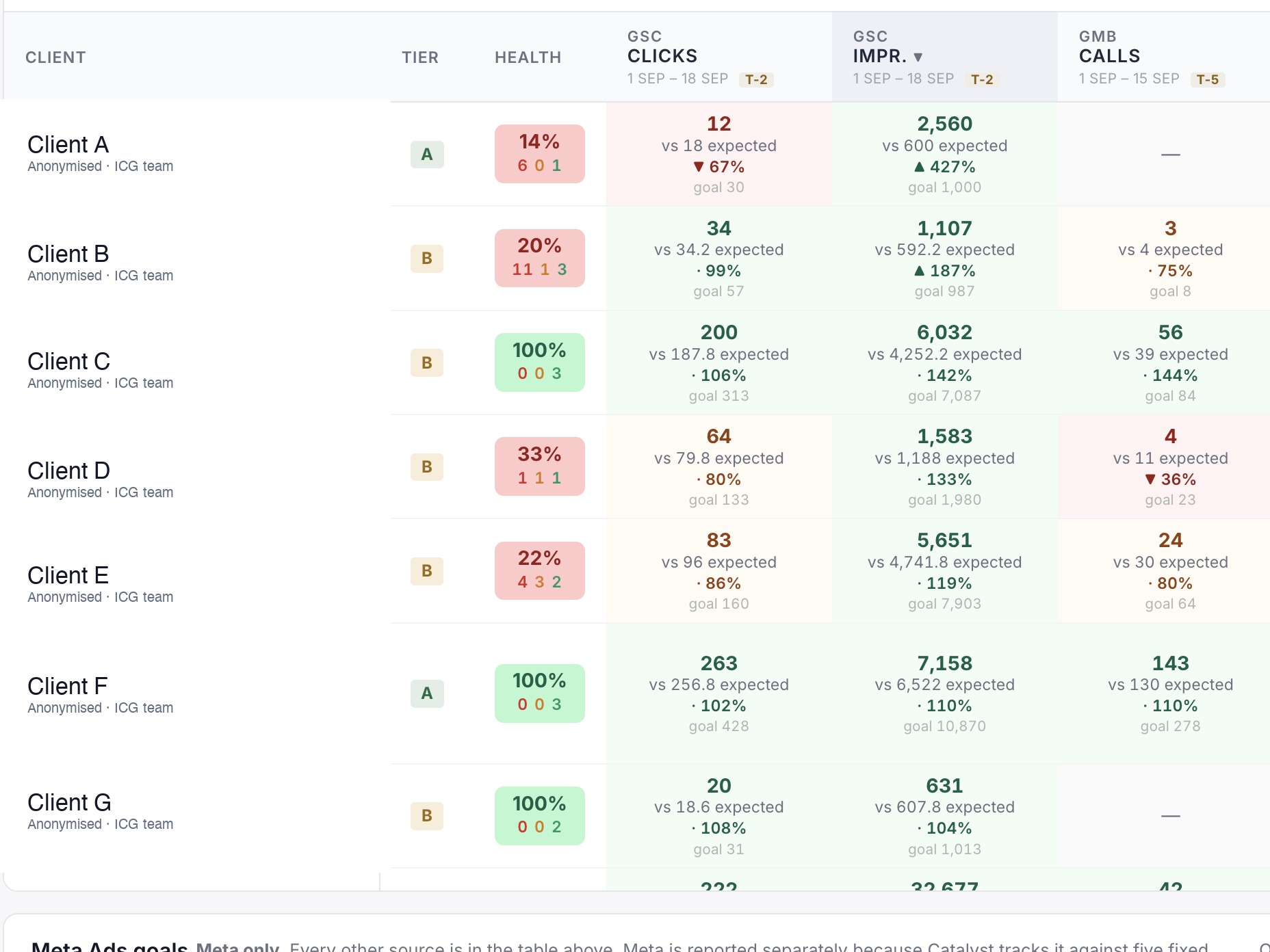
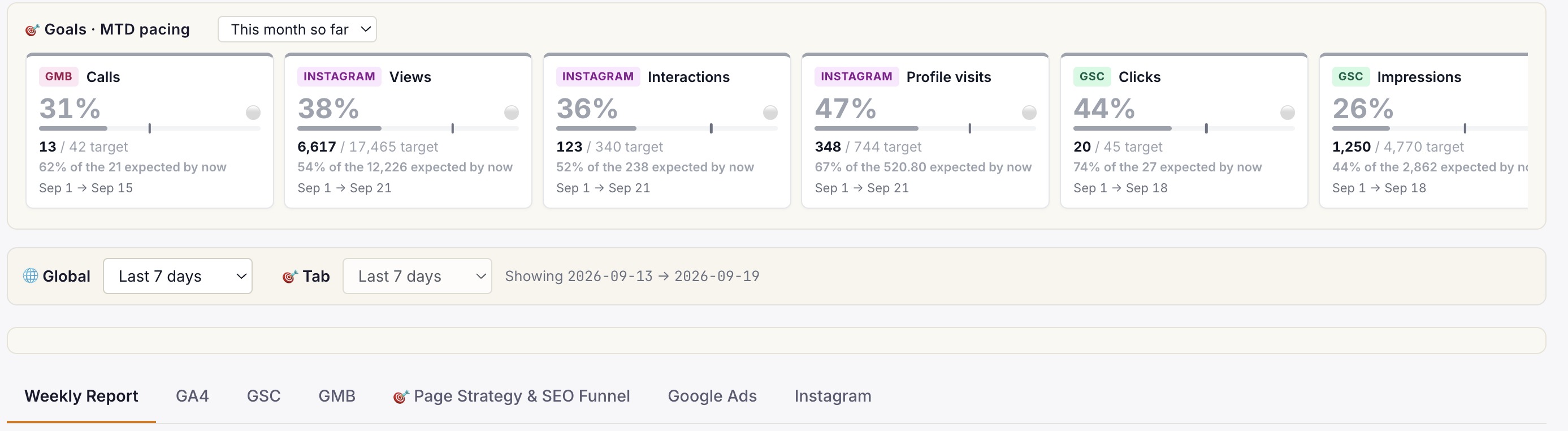
Live client dashboard. GSC, GA4, Google Ads, Meta Ads, IVR calls in one view. Login anytime, not monthly.
Phoenix
Clinic revenue intelligence over your PMS. Daily action queue: Prevent Loss, Maintain & Engage, Grow Revenue. Multi-centre rollout.
Or book a free 30-min audit to see all three in action on your account.
Healthcare brands
that already run on ICG.
A representative slice of the 150+ healthcare brands ICG has delivered for across India. Most engagements remain under NDA.


What ICG clients say · on video.
"Scale up of organic channels and business consulting. ICG has absolute domain authority in their field."
"Working with ICG transformed how we acquire IVF patients in Gurgaon. They understand the fertility journey from inquiry to consult..."
"What Ichelon accomplished — they got all my ideas and worked over 3-4 months to create an amazing, super-customised website."
Need help operationalising this?
Every ICG service is healthcare-only, NMC + DPDP-aware, and built around the patient-research patterns that drive Indian healthcare growth in 2026.
Every practice welcome — packages from ₹20,000/mo.
Goals-Driven engagements · Performance-Linked Payout Models available
More from
ICG.
Five trends shaping Indian healthcare marketing through 2027: AI-first patient research, Conversions API adoption, ABDM discovery, the AEO w...
Healthcare AIO is the discipline of getting your clinic or hospital cited inside Google AI Overviews, ChatGPT and Perplexity answers — not j...
Conversational-search advertising places brand messages inside AI chat answers — ChatGPT, Perplexity, Copilot — rather than beside a results...
Stop guessing.
Book a Diagnostic.
30 minutes. Free. With the AI-powered healthcare-only marketing agency 150+ brands already run on. No slides, no pitch, no hard close.


