


Patient Education Content Under the NMC Guidelines (2026): Compliant and Effective
Patient education is normal-course information, not advertising, under the NMC's October 2026 guidelines (para 3.2, Explanation I). How clinics produce condition guides, leaflets and multilingual material within paras 5.1 and 8.2(iv).
No pitch. Written root-cause diagnosis. AI-powered, healthcare only.
Direct answer
Patient education is normal-course information, not advertising, under the NMC's October 2026 guidelines (para 3.2, Explanation I). How clinics produce condition guides, leaflets and multilingual material within paras 5.1 and 8.2(iv).
TL;DR
Most Indian clinic websites have five pages: Home, About, Services, Gallery, Contact. Patient education content, the material that answers patients' questions before and after treatment, is largely missing.
It does three jobs at once. It answers questions patients already search for, it builds understanding before a consultation, and it helps patients arrive prepared, which reduces missed appointments. Under the NMC's October 2026 advertising guidelines it is also the content type with the clearest footing: information given to the public in the normal course, without promotional intent or commercial benefit, is not advertising (para 3.2, Explanation I). How this fits into a wider SEO programme is covered in our education-first framework for NMC-compliant medical SEO and content; the full rules are in the complete guide to the NMC advertising guidelines.
Updated 8 October 2026 to the National Medical Commission's Guidelines on Ethical Advertising and Public Communication by Hospitals/Medical Institutions and Registered Medical Practitioners (public notice No. R-13014/01/2024-Ethics, dated 6 October 2026, in force immediately). Paragraph numbers in this article refer to those guidelines. General information, not legal advice.
ICG builds patient education libraries for 150+ healthcare clients. This is the production framework.
What Patient Education Content Includes
Pre-consultation content:
- Condition explainers ("what is PCOS", "understanding vitiligo", "what is an ACL tear")
- Procedure explainers ("what to expect during an IVF cycle", "what happens during rhinoplasty")
- FAQ content ("how many IVF cycles are usually discussed", "what does laser hair removal feel like")
- Preparation guides ("what to bring to your first dermatology consultation")
Peri-treatment content:
- Informed consent supplements ("understanding your treatment options for [condition]")
- Procedure walk-through guides for patients who have booked
- What-to-expect content during and immediately after treatment
Post-treatment content:
- Recovery guides ("recovery after knee replacement, week by week")
- Warning signs to watch for
- Follow-up schedule information
- Lifestyle adjustment guides
Patient Education Under the NMC Guidelines: The Rules
Three provisions give patient education its footing:
- Explanation I to para 3.2: normal-course information without promotional intent or commercial benefit is exempt from the advertising definition.
- Para 5.1: doctors may take part in health-awareness programmes and produce educational content, provided it does not promote their personal practice, does not solicit patients and is not monetised through promotional marketing.
- Para 8.2(iv): health-education pamphlets in the clinic are permitted, with no cure guarantee and no superiority claim. Brochures, waiting-room leaflets and downloadable guides should meet the same standard.
The boundaries:
- Permitted: explaining what a condition is, how it is diagnosed and what treatment involves in general terms
- Not permitted: promising the clinic's treatment will achieve a specific outcome (Explanation II; para 8.1(vi))
- Permitted: advising patients when to seek specialist consultation
- Not permitted: claiming the clinic's doctor is the best person to treat them (para 8.1(ix))
- Permitted: general statistics on treatment effectiveness from peer-reviewed sources, cited, with risks and variability stated
- Not permitted: the clinic's own success figures as a patient-facing pitch, patient testimonials or before-after images (paras 8.1(v), 8.1(xi))
- Not permitted: identifiable patient details, faces or case photographs (para 7.4)
If a doctor is named as author or reviewer, the material discloses the doctor's name, qualifications, registration status and SMC/NMR registration number (Explanation III and IV). If AI-generated text is published, it carries a source mark (para 7.2). And a "guide" that ends in a discount coupon or a "book now, limited slots" line is no longer education; offers and inducements are barred by para 8.1(x).
Multilingual Patient Education: The India Opportunity
India has 22 scheduled languages, and many patients in Tamil Nadu, Karnataka, Kerala, West Bengal, Odisha, Gujarat and Maharashtra are most comfortable reading in a regional language. English-only material leaves many of them out.
ICG produces patient education content in English (all clients), Hindi (clients with North and Central India patient bases), Tamil, Telugu, Kannada, Malayalam, Marathi and Bengali.
Multilingual content is a patient access and trust issue. A Tamil-speaking patient who reads an IVF preparation guide in Tamil is more likely to attend prepared. Translations go through the same compliance review and clinician sign-off as the English source.
Distribution and Privacy
Patient education content does not itself collect personal data, but distribution channels often do, and the guidelines require communication to follow the IT Act 2000 and the DPDP Act 2023 with its 2025 Rules (para 7.6):
- Email newsletters to existing patients: consent required
- WhatsApp sharing of education guides: opt-in consent, with a clear opt-out. WhatsApp is a named medium of advertisement (para 3.5), so the material must stay educational
- Paid promotion of education content: a sponsored or targeted post can count as advertising when it is promotional (para 3.2), so the clinic's page must meet paras 8.1 and 8.3, and cookie consent applies to any tracking
ICG builds consent handling around every distribution channel. The content is published freely; the distribution follows DPDP.
ICG's Patient Education Production Service
- English-language: included in all ICG engagement tiers
- Hindi translation: included in Growth and Mature tier engagements
- Regional language translation: available as an add-on service
- Multilingual PDF guides for clinic and WhatsApp distribution: produced quarterly
Writing and review standards for each piece are set out in medical content writing that passes a compliance review.
Read next on ICG
How ICG works within these guidelines
ICG is a healthcare marketing agency. Our clients are hospitals, clinics and medical institutions, which may publish factual, objective and verifiable information about themselves (paras 8.3 and 9.1). For individual doctors, ICG supports only genuinely educational content in the doctor's own name and designation (para 8.2(iii)). For doctors and their practices, we run patient-education-driven campaigns: awareness content that helps patients understand their condition and their options, published in the doctor's own name and designation (para 8.2(iii)) and kept free of the self-promotion that para 8.1(ii) bars.
The work is education-first and runs across six channels:
- Awareness content on YouTube. Doctor-led educational videos on public health and disease awareness, in the doctor's own name and designation, without promoting the employer organisation (para 8.2(iii)). See YODA and YouTube marketing for healthcare.
- Research articles and blogs that help patients understand their options: information shared in the normal course, not promotion (para 3.2, Explanation I). See healthcare content marketing, ICG research reports and healthcare SEO.
- Expert answers on Reddit and Quora from named, disclosed accounts. No anonymous or fake posts, no undisclosed commercial relationships and no manufactured engagement (paras 8.1(xi) and 8.1(xii)). See Reddit and Quora programmes.
- Awareness campaigns on Meta, run from the hospital's or clinic's own page, with no discounts, offers, free procedures or other inducements (paras 8.1(x) and 8.3). See Meta advertising for hospitals and clinics.
- NMC-compliant Google Ads landing pages: factual departments, services and facilities, with no "best", "No.1", "100% success", "painless" or "guaranteed" claims (paras 8.1(iii) and 8.1(ix)). See Google Ads for hospitals and clinics.
- "Learn More" instead of "Book Now" on patient-facing pages, so that a page informs rather than solicits (paras 8.1(ii) and 8.3(ii)).
All six rest on three kinds of content: scientific (evidence-based, checked by a qualified clinician), persona-based (written for the questions a specific patient group asks) and consumer-based (built from how people search, compare and decide). AI-assisted drafts go through human medical review, and AI-generated content that is published carries an AI source mark (para 7.2). We do not publish patient testimonials, before-and-after images or superiority claims, and we never buy, incentivise or gate reviews.
Free NMC compliance check. We review a hospital's or clinic's website, Google Business Profile and social channels against the October 2026 guidelines and send back a written list of fixes.
See what the check covers · Request the check · Book a 30-minute call
General information, not legal advice. Source: NMC public notice No. R-13014/01/2024-Ethics, 6 October 2026.
Book a free 30-minute Brand & Growth Diagnostic.
It's a working session, not a sales pitch — you leave with a written root-cause analysis you can act on, whether or not you engage ICG.
Questions readers ask
about this topic.
The three platforms
behind every ICG engagement.
Beacon
CAPI middleware that fixes Event Match Quality, translates CRM statuses to Meta-standard events, dedups across channels.
Agency OS
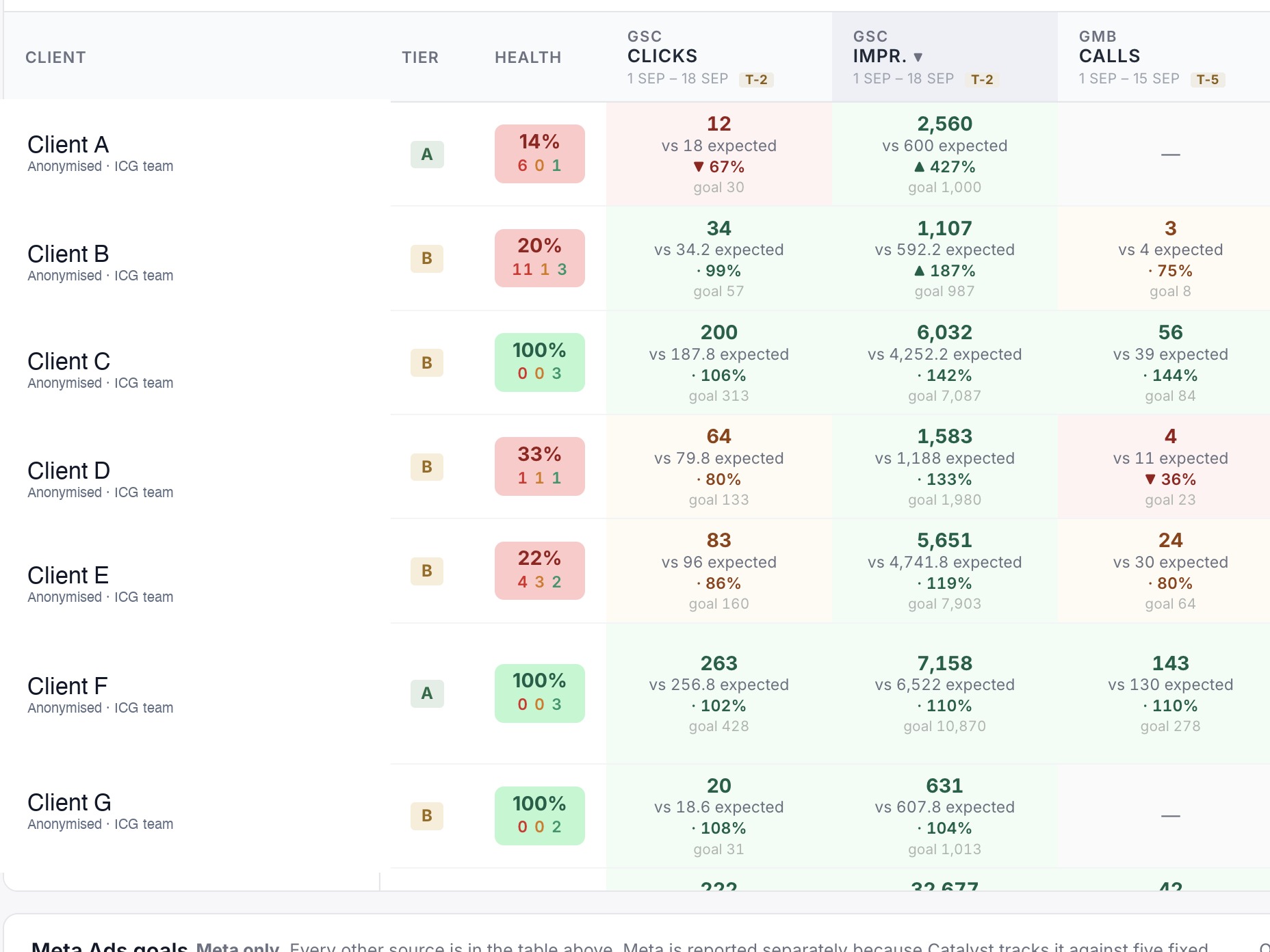
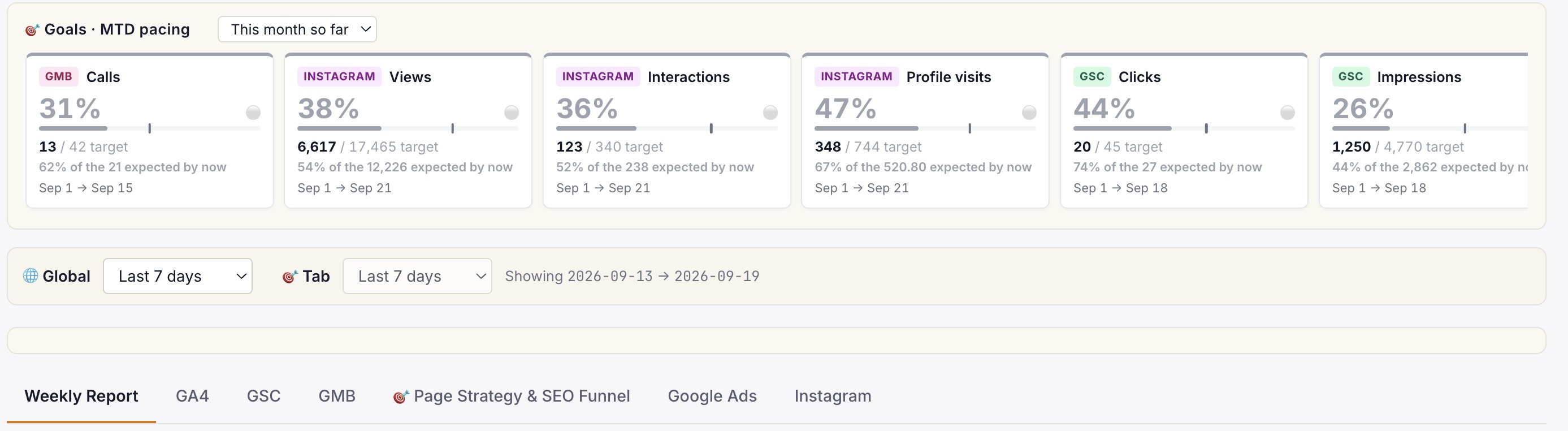
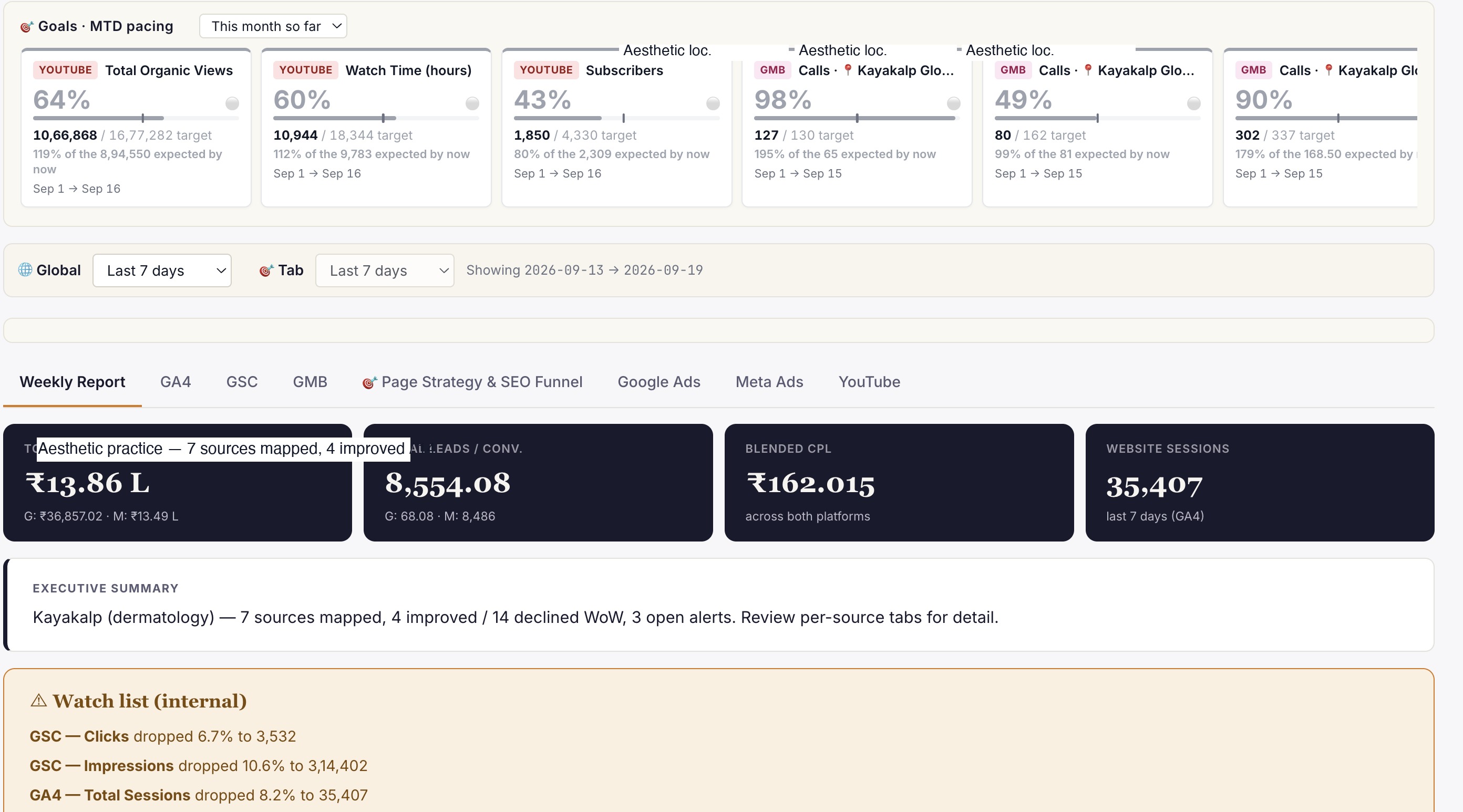
Live client dashboard. GSC, GA4, Google Ads, Meta Ads, IVR calls in one view. Login anytime, not monthly.
Phoenix
Clinic revenue intelligence over your PMS. Daily action queue: Prevent Loss, Maintain & Engage, Grow Revenue. Multi-centre rollout.
Or book a free 30-min audit to see all three in action on your account.
Healthcare brands
that already run on ICG.
A representative slice of the 150+ healthcare brands ICG has delivered for across India. Most engagements remain under NDA.


What ICG clients say · on video.
"Scale up of organic channels and business consulting. ICG has absolute domain authority in their field."
"Working with ICG transformed how we acquire IVF patients in Gurgaon. They understand the fertility journey from inquiry to consult..."
"What Ichelon accomplished — they got all my ideas and worked over 3-4 months to create an amazing, super-customised website."
Need help operationalising this?
Every ICG service is healthcare-only, NMC + DPDP-aware, and built around the patient-research patterns that drive Indian healthcare growth in 2026.
Every practice welcome — packages from ₹20,000/mo.
Goals-Driven engagements · Performance-Linked Payout Models available
More from
ICG.
Five trends shaping Indian healthcare marketing through 2027: AI-first patient research, Conversions API adoption, ABDM discovery, the AEO w...
Healthcare AIO is the discipline of getting your clinic or hospital cited inside Google AI Overviews, ChatGPT and Perplexity answers — not j...
Conversational-search advertising places brand messages inside AI chat answers — ChatGPT, Perplexity, Copilot — rather than beside a results...
Stop guessing.
Book a Diagnostic.
30 minutes. Free. With the AI-powered healthcare-only marketing agency 150+ brands already run on. No slides, no pitch, no hard close.


