


Google Reviews for Doctors Under the NMC Guidelines (2026): What's Allowed
A hospital or clinic may ask every patient for genuine Google feedback; no incentives, no asking only happy patients, no fake or paid reviews, and no doctor requests on social media (Explanation V, para 8.1(xii)). Scripts and reply rules inside.
No pitch. Written root-cause diagnosis. AI-powered, healthcare only.
Direct answer
A hospital or clinic may ask every patient for genuine Google feedback; no incentives, no asking only happy patients, no fake or paid reviews, and no doctor requests on social media (Explanation V, para 8.1(xii)). Scripts and reply rules inside.
TL;DR
Author: Rohit Gupta · Co-Founder, ICG · July 2026 (updated October 2026)
Under the NMC's advertising guidelines of 6 October 2026, a hospital or clinic may ask its patients for genuine feedback on Google. What it may not do is buy, fake, incentivise, filter or manipulate reviews, and an individual doctor may not request or share reviews on social media to promote their practice (para 3.2, Explanation V; para 8.1(xii)). This page explains where that line sits for Google reviews and how a clinic can run a review programme that stays on the right side of it.
In our own accounts, a better Google rating does move enquiries: across 20+ clinic accounts tracked over 12 months in ICG Agency OS, a one-star improvement went with 18-25% more new-patient enquiries from organic search. That is exactly why the rules matter. If you want the deeper operating playbook, read our Google review strategy for Indian clinics; for reply wording, see the review response templates. The full rulebook is in our complete guide to the NMC advertising guidelines 2026.
Updated 8 October 2026 to the National Medical Commission's Guidelines on Ethical Advertising and Public Communication by Hospitals/Medical Institutions and Registered Medical Practitioners (public notice No. R-13014/01/2024-Ethics, dated 6 October 2026, in force immediately). Paragraph numbers in this article refer to those guidelines. General information, not legal advice.
What the NMC guidelines say about reviews
Three provisions decide almost every Google review question.
| Provision | What it says | What it means for Google reviews |
|---|---|---|
| Para 3.2, Explanation V | No RMP or institution may solicit, purchase, procure, manipulate or cause to be published fake, paid or misleading reviews, ratings, testimonials, endorsements or recommendations. An RMP shall not request or share patient testimonials, recommendations, endorsements or reviews for professional promotion on social media. | No bought reviews, no review "exchanges", no staff or family reviews posing as patients. A doctor may not post "please review me" requests or reshare reviews on their social accounts. |
| Para 8.1(xii) | No fake followers, likes, reviews, ratings, comments or views, and no manipulation of search rankings or algorithms. This item also binds hospitals. | No rating manipulation of any kind, including selectively asking only satisfied patients so the average rises. |
| Para 9.4 | Healthcare platforms hosting RMPs must comply; no paid ranking of doctors; transparent listings. | Paying a listing platform to rank a doctor higher is out. |
Replies to reviews are a separate risk. A reply that confirms someone was a patient, mentions their condition, or claims a result runs into the patient-information rules (paras 6.1-6.4 and 7.4) and the bar on superiority and outcome claims (para 8.1(iii)). We cover that in detail in our guide on how doctors and clinics should reply to online reviews.
What a compliant review request looks like
The owner of the request should be the hospital or clinic, not an individual doctor. The request should go to every patient, not a hand-picked set. And it should ask for an honest account, not a rating.
| Compliant | Not compliant |
|---|---|
| The clinic sends one neutral message to every patient after the visit | Staff decide who gets the link based on whether the patient seemed happy |
| "Share your experience on Google" | "Please leave us a 5-star review" |
| Sent from the clinic's own business number or email, in the clinic's name | A doctor posting "review me on Google" on Instagram or a WhatsApp status |
| No reward, discount or priority of any kind | A discount on the next visit, a free test, or a lucky draw for reviewers |
| Reviews come only from real patients | Reviews from staff, relatives, agencies or review marketplaces |
The review request system we now run for clinics
We rewrote our review programme in October 2026 to match the guidelines. It is institution-only and non-incentivised: the hospital or clinic asks all patients for genuine feedback, there are no incentives, nobody filters who is asked, and nothing is sent by or for an individual doctor on social media.
Timing protocol:
| Day post-visit | Action | Why |
|---|---|---|
| Day 0 (day of visit) | No review request | Too early. The experience is not complete. |
| Day 3-7 (post-consultation) | One feedback request from the clinic, to every patient | The visit is recent enough to remember accurately |
| Day 7-14 (post-procedure) | One feedback request from the clinic, to every patient | Allows for recovery before asking |
| Day 14-21 (if no response yet) | At most one reminder, worded the same way | Anything more starts to feel like pressure |
The request message:
"Hello [Name], thank you for visiting [Clinic name]. We would value your honest feedback about your experience, whatever it was. If you would like to share it on Google, here is the link: [Google review link]. You can also reply to this message if you would prefer to tell us directly. — [Clinic name] team"
The message is sent by the clinic, names no doctor, asks for no rating, offers nothing in return, and gives the patient a private route for feedback as well as a public one. It goes to every patient who visited in the period, whatever their experience was.
ICG's Beacon platform sends this message on the timing above from the clinic's CRM, to every eligible patient, so nobody in the clinic has to choose who receives it.
Responding to reviews: the privacy-first protocol
For positive reviews: Respond within 24-48 hours, from the clinic's account. Keep it short and genuine. Do not confirm that the reviewer was a patient, and do not repeat any clinical detail, even one the reviewer mentioned (paras 6.1 and 7.4). No outcome claims and no "best care in the city" style lines (para 8.1(iii)).
"Thank you for taking the time to share your feedback. We pass every comment on to the team."
For negative reviews, a 3-step protocol:
Step 1: Wait several hours before responding. Replies written in the moment tend to be defensive.
Step 2: Write a reply that acknowledges, does not argue, and discloses nothing.
Template: "We are sorry to read this. We take all feedback seriously and would like to understand your concerns directly. Please contact us at [clinic phone/email] and someone from our team will get back to you."
This reply acknowledges the feedback, does not admit liability, does not confirm a patient relationship or reveal any clinical information (DPDP Act 2023 applies even if the reviewer disclosed details themselves), and moves the conversation to a private channel.
Step 3: Follow up privately through the clinic's normal patient-contact channel, if the person is a patient and you hold their contact details.
More reply patterns by specialty are in our review response templates, and you can download 30+ reply templates as a free PDF.
For fake or bad-faith reviews: Use Google's "Report a review" function. Explain to Google that the review appears to come from someone who is not a patient, and ask for removal. Post the neutral public reply above while the report is processed. Do not dispute the review's authenticity in public; that draws more attention to it.
How ratings build when the programme is honest
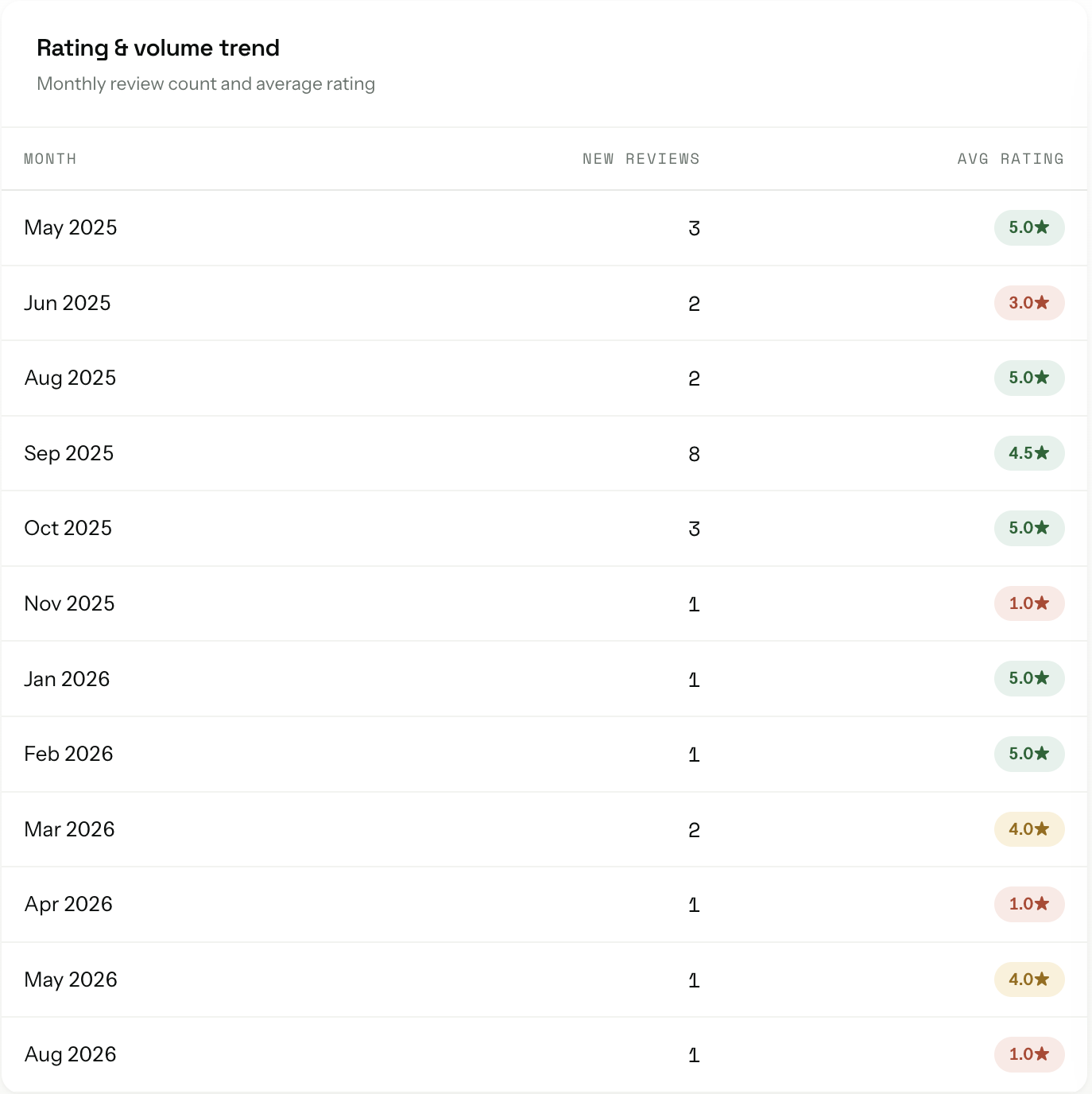
Asking every patient, consistently, is what builds a credible review profile. More genuine reviews give Google more data, the rating stabilises, and the profile becomes more useful to the next patient. The patients you ask, not the ones you pick, decide the average.
For a typical single-location clinic, what we see once the clinic starts asking every patient:
- Month 1: 8-14 new reviews
- Month 2: 12-18 new reviews
- Month 3: 14-22 new reviews, with some arriving unprompted
These are ICG operational observations, not guarantees. Review volume depends on patient volume, specialty and how consistently the clinic sends the request. The rating that follows is whatever patients genuinely give.
Clinic Google review benchmarks we use
Many Indian clinics we onboard sit at a 4.1-4.3 Google rating with 30-70 reviews per location. At that level a single 1-star review can pull the visible average down for weeks. These are the benchmarks we use inside our Client Elevation Programme when we first look at a clinic's listings. They describe review activity and responsiveness; none of them are reached by filtering who is asked.
| Metric | Underperforming | Healthy | Strong |
|---|---|---|---|
| Average rating | Below 4.3 | 4.5-4.7 | 4.8+ |
| Review count (per location) | Under 75 | 150-400 | 500+ |
| Fresh reviews / month | 0-3 | 8-15 | 20+ |
| Owner response rate | Under 40% | 70-90% | 100% within 48 hrs |
| Median response time | 7+ days | 24-48 hrs | Under 12 hrs |
Six common review mistakes
- Asking only happy patients. Choosing who gets the link based on how the visit went is review gating. It distorts the rating and runs against para 8.1(xii). Ask everyone or no one.
- Offering anything for a review. A discount, a free test or a lucky-draw entry turns a review into a paid one (Explanation V). It also breaks Google's review policies.
- Doctors asking on their own social media. An RMP may not request or share reviews for professional promotion on social media (Explanation V). Requests belong to the clinic, sent privately to patients.
- Bulk-requesting reviews after billing. Google's spam filters can catch timestamp clusters and suppress reviews. Send requests on the timing above instead; Angryturtle handles the pacing.
- Replies that disclose. Naming the treating doctor, confirming the procedure, or even confirming that the reviewer is a patient is a disclosure. Keep replies neutral.
- Buying reviews. Fake and paid reviews are barred by Explanation V and para 8.1(xii), and Google removes them in sweeps. There is no compliant version of this.
If you want your current listings and review process checked against the guidelines, use our free NMC compliance check or chat with our senior leadership on WhatsApp. For patient stories and testimonials, which are a different question from reviews, see NMC rules on patient testimonials and before-after photos.
Sources: NMC Guidelines on Ethical Advertising and Public Communication (6 October 2026), DPDP Act 2023, Google review policies.
How ICG works within these guidelines
ICG is a healthcare marketing agency. Our clients are hospitals, clinics and medical institutions, which may publish factual, objective and verifiable information about themselves (paras 8.3 and 9.1). For individual doctors, ICG supports only genuinely educational content in the doctor's own name and designation (para 8.2(iii)). For doctors and their practices, we run patient-education-driven campaigns: awareness content that helps patients understand their condition and their options, published in the doctor's own name and designation (para 8.2(iii)) and kept free of the self-promotion that para 8.1(ii) bars.
The work is education-first and runs across six channels:
- Awareness content on YouTube. Doctor-led educational videos on public health and disease awareness, in the doctor's own name and designation, without promoting the employer organisation (para 8.2(iii)). See YODA and YouTube marketing for healthcare.
- Research articles and blogs that help patients understand their options: information shared in the normal course, not promotion (para 3.2, Explanation I). See healthcare content marketing, ICG research reports and healthcare SEO.
- Expert answers on Reddit and Quora from named, disclosed accounts. No anonymous or fake posts, no undisclosed commercial relationships and no manufactured engagement (paras 8.1(xi) and 8.1(xii)). See Reddit and Quora programmes.
- Awareness campaigns on Meta, run from the hospital's or clinic's own page, with no discounts, offers, free procedures or other inducements (paras 8.1(x) and 8.3). See Meta advertising for hospitals and clinics.
- NMC-compliant Google Ads landing pages: factual departments, services and facilities, with no "best", "No.1", "100% success", "painless" or "guaranteed" claims (paras 8.1(iii) and 8.1(ix)). See Google Ads for hospitals and clinics.
- "Learn More" instead of "Book Now" on patient-facing pages, so that a page informs rather than solicits (paras 8.1(ii) and 8.3(ii)).
All six rest on three kinds of content: scientific (evidence-based, checked by a qualified clinician), persona-based (written for the questions a specific patient group asks) and consumer-based (built from how people search, compare and decide). AI-assisted drafts go through human medical review, and AI-generated content that is published carries an AI source mark (para 7.2). We do not publish patient testimonials, before-and-after images or superiority claims, and we never buy, incentivise or gate reviews.
Free NMC compliance check. We review a hospital's or clinic's website, Google Business Profile and social channels against the October 2026 guidelines and send back a written list of fixes.
See what the check covers · Request the check · Book a 30-minute call
General information, not legal advice. Source: NMC public notice No. R-13014/01/2024-Ethics, 6 October 2026.
Book a free 30-minute Brand & Growth Diagnostic.
It's a working session, not a sales pitch — you leave with a written root-cause analysis you can act on, whether or not you engage ICG.
Questions readers ask
about this topic.
The three platforms
behind every ICG engagement.
Beacon
CAPI middleware that fixes Event Match Quality, translates CRM statuses to Meta-standard events, dedups across channels.
Agency OS
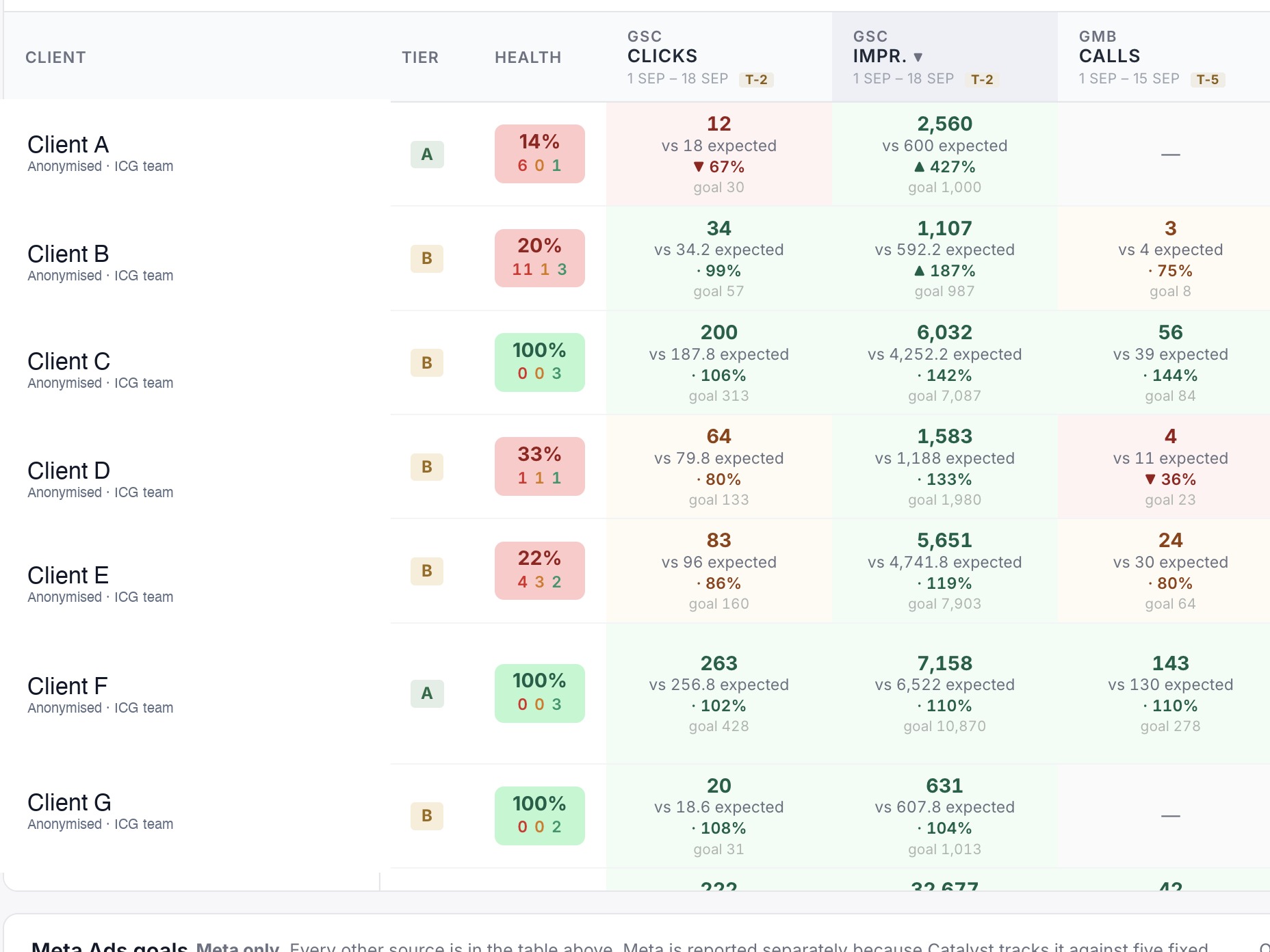
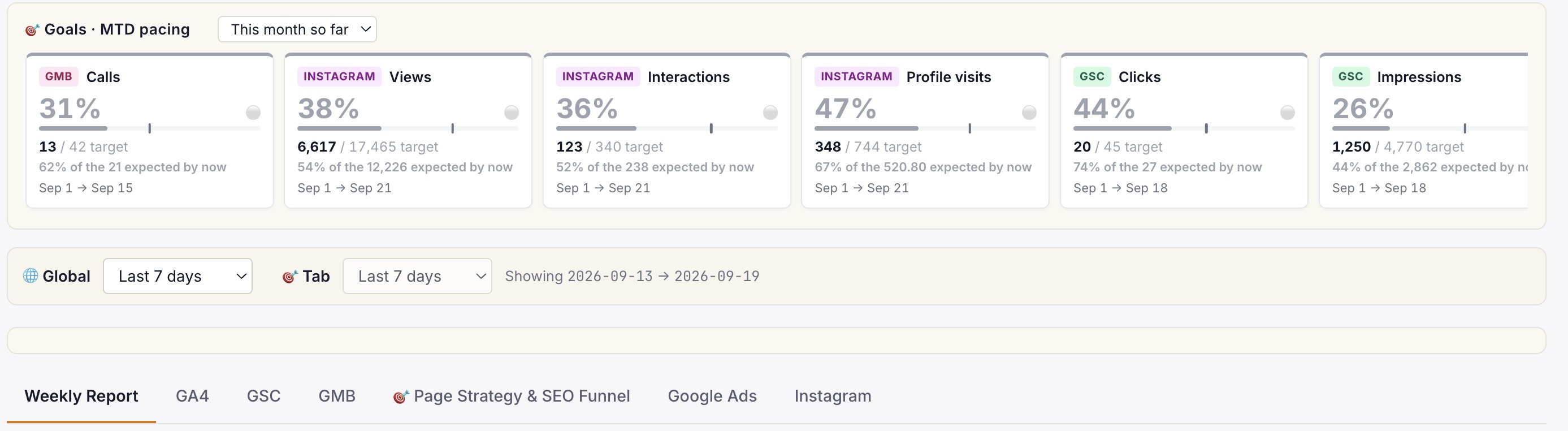
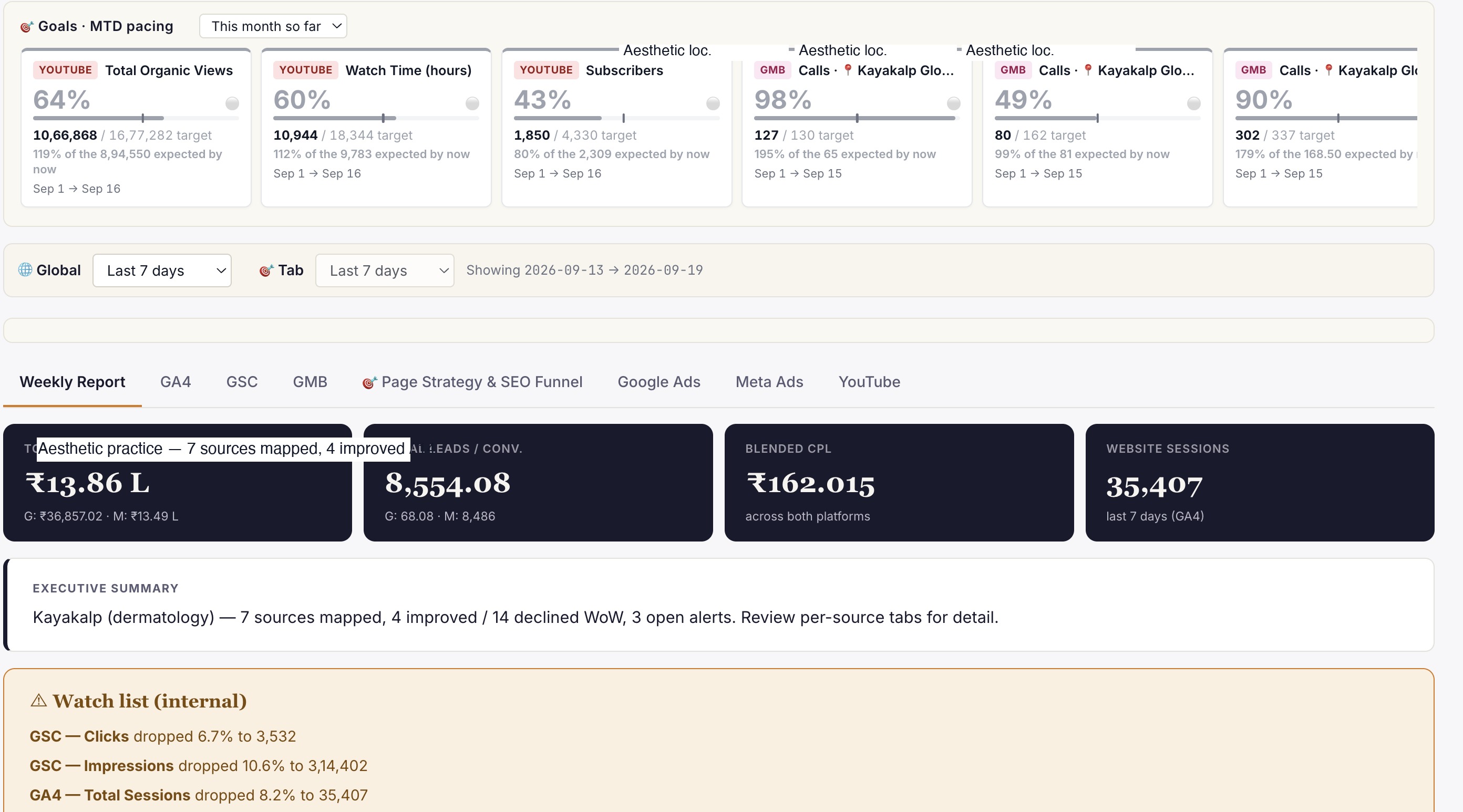
Live client dashboard. GSC, GA4, Google Ads, Meta Ads, IVR calls in one view. Login anytime, not monthly.
Phoenix
Clinic revenue intelligence over your PMS. Daily action queue: Prevent Loss, Maintain & Engage, Grow Revenue. Multi-centre rollout.
Or book a free 30-min audit to see all three in action on your account.
Healthcare brands
that already run on ICG.
A representative slice of the 150+ healthcare brands ICG has delivered for across India. Most engagements remain under NDA.


What ICG clients say · on video.
"Scale up of organic channels and business consulting. ICG has absolute domain authority in their field."
"Working with ICG transformed how we acquire IVF patients in Gurgaon. They understand the fertility journey from inquiry to consult..."
"What Ichelon accomplished — they got all my ideas and worked over 3-4 months to create an amazing, super-customised website."
Need help operationalising this?
Every ICG service is healthcare-only, NMC + DPDP-aware, and built around the patient-research patterns that drive Indian healthcare growth in 2026.
Every practice welcome — packages from ₹20,000/mo.
Goals-Driven engagements · Performance-Linked Payout Models available
More from
ICG.
Five trends shaping Indian healthcare marketing through 2027: AI-first patient research, Conversions API adoption, ABDM discovery, the AEO w...
Healthcare AIO is the discipline of getting your clinic or hospital cited inside Google AI Overviews, ChatGPT and Perplexity answers — not j...
Conversational-search advertising places brand messages inside AI chat answers — ChatGPT, Perplexity, Copilot — rather than beside a results...
Stop guessing.
Book a Diagnostic.
30 minutes. Free. With the AI-powered healthcare-only marketing agency 150+ brands already run on. No slides, no pitch, no hard close.


