


Dental Clinic Advertising in India: DCI Code and the NMC Guidelines (2026)
Dentists are regulated by the Dental Council of India's code of ethics, not the NMC Act. The NMC's October 2026 guidelines bind medical practitioners and hospitals, so they cover hospital dental departments; stand-alone clinics should follow the same principles.
No pitch. Written root-cause diagnosis. AI-powered, healthcare only.
Direct answer
Dentists are regulated by the Dental Council of India's code of ethics, not the NMC Act. The NMC's October 2026 guidelines bind medical practitioners and hospitals, so they cover hospital dental departments; stand-alone clinics should follow the same principles.
TL;DR
Dentists in India are regulated by the Dental Council of India (DCI) under its code of ethics for dentists, the Dentists (Code of Ethics) Regulations. They are not regulated by the National Medical Commission Act. The NMC's October 2026 advertising guidelines bind NMC-registered medical practitioners (RMPs) and hospitals and medical institutions. A stand-alone dental clinic run by dentists is therefore outside their direct scope, but it is not outside the reasoning behind them. For the full NMC picture, see our complete guide to the NMC advertising guidelines 2026.
The guidelines still reach dentistry in three ways. A dental department inside a hospital falls under the institutional rules (paras 8.3 and 9.1) and, for the hospital, the Clinical Establishments Act or the State Act (para 4.3). Any NMC-registered doctor a dental clinic names, such as an anaesthetist for sedation, is bound by them. And their principles are what good dental advertising looks like anyway.
Updated 8 October 2026 to the National Medical Commission's Guidelines on Ethical Advertising and Public Communication by Hospitals/Medical Institutions and Registered Medical Practitioners (public notice No. R-13014/01/2024-Ethics, dated 6 October 2026, in force immediately). Paragraph numbers in this article refer to those guidelines. General information, not legal advice.
Check every specific rule against the current DCI regulations and your State Dental Council before you publish.
Three Tracks in Dental Marketing
Dental practices typically offer three service tracks, and each has its own patient-research pattern:
Track 1: Cosmetic dentistry
Teeth whitening, veneers, smile design and clear aligners. Aspiration-driven patients who research on Instagram. This is where the compliance risk sits.
Primary channels: Instagram education and Google Ads on procedure and city keywords.
Track 2: Restorative and general dentistry
Fillings, root canals, extractions, dentures, crowns and implants. Problem-driven patients searching Google with strong local intent.
Primary channels: Google Business Profile (Maps), local SEO and local Google Ads.
Track 3: Orthodontics
Braces, clear aligners and retainers. Long consideration cycle, often parent-led. Factual information on duration and cost matters.
Primary channels: Google and Instagram together, with educational content doing the trust-building.
The DCI Code: What Dentists Need to Check
The DCI's code of ethics for dentists restricts advertising and solicitation of patients by dentists, and governs what a dentist may display about their qualifications and practice. We do not cite its clause numbers here because the regulations have been amended over time; check the current DCI regulations before relying on a specific rule. Generally safe ground, subject to that check:
- Educational content about oral health, conditions and procedures
- Factual information about the dentists: names, recognised qualifications, specialisation and registration details
- Clinic information: address, timings, services offered, facilities and equipment, described factually
- Professional, factual responses to patient reviews that disclose no patient information
Specialisation claims deserve care. Describe each dentist by the qualification they actually hold, and do not imply a specialisation the team does not have.
Where the NMC Guidelines Apply, and the Principles Worth Borrowing
For a hospital dental department, or an NMC-registered doctor a clinic names, these rules apply directly. For a stand-alone dental practice they are a sound standard.
| NMC guideline (Oct 2026) | Good practice for a dental clinic |
|---|---|
| Paras 8.3 and 9.1: institutions publish factual, verifiable information; a doctor directory is patient information | Factual service pages and a dentist directory with qualifications and registration details. No "limited slots" urgency. |
| Para 3.2, Explanation V; para 8.1(xi): no fake, paid or misleading reviews or testimonials | No patient testimonials or "patient speaks" videos as promotion. |
| Paras 8.1(v) and 6.2: no promotional before-and-after or success stories; consent does not legitimise them | No smile "transformation" posts. Explain procedures with illustrations. |
| Paras 8.1(iii) and 8.1(ix): no "best", "No.1", "100% success" or "painless" claims unless objectively verifiable | Drop "best dentist in [city]" and "painless root canal" from ads, GBP and signage. |
| Para 8.1(x): no discounts, offers or free procedures as inducements; factual price disclosure only | No "free check-up" or "50% off whitening" campaigns. |
| Para 8.1(xii): no fake followers, likes, reviews or ratings | Never buy reviews or engagement. |
| Paras 6.4 and 7.4: no identifiable patient data | No patient faces, names or case details in posts or review replies. |
| Para 7.2: no AI-generated promotion or synthetic patients; AI content carries a source mark | No AI-generated "patients" or smiles; label AI-assisted graphics. |
For a hospital with a dental department, our guide to hospital and clinic advertising under paras 8.3 and 9.1 covers the institutional rules in more depth.
Direct-to-Consumer Aligners: Responding Without Comparative Claims
Direct-to-consumer aligner brands have shaped awareness and price expectations. Clinics can respond without comparative or superiority claims:
Explain clinical suitability, educationally. Which bite and alignment problems usually need in-person assessment, and why. Do not name or criticise any brand.
Describe supervised aligner treatment factually. A service page on assessment, scans and review appointments serves patients who want clinical oversight.
Collaborate where it fits. Some practices act as clinical supervisors within aligner programmes. This is a practice-specific decision, best taken after checking the DCI code.
Local SEO: The Most Important Channel for General Dentistry
For a general dentistry clinic, Google Business Profile (GBP) is the main digital channel. Patients searching "dentist near me" or "dental clinic [locality]" are making urgent, proximity-driven decisions.
ICG's local SEO framework for dental clinics:
- GBP completeness: all services listed factually, photos of the clinic interior and exterior (no patients), accurate hours, a visible WhatsApp number
- GBP posts: weekly posts on service availability, oral-hygiene education and clinic updates, with no offers or discounts
- Patient feedback: the clinic may ask all patients for genuine feedback, in the same neutral words for everyone. No incentives, no asking only patients who seem happy, and no requests made by or for an individual dentist on social media. Our guide to Google reviews under the NMC guidelines sets out the full approach.
- Review responses: brief and factual, never confirming that the reviewer is a patient or disclosing treatment detail
- Local citations: consistent name, address and phone across relevant directories, without paid "top dentist" badges
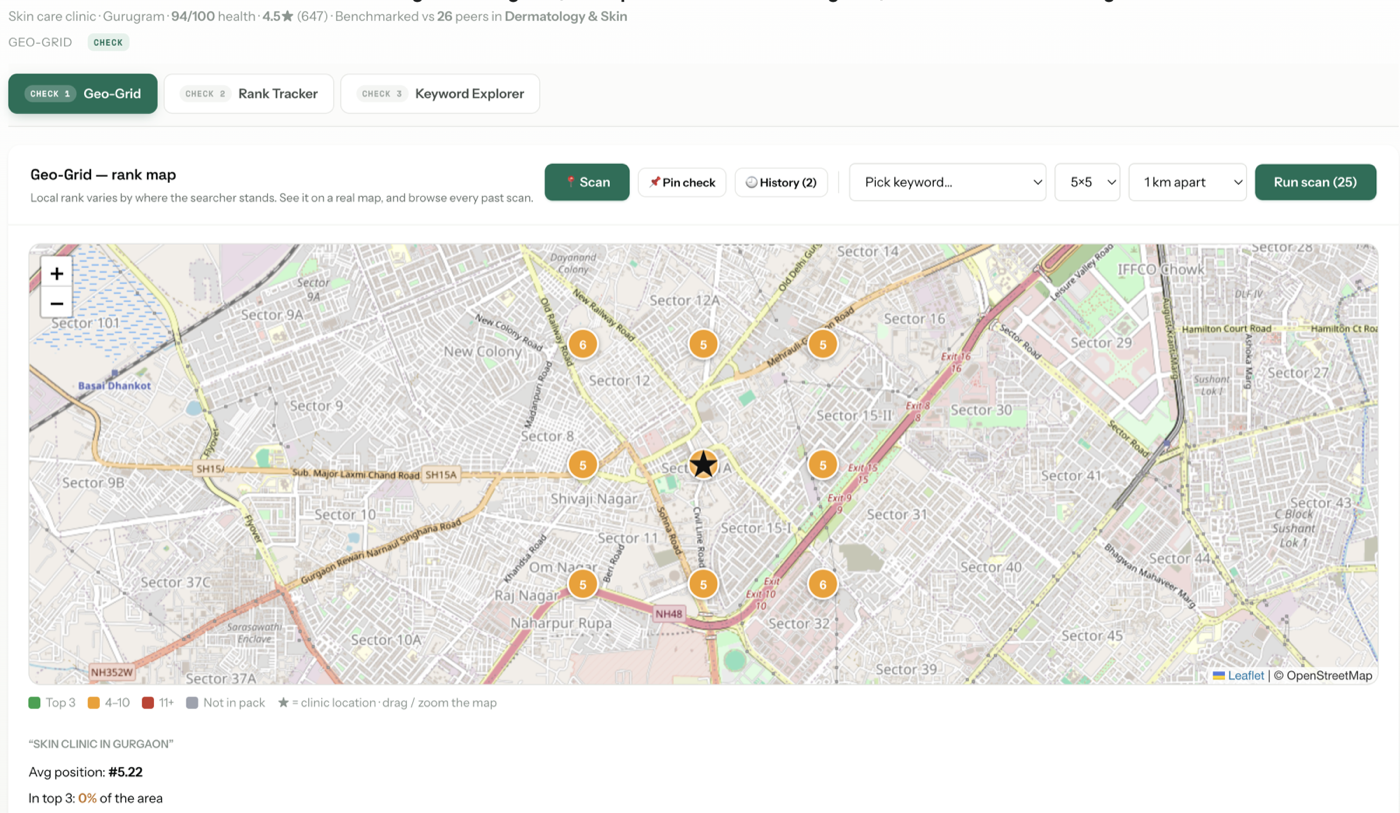
On cost per qualified lead, ICG's public CPQL benchmark dataset puts cosmetic dental at a median of ₹710 for ICG engagements against a market median of ₹1,200, and general dental at ₹780 against ₹1,100. High local intent is the main reason these figures are lower than for most specialties.
Instagram for Cosmetic Dentistry: Education Instead of Transformations
Smile-transformation posts are the format cosmetic dentistry has leaned on most, and they are exactly the before-and-after content the NMC guidelines bar for promotion (para 8.1(v)), whose logic the DCI code shares. Our guide to testimonials and before-after content explains why consent does not fix this (para 6.2).
Formats that work instead:
- Procedure explainers: animated or illustrated Reels on what a smile-design consultation involves, how veneers are bonded, or how aligners move teeth. No patient imagery.
- Dentist-led education: a dentist on camera, in their own name and qualification, explaining conditions, care and treatment options, including risks and limits. Educational, not self-promotional, and no outcome promises.
- Clinic and process content: sterilisation routines, equipment explained factually, and what happens at a first visit.
Avoid "case story" captions describing a patient's result, even without a photo. A written success story is still a success story.
Engagement Model for Dental Clinics
ICG works with dental clinics from single-chair practices to multi-location chains, with engagements from ₹20,000/month. The channel mix is typically:
- Solo or small practice: GBP, local SEO and focused Google Ads with factual landing pages
- Mid-size clinic: Google Ads, Instagram education, SEO and WhatsApp follow-up via Beacon
- Multi-location chain: all of the above, plus factual local pages for each location and Hawk re-engagement across the network
Every piece of patient-facing content goes through a compliance check against the DCI code and, where a hospital or an NMC-registered doctor is involved, the October 2026 NMC guidelines.
Read next on ICG
- Dental clinic marketing guide: a short overview
- Digital marketing for dental clinics India
- Dental marketing — industry hub
- Healthcare SEO services
How ICG works within these guidelines
ICG is a healthcare marketing agency. Our clients are hospitals, clinics and medical institutions, which may publish factual, objective and verifiable information about themselves (paras 8.3 and 9.1). For individual doctors, ICG supports only genuinely educational content in the doctor's own name and designation (para 8.2(iii)). For doctors and their practices, we run patient-education-driven campaigns: awareness content that helps patients understand their condition and their options, published in the doctor's own name and designation (para 8.2(iii)) and kept free of the self-promotion that para 8.1(ii) bars.
The work is education-first and runs across six channels:
- Awareness content on YouTube. Doctor-led educational videos on public health and disease awareness, in the doctor's own name and designation, without promoting the employer organisation (para 8.2(iii)). See YODA and YouTube marketing for healthcare.
- Research articles and blogs that help patients understand their options: information shared in the normal course, not promotion (para 3.2, Explanation I). See healthcare content marketing, ICG research reports and healthcare SEO.
- Expert answers on Reddit and Quora from named, disclosed accounts. No anonymous or fake posts, no undisclosed commercial relationships and no manufactured engagement (paras 8.1(xi) and 8.1(xii)). See Reddit and Quora programmes.
- Awareness campaigns on Meta, run from the hospital's or clinic's own page, with no discounts, offers, free procedures or other inducements (paras 8.1(x) and 8.3). See Meta advertising for hospitals and clinics.
- NMC-compliant Google Ads landing pages: factual departments, services and facilities, with no "best", "No.1", "100% success", "painless" or "guaranteed" claims (paras 8.1(iii) and 8.1(ix)). See Google Ads for hospitals and clinics.
- "Learn More" instead of "Book Now" on patient-facing pages, so that a page informs rather than solicits (paras 8.1(ii) and 8.3(ii)).
All six rest on three kinds of content: scientific (evidence-based, checked by a qualified clinician), persona-based (written for the questions a specific patient group asks) and consumer-based (built from how people search, compare and decide). AI-assisted drafts go through human medical review, and AI-generated content that is published carries an AI source mark (para 7.2). We do not publish patient testimonials, before-and-after images or superiority claims, and we never buy, incentivise or gate reviews.
Free NMC compliance check. We review a hospital's or clinic's website, Google Business Profile and social channels against the October 2026 guidelines and send back a written list of fixes.
See what the check covers · Request the check · Book a 30-minute call
General information, not legal advice. Source: NMC public notice No. R-13014/01/2024-Ethics, 6 October 2026.
Book a free 30-minute Brand & Growth Diagnostic.
It's a working session, not a sales pitch — you leave with a written root-cause analysis you can act on, whether or not you engage ICG.
Questions readers ask
about this topic.
The three platforms
behind every ICG engagement.
Beacon
CAPI middleware that fixes Event Match Quality, translates CRM statuses to Meta-standard events, dedups across channels.
Agency OS
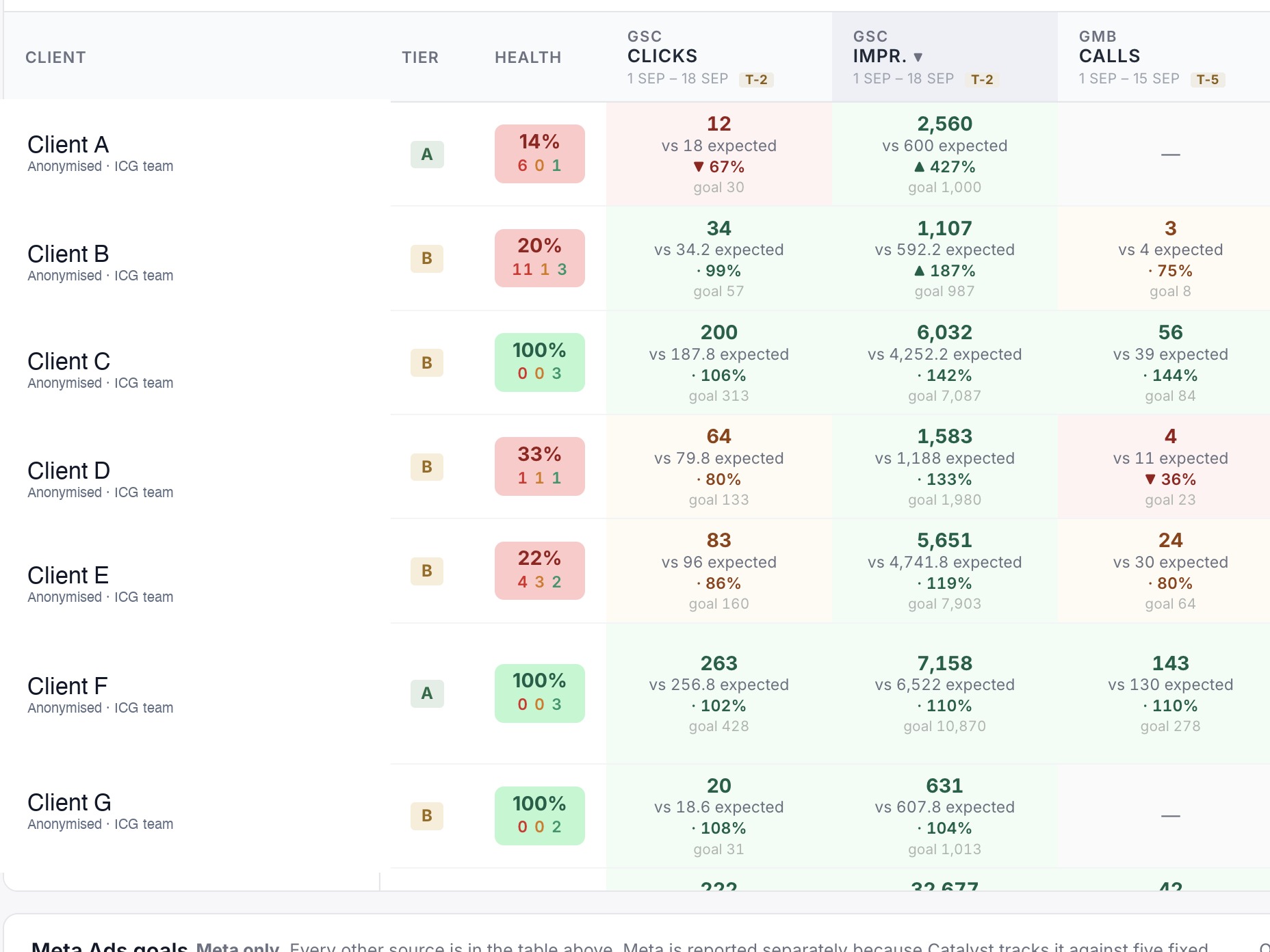
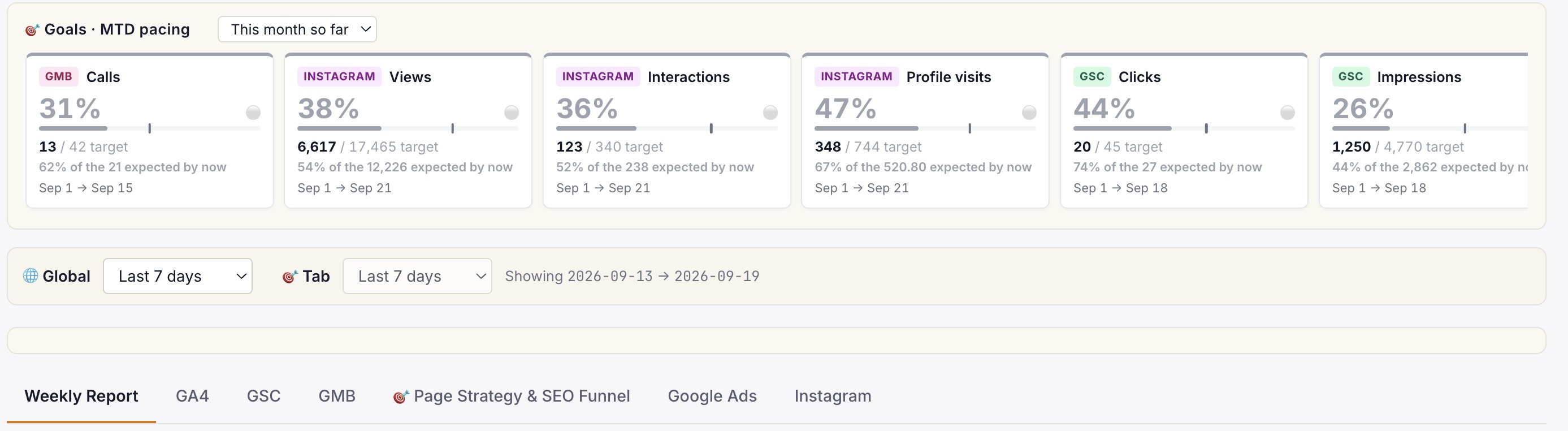
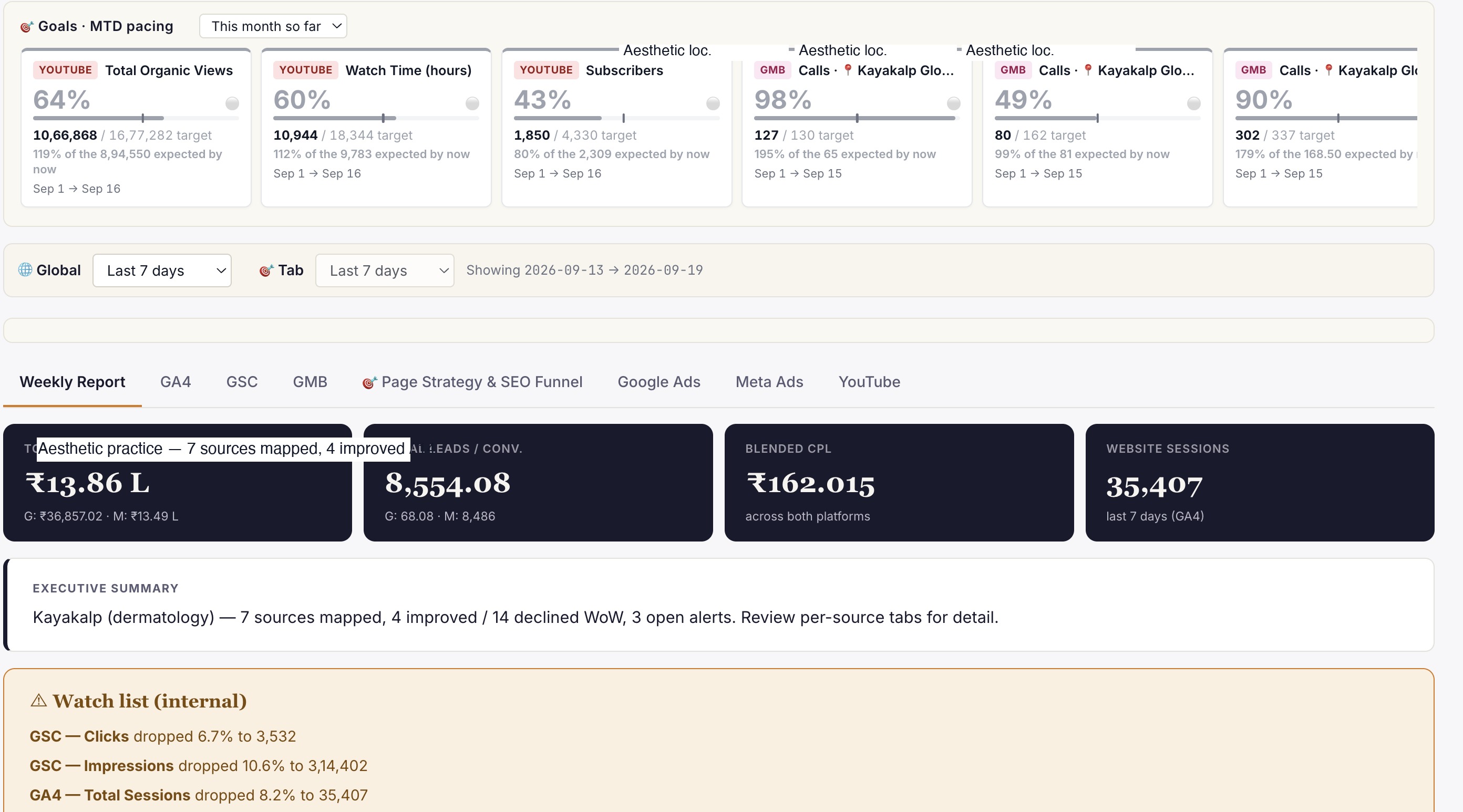
Live client dashboard. GSC, GA4, Google Ads, Meta Ads, IVR calls in one view. Login anytime, not monthly.
Phoenix
Clinic revenue intelligence over your PMS. Daily action queue: Prevent Loss, Maintain & Engage, Grow Revenue. Multi-centre rollout.
Or book a free 30-min audit to see all three in action on your account.
Healthcare brands
that already run on ICG.
A representative slice of the 150+ healthcare brands ICG has delivered for across India. Most engagements remain under NDA.


What ICG clients say · on video.
"Dental marketing in Delhi is brutally competitive. ICG's local SEO + Google Ads stack moved the needle steadily."
"Scale up of organic channels and business consulting. ICG has absolute domain authority in their field."
Need help operationalising this?
Every ICG service is healthcare-only, NMC + DPDP-aware, and built around the patient-research patterns that drive Indian healthcare growth in 2026.
Every practice welcome — packages from ₹20,000/mo.
Goals-Driven engagements · Performance-Linked Payout Models available
More from
ICG.
Five trends shaping Indian healthcare marketing through 2027: AI-first patient research, Conversions API adoption, ABDM discovery, the AEO w...
Healthcare AIO is the discipline of getting your clinic or hospital cited inside Google AI Overviews, ChatGPT and Perplexity answers — not j...
Conversational-search advertising places brand messages inside AI chat answers — ChatGPT, Perplexity, Copilot — rather than beside a results...
Stop guessing.
Book a Diagnostic.
30 minutes. Free. With the AI-powered healthcare-only marketing agency 150+ brands already run on. No slides, no pitch, no hard close.


