


AI Content in Healthcare Marketing: NMC Rules on AI Labels (Para 7.2)
The NMC guidelines of 6 October 2026 treat AI-assisted promotion as advertising, prohibit AI-generated promotional campaigns and require an AI source mark on permitted AI content (para 7.2). What hospitals, clinics and doctors must do.
No pitch. Written root-cause diagnosis. AI-powered, healthcare only.
Direct answer
The NMC guidelines of 6 October 2026 treat AI-assisted promotion as advertising, prohibit AI-generated promotional campaigns and require an AI source mark on permitted AI content (para 7.2). What hospitals, clinics and doctors must do.
TL;DR
ChatGPT, Claude, Gemini and Copilot now sit inside most hospital and clinic marketing teams in India, often without an internal policy, a review step or a labelling rule. Since 6 October 2026 that is a regulatory problem, not just a quality one. The National Medical Commission's Guidelines on Ethical Advertising and Public Communication treat AI-generated and AI-assisted promotional communication as advertising (para 3.2), prohibit AI-generated promotional campaigns for commercial interest, and require permitted AI-generated content to carry a source mark stating that it came from AI (para 7.2). This page explains what para 7.2 asks of hospitals, clinics and doctors, and how to run an AI-assisted content workflow that stays inside it.
For the full set of rules beyond AI, start with the complete guide to the NMC advertising guidelines 2026. If you are a doctor using ChatGPT for your own clinical admin and patient-education drafts, the companion piece is ChatGPT for doctors in India.
Updated 8 October 2026 to the National Medical Commission's Guidelines on Ethical Advertising and Public Communication by Hospitals/Medical Institutions and Registered Medical Practitioners (public notice No. R-13014/01/2024-Ethics, dated 6 October 2026, in force immediately). Paragraph numbers in this article refer to those guidelines. General information, not legal advice.
What the guidelines say about AI
Four provisions matter for any team using generative AI in healthcare marketing.
Para 3.3: what counts as "AI"
The guidelines define artificial intelligence as "a self-learning automated process, program, machine or computer built for doing task which usually require human brain". Large language models, image generators, voice-cloning tools and AI video avatars all fall inside that definition.
Para 3.2: AI-assisted promotion is advertising
"Advertisement" covers any communication that directly or indirectly solicits or promotes an RMP's or hospital's services, reputation, skills or facilities. Para 3.2 then lists the formats explicitly: "digital, social-media, sponsored, targeted, influencer-led, search-engine, platform-based, audio-visual, AI-generated or AI-assisted promotional communications shall be treated as advertising where their content or manner of dissemination has a promotional character." Para 3.5 adds "artificial intelligence generated promotion" to the list of advertising media. Using a model to write the copy changes nothing about which rules apply to it.
Explanation I to para 3.2 exempts information shared with the public in the normal course, without promotional intent or commercial benefit. Genuinely educational content can sit there. Promotional content cannot.
Para 7.2: the AI rule itself
Para 7.2 opens with two sentences. First: "AI Generated promotional campaign for furtherance of commercial interest is prohibited." Second: any AI-generated promotional content that otherwise conforms to the guidelines, the 2002 Regulations and the applicable Clinical Establishments Act "shall compulsorily carry the source mark, explicitly stating that the origin of the content is AI." It then sets four conditions:
| Sub-para | What it requires | What it means in practice |
|---|---|---|
| 7.2(a) | AI-generated or AI-assisted content must not create or spread misleading, deceptive or unverifiable representations about diagnosis, treatment, clinical outcomes, professional qualifications, patient experiences or healthcare services. | Every clinical statement, credential and service description in an AI draft needs a human check against a source before it is published. |
| 7.2(b) | AI must not be used to create or manipulate a patient's image, testimonial, voice or clinical outcome, or to create a synthetic endorsement purporting to be that of an actual patient, RMP or other person. | No synthetic patients, no AI "patient stories", no AI-generated before-and-after images, no cloned doctor voices or AI doctor avatars presented as real. |
| 7.2(c) | Where AI-generated or materially AI-altered content is used in a way where its artificial nature may reasonably matter to the audience, appropriate disclosure must be made. | Label AI-generated images, video, voice-overs and substantially AI-written text. When in doubt, disclose. |
| 7.2(d) | Any use of patient information as input for an AI system must comply with privacy, confidentiality, data-protection and professional-ethics requirements. | No identifiable patient data in prompts unless the law and the patient's documented consent allow it. Default to de-identified or hypothetical inputs. |
Para 7.6 and para 4.4: data law and responsibility
Para 7.6 says any advertising that processes digital personal data must comply with the Information Technology Act 2000 and the Digital Personal Data Protection Act 2023 and its 2025 Rules. Pasting a discharge summary or a patient's WhatsApp message into a consumer chatbot is processing personal data, so 7.2(d) and 7.6 apply together. Para 7.4 separately bars sharing any patient data that can be identified publicly.
Para 4.4 closes the loop on accountability: publishing through a platform, agency or other intermediary does not absolve the RMP or institution of content it authorised, commissioned, adopted or knowingly permitted. "The AI wrote it" or "the agency wrote it" is not a defence.
Why AI drafts fail the guidelines so often
General-purpose models learn from large volumes of marketing copy written for markets with looser rules. Asked for "a landing page for our IVF centre", they reach for the phrases that the October 2026 guidelines now name directly. Common patterns we see in AI drafts for Indian hospitals and clinics:
- Superiority claims. "Best fertility clinic in Delhi", "leading dental chain", "most trusted hospital". Para 8.1(ix) bars "best", "No.1", "leading", "most trusted", "top" and similar claims unless objectively verifiable with a transparent methodology, and it binds hospitals as well as doctors.
- Outcome and cure language. "Guaranteed results", "end your chronic pain", "painless procedure". Para 8.1(iii) lists "Guaranteed cures", "100% success" and "painless treatment" as examples of prohibited claims; para 8.3(ii) bars cure and outcome guarantees for institutions.
- Testimonial-style social proof. "Patients love our compassionate care", "join 50,000+ happy patients". Para 8.1(iii) bars advertising the number of patients treated, and Explanation V bars fake, paid or misleading testimonials and endorsements.
- Fear-based hooks. "Don't wait until it's too late". Para 8.1(i) bars fear-based marketing and marketing that creates unnecessary demand.
- Invented facts. Models confidently produce accreditation numbers, fellowship years, success rates and device approvals that do not exist. That is the misleading or unverifiable representation 7.2(a) prohibits.
Red-flag phrases and compliant rewrites
Across audits of 300+ ChatGPT drafts written for Indian hospital and clinic marketing teams, the same phrases keep surfacing. Strip them before anything ships.
| Phrase AI tools reach for | Why it fails | Compliant alternative |
|---|---|---|
| "Best-in-class outcomes" | Superiority claim without disclosed methodology (8.1(ix)) | Describe the department, its facilities and the procedures offered |
| "Guaranteed results" | Guarantee of outcome (8.1(iii), 8.3(ii)) | Remove entirely; explain the process and that outcomes vary |
| "World-class doctors" | Superiority claim and promotional portrayal of RMPs (8.1(ix), 8.3(ii)) | A factual doctor directory: names, recognised qualifications, specialties, registration details, availability (9.1) |
| "Painless procedure" | Named in 8.1(iii) | "Performed under local anaesthesia; the care team will explain what to expect" |
| "Success rate of 99%" | Success-rate advertising (8.1(iii)); unverifiable (7.2(a)) | Leave success rates out of promotional copy |
| "Miracle cure", "life-changing" | "Miracle treatment" is named in 8.1(iii); unrealistic expectations (8.1(vi)) | Describe the treatment, its recovery period and its risks |
| "Book now, limited slots, 20% off" | Solicitation and inducement (8.1(x), 8.3(ii)) | Factual contact details and charges where disclosed; "Learn more" rather than pressure CTAs |
What AI may be used for
Nothing in para 7.2 stops a team from using AI as a drafting and research tool. The test is what gets published, whether it is promotional, and whether a human has checked it. Lower-risk uses:
- Educational articles on conditions. Symptoms, when to see a doctor, general treatment approaches, written in a general educational tone and reviewed by a qualified clinician. Content of this kind can fall under Explanation I to para 3.2 when it is not promotional.
- Health-awareness posts. Content for World Heart Day or Diabetes Awareness Month that educates rather than promotes. Government public-interest campaigns are exempt (Explanation to para 7.3).
- Factual institutional information. First drafts of department pages, facility descriptions and service lists, kept to the factual particulars allowed by paras 8.3(i) and 9.1. Equipment and technology may be described factually, with no superiority, guaranteed-accuracy or comparative claims (Explanation II to para 3.2).
- Doctor directory entries. Names, recognised qualifications, specialties, registration details and availability (para 9.1), checked by the doctor concerned. Avoid adjectives such as "renowned" or "top".
- SEO meta descriptions and FAQ drafts that describe services factually.
- Internal documents. Briefs, SOPs and training material that never reach patients.
What AI must not be used for
- AI-generated promotional campaigns for commercial interest. Para 7.2 prohibits them outright. A campaign whose creative, copy and targeting are produced by AI to promote a hospital's paid services is exactly what the first sentence targets.
- Synthetic patients, testimonials or endorsements. No AI-written "patient reviews", no AI-generated patient faces, voices or stories, no fabricated endorsements (7.2(b)). Real testimonials are restricted too (Explanation V; 8.1(v), 8.1(xi)), so AI cannot be the workaround. See NMC rules on patient testimonials and before-after photos.
- AI before-and-after images or "expected result" simulations used in advertising (7.2(b); 8.1(v)).
- AI doctor avatars or cloned voices presented as a real RMP, or used to put words in a doctor's mouth (7.2(b)).
- Fake engagement. AI-generated comments, reviews, ratings or bot followers (8.1(xii)).
- Identifiable patient data in prompts without a lawful basis and documented consent (7.2(d), 7.6).
How to apply the AI source mark
Para 7.2 requires that permitted AI-generated content "explicitly" states that its origin is AI, and 7.2(c) requires disclosure wherever the artificial nature may reasonably matter to the audience. The guidelines do not prescribe a format, and para 12 allows the NMC to issue clarifications and SOPs. Until it does, a practical approach:
- Images and video: an on-asset label such as "AI-generated image" or "This video uses an AI-generated voice-over", visible without clicking.
- Text: where a published article or post was substantially generated by AI, a short line near the top or byline, for example "Drafted with AI assistance and reviewed by [name, qualification, registration number]".
- Doctor-attributed content: Explanation III to para 3.2 requires an RMP's electronic-media posts to disclose the RMP's name, qualifications, registration status and SMR/NMR registration number. Explanation IV requires clinical establishments to disclose the same for RMPs they name. Put the AI mark alongside these details.
- Record-keeping: keep the prompt, the raw output, the reviewer's edits and the approval date for each published asset, so you can show what the AI produced and what a human verified.
A label does not make prohibited content permissible. An AI-labelled superiority claim is still a superiority claim.
Prompt structures that keep drafts inside the rules
Educational article: "Write an educational article explaining [condition] for an Indian patient audience. Use a general educational tone. Do not use testimonial language, cure claims, outcome guarantees, success rates, patient numbers or comparative claims. Do not use 'best', 'leading', 'top', 'trusted', 'proven', 'painless' or 'guaranteed'. Cover symptoms, when to consult a doctor and general treatment approaches, including risks. Do not invent statistics; mark any figure that needs a source."
Doctor directory entry: "Write a factual directory entry for Dr [Name] using only these details: recognised qualifications, specialty, registration number, OPD days. Do not add adjectives, achievements, patient numbers or outcomes."
Awareness post: "Write a health-awareness post for [event] for Indian readers. Focus on prevention and when to consult a doctor. No promotion of any hospital's services, no offers, no fear-based language, no outcome claims."
Prompts reduce rework. They do not replace review.
The human review layer
AI models will confidently invent an accreditation number, a doctor's DM or MCh year, or a regulatory approval for a device that does not have one. Every AI-assisted asset should pass through:
- Medical review by a qualified clinician for accuracy, risks and unrealistic expectations (8.1(vi), 7.2(a)).
- Guidelines check by someone trained on paras 7.2, 8.1, 8.3 and 9.1: no superiority, no inducements, no testimonials, no promotional portrayal of an individual doctor.
- Fact check of every credential, figure and date against a primary source.
- Privacy check that no patient can be identified (7.4, 6.4).
- Labelling check that the AI source mark and the RMP disclosure details are present.
For YouTube scripts, YODA builds a medical-review checkpoint into the workflow before a script goes to camera. For paid social, Meta Catalyst IQ helps teams review creatives against platform policy. Neither replaces a clinician's sign-off.
Training your team
ICG Training Academy's AI Training for Healthcare covers prompting, review and labelling for hospital and clinic marketing teams, including the AI-2 (Managers) and AI-3 (Executive Briefing) programmes. The sessions now use para 7.2 as the reference point.
Related reading
- ChatGPT for doctors in India: clinical admin and patient-education drafts
- Hospital and clinic advertising under the NMC guidelines
- How AI is changing healthcare marketing in India
- LLM optimisation for healthcare
- Healthcare SEO and AEO
Marketing teams we onboard through the Client Elevation Programme get a review of the phrases flagged in their AI drafts. For ad-side review, see Meta Catalyst IQ; for doctor-led educational video, YODA. Questions about your current workflow? WhatsApp Rohit.
How ICG works within these guidelines
ICG is a healthcare marketing agency. Our clients are hospitals, clinics and medical institutions, which may publish factual, objective and verifiable information about themselves (paras 8.3 and 9.1). For individual doctors, ICG supports only genuinely educational content in the doctor's own name and designation (para 8.2(iii)). For doctors and their practices, we run patient-education-driven campaigns: awareness content that helps patients understand their condition and their options, published in the doctor's own name and designation (para 8.2(iii)) and kept free of the self-promotion that para 8.1(ii) bars.
The work is education-first and runs across six channels:
- Awareness content on YouTube. Doctor-led educational videos on public health and disease awareness, in the doctor's own name and designation, without promoting the employer organisation (para 8.2(iii)). See YODA and YouTube marketing for healthcare.
- Research articles and blogs that help patients understand their options: information shared in the normal course, not promotion (para 3.2, Explanation I). See healthcare content marketing, ICG research reports and healthcare SEO.
- Expert answers on Reddit and Quora from named, disclosed accounts. No anonymous or fake posts, no undisclosed commercial relationships and no manufactured engagement (paras 8.1(xi) and 8.1(xii)). See Reddit and Quora programmes.
- Awareness campaigns on Meta, run from the hospital's or clinic's own page, with no discounts, offers, free procedures or other inducements (paras 8.1(x) and 8.3). See Meta advertising for hospitals and clinics.
- NMC-compliant Google Ads landing pages: factual departments, services and facilities, with no "best", "No.1", "100% success", "painless" or "guaranteed" claims (paras 8.1(iii) and 8.1(ix)). See Google Ads for hospitals and clinics.
- "Learn More" instead of "Book Now" on patient-facing pages, so that a page informs rather than solicits (paras 8.1(ii) and 8.3(ii)).
All six rest on three kinds of content: scientific (evidence-based, checked by a qualified clinician), persona-based (written for the questions a specific patient group asks) and consumer-based (built from how people search, compare and decide). AI-assisted drafts go through human medical review, and AI-generated content that is published carries an AI source mark (para 7.2). We do not publish patient testimonials, before-and-after images or superiority claims, and we never buy, incentivise or gate reviews.
Free NMC compliance check. We review a hospital's or clinic's website, Google Business Profile and social channels against the October 2026 guidelines and send back a written list of fixes.
See what the check covers · Request the check · Book a 30-minute call
General information, not legal advice. Source: NMC public notice No. R-13014/01/2024-Ethics, 6 October 2026.
Book a free 30-minute Brand & Growth Diagnostic.
It's a working session, not a sales pitch — you leave with a written root-cause analysis you can act on, whether or not you engage ICG.
Questions readers ask
about this topic.
The three platforms
behind every ICG engagement.
Beacon
CAPI middleware that fixes Event Match Quality, translates CRM statuses to Meta-standard events, dedups across channels.
Agency OS
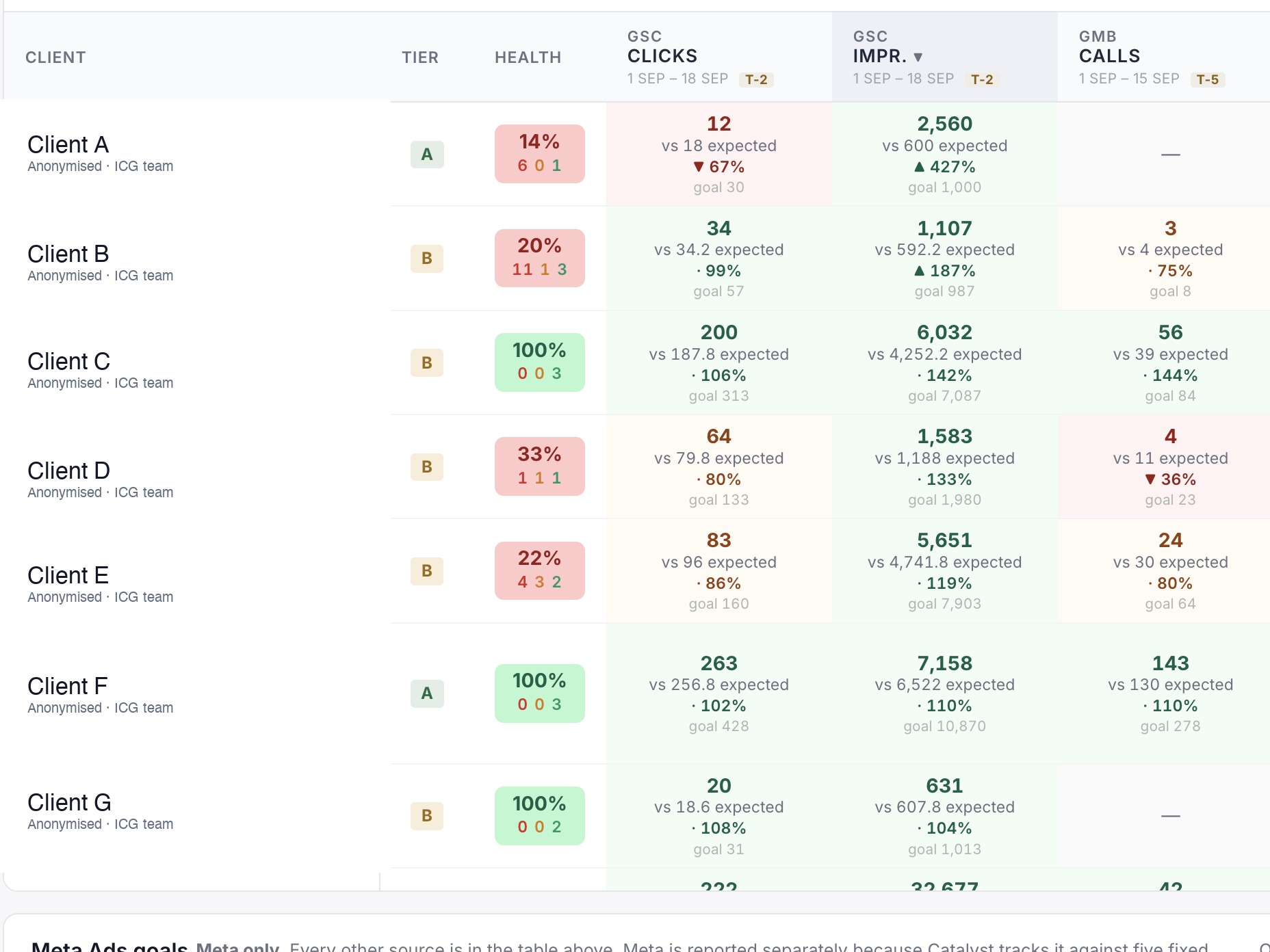
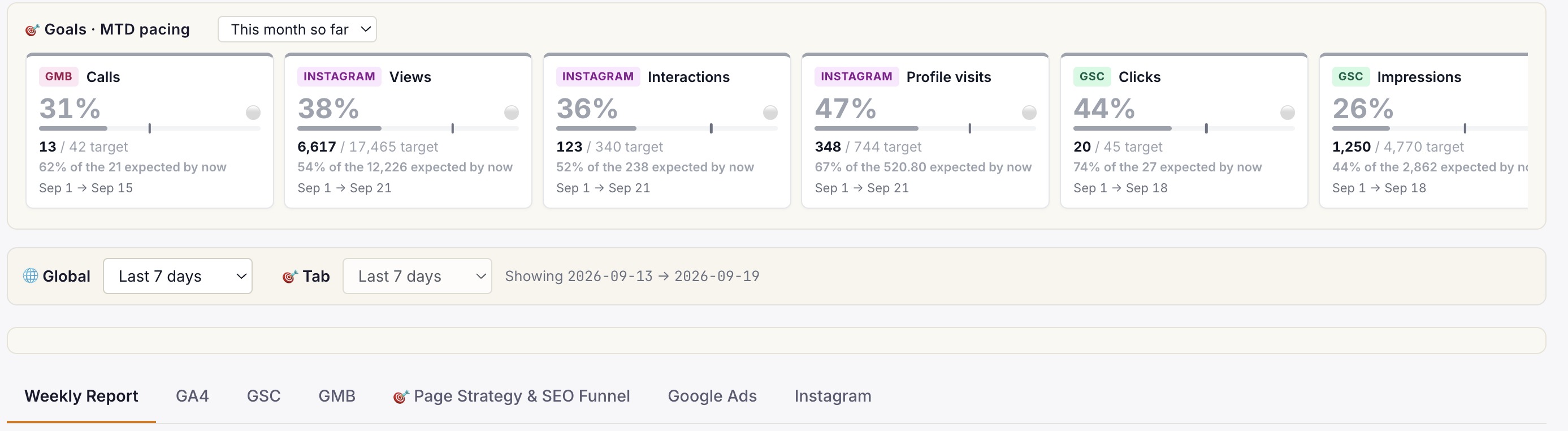
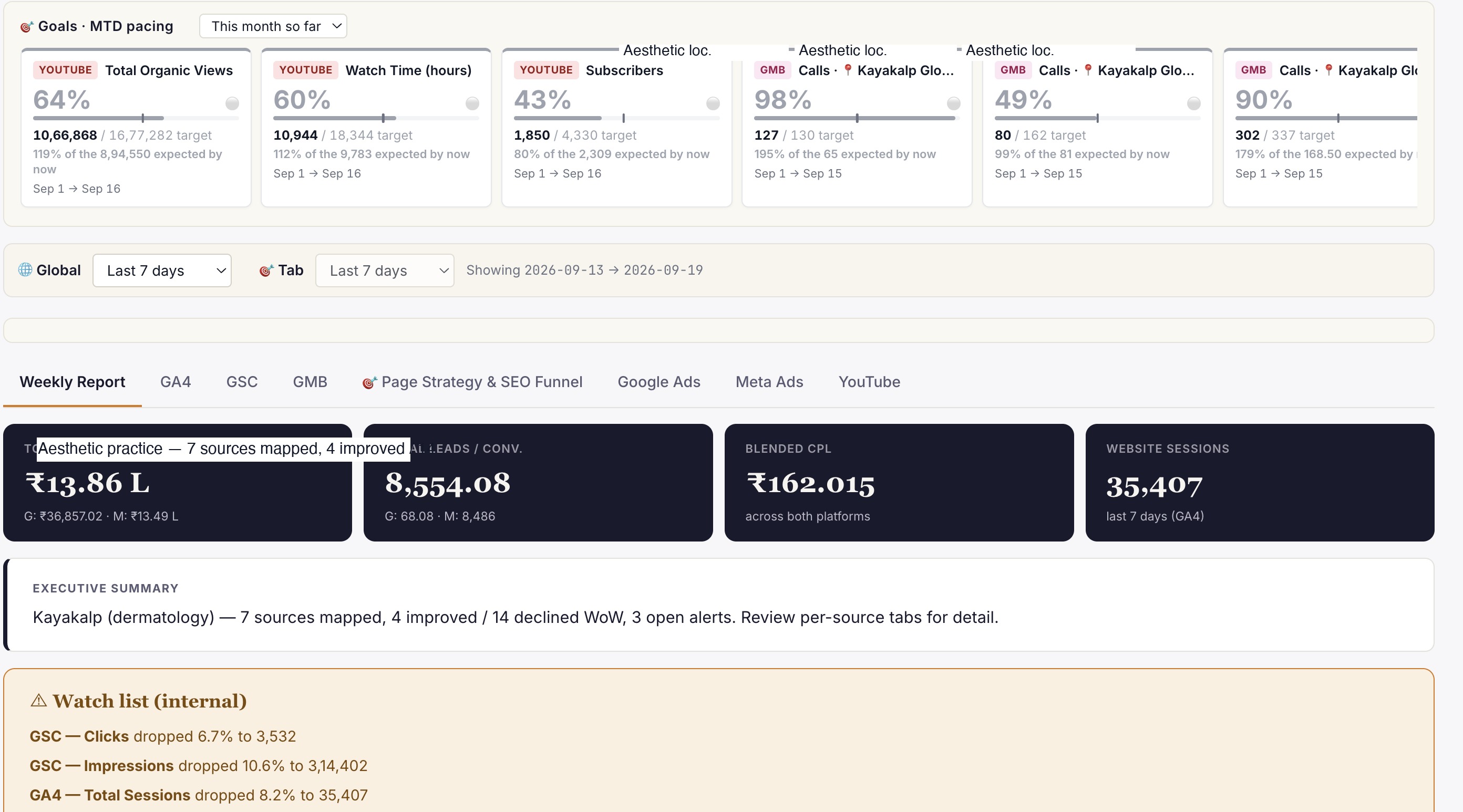
Live client dashboard. GSC, GA4, Google Ads, Meta Ads, IVR calls in one view. Login anytime, not monthly.
Phoenix
Clinic revenue intelligence over your PMS. Daily action queue: Prevent Loss, Maintain & Engage, Grow Revenue. Multi-centre rollout.
Or book a free 30-min audit to see all three in action on your account.
Healthcare brands
that already run on ICG.
A representative slice of the 150+ healthcare brands ICG has delivered for across India. Most engagements remain under NDA.


What ICG clients say · on video.
"They were able to get all my ideas and work with me over a period of three to four months and create this amazing website. I would..."
Need help operationalising this?
Every ICG service is healthcare-only, NMC + DPDP-aware, and built around the patient-research patterns that drive Indian healthcare growth in 2026.
Every practice welcome — packages from ₹20,000/mo.
Goals-Driven engagements · Performance-Linked Payout Models available
More from
ICG.
Five trends shaping Indian healthcare marketing through 2027: AI-first patient research, Conversions API adoption, ABDM discovery, the AEO w...
Healthcare AIO is the discipline of getting your clinic or hospital cited inside Google AI Overviews, ChatGPT and Perplexity answers — not j...
Conversational-search advertising places brand messages inside AI chat answers — ChatGPT, Perplexity, Copilot — rather than beside a results...
Stop guessing.
Book a Diagnostic.
30 minutes. Free. With the AI-powered healthcare-only marketing agency 150+ brands already run on. No slides, no pitch, no hard close.


