


Plastic Surgery Marketing in India Under the NMC Guidelines (2026)
Plastic surgery practices can grow within the NMC's October 2026 guidelines by marketing as an institution: factual practice information, procedure education and surgeon directories, with no testimonials, promotional before-and-after or superiority claims.
No pitch. Written root-cause diagnosis. AI-powered, healthcare only.
Direct answer
Plastic surgery practices can grow within the NMC's October 2026 guidelines by marketing as an institution: factual practice information, procedure education and surgeon directories, with no testimonials, promotional before-and-after or superiority claims.
TL;DR
Plastic and aesthetic surgery is elective, visible and outcome-sensitive, which is why it needs more care in marketing than almost any other specialty. The NMC's advertising guidelines of 6 October 2026 settle the main questions: promotional before-and-after photographs and success stories are out (para 8.1(v)), patient testimonials are out (para 3.2, Explanation V; para 8.1(xi)), and patient consent does not change that (para 6.2). For the full framework, start with our complete guide to the NMC advertising guidelines 2026.
This article is the growth side of the question: how an aesthetic or plastic surgery practice builds patient trust and enquiries inside those rules. The work is led by the institution (the clinic or hospital) and driven by education. For a clause-by-clause list of what a plastic surgeon may and may not publish, see our NMC compliance checklist for plastic surgeons, and for imagery specifically, the before-and-after photo rules for plastic surgery.
Updated 8 October 2026 to the National Medical Commission's Guidelines on Ethical Advertising and Public Communication by Hospitals/Medical Institutions and Registered Medical Practitioners (public notice No. R-13014/01/2024-Ethics, dated 6 October 2026, in force immediately). Paragraph numbers in this article refer to those guidelines. General information, not legal advice.
Why Plastic Surgery Needs Extra Care
Two features of the specialty raise the stakes.
The expectation gap is widest here. A patient considering rhinoplasty or liposuction often has a specific visual result in mind. When marketing feeds that picture, the gap between expectation and outcome widens, even after a clinically sound procedure. The guidelines address this directly: no communication that creates unrealistic expectations or hides risks (para 8.1(vi)), and no "100% success" or "painless" style claims (para 8.1(iii)).
The specialty's traditional formats are the ones now barred. Before-and-after galleries, transformation Reels and patient-story videos have been the default currency of aesthetic marketing. Under para 8.1(v), they may be used only for scientific or educational purposes with anonymised consent, not for promotion. Identifying features must be blurred or cropped wherever patient images are lawfully used (para 6.4), and AI-generated or AI-manipulated outcome images are not an alternative (para 7.2).
The Institution-Led, Education-First Framework
The guidelines draw a clear line between an individual surgeon and the institution they work in. An individual registered medical practitioner may not self-promote, solicit patients or engage a third party to market medical services (para 8.1(ii)). A hospital or clinic may publish factual, objective and verifiable information about itself (para 8.3), including a directory of its doctors (para 9.1). Publishing through an agency does not shift responsibility for the content (para 4.4). So the practice, not the surgeon personally, is the marketing entity, and ICG builds plastic surgery programmes around three content pillars:
Pillar 1: The practice's factual profile
Departments, procedures offered, facilities, equipment, accreditation and charges, presented factually (para 8.3). The surgeon directory lists each surgeon's name, recognised qualifications, specialty, registration details and availability (para 9.1). Training and society memberships can be stated as facts. What the profile may not do is portray an individual surgeon promotionally, rank them, or claim superiority (paras 8.3 and 8.1(ix)).
Pillar 2: Procedure education
Explaining what a procedure involves, who is and is not a suitable candidate, the risks, and what recovery looks like week by week. A 10-minute video titled "What happens during rhinoplasty: a step-by-step explanation" is education. A surgeon may give public-health and educational talks on television, radio and electronic media in their own name and designation, without promoting the employer (para 8.2(iii)); our guide to doctors on YouTube explains how that works in practice.
Pillar 3: Facility and process content
The operation theatre, recovery suite, anaesthesia team and sterility protocols, described factually. Information about equipment and technology is allowed, but without superiority, guaranteed-outcome or comparative claims (para 3.2, Explanation II).
Handa Aesthetics: A Reference Engagement
ICG's work with Handa Aesthetics, Dr Arjun Handa's plastic surgery practice in Delhi, shows how this framework is put together. The practice came to us with procedure-listing pages that had little educational depth and with limited visibility into where its enquiries came from.
The rebuild had four parts:
- Procedure pages rewritten as factual education: what each procedure involves, candidacy, risks and recovery
- A YouTube library of educational procedure explainers
- Website attribution rebuilt with Beacon, so that every enquiry source is tracked
- Google Ads restructured around procedure-education landing pages
The lesson was that better attribution changed the practice's picture of which channels were working, and that patients who arrived after watching long-form educational video came to consultations better informed. Under the October 2026 guidelines, programmes like this run through the practice as an institution; content in a surgeon's own name stays educational.
International Patient Acquisition for Plastic Surgery
Indian plastic surgery practices attract international patients, particularly from the Gulf, the UK diaspora and Southeast Asia, who weigh cost, the training of the surgical team and cultural comfort. The same rules apply to content aimed at them: an Indian practice's website or Instagram is in scope wherever the reader lives.
ICG's international framework for plastic surgery practices:
- English-language educational video and articles on procedures, candidacy, risks and recovery
- SEO for informational international queries ("rhinoplasty recovery time", "liposuction in India cost"), never "best surgeon" phrasing
- A WhatsApp pathway for first questions, with consent captured at the first message
- A named international patient coordinator who handles travel logistics
- Factual indicative pricing on a dedicated page, with no offers or package discounts used as inducements (para 8.1(x))
International patients have longer consideration cycles because of travel planning, so the educational library matters even more than it does for domestic patients.
Pre-Publication Checklist for Plastic Surgery Marketing
Before any content goes live for a plastic surgery client, ICG checks it against the guidelines. The short version is below; the full clause-by-clause checklist has the detail.
- No before-and-after imagery or success stories used for promotion, with or without consent (paras 8.1(v) and 6.2)
- No patient testimonials, endorsements or "patient speaks" content (para 3.2, Explanation V; para 8.1(xi))
- No outcome promises or result-implying phrases such as "natural-looking results" or "achieve your ideal look" (paras 8.1(iii) and 8.1(vi))
- No "best", "top", "leading" or "No.1" claims (para 8.1(ix))
- No discounts, offers, coupons or free procedures used as inducements (para 8.1(x))
- No identifiable patient data, and identifying features blurred or cropped where images are lawfully used (paras 6.4 and 7.4)
- No AI-generated outcome images or synthetic patients; permitted AI content carries a source mark (para 7.2)
- Every named surgeon shown with name, qualifications, registration status and SMR/NMR number (para 3.2, Explanations III and IV)
- Risks and recovery described alongside every procedure description (para 8.1(vi))
ICG's Plastic Surgery Engagement Model
ICG works with plastic surgeons on engagements that typically begin at ₹40,000-₹80,000/month (given higher media spend requirements for the specialty) and scale significantly as the practice grows.
Senior leadership runs the diagnostic for surgical specialty engagements, and the compliance audit runs in week 1.
Read next on ICG
- Plastic surgery marketing — industry hub
- YODA — educational YouTube for healthcare
- Hawk — international + domestic CRM
Instagram reporting for aesthetic practices: Prism Pulse.
How ICG works within these guidelines
ICG is a healthcare marketing agency. Our clients are hospitals, clinics and medical institutions, which may publish factual, objective and verifiable information about themselves (paras 8.3 and 9.1). For individual doctors, ICG supports only genuinely educational content in the doctor's own name and designation (para 8.2(iii)). For doctors and their practices, we run patient-education-driven campaigns: awareness content that helps patients understand their condition and their options, published in the doctor's own name and designation (para 8.2(iii)) and kept free of the self-promotion that para 8.1(ii) bars.
The work is education-first and runs across six channels:
- Awareness content on YouTube. Doctor-led educational videos on public health and disease awareness, in the doctor's own name and designation, without promoting the employer organisation (para 8.2(iii)). See YODA and YouTube marketing for healthcare.
- Research articles and blogs that help patients understand their options: information shared in the normal course, not promotion (para 3.2, Explanation I). See healthcare content marketing, ICG research reports and healthcare SEO.
- Expert answers on Reddit and Quora from named, disclosed accounts. No anonymous or fake posts, no undisclosed commercial relationships and no manufactured engagement (paras 8.1(xi) and 8.1(xii)). See Reddit and Quora programmes.
- Awareness campaigns on Meta, run from the hospital's or clinic's own page, with no discounts, offers, free procedures or other inducements (paras 8.1(x) and 8.3). See Meta advertising for hospitals and clinics.
- NMC-compliant Google Ads landing pages: factual departments, services and facilities, with no "best", "No.1", "100% success", "painless" or "guaranteed" claims (paras 8.1(iii) and 8.1(ix)). See Google Ads for hospitals and clinics.
- "Learn More" instead of "Book Now" on patient-facing pages, so that a page informs rather than solicits (paras 8.1(ii) and 8.3(ii)).
All six rest on three kinds of content: scientific (evidence-based, checked by a qualified clinician), persona-based (written for the questions a specific patient group asks) and consumer-based (built from how people search, compare and decide). AI-assisted drafts go through human medical review, and AI-generated content that is published carries an AI source mark (para 7.2). We do not publish patient testimonials, before-and-after images or superiority claims, and we never buy, incentivise or gate reviews.
Free NMC compliance check. We review a hospital's or clinic's website, Google Business Profile and social channels against the October 2026 guidelines and send back a written list of fixes.
See what the check covers · Request the check · Book a 30-minute call
General information, not legal advice. Source: NMC public notice No. R-13014/01/2024-Ethics, 6 October 2026.
Book a free 30-minute Brand & Growth Diagnostic.
It's a working session, not a sales pitch — you leave with a written root-cause analysis you can act on, whether or not you engage ICG.
Questions readers ask
about this topic.
The three platforms
behind every ICG engagement.
Beacon
CAPI middleware that fixes Event Match Quality, translates CRM statuses to Meta-standard events, dedups across channels.
Agency OS
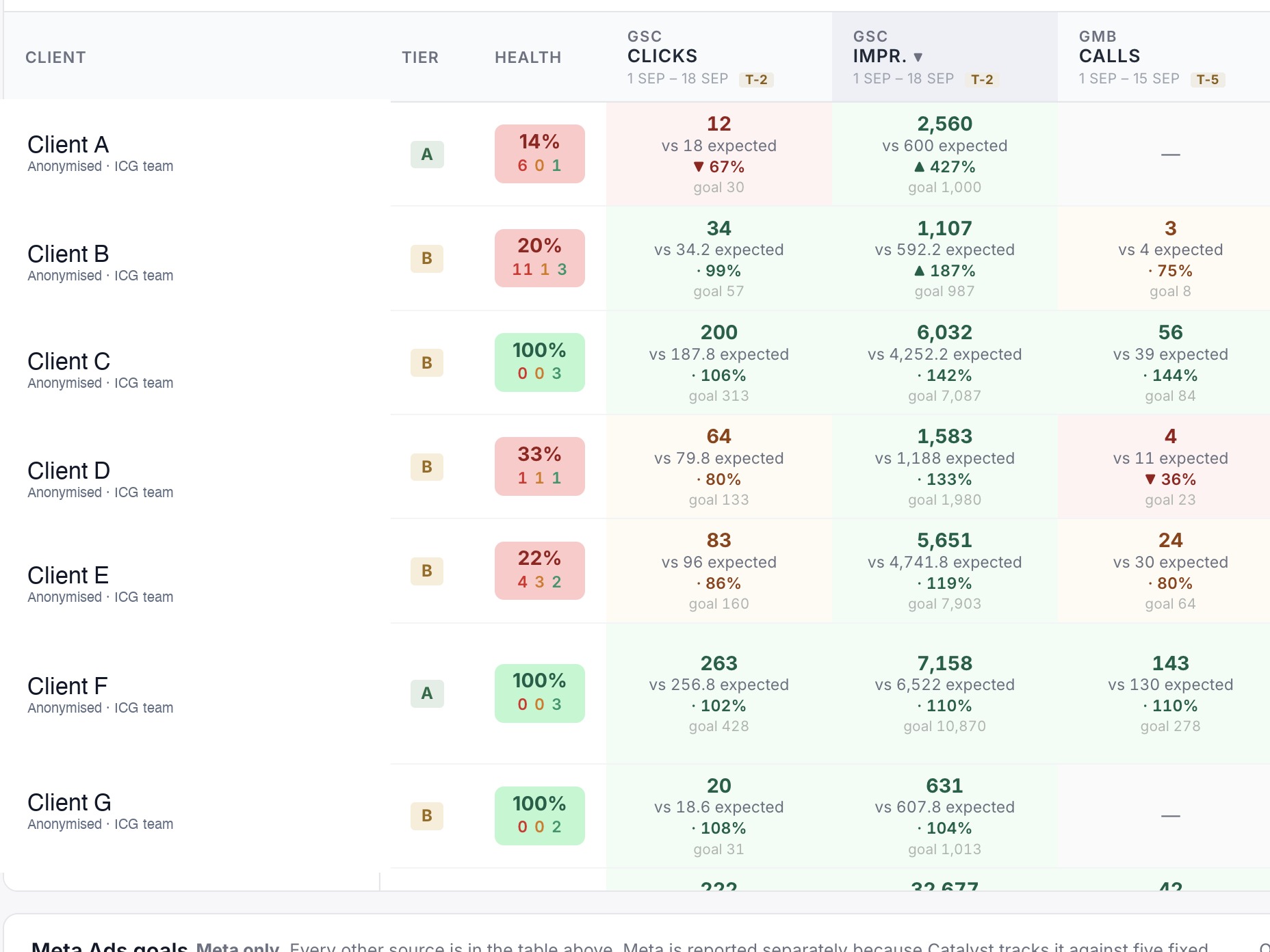
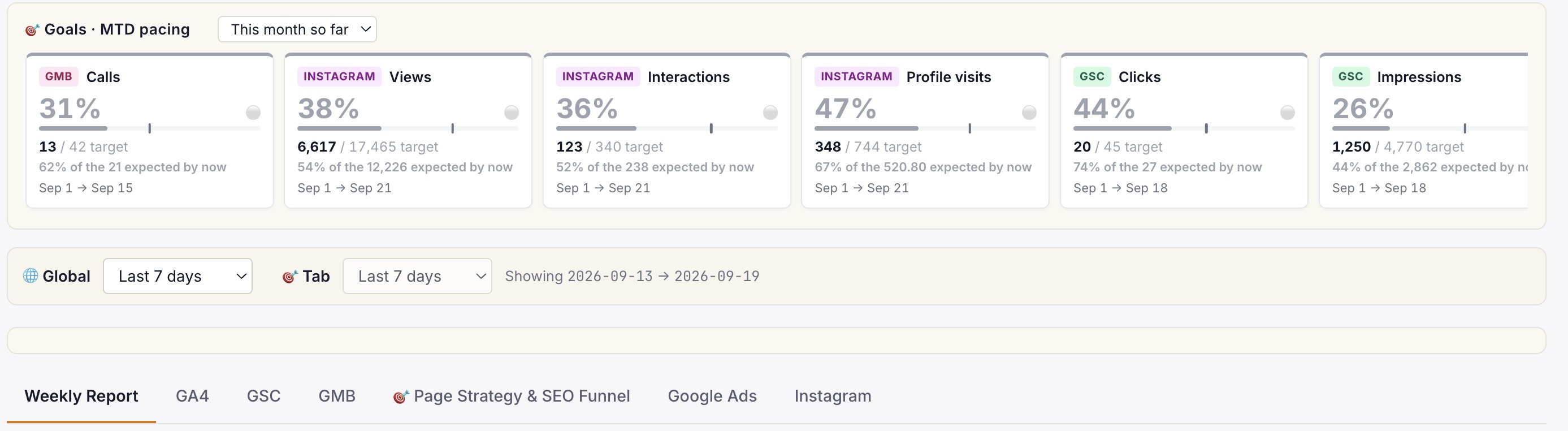
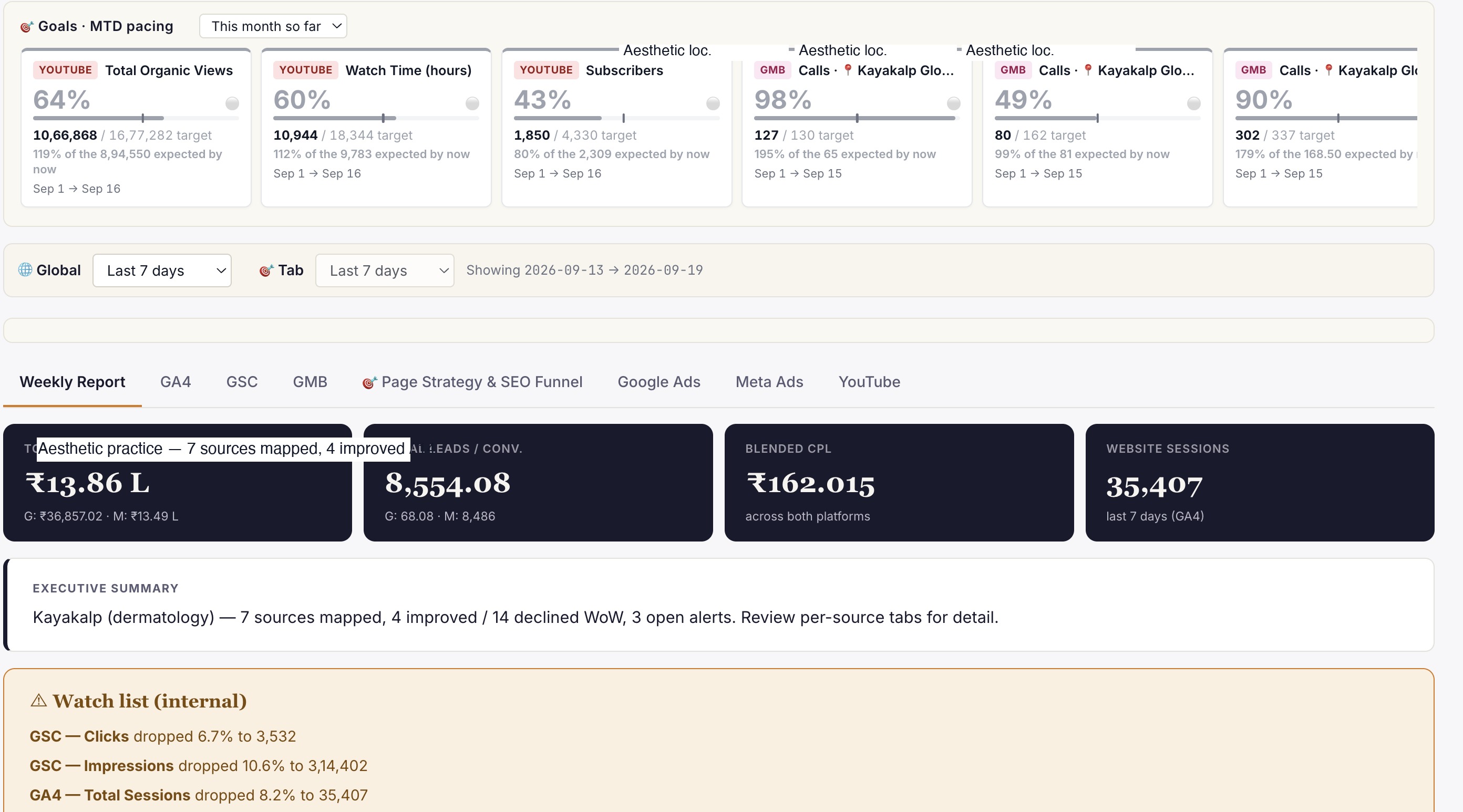
Live client dashboard. GSC, GA4, Google Ads, Meta Ads, IVR calls in one view. Login anytime, not monthly.
Phoenix
Clinic revenue intelligence over your PMS. Daily action queue: Prevent Loss, Maintain & Engage, Grow Revenue. Multi-centre rollout.
Or book a free 30-min audit to see all three in action on your account.
Healthcare brands
that already run on ICG.
A representative slice of the 150+ healthcare brands ICG has delivered for across India. Most engagements remain under NDA.


What ICG clients say · on video.
"ICG runs Google Ads + Meta for our plastic surgery practice. CPQL dropped meaningfully in the first 90 days."
"Hair transplant marketing in Jaipur needed someone who understood Tier-2 patient psychology. ICG built it right."
"ICG's Chandigarh plastic surgery campaigns delivered measurable consultation volume from the first quarter."
Need help operationalising this?
Every ICG service is healthcare-only, NMC + DPDP-aware, and built around the patient-research patterns that drive Indian healthcare growth in 2026.
Every practice welcome — packages from ₹20,000/mo.
Goals-Driven engagements · Performance-Linked Payout Models available
More from
ICG.
Five trends shaping Indian healthcare marketing through 2027: AI-first patient research, Conversions API adoption, ABDM discovery, the AEO w...
Healthcare AIO is the discipline of getting your clinic or hospital cited inside Google AI Overviews, ChatGPT and Perplexity answers — not j...
Conversational-search advertising places brand messages inside AI chat answers — ChatGPT, Perplexity, Copilot — rather than beside a results...
Stop guessing.
Book a Diagnostic.
30 minutes. Free. With the AI-powered healthcare-only marketing agency 150+ brands already run on. No slides, no pitch, no hard close.


