


Meta Ad Copy Under the NMC Guidelines (2026): What Doctors and Clinics Cannot Say
Meta ads are advertising under the NMC's October 2026 guidelines (paras 3.2, 3.5). No 'best' or 'No.1', no guarantees, no offers, no testimonials, no promotional doctor portrayal. The clause-linked ad copy review ICG runs before any ad ships.
No pitch. Written root-cause diagnosis. AI-powered, healthcare only.
Direct answer
Meta ads are advertising under the NMC's October 2026 guidelines (paras 3.2, 3.5). No 'best' or 'No.1', no guarantees, no offers, no testimonials, no promotional doctor portrayal. The clause-linked ad copy review ICG runs before any ad ships.
TL;DR

A Meta ad is advertising under the NMC's Guidelines on Ethical Advertising and Public Communication of 6 October 2026: the definition in para 3.2 covers digital, social-media, sponsored and targeted promotional communication, and para 3.5 names Facebook and sponsored posts as media of advertisement. The guidelines are read with the Indian Medical Council (Professional Conduct, Etiquette and Ethics) Regulations 2002, which remain the operative code; Chapter 6 of those Regulations covers unethical acts, including advertising. This piece is the ad copy review ICG runs on every Meta ad script for the healthcare accounts we manage: practical, clause-linked and written for a marketing lead who needs sign-off from a medical director tomorrow morning. For the full rules, see the complete guide to the NMC advertising guidelines 2026.
Updated 8 October 2026 to the National Medical Commission's Guidelines on Ethical Advertising and Public Communication by Hospitals/Medical Institutions and Registered Medical Practitioners (public notice No. R-13014/01/2024-Ethics, dated 6 October 2026, in force immediately). Paragraph numbers in this article refer to those guidelines. General information, not legal advice.
Who the guidelines bind in a Meta ad
The guidelines bind both registered medical practitioners (RMPs) and hospitals or medical institutions. For doctors, para 8.1 lists what they may not do, and it is strict: no direct or indirect solicitation, no self-promotion, no engaging a third party to market medical services, and no use of their name, image, voice or testimonial for promotion (para 8.1(ii)). In practice, an individual doctor should not be running Meta ads for their own practice.
Hospitals and clinics may publish factual, objective and verifiable information: name, location, contact, departments, facilities, equipment, services, emergency services, accreditation status and charges (para 8.3). They may not add solicitation, inducements, superiority claims, cure guarantees or a promotional portrayal of an individual RMP. Paras 8.1(ix), (x) and (xii) bind hospitals directly. Hospitals are dealt with under the Clinical Establishments Act or the relevant State Act (para 10.1, Explanation; para 4.3).
Who wrote the copy does not matter. Publishing through an agency, platform or influencer does not absolve the doctor or institution of content it authorised, commissioned, sponsored, adopted or knowingly permitted (para 4.4).
Red-flag phrases you cannot ship in a Meta ad
- "Best doctor in [city]" — para 8.1(iii); para 8.1(ix)
- "India's top / leading / No.1 [specialty]" — para 8.1(ix), unless objectively verifiable with a disclosed methodology
- "100% success rate" or "guaranteed results" — para 8.1(iii); Explanation II to para 3.2
- "Painless procedure" — named in para 8.1(iii)
- "Better than [other doctor / clinic]" — comparative claim (Explanation II)
- "Cure for [chronic condition]" — cure guarantee (para 8.3); misleading cure claims are listed among serious violations in para 10.1
- "Free consultation", "20% off this month", "cashback on packages" — inducements barred by para 8.1(x), for hospitals as well as doctors
- "Don't ignore these symptoms, book before it's too late" — fear-based marketing (para 8.1(i))
- "Results you will love", with no mention of risks — unrealistic expectations or hidden risks (para 8.1(vi))
- "Trusted by celebrities" — celebrity patients and endorsements (paras 8.1(v), 8.1(xi))
What you can say — the safe patterns
Compliant Meta ad copy from a hospital or clinic page does one of three things: it educates about a condition without soliciting; it states a factual service, department, timing, location or charge (para 8.3); or it carries a health-awareness message (para 5.1; Explanation I). Patterns we use:
- "[Clinic name]: IVF services in [city] since [year]"
- "How IVF work-ups are sequenced — [educational video]"
- "Dermatology OPD at [Clinic name], [locality]: Mon-Sat, 10 am-6 pm"
- "[Clinic name] follows [ICMR / accreditation body] guidelines for [procedure]"
- "Consultation charges: ₹[amount]" (factual price disclosure, para 8.1(x))
The move from "Dr. Ramesh, India's top hair transplant surgeon" to "Hair restoration services at [Clinic name], Bengaluru" looks small. Under the guidelines it is the difference between a promotional portrayal of a doctor and permitted institutional information. "Learn more" calls to action keep the ad informational; "Book now, limited slots" pushes it towards solicitation.
Naming or showing a doctor in an ad
Default to crediting the institution. Para 8.3 bars a hospital from a "promotional portrayal of an individual RMP", para 8.1(ii) bars doctors from using their name, image or voice for promotion, and para 9.2 does not permit an RMP's photograph where it constitutes self-advertisement.
Where a doctor genuinely needs to appear, for example presenting a public-health explainer, the content must be educational, must not promote the doctor's practice (para 5.1), and must disclose the doctor's name, qualifications, registration status and SMC/NMR registration number (Explanation III and IV). "Dr. [Name], MS Orthopaedics, Reg. No. [number], explains when knee pain needs an X-ray" is a disclosure on educational content. "Dr. [Name], the surgeon who changed knee replacement in India" is promotion. Doctors' own educational talks in their own name and designation are covered by para 8.2(iii); see educational YouTube for doctors.
Testimonials, reviews and patient stories
Do not run them. Para 8.1(xi) bars celebrity, influencer, patient and employee testimonials; para 8.1(v) bars promotional cases and success stories; and Explanation V bars any RMP or institution from soliciting, buying, procuring or manipulating fake, paid or misleading reviews, testimonials or endorsements. Patient consent does not make a prohibited testimonial lawful (para 6.2). An ad that is "a patient saying Dr. X changed my life" breaks several of these at once. More in our guide to patient testimonials and before-after photos.
Photos, before-and-after and AI creative
Before-and-after images are barred as promotion (para 8.1(v)); the only exception is scientific or educational material with anonymised consent, which is not what a Meta ad is. No identifiable patient data, faces or anomalies may appear (para 7.4). For ART and prenatal contexts, PC-PNDT restrictions apply as well. Meta's own policies also restrict before-and-after imagery for cosmetic and weight-loss categories.
AI creative has its own rule. Para 7.2 prohibits AI-generated promotional campaigns for commercial interest, requires permitted AI-generated content to carry a source mark, and bars synthetic patients, testimonials and endorsements (para 7.2(b)). An AI-generated "patient" smiling after treatment is out on two counts. See AI content in healthcare marketing.
The two-track review inside ICG
Every Meta ad script goes through two reviews before it ships. Track one is the client's medical director, who signs off on the clinical content. Track two is ICG's compliance reviewer, who checks the copy against paras 8.1 and 8.3, the AI rules in para 7.2, DPDP consent capture on lead forms (para 7.6), the ASCI code, and PC-PNDT for ART and prenatal contexts. Scripts that fail either track do not ship. It is slower than the "post today" model, and it produces ads that do not get pulled at day nine. Campaigns run from the hospital's or clinic's own page; see Meta advertising for hospitals and clinics.
Powered by PrismSpy — Meta ad intelligence, watched daily
ICG built PrismSpy because Indian healthcare Meta ad activity is hard to see without it. 75+ Indian healthcare brands tracked, 2,150+ active ads catalogued, ₹50Cr+ aggregate ad spend visibility per month. Creative, hook, format and run-length are refreshed daily. For compliance teams it is also a way to see which formats are educational and factual and which are not; offer-led creative that PrismSpy surfaces is a reference for what para 8.1(x) rules out, not a template.
- Watchlist Dashboard — 30–75 brands per specialty cluster (IVF / dermatology / dental / hair transplant / aesthetic / hospital), daily refresh.
- Comparative Insights — highest-quality ads, longest-running creatives, common hooks, and copy that would fail an NMC guidelines review.
- Offers Intelligence — 1,197 offers tracked across the market.
- Service Cluster + Inspirations — 419 services tracked, 4,697 searchable ad references by hook / language / format.
Standalone from ₹4,999/- per specialty vertical, or bundled free inside HealthApex OS (₹14,999/- flat, 9 tools). Book a 30-min PrismSpy walkthrough on WhatsApp — our team walks you through your specialty's landscape.
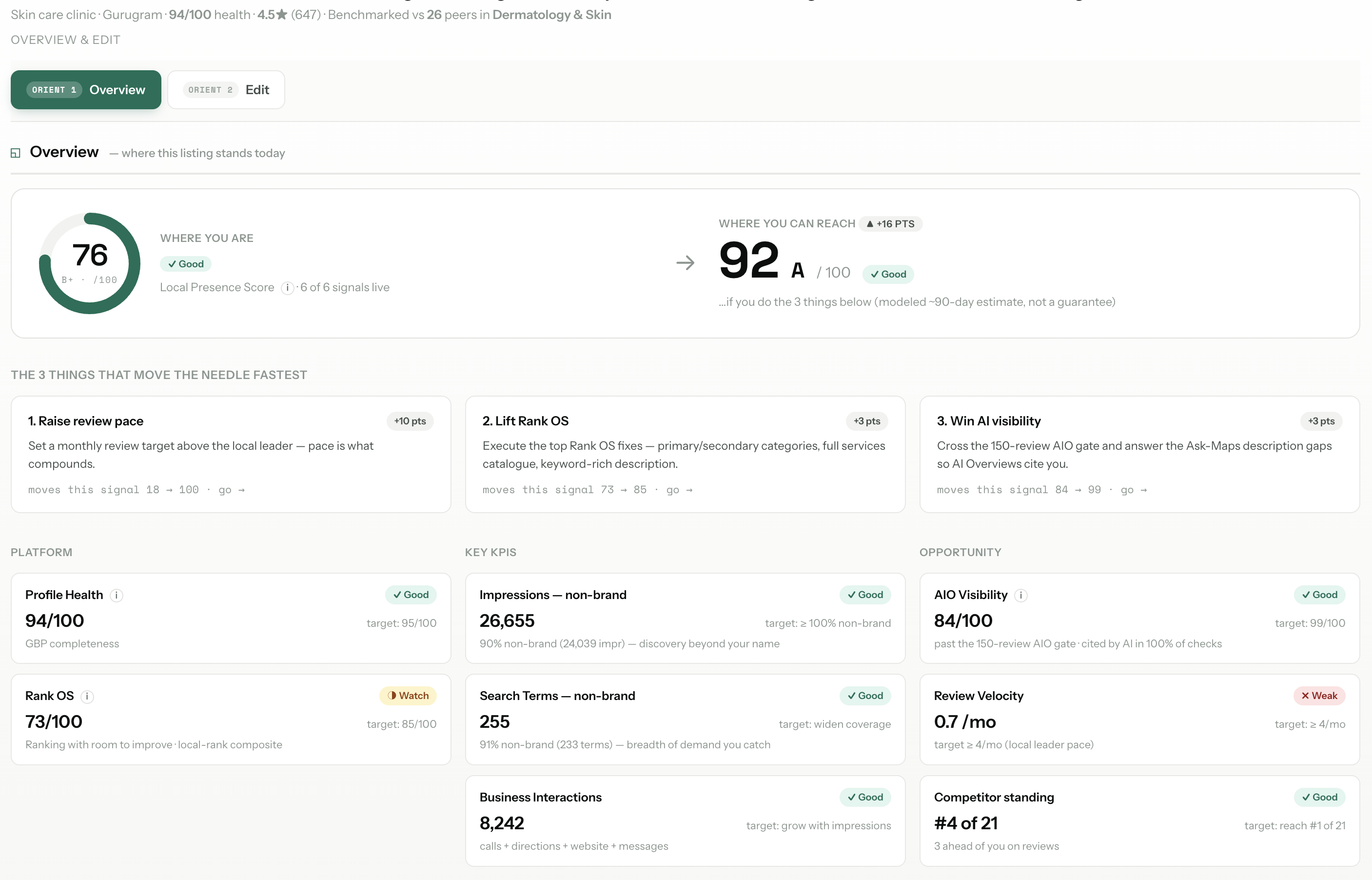


Powered by Meta Catalyst IQ — the decision engine behind every Meta ad ICG runs
Meta Catalyst IQ is the diagnosis and decision layer above Ads Manager: a Hygiene Factors 12-point checklist, Naming Intelligence, a Creative Scoring Matrix, a 2-Day Comparative, the SLC Framework and a Money Wastage column in ₹. Creative that fails the compliance review never reaches the scoring matrix.


- Diagnose → Optimise → Grow — daily hygiene checks, weekly creative scoring, monthly money wastage cleanup.
- CPQL Engine — cost per qualified lead (not just cost per lead) at ad-set level. Try the interactive CPQL calculator.
Included free with every ICG Meta ads or Performance Marketing engagement (Starter ₹20,000/-/month tier and above). Not sold standalone. Book a free 48-hour Meta ad diagnostic or WhatsApp us.

Related reading
- ASCI Guidelines 2022 explained for Indian healthcare marketers
- DPDP consent form fields for healthcare Meta lead ads
- PC-PNDT Act — what you cannot say in IVF Meta ads
- The 5-zone creative testing framework
- Hook frameworks for the first 3 seconds
- Hospital and clinic advertising under the NMC guidelines
Authority reading: NMC Guidelines on Ethical Advertising and Public Communication (6 October 2026) and ASCI code and healthcare-specific guidelines.
How ICG works within these guidelines
ICG is a healthcare marketing agency. Our clients are hospitals, clinics and medical institutions, which may publish factual, objective and verifiable information about themselves (paras 8.3 and 9.1). For individual doctors, ICG supports only genuinely educational content in the doctor's own name and designation (para 8.2(iii)). For doctors and their practices, we run patient-education-driven campaigns: awareness content that helps patients understand their condition and their options, published in the doctor's own name and designation (para 8.2(iii)) and kept free of the self-promotion that para 8.1(ii) bars.
The work is education-first and runs across six channels:
- Awareness content on YouTube. Doctor-led educational videos on public health and disease awareness, in the doctor's own name and designation, without promoting the employer organisation (para 8.2(iii)). See YODA and YouTube marketing for healthcare.
- Research articles and blogs that help patients understand their options: information shared in the normal course, not promotion (para 3.2, Explanation I). See healthcare content marketing, ICG research reports and healthcare SEO.
- Expert answers on Reddit and Quora from named, disclosed accounts. No anonymous or fake posts, no undisclosed commercial relationships and no manufactured engagement (paras 8.1(xi) and 8.1(xii)). See Reddit and Quora programmes.
- Awareness campaigns on Meta, run from the hospital's or clinic's own page, with no discounts, offers, free procedures or other inducements (paras 8.1(x) and 8.3). See Meta advertising for hospitals and clinics.
- NMC-compliant Google Ads landing pages: factual departments, services and facilities, with no "best", "No.1", "100% success", "painless" or "guaranteed" claims (paras 8.1(iii) and 8.1(ix)). See Google Ads for hospitals and clinics.
- "Learn More" instead of "Book Now" on patient-facing pages, so that a page informs rather than solicits (paras 8.1(ii) and 8.3(ii)).
All six rest on three kinds of content: scientific (evidence-based, checked by a qualified clinician), persona-based (written for the questions a specific patient group asks) and consumer-based (built from how people search, compare and decide). AI-assisted drafts go through human medical review, and AI-generated content that is published carries an AI source mark (para 7.2). We do not publish patient testimonials, before-and-after images or superiority claims, and we never buy, incentivise or gate reviews.
Free NMC compliance check. We review a hospital's or clinic's website, Google Business Profile and social channels against the October 2026 guidelines and send back a written list of fixes.
See what the check covers · Request the check · Book a 30-minute call
General information, not legal advice. Source: NMC public notice No. R-13014/01/2024-Ethics, 6 October 2026.
Book a free Meta ads account audit.
Raman Soni's team pulls your account, checks CAPI/EMQ, reviews creative for NMC compliance, and shows where CPQL is leaking. 45 minutes, actionable output.
Questions readers ask
about this topic.
The three platforms
behind every ICG engagement.
Beacon
CAPI middleware that fixes Event Match Quality, translates CRM statuses to Meta-standard events, dedups across channels.
Agency OS
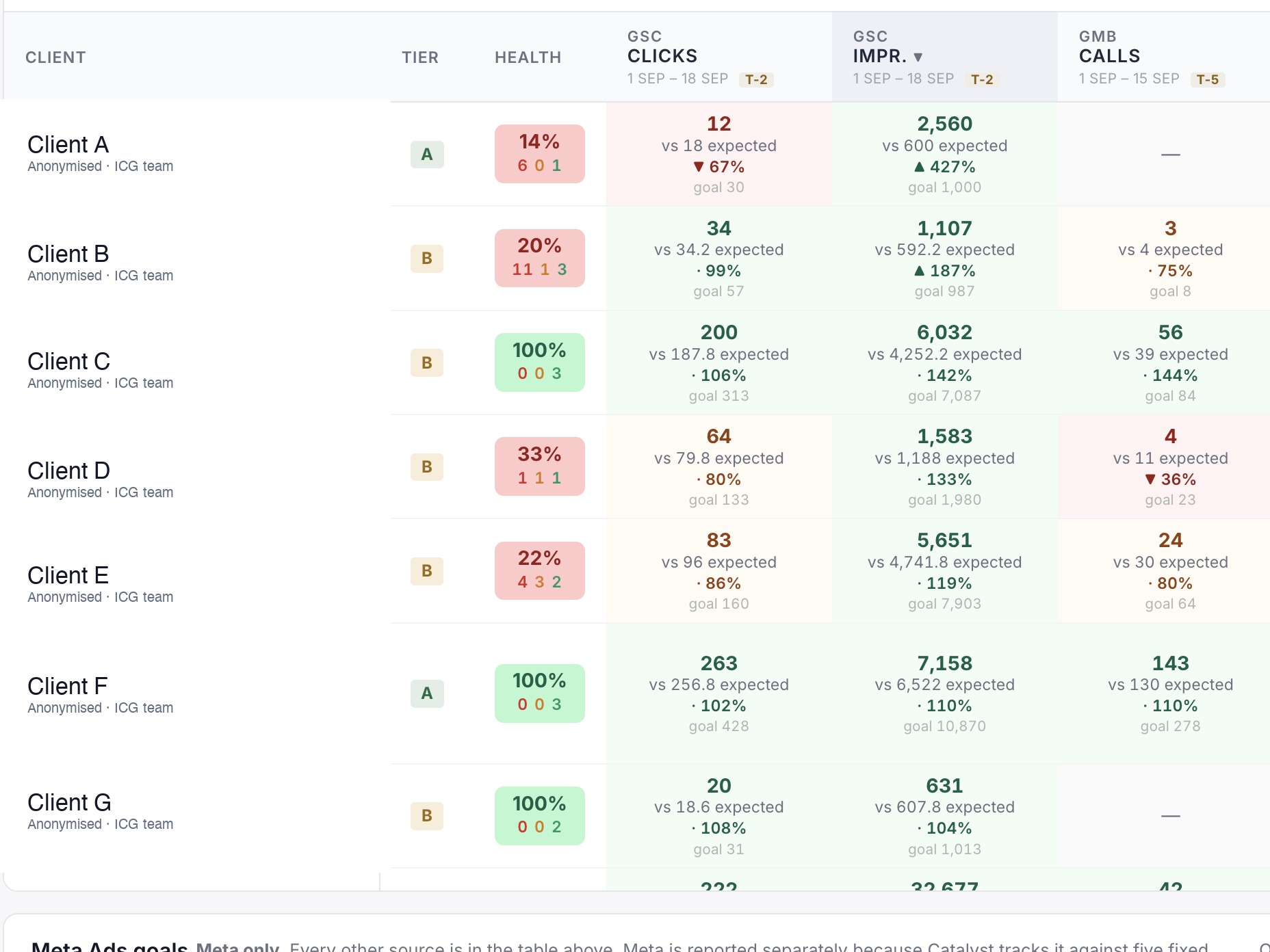
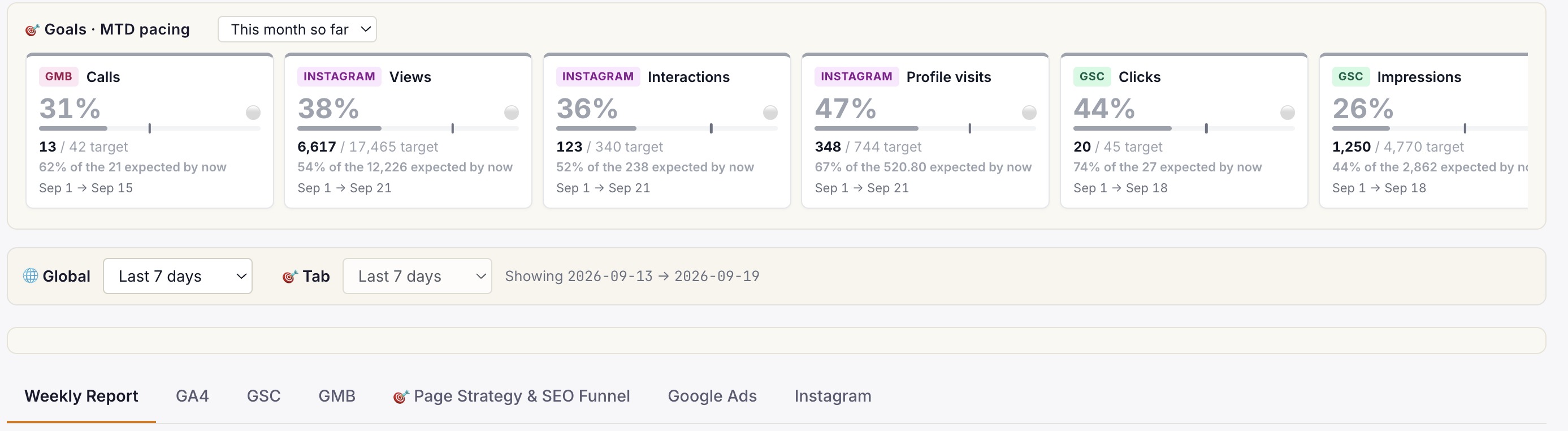
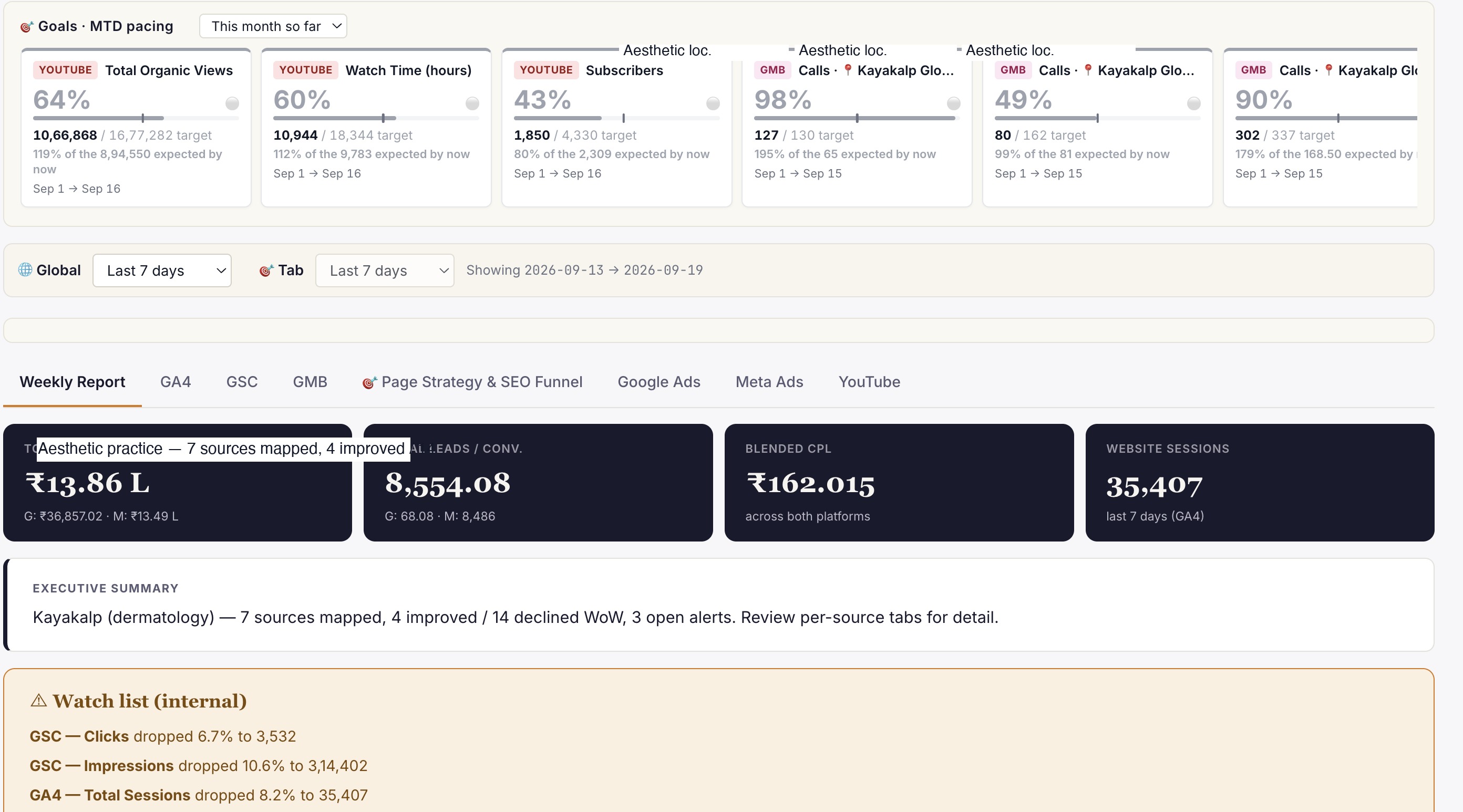
Live client dashboard. GSC, GA4, Google Ads, Meta Ads, IVR calls in one view. Login anytime, not monthly.
Phoenix
Clinic revenue intelligence over your PMS. Daily action queue: Prevent Loss, Maintain & Engage, Grow Revenue. Multi-centre rollout.
Or book a free 30-min audit to see all three in action on your account.
Healthcare brands
that already run on ICG.
A representative slice of the 150+ healthcare brands ICG has delivered for across India. Most engagements remain under NDA.


What ICG clients say · on video.
"Scale up of organic channels and business consulting. ICG has absolute domain authority in their field."
"Working with ICG transformed how we acquire IVF patients in Gurgaon. They understand the fertility journey from inquiry to consult..."
"What Ichelon accomplished — they got all my ideas and worked over 3-4 months to create an amazing, super-customised website."
Need help operationalising this?
Every ICG service is healthcare-only, NMC + DPDP-aware, and built around the patient-research patterns that drive Indian healthcare growth in 2026.
Every practice welcome — packages from ₹20,000/mo.
Goals-Driven engagements · Performance-Linked Payout Models available
More from
ICG.
Five trends shaping Indian healthcare marketing through 2027: AI-first patient research, Conversions API adoption, ABDM discovery, the AEO w...
Healthcare AIO is the discipline of getting your clinic or hospital cited inside Google AI Overviews, ChatGPT and Perplexity answers — not j...
Conversational-search advertising places brand messages inside AI chat answers — ChatGPT, Perplexity, Copilot — rather than beside a results...
Stop guessing.
Book a Diagnostic.
30 minutes. Free. With the AI-powered healthcare-only marketing agency 150+ brands already run on. No slides, no pitch, no hard close.


