


Google Review Strategy for Indian Clinics Under the NMC Guidelines (2026)
A compliant Google review strategy for Indian hospitals and clinics: the institution asks every patient for genuine feedback, with no incentives, no gating and no doctor requests on social media (Explanation V, para 8.1(xii)). Timing, channels, scripts and tooling.
No pitch. Written root-cause diagnosis. AI-powered, healthcare only.
Direct answer
A compliant Google review strategy for Indian hospitals and clinics: the institution asks every patient for genuine feedback, with no incentives, no gating and no doctor requests on social media (Explanation V, para 8.1(xii)). Timing, channels, scripts and tooling.
TL;DR

A Google review strategy for an Indian hospital or clinic is not the same problem as reviews for a restaurant or a shop. Reviews still carry a lot of weight in local search, but since 6 October 2026 the NMC's advertising guidelines set clear limits on how they can be gathered. The workable model is institution-only and non-incentivised: the hospital or clinic asks every patient for genuine feedback, offers nothing in return, filters nobody out, and never runs requests by or for an individual doctor on social media (para 3.2, Explanation V; para 8.1(xii)).
If you want the short version of what the guidelines allow, start with Google reviews for doctors under the NMC guidelines. This article is the operating playbook behind it: timing, channels, scripts and the tooling. ICG runs healthcare local SEO for 150+ Indian clinics and hospitals using Angryturtle, and in October 2026 we rewrote our review programme to this model. For the full set of rules, see our complete guide to the NMC advertising guidelines 2026.
Updated 8 October 2026 to the National Medical Commission's Guidelines on Ethical Advertising and Public Communication by Hospitals/Medical Institutions and Registered Medical Practitioners (public notice No. R-13014/01/2024-Ethics, dated 6 October 2026, in force immediately). Paragraph numbers in this article refer to those guidelines. General information, not legal advice.
Why reviews still outweigh almost every other local SEO signal
In the Angryturtle sie" style="color:inherit;text-decoration:underline;text-decoration-color:rgba(42,126,200,.5);text-underline-offset:2px">Rank OS model, Review Health is one of five weighted dimensions, and it is the one that moves local pack position fastest when it changes. In our accounts, a clinic that grows from 40 reviews with a 4.1 average to 180 reviews with a 4.6 average typically moves up two to four positions on its primary "{specialty} in {area}" query within about sixty days, other factors held constant. Google's local ranking reads reviews as a combined signal of relevance (patients describe the right kind of practice), volume, and freshness (recent reviews count more than old ones).

For patients choosing a clinic on Google Search or Maps, the reviews are also the first thing they read after the star rating. In Angryturtle's call-tracking data, profiles with many detailed reviews convert search traffic into enquiries noticeably better than profiles with a handful of short ones, even when the rest of the profile is the same.
The trap is chasing that leverage with tactics the guidelines now bar outright: incentivised reviews, ghost-written reviews, asking only the patients who look happy, or bulk messages sent from front-desk phones using patient lists without consent. These can lift numbers for a few weeks and then trigger Google's spam filters, complaints to the State Medical Council, or data-protection problems. The compliant programme is slower to start and far more durable.
The compliance perimeter: NMC guidelines, ASCI and DPDP
Three sets of rules apply to any Indian healthcare review strategy at the same time.
The NMC advertising guidelines (6 October 2026). The National Medical Commission's Guidelines on Ethical Advertising and Public Communication apply to registered medical practitioners and to hospitals and medical institutions, read with the IMC (Professional Conduct, Etiquette and Ethics) Regulations 2002. The provisions that matter for reviews:
| Provision | What it says | What it means for a review programme |
|---|---|---|
| Para 3.2, Explanation V | No RMP or institution may solicit, purchase, procure, manipulate or cause to be published fake, paid or misleading reviews, ratings or testimonials. An RMP shall not request or share patient testimonials or reviews for professional promotion on social media. | No bought, fake or staff-written reviews. Requests come from the institution, privately, not from a doctor's social accounts. |
| Para 8.1(xii) | No fake followers, likes, reviews, ratings, comments or views; no manipulation of search rankings or algorithms. Binds hospitals too. | No review gating, no rating manipulation, no review "exchanges". |
| Para 8.1(x) | No discounts, offers, coupons, cashback or free procedures used as inducements. Binds hospitals too. | No reward of any kind for leaving a review. |
| Paras 6.1-6.4 and 7.4 | Patient information only where law permits, with consent; no identifiable patient data. | Requests and replies must not reveal anything about a patient's care. |
| Para 9.4 | Healthcare platforms: no paid ranking of doctors; transparent listings. | Paying a directory for a higher position is not a review strategy. |
Two practical consequences follow. A review request cannot ask the patient to mention a treatment or an outcome. And the clinic cannot turn review text into promotional material: quoting patient reviews in ads or on social media is using testimonials for promotion, which Explanation V and para 8.1(xi) bar. See NMC rules on patient testimonials for that side of the question.
ASCI's advertising code applies to advertising generally. Any comparative claim ("best cardiology reviews in Bengaluru") or outcome claim needs substantiation, and for doctors the NMC guidelines are stricter still (para 8.1(iii) and (ix)).
DPDP Act 2023. Patient phone numbers and email addresses collected at registration are personal data. Using them for a feedback request needs a lawful basis, which in practice means a clear consent line for post-visit feedback messages on the patient registration form, and an easy opt-out in every message (para 7.6 of the guidelines also points to the IT Act 2000 and the DPDP Act 2023 and Rules 2025).
The institution-only, non-incentivised model in four rules
- The institution asks. Requests are sent by the hospital or clinic, in its own name, from its own business number, SMS sender ID or email. They do not come from a doctor's personal account and are never posted on social media.
- Every patient is asked. The same request goes to every patient seen in the period. Nobody decides who gets it based on how the visit went, and there is no "happy patients only" step.
- Nothing is offered. No discount, free test, cashback, priority appointment or lucky draw.
- The wording is neutral. "Share your experience." Never "5 stars", never suggested wording, never a mention of a doctor or a treatment outcome.
Offering a private feedback route alongside the public one is good practice, as long as both are offered to everyone in the same message. What turns it into gating is sending the Google link only to people who answered positively.
The post-visit ask window
Timing still matters. Across the Angryturtle client base, a request reaching the patient's WhatsApp or inbox two to twenty-four hours after the visit gets a response several times more often than one sent four days later, and far more often than one sent two weeks later. Recent visits produce more detailed feedback.
The compliant pattern: the patient completes the visit. Within a few hours, one message from the clinic thanks them for visiting and invites feedback on their experience, with the Google review link and a private feedback option in the same message. Every patient gets that message. For procedures, the clinic waits until the patient has had time to recover. At most one reminder follows, worded the same way. If someone raises a concern privately, the clinic manager follows it up as a service matter, and that patient still has the same Google link everyone else received.
QR code, SMS and WhatsApp request mechanics
Each delivery channel has its own setup.
QR code at the billing desk or exit. The QR can open a clinic-branded page on the clinic's own domain that shows the Google review link and a private feedback form side by side, to everyone. It must not screen the visitor first. A clinic-hosted page keeps the wording under the clinic's control and records consent where needed. Angryturtle generates the QR with a UTM-tagged short link so the clinic can see which placement (billing counter, waiting area, exit) works.
SMS from a DLT-registered sender ID. India's DLT framework for commercial SMS requires the sender ID and message template to be registered before sending; unregistered SMS is blocked by Indian telcos. The template should say exactly what it does and include an opt-out.
WhatsApp Business API. WhatsApp usually gets the most responses in our client base. Business-initiated templates have to be approved by Meta, and template rules can restrict links in the first message. Where a link cannot go in the first message, the clinic asks every patient whether they would like the link, and sends it to everyone who says yes, regardless of what else they say. Angryturtle's WhatsApp integration handles template approval and the session window.
Sample compliant request scripts
These are the scripts we now use for ICG's hospital and clinic clients. Each is sent by the clinic, to every patient.
WhatsApp template (with link): "Hello {first_name}, thank you for visiting {clinic_name}. We would value your honest feedback about your experience, whatever it was. You can share it on Google here: {short_link}, or reply to this message to tell us directly. Reply STOP to opt out."
WhatsApp template (where the link must follow): "Hello {first_name}, thank you for visiting {clinic_name}. Would you like to share feedback about your experience? Reply YES and we will send you the link, or reply with any comments for our team. Reply STOP to opt out."
WhatsApp follow-up (to everyone who replied YES): "Thank you. Here is the link to share your experience on Google: {short_link}."
SMS template (DLT registered): "{Clinic}: Thank you for visiting. Share your experience on Google: {short_link}. Feedback for our team: {feedback_link}. Reply STOP to opt out."
QR landing page: "Thank you for visiting {clinic_name}. Share your experience on Google, or send feedback directly to our team." Two buttons, shown to everyone.
What none of these do: ask for five stars or suggest wording; mention a treatment or an outcome; name or promote a doctor; offer anything in return; or decide who receives the Google link based on sentiment.
Doctor-directory listings and platform overlap
Most Indian clinics also have a doctor-directory listing, which raises the question of where to send patients. Google reviews carry more weight in local search; directory reviews matter mainly within that platform.
Keep it simple: one request, one platform, per patient. Asking for reviews on two platforms in the same message lowers responses on both and starts to feel like pressure. If a clinic also wants directory feedback, it should use the same rules there: the same neutral request to every patient, from the clinic, with no incentive. Angryturtle records which request each patient received so nobody is asked twice.
Paid directory tiers do not change Google review weight, and para 9.4 of the guidelines now bars healthcare platforms from paid ranking of doctors. Treat listings as factual information about the practice, not as something to buy position in.
What breaks when clinics get review requests wrong
The failure patterns are consistent across the clinics we have audited.
- Incentives. A discount or free service for a review. Barred by Explanation V and para 8.1(x), against Google's policies, and a common cause of review removal.
- Gating. Sending the review link only to patients who rated the visit well. It manipulates the rating (para 8.1(xii)) and Google's policies prohibit it too.
- Ghost-written reviews from staff, relatives or the doctor's own account. Fake reviews under Explanation V, and easy for Google to spot.
- Doctors asking on social media. A doctor's "please review me" post or story, or resharing reviews, is barred by Explanation V.
- Bulk SMS without DLT registration or consent. Gets the sender ID blocked and creates DPDP exposure.
- Asking patients to mention treatments. Produces near-identical reviews that look manufactured and turns reviews into treatment promotion.
Each of these is caught eventually: by Google's systems, by a complaint to the State Medical Council, or by a patient's data-protection complaint. A clinic that runs the institution-only programme from day one avoids the whole class of failure.
Angryturtle's review request kit
The review module inside Angryturtle is built for the institution-only model. It includes DLT-ready SMS templates, Meta-approved WhatsApp templates, a QR generator linked to a clinic-hosted page that shows the Google link and a private feedback option to everyone, consent capture aligned with the DPDP Act, per-specialty variants of the same neutral wording (dental, IVF, cardiology, dermatology, ophthalmology, orthopaedics, general medicine), a monitoring dashboard that alerts the clinic when a new review lands, and AI-drafted reply suggestions that a person reviews before posting.
The send logic goes to every eligible patient from the clinic's CRM. It has no sentiment filter, no incentive fields, and no option to send requests from or on behalf of an individual doctor. Reply drafts are written to avoid confirming that the reviewer is a patient, naming a treatment, or making outcome or superiority claims; see our review response templates and guide to replying to online reviews.
For solo owners running one or two profiles, the self-serve tier at ₹999/- per month includes the full kit and expects the owner to run the operator role themselves. For clinic groups and hospitals, ICG's managed service from ₹25,000/- per month runs the operator role inside the same platform with our healthcare specialists executing weekly cadence and monthly reporting.
The tool ICG uses to run this at scale: Angryturtle
ICG runs local SEO and GBP intelligence for 150+ Indian healthcare brands using Angryturtle, our own AI-native GBP intelligence and management OS. The platform scores every profile 0-100 via a proprietary Rank OS model with five weighted dimensions (Relevance, Review Health, Freshness, Entity Authority, AIO Readiness), publishes edits, Posts, media and review replies directly to Google, and includes Ask Maps AIO Readiness scoring for Google AI Overviews and ChatGPT visibility.

Available in two shapes: self-serve at ₹999/- per month for solo owners with 1-2 profiles, and ICG's managed service from ₹25,000/- per month where our healthcare specialists execute inside the same platform. Both are anchored in the Healthcare Local SEO Agency India pillar page which has full scope, methodology and pricing.
Book a demo on WhatsApp → or start a free trial at angryturtle.ai →
Related reading

- Google reviews for doctors under the NMC guidelines: what is allowed
- Healthcare local SEO agency India: the pillar service page
- Review response templates for Indian healthcare: privacy-safe reply patterns
- Review velocity and local pack ranking: cadence maths
- Doctor-directory vs Google reviews: platform comparison
- Angryturtle Rank OS explained: the scoring model
How ICG works within these guidelines
ICG is a healthcare marketing agency. Our clients are hospitals, clinics and medical institutions, which may publish factual, objective and verifiable information about themselves (paras 8.3 and 9.1). For individual doctors, ICG supports only genuinely educational content in the doctor's own name and designation (para 8.2(iii)). For doctors and their practices, we run patient-education-driven campaigns: awareness content that helps patients understand their condition and their options, published in the doctor's own name and designation (para 8.2(iii)) and kept free of the self-promotion that para 8.1(ii) bars.
The work is education-first and runs across six channels:
- Awareness content on YouTube. Doctor-led educational videos on public health and disease awareness, in the doctor's own name and designation, without promoting the employer organisation (para 8.2(iii)). See YODA and YouTube marketing for healthcare.
- Research articles and blogs that help patients understand their options: information shared in the normal course, not promotion (para 3.2, Explanation I). See healthcare content marketing, ICG research reports and healthcare SEO.
- Expert answers on Reddit and Quora from named, disclosed accounts. No anonymous or fake posts, no undisclosed commercial relationships and no manufactured engagement (paras 8.1(xi) and 8.1(xii)). See Reddit and Quora programmes.
- Awareness campaigns on Meta, run from the hospital's or clinic's own page, with no discounts, offers, free procedures or other inducements (paras 8.1(x) and 8.3). See Meta advertising for hospitals and clinics.
- NMC-compliant Google Ads landing pages: factual departments, services and facilities, with no "best", "No.1", "100% success", "painless" or "guaranteed" claims (paras 8.1(iii) and 8.1(ix)). See Google Ads for hospitals and clinics.
- "Learn More" instead of "Book Now" on patient-facing pages, so that a page informs rather than solicits (paras 8.1(ii) and 8.3(ii)).
All six rest on three kinds of content: scientific (evidence-based, checked by a qualified clinician), persona-based (written for the questions a specific patient group asks) and consumer-based (built from how people search, compare and decide). AI-assisted drafts go through human medical review, and AI-generated content that is published carries an AI source mark (para 7.2). We do not publish patient testimonials, before-and-after images or superiority claims, and we never buy, incentivise or gate reviews.
Free NMC compliance check. We review a hospital's or clinic's website, Google Business Profile and social channels against the October 2026 guidelines and send back a written list of fixes.
See what the check covers · Request the check · Book a 30-minute call
General information, not legal advice. Source: NMC public notice No. R-13014/01/2024-Ethics, 6 October 2026.
Book a free Brand & Growth Diagnostic.
60 minutes with Sr. Leadership. You leave with a written root-cause analysis of where growth is stalling and what to fix first — whether or not you engage ICG.
Questions readers ask
about this topic.
The three platforms
behind every ICG engagement.
Beacon
CAPI middleware that fixes Event Match Quality, translates CRM statuses to Meta-standard events, dedups across channels.
Agency OS
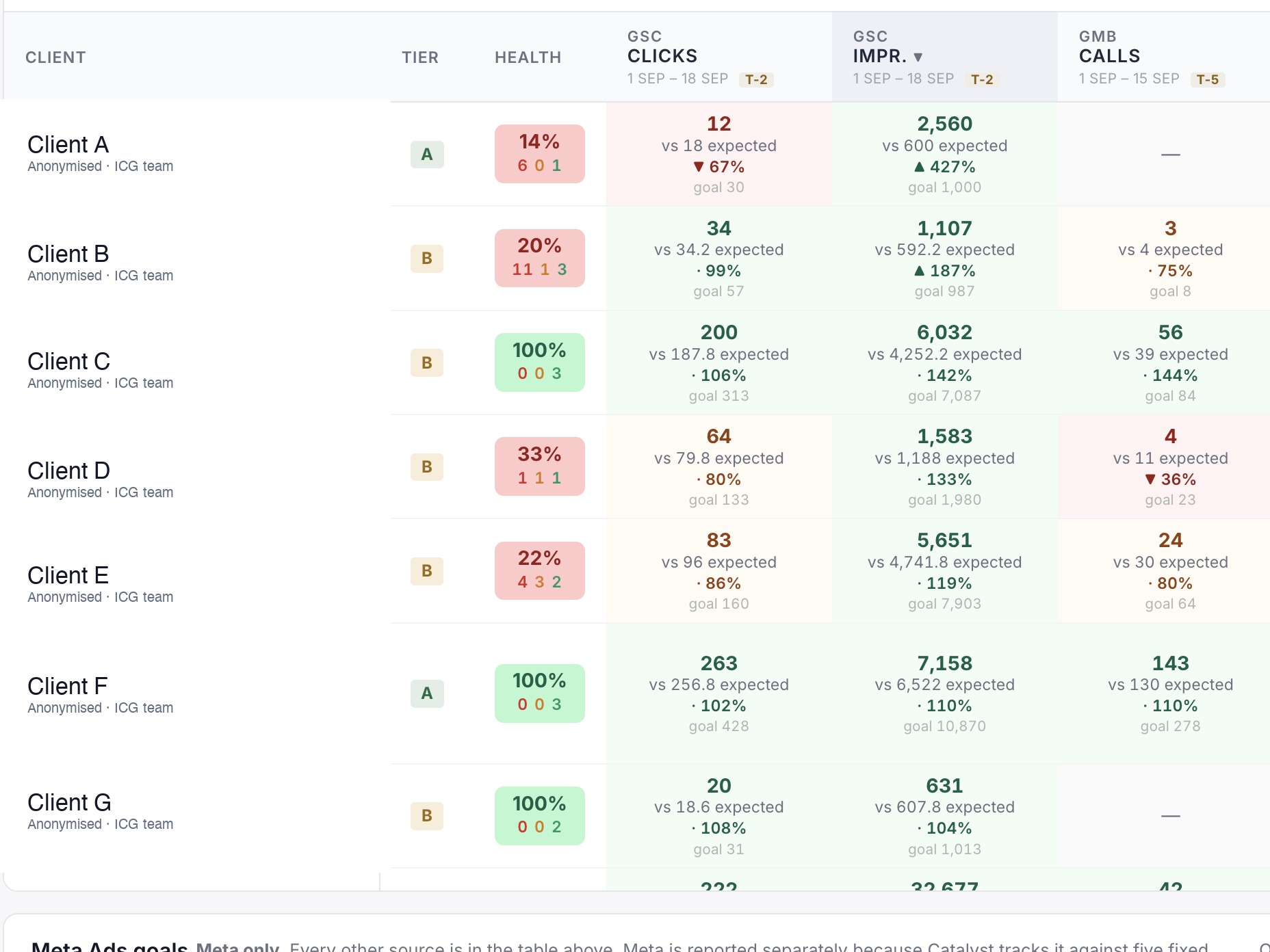
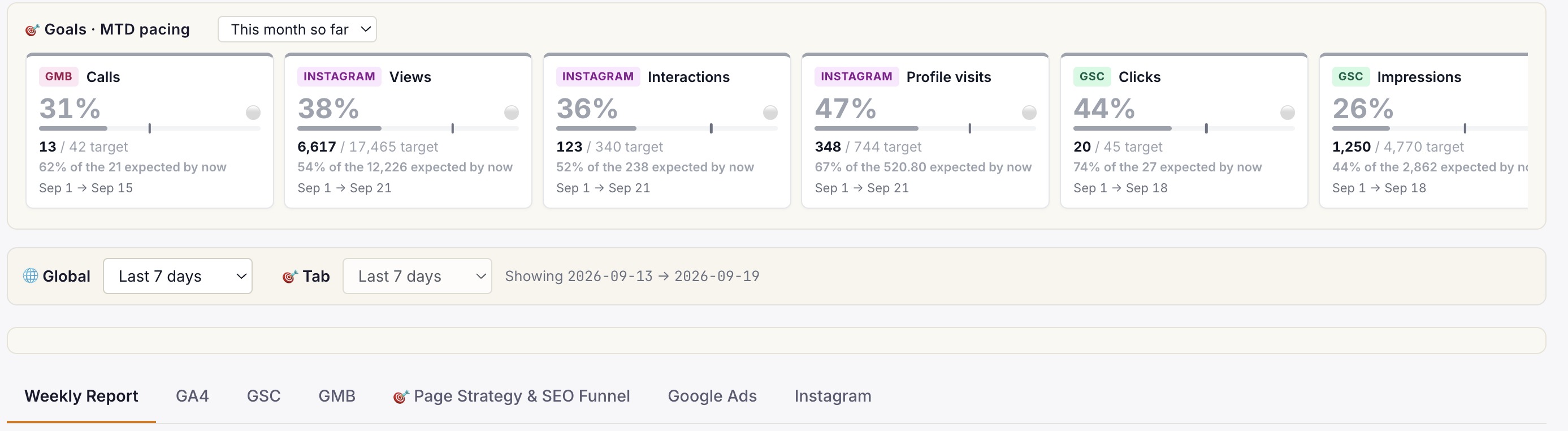
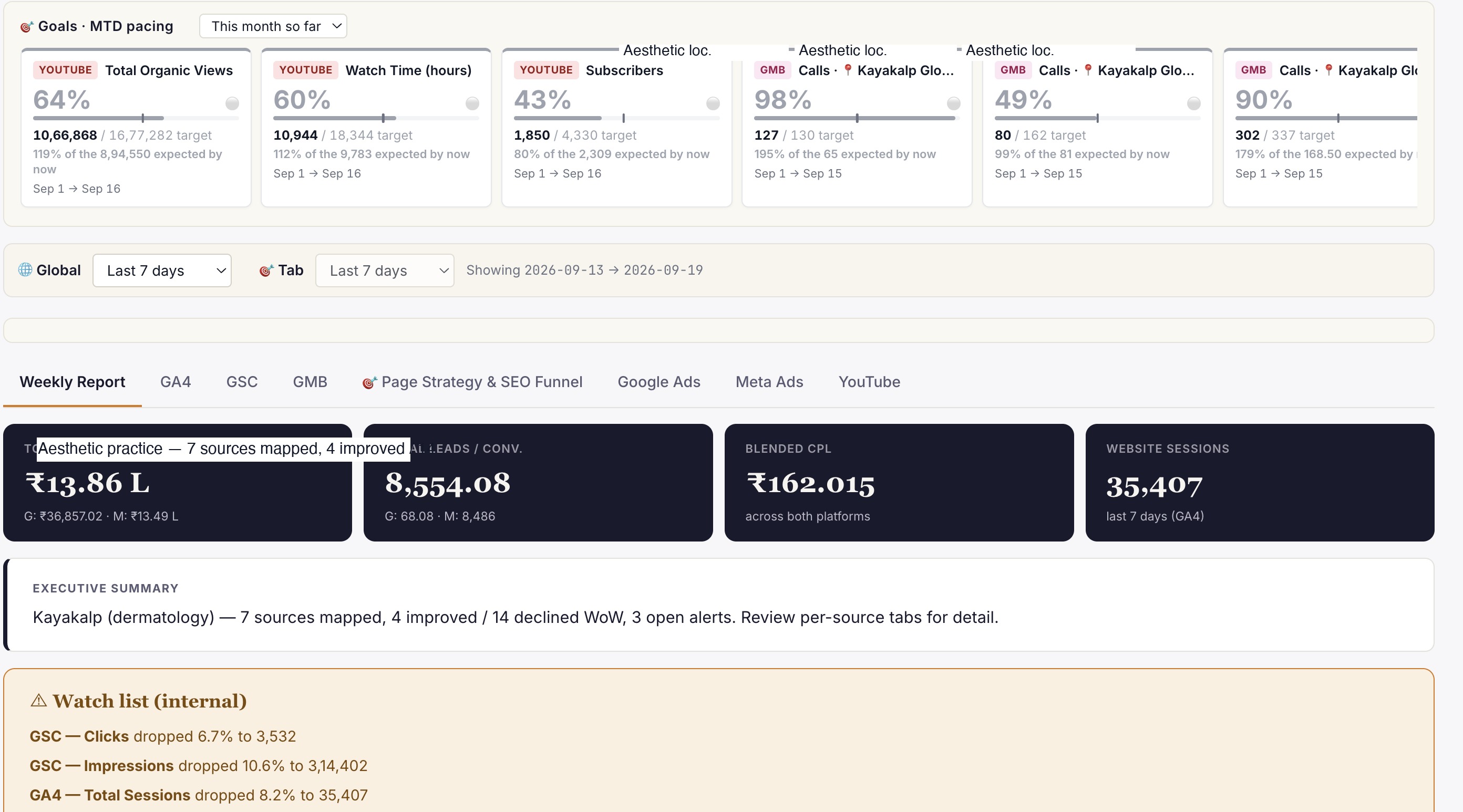
Live client dashboard. GSC, GA4, Google Ads, Meta Ads, IVR calls in one view. Login anytime, not monthly.
Phoenix
Clinic revenue intelligence over your PMS. Daily action queue: Prevent Loss, Maintain & Engage, Grow Revenue. Multi-centre rollout.
Or book a free 30-min audit to see all three in action on your account.
Healthcare brands
that already run on ICG.
A representative slice of the 150+ healthcare brands ICG has delivered for across India. Most engagements remain under NDA.


What ICG clients say · on video.
"Scale up of organic channels and business consulting. ICG has absolute domain authority in their field."
"Working with ICG transformed how we acquire IVF patients in Gurgaon. They understand the fertility journey from inquiry to consult..."
"What Ichelon accomplished — they got all my ideas and worked over 3-4 months to create an amazing, super-customised website."
Need help operationalising this?
Every ICG service is healthcare-only, NMC + DPDP-aware, and built around the patient-research patterns that drive Indian healthcare growth in 2026.
Every practice welcome — packages from ₹20,000/mo.
Goals-Driven engagements · Performance-Linked Payout Models available
More from
ICG.
Five trends shaping Indian healthcare marketing through 2027: AI-first patient research, Conversions API adoption, ABDM discovery, the AEO w...
Healthcare AIO is the discipline of getting your clinic or hospital cited inside Google AI Overviews, ChatGPT and Perplexity answers — not j...
Conversational-search advertising places brand messages inside AI chat answers — ChatGPT, Perplexity, Copilot — rather than beside a results...
Stop guessing.
Book a Diagnostic.
30 minutes. Free. With the AI-powered healthcare-only marketing agency 150+ brands already run on. No slides, no pitch, no hard close.


