


Review Response Templates for Indian Clinics: NMC-Safe Replies by Specialty (2026)
Review reply templates for Indian hospitals and clinics that never confirm a patient, a treatment or an outcome, and never promote a doctor (NMC guidelines paras 6.1-6.4, 7.4, 8.1(iii), 8.3). Positive, negative and specialty patterns for dental, IVF, cardiology and dermatology.
No pitch. Written root-cause diagnosis. AI-powered, healthcare only.
Direct answer
Review reply templates for Indian hospitals and clinics that never confirm a patient, a treatment or an outcome, and never promote a doctor (NMC guidelines paras 6.1-6.4, 7.4, 8.1(iii), 8.3). Positive, negative and specialty patterns for dental, IVF, cardiology and dermatology.
TL;DR

Review response templates for Indian healthcare are one of the most under-considered parts of a clinic's public reputation. A reply that discloses something about a patient, or claims a result, can sit on a profile for months before anyone notices, and by then it has been cached by AI answer engines and copied to scraper directories. The safe pattern is not complicated once written down. This guide is the template library ICG uses for hospital and clinic clients across healthcare local SEO for 150+ Indian clinics and hospitals with Angryturtle, updated for the NMC's October 2026 advertising guidelines.
Replies are one half of the review question. For what the guidelines allow when asking patients for reviews, see Google reviews for doctors under the NMC guidelines; for the reply workflow and escalation, see how doctors and clinics should reply to online reviews. The full rulebook is in our complete guide to the NMC advertising guidelines 2026.
Updated 8 October 2026 to the National Medical Commission's Guidelines on Ethical Advertising and Public Communication by Hospitals/Medical Institutions and Registered Medical Practitioners (public notice No. R-13014/01/2024-Ethics, dated 6 October 2026, in force immediately). Paragraph numbers in this article refer to those guidelines. General information, not legal advice.
Why reply templates are a real compliance risk
A review is written by the patient. A reply is written by the clinic, and it is a public statement the clinic is responsible for, even if an agency drafted it (para 4.4). It has to fit the NMC's Guidelines on Ethical Advertising and Public Communication (6 October 2026), the DPDP Act 2023, ASCI's advertising code where the reply promotes, and Google's own content policies.
The pattern we see in audits is that clinics run for months without anyone scrutinising reply text, until a complaint surfaces phrases that confirm a patient's identity, acknowledge a treatment outcome or make a comparative claim. At that point the clinic has to go back and edit dozens or hundreds of replies. Getting the defaults right at the start is far cheaper.
Replies are also read. Patients comparing clinics on Maps read reply text as closely as the reviews, and a calm, consistent reply reads better than either silence or a defensive one.
What a reply can and cannot say under the NMC guidelines and the DPDP Act
| A reply cannot | Why |
|---|---|
| Confirm (or deny) that the reviewer was a patient, or what treatment they had | Identifiable patient information (paras 6.1-6.4, 7.4); DPDP Act 2023 (para 7.6) |
| Restate a clinical situation, diagnosis or test result | Same as above, even if the reviewer mentioned it first |
| Claim better results, "best" care or a guaranteed outcome | Paras 8.1(iii), 8.1(vi) and 8.1(ix); para 3.2, Explanation II |
| Praise or promote a named doctor | Para 8.1(ii) (no self-promotion); para 8.3 (no promotional portrayal of an individual RMP by a hospital) |
| Invite the reader to book or offer a discount | Paras 8.1(ii) and 8.1(x) |
A reply should thank the person for their feedback, acknowledge it in general terms, offer a private channel, and sign off from the clinic, not from an individual doctor. Official sources: the NMC guidelines of 6 October 2026 and the MeitY DPDP framework page.
Positive reply patterns that do not confirm anything
The default positive reply we use in Angryturtle for a five-star review: "Thank you for taking the time to share your feedback. We pass every comment on to our team. If there is anything we can help with, you can reach us at {contact}. — The {clinic_name} team."
Look at what it leaves out. It thanks the person for the feedback, not for being treated. It does not say "your visit", "your treatment" or "your recovery", any of which confirms a patient relationship. It makes no claim about care quality or results. It offers a clinic-level contact and signs off from the clinic.
For a four-star review: "Thank you for your feedback. We are always looking at how we can improve, and if there is anything you would like to tell us, we would welcome it at {contact}. — The {clinic_name} team."
Variation matters. The same reply pasted under every review reads as automated. Angryturtle drafts variants within the same safe pattern, and a person checks each one before it is posted.
Negative reply patterns that de-escalate without disclosing
Negative reviews are where clinics most often go wrong, usually by defending themselves in public. Any factual correction requires the clinic to reveal that the reviewer is a patient, what treatment they had and what happened. All three are disclosures.
The safe pattern is two moves: acknowledge without confirming, then invite the person offline.
Default template for a one- or two-star review: "We are sorry to read this. We take all feedback seriously and would like to understand your concerns. Please contact our clinic manager directly at {contact} so we can discuss this privately. — The {clinic_name} team."
It neither confirms nor denies that the reviewer was a patient, or the complaint itself. It offers a private channel. And it shows other readers that the clinic responds with process, not defensiveness.
What a negative reply must never do: argue facts in the public thread, imply the reviewer is lying or misremembering, name staff for praise or blame, or offer compensation publicly.
Specialty templates: dental clinics
Dental reviews often name procedures (root canal, crown, aligners, whitening). The reply does not echo them, because echoing confirms the treatment. Dentists in private practice follow the Dental Council of India's code rather than the NMC guidelines, but dental departments inside hospitals fall under the hospital's obligations, and the DPDP Act applies to everyone. See dental clinic advertising and the DCI code.
Positive dental reply: "Thank you for sharing your feedback with {clinic_name}. We appreciate you taking the time. Our front desk is available at {contact} if you need anything."
Negative dental reply: "We are sorry to read this. We would welcome the chance to understand your concerns directly. Please contact our clinic manager at {contact}."
Specialty templates: IVF and fertility
Fertility reviews carry the heaviest emotional weight, and fertility treatment history is highly sensitive personal data. Specialty-specific laws on fertility services and sex determination apply on top of the NMC guidelines and the DPDP Act, so replies need to be especially restrained.
Positive fertility reply: "Thank you for taking the time to share your feedback with {clinic_name}. If you have any questions, our coordinator is available at {contact}."
Negative fertility reply: "We are sorry to read this. We take every concern seriously. Please reach our clinic coordinator directly at {contact} so we can discuss your feedback privately."
Never acknowledge whether anyone underwent IVF, ICSI, IUI or any other procedure. Never refer to a cycle, an outcome or a pregnancy. Never mention success rates.
Specialty templates: cardiology
Cardiology reviews often mention procedures (angiography, angioplasty, bypass) and the cardiologist by name. The reply confirms neither the procedure nor the relationship, and does not promote the doctor.
Positive cardiology reply: "Thank you for your kind words. We will share your feedback with the team. You can reach us at {contact} for anything further."
Negative cardiology reply: "We are sorry to read this. We would welcome the opportunity to discuss your concerns privately. Please contact our clinic manager at {contact}."
Even when the reviewer praises a cardiologist by name, the reply comes from the clinic and does not repeat the name. A hospital may not portray an individual RMP promotionally (para 8.3), and an RMP may not promote themselves (para 8.1(ii)).
Specialty templates: dermatology and aesthetics
Dermatology and aesthetics reviews often describe cosmetic results and name procedures. Before-and-after content and success stories used for promotion are barred by para 8.1(v), and replies must not drift into that territory.
Positive dermatology reply: "Thank you for taking the time to share your feedback with {clinic_name}. We are available at {contact} if you have any questions."
Negative dermatology reply: "We are sorry to read this. We take feedback seriously and would welcome the chance to discuss your concerns directly. Please contact our clinic team at {contact}."
The rule: never confirm a cosmetic result, never refer to a before-and-after, never name the procedure in the reply. For the wider testimonial question, see NMC rules on patient testimonials and before-after photos.
Escalation rules when a reply isn't enough
Some reviews need more than a reply: defamatory allegations, a reviewer disclosing confidential details about other people, coordinated attacks, or content that breaks Google's own policies (spam, off-topic, personal attacks).
The escalation ladder: first, post the neutral acknowledgement so other readers see the clinic has responded. Second, report the review through Google Business Profile under the specific policy category. Third, if that does not resolve it, escalate through Google Business Profile support with your evidence. Fourth, for defamatory content, take legal advice on a notice through counsel. The dedicated fake-review-removal article covers this ladder in detail.
Angryturtle's review monitoring flags reviews that match these triggers and routes them to a person with a suggested next step, so high-risk reviews are not left waiting behind routine ones.
The tool ICG uses to run this at scale: Angryturtle
ICG runs local SEO and GBP intelligence for 150+ Indian healthcare brands using Angryturtle, our own AI-native GBP intelligence and management OS. The platform scores every profile 0-100 via a proprietary Rank OS model with five weighted dimensions (Relevance, Review Health, Freshness, Entity Authority, AIO Readiness), publishes edits, Posts, media and review replies directly to Google, and includes Ask Maps AIO Readiness scoring for Google AI Overviews and ChatGPT visibility.

Available in two shapes: self-serve at ₹999/- per month for solo owners with 1-2 profiles, and ICG's managed service from ₹25,000/- per month where our healthcare specialists execute inside the same platform. Both are anchored in the Healthcare Local SEO Agency India pillar page which has full scope, methodology and pricing.
Book a demo on WhatsApp → or start a free trial at angryturtle.ai →
Related reading

- Healthcare local SEO agency India: the pillar service page
- Google review strategy for healthcare: institution-led, non-incentivised review requests
- Fake review removal on Google: escalation and legal path
- Review velocity and local pack ranking: cadence maths
- Doctor-directory vs Google reviews: platform comparison
How ICG works within these guidelines
ICG is a healthcare marketing agency. Our clients are hospitals, clinics and medical institutions, which may publish factual, objective and verifiable information about themselves (paras 8.3 and 9.1). For individual doctors, ICG supports only genuinely educational content in the doctor's own name and designation (para 8.2(iii)). For doctors and their practices, we run patient-education-driven campaigns: awareness content that helps patients understand their condition and their options, published in the doctor's own name and designation (para 8.2(iii)) and kept free of the self-promotion that para 8.1(ii) bars.
The work is education-first and runs across six channels:
- Awareness content on YouTube. Doctor-led educational videos on public health and disease awareness, in the doctor's own name and designation, without promoting the employer organisation (para 8.2(iii)). See YODA and YouTube marketing for healthcare.
- Research articles and blogs that help patients understand their options: information shared in the normal course, not promotion (para 3.2, Explanation I). See healthcare content marketing, ICG research reports and healthcare SEO.
- Expert answers on Reddit and Quora from named, disclosed accounts. No anonymous or fake posts, no undisclosed commercial relationships and no manufactured engagement (paras 8.1(xi) and 8.1(xii)). See Reddit and Quora programmes.
- Awareness campaigns on Meta, run from the hospital's or clinic's own page, with no discounts, offers, free procedures or other inducements (paras 8.1(x) and 8.3). See Meta advertising for hospitals and clinics.
- NMC-compliant Google Ads landing pages: factual departments, services and facilities, with no "best", "No.1", "100% success", "painless" or "guaranteed" claims (paras 8.1(iii) and 8.1(ix)). See Google Ads for hospitals and clinics.
- "Learn More" instead of "Book Now" on patient-facing pages, so that a page informs rather than solicits (paras 8.1(ii) and 8.3(ii)).
All six rest on three kinds of content: scientific (evidence-based, checked by a qualified clinician), persona-based (written for the questions a specific patient group asks) and consumer-based (built from how people search, compare and decide). AI-assisted drafts go through human medical review, and AI-generated content that is published carries an AI source mark (para 7.2). We do not publish patient testimonials, before-and-after images or superiority claims, and we never buy, incentivise or gate reviews.
Free NMC compliance check. We review a hospital's or clinic's website, Google Business Profile and social channels against the October 2026 guidelines and send back a written list of fixes.
See what the check covers · Request the check · Book a 30-minute call
General information, not legal advice. Source: NMC public notice No. R-13014/01/2024-Ethics, 6 October 2026.
Book a free 30-minute Brand & Growth Diagnostic.
It's a working session, not a sales pitch — you leave with a written root-cause analysis you can act on, whether or not you engage ICG.
Questions readers ask
about this topic.
The three platforms
behind every ICG engagement.
Beacon
CAPI middleware that fixes Event Match Quality, translates CRM statuses to Meta-standard events, dedups across channels.
Agency OS
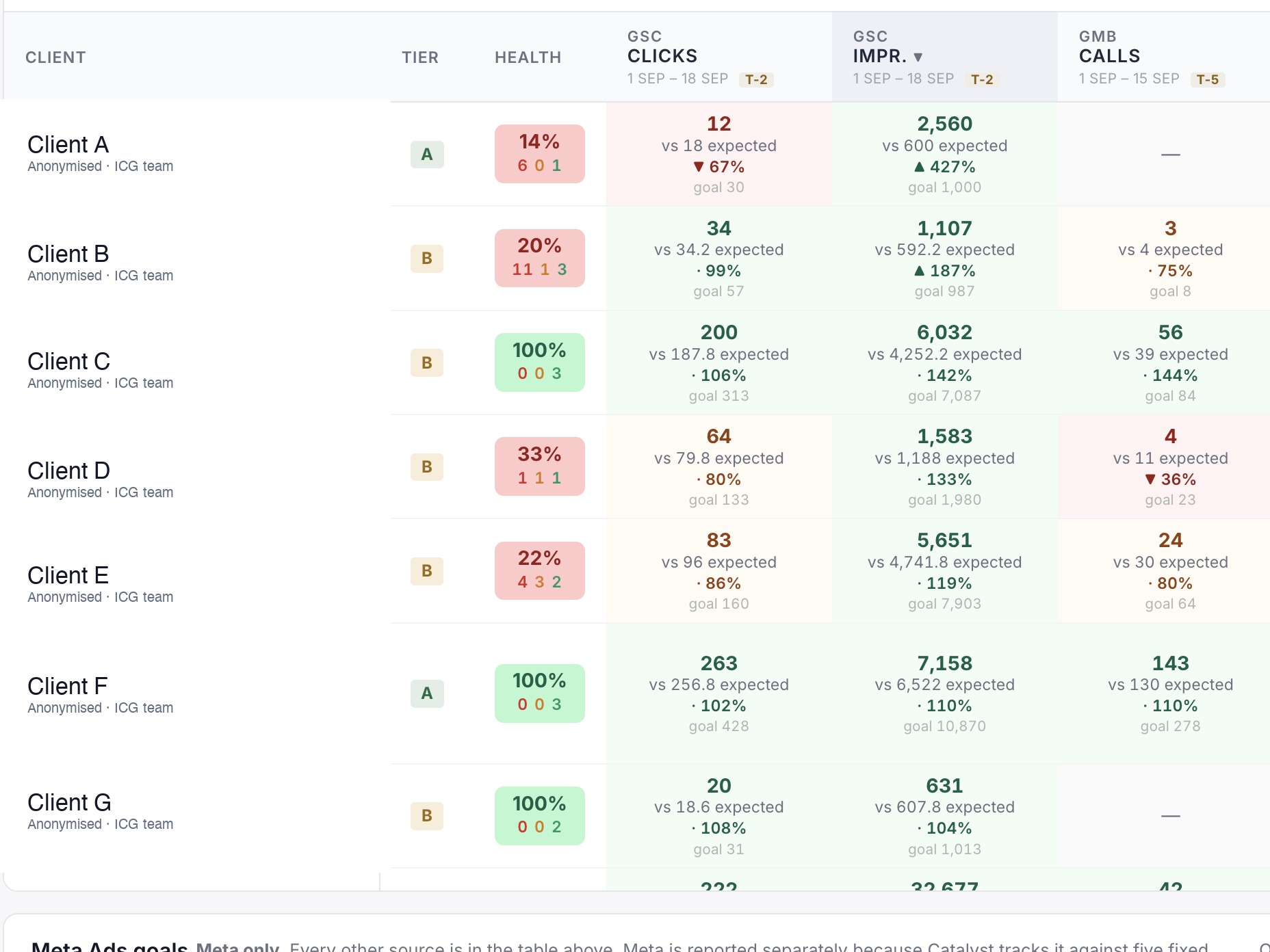
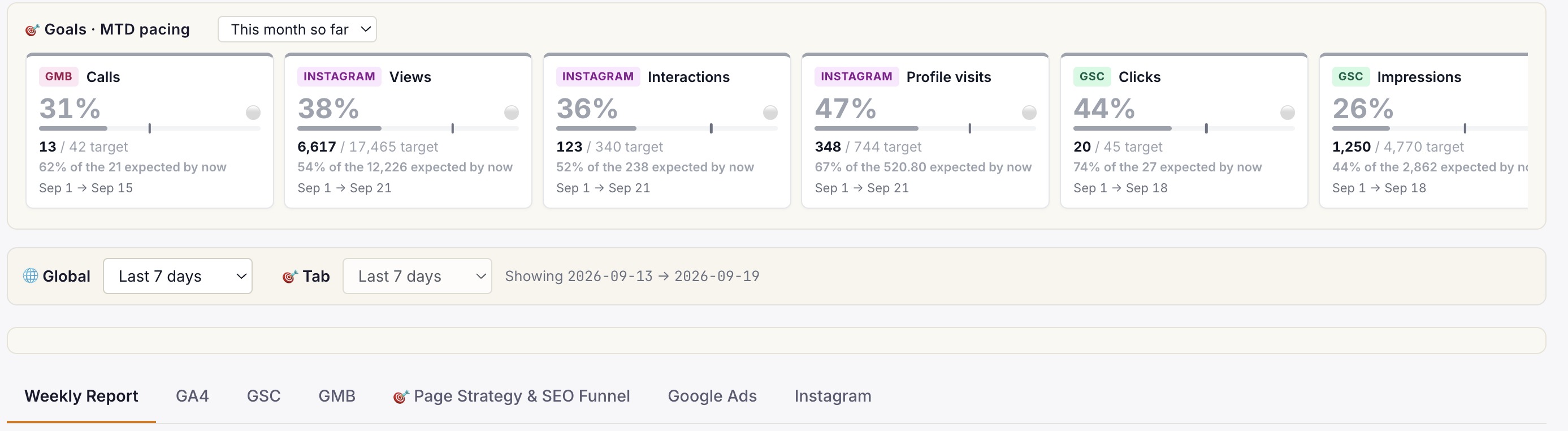
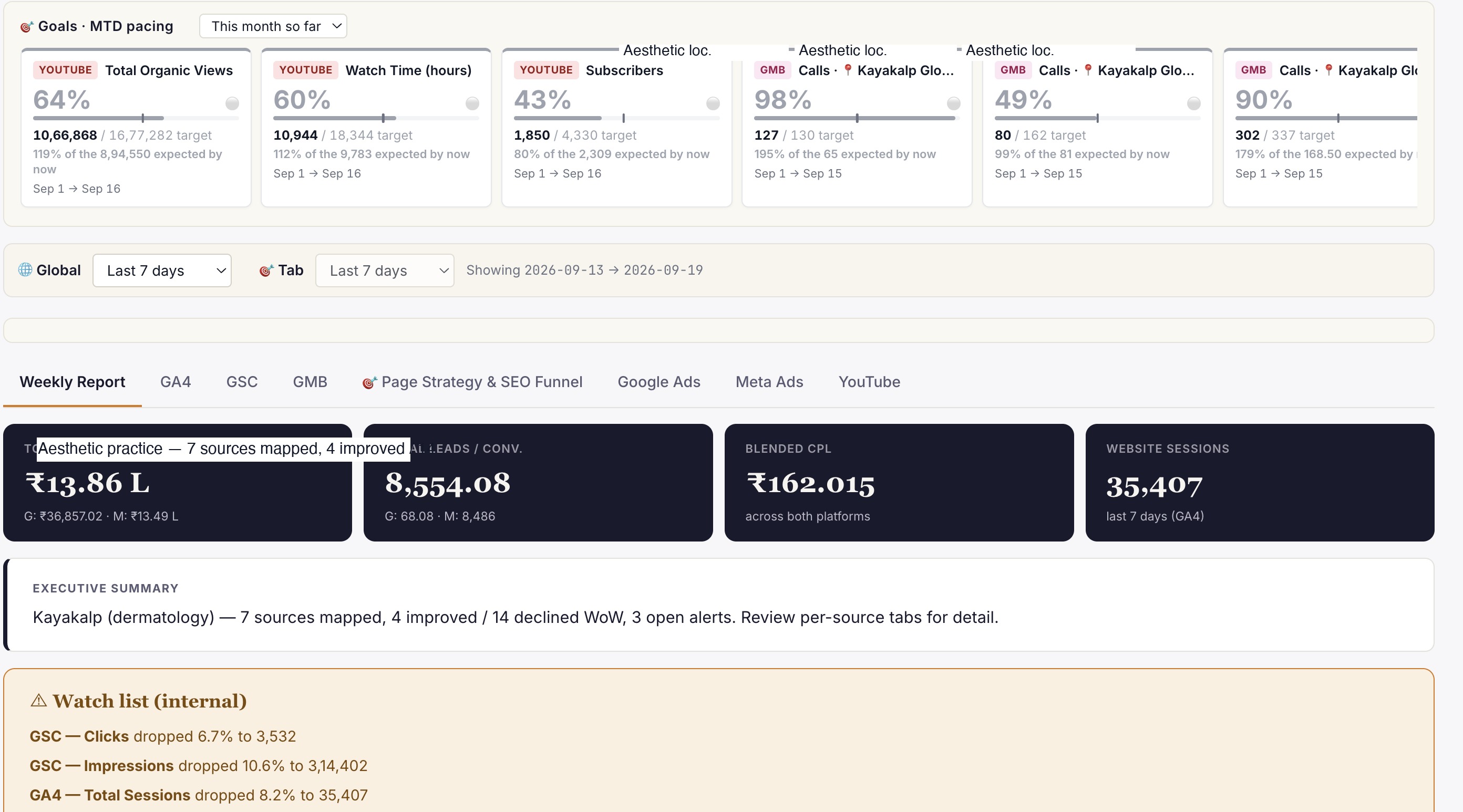
Live client dashboard. GSC, GA4, Google Ads, Meta Ads, IVR calls in one view. Login anytime, not monthly.
Phoenix
Clinic revenue intelligence over your PMS. Daily action queue: Prevent Loss, Maintain & Engage, Grow Revenue. Multi-centre rollout.
Or book a free 30-min audit to see all three in action on your account.
Healthcare brands
that already run on ICG.
A representative slice of the 150+ healthcare brands ICG has delivered for across India. Most engagements remain under NDA.


What ICG clients say · on video.
"Scale up of organic channels and business consulting. ICG has absolute domain authority in their field."
"Working with ICG transformed how we acquire IVF patients in Gurgaon. They understand the fertility journey from inquiry to consult..."
"What Ichelon accomplished — they got all my ideas and worked over 3-4 months to create an amazing, super-customised website."
Need help operationalising this?
Every ICG service is healthcare-only, NMC + DPDP-aware, and built around the patient-research patterns that drive Indian healthcare growth in 2026.
Every practice welcome — packages from ₹20,000/mo.
Goals-Driven engagements · Performance-Linked Payout Models available
More from
ICG.
Five trends shaping Indian healthcare marketing through 2027: AI-first patient research, Conversions API adoption, ABDM discovery, the AEO w...
Healthcare AIO is the discipline of getting your clinic or hospital cited inside Google AI Overviews, ChatGPT and Perplexity answers — not j...
Conversational-search advertising places brand messages inside AI chat answers — ChatGPT, Perplexity, Copilot — rather than beside a results...
Stop guessing.
Book a Diagnostic.
30 minutes. Free. With the AI-powered healthcare-only marketing agency 150+ brands already run on. No slides, no pitch, no hard close.


