


Single Clinic vs Multi-Clinic Chain Marketing in India: The 8-Axis Buyer Guide
Feature-based comparison of single-clinic vs multi-clinic-chain marketing in India — eight axes (GBP, SEO, ads, ORM, CRM, compliance, budget) mapped to four category tiers with buyer archetypes and honest recommendations. Neutral-advisor guide by ICG.
No pitch. Written root-cause diagnosis. AI-powered, healthcare only.
Direct answer
Feature-based comparison of single-clinic vs multi-clinic-chain marketing in India — eight axes (GBP, SEO, ads, ORM, CRM, compliance, budget) mapped to four category tiers with buyer archetypes and honest recommendations. Neutral-advisor guide by ICG.
TL;DR

TL;DR
- Single-clinic marketing runs on three levers — a well-fed Google Business Profile, one strong local landing page, and WhatsApp as the reply channel. Total spend usually sits at Rs 30,000-60,000 a month when the fundamentals are held tight.
- Chain marketing needs a location-hub website, per-branch call tracking, one CRM behind every branch, and a single attribution model that rolls up. Monthly investment ranges from about Rs 2,00,000 for a 4-branch dental group to Rs 12-15 lakh for a 25-branch IVF network.
- The tipping point sits around the third or fourth branch. Before that, chain-tier tooling wastes money and slows the team. After that, single-clinic tactics start leaking leads between branches and confusing patients.
- DPDP Act 2023 pushes chains toward one lawful consent flow across every location. A mix of paper-form-here and Google-form-there stops being defensible the moment a group has more than one PIA handler.
- ABDM linkage matters more for chains because patients expect linked records across branches. For a single clinic it is still optional; for a chain it is fast becoming a booking-conversion signal.
Table of Contents

- Why this comparison matters right now
- The eight axes to compare on
- The main comparison table
- Axis 1 — GBP and Maps footprint
- Axis 2 — Website architecture
- Axis 3 — Local SEO scope
- Axis 4 — Paid ads and attribution
- Axis 5 — Reviews and reputation
- Axis 6 — CRM, WhatsApp, call tracking
- Axis 7 — NMC, DPDP, ABDM compliance surface
- Axis 8 — Team, budget, operating rhythm
- Which fits which buyer
- How ICG helps
- A note on the 70-30 model
- FAQ
Why this comparison matters right now
India's clinic market is not one market. It is at least four. A single dermatology clinic in Indirapuram, a four-branch dental chain across Bengaluru, a twelve-branch IVF network in Tamil Nadu, and a 100-bed cardiology hospital in Jaipur are running four different businesses even when the shopfront looks similar. The moment their owners open a marketing budget, the differences turn brutal.
Two things have changed since 2023 that make this comparison sharper than it used to be. First, private equity moved into the space in a serious way. Aesthetic chains, dental groups, IVF networks and specialty-hospital rollups have raised more than Rs 3,000 crore between them, and every one of those investors now demands per-branch marketing accountability. A city manager who used to run WhatsApp broadcasts from a personal phone is being asked for CAC per branch, month on month, on a dashboard. Second, single-clinic owners find themselves competing in the same catchment against those rollups. A dentist with one chair in HSR Layout is fighting for the same "dental implants near me" query as a chain with three branches inside a 4-km radius. The playbook that worked in 2019 — one GBP, some Instagram posts, a friend who "does SEO" — has stopped working, but the chain playbook is too heavy for that same clinic to lift.
Third, and less discussed, DPDP Act 2023 changes the compliance load. The moment a group processes patient data in more than one place, the consent trail becomes a serious operational surface — not a footer link. NMC's teleconsult framework and ABDM's health-record linkage add two more layers. A single clinic can navigate this with a printed form and a WhatsApp opt-in message. A chain cannot.
The right question, then, is not "do I need marketing?" It is "which category am I operating in, and which set of tools, teams and budgets does that category require?" This piece breaks that question into eight axes, then maps each axis to four category tiers.
The eight axes to compare on
Every comparison in this piece is a feature comparison, not a vendor comparison. The reason is simple — most healthcare marketing directors we work with have already been pitched five vendors in each category, and none of the pitches map to their actual stage. When you compare on features first, the vendor question becomes downstream and easy.
- Axis 1 — GBP and Maps footprint. How many listings, who owns them, how they are fed, and how duplicates are policed.
- Axis 2 — Website architecture. A single-page mini-site, a five-page brochure, or a hub-and-spoke structure with per-location landing pages.
- Axis 3 — Local SEO scope. One suburb, one city, one state, or multi-state.
- Axis 4 — Paid ads and attribution. Single campaign vs geo-fenced multi-location structure, and how call, form and WhatsApp attribution tie back to branch.
- Axis 5 — Reviews and reputation. One review stream vs distributed streams that need branch-level ORM.
- Axis 6 — CRM, WhatsApp, call tracking. Free tools vs a proper CRM behind every intake channel.
- Axis 7 — Compliance surface. NMC advertising code, DPDP consent handling, ABDM linkage, telemedicine records.
- Axis 8 — Team, budget, operating rhythm. Who runs it, what it costs, and how fast the cycle turns.
The main comparison table
| Axis | Single Clinic (1 location) | Small Chain (2-5 locations) | Mid Chain (6-25 locations) | Enterprise Network (25+ locations or 100-bed hospital) |
|---|---|---|---|---|
| GBP footprint | 1 verified listing, owner-managed | 2-5 listings under a shared brand, one manager account | Multi-location dashboard with role-based access, weekly duplicate sweeps | API-fed listings with automated posts, response-time SLA per branch |
| Website architecture | Single-page or 5-page site, one location schema | Brochure site plus 2-5 location pages sharing one template | Hub-and-spoke — service, city, per-branch and service-x-city pages | CMS with content governance, 500-3,000 URLs, per-branch microsite pattern |
| Local SEO scope | One suburb, one primary keyword cluster | One city, 2-5 catchments | Multi-city, state-level clusters | Multi-state, national brand terms plus local defence |
| Paid ads structure | 1-2 campaigns, catchment-level bidding, manual pause rules | Location-group campaigns, unified pixel, one attribution model | Geo-fenced ad sets per branch, call-tracking numbers per branch | Programmatic buying, RCM-linked spend allocation, MMM overlay |
| Reviews and ORM | WhatsApp review request after visit, owner replies | Automated review requests, brand-level playbook | Per-branch reply SLAs, escalation matrix, monthly rating audit | Dedicated ORM pod, crisis protocol, board-level score reporting |
| CRM and intake | Notebook, WhatsApp, receptionist call log | Shared spreadsheet or entry-level CRM | Healthcare CRM with lead-to-branch routing, source attribution | CRM plus RCM/EHR overlay, patient journey stitched to revenue |
| Compliance surface | NMC personal-scope, DPDP with one PIA handler | NMC per-doctor, DPDP with 2-5 handlers, shared consent form | NMC per-doctor, DPDP with formal DPO practice, ABDM linkage | NMC group-level, DPDP with DPO team, ABDM-native, telemedicine SOPs |
| Team and budget | Owner plus part-time freelancer. Rs 30-60K per month total. | Owner plus a 1-2 person marketing pod. Rs 1-2 lakh per month. | Central marketing head, 4-8 person team, agency partner. Rs 3-8 lakh per month. | CMO plus specialty pods, multiple agencies, in-house creative. Rs 10-40 lakh per month. |
Axis 1 — GBP and Maps footprint
The single-clinic case is deceptively easy. One listing, verified in the doctor's name, with the right primary and secondary categories, honest opening hours, and a steady drip of posts. The trap is that most single-clinic owners stop after verification. Photos never refresh. The Q&A section fills with random junk. Categories are wrong — a "cosmetic dentist" gets tagged as "dental clinic" and quietly loses the sub-category boost. A weekly 20-minute check by someone competent covers it.
Chains have a different problem — sprawl. A four-branch dental chain in Bengaluru will typically show 12 listings on Maps if nobody has audited it. Old addresses from when a partner-dentist freelanced somewhere else. Duplicate listings created when a receptionist tried to "help." A branch with two verified locations because the wrong one was claimed first. The clean-up is a project — not a task — and it is the first thing any serious chain marketer runs before spending on ads.
Beyond clean-up, chains need a governance layer. Who publishes posts. Who replies to reviews. Who handles menu updates when a service is added at one branch and not another. That layer is where single-clinic tooling stops being enough. An operating system for GBP that treats every branch as a node — with its own weekly post cadence, review reply queue, and photo-refresh schedule — becomes non-negotiable at branch three or four.
Axis 2 — Website architecture
A single clinic does not need a hub. It needs a strong local page. That page should carry the doctor's credentials, the clinic address with a working map embed, primary services with visible pricing bands, a clear WhatsApp button, and a review widget. Five pages, tight copy, decent Core Web Vitals scores. Anything more is a distraction — and pays for itself in slower loads and worse Maps ranking.
Chains need architecture. The pattern that works in Indian healthcare is hub-and-spoke — a global service page (say, "dental implants") anchors the topic, then city pages ("dental implants in Bengaluru"), then branch pages ("dental implants at Koramangala branch"), and finally the crossroads pages that combine service and city ("root canal treatment in HSR Layout"). Each layer serves a different query type — informational, commercial-local, brand-local. Miss a layer and the traffic goes to a chain with a fuller architecture.
The failure mode is copy duplication. When ten branch pages read the same, Google collapses them. When they read differently but poorly, they rank for nothing. The discipline is location-specific proof — the branch's own doctor, the branch's own photos, the branch's own Google reviews embedded, and one hyper-local hook (the metro station, the anchor tenant, the pincode). A 200-word local-proof block per branch page is usually enough to hold ranking.
Axis 3 — Local SEO scope
Scope drives everything else. A single clinic optimises for one catchment — the 3-5 km radius around the address, plus the two or three transit-connected suburbs. Everything past that is spillover. Keywords are hyper-local and long-tail, and citation building focuses on Indian directories and health-specific listings rather than national ones.
A small chain of two to five branches within one city works at catchment level per branch, then rolls up to a city-brand story. A mid-chain of six to twenty-five branches usually spans two or three cities, which means state-level clusters — "dental clinics in Karnataka", "IVF in Tamil Nadu" — sit above the city pages. An enterprise network gets national terms in play, plus a defence layer against branded searches that get bid on aggressively.
The mistake at every level is chasing the tier above. A single-clinic owner who wants to "rank in Delhi" wastes budget. A small chain that skips catchment-level effort in favour of national terms loses local visibility to the neighbourhood clinic that owns the pincode. The rule is simple — earn the tier you are, then reach for the next tier.
Axis 4 — Paid ads and attribution
Ad structure is where single-clinic and chain worlds diverge the most. A single clinic runs one or two Google campaigns — a branded defence campaign and a service-plus-locality campaign — usually pointed at the same landing page. Meta ads run one or two ad sets aimed at the catchment radius. Budgets sit in the Rs 20,000-40,000 per month band for paid media. Attribution is direct — the call came from a Google Ads number, or the WhatsApp opened from a Meta ad.
Chains cannot do this. A four-branch chain running one campaign for all branches will overspend on the strong branches and starve the weak ones. Geo-fenced ad sets per branch fix that. Call-tracking numbers per branch fix the attribution question. A unified pixel and a single attribution model — usually a data-driven model rather than last-click — fix the roll-up. Meta creative intelligence tools that reveal which ads are running in the same catchment become genuinely useful at this stage, because creative fatigue moves faster in dense city micro-markets than in a single-city ad account.
Mid-chains and enterprise networks add the RCM overlay — spend allocated by branch revenue potential, not just by leads. A branch with high implant revenue justifies higher spend than a branch of the same lead volume doing mostly consultation-only visits. That is a modelling problem, not a media problem, and it is why mid-chain marketing teams almost always run a dedicated analytics function alongside the media function. Google Ads engagements for chains typically require budgets from Rs 5 lakh a month upward before the segmentation math starts paying off.
Axis 5 — Reviews and reputation

Single-clinic ORM is a habit — every satisfied patient gets a WhatsApp with the review link, and the doctor replies to every review, good or bad, within 48 hours. That is it. If done for 12 months, most single clinics in urban India end up with 200-500 Google reviews at a 4.7-plus rating.
Chain ORM is a system. Distributed review streams need per-branch SLAs — a two-hour reply target for negative reviews, a 24-hour target for positive ones. An escalation matrix decides who handles a review that references a clinical outcome, a billing dispute, or a staff complaint. A monthly rating audit surfaces branches trending down before the drop shows up in rankings. Enterprise networks add a crisis protocol — one bad viral review can move a chain's brand sentiment 3-5 points in a week, and the response has to be pre-authorised, not workshopped in the moment.
Instagram and Meta signals matter here too. An Instagram analytics discipline that tracks reach, saves, and DMs at brand and per-branch level gives chains an early-warning system that reviews alone miss. A branch losing DMs week on week is usually a branch about to lose bookings.
Axis 6 — CRM, WhatsApp and call tracking
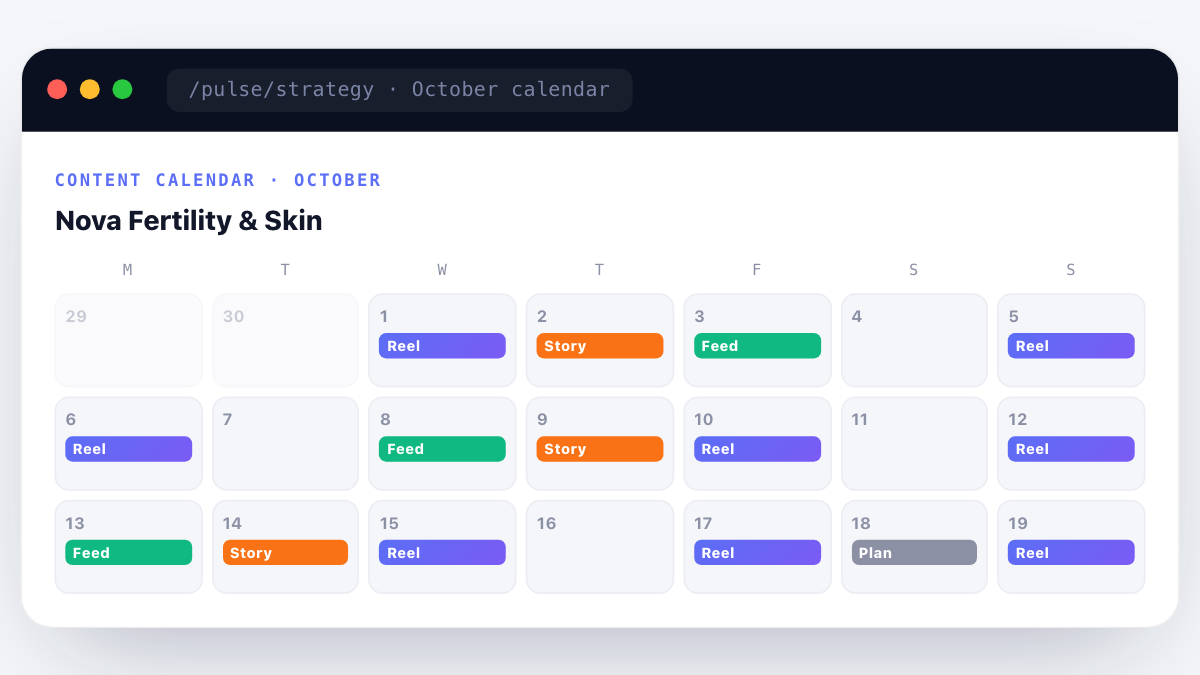
For a single clinic, the receptionist's notebook and a WhatsApp Business number is honestly enough at low volumes. Once monthly leads cross about 150, a lightweight healthcare CRM makes sense — the goal is source attribution and a follow-up cadence, not enterprise workflow.
Chains need routing. A lead from a Meta ad for "dental implants Koramangala" has to reach the Koramangala branch's receptionist, not the head office. WhatsApp Business API layered with an entry-level healthcare CRM covers most 2-5 branch groups. Mid-chains need a full healthcare CRM with lead-to-branch routing, source attribution, and a re-engagement engine for cold leads. Cost bands sit around Rs 14,999 per month for entry-level healthcare CRMs suitable for chains up to 25 branches.
Enterprise networks add the RCM/EHR overlay. Patient journeys stitched to revenue require the marketing CRM to talk to the hospital information system. That integration is heavy — usually a specialised healthcare RCM/EHR overlay running from around Rs 14,999 per month per module — but it is what unlocks true CAC-to-LTV reporting for the CMO's board deck.
Axis 7 — NMC, DPDP, ABDM compliance surface
Compliance is the axis most single-clinic owners underestimate and most chain CMOs over-engineer.
NMC's advertising code applies at the doctor level, not the clinic level. A single clinic complies by keeping the doctor's registration number visible on the site, on ads, and on WhatsApp templates, and by avoiding disallowed superlatives, before-after imagery outside permitted scope, and cure-guarantee language. A chain complies branch-by-branch — every doctor at every branch, with the correct state medical council number, on every service page that lists them. The moment a chain shares one doctor's credentials across ten branches for convenience, NMC exposure begins.
DPDP Act 2023 is where chains get caught. A single clinic with one PIA handler — usually the owner-doctor — can run a simple written consent form and a WhatsApp opt-in message. A chain has multiple handlers by definition. Consent has to be lawful, specific, informed, and revocable at every branch, and the consent trail has to survive an audit. Most chains discover during a diligence round that half their branches are using paper forms, a third are using Google Forms, and the rest are using nothing. Fixing this is a two-quarter project.
ABDM linkage is optional for single clinics today and increasingly non-optional for chains. Patients moving between branches expect their records to follow them. Chains that offer ABDM-linked bookings see 8-12% higher conversion in cardiology, orthopaedics, and IVF verticals where patient histories matter. The infrastructure is available through healthcare RCM/EHR overlays that ship ABDM connectors as standard.
Axis 8 — Team, budget and operating rhythm
A single clinic runs on owner attention. The doctor or the doctor's spouse handles marketing, usually with a part-time freelancer for ads and posts. Total marketing spend — media plus tools plus fees — sits in the Rs 30,000-60,000 per month band. The rhythm is weekly, sometimes fortnightly, and the review meeting is a 20-minute WhatsApp voice note.
Small chains outgrow this fast. By branch three, a marketing coordinator becomes necessary — someone who owns the calendar, the reviews, the WhatsApp broadcasts, and the vendor coordination. Budgets move to Rs 1-2 lakh per month. Mid-chains need a central marketing head, a 4-8 person team spanning content, performance, ORM and analytics, and an agency partner for the heavy lifting on SEO, video, and Meta creative. Budgets move to Rs 3-8 lakh per month.
Enterprise networks run marketing like a business. A CMO with specialty pods — cardiology marketing lead, oncology marketing lead, women-and-child lead — an in-house creative team, multiple agency partners for channel depth, and a monthly board review with revenue-linked reporting. Budgets sit between Rs 10 lakh and Rs 40 lakh per month, and every rupee is defended with a CAC-to-LTV number.
Which fits which buyer
Dr. Sharma's single dermatology clinic in Indirapuram
One doctor, one location, three staff. The right pattern is Single Clinic (Tier A) — GBP-first, one strong local page, WhatsApp intake, Rs 45,000 per month across media and tools. A GBP operating system that keeps posts, photos and reviews on cadence removes the biggest failure point. Anything heavier will waste money and slow the practice.
The 4-branch dental chain across Bengaluru
Four branches, one brand, one owner-dentist plus branch dentists. This is Small Chain (Tier B) tipping into Mid-Chain territory. Location pages per branch, a shared review-and-post cadence, geo-fenced Meta ad sets per branch, one entry-level healthcare CRM behind every WhatsApp number. Budget lands around Rs 1.75-2.5 lakh per month all-in. A dedicated marketing coordinator is now non-negotiable.
The 12-branch IVF chain across South India
Twelve branches, three states, PE-backed. This is Mid-Chain (Tier C). Full hub-and-spoke architecture, state-level SEO clusters, per-branch call tracking, healthcare CRM with lead-to-branch routing, ABDM linkage in the works. Video-first content — IVF buyers research heavily on YouTube — with an AI-native approach that keeps output high without staff burnout. Central marketing head, 5-6 person team, one lead agency partner. Rs 5-8 lakh per month.
The 100-bed cardiology hospital in Jaipur
Single-site but enterprise-scale — a 100-bed hospital with 25 consultants and a full RCM system. This is a hybrid of Tier A (single location, so single GBP) and Tier D (enterprise team, compliance surface, and budget). The right pattern is enterprise tooling for CRM, RCM/EHR overlay, and analytics, paired with single-location GBP and Maps discipline. Budget sits in Rs 4-10 lakh per month for marketing, separate from clinical software.
How ICG helps
Ichelon Consulting Group works with 300+ live healthcare clients across 150+ clinics, chains, single-specialty hospitals and multi-specialty networks. That range is why we can be a neutral advisor on this comparison — we run single-clinic engagements alongside enterprise-network engagements every month, and we see which stage each buyer is actually in versus the stage they think they are in.
Our engagement always starts with the axis map above, applied to the buyer's real branch count, real budget, and real team. For single-clinic clients we lean on our GBP operating system to keep the fundamentals tight without burning owner time. For chain clients we bring the hub-and-spoke architecture, geo-fenced media playbooks, ORM systems, and — where useful — a healthcare CRM plus an RCM/EHR overlay for hospitals. Our Meta Ads intelligence work, competitor Meta creative research, and Instagram analytics discipline round out the chain toolkit. YouTube and AI-Overview work for the specialties that need long-form patient education (IVF, oncology, orthopaedics, cardiology) runs through our AI-native YouTube practice.
Because we are feature-based, we can also tell a buyer honestly when a tier of tooling is wrong for them. A three-branch chain does not need enterprise CRM. A single clinic does not need hub-and-spoke SEO. Getting that call right is more valuable than any single tool we ship.
A note on the 70-30 model
ICG's healthcare marketing engagements run on a 70-30 outcome-linked model. For SEO, three tiers cover most of the market — Foundation at Rs 49,999 per month, Growth at Rs 74,999 per month, and Scale at Rs 99,999 per month. Seventy per cent of the fee is fixed for the work delivered; thirty per cent is tied to a twelve-month organic target agreed at kickoff, released on a sliding-scale slab. The same 70-30 principle extends to Google Ads engagements (at ad spends of Rs 5 lakh and above) and to YouTube and AI-Overview work (at monthly investments of Rs 50,000 and above). Chain engagements typically bundle multiple tracks — SEO plus Google Ads plus YouTube — with a rolled-up outcome definition per city or per branch cluster.
FAQ
At what branch count should a single clinic start using chain tooling?
The tipping point sits around branch three or four. Below that, single-clinic tactics — one GBP, one landing page, one WhatsApp number, one review habit — outperform chain-tier systems on cost and speed. From branch three onward, per-branch call tracking, geo-fenced ad sets, and a light healthcare CRM start paying for themselves. By branch six, hub-and-spoke architecture, ORM SLAs, and a central marketing coordinator become non-negotiable.
Is DPDP Act 2023 a real risk for a single-clinic doctor?
The risk exists but is manageable. A single-clinic doctor is usually the sole PIA handler, which simplifies consent to one written form and one WhatsApp opt-in language. The material risks are storing patient photos on personal phones, using free consumer messaging apps for medical records, and forwarding patient data to third parties without consent. Fix those three and the compliance surface stays small.
Do chains actually get penalised by Google for duplicate location content?
Yes, and quickly. When ten branch pages carry near-identical copy, Google collapses them into one and drops the others from local packs. The fix is location-specific proof on every page — the branch's own doctor, the branch's own photos, the branch's own review embed, and one hyper-local hook such as the nearest metro station or a landmark anchor. A 200-word local-proof block per branch page is enough to hold ranking.
What is the honest minimum monthly spend for a single clinic to see results?
About Rs 30,000 per month, all in — media, tools, fees. Below that, the numbers do not compound. That budget usually splits as Rs 8-10K on Google Ads, Rs 8-10K on Meta, Rs 5K on tools and WhatsApp Business API, and the balance on freelance help for content and posts. Cheaper than that becomes hobby marketing.
Can a chain skip location pages and just run a strong homepage?
Only if the chain is happy to lose 40-60% of local search visibility. Location pages are what unlock the "service in city" and "service in locality" queries that drive high-intent traffic. A homepage-only chain ranks for brand terms and nothing else, which means it depends entirely on paid media to fill branches — an expensive way to run a group.
Is ABDM linkage worth the integration cost for a mid-chain?
For specialties where patients carry longitudinal records — cardiology, orthopaedics, oncology, IVF, chronic care — yes. Conversion lift sits in the 8-12% range when patients can carry their history between branches without repeating investigations. For specialties where visits are episodic — cosmetic dentistry, general dermatology, aesthetic — the case is weaker and the linkage becomes a nice-to-have rather than a driver.
How should a chain split marketing budget across branches?
Never equally. The right split is by revenue potential and market maturity — a two-year-old branch in a competitive catchment needs proportionally more media than a five-year-old branch in a captive catchment. The framework we use is a two-axis split — branch age and catchment competitiveness — reviewed quarterly. Equal-split budgeting is the fastest way to under-fund the branches that would grow with more spend.
What is the difference between GBP work for a single clinic and for a chain?
Single-clinic GBP is a discipline — 20 minutes a week done well. Chain GBP is a system — a dashboard with role-based access, per-branch post cadences, review reply queues with SLAs, monthly duplicate sweeps, and photo-refresh schedules. The single-clinic version can be handled by a competent freelancer. The chain version needs an operating system built for multi-location.
How much time does a chain marketing head realistically spend on compliance?
Between 10-15% of their week once systems are in place. During the initial DPDP consent rollout and ABDM linkage phase, expect 25-30% for one to two quarters. After that, the ongoing load is quarterly audits, monthly branch spot-checks, and a compliance calendar aligned to NMC advisory updates.
Does founder-led marketing scale past a single clinic?
To branch two, sometimes. Past branch three, no. The pattern that breaks is decision-time — the founder becomes the bottleneck for post approvals, review replies, and vendor calls. The solution is not to hire cheaply; it is to hire a marketing coordinator who can own the calendar, then to hire a marketing head once branch count crosses six. Founder attention returns to strategy, not execution.
Book a free 30-minute Brand & Growth Diagnostic.
It's a working session, not a sales pitch — you leave with a written root-cause analysis you can act on, whether or not you engage ICG.
Questions readers ask
about this topic.
The three platforms
behind every ICG engagement.
Beacon
CAPI middleware that fixes Event Match Quality, translates CRM statuses to Meta-standard events, dedups across channels.
Agency OS
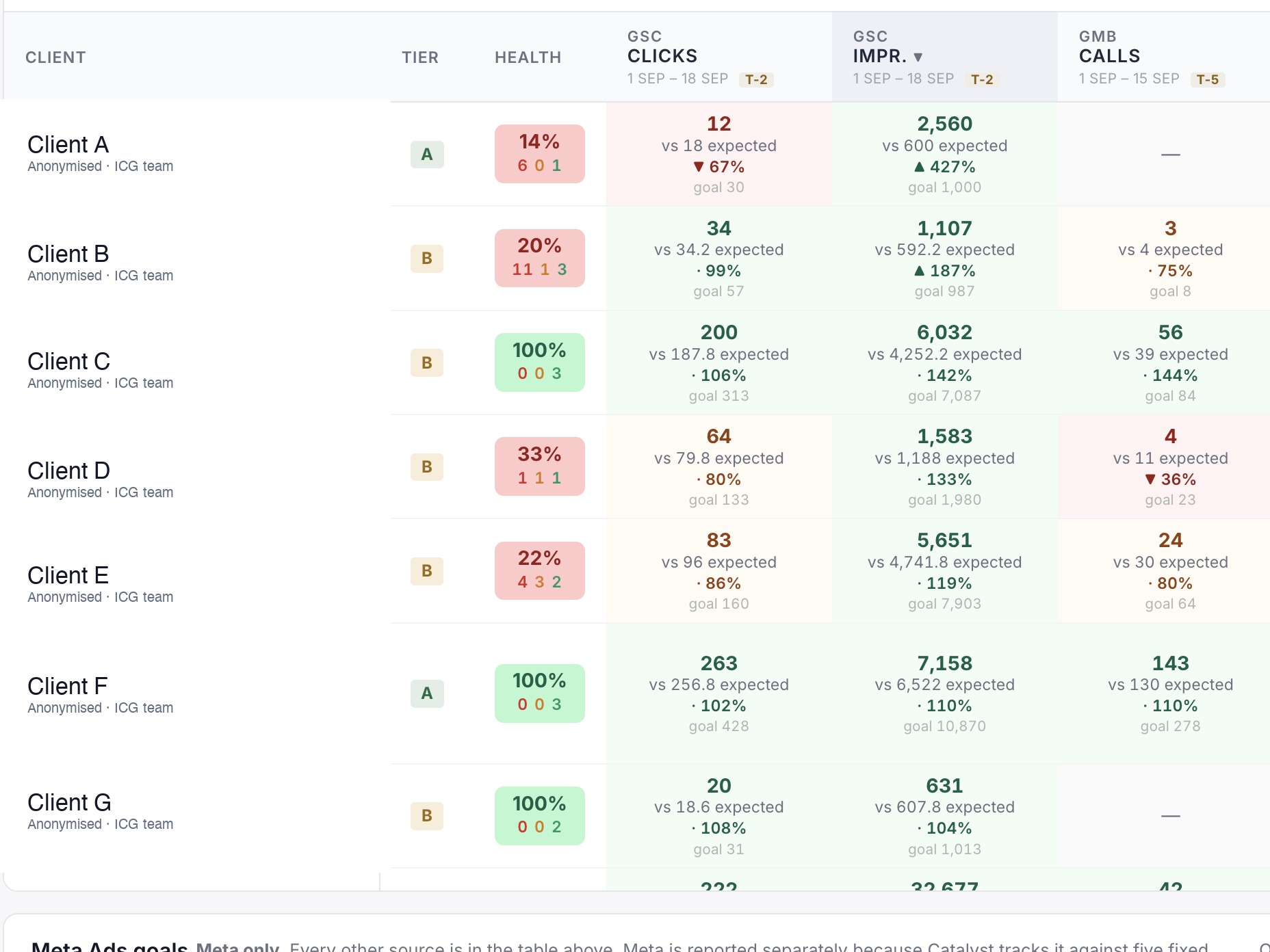
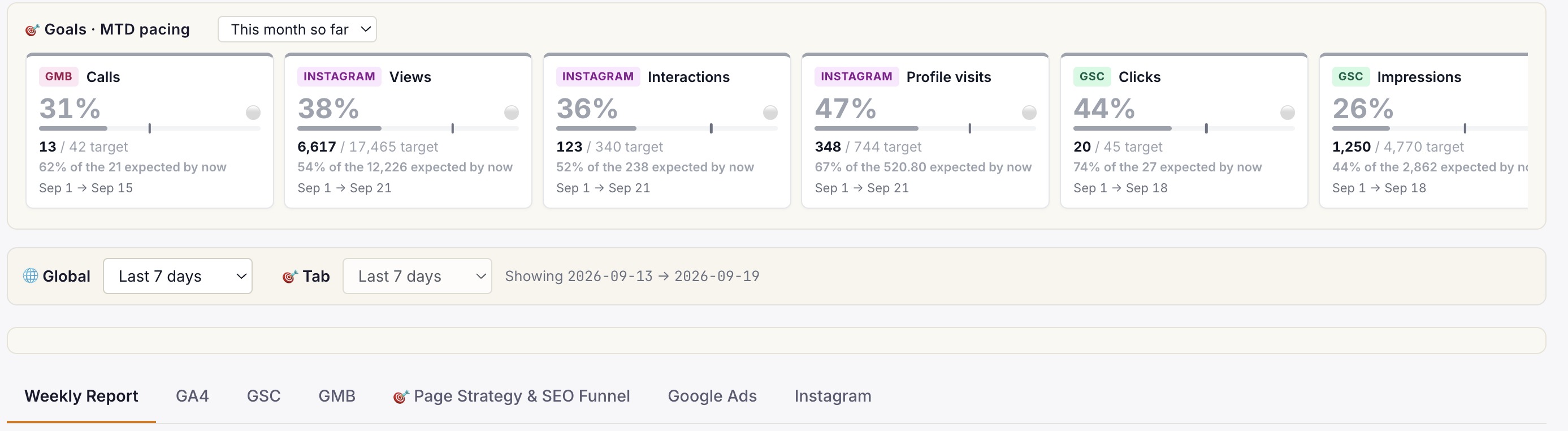
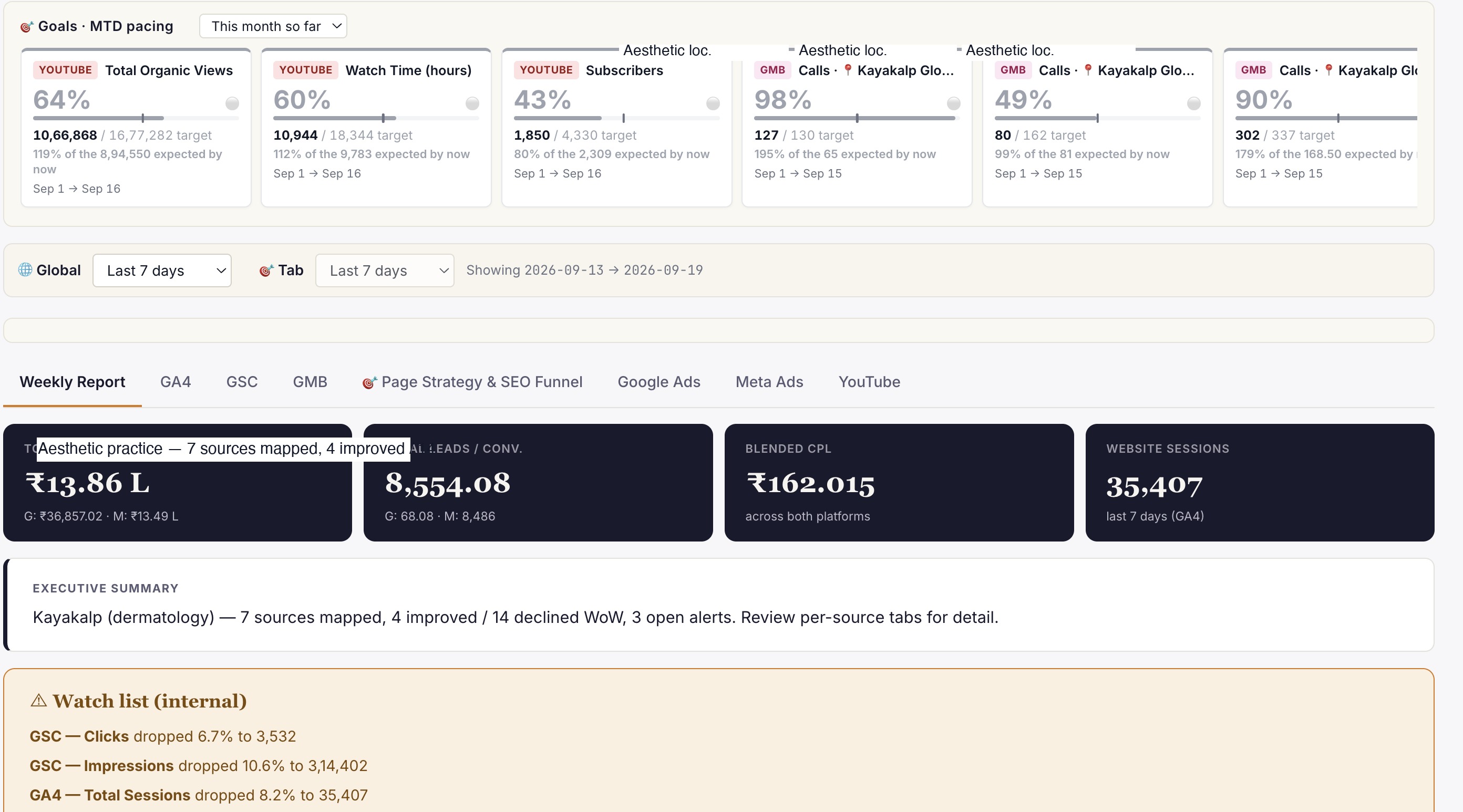
Live client dashboard. GSC, GA4, Google Ads, Meta Ads, IVR calls in one view. Login anytime, not monthly.
Phoenix
Clinic revenue intelligence over your PMS. Daily action queue: Prevent Loss, Maintain & Engage, Grow Revenue. Multi-centre rollout.
Or book a free 30-min audit to see all three in action on your account.
Healthcare brands
that already run on ICG.
A representative slice of the 150+ healthcare brands ICG has delivered for across India. Most engagements remain under NDA.


What ICG clients say · on video.
"Scale up of organic channels and business consulting. ICG has absolute domain authority in their field."
"Working with ICG transformed how we acquire IVF patients in Gurgaon. They understand the fertility journey from inquiry to consult..."
"What Ichelon accomplished — they got all my ideas and worked over 3-4 months to create an amazing, super-customised website."
Need help operationalising this?
Every ICG service is healthcare-only, NMC + DPDP-aware, and built around the patient-research patterns that drive Indian healthcare growth in 2026.
Every practice welcome — packages from ₹20,000/mo.
Goals-Driven engagements · Performance-Linked Payout Models available
More from
ICG.
Five trends shaping Indian healthcare marketing through 2027: AI-first patient research, Conversions API adoption, ABDM discovery, the AEO w...
Healthcare AIO is the discipline of getting your clinic or hospital cited inside Google AI Overviews, ChatGPT and Perplexity answers — not j...
Conversational-search advertising places brand messages inside AI chat answers — ChatGPT, Perplexity, Copilot — rather than beside a results...
Stop guessing.
Book a Diagnostic.
30 minutes. Free. With the AI-powered healthcare-only marketing agency 150+ brands already run on. No slides, no pitch, no hard close.


