


Fake review removal on Google for Indian healthcare 2026: flagging, escalation and legal recourse for clinics and hospitals
The complete process for removing fake Google reviews from an Indian healthcare profile in 2026: identifying patterns, building the evidence file, business.google.com flagging, escalation to Google support, and defamation notice under BNS.
No pitch. Written root-cause diagnosis. AI-powered, healthcare only.
Direct answer
The complete process for removing fake Google reviews from an Indian healthcare profile in 2026: identifying patterns, building the evidence file, business.google.com flagging, escalation to Google support, and defamation notice under BNS.
TL;DR

Fake reviews on a Google Business Profile are one of the most damaging and least-well-handled reputation problems Indian healthcare providers face. A cluster of coordinated one-star reviews from a competitor, an ex-employee, or a disgruntled outsider can drop a clinic's star rating from 4.7 to 4.2 inside a week and take six months of genuine review growth to rebuild. Most clinics either ignore the problem, retaliate with fake counter-reviews (which makes it worse), or spend money with agencies that promise removal they cannot deliver. There is a compliant, systematic process that actually works. ICG runs this process for 150+ Indian healthcare brands using Angryturtle, and this article documents the full escalation ladder end to end.
What actually counts as a "fake" review under Google's policies
Google's review policy defines several categories of violation, and understanding which category a suspected fake review falls under determines the flagging path. The clinic that flags a review as "fake" without identifying the specific policy violation gets rejected by Google's automated review system almost every time.
The categories that actually get reviews removed are: spam and fake content (reviews from accounts with no genuine activity, reviews that pattern-match to other reviews across many profiles, reviews that appear to be paid or coordinated), off-topic content (reviews that don't describe an actual customer experience at the location), conflict of interest (reviews from competitors, former employees with a grudge, or the business owner themselves), personal information (reviews that disclose private information about the business or its staff), and harassment or hate speech (reviews that contain slurs, threats, or targeted personal attacks).
What Google will not remove is a review that is negative but genuine, even if the clinic disputes the underlying facts. "This patient is lying about their experience" is not by itself a valid removal claim, because Google cannot verify who is telling the truth. The clinic's only recourse for a genuine negative review is the compliant reply pattern covered in the review-response templates guide, not removal.
The full policy text is worth reading in original form and can be found at Google's prohibited and restricted content page. Framing every removal request in the exact language of Google's own policy dramatically improves the success rate.
The three most common patterns in Indian healthcare fake reviews
Across the fake-review cases ICG has handled for healthcare clients, three patterns account for the overwhelming majority.
Competitor-driven clusters. Three to eight one-star reviews land on the profile inside a 48 to 96 hour window, typically from accounts with no reviewer history and often using nearly identical phrasing. The reviews reference generic complaints ("worst clinic," "very bad experience," "would not recommend") without any specifics that would tie back to an actual visit. When the reviewer profiles are examined, several often share regional signals with a specific competitor. This is the most common pattern and the most reliably removable through Google's spam-flagging process.
Ex-employee retaliation. A single well-written negative review appears with insider details that a genuine patient would not know (staffing structure, internal processes, financial arrangements). The reviewer account often has a small number of unrelated reviews across other businesses to appear legitimate. This pattern is harder to remove through automated flagging because the review superficially reads as legitimate. Escalation typically requires the evidence file described below.
Disgruntled outsider. A patient's family member, a rejected job applicant, or someone who never had a clinical relationship with the practice posts a review based on secondhand information or on a non-clinical grievance. These sit in a grey zone because the reviewer may have technically visited the premises without receiving care. Removal depends on establishing that no customer relationship exists.
Angryturtle's review monitoring flags reviews that pattern-match the first two categories automatically, based on account-history signals, phrasing similarity to other flagged reviews, and cadence anomalies against the profile's baseline.
How to build the evidence file Google will actually act on
The single biggest mistake clinics make in the removal process is submitting a flag without evidence. Google's automated review looks at the review, checks it against basic policy heuristics, and either removes it or rejects the flag within 24 to 72 hours. If the flag is rejected once, the same review is significantly harder to remove on a re-flag because Google's system treats it as already-reviewed. The first flag is the important one, and it needs an evidence file.
The evidence file assembles: screenshots of the suspect review with timestamp visible, screenshots of the reviewer's profile showing account age, reviewer activity, and any other reviews they have posted, screenshots of any other suspect reviews from related accounts or with matching phrasing, a chronological timeline showing when the cluster appeared relative to the clinic's baseline review pattern, and a written statement explaining which specific Google policy category the review violates and why.
For competitor-driven clusters, the evidence file also includes side-by-side comparison of phrasing across the cluster, evidence that the reviewer accounts have posted positive reviews at a suspected competitor, and, where possible, IP or device fingerprint evidence (which Angryturtle can surface for clients on the platform's enterprise tier).
For ex-employee cases, the evidence file includes documentation of the employment relationship that ended, dated correspondence around the termination, and evidence linking the reviewer account to the specific individual (matching email, matching phone, matching identifying details).
The evidence file is not submitted to Google through the initial flag interface, but it becomes essential in the escalation path if the automated flag is rejected.
The step-by-step flagging process at business.google.com
The current interface for flagging a review runs through business.google.com under the reviews tab of the specific profile. The workflow: open the profile, navigate to the Reviews section, locate the suspect review, click the three-dot menu on the review, select "Report review," choose the specific policy category that best matches the violation, submit.
Two operational details matter. First, the profile owner and profile manager both have flagging permissions, but only one flag per review per account is registered. If the owner and manager both flag the same review, only the first flag counts. Coordinate internally before submitting. Second, the flag itself does not allow a written explanation — Google only reads the policy category selection. This is why the evidence file matters for the escalation path if the automated flag is rejected.
The automated review typically resolves within 24 to 72 hours. If the review is removed, Google usually does not send an explicit notification — the review simply disappears from the profile. If the review is retained, Google may send a rejection notification, or may retain it silently. Angryturtle's review-monitoring dashboard tracks the state of every flagged review and alerts the operator on resolution.
Escalating past the automated review to a real Google support agent
When the automated flag is rejected but the review is genuinely a policy violation, the next step is human escalation through Google Business Profile support. The interface is at business.google.com under the help menu, followed by contact support. Chat, email, and callback options are typically available for verified business owners.
The escalation conversation should be structured, not conversational. State the profile URL, the specific review being disputed, the specific Google policy category violated, the reasons the automated flag was insufficient, and reference the evidence file (which can be attached by email or shared via a Google Drive link). Ask specifically for the review to be escalated to Google's trust and safety team for human review.
Human review at Google typically takes seven to fourteen days. The success rate at this level, in ICG's experience across hundreds of healthcare escalations, is materially higher than the automated pass rate for cases where a real policy violation exists and the evidence file is well-constructed. It remains zero for reviews that are simply negative but genuine, and no amount of escalation changes that.
When to move to legal — defamation notice under BNS and IPC
For reviews that constitute defamation — false statements of fact that damage the clinic's reputation — Indian law provides civil and criminal remedies under the Bharatiya Nyaya Sanhita (BNS) provisions on defamation, which succeeded the corresponding provisions of the Indian Penal Code (IPC). The relevant sections cover defamatory statements published through electronic communication.
A legal notice through counsel serves two purposes. First, it creates a formal record that the clinic has notified the reviewer of the defamatory content and demanded retraction. Second, it can be submitted to Google as part of the escalation file, which frequently prompts Google to remove content it might otherwise retain, because platforms treat pending legal action as a meaningful signal.
The legal path is not free. Legal notice through competent counsel typically runs ₹15,000-₹40,000, and civil litigation if pursued materially higher. The path is worth it for coordinated attacks or defamatory content that a resistant single reviewer refuses to remove, and rarely worth it for isolated negative reviews that a reply pattern would handle.
Legal action can also be a signalling tool. In several cases ICG has handled, a formal notice from counsel to a suspected ex-employee reviewer has produced voluntary review removal within two weeks, avoiding the full litigation path entirely.
Realistic timeline expectations
The removal timeline depends heavily on which path resolves the case. Automated flag success: 24 to 72 hours. Escalated human review at Google: seven to fourteen days. Legal notice-driven voluntary removal: two to four weeks. Full defamation litigation for court-ordered removal: six to twelve months, though most cases resolve short of judgment.
Realistic expectations matter because agencies that promise "removal in 48 hours" for cases that don't match the automated flag profile are either overselling or planning to fail. The compliant honest answer is that the timeline depends on the category of violation, the quality of the evidence file, and whether escalation is needed.
What NOT to do — retaliation, mass-flagging, fake counter-reviews
Three tactics make the problem worse. Never post fake counter-reviews from clinic-controlled accounts to bury the negative reviews. Google detects the pattern and can suspend the entire profile. Never mass-flag every negative review as fake. Google's system tracks flagging accuracy per profile, and a low accuracy rate downweights future flags from the same account. Never engage the reviewer combatively in the public reply thread — the reply becomes evidence in any subsequent dispute and reads to other patients as unprofessional.
The compliant escalation ladder — flag with policy specificity, escalate with evidence, move to legal only for genuine defamation — is slower but is the only path that consistently produces removal without collateral damage.
Ongoing monitoring with Angryturtle
Fake reviews are easier to remove when caught within 48 hours of posting. After that, other patients have already seen and reacted to the content, and any AI answer engine that has crawled the profile has cached the review text into its answer graph. Real-time monitoring is a structural requirement, not a nice-to-have.
Angryturtle's review monitoring polls every managed profile at hourly cadence, flags reviews that pattern-match the fake-review signal set, alerts the operator with a suggested action (flag, escalate, reply, or ignore), and tracks the state of every flagged review through resolution. For clinic groups and hospital chains managing multiple profiles, the platform surfaces cross-profile patterns that individual-profile monitoring would miss.
The tool ICG uses to run this at scale: Angryturtle
ICG runs local SEO and GBP intelligence for 150+ Indian healthcare brands using Angryturtle — our own AI-native GBP intelligence and management OS. The platform scores every profile 0-100 via a proprietary Rank OS model with five weighted dimensions (Relevance, Review Health, Freshness, Entity Authority, AIO Readiness), publishes edits, Posts, media, and review replies directly to Google, and includes Ask Maps AIO Readiness scoring for Google AI Overviews and ChatGPT visibility.

Available in two shapes: self-serve at ₹999/- per month for solo owners with 1-2 profiles, and ICG's managed service from ₹25,000/- per month where our healthcare specialists execute inside the same platform. Both are anchored in the Healthcare Local SEO Agency India pillar page which has full scope, methodology and pricing.
Book a demo on WhatsApp → or start a free trial at angryturtle.ai →
Related reading
- Healthcare local SEO agency India — the pillar service page
- Google review strategy for Indian healthcare — compliant growth
- Review response templates — NMC-safe reply frameworks
- Review velocity and local pack ranking — cadence math
- Angryturtle Rank OS explained — the scoring model
FAQ
How long does it take to remove a fake review from Google? Automated flag resolution takes 24 to 72 hours. Escalated human review at Google takes seven to fourteen days. Legal-notice-driven voluntary removal typically resolves in two to four weeks. Full court-ordered removal for defamation cases can take six to twelve months. The timeline depends on which path resolves the case.
Can we remove a negative review just because we think it's fake? No. Google requires that the review violate a specific policy — spam, off-topic, conflict of interest, personal information, or harassment. A review that is simply negative but describes a genuine visit will not be removed. The clinic's recourse for genuine negatives is the compliant reply pattern, not removal.
What's the success rate for fake review removal? For clear-cut spam clusters with a well-constructed evidence file, the removal success rate through the combined flag + escalation path is materially high. For borderline cases — insider-informed reviews that superficially read as genuine — the rate drops significantly and often requires legal escalation. No agency should promise a guaranteed outcome.
Can we file legal action against a Google reviewer for defamation in India? Yes, under the BNS defamation provisions. Civil and criminal remedies are both available. Practical use of the legal path is a signalling tool as much as an outcome pursuit — a formal notice through counsel frequently produces voluntary removal without full litigation.
What if the fake review comes from a competitor clinic? Document the pattern (multiple accounts posting negative reviews of you while posting positive reviews of the competitor is a strong signal), build the evidence file, and flag through the conflict-of-interest policy category. Google takes competitor-driven review manipulation seriously and the removal rate for well-documented cases is materially high.
Should we ever post positive reviews from our own accounts to counter fake negatives? No, never. Owner-generated or staff-generated reviews violate Google's policies and can result in profile suspension. The compliant response to fake negatives is flagging and escalation, not counter-manipulation.
Does Angryturtle guarantee fake review removal? No, because no tool or agency can honestly guarantee an outcome that depends on Google's discretionary review. What Angryturtle does guarantee is real-time detection of suspicious review patterns, structured evidence file assembly, systematic flagging with the correct policy category, escalation tracking, and the operational discipline that materially improves the success rate.
How much does the legal path cost? Legal notice through competent counsel typically runs ₹15,000-₹40,000. Full civil defamation litigation, if pursued, can run several lakh in fees over the life of the case. Most cases that go to legal notice resolve without proceeding to litigation.
Can ex-employees be legally restricted from posting negative reviews? Employment contracts can include reasonable non-disparagement clauses that survive termination. Enforcement depends on the specific contract language and is a legal question best handled by employment counsel. For clinic groups, ICG typically recommends a review of employment contracts as part of the broader reputation-protection posture.
What's the biggest mistake clinics make in fake review handling? Waiting too long. Fake reviews are easier to remove within 48 hours of posting and get harder every day after. Real-time monitoring plus a rehearsed escalation process is materially cheaper than trying to reverse damage after it has been sitting on the profile for two weeks.
Book a free 30-minute Brand & Growth Diagnostic.
It's a working session, not a sales pitch — you leave with a written root-cause analysis you can act on, whether or not you engage ICG.
The three platforms
behind every ICG engagement.
Beacon
CAPI middleware that fixes Event Match Quality, translates CRM statuses to Meta-standard events, dedups across channels.
Agency OS
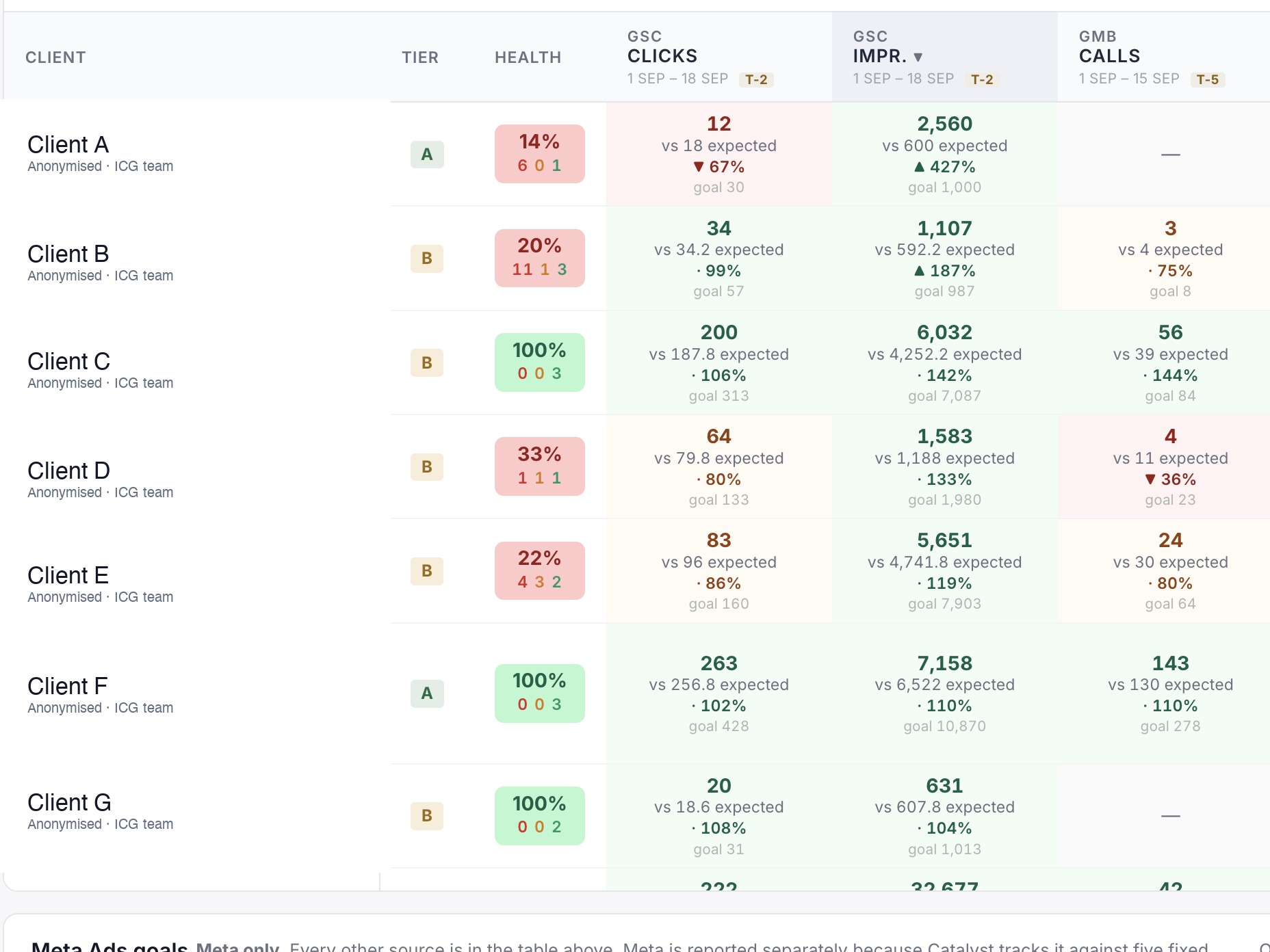
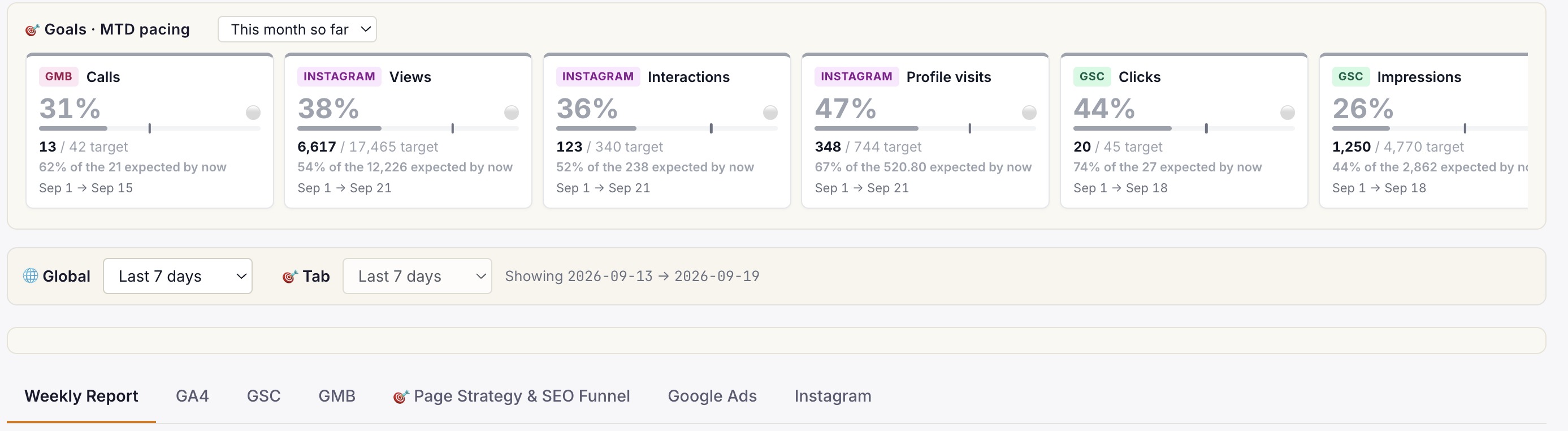
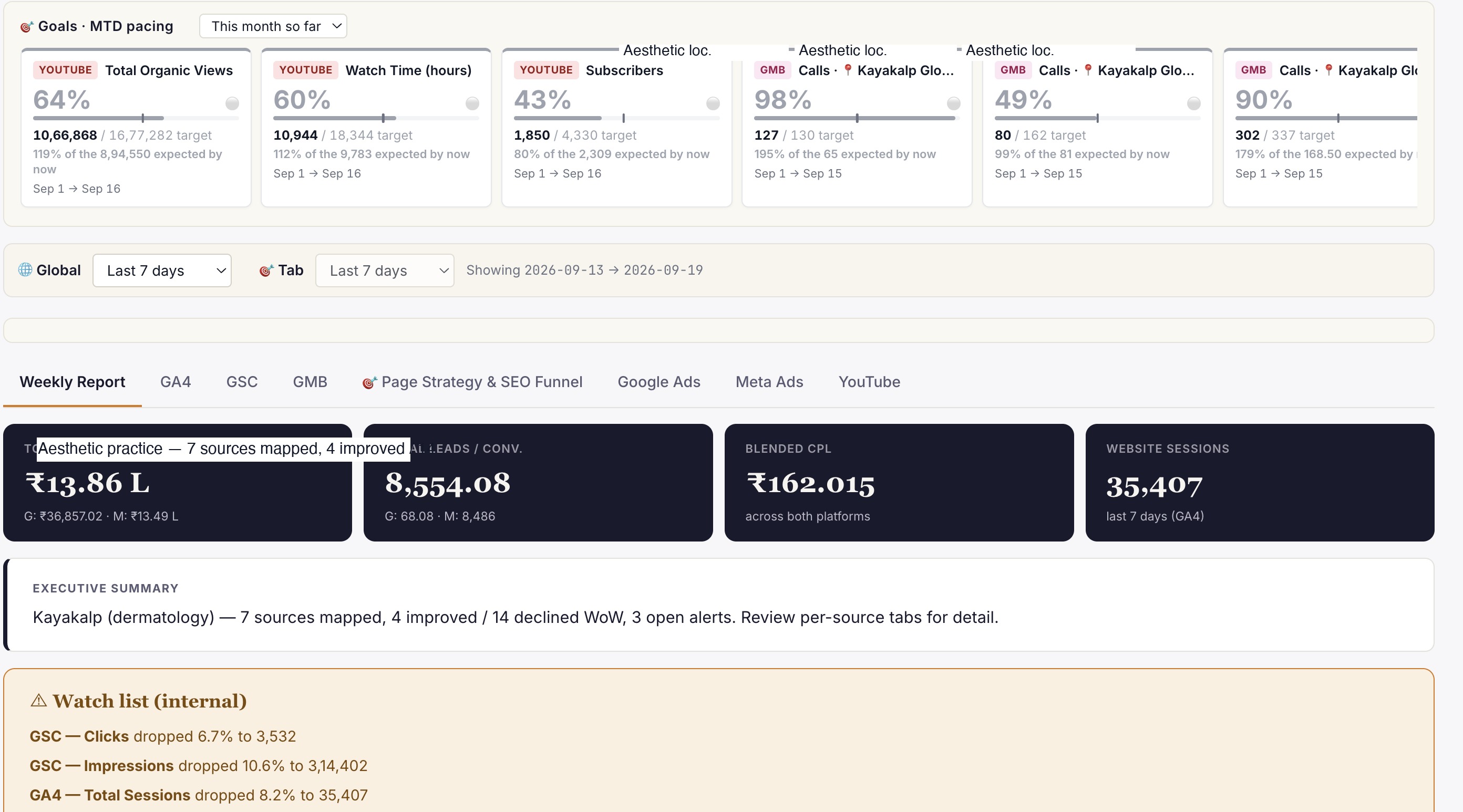
Live client dashboard. GSC, GA4, Google Ads, Meta Ads, IVR calls in one view. Login anytime, not monthly.
Phoenix
Clinic revenue intelligence over your PMS. Daily action queue: Prevent Loss, Maintain & Engage, Grow Revenue. Multi-centre rollout.
Or book a free 30-min audit to see all three in action on your account.
Healthcare brands
that already run on ICG.
A representative slice of the 150+ healthcare brands ICG has delivered for across India. Most engagements remain under NDA.


What ICG clients say · on video.
"Scale up of organic channels and business consulting. ICG has absolute domain authority in their field."
"Working with ICG transformed how we acquire IVF patients in Gurgaon. They understand the fertility journey from inquiry to consult..."
"What Ichelon accomplished — they got all my ideas and worked over 3-4 months to create an amazing, super-customised website."
Need help operationalising this?
Every ICG service is healthcare-only, NMC + DPDP-aware, and built around the patient-research patterns that drive Indian healthcare growth in 2026.
Every practice welcome — packages from ₹20,000/mo.
Goals-Driven engagements · Performance-Linked Payout Models available
More from
ICG.
Five trends shaping Indian healthcare marketing through 2027: AI-first patient research, Conversions API adoption, ABDM discovery, the AEO w...
Healthcare AIO is the discipline of getting your clinic or hospital cited inside Google AI Overviews, ChatGPT and Perplexity answers — not j...
Conversational-search advertising places brand messages inside AI chat answers — ChatGPT, Perplexity, Copilot — rather than beside a results...
Stop guessing.
Book a Diagnostic.
30 minutes. Free. With the AI-powered healthcare-only marketing agency 150+ brands already run on. No slides, no pitch, no hard close.


