Wellness & IV therapy marketing agency — IV hydration, NAD+, glutathione, vitamin drip practices across the USA
Ichelon Consulting US builds patient acquisition, membership-economics conversion, and cash-pay retention systems for US wellness and IV therapy practices — standalone drip lounges, med spa-integrated IV, mobile and concierge IV networks, and longevity-adjacent NAD+ clinics. Cash-pay $150 to $500 per drip, membership models $150 to $400 per month. State medical board-safe supervision-model compliance, FTC wellness-claim-safe creative, HIPAA-scoped analytics, TCPA-safe outreach. Dallas HQ, US-native delivery, healthcare-only team.

- Wellness IV therapy is the fastest-growing cash-pay wellness vertical in US healthcare-adjacent services. Category demand grew consistently through 2023, 2024, and 2025 driven by post-pandemic wellness prioritization, longevity-medicine mainstreaming (NAD+, glutathione, methylation nutrients), hangover-recovery on-demand, fitness and recovery adjacency, and mobile / concierge delivery.
- Every engagement scoped against HIPAA, state medical boards (RN, paramedic, MD, NP supervision-model rules that vary state by state), state nursing boards, FDA (compounded and drug-supply rules for NAD+ and specialty formulations), FTC (wellness and longevity substantiation), Meta and Google health-ad policy, TikTok health policy, TCPA, CAN-SPAM, and ADA.
- Blended CPQL: $35 to $95 per first-visit booking. Cash-pay per-drip pricing: $150 to $500. Membership models: $150 to $400/month with 3 to 6x LTV multiple over single-drip revenue.
- Retainers start from $499/month, custom-scoped to your goals, with Goals-Driven engagements and Performance-Linked Payout Models available. Media spend pass-through.
- Dallas, Texas LLC
- US client team · Central Time (CST)
- 25+ US healthcare clients
- BAA signed with every client
- HIPAA compliance training across client and delivery teams
- Contracts and invoices in USD
-
 Primary Care · North Dallas, TXCase study →
-
 MedSpa · North Dallas, TX
-
 Skin Care · Beverly Hills, CA
-
 Dental · Christiansburg, VACase study →
-
 Pediatrics · Blacksburg, VACase study →
-
 Pediatric Dentistry · Blacksburg, VACase study →
-
 Dental · Roanoke, VACase study →
-
 Functional Medicine · Telehealth · USACase study →
“When I first approached Ichelon Consulting, my YouTube channel was stuck and despite my own efforts, it was not growing. They created a specific strategy which was based on SEO, and completely evaluating the channel, which worked great and has propelled our YouTube channel to new heights. Because of the channel growth, we have seen new patient consultations coming on a regular basis.”
Wellness IV therapy is the fastest-growing cash-pay wellness vertical in the US
The US wellness IV therapy category has grown at a pace that catches most healthcare-adjacent operators off guard. Standalone drip lounges, med spa-integrated IV corners, mobile and concierge providers who deliver drips in hotel rooms and offices, and longevity-focused NAD+ clinics all pull demand from a buyer who did not exist in the current volume five years ago. The category demand curve has stayed steep through 2023, 2024, and 2025.
Four structural drivers are behind it. Post-pandemic, a large slice of US consumers reprioritized biomarker-adjacent wellness, immunity, and recovery as ongoing spend rather than occasional interest — a category-level shift in the cash-pay wellness wallet. Longevity medicine went mainstream, with NAD+, glutathione, methylation-related nutrients, and mitochondrial support becoming podcast-and-influencer-driven mass conversation rather than niche biohacker vocabulary. The hangover-recovery on-demand market grew into a real vertical with its own delivery logistics. The fitness and recovery adjacency (post-marathon, post-CrossFit, pre-competition) pulled a cohort of athletes into repeat-purchase IV drips. And the concierge / mobile model, which lets a provider deliver a drip at a hotel, office, or home, opened a delivery channel that clinic-only competitors cannot match.
The winning practices treat wellness IV as a membership economics business, not a per-drip retail business. Cash-pay memberships (custom-scoped) typically include one or two drip credits, add-on discounts, priority booking, and quarterly-cadence retention. LTV multiples of 3 to 6x single-drip revenue are the norm in well-run practices — and defensible marketing spend follows LTV, not single-drip price. Ichelon Consulting US's wellness IV practice is built around that reframing. Every engagement designs membership-first landing pages, CRM segments that separate one-time buyers from members, and reactivation flows against lapsed-member cohorts.
The wellness IV therapy compliance envelope, in operating detail
Ten frameworks in scope on every wellness IV therapy engagement — HIPAA, state medical boards, state nursing boards, FDA (compounded and specialty drug-supply rules), FTC (wellness and longevity substantiation), Meta and Google health-ad policy, TikTok health policy, TCPA, CAN-SPAM, and ADA. IV therapy sits at the intersection of aesthetic medicine's marketing envelope and the stricter clinical-medicine envelope.
HIPAA and OCR tracking-tech guidance
The 2022 OCR Bulletin and its March 2024 update treat identifiable event data tied to condition or provider information as PHI when passed to a third-party analytics or ad platform. For an IV therapy practice, URLs like /nad-plus, /hangover-drip, /immunity-iv, or /glutathione combined with identifiable event data fall under the OCR standard. Every engagement opens with a PHI scrub across GA4, Google Ads enhanced conversions, Meta CAPI, TikTok Events API, session recording tools, chat widgets, booking widgets, and every third-party embed on the practice website.
State medical boards — supervision-model compliance
This is the single most consequential and most variable layer of the IV therapy compliance envelope. State medical board and state nursing board posture on who may deliver IV therapy, and under what supervision, varies materially:
- Physician-supervised RN delivery is the dominant model, but the required supervision cadence (in-person, on-site, on-call, chart review) varies by state.
- Paramedic delivery is permitted in some states under specific protocol frameworks and prohibited or restricted in others.
- Nurse practitioner and physician assistant scope-of-practice for ordering IV protocols varies by state.
- Mobile / concierge IV is governed by additional rules in several states — some require the delivery-site environment to meet specific standards, some impose supervision requirements distinct from clinic-based delivery.
- Medical director requirements for standalone drip lounges vary in cadence, chart-review scope, and geographic proximity of the medical director to the delivery site.
Every state where the practice operates gets mapped against current board posture. Advertising and landing-page language is scoped to what the delivery model can legally claim in that state, and we re-scope when boards issue new guidance. This is where generalist marketing agencies get IV therapy clinics into regulatory trouble; a healthcare-only team treats it as first-class scope.
FDA on NAD+ and specialty compounded formulations
NAD+ (nicotinamide adenine dinucleotide) sits in a distinct FDA regulatory posture. Some formulations are compounded under 503A or 503B rules, some are supplied via specific pharmacy channels, and the FDA's evolving view on NAD+ shortage designations and compounding eligibility has shifted through 2023, 2024, and 2025. Glutathione, methylation-nutrient stacks, and specialty amino-acid formulations each carry their own drug-supply and compounding considerations. Advertising is scoped to legally defensible supply channels only, and re-scoped when FDA posture shifts.
FTC on wellness and longevity substantiation
The FTC applies a substantiation standard to health, wellness, immunity, energy, cognitive, and longevity claims. Specific benefit claims require evidence the practice can defend. NAD+ and longevity-adjacent claims sit under heightened scrutiny given the category's rapid growth and the volume of consumer complaints about unsubstantiated efficacy. Our creative and landing-page copy uses category-level education, ingredient descriptions, and provider-authority framing without unsubstantiated efficacy claims. Testimonial and endorsement content follows FTC Endorsement Guides with material-connection disclosure where relevant.
Meta and Google health-ad policy on wellness IV
Meta Personal Attributes policy still applies to wellness IV advertising — creative implying knowledge of a viewer's health, energy, or body condition is disallowed. Meta's healthcare category rules require accurate representation of medical claims. Google's healthcare ad policies require the practice to hold appropriate state licensure and to represent claims honestly; NAD+ and specialty IV advertising sits in a stricter Google policy lane where the practice may need to provide additional verification.
TikTok health policy
TikTok prohibits unsubstantiated medical claims, promotes provider-verified health content, and treats wellness-drip content as a category deserving heightened scrutiny for paid ads. Organic educational content by licensed providers is welcomed; paid IV therapy ads face stricter review. We publish organic clinical-authority content on TikTok and treat TikTok paid as an assist channel rather than a primary CPQL channel.
TCPA and CAN-SPAM on outreach
Membership retention SMS, appointment reminders, mobile / concierge booking confirmations, reactivation flows, and educational drips all scoped against TCPA including the FCC's 2024 revocation-of-consent updates, and CAN-SPAM on email. Statutory damages of $500 to $1,500 per violating TCPA message.
ADA on website accessibility
Practice websites are places of public accommodation under the ADA. Screen-reader compatibility, color-contrast standards, keyboard-navigable UI, accessible booking flows, and accessible membership-signup forms are in scope. We audit accessibility and fix critical failures before spending media budget.
Wellness IV therapy is four sub-verticals, one relationship
A wellness IV therapy practice looks like one business from the outside and functions as four distinct sub-verticals from the marketing operations perspective. Each has its own buyer, its own creative craft, its own CRM segment, its own price band, and its own compliance nuance.
IV hydration — the everyday-wellness lane
Standard hydration drips (Myers cocktail-style vitamin blends, immunity drips, hangover recovery, pre- and post-workout hydration). Cash-pay $150 to $300 per session, membership models $150 to $250/month with one or two drip credits. Buyer arrives from category-level Google search ("IV therapy near me", "hangover drip [metro]"), Meta wellness-lifestyle creative, or GBP walk-in. Decision window: minutes to hours. Repeat-purchase cadence drives LTV; the marketing job is landing the first visit and then converting to membership at visit two or three.
NAD+ — the longevity-medicine lane
NAD+ (nicotinamide adenine dinucleotide) infusions sit at a fundamentally different price point ($300 to $900 per session, series-based protocols) and pull a different buyer. Longevity-medicine framing, podcast-and-influencer-driven research paths, and heightened FTC scrutiny make this its own funnel. Buyer decision window 2 to 6 weeks. Provider-authority long-form (YouTube, podcast placement, in-depth blog content on mechanism, dosing, expected effects) is the load-bearing marketing craft. NAD+ deserves its own landing page, CRM segment, and creative — separated from standard vitamin-drip funnels.
Glutathione and antioxidant / detox lane
Glutathione IV and injection protocols sit in the $150 to $350 per session band, often bundled with vitamin C, alpha-lipoic acid, and methylation nutrients. Buyer overlap with cosmetic dermatology and aesthetic clinics is meaningful — glutathione is often positioned around skin-quality claims. FTC substantiation applies heavily to skin-quality and detox framing. We scope creative and landing-page claims to category-level education without efficacy overreach.
Vitamin injection and B12 lane
Vitamin B12, MIC (methionine-inositol-choline) shots, and specific-nutrient injection protocols at $35 to $95 per shot. Lower price point, higher-frequency purchase (weekly or biweekly), often bundled into membership. Cross-sells naturally into IV drip and NAD+ over the relationship. The vitamin shot is often the entry product for membership acquisition — the low price point makes the first visit easy, and the retention flow moves the buyer up the value ladder.
What each layer of the delivery stack looks like in practice
SEO — drip + condition + metro topic map
Topic map organized across drip protocol (Myers cocktail, immunity, hangover, athletic recovery, NAD+, glutathione, beauty drip, vitamin shot), buyer intent (near me, delivery, mobile, membership), and metro. Long-tail programmatic coverage of drip x metro. AI Overview and PAA-optimized briefs on drip-mechanism and ingredient education. Membership landing pages built to convert repeat visitors.
Google Ads — local-intent screened
Branded and non-branded search geo-fenced to the state and metro footprint. Enhanced conversions with hashed first-party identifiers only. Local Services Ads where category eligibility permits. Offline conversion imports for cost-per-first-visit and cost-per-membership-signup reporting.
Meta Ads — category-level wellness framing
Advantage+ and interest-plus-context targeting with no health-attribute inference. Creative framed at wellness, recovery, membership convenience, and lifestyle integration — not "you feel tired, we fix you." Lead-form consent language TCPA-safe. Every creative through health-ad policy review before spend.
GBP density per location + mobile service-area
Per-address GBP built and maintained for physical drip lounges. Service-area business setup for mobile / concierge IV networks. Post cadence on drip education and seasonal promotion, review response with FTC-safe language, Q&A seeding on drip-selection intent, photo hygiene, membership catalog depth.
YouTube and podcast — NAD+ and longevity authority
For NAD+ and longevity-focused practices, YouTube long-form and podcast-adjacent authority is the primary conversion surface. Provider-authority content on NAD+ mechanism, dosing protocols, expected effects, and honest expectation-setting on longevity claims. Podcast placement on wellness and longevity networks where audience-fit is strong.
Membership CRM + retention design
Membership economics are the entire game. Landing pages built around membership offers, first-visit-to-membership conversion sequences, lapsed-member reactivation flows, quarterly retention outreach, and referral programs wired into member communication cadence. Reporting focused on LTV, membership churn, and average-revenue-per-member rather than single-drip metrics.
Membership economics — where wellness IV practices actually compound
A wellness IV practice that measures itself on single-drip revenue is playing the wrong game. The unit economics of a $200 drip with $50 CPQL and 40% first-visit conversion leave the practice with less margin than the coffee shop next door. The unit economics of a $250/month membership with a 14-month average tenure produce a $3,500 lifetime revenue against a similar acquisition cost — and that is the business the winning practices build.
The mechanics look like this. The first landing page the practice sends media traffic to is not a menu of drips; it is a membership offer with drip credits, add-on discounts, priority booking, and a specific first-visit incentive. The first-visit workflow moves the buyer from "let me try one drip" to "let me try the membership" during the drip itself — that ten-minute conversation is the highest-leverage sales moment in the entire funnel. The CRM tags every buyer by member-vs-non-member status from the first booking, and the retention system runs different sequences for the two segments. Membership drop-off gets a specific reactivation flow with a comeback offer. Long-tenure members get referral prompts and cross-sell into NAD+, glutathione series, and body-adjacent aesthetic services where the practice offers them.
Ichelon Consulting US scopes the membership economics into the marketing engagement from the first landing page. The consultation offer, the pricing presentation, the retargeting audience structure, and the CRM automation are all built against membership LTV, not single-drip revenue.
Mobile and concierge IV — the operating and marketing differences
Mobile and concierge IV networks (in-home, in-hotel, in-office, event-based) operate under a different logistics envelope, a different compliance lane, and a different marketing craft than clinic-based IV. Delivery-window logistics, service-area geography, medical-director supervision at the delivery site, and consumer expectations around wait time all shape the marketing.
- Google Business Profile setup: service-area business rather than storefront. Service-area boundaries defined precisely to match the delivery-window logistics.
- Geo-fenced auction: paid media geo-fenced to the actual service area, with premium bidding on hotel, convention, and event-adjacent geographies where hangover-recovery and pre-event drips concentrate demand.
- Booking-widget conversion path: mobile buyers expect same-day or next-day booking with visible delivery windows, not "call for consultation." The booking widget is the landing page for a mobile / concierge practice.
- Hotel and hospitality partnerships: concierge desk placements, hotel-app integrations, and hospitality-partner referral flows are load-bearing in tourist-heavy metros.
- Event-driven demand: conventions, festivals, sports events, and holidays produce demand spikes that reward pre-scheduled inventory and geo-fenced ad campaigns tied to event dates.
- State-by-state mobile scope: mobile IV compliance varies materially state to state; the marketing has to respect the current legal service area, not the aspirational one.
US metros and states where we deliver wellness IV therapy marketing
National scope — we serve wellness IV, NAD+, glutathione, and vitamin-injection practices across every US state, respecting each state's supervision-model rules. Highest-density submarkets we know well include the DFW metroplex (our HQ), Miami and South Florida, Las Vegas, Nashville, greater Los Angeles, Newport Beach and Orange County, Scottsdale, and Austin. Mobile / concierge networks operate in most major metros with service-area GBP setup.
Retainer scope for US wellness IV therapy engagements
Retainers start from $499/month, custom-scoped to your goals, with Goals-Driven engagements and Performance-Linked Payout Models available. Media spend runs pass-through and is scoped separately. Multi-location and mobile networks add per-location or per-region GBP density scope in parallel.
- Boutique single-location drip lounge or standalone IV clinic. SEO + GBP + one paid channel (Google or Meta), monthly reporting, quarterly strategy review, HIPAA-scoped analytics setup, membership-first landing pages, first-visit-to-membership retention design.
- Multi-location IV group or NAD+ / longevity-focused practice. Full SEO stack, GBP density per location, Google + Meta paid, YouTube and podcast provider authority for NAD+ funnel, reputation cross-monitoring, membership CRM integration.
- Mobile / concierge IV network or multi-vertical wellness platform. Full stack + per-region service-area attribution + hospitality-partnership integration + event-driven media planning + multi-vertical ascension (IV + injections + longevity + aesthetic where offered).
US wellness IV therapy marketing — common questions
What is a realistic CPQL for IV therapy and wellness drip practices in the USA?
Blended CPQL for a first-visit IV therapy booking runs $35 to $95. Google Search on branded and non-branded runs $45 to $85; Meta on category-level wellness framing runs $28 to $65; organic + GBP under $25 at scale. Mobile / concierge IV therapy providers (in-home, in-hotel, in-office) sit at the higher end because delivery logistics feed into acquisition cost.
How do state medical boards regulate IV therapy delivery?
State medical board and nursing board posture on IV therapy varies materially. Some states require direct physician supervision at the delivery site; some accept protocol-based delegation with an offsite medical director; some restrict IV therapy delivery to specific licensure classes (RN, LPN, paramedic, MD, NP). Some states have carve-outs or restrictions for mobile / concierge IV. NAD+ and specific compounded formulations sit inside additional scope. We map every state where the practice operates and re-scope on board updates.
Why is wellness IV therapy the fastest-growing cash-pay wellness vertical?
Category-level demand grew consistently through 2023, 2024, and 2025. Drivers include the post-pandemic prioritization of biomarker-adjacent wellness, longevity-medicine mainstreaming (NAD+, glutathione, methylation-related nutrients), the hangover-recovery on-demand market, the fitness and recovery adjacency, and the concierge / mobile delivery model that makes drips accessible without a clinic visit. Cash-pay membership economics compound the unit-level margin over months.
How do you handle FTC wellness-claim compliance?
FTC substantiation standards apply to health, wellness, and supplement claims. Specific benefit claims (immunity boost, energy restoration, cognitive enhancement, anti-aging) require substantiation the practice can defend. NAD+ and longevity-adjacent claims sit under heightened scrutiny. Our creative and landing-page copy uses category-level education, ingredient descriptions, and provider-authority framing without unsubstantiated efficacy claims. Testimonial and endorsement content follows FTC Endorsement Guides with material-connection disclosure.
What does a successful membership economics model look like for an IV therapy clinic?
Cash-pay memberships (custom-scoped) typically include one or two drip credits, add-on discounts, and priority booking. LTV multiples of 3 to 6x single-drip revenue are common in well-run practices. Marketing spend is defensible against membership LTV, not single-drip price. Landing pages built around membership offers convert at materially higher rates than single-drip pricing pages. Reactivation flows and lapsed-member win-back are load-bearing revenue drivers.
How is NAD+ marketing different from standard vitamin drip marketing?
NAD+ sits inside longevity-medicine framing rather than everyday wellness. Buyers arrive with deeper research paths (podcasts, longevity influencer content, biomarker-testing communities), longer decision windows, and higher price tolerance ($300 to $900 per session, series-based). FTC scrutiny on longevity claims is heightened. Provider-authority long-form is the load-bearing marketing craft. NAD+ landing pages, CRM segments, and creative are separated from standard vitamin-drip funnels.
Is HIPAA in scope for a cash-pay IV therapy practice?
Yes if the practice is a covered entity or business associate under HIPAA. Cash-pay practices that submit any claim, e-prescribe, or exchange patient data electronically fall inside HIPAA. IV therapy practices operating under a physician medical director typically fall inside HIPAA even without any insurance workflow. Every engagement opens with a PHI scrub across GA4, Google Ads, Meta CAPI, TikTok Events API, session recording, chat widgets, and every third-party embed on the site.
What does an IV therapy marketing retainer cost?
Retainers start from $499/month, custom-scoped to your goals, with Goals-Driven engagements and Performance-Linked Payout Models available. Media spend pass-through, scoped separately. Multi-location groups and mobile / concierge IV networks add per-location or per-region GBP density and geo-fenced auction scope at additional retainer.
Scope your US wellness IV therapy marketing engagement
Book a 30-minute scoping call with a member of the Leadership Team, email Santosh (Dallas HQ) directly, or WhatsApp us — CT hours, same day where we can.
Related US aesthetic sub-verticals and national pillars
-
Primary Care · North Dallas, TXCase study →
-
MedSpa · North Dallas, TX
-
Skin Care · Beverly Hills, CA
-
Dental · Christiansburg, VACase study →
-
Pediatrics · Blacksburg, VACase study →
-
Pediatric Dentistry · Blacksburg, VACase study →
-
Dental · Roanoke, VACase study →
-
Functional Medicine · Telehealth · USACase study →
“When I first approached Ichelon Consulting, my YouTube channel was stuck and despite my own efforts, it was not growing. They created a specific strategy which was based on SEO, and completely evaluating the channel, which worked great and has propelled our YouTube channel to new heights. Because of the channel growth, we have seen new patient consultations coming on a regular basis.”
We cover every stage, from first search to repeat visit
- 0Foundations
- 1Demand gen
- 2Capture
- 3Lead quality
- 4Lead mgmt
- 5Scheduling
- 6Show-up
- 7Conversion
- 8Retention
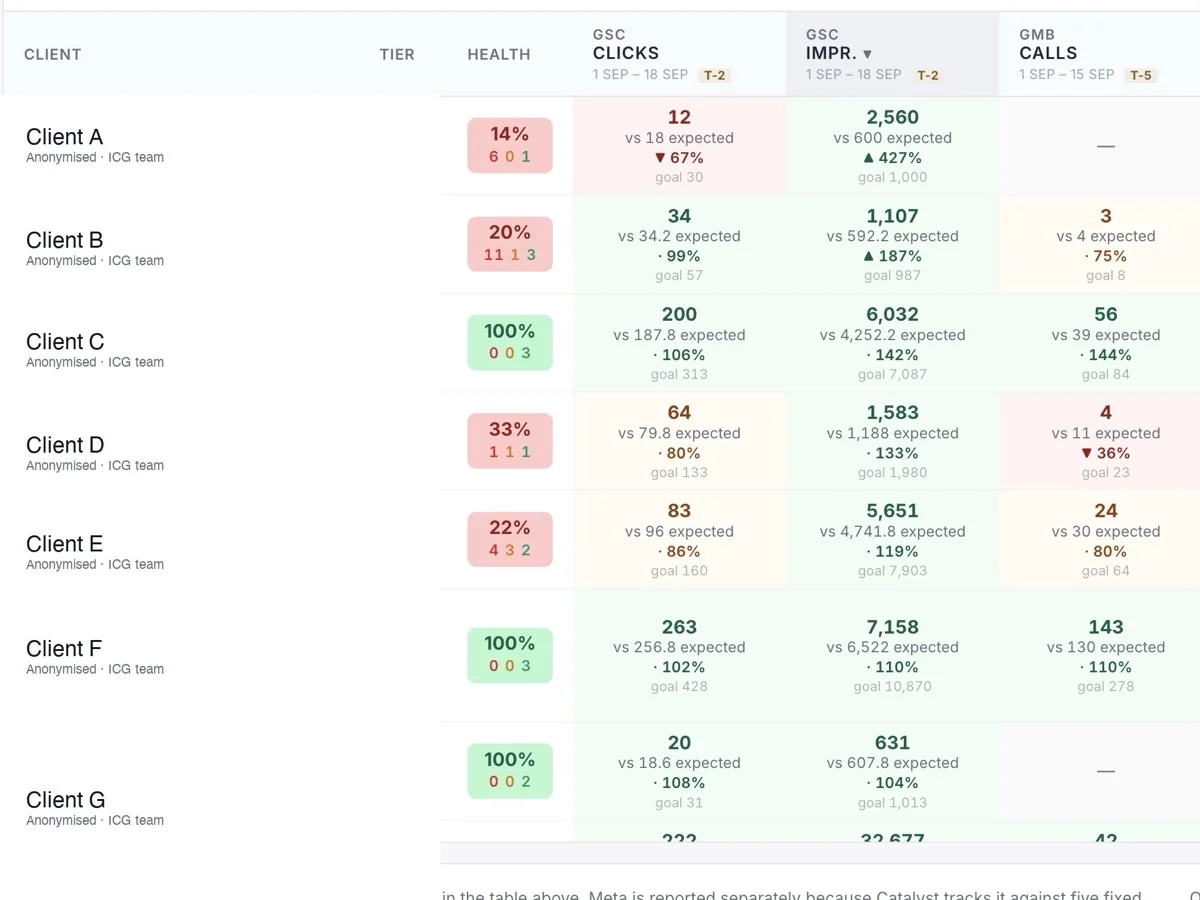
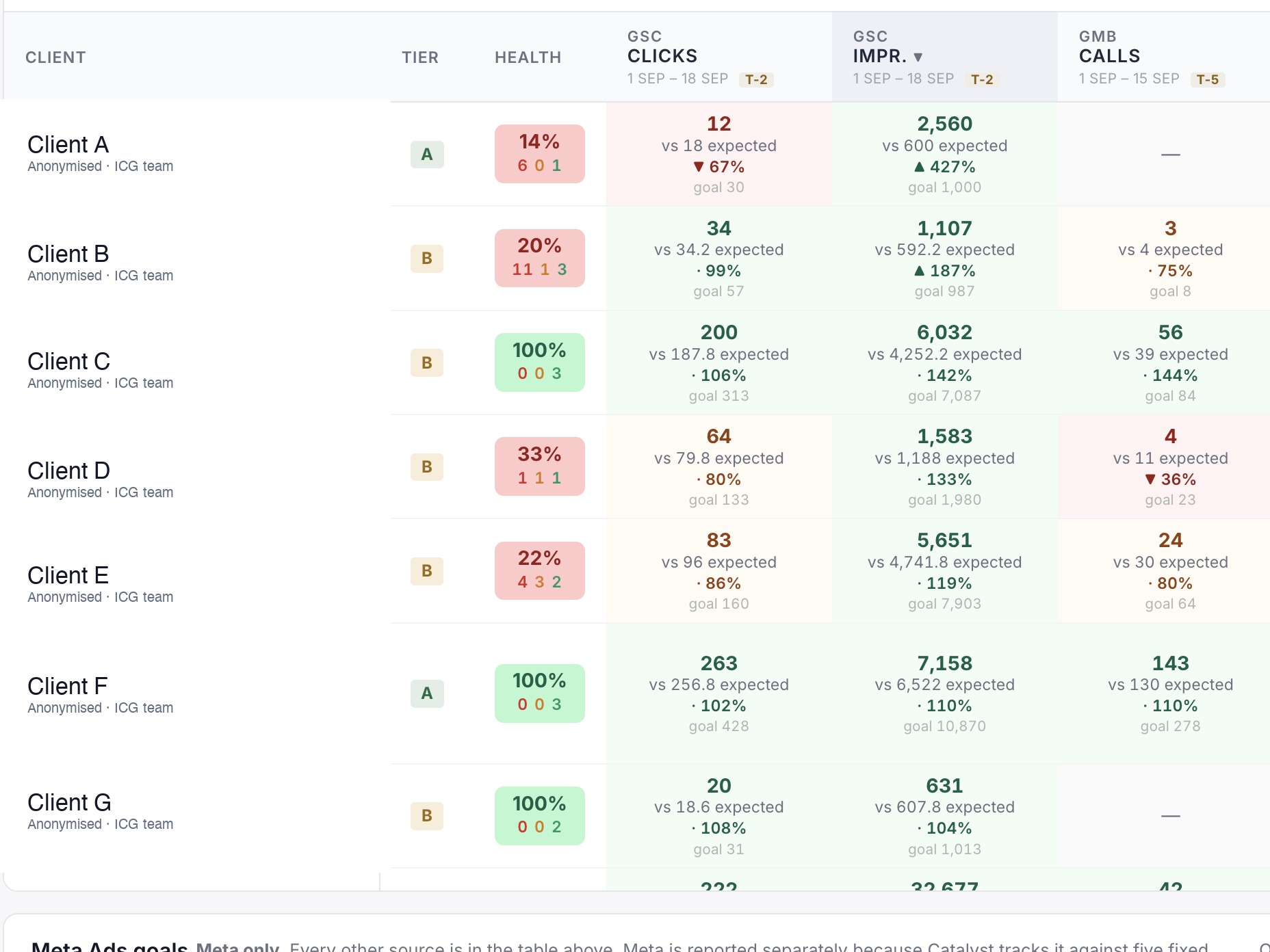
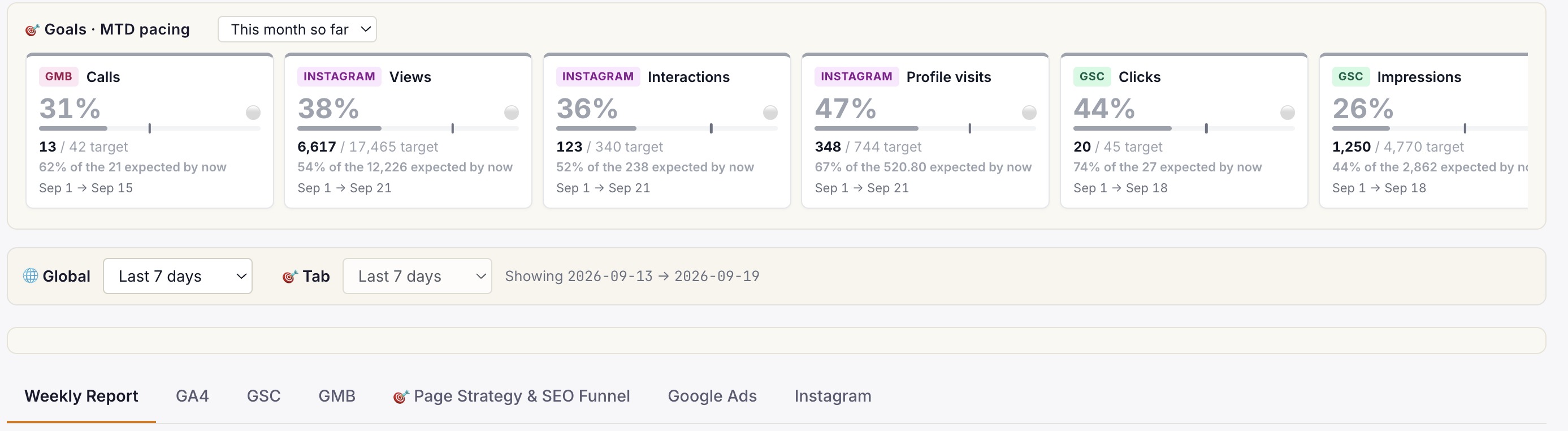
We work across all nine stages, from foundations to past patients, and fix the stage that leaks first. Our own software runs the work, and every stage is reported against a monthly target on Ichelon Agency OS.
See all nine stages and the tool behind each one →