Aesthetic clinic marketing agency for US practices — physician-supervised luxury positioning, HIPAA-safe, 50-state board-compliant
Ichelon Consulting US is an aesthetic clinic marketing agency headquartered in Dallas, Texas, running patient acquisition and membership growth for luxury, physician-supervised aesthetic clinics across all 50 US states. Aesthetic clinics carry the widest service catalog in the cash-pay medical world — injectables, energy-based devices, body contouring, threads, medical-grade skincare, IV and wellness where the state permits, plus membership economics that shape everything downstream. Every campaign is scoped inside a HIPAA + TCPA + FTC + FDA + state medical board envelope, from the first line of hero copy to the final SMS reminder.

- Ichelon Consulting US is a Dallas-headquartered aesthetic clinic marketing agency serving US practices — from single-physician boutique clinics to multi-state luxury aesthetic platforms — across Texas, California, Florida, New York, Georgia, Arizona, Tennessee, Illinois, Washington and every other state where a licensed physician can supervise the advertised scope of aesthetic services.
- Every engagement is scoped against HIPAA (OCR 2022/2024 tracking bulletin), TCPA (2024 FCC revocation updates), CAN-SPAM, ADA, FTC 16 CFR §255 Endorsement Guides, FDA 21 CFR §202.1 on prescription drug advertising, Meta Personal Attributes policy, and the state medical board that governs the supervising physician's license in each state the clinic operates in.
- Retainers start from $499/month, custom-scoped to your goals, with Goals-Driven engagements and Performance-Linked Payout Models available. Consult CPQL runs $75 to $300 depending on metro tier, aesthetic service mix, and whether the campaign is scoped to fill first-time consults or to feed a paid membership pipeline.
- Delivery stack covers organic search, Google Ads, Meta Ads, TikTok where the clinic's compliance risk tolerance allows, GBP density across every clinical address, YouTube provider-authority (YODA), reputation cross-monitoring, membership program marketing, and CRM attribution back to booked and completed consults.
- Dallas, Texas LLC
- US client team · Central Time (CST)
- 25+ US healthcare clients
- BAA signed with every client
- HIPAA compliance training across client and delivery teams
- Contracts and invoices in USD
-
 Primary Care · North Dallas, TXCase study →
-
 MedSpa · North Dallas, TX
-
 Skin Care · Beverly Hills, CA
-
 Dental · Christiansburg, VACase study →
-
 Pediatrics · Blacksburg, VACase study →
-
 Pediatric Dentistry · Blacksburg, VACase study →
-
 Dental · Roanoke, VACase study →
-
 Functional Medicine · Telehealth · USACase study →
“They were able to get all my ideas and work with me over a period of three to four months and create this amazing website. It's super customized, very modern, and it incorporates all the elements that I had wanted — the patient portal, nice pictures, a very interactive website, patient reviews. I would highly recommend their company to anyone who wants to make an excellent website.”
A marketing agency built for the physician-supervised luxury aesthetic clinic — not a generalist retrofit
A US aesthetic clinic is a specific kind of business. It is a physician-supervised medical practice that sells a luxury, cash-pay experience across a catalog that spans neurotoxins, dermal filler, biostimulators, PDO threads, laser resurfacing, IPL, radiofrequency microneedling, body contouring (CoolSculpting, EmSculpt Neo, Sofwave, Ultherapy), medical-grade skincare, chemical peels, and in most states a growing wellness adjacency — IV drips, hormone optimization, weight-loss support tied to GLP-1 protocols. The buyer walks in expecting a five-star hospitality experience. The business behind the counter has to run inside the medical compliance envelope of the supervising physician's license.
That combination — luxury retail experience wrapped around medical compliance — is where generic aesthetic marketing fails. A creative agency that runs a great salon or spa campaign will not survive the FDA fair-balance rule on any Botox creative. A general performance-marketing agency that added a healthcare vertical will not know that Texas Medical Board Rule 165.5 requires written patient consent on every before/after image the clinic ever posts. A social-media-first shop will not understand why Meta rejected the account's ad set for Personal Attributes even though the creative reads clean to a human. Ichelon Consulting US was built at exactly this intersection — luxury aesthetic marketing energy inside a medical compliance envelope that never gets loose.
Our Dallas HQ at 3714 Matador Dr sits in the Central time zone that most US aesthetic clinic operators run leadership calls on, and Santosh Reddy leads our US practice from that address. Texas is also one of the largest US states for aesthetic clinics, and the DFW aesthetic corridor operates as an informal proving ground for creative, membership, and consult-to-visit funnel patterns that then travel to Florida, California, Arizona and the rising metros. Working in Dallas puts us on that map first.
But this is a national engagement — the Dallas address anchors the delivery pod, not a limit on client geography. We run active engagements across Texas, California, Florida, New York, Georgia, Arizona, Tennessee, Illinois and Washington, and we scope net-new engagements in any state where a licensed physician can supervise an aesthetic clinic's advertised scope of services. Multi-state luxury aesthetic groups get a single national delivery pod with per-state creative review, per-state paid-media benchmarks, per-state supervising-physician review workflows, and consolidated membership program marketing that treats every clinical address as one node on one commercial map.
Membership is the aesthetic clinic P&L — and most agencies never build a marketing plan around it
The single biggest structural difference between an aesthetic clinic and a dermatology practice or plastic surgery practice is the membership economics. Aesthetic clinic revenue is not just first-time consults and treatments. It is monthly recurring credits (typical band $150 to $600 per month), tiered access programs (Bronze, Silver, Gold; or brand-specific naming), referral-linked credit bonuses, seasonal event pricing, injectable subscription packs (Allergan Alle, Aspire, Galderma ASPIRE Galderma Rewards points redeemed for treatment), device-specific memberships (an EmSculpt Neo body membership (custom-scoped)), and increasingly a hybrid GLP-1 wellness bundle where state law permits.
If a marketing plan only optimizes the first-consult conversion — clicks, leads, first visits — it leaves 60 to 75 percent of the possible clinic P&L on the table. Membership programs typically convert at 20 to 40 percent of first-time cosmetic-injectable visits when the clinic has the offer, the education, and the retention motion built in. That is where the compounding LTV sits. That is where a well-run aesthetic clinic beats a well-run competitor with a bigger paid-media budget.
Membership acquisition marketing
Separate campaign track from first-consult acquisition. Different creative language (belonging, savings, priority access rather than aspiration and outcome), different landing page, different conversion definition, different attribution. Membership CPQL typically runs 1.4× to 2× first-consult CPQL but LTV is 4× to 8× — the ROI math is where a mature aesthetic clinic scales.
Manufacturer rewards program integration
Allergan Alle, Galderma ASPIRE Rewards, Merz Xperience+. Every serious US aesthetic clinic runs at least one; the acquisition path should route eligible buyers into the manufacturer rewards enrollment as part of the first-visit journey. We build the landing pages, email drips, and SMS confirmations that turn a $500 tox visit into a rewards-enrolled recurring customer.
Referral engine design
Aesthetic clinic referral rates are the highest in cash-pay medical (30 to 55 percent of new bookings for a mature clinic). But a referral engine has to be designed, not left to word of mouth. Credit-based referral incentives, member-guest-day mechanics, and post-treatment SMS asks scoped under FTC 16 CFR §255 material connection disclosure rules — we build all three into the acquisition engagement.
Retention marketing
The 30 to 90 day post-consult window is where retention is won or lost. Automated but human-toned drips on injectable interval reminders, seasonal service education, and event-based invites (membership member-only preview nights, brand-launch previews) compound retention beyond the first 12 months. We build the whole retention motion inside the acquisition engagement, not as a separate afterthought.
The US aesthetic clinic market — the numbers behind the strategy
A national aesthetic clinic marketing plan has to start from the actual size and shape of the market. The underlying data:
The wider US aesthetic market — physician-supervised aesthetic clinics, med spas, cosmetic dermatology and cash-pay aesthetic services from plastic surgery clinics — has grown steadily, and AmSpa counted 10,488 US med spa locations in 2023.
Where that growth actually lives is not evenly distributed. Five state-level realities shape a US aesthetic clinic marketing plan today:
- Texas is a major state for aesthetic clinics. Practices are weighted to Dallas-Fort Worth, Houston, Austin and San Antonio. Texas Medical Board Rule 165.5 governs testimonials and before/after photography across the state; DFW anchors an outsized share of the cash-pay injectable revenue in the country.
- Florida is the second-largest aesthetic clinic market. Miami, Fort Lauderdale, Palm Beach, Tampa and Orlando anchor Florida aesthetic clinic density. Florida Statute 458.351 governs physician advertising, and the Miami injectable and body-contouring buyer is arguably the most sophisticated in the country.
- California is the third-largest aesthetic clinic market and the most compliance-heavy. Los Angeles, San Francisco, San Diego, Orange County. California Bus & Prof Code §17500, Medical Board §2261, and the state's Medical Corporation structure requirements each add compliance layers most other states do not carry — but the LA aesthetic buyer has among the highest willingness-to-pay ceilings in the country.
- Scottsdale is the aesthetic-buyer-per-capita capital of the US. Scottsdale concentrates the most aesthetic-buyer density per capita in the country by most measures, with luxury clinic clustering along Scottsdale Rd and inside the resort corridor. Arizona Rev Stat §32-1454 governs physician advertising; the local buyer is willing to spend at the top of the injectable price curve.
- The rising cohort is Nashville, Atlanta, Austin and Charlotte. These four metros grew aesthetic clinic density fastest between 2020 and 2025. Each carries a distinct compliance and demand profile a national strategy has to price separately from the top-tier legacy markets.
The top-demand US aesthetic clinic markets by paid-media auction pressure and organic search competitiveness are Miami, Beverly Hills, Manhattan, Scottsdale, Dallas and Nashville. A national aesthetic clinic plan that budgets to a US-wide average CPC will overspend in the mid-tier metros and underspend in the top six — which is where a specialist agency earns its fee by moving media where a $200 CPC still returns a positive LTV, and away from metros where a lower-nominal CPC still fails to convert to consult.
State medical board rules on aesthetic clinic advertising — the 50-state compliance matrix
Every US aesthetic clinic advertises under two layers of medical board rules: the federal envelope described below, and the individual state medical board that issued the supervising physician's license. Below is the condensed 50-state matrix Ichelon Consulting US works from. This is the operating map, not a legal opinion — every clinic's specific facts should be reviewed by its own healthcare counsel before creative deployment.
| State | Governing rule / statute | Key stance on aesthetic clinic advertising |
|---|---|---|
| Texas | TMB Rule 165.5 & 165.1 | Written patient consent required for every testimonial and before/after image; no false, deceptive or misleading claims; superiority claims require verifiable methodology; supervising physician of record must be identifiable. |
| Florida | Florida Statute 458.351 | Ban on deceptive advertising, mandatory disclosure of the supervising physician's medical qualifications, licensed name required in ads, before/after imagery must reflect typical results, off-label promotion of injectables scrutinized. |
| California | CA Bus & Prof Code §17500 + Medical Board §2261 | Broadest truthful-advertising rule in the US; no misleading testimonials; disclosure of non-typical before/after results; strict on "board certified" and "medical director" claims; Medical Corporation structure requirements shape how the clinic itself is advertised as an entity. |
| New York | NY Education Law §6530 | Professional misconduct rules cover any false, fraudulent or deceptive advertising by a licensed physician; strong on superiority claim substantiation; scope of practice by non-physician staff scrutinized in advertising language. |
| Georgia | GA Code §43-34-8 | Requires truthful, current-standard-of-care representation of results; no comparative superiority without objective basis; supervising physician disclosure required on aesthetic clinic advertising. |
| Arizona | AZ Rev Stat §32-1454 | Testimonials must be honest and current; before/after must not misrepresent typical outcome; strict on injectable off-label promotion; Scottsdale market receives frequent enforcement attention on aesthetic advertising. |
| Tennessee | TN Code §63-6-214 | Deceptive advertising is unprofessional conduct; testimonials without disclosure of compensation prohibited; Nashville aesthetic clinics are watched closely on before/after claim language. |
| Illinois | IL Medical Practice Act §225 ILCS 60 | Strict on advertising outcomes as guarantees; before/after images require typical-results disclaimer where applicable; corporate practice of medicine rules shape clinic entity advertising. |
| Washington | WA Medical Practice Act RCW 18.71 | Broad prohibition on false, fraudulent, misleading or deceptive statements in advertising; scope of practice by non-physician staff must not be overstated in ads. |
| Pennsylvania | 49 Pa Code §16.61 | Bans deceptive statements, requires substantiation of claims, physician-name attribution required, before/after imagery must be current and reflect typical results. |
| All other states | State-specific board rules apply | Every remaining state has a materially similar deceptive-advertising prohibition. Ichelon Consulting US scopes creative against the actual current rule and interpretive guidance of the state your supervising physician is licensed in. |
For multi-state aesthetic clinic platforms, we maintain a per-state creative review checklist that runs against every campaign asset — website copy, paid creative, GBP posts, Instagram carousels, YouTube titles, review-response templates, membership landing pages — before it goes live in that state. A single national creative that reads clean in Texas can trigger a Florida deceptive-advertising complaint if the results language is not appropriately hedged for the Florida Statute 458.351 standard. The cost of that mistake is not the creative rework — it is the board complaint, the licensure defense, and the reputational surface area that follows.
HIPAA, TCPA, CAN-SPAM, ADA, FTC, FDA — the federal envelope every US aesthetic clinic campaign runs inside
Above the state medical board layer sits a federal envelope that applies uniformly across all 50 states. A US aesthetic clinic marketing plan that does not scope against every framework below is not a plan — it is an exposure profile the clinic will carry until its first regulator complaint.
HIPAA (OCR 2022/2024 tracking bulletin)
Any condition, service or provider information passed to a third-party analytics or ad platform can constitute PHI when tied to an individual identifier. Every aesthetic clinic engagement starts with a PHI scrub across GA4, Google Ads conversions, Meta CAPI, TikTok Events API, Clarity, Hotjar, LiveChat and every third-party embed on the clinic website. BAA-ready with every partner that requires one.
TCPA (2024 FCC revocation updates)
The Telephone Consumer Protection Act carries $500 to $1,500 statutory damages per violating message. Every lead-form disclosure, appointment-reminder SMS, membership renewal reminder, and reactivation outreach is audited against the current TCPA rule set including the 2024 revocation-of-consent updates.
CAN-SPAM Act
Every US aesthetic clinic email marketing program — event invites, seasonal specials, membership renewal, injectable reminders — is scoped for accurate sender identification, honest subject lines, physical postal address disclosure, and functioning one-click unsubscribe.
ADA (web accessibility)
Aesthetic clinic websites are Title III places of public accommodation. WCAG 2.1 AA is the operative accessibility floor. We audit new-build and legacy aesthetic clinic websites against WCAG 2.1 AA (contrast, alt text, keyboard navigation, ARIA labeling) as part of engagement onboarding.
FTC 16 CFR §255 (Endorsement Guides)
Any influencer collaboration, injector-referred client story, or incentivized Google review triggers the FTC Endorsement Guides. Material connection disclosure, honest depiction of results, and truthful representation of the endorser's actual experience are all in scope. We do not run influencer or review-incentive programs without an FTC-compliant disclosure structure built in.
FDA 21 CFR §202.1 (prescription drug advertising)
Any promotional communication that mentions Botox, filler brands (Juvederm, Restylane, RHA, Sculptra, Radiesse), prescription cosmeceuticals, or the on-label vs off-label boundary is subject to FDA prescription drug advertising rules. Fair balance, indication accuracy, and risk information disclosure are scoped into every relevant creative asset before publication.
Meta Personal Attributes policy
Meta's ad-review system rejects creative that implies knowledge of a person's medical condition, appearance, or health status. Aesthetic clinic creative that reads clean to a human reviewer can trigger a Personal Attributes rejection at scale. We rewrite creative pre-flight against the current Meta policy interpretation and monitor account-level policy risk continuously.
Google Healthcare and Medicines policy
Google Ads restricts prescription-drug promotion, applies personalization restrictions to health-related audiences, and requires specific policy classifications for certain aesthetic categories. Every US aesthetic clinic Google Ads engagement is set up under the correct policy classification from account creation.
What we found when we studied 555 US med spas on Google
Patients praise the care almost without exception. The one area where complaints outnumber praise is booking and communication, and that is where most med spas can win.
Full study · 555 US med spas across 20 metros · roughly ±4% nationally · review velocity and themes from a 115-spa subsample · verified against raw data.
What the monthly stack delivers for a US aesthetic clinic
Every aesthetic clinic engagement runs on the same six delivery layers, weighted per clinic. A solo-injector luxury boutique in Beverly Hills weights heavier on paid social and reputation; a five-location aesthetic group in Texas weights heavier on GBP density and membership acquisition; a multi-state PE-backed aesthetic platform weights heavier on per-location P&L attribution and CRM-integrated reporting.
1. SEO — aesthetic catalog + membership + provider clusters
Three separate topic maps: aesthetic catalog (Botox, filler, laser, RF microneedling, CoolSculpting, EmSculpt Neo, threads, PDO, Sculptra, biostimulators) tied to cash-pay intent; membership program education tied to LTV growth intent; injector-provider bios tied to trust intent. Site architecture separates the three so paid amplification and content depth compound in the right direction.
2. Paid — Google + Meta + TikTok where compliance allows
Google Ads on branded and non-branded intent, geo-fenced to the ZIP-code catchments each provider actually sees clients from. Meta Advantage+ campaigns with HIPAA-scoped audience construction and TCPA-safe lead-form consent language. TikTok where the clinic's compliance risk tolerance permits, with FTC-compliant creator collab structures.
3. GBP density — per location, per state
Angryturtle-run GBP for every clinical address the clinic operates from. Post cadence, review response, Q&A seeding, service catalog depth, and photo hygiene — all scoped to the state medical board's testimonial rules. Multi-location aesthetic groups get consolidated review monitoring with per-location alerting.
4. YouTube provider-authority (YODA)
Long-form injector-authority publishing that positions the clinic's supervising physician and lead injectors as the citation surface for AI Overviews and PAA panels on US aesthetic queries. Doubles as the manufacturer-rewards enrollment funnel and the member education library.
5. Reputation cross-monitoring
Google, RealSelf, Yelp (aesthetic listings), Healthgrades where applicable, and Reddit aesthetic community subreddits. Review-request cadence tied to satisfied-client triggers with state-consent capture. Negative-review response templates cleared by state creative review before deployment.
6. Membership acquisition & CRM attribution
Separate membership acquisition tracks per program tier, with landing pages, email drips, and SMS flows scoped for CAN-SPAM and TCPA compliance. CRM integration where the clinic runs one; call-tracking with HIPAA-scoped recording where they do not. Per-location, per-provider, per-membership-tier P&L attribution for multi-location clinics.
The US aesthetic clinic buyer journey — from social scroll to signed membership
US aesthetic clinic buyers move through a journey that is faster, more socially-influenced, and more visually-driven than any other cash-pay medical category. Understanding the shape of the journey — and where the marketing investment changes the conversion outcome — is what separates a marketing plan that fills injector schedules from one that just accumulates clicks and never converts to a completed consult, let alone a signed membership.
Stage 1 — Aspiration trigger
Aesthetic clinic buyers rarely enter through a symptom. They enter through an aspiration trigger — a wedding, a reunion, a birthday, a career transition, a divorce, a post-baby body goal, a GLP-1 weight loss that revealed loose skin, a friend's Botox result at a social occasion, or a TikTok video demonstrating a treatment the buyer had not previously considered. The trigger is often tied to a specific date, which shortens the marketing window materially compared to dermatology or plastic surgery. Marketing has to be findable in the specific query language a US aesthetic clinic buyer actually uses (which skews to brand-and-outcome language rather than clinical terminology) and to appear on the specific social surfaces they scroll on their commute.
Stage 2 — Social discovery and shortlist
US aesthetic buyers form their shortlist primarily on Instagram, TikTok and Google — in roughly that order for injectables, and closer to reversed for body contouring and skin-tightening. The shortlist window is measured in days for injectables and weeks for higher-ticket devices. Your job is to be findable on all three surfaces with a creative library that reads as "the obvious choice" in the specific submarket the buyer lives in. A national creative library that ignores submarket-level demand differences underperforms a smaller library scoped tightly to specific metros and neighborhoods.
Stage 3 — Consult booking
Most US aesthetic clinic first-appointments run through an online booking system rather than a phone call. This is a critical difference from medical dermatology and plastic surgery. An aesthetic clinic website that only offers a "call to book" path loses a majority of aspirational-intent buyers. We build online-book-first flows with a call-fallback, HIPAA-scoped analytics on both paths, and TCPA-safe consent structures on any SMS confirmation sequence.
Stage 4 — First visit and membership signup
The US aesthetic clinic P&L is decided in the 30 to 90 day post-first-visit window. A first-visit Botox client who is not converted to a membership program or manufacturer rewards enrollment will typically return 1.4 times over the following 12 months. A first-visit client who is converted to a membership will return 5 to 8 times over the same window, at a higher average ticket, with a materially lower churn profile. The marketing plan has to scope the membership conversion motion into the acquisition engagement — landing pages, first-visit takeaway collateral, 24-hour follow-up SMS, 72-hour education email — not treat it as a separate afterthought.
Stage 5 — Long-term retention and referral
Mature aesthetic clinics generate 30 to 55 percent of new bookings through member and client referral. The referral engine is built in the acquisition engagement: credit-based referral incentives, member-guest-day mechanics, event-based invites, post-treatment SMS asks scoped under FTC 16 CFR §255 material connection disclosure. This is where a well-run clinic beats a well-run competitor with a bigger paid-media budget — because compounding referral density lowers effective CPQL every quarter the marketing plan runs.
What a US aesthetic clinic marketing engagement costs — and CPQL to expect per metro
Retainers start from $499/month, custom-scoped to your goals, with Goals-Driven engagements and Performance-Linked Payout Models available.
Retainers are custom-scoped per clinic against provider count, location count, state footprint, service catalog breadth, membership program maturity, and desired share of the metro market. There are no packaged tiers because a solo-injector luxury clinic in Scottsdale does not need the same stack as a five-state aesthetic platform with a Miami flagship.
Typical scope by clinic profile:
- Solo-injector or two-provider boutique aesthetic clinic, one high-CPC metro location. SEO + GBP + one paid channel (usually Meta on cosmetic-injectable intent), monthly reporting, quarterly membership strategy review.
- Two-to-four location physician-supervised aesthetic clinic group, single state. Full SEO stack across aesthetic catalog and membership clusters, GBP density per location, Google + Meta paid, reputation cross-monitoring, YouTube provider-authority pilot, membership acquisition track.
- Multi-state luxury aesthetic platform or PE-backed group. Full stack plus per-location, per-state P&L attribution, per-provider content publishing, national SEO across every state the group operates in, and CRM integration for true cost-per-completed-consult and cost-per-signed-membership reporting.
Media spend runs pass-through and is scoped separately, typically $4,000 to $50,000 per month depending on ambition and number of markets in play. Product SKUs like Angryturtle ($12/month per location for GBP OS) run in parallel where per-location density is the acquisition constraint.
National CPQL benchmarks — cost per aesthetic consult by metro cohort
Aesthetic clinic CPQL is priced against a completed consult — a client who booked, showed up, and sat with a provider — not against a top-of-funnel form fill. The ranges below are mature-campaign benchmarks Ichelon Consulting US operates against across our current US book, not first-90-day exploration numbers.
- Top-CPC metros (Miami, Beverly Hills, Manhattan, Scottsdale). First-consult CPQL typically returns $150 to $300 for aesthetic-catalog intent (injectables, laser, body). Membership-conversion CPQL runs 1.5× to 2× that band because the marketing motion is heavier.
- Mid-CPC metros (Dallas, Houston, Atlanta, Nashville, Austin, Chicago, Boston). First-consult CPQL typically returns $95 to $180. Membership-conversion CPQL $180 to $280.
- Emerging metros (Charlotte, Raleigh, Denver, Portland, San Antonio, Kansas City, Minneapolis). First-consult CPQL typically returns $75 to $130. Membership-conversion CPQL $130 to $210.
- Wellness-adjacent aesthetic (IV therapy, hormone optimization, GLP-1 support) where state law permits. Consult CPQL runs $110 to $220 depending on how the campaign is structured. Higher-ticket wellness memberships often pull first-visit CPQL upward but LTV compensates within the first six months.
City-level aesthetic clinic pages Ichelon Consulting US maintains — the national cluster
This flagship page consolidates the semantic cluster of city-level aesthetic clinic marketing pages Ichelon Consulting US maintains across the US. Each metro page below carries its own state medical board scoping, its own paid-media CPC calibration, and its own submarket-level demand data. Practices researching us should read the metro page for their own market alongside this national flagship.
Not listed above? We take on new-market engagements every quarter. If your clinic operates in a metro that does not have a dedicated Ichelon Consulting US page yet — Chicago, Boston, Seattle, Denver, Minneapolis, San Diego, Philadelphia, Charlotte, Portland, Salt Lake City, Raleigh, Kansas City and dozens more are actively serviced without a dedicated landing page yet — the delivery stack and pricing are identical. Scope a call and we will confirm state medical board coverage, paid-media benchmarks, and delivery-team allocation before any commercial commitment.
Search Intelligence Trifecta — organic and paid on one national stack
Every US aesthetic clinic engagement runs on the Search Intelligence Trifecta — Angryturtle, SIE and YODA. Paid acquisition buys the consult today; SIE earns the ranking tomorrow so the same query is free next quarter. YODA builds the injector-authority library that pulls in both first-time buyers and manufacturer-rewards enrollment. Angryturtle keeps every US clinical address dense on Google Maps.
Angryturtle · GBP OS for every US location
Post cadence, review response, Q&A seeding, photo hygiene, service catalog depth — scoped to each state's testimonial rules. Multi-location aesthetic groups get consolidated review monitoring across every clinical address. Solo plan from $12/month per location; agency-managed plans priced separately.
SIE · Search Intelligence Engine
Topic map, entity graph and internal-link engineering around US aesthetic clinic query patterns — catalog-level, provider-level, membership-level. Content briefs optimized for AI Overview citation and PAA answer boxes on aesthetic intent across state, metro and neighborhood queries.
YODA · YouTube AIO for aesthetics
Provider-authority builds — treatment explainers, injector technique overviews, before/after case discussion with state-board-compliant framing. Optimized for AI Overview citation and YouTube's recommendation engine. Doubles as the member education library.
US aesthetic clinic marketing — national-scope questions
How does an aesthetic clinic engagement differ from a med spa or dermatology engagement?
The clinic-model overlap is real, but three things separate an aesthetic clinic engagement structurally. First, service catalog breadth — a full aesthetic clinic runs injectables, energy-based devices, body contouring, threads, medical-grade skincare and often wellness adjacencies, and the SEO topic map has to hold all of them. Second, membership economics — aesthetic clinics run monthly recurring revenue lines that need a dedicated membership-acquisition marketing track. Third, physician-supervision framing — the marketing has to lead with the supervising physician's credibility as the compliance anchor, even when the primary buyer touchpoint is with an injector or aesthetician.
What is the CPQL range for aesthetic clinic consults across US metros?
First-consult CPQL runs $150 to $300 in top-CPC metros (Miami, Beverly Hills, Manhattan, Scottsdale), $95 to $180 in mid-CPC metros (Dallas, Houston, Atlanta, Nashville, Austin, Chicago, Boston), and $75 to $130 in emerging metros. Membership-conversion CPQL runs 1.5× to 2× the first-consult band because the marketing motion is heavier. Wellness-adjacent consult CPQLs run $110 to $220 depending on service structure.
Do you build the membership acquisition track separately from the first-consult acquisition track?
Yes, and this is one of the sharpest ROI decisions in an aesthetic clinic engagement. Membership acquisition needs different creative language (belonging, savings, priority access rather than aspiration and outcome), different landing pages, different email drips, different attribution rules, and a different SMS structure. Bundling it into the first-consult track dilutes both. Splitting them lets the clinic scale membership as its own P&L driver, with membership CPQL typically running 1.4× to 2× first-consult CPQL but LTV 4× to 8× higher.
Can you integrate with Allergan Alle, Galderma ASPIRE Rewards and other manufacturer rewards programs?
Yes. Every serious US aesthetic clinic runs at least one manufacturer rewards program (Allergan Alle for Botox and Juvederm; Galderma ASPIRE Rewards for Dysport, Restylane and Sculptra; Merz Xperience+ for Xeomin and Radiesse). We build enrollment landing pages, first-visit hand-off flows, and post-visit SMS reminders that route eligible clients into the correct rewards program without breaking FTC endorsement or FDA fair-balance rules. This routinely lifts first-visit-to-second-visit conversion by 15 to 30 percent in accounts that were not previously running rewards enrollment tightly.
How do you handle the physician-supervision requirement in the marketing?
Every aesthetic clinic advertises under the supervising physician's license, and the marketing has to lead with that credibility rather than hide it. We build supervising-physician bio pages, provider schema, and photo assets that establish the physician-of-record as the clinical authority, then route buyer trust through that anchor into the wider injector team. In states with stricter supervision requirements (California, Florida, Arizona) we tighten the language further so nothing overstates non-physician staff scope.
Do you serve US aesthetic clinics outside Texas, California, Florida and New York?
Yes. We currently run engagements across Georgia, Arizona, Tennessee, Illinois, Washington, Colorado, North Carolina, Massachusetts and other states, and we scope net-new engagements in any state where a licensed physician can legally back an aesthetic clinic's advertised scope. Not having a dedicated metro landing page for a market does not mean we do not serve it — the delivery stack and pricing are identical.
How do you handle Meta Ads Personal Attributes rejections on aesthetic creative?
Meta rejects aesthetic creative that implies knowledge of a person's appearance, weight, skin condition or health status — even when it is technically compliant with FTC and state medical board rules. We rewrite creative pre-flight against the current Meta policy interpretation, monitor account-level policy risk continuously, and structure campaigns to reduce the surface area for cascading account restrictions. Where a rejection does occur, we appeal through official Meta channels rather than resubmitting the same creative under a different account.
How does the Dallas HQ actually work for a clinic on the other side of the country?
Dallas is where our US delivery pod sits — leadership, senior strategy, creative direction and reporting. Central time zone gives us working overlap with every US metro. Client calls happen on Google Meet or Zoom; reporting is asynchronous and on-demand; senior team travel to on-site strategy sessions is scoped where the engagement warrants it. Clinics in California, Florida, New York and every other state we serve get the same senior attention as clinics in DFW itself — the physical office location is the compliance and delivery anchor, not a limitation on client geography.
Scope your US aesthetic clinic marketing engagement
Book a 30-minute scoping call with a member of the Leadership Team, email Santosh (Dallas HQ) directly, or WhatsApp us. Central time zone hours, same day where we can.
Adjacent US aesthetic and cosmetic pillar pages
-
Primary Care · North Dallas, TXCase study →
-
MedSpa · North Dallas, TX
-
Skin Care · Beverly Hills, CA
-
Dental · Christiansburg, VACase study →
-
Pediatrics · Blacksburg, VACase study →
-
Pediatric Dentistry · Blacksburg, VACase study →
-
Dental · Roanoke, VACase study →
-
Functional Medicine · Telehealth · USACase study →
“They were able to get all my ideas and work with me over a period of three to four months and create this amazing website. It's super customized, very modern, and it incorporates all the elements that I had wanted — the patient portal, nice pictures, a very interactive website, patient reviews. I would highly recommend their company to anyone who wants to make an excellent website.”
We cover every stage, from first search to repeat visit
- 0Foundations
- 1Demand gen
- 2Capture
- 3Lead quality
- 4Lead mgmt
- 5Scheduling
- 6Show-up
- 7Conversion
- 8Retention
We work across all nine stages, from foundations to past patients, and fix the stage that leaks first. Our own software runs the work, and every stage is reported against a monthly target on Ichelon Agency OS.
See all nine stages and the tool behind each one →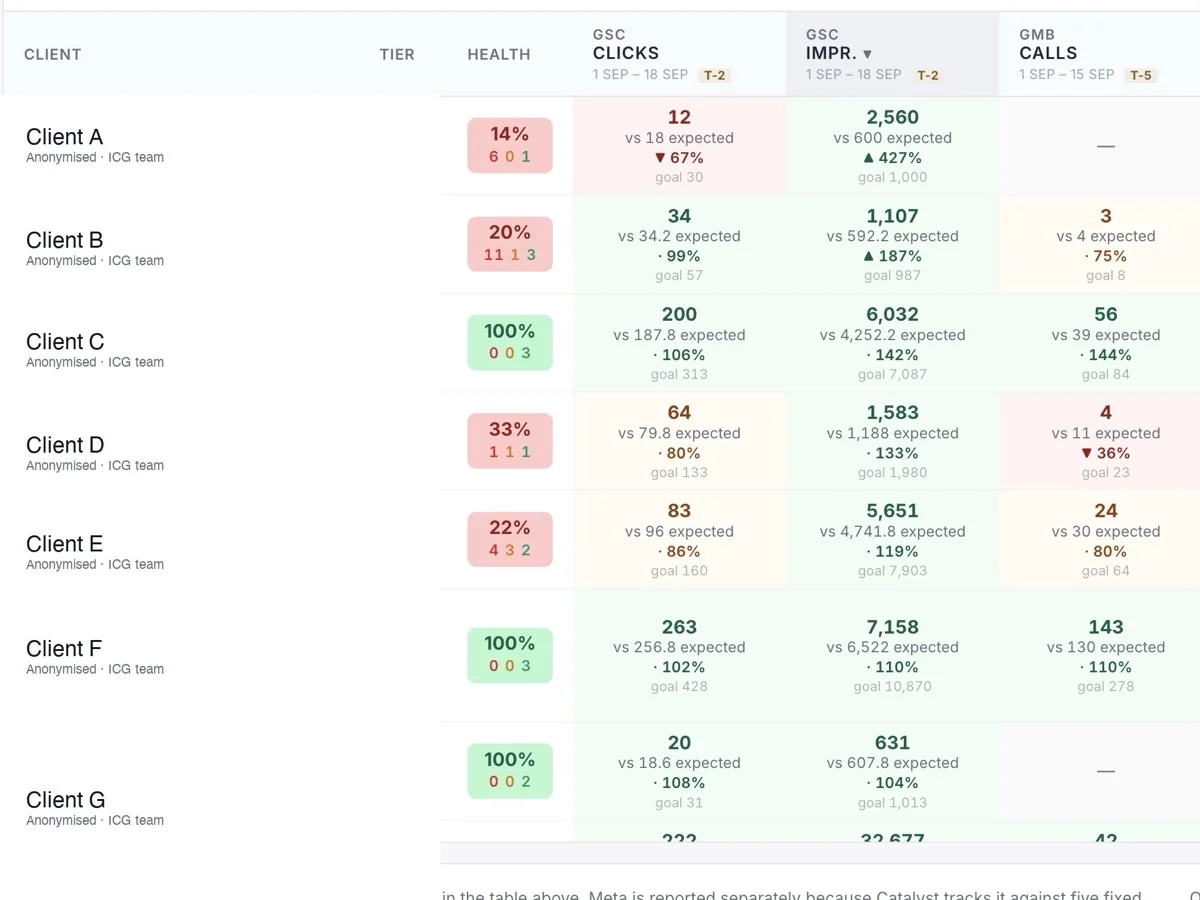
More questions answered
How does the Dallas HQ work for a clinic on the other side of the country?
Dallas is where our US delivery pod sits — Central time zone overlap with every US metro. Client calls happen on Meet or Zoom; reporting is asynchronous; on-site strategy travel is scoped where warranted. Clinics in California, Florida, New York and every other state get the same senior attention as DFW clinics.