


AI Overview Optimization for Cardiology Hospitals in India: 2026 Playbook
How cardiology hospitals in India earn citations in Google's AI Overviews: what Google's own guidance says, which cardiac queries trigger AI answers, the eight signals behind citations, schema, and the NMC and ASCI rules for cardiac content.
No pitch. Written root-cause diagnosis. AI-powered, healthcare only.
Quick answer
What is AI Overview optimization?
AI Overview optimization is the work of making a page easy for Google's AI Overviews to find, trust and cite. Google says no special markup is needed: the page must be indexed and eligible for a snippet, answer the question clearly, offer original value and follow normal SEO practice. For cardiology, that also means safety-first triage wording, a credentialed reviewer and no outcome claims.
Source: Google Search Central: optimizing for generative AI features
Direct answer
How cardiology hospitals in India earn citations in Google's AI Overviews: what Google's own guidance says, which cardiac queries trigger AI answers, the eight signals behind citations, schema, and the NMC and ASCI rules for cardiac content.
TL;DR

AI Overview optimization for cardiology hospitals is the practice of restructuring cardiac-care web content — chest-pain triage explainers, angioplasty vs bypass comparisons, heart-attack first-response guides — so Google's AI Overview panel cites the hospital as a source. Because cardiology is one of the most expensive specialties to advertise, an AIO citation on a symptom or triage query can decide whether a modest digital budget converts or stalls.
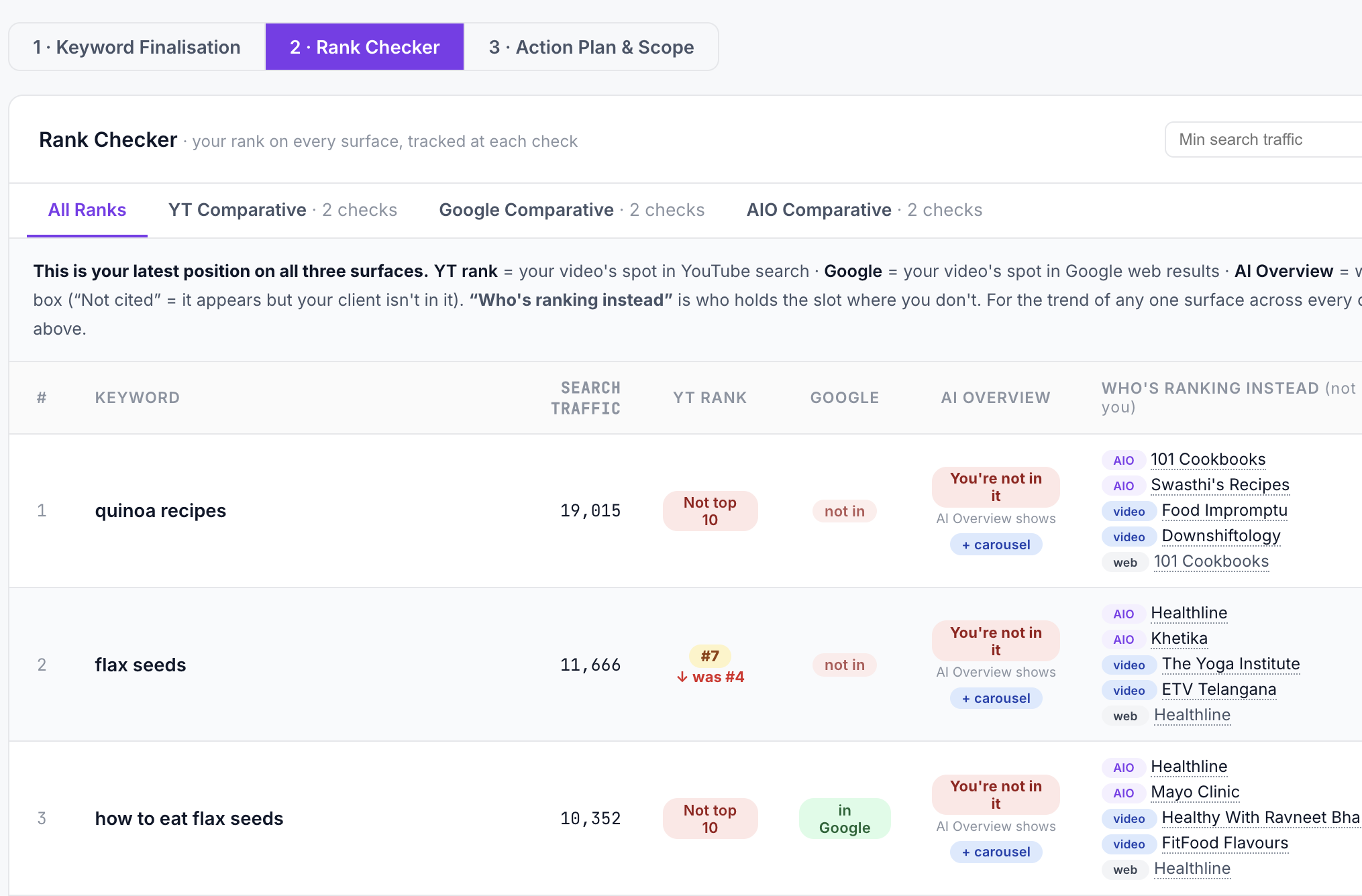
Cardiology is where AI Overview optimization matters most and is hardest to get right. It is one of India's most expensive healthcare clusters on paid media, the queries carry the highest emergency load (chest pain, breathlessness, palpitations), and the compliance perimeter is unforgiving — the NMC's ethics regulations and its October 2026 advertising guidelines restrict what cardiologists and hospitals can claim, ASCI Guidelines 2022 police every superlative, and the DPDP Act 2023 restricts patient outcome storytelling. This post walks through the specific cardiology query patterns that fire AI Overview panels in India, the eight signals we have observed drive citation on cardiac content across the ICG portfolio, the compliance boundary that most hospital marketing teams miss, and the YODA AIO Lab workflow ICG runs weekly for cardiac clients.
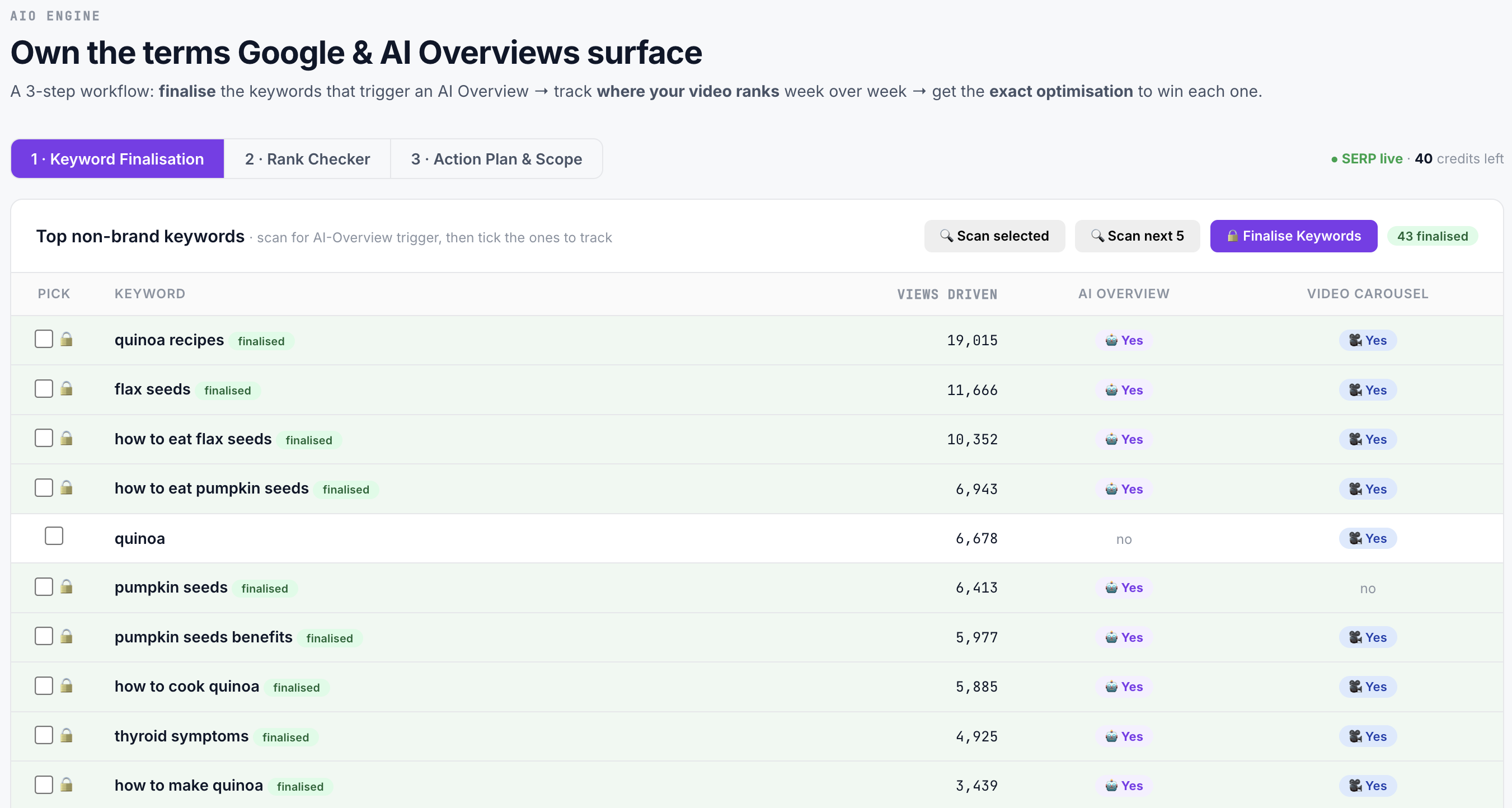
Which cardiology queries actually fire AIO panels in India
Not every cardiac query gets an AI Overview panel. Google decides eligibility per query based on intent, YMYL sensitivity, and answer confidence. From ICG's tracking across 40+ cardiology pages in the portfolio, three query families fire AIO panels most reliably in Indian SERPs today.
First — symptom-recognition queries. "Chest pain left side after eating", "sudden breathlessness at night causes", "palpitations after exercise dangerous". These are the highest-volume cardiac queries in India, they carry genuine emergency-triage stakes, and Google surfaces AIO because a wrong answer has real safety cost. Second — comparison queries. "Angioplasty vs bypass surgery which is better", "stent vs medicine for blocked artery", "single-vessel vs multi-vessel disease treatment". These carry high commercial value because they precede a treatment decision worth Rs 2-8 lakh. Third — cost and access queries. "Angioplasty cost in Delhi", "bypass surgery cost with insurance", "heart attack emergency number India". Cost queries fire AIO less often than symptom queries but when they do, the citation is disproportionately valuable.
The pattern that does not fire AIO reliably is the pure branded query ("Fortis Escorts cardiology", "Medanta heart institute") or the pure booking query ("book cardiologist appointment Bangalore"). AIO tends to defer to organic results on navigational and transactional intent. The AIO opportunity in cardiology is almost entirely informational — the top of the funnel.
The cardiac emergency caveat — safety-first content wins citation
Cardiology carries something no other healthcare specialty carries at this scale: genuine same-hour emergency risk. AIO's trust filter is markedly more conservative on cardiac emergency queries than on, say, dermatology aesthetic queries. Pages that lead with treatment upselling get filtered out. Pages that lead with clear triage guidance — "if the pain is crushing, radiating to left arm or jaw, and lasts more than 15 minutes, call 108 immediately" — get cited.
The pattern ICG uses on every cardiac symptom page: the first paragraph is a definition + safety triage statement, not a marketing hook. The AIO panel quotes it verbatim because it is the safest, cleanest answer to the query. The marketing conversion happens further down the page, after trust is established. Hospital marketing teams that resist this ordering usually stay invisible in AIO for exactly the queries they most want to be seen on.
Eight signals that drive AIO citation for cardiac content in India
The eight-signal checklist ICG runs on every cardiac page before it goes to writers, tuned specifically for the cardiology query mix.
- Safety-first triage opening. For symptom queries, the first paragraph must include the "when to call emergency" guidance. AIO cites pages that put safety before conversion.
- Named cardiologist byline with NMC registration. Person schema with jobTitle "Interventional Cardiologist" or "Cardiac Surgeon", degree (MBBS, MD, DM), memberOf (NMC / CSI membership). Cardiac content without a credentialed byline rarely gets cited.
- MedicalCondition or MedicalProcedure schema. Angioplasty, CABG, valve replacement, ablation — mark up with the correct schema type including bodyLocation and howPerformed properties.
- Definition-first structure. 40-60 word tight definitions for every major cardiac term (STEMI, NSTEMI, angina, arrhythmia). AIO pulls definitions verbatim.
- Recency signal. "Last medically reviewed" date within 12 months. Cardiac guidelines shift (ACC/AHA and ESC update annually) and AIO downweights stale cardiac content aggressively.
- Authority anchoring. Outbound links to Cardiological Society of India, ICMR cardiac guidelines, ACC/AHA if referencing international standards. Cardiac content is heavily citation-dependent.
- NMC and ASCI compliance. No "India's best cardiologist", no "100% success rate on angioplasty", no fabricated before-after imagery. AIO filters superlatives even more strictly on cardiac content.
- Cost transparency for cost queries. If the query is a cost query, the page must give a real range. "Angioplasty in Delhi ranges Rs 1.5-3.5 lakh depending on stent type and hospital tier." AIO does not cite pages that dodge the number.
Signal 8 is the one Indian hospital marketing teams push back on hardest. The instinct is to force the enquiry ("call us for pricing"). AIO reads that as a trust downgrade and does not cite. Give the range, then offer the enquiry for personalised quotes.
The cardiology schema map for AIO citation
Schema.org markup for cardiac content maps to specific query intents. This table shows the schema-to-query mapping ICG uses across cardiac pages in the portfolio.
| Cardiac content type | Query intent | Primary schema | AIO citation lift observed |
|---|---|---|---|
| Symptom explainer (chest pain, breathlessness) | What is / when to worry | MedicalCondition + FAQPage | Very high |
| Procedure explainer (angioplasty, CABG, TAVR) | How does X work / what to expect | MedicalProcedure + HowTo (prep steps) | High |
| Comparison (angioplasty vs bypass) | Which is better / when to choose | FAQPage + comparison tables | High |
| Cost pages (angioplasty cost Delhi) | How much does X cost | MedicalProcedure with cost range in body | Moderate — depends on range clarity |
| Emergency triage (heart attack signs) | What to do if / when to call | MedicalCondition + EmergencyService reference | Very high |
| Doctor profile (Dr X interventional cardiologist) | Doctor credibility + booking | Physician / Person + Hospital | Moderate |
| Hospital cardiac department | Local intent, "cardiac hospital near me" | Hospital + MedicalBusiness + LocalBusiness | Moderate — Angryturtle handles the Maps layer |
FAQPage schema stacks on almost every cardiac content type because so many cardiac queries are question-form. The MedicalProcedure + FAQPage combination on procedure pages typically outperforms either alone by a wide margin in AIO citation rate.
The NMC and ASCI compliance perimeter for cardiac content
Cardiology sits at the tightest end of Indian healthcare compliance because the treatment claims carry the highest stakes. The NMC's Guidelines on Ethical Advertising and Public Communication (6 October 2026) bar success rates, patient counts and superiority claims such as "best" or "No.1" unless independently verifiable — an interventional cardiologist cannot advertise a success rate or claim to be better than a colleague. ASCI Guidelines 2022 prohibit any advertising suggesting one hospital's cardiac outcomes are better than another's without published, peer-reviewed substantiation. The Drugs and Magic Remedies Act restricts certain heart-disease treatment claims outright.
What this means for cardiac AIO content: the language pattern that works is descriptive, not superlative. "The hospital has a 24-hour cath lab and NABH accreditation" works. "The best angioplasty results in Delhi" does not — and AIO's trust filter catches it. "Dr X, DM (Cardiology), registration number Y, leads the interventional team" works. "India's leading cardiac surgeons" does not. The compliance boundary and the AIO citation criteria are the same boundary. Write to one and you satisfy the other.
The five-step cardiac page audit ICG runs for AIO citation
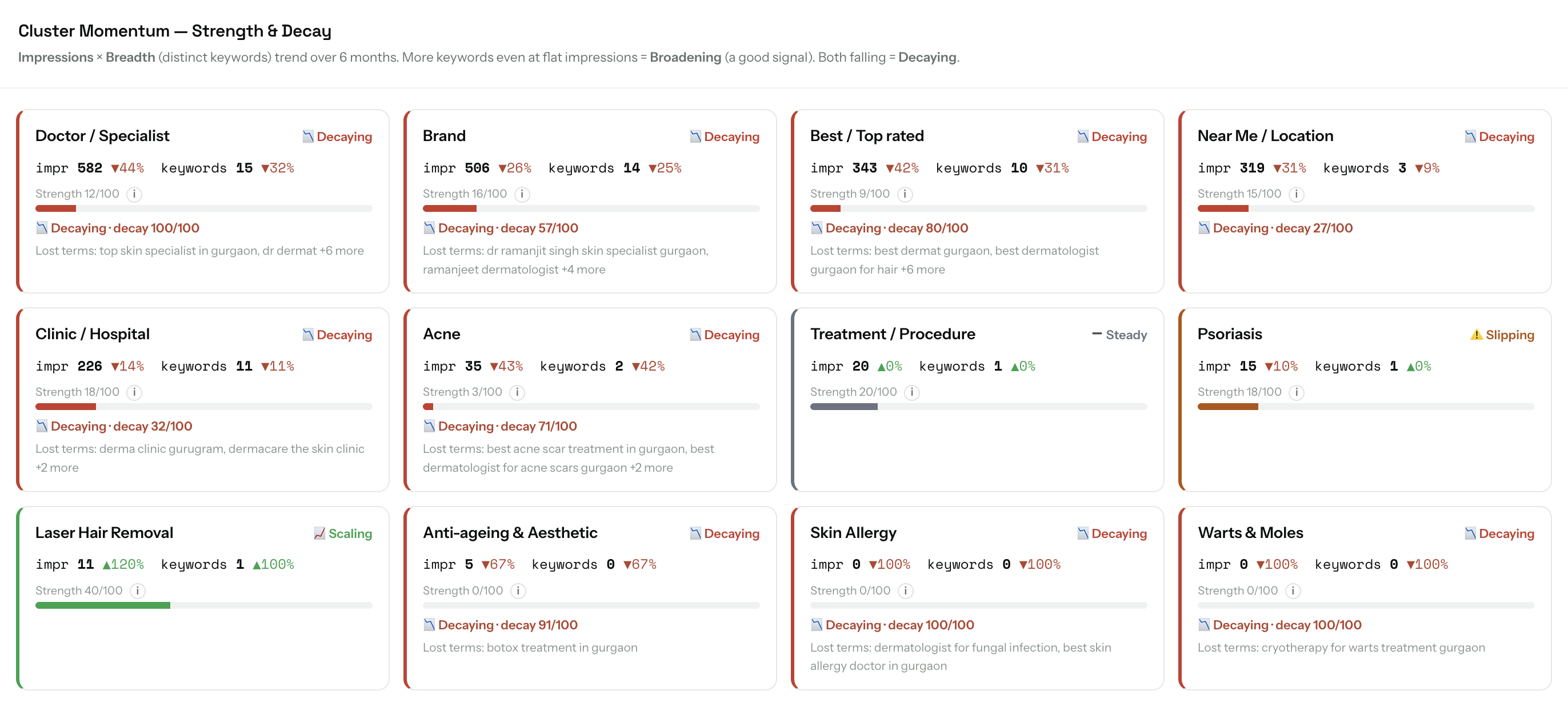
When a cardiology client asks why a specific page is not being cited despite ranking well organically, the audit follows the same shape as the general AIO audit with cardiac-specific checks layered on.
- Query in incognito Indian-IP session and capture the AIO panel. Note which hospital, journal, or consumer-health site is being cited. Cardiac AIO panels lean heavily on Mayo Clinic, WebMD, AHA, and a small handful of Indian hospital chains — identify the reference structure.
- Extract the cited page's cardiac-specific signals. Byline (which cardiologist, what credentials), schema (MedicalProcedure vs MedicalCondition), triage language (does the page open with safety guidance), cost transparency (does it give a range).
- Run the client page through the eight-signal cardiac checklist. Every failed signal is a candidate fix. Prioritise triage opening and named cardiologist byline for symptom pages, cost range clarity for cost pages.
- Rewrite, re-schema, add byline. Push live with a "last medically reviewed" date. For cardiac content the reviewing doctor should be named, credentialed, and ideally the hospital's clinical head or a senior consultant.
- Re-query at 21, 45, and 90 days. Cardiac AIO refresh is slower than general healthcare because YMYL sensitivity is higher. Median time-to-cite in our data is 30-45 days for top-10 organic cardiac pages, longer if the page moves through organic ranks first.
The YODA AIO Lab cardiology workflow
ICG runs a specific cardiology workflow inside YODA's AIO Lab module for cardiac hospital clients. The lab tracks a curated 60-100 query list per cardiac client — chest-pain triage, symptom queries, procedure comparison, cost queries, doctor-name queries — refreshed weekly. Each capture pulls the AIO panel content, cited sources, and diff versus the prior week. When the client's content starts driving citation, the pattern is surfaced so it can be replicated across sister content. When a competitor moves into citation, the diff shows what structural change likely caused it.
The cardiology-specific overlay: YODA's AIO Lab tags every cardiac query with a triage-safety class (informational, symptom-triage, emergency, procedural, cost, doctor-brand). The class determines what the citation criteria weigh most heavily. Emergency-triage queries reward safety-first openings above all. Cost queries reward transparency. Procedural queries reward MedicalProcedure schema. The lab reports citation performance by class, not just by query, so cardiac marketing teams see where their content is winning and where it is not — and, more usefully, why.
YODA's AIO Lab is bundled inside the YODA platform for cardiac hospital clients. The three rank races — YouTube, AIO Lab, and general SERP — run in parallel and feed a single weekly readout.
Powered by YODA, Meta Catalyst IQ, and Angryturtle — the cardiac stack at ICG
Every cardiology engagement at ICG runs on the same three-part stack. YODA — the AI-native healthcare YouTube platform — handles YouTube ranking, AIO Lab tracking, and long-form content workflow across three rank races. Meta Catalyst IQ handles paid Meta media at portfolio scale — 23+ accounts optimised, Rs 9.1Cr+ monthly ad spend. Angryturtle handles Google Business Profile and local search at Rs 999/- per listing self-serve or Rs 3,499+/- managed, with 143+ healthcare listings under active management. PrismSpy — 75+ Indian healthcare brands tracked, 2,150+ active ads catalogued — surfaces every competitor's creative, offer, and hook daily so the cardiac media plan is never blind to what the market is running.
For a cardiology hospital in India spending Rs 40,000-4,00,000 per month on digital, the stack is the entire growth engine. WhatsApp ICG on 918130226224 for a cardiac AIO audit and stack walkthrough — Sr. Leadership and the healthcare team map the current state and the 90-day plan.
What Google says about optimizing for AI Overviews
Google's own guide to its generative AI features in Search (last updated July 2026) is the best starting point, because much of the advice sold as “AIO hacks” contradicts it. The main points:
- SEO still applies. AI Overviews are built on Google's core ranking and quality systems, using retrieval and “query fan-out” across related searches.
- Eligibility is basic. A page must be indexed and eligible to show in Search with a snippet;
nosnippetand similar controls also limit AI features. - Original value wins. Content that only repeats what is already online, or what an AI model could produce on its own, is unlikely to stand out.
- No special files or markup. Google says you do not need an llms.txt file, AI-specific markup, content “chunking” or rewrites for AI. Structured data still helps rich results, but it is not a requirement for AI Overviews.
- Local details come from Business Profiles. For local questions, a complete Google Business Profile feeds the answer.
- Measure in Search Console and be wary of tools that promise AI ranking or claim access to internal Google metrics.
For a cardiology hospital, the practical translation is the eight-signal checklist below: safety-first triage openings, a named and registered cardiologist as reviewer, clear definitions, honest cost ranges and no superiority or outcome claims.
How long should a page be to get cited in AI Overviews?
Depth helps more than length for its own sake, but very short pages rarely get cited. In ICG's study of 2,140 Indian healthcare URLs probed across 24,800 AI Overview checks, pages under 500 words were cited on 4.1% of matched queries, pages of 1,500 to 2,499 words on 19.1%, and pages over 4,000 words on 24.0% (Word Count vs AIO Citation Rate, India Healthcare 2026). For cardiac symptom and procedure pages, aim to answer the question in the first lines and then cover causes, warning signs, options, costs and when to seek emergency care in one complete page rather than several thin ones.
Hospitals in other specialties can use the same approach; see our guides for multi-specialty hospitals and dental clinics.
Related reading
- For how SEO, AEO and GEO fit together for healthcare brands, read our healthcare SEO and AEO guide.
- See our cardiology GP-referral and digital playbook for heart clinics.
FAQ — AI Overview for Indian cardiology
How is cardiology AIO different from other healthcare specialties?
Cardiology carries higher YMYL sensitivity because of same-hour emergency risk. AIO's trust filter is stricter, the citation criteria weigh safety-first content more heavily, and named cardiologist bylines with NMC registration matter more than in lower-stakes specialties like aesthetics. The upside is that a well-structured cardiac page can out-cite much larger hospital chains because AIO rewards structural clarity over pure brand authority.
What is the highest-lift change for a cardiac page that ranks organic top-10 but is not being cited?
Almost always rewriting the opening paragraph as a definition-plus-triage statement rather than a marketing hook. For symptom queries, adding the "when to call 108" line inside the first paragraph moves citation more reliably than any schema change. Schema additions come second — FAQPage on comparison pages and MedicalProcedure on procedure pages.
Does NMC compliance actually affect AIO citation?
Yes, materially. Pages carrying "India's best cardiologist" or "100% success rate" language are downweighted by AIO's trust filter because those signals correlate with lower editorial quality across the wider web. The compliance-clean version of the same page — "our team has performed 800+ angioplasty procedures over 15 years" — cites at a far higher rate.
Should a cardiac hospital publish angioplasty cost transparently on the website?
For AIO citation on cost queries, yes — with a real range and the factors that move the number (stent type, hospital tier, insurance). Pages that dodge the cost question with "call for pricing" do not get cited on cost queries. Publishing a range does not reduce enquiries; in our data it usually increases them because the trust signal offsets the "shopping around" concern.
How long before a new cardiac page starts appearing in AIO?
Median 30-45 days if the page reaches organic top-10 for the target query within its first 30 days. Cardiac AIO refresh is slower than general healthcare because the YMYL trust filter takes longer to build confidence in a new source. If the page never breaks organic top-10, AIO citation is very unlikely.
Does a solo cardiologist's personal-brand page have any chance against Apollo or Fortis in AIO?
Yes, on informational queries. AIO citation is not brand-weighted the way organic sometimes is. A well-credentialed solo cardiologist with definition-first content, MedicalProcedure schema, and NMC-registered byline can and does out-cite hospital chain pages on symptom and procedure explainer queries. Local queries and cost queries lean more toward the hospital chains because of NAP and volume signals.
How do we track cardiac AIO performance week-over-week?
Google Search Console does not report AIO citations distinctly. Practical tracking is a scripted incognito-capture on a curated 60-100 query cardiac list refreshed weekly. YODA's AIO Lab does exactly this for cardiac clients in the ICG portfolio, tagged by triage-safety class so the weekly readout separates emergency-triage citation from procedural and cost citation.
Related reading
- How to appear in Google AI Overview for healthcare queries in India
- AI Overview optimization for multi-specialty hospitals in India
- FAQPage schema for healthcare AIO — implementation guide
- HowTo schema for healthcare AIO — implementation guide
- Definition-first content structure — the AIO citation pattern
Reference frameworks — the National Medical Commission for practitioner conduct and cardiac advertising ethics, and the Advertising Standards Council of India for healthcare superlative and comparative-claim restrictions. For Google's own guidance on AI Overview and Search Generative Experience, see the Google Search generative AI blog.
Book a free 30-minute Brand & Growth Diagnostic.
It's a working session, not a sales pitch — you leave with a written root-cause analysis you can act on, whether or not you engage ICG.
The three platforms
behind every ICG engagement.
Beacon
CAPI middleware that fixes Event Match Quality, translates CRM statuses to Meta-standard events, dedups across channels.
Agency OS
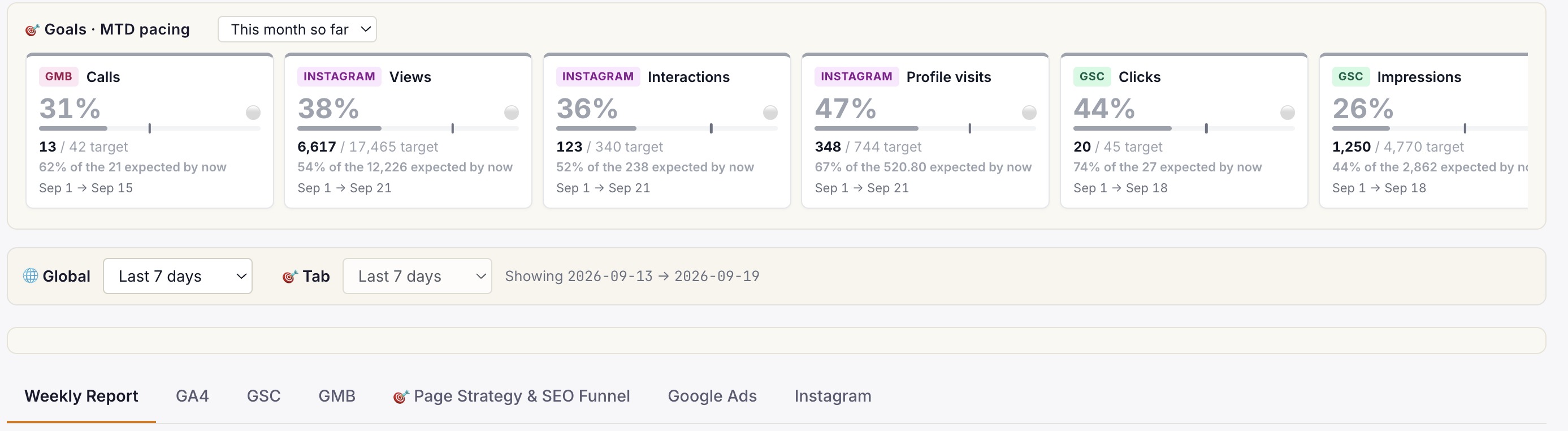
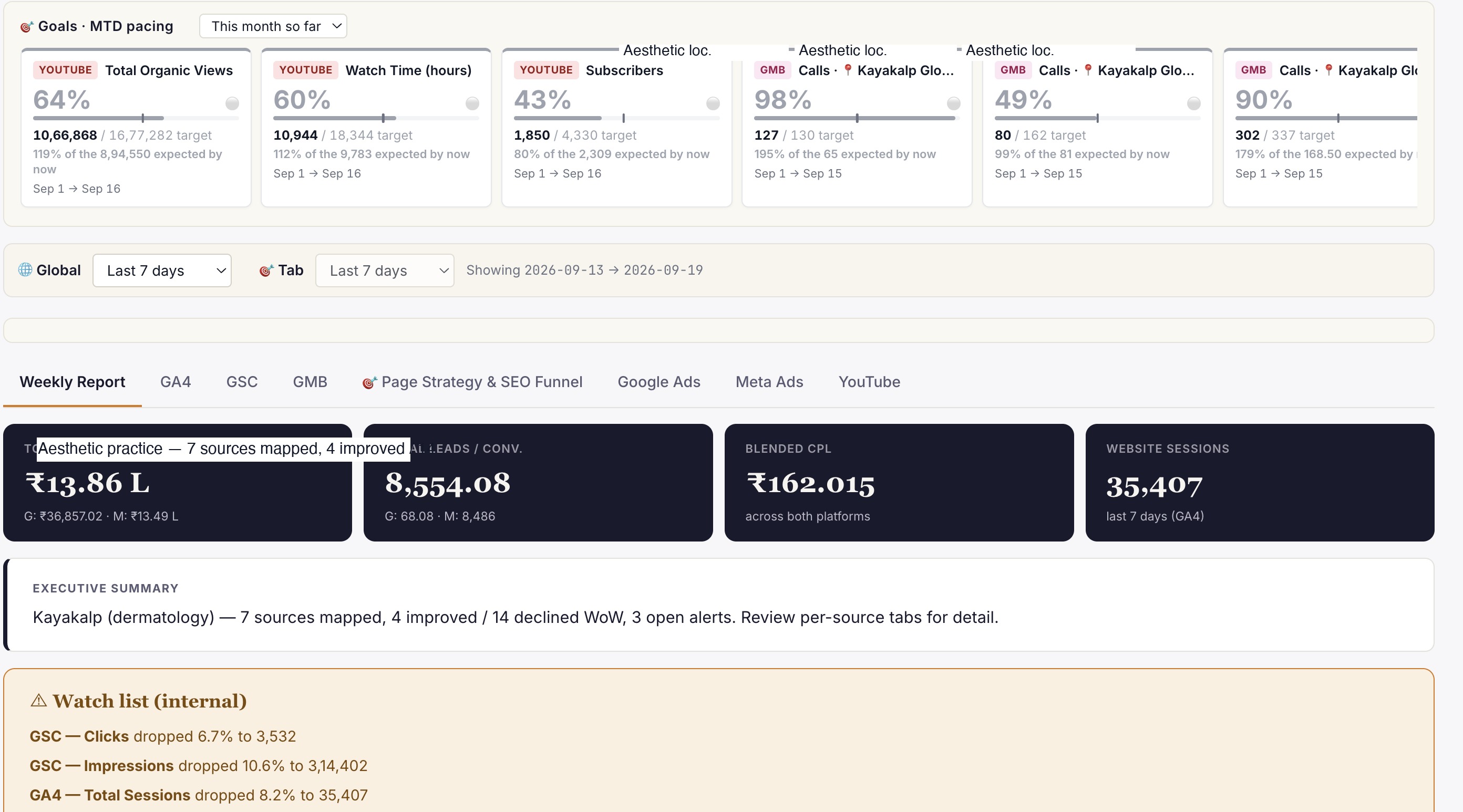
Live client dashboard. GSC, GA4, Google Ads, Meta Ads, IVR calls in one view. Login anytime, not monthly.
Phoenix
Clinic revenue intelligence over your PMS. Daily action queue: Prevent Loss, Maintain & Engage, Grow Revenue. Multi-centre rollout.
Or book a free 30-min audit to see all three in action on your account.
Healthcare brands
that already run on ICG.
A representative slice of the 150+ healthcare brands ICG has delivered for across India. Most engagements remain under NDA.


What ICG clients say · on video.
"Mental health marketing requires a different sensitivity. ICG built compliance-aware campaigns that respect both patients and our..."
"Bariatric surgery patients need a long consideration cycle. ICG built a content + paid system that respects that timeline."
"Working with ICG felt like working with an in-house growth team that happens to specialise in healthcare."
The intelligence stack behind this playbook.
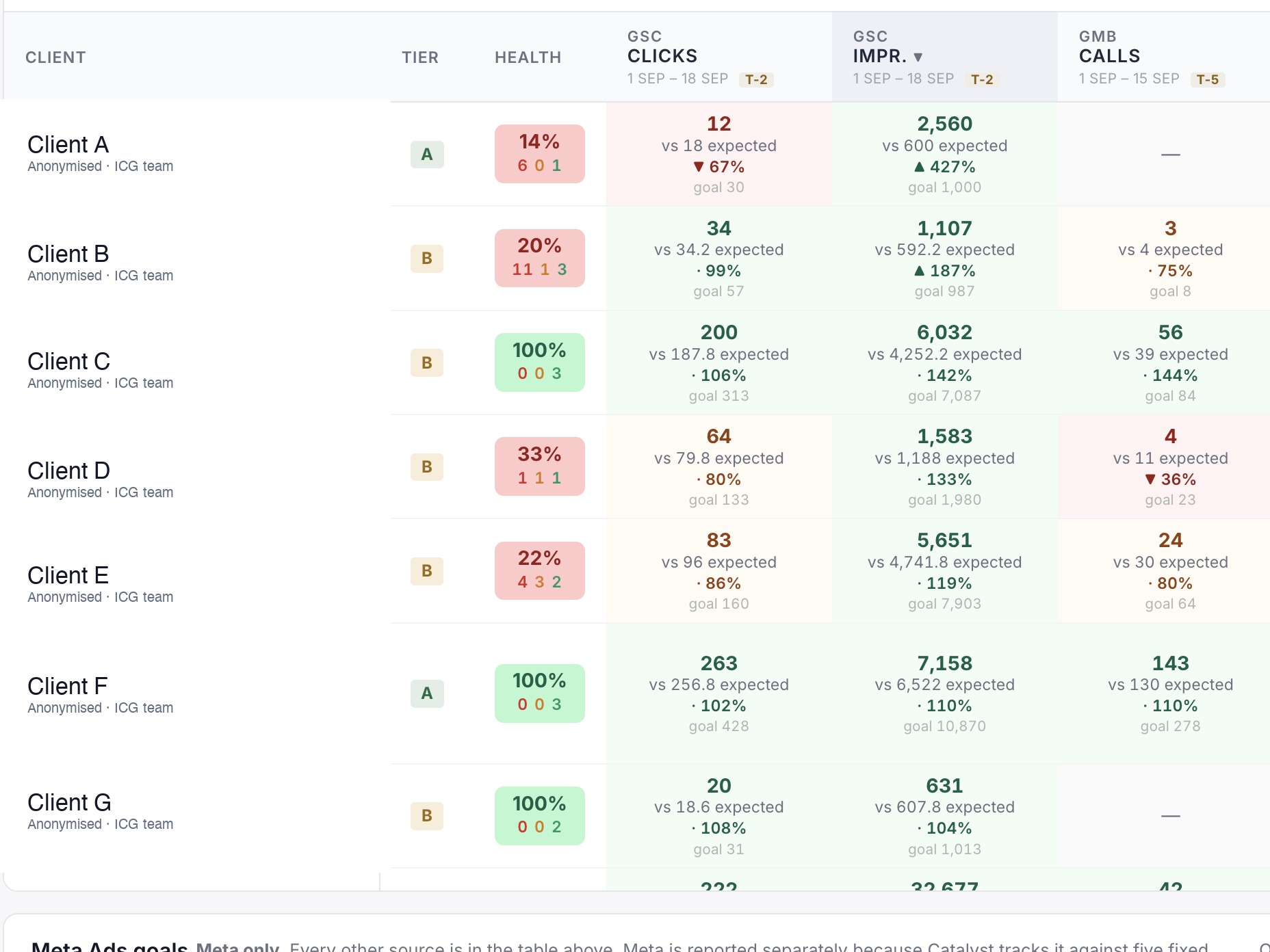
Every ICG engagement runs on the Search Intelligence Trifecta — Angryturtle for GMB, SIE for search and AI Overview, YODA for YouTube. Live product screens below.
Need help operationalising this?
Every ICG service is healthcare-only, NMC + DPDP-aware, and built around the patient-research patterns that drive Indian healthcare growth in 2026.
Every practice welcome — packages from ₹20,000/mo.
Goals-Driven engagements · Performance-Linked Payout Models available
More from
ICG.
Five trends shaping Indian healthcare marketing through 2027: AI-first patient research, Conversions API adoption, ABDM discovery, the AEO w...
Healthcare AIO is the discipline of getting your clinic or hospital cited inside Google AI Overviews, ChatGPT and Perplexity answers — not j...
Conversational-search advertising places brand messages inside AI chat answers — ChatGPT, Perplexity, Copilot — rather than beside a results...
Stop guessing.
Book a Diagnostic.
30 minutes. Free. With the AI-powered healthcare-only marketing agency 150+ brands already run on. No slides, no pitch, no hard close.


