


Cardiology Marketing: GP Referral + Digital Hybrid
Cardiology is one of the few specialties in India where digital marketing alone is not sufficient — and where B2B referral network development is equally critical. Between 60% and 70% of cardiac patients at a non-emergency cardiology clinic arrive through GP or internist referral...
No pitch. Written root-cause diagnosis. AI-powered, healthcare only.
Quick answer
What does a cardiology practice digital marketing agency in India do?
A cardiology digital marketing agency in India builds both routes by which cardiac patients arrive: GP and physician referrals, and patients searching on their own. In practice that means a referral-tracking system, Google Ads and SEO for consultation searches, second-opinion content, a well-run Google Business Profile for the cardiac department, and cardiologist-led educational video, all within the 2026 NMC advertising guidelines.
Direct answer
Cardiology is one of the few specialties in India where digital marketing alone is not sufficient — and where B2B referral network development is equally critical. Between 60% and 70% of cardiac patients at a non-emergency cardiology clinic arrive through GP or internist referral...
TL;DR
Cardiology is one of the few specialties in India where digital marketing alone is not sufficient — and where B2B referral network development is equally critical. Between 60% and 70% of cardiac patients at a non-emergency cardiology clinic arrive through GP or internist referral. Digital marketing reaches the remainder — patients self-researching after symptoms, patients seeking a second opinion, patients relocating to a new city and seeking an established cardiologist.
A cardiology marketing strategy that neglects either track — the B2B referral network or the B2C digital presence — will underperform. ICG's hybrid framework builds both simultaneously.
The B2B Referral Track: Building a GP Network
Why GPs refer: A GP refers a cardiac patient to a cardiologist when (a) the patient needs investigation or treatment beyond the GP's scope, and (b) the GP is confident the cardiologist will provide excellent care and return the patient to the GP for continued management. The referral relationship is a trust relationship, not a transactional one.
What ICG does to build GP referral networks:
Regular CME/academic engagement: ICG organises and promotes CME sessions — either hosted by the cardiologist or sponsored through a verified medical association — where GPs receive genuine clinical education. The cardiologist presents as a peer and educator, not as a service provider. These sessions build the relationships that generate referrals.
Compliance note: Under UCPMP 2024, CME hospitality must be modest and the event must be a genuine educational programme through a bona fide association. ICG structures all CME support for cardiology clients within this framework.
Referral feedback loop: When a GP refers a patient, the cardiologist's team must send a detailed consultation summary back to the referring GP — promptly, by WhatsApp or email. This is the professional courtesy that sustains referral relationships. It signals that the cardiologist respects the GP's relationship with the patient and will not capture the patient permanently. ICG builds WhatsApp templates for referral feedback as part of every cardiology engagement.
Targeted GP outreach: ICG maps the GP ecosystem within a 5-15 km radius of the cardiology clinic and builds a structured outreach programme — introduction calls, personalised mailers, invitation to CME sessions. The aim is 50-80 GP referral relationships within 12 months for a single-centre practice.
The B2C Digital Track: Compliance-First
Schedule J lists heart disease and high/low blood pressure. This means:
- No advertisement claiming to "treat heart disease" is permissible
- No before-and-after cardiac outcomes content
- No success rate claims for cardiac interventions
What IS permitted for cardiology digital marketing:
- Educational content about heart health, risk factors, symptoms
- Doctor authority content (credentials, institutional affiliations, published research)
- Service-framed ads: "Cardiologist consultation — Dr [Name], [Hospital]"
- Awareness campaigns about cardiac screening (permissible educational content)
Google Ads for cardiology: Focus on consultation-intent keywords: "cardiologist [city]", "heart specialist [city]", "second opinion cardiologist [city]", "cardiac screening [city]". Avoid any copy that implies treatment of a specific condition.
SEO for cardiology: Educational content strategy — "what does a cardiologist do", "when to see a cardiologist", "heart health check-up India", "what is an echocardiogram" — that positions the clinic as a trusted educational resource before the patient has a specific treatment need.
YouTube for cardiology: The cardiologist as an educator. Videos on cardiac risk factors, understanding ECG reports, heart-healthy lifestyle, managing hypertension (general wellness framing, not Schedule J treatment claim). These videos reach the 40-65 year male demographic that is the primary cardiac patient cohort.
Insurance Empanelment and CGHS: A Marketing Angle
A significant proportion of cardiac patients — particularly in government employment, defence services, and PSU backgrounds — use CGHS (Central Government Health Scheme) or employer insurance. For cardiac hospitals and cardiologists working in networked hospitals, CGHS and private insurance empanelment is both a service offering and a marketing channel.
ICG's recommendation: make insurance empanelment status visible and prominent on all digital channels. A cardiologist's website should clearly list: which insurance panels they participate in, whether they accept CGHS, and the process for submitting insurance claims. Patients who can use insurance are higher-conversion prospects than those who must pay out of pocket.
CPQL Benchmarks for Cardiology
ICG benchmark CPQL for cardiology: ₹1,650 (per qualified consultation). Market median: approximately ₹2,800-₹3,200 (cardiology is a high-CPQL specialty due to the dominance of referral traffic, which makes attributing digital CPQL accurately more challenging).
Individual results vary by city, competition density, and whether the practice is a standalone clinic or operates within a hospital network.
Building the Hybrid Cardiology Programme: Year 1 Roadmap
Months 1-3:
- GP referral database: identify 100+ GPs within catchment area
- CME programme: plan and execute 2 CME sessions (cardiologist as faculty)
- Referral feedback protocol: WhatsApp template + team training
- Digital: Google Ads live (consultation intent keywords), website educational content first 8 articles
Months 4-6:
- GP referral programme: 30-50 GPs in active engagement
- 2 CME sessions per quarter
- YouTube: 4 educational videos live
- Digital: SEO beginning to show organic traffic growth
- Insurance empanelment: verify and promote on website
Months 7-12:
- GP referral programme: target 60-80 active referral relationships
- YouTube: 12+ videos, subscriber growth beginning
- Digital: CPQL trending toward ICG benchmark
- CGHS/insurance content live on website
ICG works with cardiology clients — both independent cardiologists and hospital cardiac departments — on long-term engagements.
What to expect from a cardiology digital marketing agency
Most agencies sell cardiology the same package they sell a dental clinic: a website, some posts and a Google Ads account. Cardiology needs more because referrals drive most non-emergency volume and because patients search differently after a diagnosis. When you brief an agency, check that it will cover:
- Referral tracking. A simple record of which GPs and physicians refer, how many patients each sends, and a feedback loop back to them after the consult. Without it you cannot tell whether digital work is adding patients or just relabelling referrals.
- Consultation-intent search. Google Ads and SEO for searches such as "cardiologist near me", "echo test cost" or "TMT test" in your catchment, with call tracking so enquiries are counted.
- Second-opinion content. Plain explanations of angiography reports, ejection fraction, stents versus bypass surgery, written or reviewed by a named cardiologist.
- The cardiac department's Google profile. Correct categories, procedure listings, timings and review replies that never confirm a patient's condition.
- Compliance. Under the NMC's 2026 advertising guidelines there are no testimonials, no before-and-after claims, no "best" or "No. 1" language and no payments linked to individual patient referrals. An agency that cannot explain these rules is a risk to the practice.
For the wider channel plan and budget guidance, our cardiology marketing guide 2026 covers the full picture; this article stays focused on the referral-plus-digital model.
Cardiology numbers to plan with
Cardiology costs more per qualified lead than most specialties, and patients take time to decide. These are the figures we plan cardiology OPD campaigns against:
| Cardiology (OPD), 9 engagements, Q2 2026 | Figure |
|---|---|
| ICG median cost per qualified lead | ₹1,650 |
| Market median cost per qualified lead | ₹2,800 |
| Enquiries attending a consultation | 55% |
| Median days from first contact to consultation | 14 |
| Consultations converting to a procedure | 65% |
Our cardiology research adds two useful facts. Across 812 cardiology videos, median viewer retention was 61%, about ten points above the healthcare average, because people watch to the end when they face a real decision. And on the cardiac sites we track, 34 to 42% of organic visits came from second-opinion searches. Both point the same way: answer the questions patients ask after a diagnosis, on video and on the website, and the GP referral network is supported rather than replaced.
Sources: ICG Healthcare CPQL Benchmark Database India 2026; Cardiology & Hospital Digital Performance Report India 2026.
Marketing tools for a cardiology practice
You do not need a large software stack. Five tools cover most of the hybrid model:
- A referral and enquiry CRM that logs the source of every patient (GP, search, ads, walk-in) and sends WhatsApp follow-ups with consent. See our comparison of healthcare CRM software in India.
- Call tracking on the website and ads, so phone enquiries are counted against the channel that produced them.
- A Google Business Profile manager for posts, photos and review replies across branches.
- A video plan: one short educational video a week from the cardiologist, answering one question, with the source of any AI-assisted material disclosed.
- A monthly report that puts referrals and digital enquiries side by side, so the practice can see both tracks.
If you want a partner to run this, see our cardiology marketing page or the hospital marketing agency page for cardiac departments inside multi-specialty hospitals.
Related reading
- For the broader cardiology marketing guide (channels, compliance, CPQL), see cardiology marketing guide 2026.
Read next on ICG
Book a free 30-minute Brand & Growth Diagnostic.
It's a working session, not a sales pitch — you leave with a written root-cause analysis you can act on, whether or not you engage ICG.
Questions readers ask
about this topic.
The three platforms
behind every ICG engagement.
Beacon
CAPI middleware that fixes Event Match Quality, translates CRM statuses to Meta-standard events, dedups across channels.
Agency OS
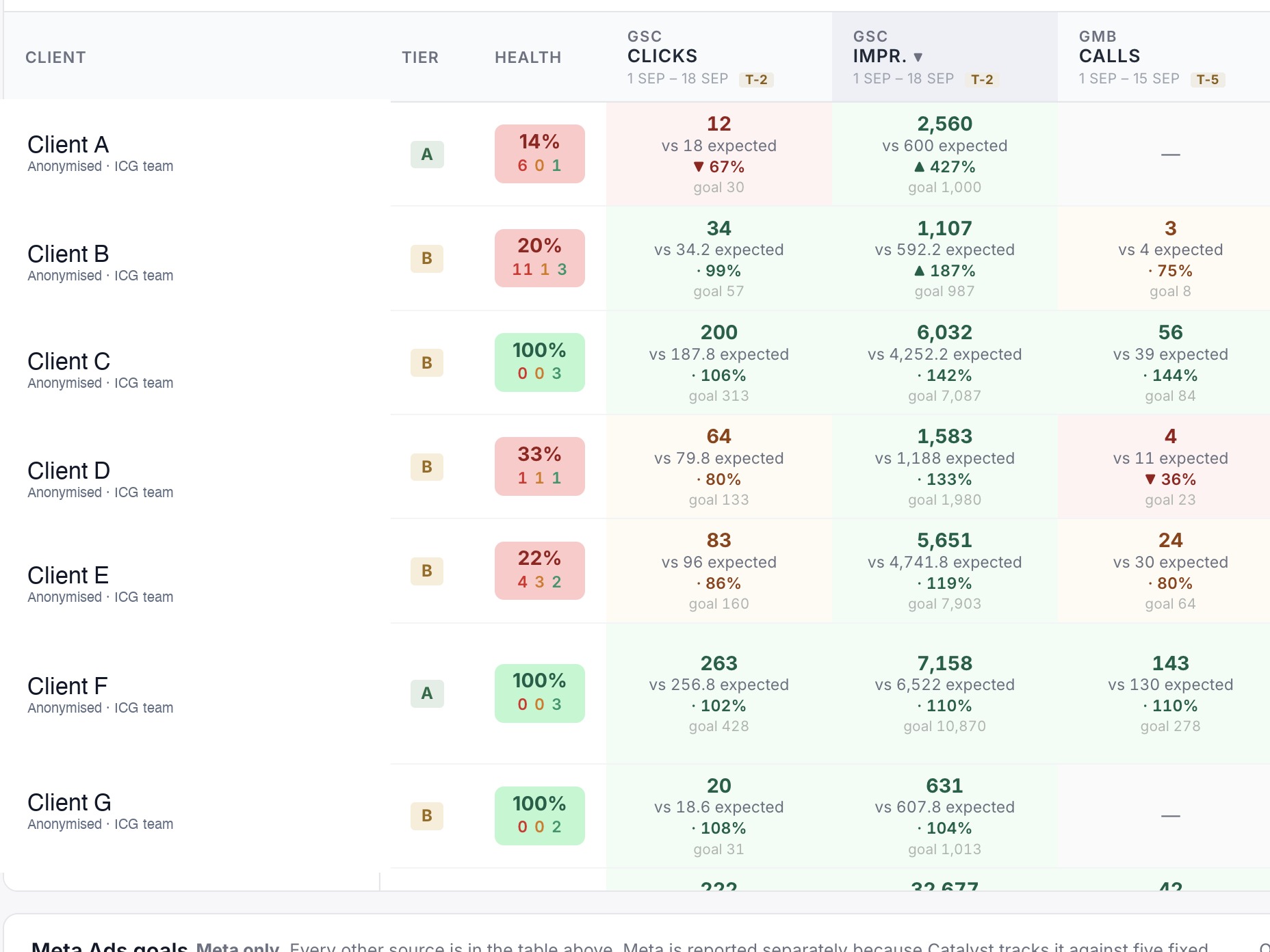
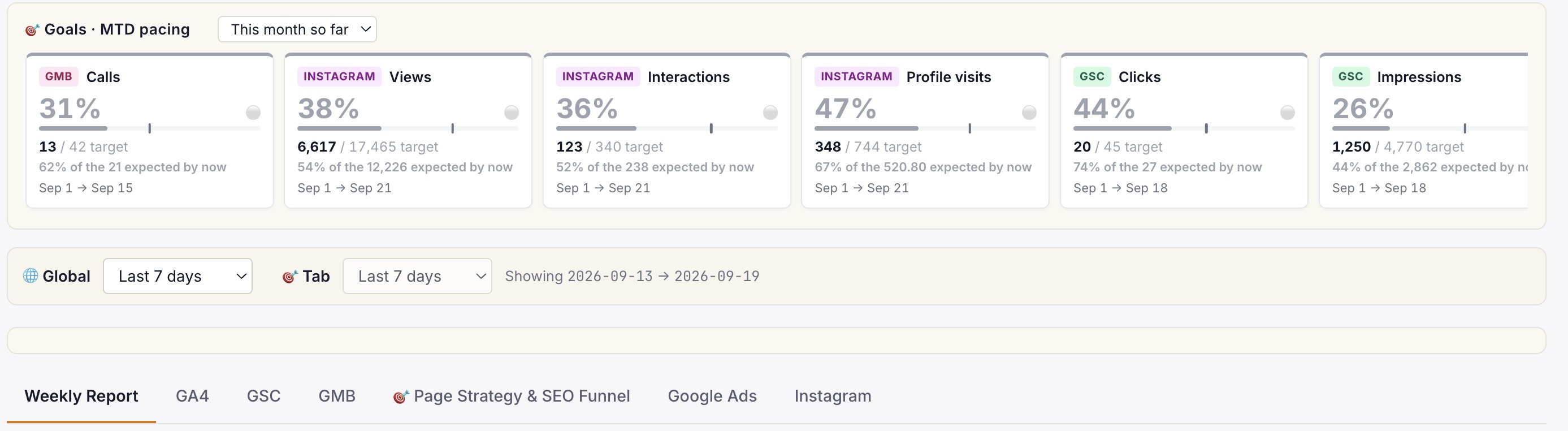
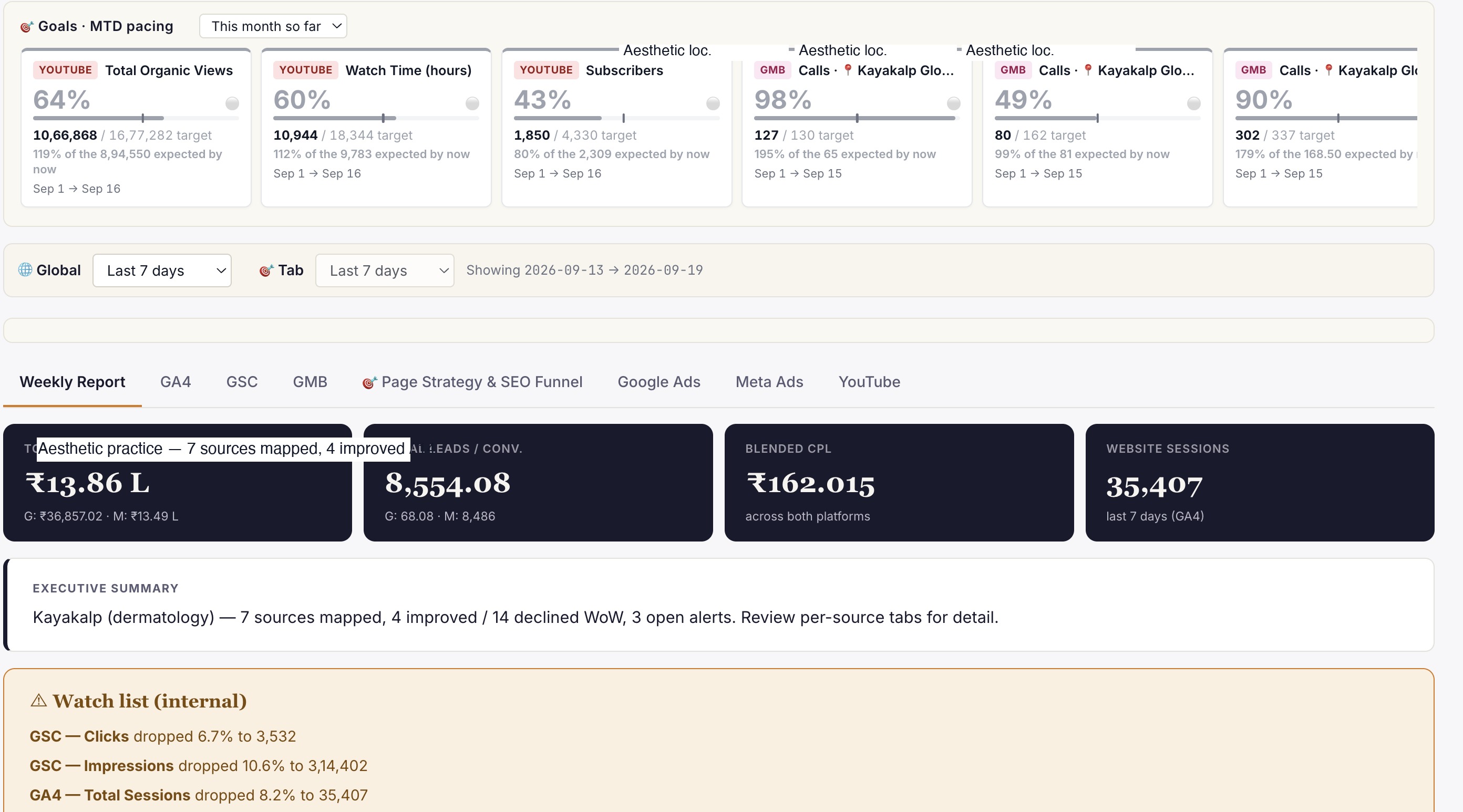
Live client dashboard. GSC, GA4, Google Ads, Meta Ads, IVR calls in one view. Login anytime, not monthly.
Phoenix
Clinic revenue intelligence over your PMS. Daily action queue: Prevent Loss, Maintain & Engage, Grow Revenue. Multi-centre rollout.
Or book a free 30-min audit to see all three in action on your account.
Healthcare brands
that already run on ICG.
A representative slice of the 150+ healthcare brands ICG has delivered for across India. Most engagements remain under NDA.


What ICG clients say · on video.
"They were able to get all my ideas and work with me over a period of three to four months and create this amazing website. I would..."
Need help operationalising this?
Every ICG service is healthcare-only, NMC + DPDP-aware, and built around the patient-research patterns that drive Indian healthcare growth in 2026.
Every practice welcome — packages from ₹20,000/mo.
Goals-Driven engagements · Performance-Linked Payout Models available
More from
ICG.
Five trends shaping Indian healthcare marketing through 2027: AI-first patient research, Conversions API adoption, ABDM discovery, the AEO w...
Healthcare AIO is the discipline of getting your clinic or hospital cited inside Google AI Overviews, ChatGPT and Perplexity answers — not j...
Conversational-search advertising places brand messages inside AI chat answers — ChatGPT, Perplexity, Copilot — rather than beside a results...
Stop guessing.
Book a Diagnostic.
30 minutes. Free. With the AI-powered healthcare-only marketing agency 150+ brands already run on. No slides, no pitch, no hard close.


