


How to appear in Google AI Overview for healthcare queries in India — the 2026 playbook for hospitals, clinics and DTC health brands
Google AI Overview is now the answer surface for a growing share of Indian healthcare searches. Here is the mechanism, the eight ranking signals, and the five-step page audit ICG runs to earn citation.
No pitch. Written root-cause diagnosis. AI-powered, healthcare only.
Direct answer
Google AI Overview is now the answer surface for a growing share of Indian healthcare searches. Here is the mechanism, the eight ranking signals, and the five-step page audit ICG runs to earn citation.
TL;DR

Google AI Overview is a generative answer panel that appears above the traditional blue links, synthesising 3 to 8 web sources into a single paragraph-style response with inline citations. For Indian healthcare queries, appearing in AI Overview means being one of those cited sources — the panel quotes your page, names your brand, and links back. Earning that citation is not the same as ranking #1 in classic organic; it is a separate, definition-first, schema-heavy, entity-aware optimisation problem.
Indian healthcare marketing teams have spent the last decade optimising for classic organic — meta titles, backlinks, keyword density, page speed. Most of that work still matters. What has changed since AI Overview rolled into Indian SERPs through late 2025 and 2026 is that a rising share of high-intent healthcare queries — IVF success rate at age 38, root canal cost Delhi, PCOS symptoms and treatment — now resolve inside the AI Overview panel before the user ever scrolls to the first organic result. If your page ranks organic position 3 but never gets cited in the AIO panel above it, you are losing the click. This post walks through the mechanism of AIO citation for healthcare queries, the eight signals we have observed drive citation across 40+ healthcare pages in the ICG portfolio, and the exact five-step page-level audit ICG runs when a client asks "why aren't we in the AI Overview for X?"
What Google AI Overview actually is (and is not)
AI Overview is Google's implementation of retrieval-augmented generation on top of its own web index. When a query fires, Google's system decides whether the query is AIO-eligible (informational, comparison, definition, or how-to intents are far more likely than pure navigational or transactional). If eligible, the system retrieves a subset of ranking-eligible pages, passes them into an LLM (a variant of Gemini tuned for search), and generates a synthesised answer with inline citation links back to a curated subset of the retrieved sources. The user sees a paragraph or two, sometimes with a bulleted breakdown, and 3 to 8 named source citations they can click.
What AI Overview is not: it is not a separate ranking. Google does not run a parallel index for AIO. The pool of eligible sources is drawn from your existing organic ranking pool. But the selection criteria for which of those eligible pages gets cited is not the same as classic organic ranking. Classic organic rewards backlink authority, topical relevance, and user signals. AIO citation rewards a much more specific set of structural and semantic signals — definition-first content, entity clarity, schema.org markup that maps to the query type, and a writing style that yields clean pull-quotes to the LLM.
Why healthcare is a hard AIO vertical in India
Healthcare in India is a YMYL (Your Money or Your Life) category by Google's own quality guidelines, and AIO applies additional caution to YMYL categories. Two things follow. First, AIO panels for Indian healthcare queries lean more heavily on institutional and expert sources — government sites (mohfw.gov.in, nmc.org.in), the NHS, Mayo Clinic, WebMD, and a small handful of large Indian hospital groups. Second, when AIO does cite a smaller brand or clinic page, it is almost always because that page has done something structurally superior — clearer definitions, cleaner schema, better named-author credentials, or a specific data table the panel needed to answer the query.
The second constraint that shapes Indian healthcare AIO is compliance. NMC's 2026 advertising guidelines forbids doctors from making certain performance claims. ASCI Guidelines 2022 forbid superlatives without substantiation. DPDP Act 2023 constrains what patient data pages can display. AIO respects the compliance boundary because the underlying pages must; a page making an ASCI-violating claim ("India's best IVF clinic") is unlikely to get cited because the LLM detects the unsubstantiated superlative and downgrades the trust signal.
Eight ranking signals that drive AIO citation for healthcare pages
Across the ICG portfolio and audits of the top-cited pages in Indian healthcare AIO panels, eight signals recur so consistently that they now form the base checklist we run before every content brief goes to writers.
- Definition-first opening. The first paragraph of the page is a 40-60 word tight definition of the topic, ideally bolded. AIO panels quote definitions verbatim.
- Entity clarity. The page names the specific medical condition, procedure, drug, or specialty using its canonical name (matching Wikidata / MeSH / SNOMED) rather than a colloquial variant.
- Named-author byline with credentials. Person schema with jobTitle, degree, memberOf (MCI registration for doctors) — AIO rewards E-E-A-T signals more heavily on YMYL.
- Schema.org markup that maps to the query type. MedicalCondition, MedicalProcedure, Drug, Hospital, Physician, FAQPage, HowTo — matched to the query intent.
- Structured pull-quotes. Short, self-contained factual statements that can be quoted without additional context. Tables and numbered lists convert well.
- Recency signal. A visible "last reviewed" date or a datePublished / dateModified schema field within the last 12 months. AIO downweights stale medical content aggressively.
- Source anchoring. At least one outbound link to a Tier-1 authority (mohfw.gov.in, WHO, NIH, PubMed, NMC, ICMR, or a recognised journal).
- Absence of ASCI red flags. No "best", "leading", "#1", "100% success rate" — AIO's trust filter downgrades pages carrying unsubstantiated superlatives.
The eighth signal is often the invisible one. Healthcare marketing teams new to AIO frequently over-optimise for the first seven and undo it by leaving ASCI-violating language in the H1 or lede. The trust filter catches it and the page never surfaces in the panel.
Schema types and their AIO citation lift for healthcare queries
Not every schema type carries equal weight in AIO. From ICG's tracked pages, this is the observed pattern of schema-to-citation-lift for Indian healthcare queries as of Q2 2026:
| Schema type | Query intent it maps to | Observed AIO citation lift | Common misuse |
|---|---|---|---|
| FAQPage | Question-form queries (what, how, why) | Very high — 40-60% of AIO panels cite FAQPage-marked pages when available | Marking marketing FAQs (pricing, offer) as FAQPage — trust downgrade |
| HowTo | Procedural queries (how to prepare for, how to book) | High — 25-35% lift when the page is the clearest step-list | Marking non-procedural content as HowTo |
| MedicalCondition | Symptom / condition definition queries | High for definition queries | Combining marketing copy with clinical schema |
| MedicalProcedure | Procedure explainer queries (IVF, root canal) | High | Missing required properties (bodyLocation, howPerformed) |
| Physician / Person | Doctor-name queries, expert credibility signals | Moderate — critical for author bylines | Missing sameAs to LinkedIn / NMC registration |
| Hospital / MedicalBusiness | Local queries, chain / branch queries | Moderate | Duplicating LocalBusiness across branches without differentiation |
| VideoObject | Explainer / how-to video content | Rising — YouTube-hosted videos with transcript get pulled into AIO video previews | Missing transcript, missing thumbnailUrl |
| Speakable | Voice-search / Assistant queries | Emerging — small but growing footprint on Nest / Assistant surfaces | Marking entire article speakable instead of specific answer paragraphs |
FAQPage remains the single highest-lift schema type for healthcare AIO in India because so many high-intent healthcare queries are question-form ("what is the success rate of IVF at age 38", "how much does root canal cost in Delhi", "when should I see a dermatologist for acne"). Any page that already ranks organic top-10 for a question query and does not have FAQPage schema is leaving citation on the table.
The definition-first content pattern — how to write the opening paragraph
The single highest-leverage change ICG makes to healthcare pages when optimising for AIO is rewriting the opening paragraph as a strict definition. The pattern: 40 to 60 words, bolded, containing (1) the topic named at its canonical entity, (2) its category, (3) the mechanism or key attribute, and (4) the primary use case or context. No marketing language, no CTA, no throat-clearing.
Weak opening (organic-optimised, AIO-invisible): "Looking for the best IVF clinic in Delhi? We have helped thousands of couples achieve parenthood with our world-class treatment options. Read on to learn why our clinic is the top choice for fertility care."
Strong opening (AIO-optimised): "IVF, or in vitro fertilisation, is an assisted reproductive technology in which eggs are retrieved from the ovaries and fertilised with sperm in a laboratory. The resulting embryos are cultured for 3 to 5 days and transferred back to the uterus. In India, average IVF success rates range from 30 to 50 percent per cycle, varying by age, protocol, and clinic quality."
The second opening reads flat to a marketing manager and sings to a retrieval LLM. It gives the AIO panel a clean, self-contained pull-quote it can use verbatim. That is the entire point.
The five-step AIO audit ICG runs on any healthcare page
When a client asks why a specific page is not being cited in AIO despite ranking well organically, ICG runs a five-step audit before proposing changes.
- Query the page in an incognito Indian-IP session and screenshot the AIO panel. Identify which sources ARE being cited. This tells you what the panel considers a "good answer" for this query today.
- Extract the definition paragraph, byline, schema, and outbound links from each cited source. Look for the common pattern — nine times out of ten, the cited sources share a structural signature the client's page is missing.
- Run the client page through the eight-signal checklist above. Every signal that fails is a candidate fix. Rank by likely impact (definition-first opening and FAQPage schema are usually the top two).
- Rewrite and re-schema. Apply the definition-first opening, add or clean schema, add or clean the byline, add a recency signal, remove ASCI red flags. Push live.
- Wait 14 to 45 days, then re-query. AIO refresh is not instant. In our data the median time-to-cite after a definition-first rewrite is 21 days for existing top-10 pages and 45-60 days for pages ranking organic 11-30.
YMYL and compliance boundaries for Indian healthcare AIO
Every Indian healthcare page optimising for AIO sits inside a compliance perimeter that is stricter than most other verticals. NMC's 2026 advertising guidelines restrict what doctor-branded pages can claim. ASCI Guidelines 2022 restrict superlatives, unsubstantiated efficacy, and misleading before-after imagery. DPDP Act 2023 restricts patient testimonials that include identifiable data. PC-PNDT Act 1994 restricts prenatal sex-determination content. The ART Act 2021 restricts specific IVF claims. DCGI regulates medical device and pharma content.
The good news: AIO citation actually rewards compliance-clean writing. The panel's trust filter downweights pages carrying ASCI red flags precisely because those signals correlate with lower editorial quality across the wider web. Writing to the compliance perimeter is also writing to the AIO citation criteria. The two disciplines converge.
How YODA's AIO Lab and Ask Maps AIO (Angryturtle) fit into the workflow
ICG runs two internal tools that track AIO performance across the portfolio. YODA — ICG's AI-native healthcare YouTube platform — includes an AIO Lab module that tracks which of a channel's videos and long-form pages are being cited in AIO across a curated query list, refreshed weekly. It works by scripted incognito query capture, source extraction, and diff-tracking versus the prior week. When a video's VideoObject schema or a page's FAQPage schema starts driving citation, the lab surfaces the pattern so it can be replicated across the wider channel.
Angryturtle, ICG's AI-native GBP (Google Business Profile) operating system, includes Ask Maps AIO — a parallel module tracking AIO citation on Maps and local intent queries ("IVF clinic near me", "best dermatologist in Bandra"). Ask Maps AIO uses the same capture-and-diff approach on the local surface. Between YODA's AIO Lab (web + YouTube) and Angryturtle's Ask Maps AIO (Maps + local), ICG portfolio brands get a weekly readout of their AIO footprint across all three surfaces.
FAQ — AI Overview for Indian healthcare
How long does it take to appear in AI Overview after publishing a new page?
Median time-to-cite for a new page that lands organic top-10 within the first 30 days is around 45 to 60 days from publish. For a page that lands top-3 organic, the AIO citation often follows within 14 to 21 days. If a page never breaks top-10 organic for the target query, AIO citation is very unlikely — the pool of AIO-eligible sources is drawn from the organic ranking pool, so classic SEO is still the foundation.
Does AI Overview kill organic traffic to healthcare pages?
Not uniformly. Informational queries where AIO answers the whole question ("what causes PCOS") do lose click-through to organic. Transactional queries ("book IVF consultation Mumbai") largely retain their organic CTR because AIO adds context but users still need to click through to convert. The right response is to shift informational content to earn AIO citation (brand exposure without click), while doubling down on transactional pages where the click is the value.
Can a small clinic outrank a large hospital chain in AIO?
Yes, more often than in classic organic. AIO's selection criteria favour structural clarity (definition-first, clean schema, credentialed byline) over pure authority. A small clinic with a well-structured page can and does out-cite a large hospital chain whose page is a marketing brochure. Our portfolio has multiple examples where a single-location clinic earns AIO citation for a query the local hospital chain ranks organic #1 for.
Does the AI Overview panel show up for every healthcare query?
No. Google decides AIO eligibility per query. Informational, comparison, definition, and how-to queries fire AIO panels far more often than pure navigational or transactional. Symptom queries, condition explainer queries, procedure cost queries, and "what is X" queries fire AIO most frequently in our tracking. Brand queries and location-specific booking queries usually do not.
Should we add FAQPage schema to every page?
Only where the page contains a genuine FAQ block with substantive answers. Marking a marketing pricing FAQ as FAQPage schema when the answers are one-line CTAs will trigger Google's spam signals and can hurt broader rankings. FAQPage schema is a citation lever specifically for question-form informational queries.
Does named-author bylining actually move the needle for a clinic marketing page?
Yes, materially. Person schema with credentials (MCI registration, degree, memberOf) plus an on-page byline is one of the most reliable ways to signal E-E-A-T on YMYL content. AIO cites credentialed pages preferentially. Our ICG named-experts byline component (available across 8 experts) exists specifically for this reason.
How do we track whether we are being cited in AIO?
Google Search Console does not yet report AIO citations as a distinct metric. Practical tracking today is scripted incognito capture on a curated query list, refreshed weekly. YODA's AIO Lab does this at scale for the ICG portfolio. Third-party tools like SE Ranking, seoClarity, and Semrush are rolling out AIO tracking beta features through 2026.
Related reading
- The eight AI Overview ranking signals for Indian healthcare
- AIO SEO for hospitals in India — the 2026 guide
- AI Overview citation for doctors — the personal-brand playbook
- FAQPage schema for healthcare AIO — implementation guide
- Definition-first content structure — the AIO citation pattern
Reference frameworks — India's National Medical Commission for practitioner conduct, the Advertising Standards Council of India for healthcare advertising compliance, and India's Digital Personal Data Protection Act 2023 for patient data handling. For AI Overview mechanics as documented by Google, see Google's Search Generative Experience blog. Meta's health advertising policy sits at Meta Business Help.
Book a free 30-minute Brand & Growth Diagnostic.
It's a working session, not a sales pitch — you leave with a written root-cause analysis you can act on, whether or not you engage ICG.
The three platforms
behind every ICG engagement.
Beacon
CAPI middleware that fixes Event Match Quality, translates CRM statuses to Meta-standard events, dedups across channels.
Agency OS
Live client dashboard. GSC, GA4, Google Ads, Meta Ads, IVR calls in one view. Login anytime, not monthly.
Phoenix
Clinic revenue intelligence over your PMS. Daily action queue: Prevent Loss, Maintain & Engage, Grow Revenue. Multi-centre rollout.
Or book a free 30-min audit to see all three in action on your account.
Healthcare brands
that already run on ICG.
A representative slice of the 150+ healthcare brands ICG has delivered for across India. Most engagements remain under NDA.


What ICG clients say · on video.
"Scale up of organic channels and business consulting. ICG has absolute domain authority in their field."
"Working with ICG transformed how we acquire IVF patients in Gurgaon. They understand the fertility journey from inquiry to consult..."
"What Ichelon accomplished — they got all my ideas and worked over 3-4 months to create an amazing, super-customised website."
The intelligence stack behind this playbook.
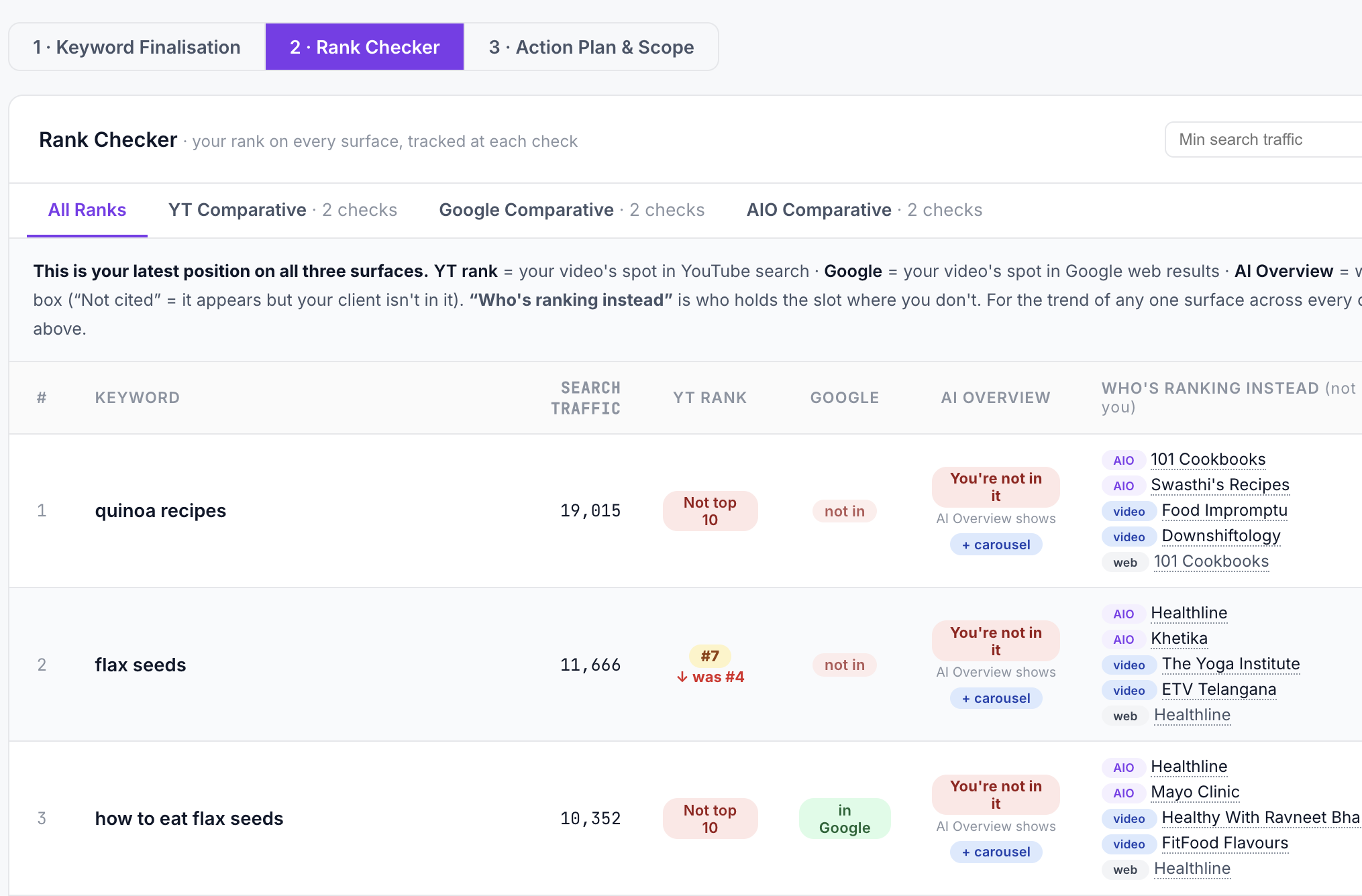
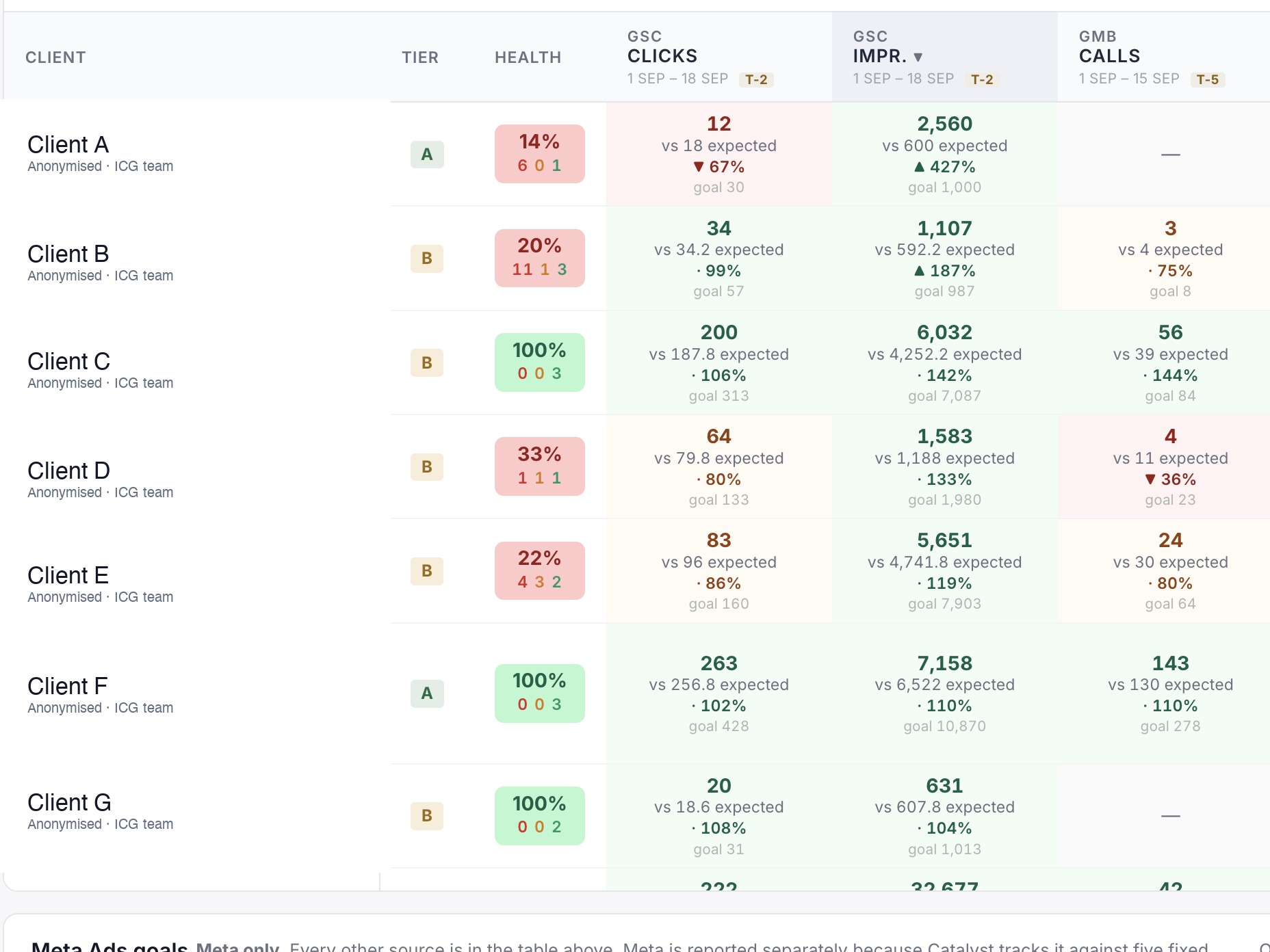
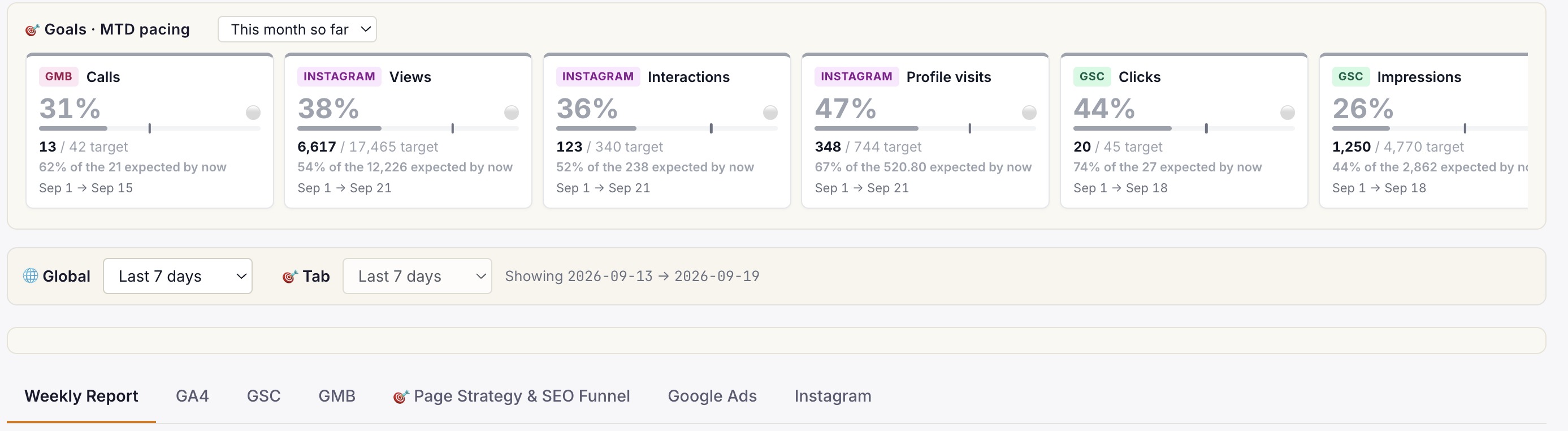
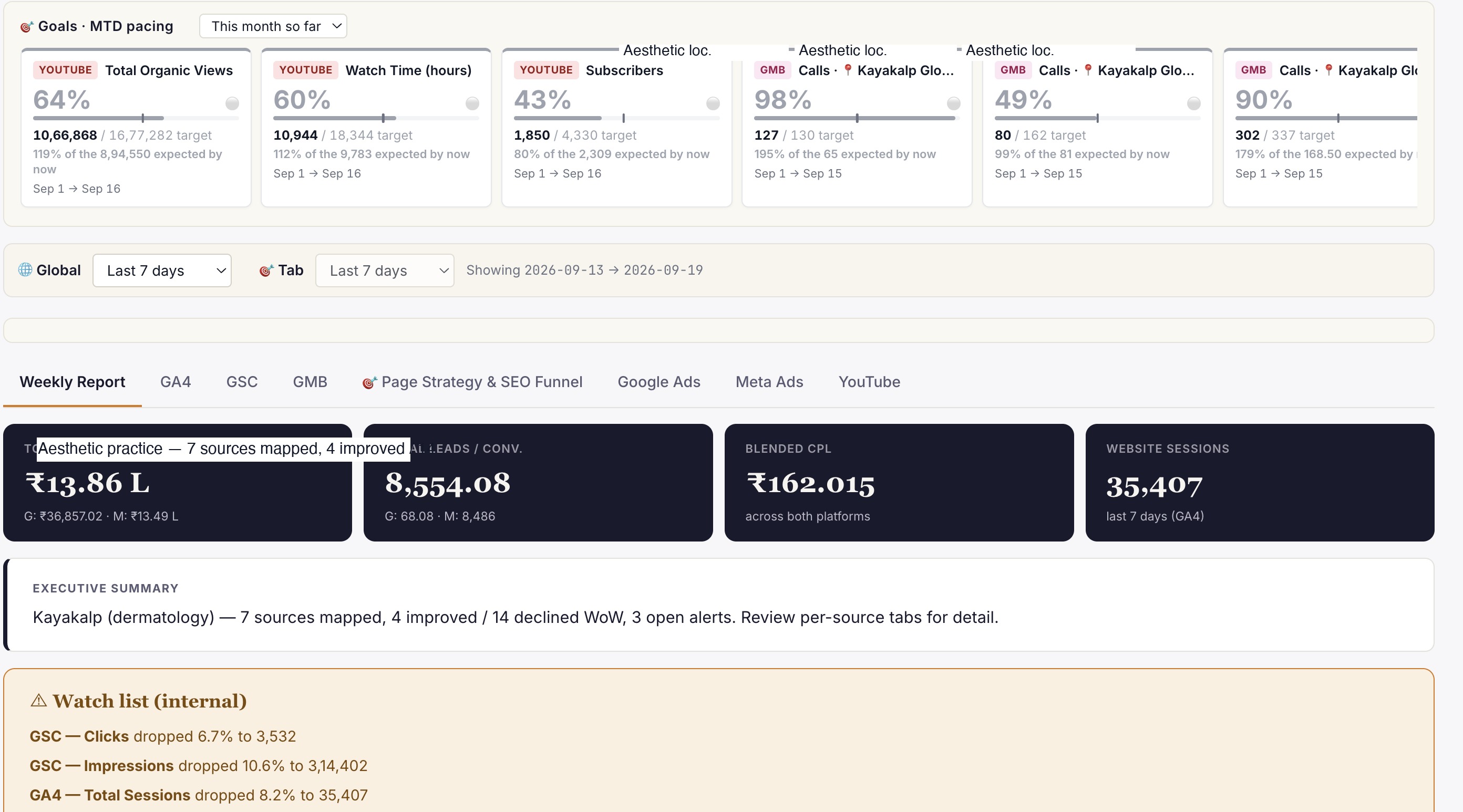
Every ICG engagement runs on the Search Intelligence Trifecta — Angryturtle for GMB, SIE for search and AI Overview, YODA for YouTube. Live product screens below.
Need help operationalising this?
Every ICG service is healthcare-only, NMC + DPDP-aware, and built around the patient-research patterns that drive Indian healthcare growth in 2026.
Every practice welcome — packages from ₹20,000/mo.
Goals-Driven engagements · Performance-Linked Payout Models available
More from
ICG.
Five trends shaping Indian healthcare marketing through 2027: AI-first patient research, Conversions API adoption, ABDM discovery, the AEO w...
Healthcare AIO is the discipline of getting your clinic or hospital cited inside Google AI Overviews, ChatGPT and Perplexity answers — not j...
Conversational-search advertising places brand messages inside AI chat answers — ChatGPT, Perplexity, Copilot — rather than beside a results...
Stop guessing.
Book a Diagnostic.
30 minutes. Free. With the AI-powered healthcare-only marketing agency 150+ brands already run on. No slides, no pitch, no hard close.


