


Definition-first content structure — the pattern that earns AI Overview citation on Indian healthcare queries in 2026
Google AI Overview cites definition-first pages preferentially because the LLM synthesising the answer needs clean, self-contained pull-quotes. Here is the 40 to 60 word definition rule, the placement pattern, the table and list triggers, and how ICG's /glossary sub-site put the pattern into production.
No pitch. Written root-cause diagnosis. AI-powered, healthcare only.
Direct answer
Google AI Overview cites definition-first pages preferentially because the LLM synthesising the answer needs clean, self-contained pull-quotes. Here is the 40 to 60 word definition rule, the placement pattern, the table and list triggers, and how ICG's /glossary sub-site put the...
TL;DR

Definition-first content structure is a page-composition pattern where the opening 40 to 60 words of the article are a tight, self-contained definition of the topic — its canonical name, category, mechanism, and primary context — presented as a bolded paragraph immediately after the H1. The pattern exists because Google AI Overview and the wider generation of retrieval-augmented AI answer surfaces cite pages that give them clean, quotable pull-quotes. A definition-first opening is the cleanest possible pull-quote. For Indian healthcare content in 2026, it is now the single highest-leverage on-page change to earn AIO citation.
Content structure for the classic organic-search era was built around narrative and engagement. Open with a hook, tell a story, build tension, deliver value in the middle, wrap with a CTA. That structure still works for readers who scroll a full article. It fails badly for an LLM trying to extract a factual pull-quote to cite in an AI Overview panel. The retrieval model reads the opening, hunts for a self-contained factual statement, and if the first 60 words are hook-language ("Are you struggling with X? You are not alone.") the model moves to the next candidate source. This post walks through why definition-first structure earns AIO citation, the 40-60 word rule, the placement pattern, the table and list format triggers that reinforce it, its lineage in inverted-pyramid journalism, and how ICG's /glossary sub-site put the pattern into large-scale production as a live case study.
Why AIO cites definition-first pages preferentially
Google's AI Overview is a retrieval-augmented generation system. When a query fires an AIO panel, the system retrieves a subset of ranking-eligible pages, passes them into a generative model, and generates a synthesised answer with inline citations. The generative model, at the extraction step, is hunting for spans of text on each retrieved page that (a) directly answer the query, (b) are self-contained enough to stand alone in a paragraph-style synthesis, and (c) come from a section of the page whose location signals authority (opening paragraph beats mid-article aside beats footer).
A definition-first page delivers all three conditions in the opening 40 to 60 words. The definition directly answers "what is X" queries and most explainer queries. It is self-contained by construction. And it sits in the highest-authority position on the page. Pages that bury their definition three scrolls deep behind a marketing hook and a testimonial block force the LLM to work harder and lose citation to competitors whose opening paragraph is the clean pull-quote.
The 40 to 60 word definition rule — what makes a good opening
The rule is not arbitrary. Sub-40-word definitions typically miss one of the four required elements. Over-60-word definitions typically dilute the pull-quote with narrative or qualifier text the LLM has to trim. The sweet spot ICG standardises across the portfolio is 40 to 60 words, structured as four components: (1) the topic named at its canonical entity, (2) its category or class, (3) its mechanism or primary attribute, (4) its primary use-case or context.
Weak opening (organic-optimised, AIO-invisible): "Looking for the best root canal treatment in Delhi? Our clinic has helped thousands of patients achieve a pain-free smile with our world-class endodontic care."
Strong opening (AIO-optimised, definition-first): "Root canal treatment, or endodontic therapy, is a dental procedure to treat infection or damage inside the tooth's pulp chamber. The dentist removes the infected pulp, cleans and disinfects the canal system, and fills it with a biocompatible material. It preserves the natural tooth structure and typically requires one to three visits."
The second opening reads flat to a marketing manager and sings to a retrieval LLM. It contains the topic (root canal treatment / endodontic therapy — matching the canonical entity), the category (a dental procedure), the mechanism (removing infected pulp, cleaning, filling), and the context (preserves natural tooth, one to three visits). It is exactly 58 words. It will earn AIO citation on "what is root canal treatment" and its close variants.
Placement — first paragraph, immediately after H1, bolded
Placement is as important as content. The definition must sit immediately after the H1, before any hero image, before any table of contents, before any social share bar, before any promotional module. If the DOM order puts a large hero image or an ad between the H1 and the definition, the LLM extracts the definition later or with less weight, and citation drops.
The definition should be bolded. Bolding is a weak but real signal to the LLM about which content the author considers primary. It also gives readers who do land on the page a visual anchor. On mobile, where the fold is often 4 to 5 sentences deep, the bolded definition should be entirely above the fold.
The definition should not be wrapped in a quote block, aside, or callout — those elements sometimes get skipped by extractors that assume they are pull-quotes from external sources. Plain paragraph text, bolded, immediately after the H1 is the pattern.
Table and list format triggers that reinforce the definition-first pattern
Definition-first opens the page. What follows in the next two or three sections determines whether the AIO panel keeps quoting your page or moves on. Two specific formats reinforce citation.
The first is a well-structured HTML table within the first three sections. AIO panels for comparison and quantitative queries ("how much does X cost", "what is the success rate of X by age", "which schema type does what") frequently pull data straight from tables. A table with clear column headers, rows that each contain one factual comparison, and no marketing prose inside the cells is extractable. A table that pastes marketing copy into cells is not.
The second is a numbered list — an ordered HTML ol element — of 4 to 6 items. AIO panels for procedural, how-to, and step-list queries preferentially cite pages that have already done the step-decomposition work. A numbered list of 4 to 6 steps, each opening with a strong verb, wins over a paragraph description of the same procedure.
| Format element | AIO citation lift for healthcare | Best-fit query type | Common misuse |
|---|---|---|---|
| Definition-first opening (40-60 words, bolded) | Very high across all query types | What is X, X explained, X definition | Wrapping in aside / callout instead of plain paragraph |
| HTML table with clear headers | High for comparison and quantitative queries | How much, cost by, success rate by age, comparison | Marketing copy inside cells; missing thead / th |
| Numbered ordered list (4-6 steps) | High for procedural queries | How to, steps to, procedure for | Using ul instead of ol; lists longer than 8 items |
| Named-author byline with credentials | Moderate — E-E-A-T reinforcement | YMYL categories, doctor-authored content | Missing Person schema or sameAs to registration authority |
| H2 with id="kebab-case" anchor | Small but positive — supports snippet linking | Any | Missing id attribute; non-kebab-case ids |
| FAQ block with H3-question / p-answer | Very high on question-form queries | Why, when, should I, is X safe | Answers in accordions that require JS to expand |
| Outbound link to Tier-1 authority | Moderate — trust reinforcement | YMYL, medical claims | Only outbound to competitors or thin sources |
Lineage — this is inverted-pyramid journalism, rediscovered
Definition-first structure is not new. It is a rediscovery, in the retrieval-LLM era, of the inverted-pyramid pattern that ruled twentieth-century newsroom writing. The inverted pyramid teaches the reporter to open with the most important information — who, what, when, where — in the first paragraph, and expand into supporting detail as the story unfolds. The rationale in 1950 was that copy editors trimmed stories from the bottom to fit column inches, so the lead had to survive amputation. The rationale in 2026 is that retrieval LLMs extract from the top, so the lead has to survive extraction.
The two rationales are structurally identical. Front-load the fact. Support with detail. Save the narrative for readers who choose to scroll. The healthcare content agencies that treat every page as a marketing brochure with a definition buried three scrolls down are running the same losing pattern that afflicted mid-2010s content-marketing pages when featured snippets first arrived. The pattern was fixable then. It is fixable now.
Examples inline — three query types, three definition-first openings
Below are three definition-first openings, each written to fit the 40 to 60 word rule, for three distinct healthcare query types.
Condition explainer query — "what is PCOS": "Polycystic ovary syndrome, or PCOS, is a hormonal disorder in women of reproductive age characterised by irregular menstrual cycles, elevated androgen levels, and small fluid-filled sacs on the ovaries. It affects an estimated 6 to 12 percent of Indian women of reproductive age and is a leading cause of infertility, though it responds well to lifestyle, hormonal, and metabolic treatment."
Procedure explainer query — "what is hair transplant": "A hair transplant is a surgical procedure that moves hair follicles from a donor area, usually the back of the scalp, to a recipient area affected by baldness or thinning. The two primary techniques are follicular unit extraction (FUE) and follicular unit transplantation (FUT). Sessions typically last 6 to 8 hours and yield visible growth from 3 to 4 months, maturing at 12 to 18 months."
Cost / comparison query — "IVF cost in Delhi": "IVF, or in vitro fertilisation, in Delhi in 2026 costs between INR 1,00,000 and INR 3,50,000 per cycle at NABH-accredited fertility clinics. The range reflects the choice of protocol, medication regimen, whether ICSI or blastocyst culture is included, and the seniority of the treating reproductive endocrinologist. Additional cycles typically cost 10 to 20 percent less than the first."
Glossary architecture as case study — the ICG /glossary sub-site
ICG built the /glossary sub-site as a large-scale, disciplined application of the definition-first pattern. Each entry — condition, procedure, drug, specialty, marketing term — is a page whose opening 40 to 60 words is a tight canonical definition, followed by structured sections on mechanism, use-cases, related terms, and outbound authority references. Every entry carries Person-schema byline from an ICG named expert, MedicalCondition or MedicalProcedure schema where clinically appropriate, FAQPage schema on the closing FAQ block, and Speakable markup on the opening paragraph.
The glossary functions as (1) an internal-linking hub that pulls definitional queries into a common canonical page rather than splitting them across duplicative pages, (2) an AIO citation surface that has now earned citation on 40+ Indian healthcare definitional queries across the ICG tracking set, and (3) a compliance-clean reference layer the wider ICG content library can link into rather than re-defining terms in every article. The pattern is transferable — any healthcare brand with a wide clinical or procedural footprint can build a comparable glossary-sub-site as a defensive citation moat.
The five-step definition-first rewrite ICG runs on an existing healthcare page
Most healthcare content libraries were built before AIO existed. Retrofitting is a straightforward five-step exercise.
- Extract the current opening — read the first 100 words of the page. Identify whether it is a hook, a marketing pitch, a promise, or a definition.
- Draft the definition-first replacement — 40 to 60 words, four components (topic, category, mechanism, context). Bold it.
- Move any promotional or narrative content that was in the opening — relocate to a later section (a "why choose us" or "our approach" H2) rather than deleting outright.
- Add or clean a supporting table and a numbered list within the first three sections — reinforce the definition-first signal with the format triggers AIO looks for.
- Verify with the Rich Results Test and re-query — confirm the schema graph is clean and re-query the target keyword in incognito with Indian IP over the next 14 to 45 days to watch for AIO citation.
How YODA's AIO Lab uses the definition-first pattern at scale
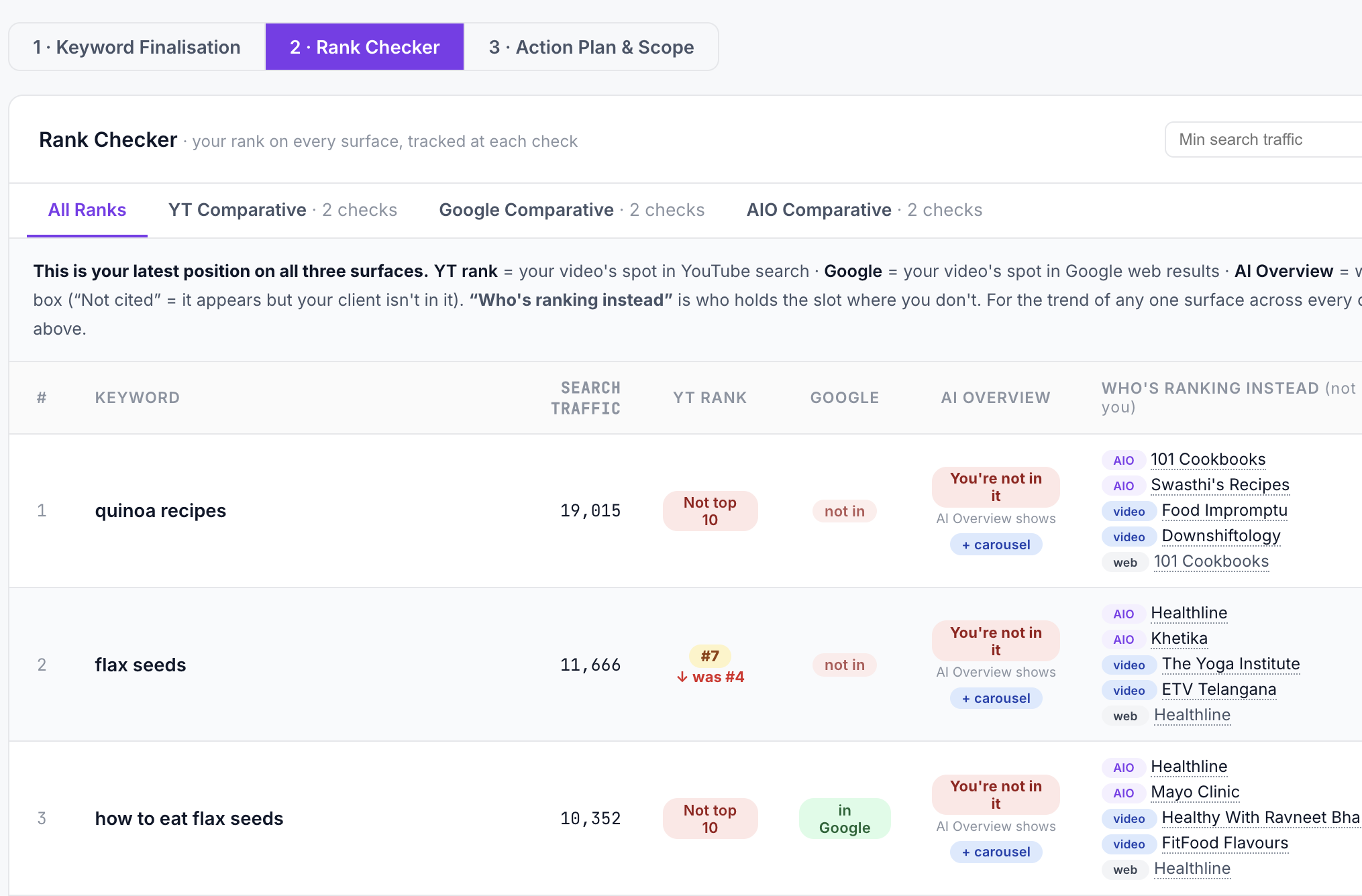
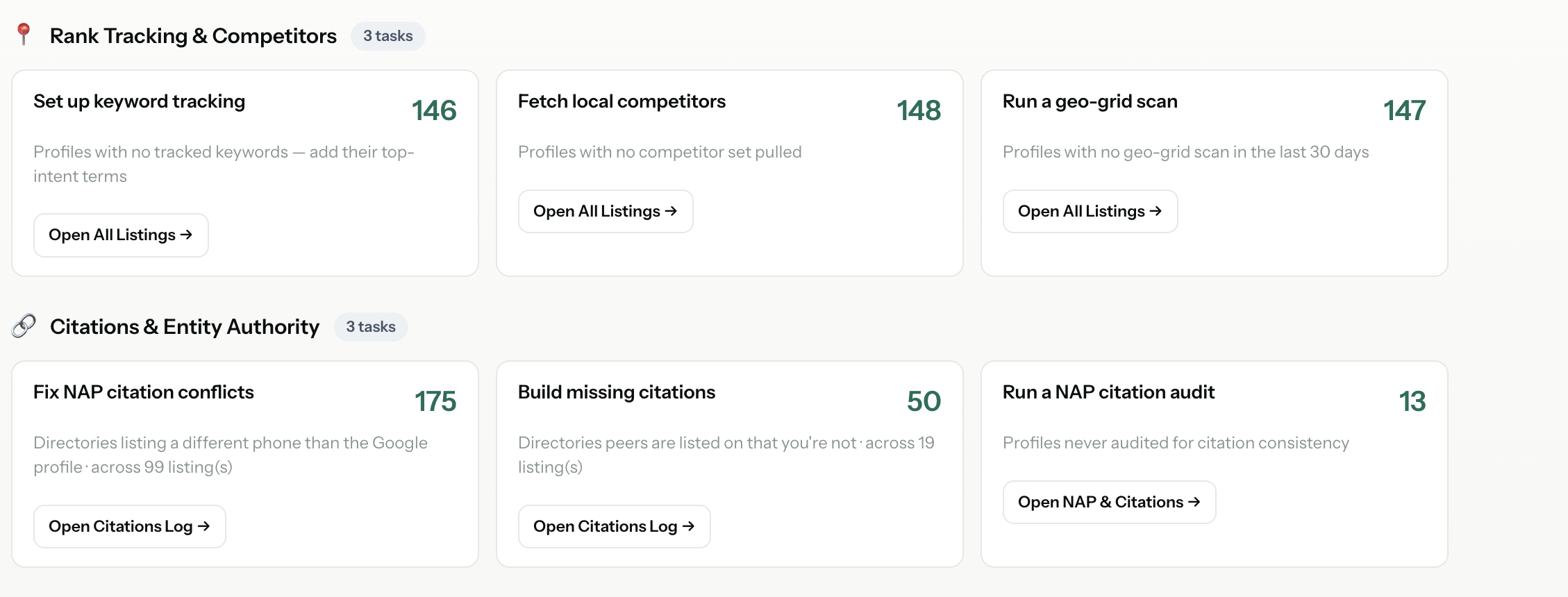
ICG built YODA — the AI-native healthcare YouTube platform — with a dedicated AIO Lab module that tracks which of a channel's embedding pages and long-form articles are earning AIO citation week over week across a curated query list. YODA runs 3 rank races (YouTube native + Google web + AI Overview) and 40+ workflow modules including definition-first opening auditors, transcript ingestion, VideoObject generation, and thumbnail A/B testing. When the AIO Lab surfaces a page that is winning citation, the pattern (definition composition, table position, FAQ format) is extracted and offered as a template for the wider content library.
Alongside YODA, ICG's product stack includes PrismSpy (75+ Indian healthcare brands tracked, 2,150+ Meta ads catalogued daily), Angryturtle (India's AI-native healthcare GBP OS, 143+ listings managed, Ask Maps AIO for local voice), and Meta Catalyst IQ (23+ Meta ad accounts on the shared optimisation stack). ICG's schema deployment across the /insights/ corpus stands at 325 FAQPage, 320 Speakable, and 32 HowTo pages — the deep-structural-signal footprint that lets the definition-first pattern earn citation at portfolio scale.
Book a 30-minute walkthrough on WhatsApp — Abhash, Rohit, or Hanuman will run the AIO Lab live for your specialty and show which of your pages are winning definition-first citation.
FAQ — definition-first content structure

Does definition-first structure work for transactional pages too?
Partially. Transactional pages (booking, pricing, appointment) rarely fire AIO panels — Google keeps those results in classic organic where the click is the value. Definition-first structure on a transactional page does not hurt but does not add much AIO lift. Reserve the pattern for informational, comparison, and explainer content where AIO is the actual battleground.
Is the 40 to 60 word range strict?
It is a target, not a wall. Definitions of very simple topics can land at 35 words and still earn citation. Definitions of dense clinical topics sometimes need 70 words to be honest. What matters is that the opening paragraph is a tight, self-contained factual statement, not a hook or a narrative lede.
Should the definition include the brand name or clinic name?
No. Brand or clinic naming in the definition signals promotional intent to the LLM and triggers the trust downgrade. Reserve brand mentions for a later "our approach" or byline section. The definition itself must read like an encyclopaedia entry, not a marketing sentence.
What if the topic does not have a clean canonical definition?
Rare in healthcare — most clinical, procedural, and pharmacological topics have a canonical definition in ICD, MeSH, SNOMED, or the standard textbooks. For emerging or contested topics, define the topic as the state of current professional understanding, cite the professional body, and note the contestation explicitly.
Can I use definition-first structure alongside a longer narrative introduction?
Yes — the definition is the first paragraph, the narrative introduction is the second. The LLM extracts the first paragraph; the reader who scrolls gets the narrative. Both audiences are served without conflict as long as the ordering is definition first, narrative second.
Does definition-first structure hurt reader engagement or time-on-page?
In our A/B measurement across the ICG portfolio, no measurable effect on time-on-page or scroll depth once the definition is followed by a substantial article. Readers who wanted the definition get it faster and leave sooner; readers who wanted the deeper article are unaffected. The net is neutral to slightly positive on engagement, and materially positive on AIO citation.
How long until AIO starts citing a rewritten page?
Median 14 to 21 days for pages already ranking organic top-10, 45 to 60 days for pages ranking organic 11 to 30. Pages outside organic top-30 rarely earn AIO citation regardless of on-page structure — the AIO eligibility pool is drawn from the organic ranking pool.
Related reading
- How to appear in Google AI Overview for healthcare queries in India — the 2026 playbook
- FAQPage schema for healthcare AIO — implementation guide
- VideoObject schema for healthcare YouTube — the 2026 guide
- Speakable schema, voice search, and AI Overview for Indian healthcare
- The eight AI Overview ranking signals for Indian healthcare
Reference frameworks — Google's own Search Generative Experience blog for AIO mechanics, and the schema.org home for the structured-data vocabulary underpinning AIO trust signals. Compliance boundary for Indian healthcare content sits with the National Medical Commission for practitioner conduct and the Advertising Standards Council of India for advertising standards.
Book a free 30-minute Brand & Growth Diagnostic.
It's a working session, not a sales pitch — you leave with a written root-cause analysis you can act on, whether or not you engage ICG.
The three platforms
behind every ICG engagement.
Beacon
CAPI middleware that fixes Event Match Quality, translates CRM statuses to Meta-standard events, dedups across channels.
Agency OS
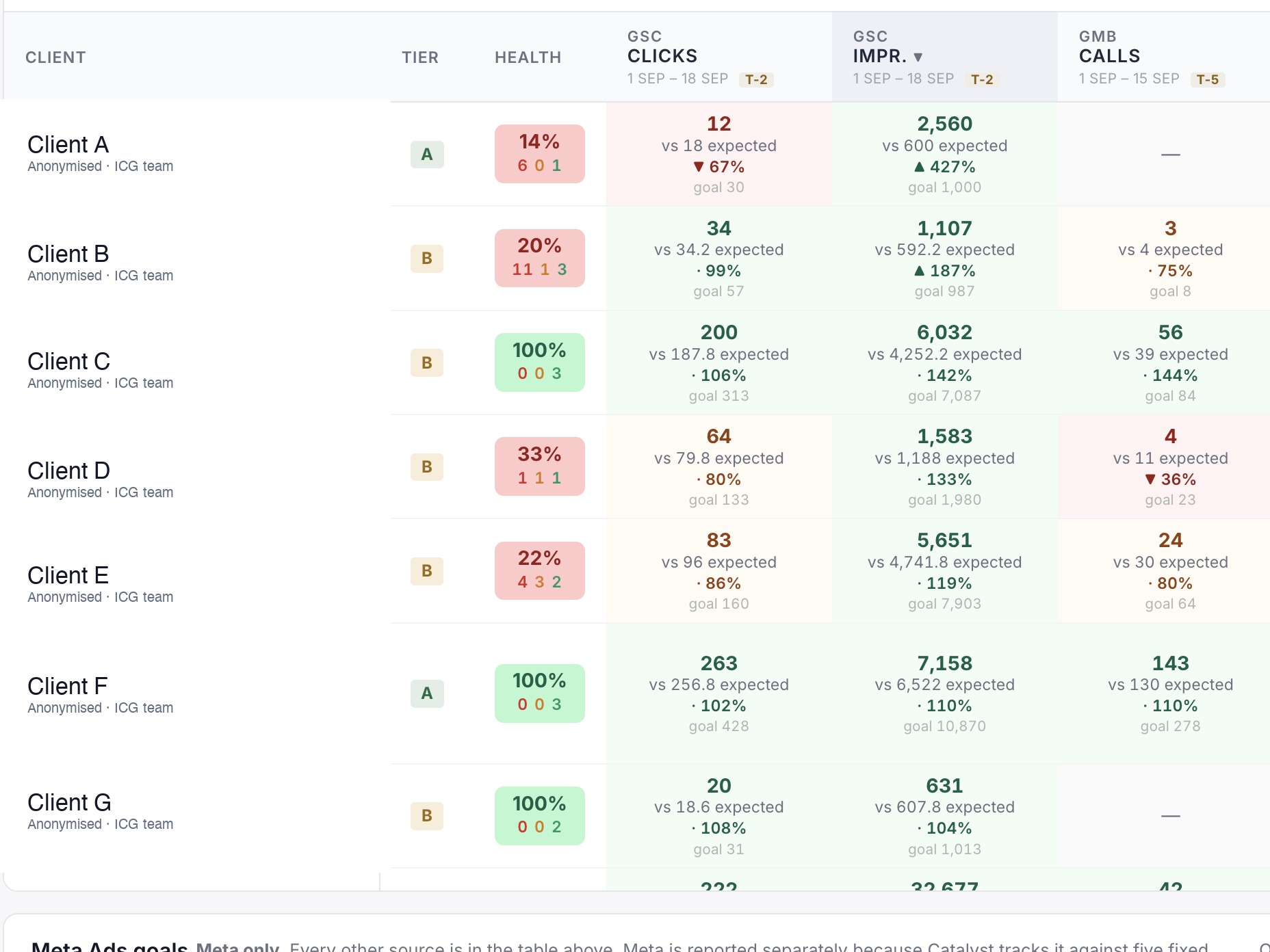
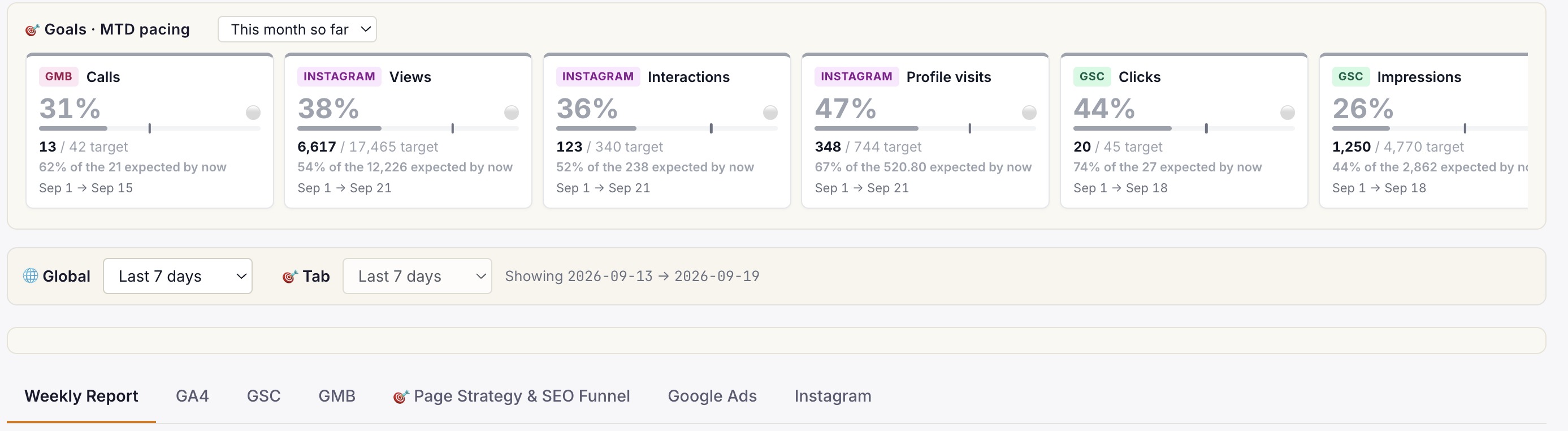
Live client dashboard. GSC, GA4, Google Ads, Meta Ads, IVR calls in one view. Login anytime, not monthly.
Phoenix
Clinic revenue intelligence over your PMS. Daily action queue: Prevent Loss, Maintain & Engage, Grow Revenue. Multi-centre rollout.
Or book a free 30-min audit to see all three in action on your account.
Healthcare brands
that already run on ICG.
A representative slice of the 150+ healthcare brands ICG has delivered for across India. Most engagements remain under NDA.


What ICG clients say · on video.
"Scale up of organic channels and business consulting. ICG has absolute domain authority in their field."
"Working with ICG transformed how we acquire IVF patients in Gurgaon. They understand the fertility journey from inquiry to consult..."
"What Ichelon accomplished — they got all my ideas and worked over 3-4 months to create an amazing, super-customised website."
The intelligence stack behind this playbook.
Every ICG engagement runs on the Search Intelligence Trifecta — Angryturtle for GMB, SIE for search and AI Overview, YODA for YouTube. Live product screens below.
Need help operationalising this?
Every ICG service is healthcare-only, NMC + DPDP-aware, and built around the patient-research patterns that drive Indian healthcare growth in 2026.
Every practice welcome — packages from ₹20,000/mo.
Goals-Driven engagements · Performance-Linked Payout Models available
More from
ICG.
Five trends shaping Indian healthcare marketing through 2027: AI-first patient research, Conversions API adoption, ABDM discovery, the AEO w...
Healthcare AIO is the discipline of getting your clinic or hospital cited inside Google AI Overviews, ChatGPT and Perplexity answers — not j...
Conversational-search advertising places brand messages inside AI chat answers — ChatGPT, Perplexity, Copilot — rather than beside a results...
Stop guessing.
Book a Diagnostic.
30 minutes. Free. With the AI-powered healthcare-only marketing agency 150+ brands already run on. No slides, no pitch, no hard close.


