


AI Overview optimisation for dental clinics in India — the 2026 playbook for primary dental, aligners, implants and the DCI + NMC compliance perimeter
Dental splits into primary dental and aligners for AIO. Here is the query taxonomy, the DCI and NMC compliance boundary, and the YODA AIO Lab dental workflow.
No pitch. Written root-cause diagnosis. AI-powered, healthcare only.
Direct answer
Dental splits into primary dental and aligners for AIO. Here is the query taxonomy, the DCI and NMC compliance boundary, and the YODA AIO Lab dental workflow.
TL;DR
AI Overview optimisation for Indian dental clinics is the practice of structuring primary-dental, aligner, and implant content so Google's generative answer panel cites the clinic's page as an authoritative source. The two sub-verticals behave differently — primary dental (root canal, cavity, cleaning, extraction) fires AIO at 60 to 78 percent with tight cost-query intent, while clear aligners fire AIO at 55 to 72 percent with heavier comparison intent and a stricter DCI plus NMC compliance perimeter.
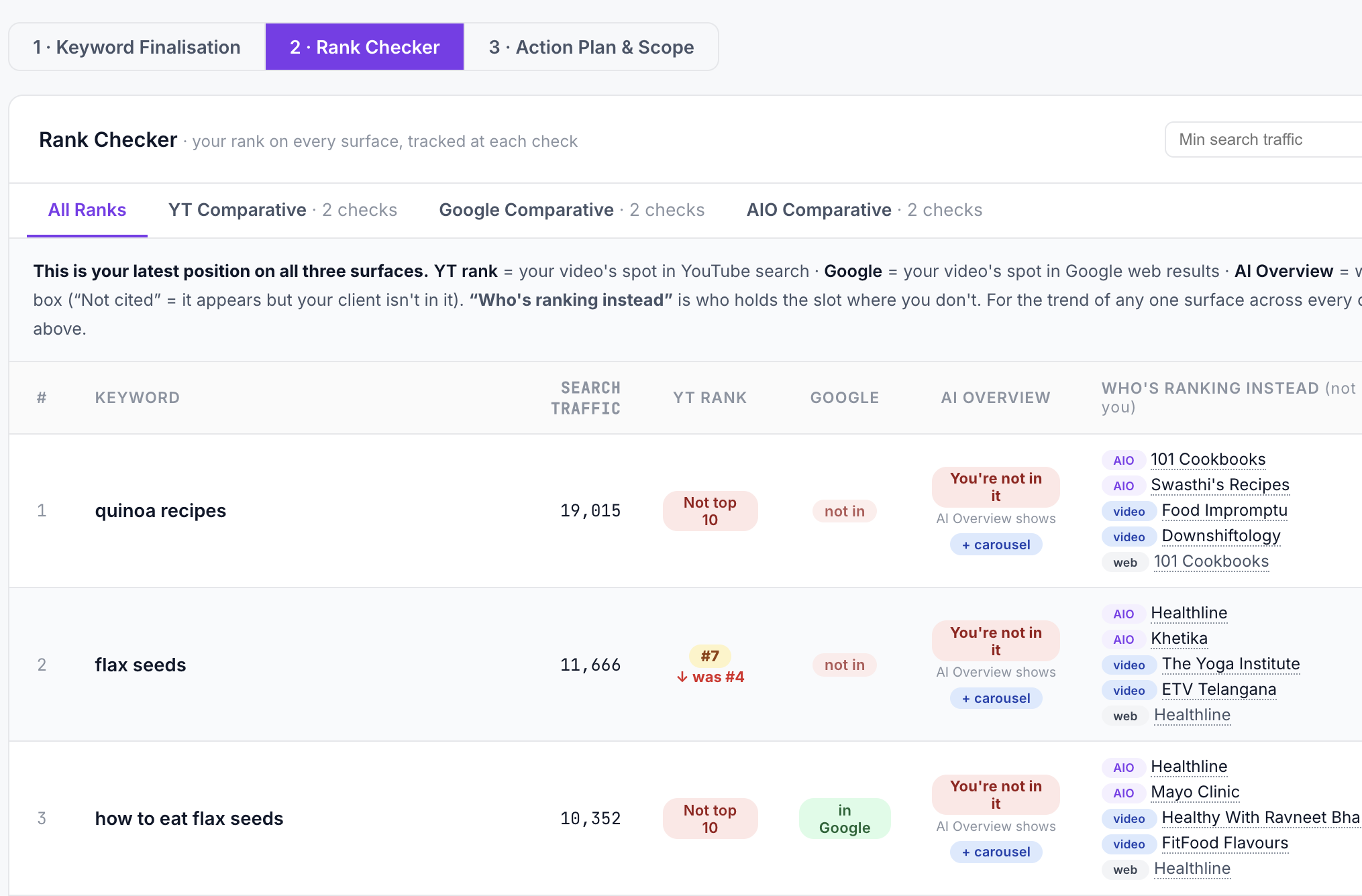
Dental is one of the fastest-growing digital marketing categories in Indian healthcare through 2026, driven by the aligner boom and the compounding shift of routine dental care from ad-hoc visits to booked appointments. Patients searching for dental care in India ask two distinct kinds of question. Primary-dental queries — "how much does a root canal cost", "wisdom tooth removal recovery", "is dental cleaning painful" — behave as classic informational-with-commercial-tilt queries. Aligner queries — "Invisalign vs local aligner brands", "clear aligner cost India", "how long do aligners take" — behave as comparison-and-cost queries with much higher purchase intent. Both surfaces now fire AI Overview panels routinely, and both sit inside the Dental Council of India (DCI) code plus the NMC 2026 ethics perimeter. Clinics that structure their content correctly capture citation on both surfaces; clinics that treat dental as a single content pattern miss on both. This post walks through the primary-versus-aligner split, the DCI plus NMC compliance boundary, the schema stack that maps to each query type, and the YODA AIO Lab workflow ICG runs across dental client portfolios.
The primary-dental-versus-aligner split for AIO
Primary dental in India is a high-volume, high-question-frequency category. Every household with dental needs generates 15 to 40 distinct informational queries per year — from routine ("is my cavity fillable"), through cost ("how much for a crown"), to procedure explainers ("root canal step by step"). AIO fires heavily on the informational and cost clusters because the answers are relatively standardised across Indian clinical practice, and Google can synthesise a defensible answer from a pool of well-structured dental pages.
Clear aligners behave differently. Aligner queries are dominated by comparison intent — Invisalign against local aligner brands (Toothsi, MakeO, ClearPath, and others), cost across cities, treatment timeline, and outcome durability. Each comparison query fires AIO reliably because Google can pull a comparative table from any well-structured aligner content page. But the compliance perimeter is tighter — aligner marketing has been a focus area for DCI and ASCI enforcement through 2025 and 2026, and pages carrying unsubstantiated claims about outcome guarantees or celebrity endorsement without disclosure get downgraded fast.
The dental query taxonomy that fires AIO in India
Observed AIO fire rate by dental query cluster across the ICG portfolio, Q2 2026, weekly-refreshed inside YODA's AIO Lab.
| Query cluster | Example query | AIO fire rate | Compliance risk |
|---|---|---|---|
| Root canal explainer | "root canal procedure step by step" | 72-84% | Low — medical framing |
| Root canal cost | "root canal cost Delhi 2026" | 50-68% | Moderate — pricing claims |
| Wisdom tooth | "wisdom tooth removal recovery time" | 75-85% | Low — medical framing |
| Cavity / filling | "types of dental fillings compared" | 68-80% | Low — medical framing |
| Dental cleaning | "is dental cleaning painful" | 65-78% | Low — medical framing |
| Implant explainer | "dental implant procedure duration" | 62-76% | Moderate — outcome claims |
| Implant cost | "dental implant cost India" | 45-60% | Moderate — pricing claims |
| Aligner comparison | "Invisalign vs local aligner brands India" | 60-75% | High — brand comparison + ASCI |
| Aligner cost | "clear aligner cost India" | 50-68% | High — pricing + guarantee claims |
| Aligner timeline | "how long do aligners take to work" | 55-72% | Moderate — outcome claims |
| Local commercial | "dentist Koramangala" | Under 20% | Low — Maps takes precedence |
| Brand | "[Clinic name] dental Delhi" | Under 5% | Low |
Two patterns stand out. Explainer clusters — root canal step-by-step, wisdom tooth recovery, cavity types — fire AIO at 65 percent or more and carry low compliance risk. These are the fastest citation wins. Cost clusters and aligner-comparison clusters fire AIO less frequently but carry higher click-value because the intent is much closer to booking. The correct dental content stack builds authority on the low-risk explainer surface first, then extends into the higher-value cost and aligner-comparison surface once the base citation credibility is established.
DCI and NMC compliance shapes what dental content can say
Two overlapping regulatory perimeters govern Indian dental advertising and content. The Dentists Act 1948 and the Dental Council of India (DCI) Code of Ethics restrict superlatives, guaranteed-outcome claims, and comparative advertising against named competitors. The National Medical Commission (NMC) Ethics Code 2026, though primarily targeting MBBS-registered practitioners, sets the broader trust perimeter Google's AIO filter enforces on all healthcare content. ASCI Guidelines 2022 apply on top of both. DPDP Act 2023 governs any patient testimonial, imagery, or identifiable data usage.
Practical implications for dental AIO content:
- Do not name competitor brands in comparison content in a disparaging framing. Comparative content is allowed but must be factual, substantiated, and non-derogatory — the DCI Code and ASCI both enforce this. Aligner comparison pages that name Invisalign against local brands are fine when the comparison is factual (cost range, treatment duration, brand model type) but not fine when the comparison implies inferiority without evidence.
- Quote outcome ranges rather than guarantees. "Typical aligner treatment duration in India is 6 to 18 months depending on case complexity" is compliance-safe. "Straight teeth in 6 months guaranteed" is not.
- Every treating dentist on the page needs a BDS or MDS credential visible plus State Dental Council registration. Person schema with jobTitle, degree, memberOf (Indian Dental Association where applicable), sameAs to a verifiable profile.
- Before-after imagery must carry documented patient consent and a visible disclosure line. DPDP Act 2023 compliance is non-negotiable.
- Add an editorial disclosure at the page bottom. "Editorial disclosure — content reviewed for DCI Code, NMC's 2026 advertising guidelines, and ASCI Guidelines 2022 compliance. Individual outcomes vary."
Pages that follow this rule set retain AIO citation eligibility across the dental query surface. Pages that skip any one of the five items regularly lose citation even when organic ranking holds.
The schema stack for dental AIO pages
Primary dental hub pages deploy Dentist plus MedicalProcedure as the primary entity schemas, with FAQPage and Person layered on top. Dentist schema is a specific subtype under MedicalBusiness that carries local-trust weight for the clinic entity. MedicalProcedure with bodyLocation, howPerformed, preparation, and followup properties carries the citation weight for the procedure explainer content.
Aligner pages use MedicalProcedure with the specific canonical name (clear aligners, orthodontic treatment) and Product schema where the clinic offers a branded aligner package. FAQPage carries most of the citation weight for aligner comparison and cost queries because those queries are question-form. Person schema on the treating orthodontist is heavier for aligner content than for primary dental content because aligner citation eligibility depends more strongly on the credentialed reviewer signal.
The definition-first opening for dental pages
The 40 to 60 word definition-first opening pattern applies to both primary and aligner dental content. Two examples.
Primary dental (root canal): "A root canal is an endodontic procedure in which infected or inflamed pulp tissue is removed from inside a tooth, the internal canal is cleaned and shaped, and the space is sealed with a biocompatible filling material. In India, root canal treatment typically takes one to three appointments and costs between ₹2,500 and ₹15,000 depending on tooth type, complexity, and clinic tier."
Aligner (clear aligner): "Clear aligners are custom-fabricated, removable orthodontic appliances made of transparent thermoplastic that gradually shift teeth into planned positions. Treatment involves a series of aligner trays worn 20 to 22 hours a day, replaced every 1 to 2 weeks. In India, typical clear aligner treatment lasts 6 to 18 months and costs between ₹80,000 and ₹3,50,000 depending on case complexity, brand, and clinic tier."
Both openings quote ranges, reference specific mechanisms, avoid ASCI-triggering language, and give the AIO panel a clean pull-quote it can lift verbatim into the answer.
The YODA AIO Lab workflow ICG runs for dental clients
YODA — ICG's AI-native healthcare YouTube and content platform — runs a dental-specific AIO Lab workflow. The cadence:
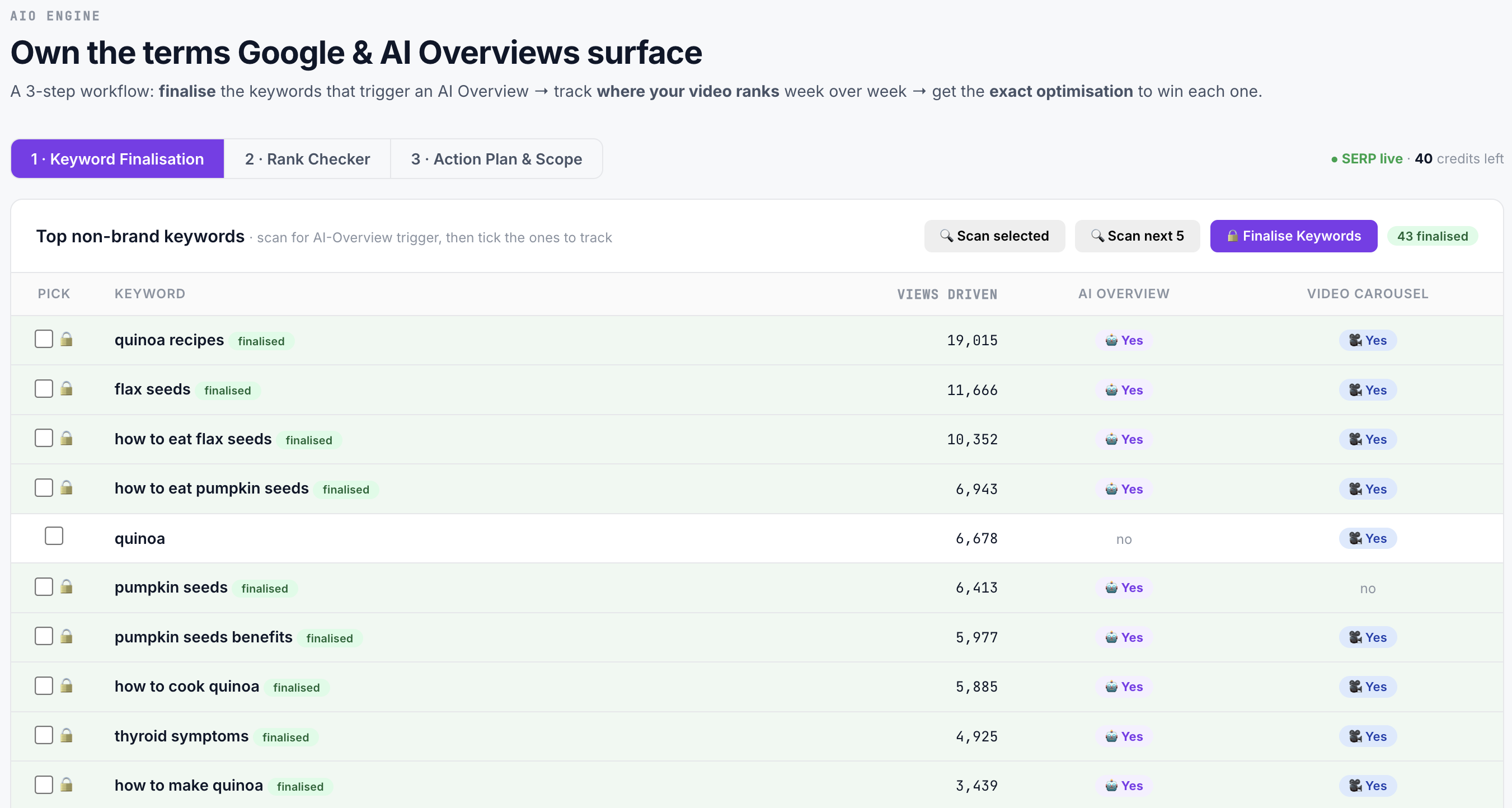
- Split-cluster keyword finalisation. Separate the clinic's target keyword set into primary-dental clusters (root canal, wisdom tooth, cavity, cleaning, extraction, implant), aligner clusters (comparison, cost, timeline, brand), and cosmetic-dental clusters (whitening, veneers, smile design). Prioritise primary-dental explainer clusters first for citation velocity.
- Weekly rank capture across three races. Automated incognito capture from an Indian IP on 5 to 7 variants per cluster across organic rank, AIO citation, and YouTube search. YouTube matters heavily for dental because procedure explainer videos frequently earn AIO video-preview citation.
- Compliance sweep every four weeks. DCI Code and ASCI Guidelines 2022 audit across all live pages. The dental content perimeter has been an ASCI enforcement focus through 2025 and 2026 and drift is common.
- Aligner comparison structural audit. Aligner pages naming competitor brands go through a specific structural review to verify factual, substantiated, non-derogatory framing before publish.
- Video schema deployment. Every treatment explainer video hosted on the clinic's YouTube channel gets VideoObject schema with full transcript, uploadDate, and duration. AIO video-preview citation for dental has risen through 2026.
Meta Catalyst IQ — the paid dental surface that runs alongside AIO
Dental intake windows are short. A patient with tooth pain books within days; a patient considering aligners typically decides within four to eight weeks. Meta Catalyst IQ is ICG's Meta ads performance engine and runs the paid side of the dental conversion stack. Portfolio primary-dental CPL sits around ₹620 blended, dental-aligner CPL around ₹1,800 blended, delivered across 23+ active accounts, ₹9.1Cr+ optimised monthly spend, with a typical 38 to 58 percent CPL reduction inside the first 90 days. Paid Meta handles the short-window intake demand while AIO and organic content builds the informational authority that lowers paid CPL over time. Book a 30-minute Meta Catalyst IQ walkthrough on WhatsApp.
FAQ — AI Overview optimisation for dental clinics

Should I write separate pages for primary dental and aligners or combine them?
Separate. The two sub-verticals fire AIO at different rates, carry different compliance risk, and target different reader intents. Combining them into a single service page dilutes citation eligibility on both. Aligner content in particular needs its own hub with dedicated comparison, cost, and timeline sections because those are the queries that fire AIO reliably for the aligner category.
Can I name competitor aligner brands in my comparison content?
Yes, when the comparison is factual, substantiated, and non-derogatory. DCI Code, ASCI, and the AIO trust filter all enforce the same standard. A comparison table showing cost range, treatment duration, brand type, and clinical protocol across Invisalign, Toothsi, MakeO, ClearPath, and other named brands is compliance-safe when the underlying data is verifiable. Comparison content that implies inferiority without evidence is not.
Does the treating dentist byline actually move AIO citation?
Yes, materially. Person schema with jobTitle, BDS or MDS degree, memberOf (Indian Dental Association where applicable), State Dental Council registration, and sameAs to a verifiable profile tips the YMYL trust filter on dental content. Our dental pages with credentialed reviewedBy bylines earn AIO citation at roughly 1.5 to 1.8 times the rate of otherwise-identical pages without the byline.
Which dental query cluster should be prioritised first for AIO?
Root canal explainer, wisdom tooth recovery, and cavity or filling types are the three highest-fire, lowest-compliance-risk clusters for Indian dental content. All three fire AIO at 68 to 85 percent, all three are underserved by structured clinic content, and all three drive high downstream commercial intent. A clinic starting from zero should build hubs on these three first, then extend into implant explainer and aligner comparison in the second wave.
How do I handle before-after imagery on cosmetic dental content?
Documented patient consent, DPDP-compliant handling of any identifiable data, and a visible disclosure line noting individual outcomes vary. Non-compliant before-after imagery gets flagged by ASCI, downgraded by the AIO trust filter, and increasingly by Google's YMYL quality rater guidance too. Pages that carry compliance-clean before-after imagery are AIO-eligible; pages that carry uncredited imagery are not.
Do YouTube dental videos actually earn AIO citation?
Yes, and increasingly so through 2026. AIO panels for dental procedure explainer queries now include a video-preview section where YouTube-hosted videos with VideoObject schema and full transcripts get pulled in. YODA's content workflow includes video production and schema deployment specifically for dental clients so the video and the web page earn citation together, doubling exposure per query.
What is the fastest aligner query to earn AIO citation on?
Aligner treatment timeline queries. "How long do aligners take" fires AIO at 55 to 72 percent, has well-established outcome ranges, is underserved by structured clinic content, and is question-form which matches FAQPage schema cleanly. A compliance-clean explainer page with MedicalProcedure and FAQPage schema, a credentialed orthodontist byline, and a definition-first opening typically earns citation inside 30 to 60 days of publish.
Related reading
- How to appear in Google AI Overview for healthcare queries in India — the 2026 playbook
- Google AI Overview vs organic position #1 for Indian healthcare — CTR economics
- AI Overview optimisation for IVF clinics in India
- AI Overview optimisation for dermatology clinics in India
- FAQPage schema for healthcare AIO — implementation guide
Compliance and regulatory reference — India's National Medical Commission for practitioner conduct standards that inform the broader YMYL trust perimeter Google AIO enforces, and the Advertising Standards Council of India for the specific healthcare advertising rules governing superlatives, guarantee claims, comparative brand content, and before-after imagery in dental advertising. Both frameworks shape what a dental page can say and remain AIO citation eligible.
Book a free 30-minute Brand & Growth Diagnostic.
It's a working session, not a sales pitch — you leave with a written root-cause analysis you can act on, whether or not you engage ICG.
The three platforms
behind every ICG engagement.
Beacon
CAPI middleware that fixes Event Match Quality, translates CRM statuses to Meta-standard events, dedups across channels.
Agency OS
Live client dashboard. GSC, GA4, Google Ads, Meta Ads, IVR calls in one view. Login anytime, not monthly.
Phoenix
Clinic revenue intelligence over your PMS. Daily action queue: Prevent Loss, Maintain & Engage, Grow Revenue. Multi-centre rollout.
Or book a free 30-min audit to see all three in action on your account.
Healthcare brands
that already run on ICG.
A representative slice of the 150+ healthcare brands ICG has delivered for across India. Most engagements remain under NDA.


What ICG clients say · on video.
"Dental marketing in Delhi is brutally competitive. ICG's local SEO + Google Ads stack moved the needle steadily."
"Scale up of organic channels and business consulting. ICG has absolute domain authority in their field."
The intelligence stack behind this playbook.
Every ICG engagement runs on the Search Intelligence Trifecta — Angryturtle for GMB, SIE for search and AI Overview, YODA for YouTube. Live product screens below.
Need help operationalising this?
Every ICG service is healthcare-only, NMC + DPDP-aware, and built around the patient-research patterns that drive Indian healthcare growth in 2026.
Every practice welcome — packages from ₹20,000/mo.
Goals-Driven engagements · Performance-Linked Payout Models available



More from
ICG.
Five trends shaping Indian healthcare marketing through 2027: AI-first patient research, Conversions API adoption, ABDM discovery, the AEO w...
Healthcare AIO is the discipline of getting your clinic or hospital cited inside Google AI Overviews, ChatGPT and Perplexity answers — not j...
Conversational-search advertising places brand messages inside AI chat answers — ChatGPT, Perplexity, Copilot — rather than beside a results...
Stop guessing.
Book a Diagnostic.
30 minutes. Free. With the AI-powered healthcare-only marketing agency 150+ brands already run on. No slides, no pitch, no hard close.


