


FAQPage schema for healthcare AI Overview citation in India — the 2026 implementation guide with JSON-LD examples
FAQPage schema is the single highest-lift structured-data type for healthcare AI Overview citation in India. Here is the JSON-LD structure, question-format best practices, and the common mistakes that trigger Google spam signals.
No pitch. Written root-cause diagnosis. AI-powered, healthcare only.
Direct answer
FAQPage schema is the single highest-lift structured-data type for healthcare AI Overview citation in India. Here is the JSON-LD structure, question-format best practices, and the common mistakes that trigger Google spam signals.
TL;DR

FAQPage schema is a structured-data type in the schema.org vocabulary that marks a block of question-and-answer pairs as a machine-readable FAQ. In healthcare AI Overview citation, FAQPage is the highest-lift schema type for Indian queries — 40 to 60 percent of AIO panels on question-form healthcare queries cite pages that carry FAQPage markup. Deployed correctly it moves citation. Deployed carelessly it triggers Google's spam signals and hurts the wider ranking.
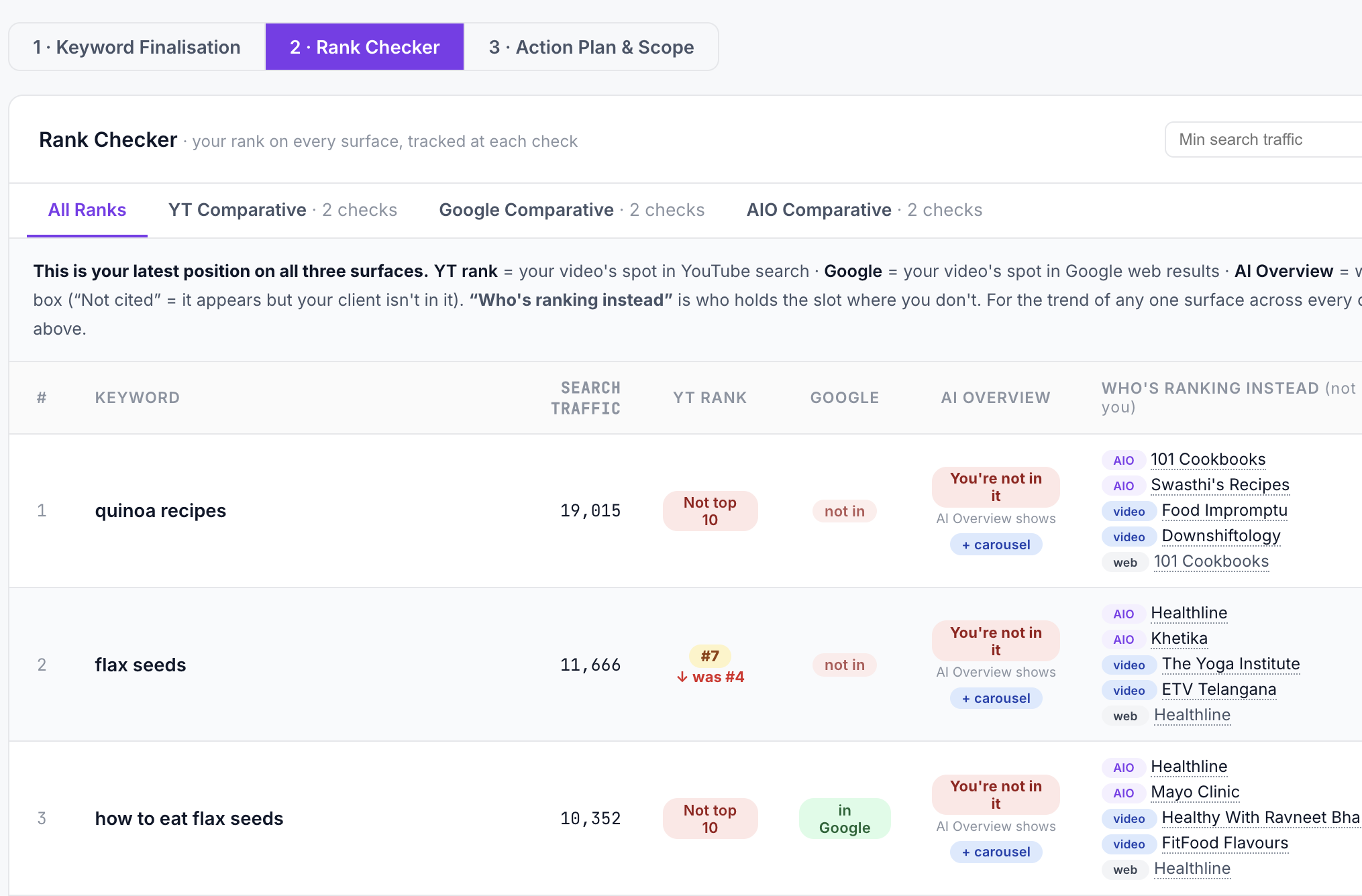
Every ICG healthcare content engagement starts with a schema audit, and FAQPage is almost always the first schema type recommended for deployment because so many high-intent healthcare queries in India are question-form: "what causes PCOS", "how does IVF work at age 38", "when should I see a dermatologist for acne", "how much does root canal cost in Delhi". Question queries fire AI Overview panels more reliably than any other intent, and FAQPage-marked pages get cited at a materially higher rate than pages carrying the same content without the schema. This post walks through the FAQPage JSON-LD structure with a working healthcare example, the question-and-answer format that actually gets cited, the length rule for answers, the common misuses that trigger spam downgrades, Google's stated rich-result guidelines, and how ICG deploys FAQPage across YODA content and Angryturtle GBP posts.
What FAQPage schema actually is
FAQPage is one of schema.org's structured-data types, part of the CreativeWork hierarchy, designed to describe pages whose main content is a list of frequently asked questions with their answers. It has one required property — mainEntity — which contains an array of Question items, each with a name (the question text) and an acceptedAnswer (a single Answer item with a text property containing the answer body).
The schema is embedded in the page via a JSON-LD block inside a script tag in the HTML head or body. Google's search crawler reads the JSON-LD, matches the questions and answers to visible on-page content, and treats the block as an eligible FAQ for rich-result display and — separately — as a citation-eligible unit for AI Overview panel synthesis.
Two things about this the AI Overview literature often gets wrong. First, FAQPage rich-result display in classic SERPs has been throttled by Google since mid-2023 (fewer FAQ rich results appear organically now), but FAQPage's role as an AIO citation signal has grown, not shrunk. The schema still matters, just for a different surface. Second, FAQPage is not just a display hint — it is a semantic content type that the AIO retrieval layer uses to identify pages likely to contain crisp, quotable answers to question-form queries.
The JSON-LD structure — a working healthcare example
Below is a working FAQPage JSON-LD block for an IVF cost page. Copy the shape, replace the content.
<script type="application/ld+json">
{
  "@context": "https://schema.org",
  "@type": "FAQPage",
  "mainEntity": [
    {
      "@type": "Question",
      "name": "How much does IVF cost in India in 2026?",
      "acceptedAnswer": {
        "@type": "Answer",
        "text": "IVF in India ranges from Rs 1,50,000 to Rs 3,50,000 per cycle in 2026, depending on the clinic tier, medication protocol, and whether ICSI or embryo freezing is included. Tier-1 metros (Delhi, Mumbai, Bangalore) trend Rs 2,00,000 to Rs 3,50,000 per cycle. Tier-2 cities and hospital-attached IVF units typically fall Rs 1,50,000 to Rs 2,20,000."
      }
    },
    {
      "@type": "Question",
      "name": "What is the average IVF success rate at age 35 in India?",
      "acceptedAnswer": {
        "@type": "Answer",
        "text": "For women aged 35 in India, the average IVF success rate per cycle is 35 to 45 percent, varying by clinic, protocol, and embryo quality. Cumulative success across three cycles typically rises to 60 to 75 percent. Success rates decline notably after age 38 and more sharply after age 40."
      }
    }
  ]
}
</script>
Two points on this shape. First, every Question needs an acceptedAnswer with a text property. suggestedAnswer is available in the schema.org vocabulary but Google's rich-result implementation ignores it — use acceptedAnswer. Second, the answer text in the JSON-LD must match, word-for-word or very closely, the visible answer on the page. Google explicitly requires this. Discrepancy between JSON-LD and visible content triggers a spam signal.
Question format best practices for healthcare AIO
Not every question format cites equally. From ICG's tracking, four question patterns cite disproportionately well on healthcare AIO panels.
What-is questions — "What is PCOS?", "What is a coronary angiogram?", "What is the difference between angioplasty and bypass?" These are definition and comparison queries, high AIO fire rate, high citation lift when the answer is a clean 40-70 word paragraph.
How-much / how-long questions — "How much does IVF cost in Bangalore?", "How long does angioplasty recovery take?", "How much does a root canal cost in Delhi?" Cost and duration questions carry high commercial intent and cite well when the answer gives a real range with the factors that move the number.
When-should questions — "When should I see a dermatologist for acne?", "When is chest pain an emergency?", "When to start IVF after failed IUI?" Timing and threshold questions cite well because AIO's trust filter reads them as safety-adjacent and rewards direct, unhedged answers.
Can-I / is-it-safe questions — "Can I fly after cataract surgery?", "Is it safe to conceive after IVF miscarriage?", "Can I drive after LASIK?" Safety-adjacent questions carry the highest citation lift because the AIO panel prefers to surface a clear authoritative answer over sending the user to click.
The pattern that does not cite well: yes/no questions with one-word answers, or questions phrased in the third person that break the direct question-to-answer structure. FAQPage schema needs a real question and a real, substantive answer.
The 40-70 word answer rule — why length matters
Answer length is the second-most-common FAQPage failure mode after question format. Answers under 30 words are too thin for AIO to cite because they lack the specific detail the panel needs to synthesise a paragraph response. Answers over 100 words are too long for AIO to pull cleanly and the panel tends to skip them for shorter alternatives on other pages.
The observed sweet spot is 40 to 70 words per answer. That range is long enough to include the specific number, condition, timeframe, or nuance the query needs, and short enough to be quoted verbatim in the AIO panel. Answers in this range should include at least one specific piece of information (a number, a threshold, a name, a range) — abstract answers without specifics cite poorly regardless of length.
Answer structure inside the range: lead with the direct answer in the first sentence, follow with 1-2 sentences of qualifying context. Avoid "It depends" openings — AIO downweights hedged answers because they do not synthesise cleanly. Give the answer, then qualify it.
The common mistakes that trigger Google spam signals
Google's rich-result guidelines for FAQPage are more restrictive than most healthcare marketing teams realise. The following mistakes are the most common and most damaging.
- Marking marketing FAQs as FAQPage. "Do you offer discounts?" / "Yes, call for our offer" — this is not an FAQPage-eligible unit. FAQPage is for informational Q&A, not sales enquiries. Marking sales content as FAQPage triggers a spam downgrade.
- Answers that promote a product or booking. If the answer body says "Book your IVF consultation with us today" instead of answering the medical question, Google flags it. Answers must answer.
- Duplicate FAQ blocks across the site with identical Q&A. Common on multi-city landing pages using the same FAQ block templated across 40 city variants. Google reads this as thin duplicate content. Each FAQPage instance needs at least some genuinely differentiated Q&A.
- JSON-LD content that does not match visible page content. Google explicitly requires FAQPage schema to reflect visible on-page content. Adding hidden Q&A only in JSON-LD is a manual-action risk.
- Marking a testimonial section or a product FAQ as FAQPage. Testimonials belong under Review schema. Product FAQs belong under Product. Using FAQPage as a catch-all confuses the retrieval layer.
- Question texts that are keyword-stuffed. "IVF cost Delhi cheap best clinic 2026 price" — not a real question. AIO ignores and Google may downgrade.
The general principle: FAQPage is a promise to Google that the page contains genuine informational Q&A. Break the promise and the schema turns from an asset into a liability.
Google's rich-result guidelines — what they actually require
Google's formal FAQPage documentation carries a specific list of eligibility requirements. Summarised.
| Requirement | What it means in practice | Common miss |
|---|---|---|
| Content must be publicly visible on page | Every Q&A in JSON-LD must appear in visible HTML | Hidden schema-only content |
| User-generated content is not eligible | Reddit-style community Q&A does not qualify | Forum content marked as FAQPage |
| Question-and-answer style required | Not conversational, not statement-question | Marketing copy dressed as Q&A |
| Each Question needs one acceptedAnswer | Multiple answers to one question not supported | Multiple acceptedAnswer objects |
| Answer HTML allowed but limited | Basic formatting (p, ul, ol, strong) supported | Complex nested markup that breaks parsing |
| Do not include ads / promotional links in answers | Answers should be substantive, not sales | CTA in answer body |
| Match on-page content exactly | JSON-LD text should mirror visible text | Slightly different phrasing between layers |
Google's Rich Results Test tool validates JSON-LD syntax and eligibility. Every FAQPage deployment should pass Rich Results Test before publish. The tool catches most syntax errors and the majority of eligibility issues. It does not catch spam-signal issues (marketing content dressed as FAQ) — that requires editorial judgement.
How ICG deploys FAQPage across YODA content and Angryturtle GBP
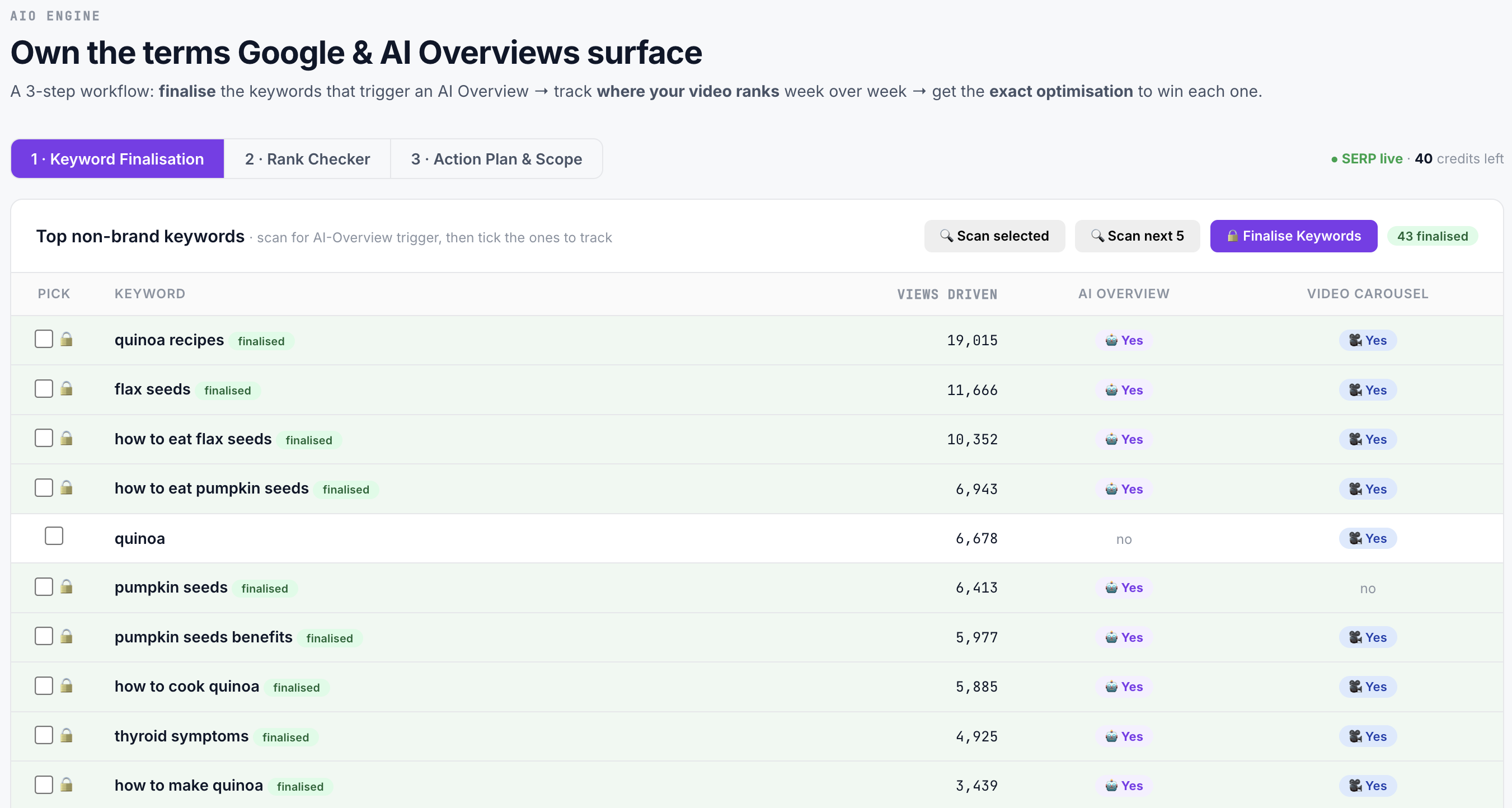
Inside YODA — ICG's AI-native healthcare YouTube platform — FAQPage schema is auto-injected on every long-form content piece and every video description page where a genuine Q&A block exists. The workflow parses the H2/H3 structure of the content, identifies question-form headings, and generates the FAQPage JSON-LD from the on-page Q&A automatically. AIO Lab then tracks which of those FAQPage-marked pages get cited in AI Overview panels, refreshed weekly across the three rank races (YouTube ranking, AIO Lab citation, general SERP).
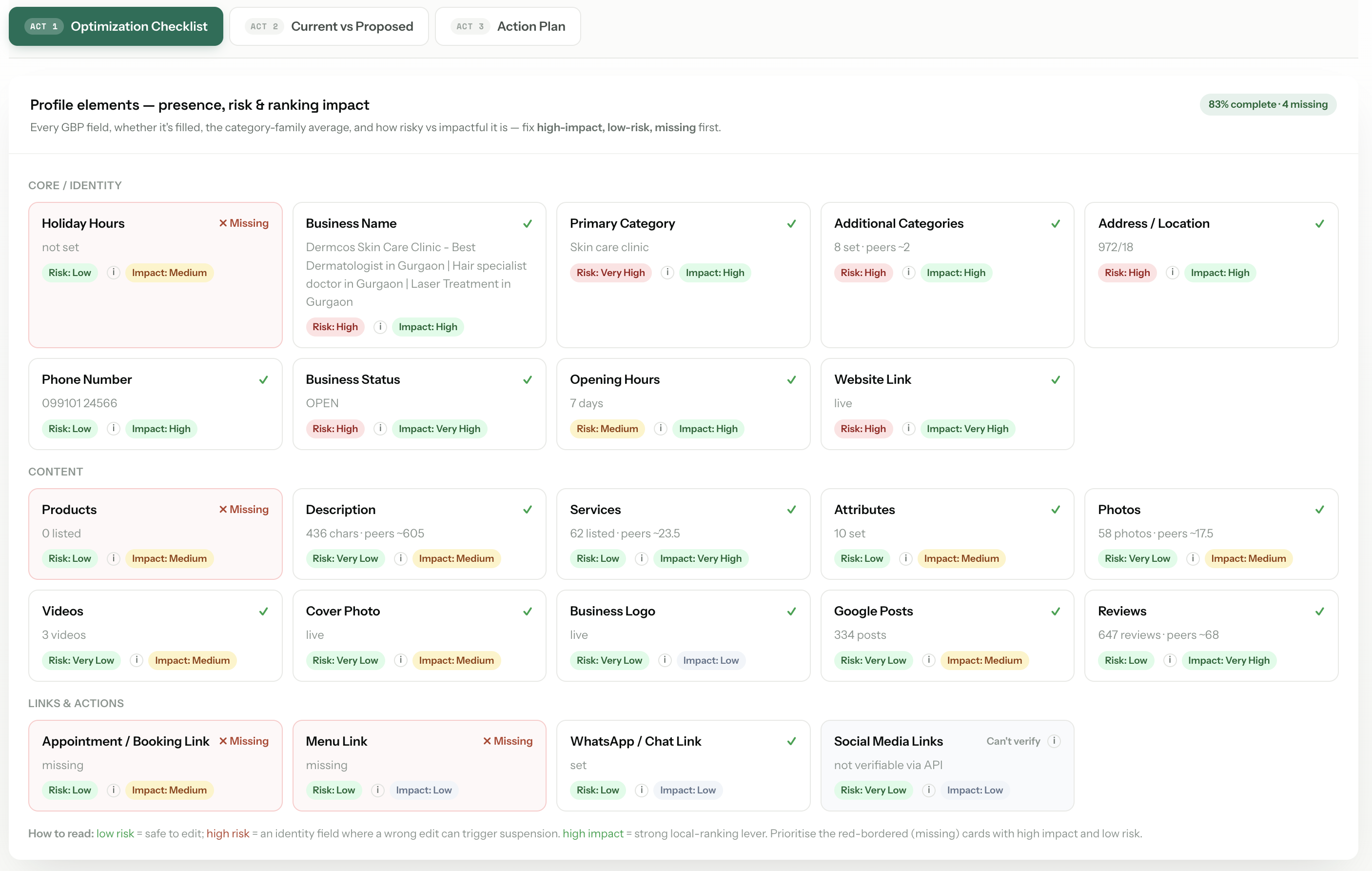
Inside Angryturtle — ICG's AI-native GBP operating system — FAQPage schema deploys through the GBP Posts and GBP Q&A modules. Google Business Profile has its own Q&A layer separate from schema.org FAQPage, but for the business's primary website (linked from the GBP), Angryturtle's content deployment includes FAQPage generation on the equivalent web pages. Ask Maps AIO — Angryturtle's parallel AIO Lab for local-intent queries — tracks whether the FAQPage-marked local pages are being cited on Maps and local AIO panels.
The stack effect: FAQPage schema deployed once at the CMS or content-generation layer, tracked automatically across two AIO surfaces (web and local), and continuously refined based on which questions and answer formats are earning citation.
Powered by YODA, Meta Catalyst IQ, and Angryturtle — the schema stack at ICG
Every healthcare engagement at ICG runs FAQPage schema as part of the broader stack. YODA handles YouTube ranking, AIO Lab tracking, and long-form content workflow with automatic FAQPage injection across three rank races. Meta Catalyst IQ handles paid Meta media at portfolio scale — 23+ accounts, Rs 9.1Cr+ monthly ad spend, 5,784 leads tracked in May 2026 at Rs 1,581 blended CPL. Angryturtle handles Google Business Profile and local search with FAQPage deployment on GBP-linked web pages — 143+ healthcare listings under active management. PrismSpy tracks competitor Meta ad activity — 75+ Indian healthcare brands, 2,150+ active ads catalogued — so the FAQ content plan is informed by what competitors are actually promoting.
WhatsApp ICG on 918130226224 for a FAQPage schema audit — the healthcare team maps which pages are eligible, which questions are firing AIO panels, and the 60-day deployment plan.
FAQ — FAQPage schema for healthcare AIO
Do we need FAQPage schema on every page of a healthcare site?
No. FAQPage belongs only on pages that contain a genuine FAQ block with substantive answers to informational questions. Marketing landing pages, doctor profiles, and location pages should not carry FAQPage unless they have a real FAQ section. Over-deployment triggers spam signals and can hurt broader rankings.
Can we reuse the same FAQ block across multi-city landing pages?
Not without differentiation. Duplicate FAQ blocks across 40 city variants trigger thin-content signals. Each city page's FAQ should have at least 30 to 40 percent unique Q&A specific to that city (local cost variations, local doctor names, local hospital references). The other 60 to 70 percent can be shared.
How long should each answer in FAQPage be for maximum AIO citation lift?
40 to 70 words is the observed sweet spot. Under 30 words the answer is too thin for AIO to synthesise. Over 100 words the panel tends to skip in favour of shorter alternatives elsewhere. The 40-70 range should include at least one specific number, threshold, or named detail.
Does FAQPage still generate rich-result snippets in classic SERPs?
Rarely, since Google throttled FAQ rich results in mid-2023. FAQPage's value today is primarily as an AIO citation signal, not as a display feature in classic SERPs. Deploy for AIO, not for rich snippets.
What is the difference between FAQPage and QAPage schema?
FAQPage marks a curated list of Q&A written by the page owner. QAPage marks a single user-submitted question with community answers (like Stack Overflow or Quora format). Healthcare marketing content is almost always FAQPage, never QAPage. Using QAPage on brand content is a misuse.
Should we include the doctor's byline schema inside FAQPage?
Not inside FAQPage itself. Author byline goes on the page as a separate Person schema block (or via a MedicalEntity's recognizingAuthority property for medical content). FAQPage focuses on the Q&A. The page as a whole can carry multiple schema types.
How do we verify our FAQPage schema is working after deployment?
Google's Rich Results Test tool validates syntax and eligibility — every FAQPage deployment should pass before publish. For AIO citation tracking, use scripted incognito capture on the target queries. YODA's AIO Lab does this automatically for pages inside the platform, refreshed weekly.
Related reading

- How to appear in Google AI Overview for healthcare queries in India
- HowTo schema for healthcare AIO — implementation guide
- AI Overview optimization for cardiology hospitals in India
- AI Overview optimization for multi-specialty hospitals in India
- Definition-first content structure — the AIO citation pattern
Reference frameworks — Google's own FAQPage structured-data documentation for the current eligibility criteria and rich-result guidelines, and the schema.org FAQPage vocabulary definition for the canonical property list. Test every deployment through Google's Rich Results Test before publish.
Book a free SEO diagnostic.
Hanuman Sihag's team runs a live crawl, checks technical health, cannibalisation, schema coverage and content gaps. 60 minutes, prioritised fix list.
The three platforms
behind every ICG engagement.
Beacon
CAPI middleware that fixes Event Match Quality, translates CRM statuses to Meta-standard events, dedups across channels.
Agency OS
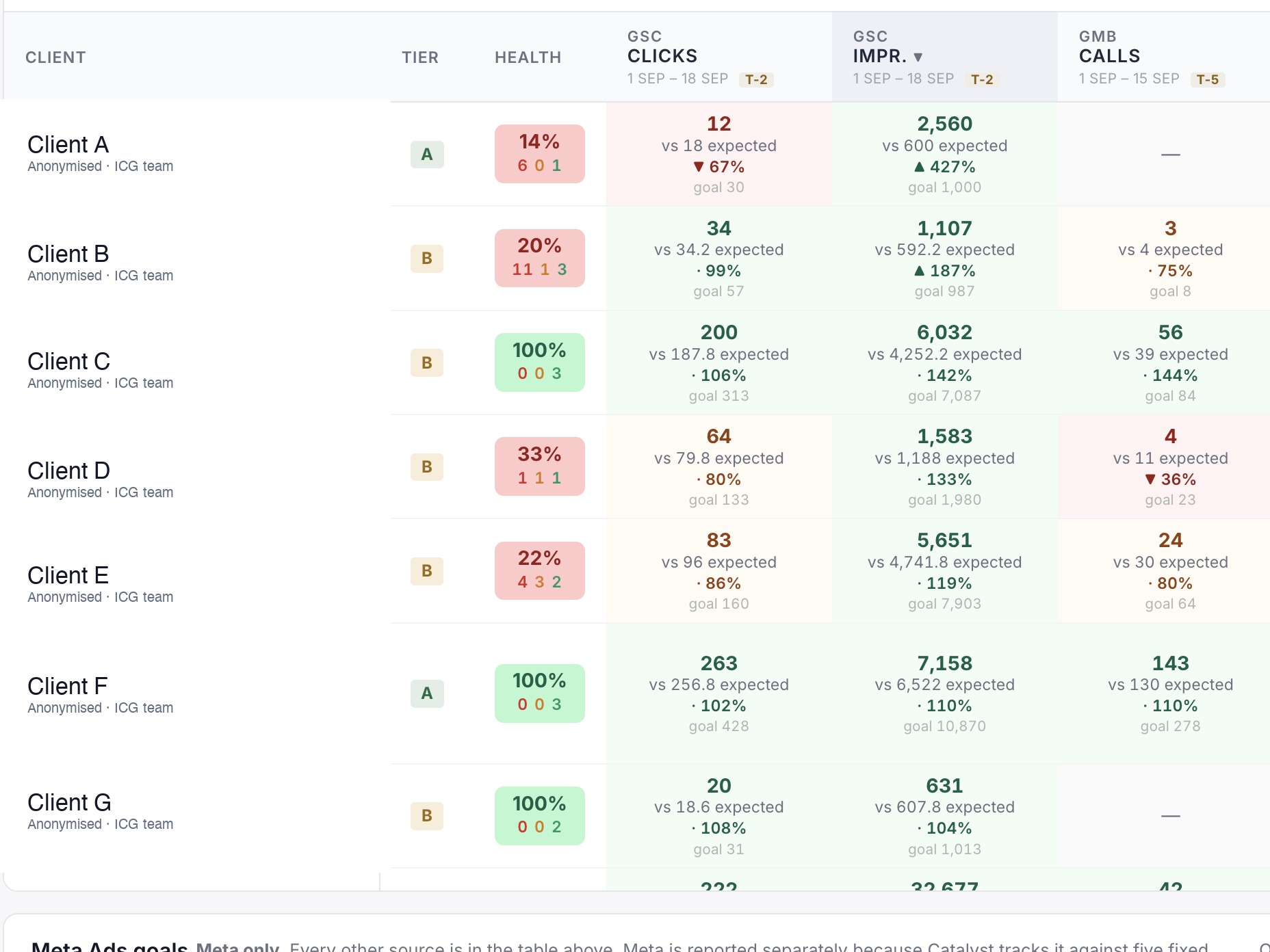
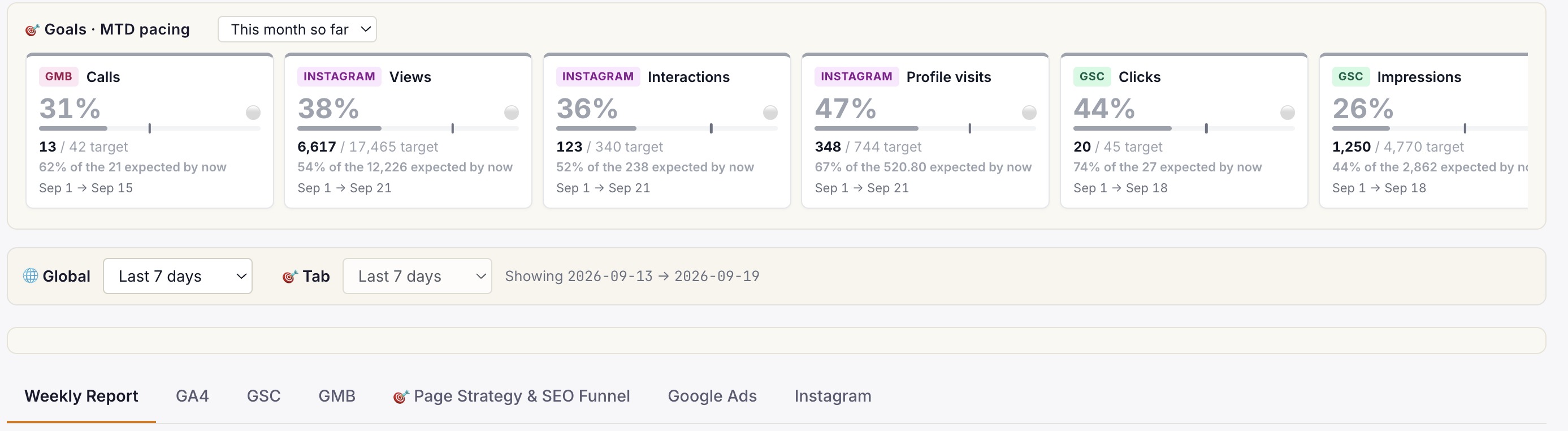
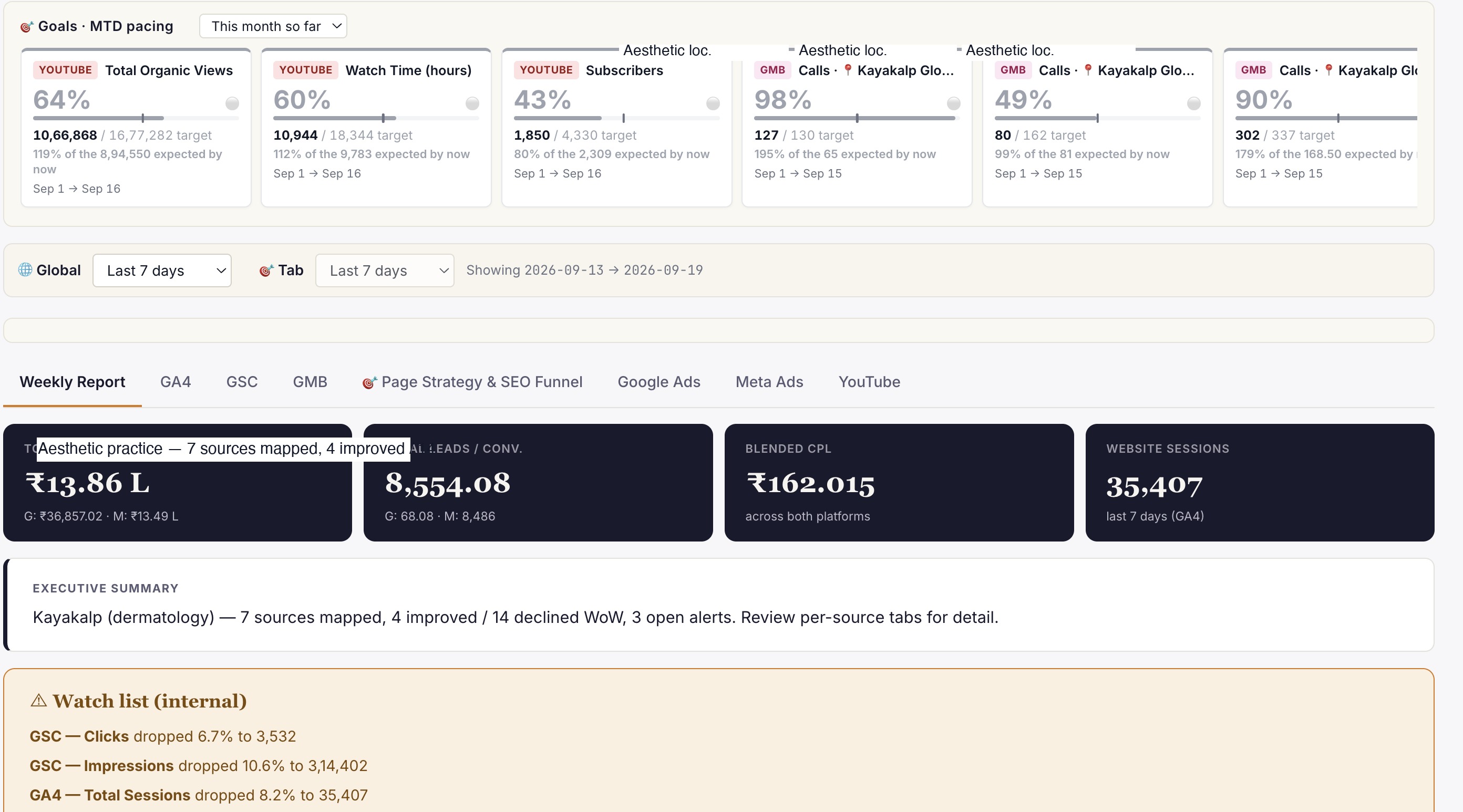
Live client dashboard. GSC, GA4, Google Ads, Meta Ads, IVR calls in one view. Login anytime, not monthly.
Phoenix
Clinic revenue intelligence over your PMS. Daily action queue: Prevent Loss, Maintain & Engage, Grow Revenue. Multi-centre rollout.
Or book a free 30-min audit to see all three in action on your account.
Healthcare brands
that already run on ICG.
A representative slice of the 150+ healthcare brands ICG has delivered for across India. Most engagements remain under NDA.


What ICG clients say · on video.
"Scale up of organic channels and business consulting. ICG has absolute domain authority in their field."
"Working with ICG transformed how we acquire IVF patients in Gurgaon. They understand the fertility journey from inquiry to consult..."
"What Ichelon accomplished — they got all my ideas and worked over 3-4 months to create an amazing, super-customised website."
The intelligence stack behind this playbook.
Every ICG engagement runs on the Search Intelligence Trifecta — Angryturtle for GMB, SIE for search and AI Overview, YODA for YouTube. Live product screens below.
Need help operationalising this?
Every ICG service is healthcare-only, NMC + DPDP-aware, and built around the patient-research patterns that drive Indian healthcare growth in 2026.
Every practice welcome — packages from ₹20,000/mo.
Goals-Driven engagements · Performance-Linked Payout Models available
More from
ICG.
Five trends shaping Indian healthcare marketing through 2027: AI-first patient research, Conversions API adoption, ABDM discovery, the AEO w...
Healthcare AIO is the discipline of getting your clinic or hospital cited inside Google AI Overviews, ChatGPT and Perplexity answers — not j...
Conversational-search advertising places brand messages inside AI chat answers — ChatGPT, Perplexity, Copilot — rather than beside a results...
Stop guessing.
Book a Diagnostic.
30 minutes. Free. With the AI-powered healthcare-only marketing agency 150+ brands already run on. No slides, no pitch, no hard close.


