


AI Overview optimization for multi-specialty hospitals in India — the portfolio playbook for 12-25 specialty channels in 2026
A multi-specialty hospital runs 12-25 specialty content channels. AI Overview optimization at that scale needs a centralized AIO Lab plus de-centralized clinical review. Here is the ICG playbook.
No pitch. Written root-cause diagnosis. AI-powered, healthcare only.
Direct answer
A multi-specialty hospital runs 12-25 specialty content channels. AI Overview optimization at that scale needs a centralized AIO Lab plus de-centralized clinical review. Here is the ICG playbook.
TL;DR

AI Overview optimization for a multi-specialty hospital is a portfolio problem, not a page problem. A single hospital site spans 12-25 clinical departments — cardiology, oncology, orthopaedics, neurology, gastroenterology, nephrology, urology, gynaecology, IVF, paediatrics, general medicine and more — and each specialty has its own query mix, compliance perimeter, and citation pattern. The workflow that scales is centralized AIO Lab tracking with de-centralized clinical review.
Single-specialty clinics have it easier. A standalone IVF clinic or a solo dermatology practice can run AIO optimization as a page-by-page exercise, with one clinical lead reviewing every piece of content. A multi-specialty hospital cannot. The volume — hundreds of pages across 12-25 specialties, dozens of doctor profiles, multiple locations — breaks the page-by-page model. What works instead is a portfolio approach: a centralized team owns the AIO structural playbook and weekly tracking, and each specialty's clinical lead owns the medical accuracy review for their department's content. This post walks through the multi-specialty structure ICG runs for hospital clients, the department-by-department query mix that shapes the content plan, the NABH compliance overlay that most single-specialty guides skip, and the AIO Lab workflow at hospital-portfolio scale.
Why multi-specialty AIO is a different problem
Three things break at multi-specialty scale that do not break at single-specialty scale. First, query volume and diversity. A cardiology-only site tracks maybe 60-100 core queries. A 15-department hospital tracks 900-1,500. No single content lead can maintain query-level familiarity across that surface. Second, compliance variance by specialty. IVF content sits under the ART Act 2021 and PC-PNDT Act 1994. Oncology under DCGI drug-content rules. Paediatrics under stricter parental-consent norms. Aesthetic and cosmetic surgery under separate ASCI cosmetic-surgery guidelines. The compliance perimeter is not uniform across specialties. Third, clinical review bottlenecks. Every specialty needs review by a credentialed doctor in that specialty — a cardiologist cannot sign off on oncology content and vice versa. Central editorial cannot bypass this without breaking NMC compliance.
The workflow that solves all three: a central content team owns structure, schema, and AIO Lab tracking; each specialty's Head of Department (HOD) or a named senior consultant owns medical accuracy review and byline attribution for their content. Central handles the mechanical portion of AIO citation optimization (definition-first openings, schema deployment, recency signals, ASCI cleanup); clinical review handles the substance.
The specialty query mix a hospital must plan for
Query volume and AIO panel frequency vary widely by specialty. This table shows the pattern ICG has observed across multi-specialty hospital portfolios in India.
| Specialty | Query volume in India | AIO panel frequency | Blended CPL (paid benchmark) | Primary AIO query type |
|---|---|---|---|---|
| Cardiology | Very high | Very high | Rs 3,200 | Symptom triage + procedure comparison |
| Oncology | Very high | High (YMYL-restricted) | Rs 4,500-6,000 | Treatment options + cost |
| Orthopaedics | High | High | Rs 1,400 | Procedure explainer + recovery |
| Neurology / Neurosurgery | Medium | Medium | Rs 2,800-3,500 | Symptom explainer + condition definition |
| Gastroenterology | High | High | Rs 900-1,400 | Symptom + procedure (endoscopy) |
| IVF / Reproductive medicine | Very high | Very high | Rs 632 (ICG portfolio) | Success rate + cost + procedure |
| Nephrology | Medium | Medium | Rs 2,200 | Condition + dialysis explainer |
| Urology | Medium | Medium | Rs 1,600 | Procedure + prostate content |
| Gynaecology | Very high | Medium (YMYL-restricted) | Rs 800-1,200 | Symptom + condition + PCOS |
| Paediatrics | High | Medium | Rs 700-1,100 | Symptom + vaccination + development |
| General medicine | Very high | Very high | Rs 500-900 | Symptom triage across every complaint |
| Dermatology | High | High | Rs 520-1,180 | Condition + treatment + cost |
Three specialties disproportionately drive AIO impressions for a multi-specialty hospital: general medicine (broadest query base), cardiology (highest emergency stakes), and IVF (highest commercial intent per query). A content plan that under-invests in any of the three leaves significant impressions on the table.
The central-plus-de-central workflow that scales
The workflow ICG runs for multi-specialty hospital portfolios splits ownership between a central content ops team and specialty-level clinical reviewers.
Central owns: the AIO structural playbook (definition-first templates, schema deployment patterns, byline schema components, "last medically reviewed" recency tags, ASCI compliance sweep), the AIO Lab weekly tracking across all specialties, the CMS-level schema injection, and the content calendar coordination across departments.
Each specialty's HOD or senior consultant owns: medical accuracy review of every content piece attributed to their department, byline attribution and NMC registration reference, sign-off on treatment claims and outcome language, and quarterly review of "last medically reviewed" dates on evergreen content in their specialty.
The connective tissue: a lightweight content brief format that goes from central editorial to specialty clinical review, includes the target AIO query, the definition draft, the proposed byline, and the schema type. Clinical review approves, edits medically, or rejects. Central deploys and tracks in AIO Lab. Feedback loop closes on the next weekly readout.
The NABH compliance overlay for multi-specialty hospitals
NABH (National Accreditation Board for Hospitals and Healthcare Providers) accreditation is a marketing asset for multi-specialty hospitals — but only if the on-site content and communications honour the NABH standards. NABH accreditation levels (Entry Level, Full Accreditation, Specialty Accreditation) each carry specific patient-communication and quality-standard requirements that map to how the hospital talks about outcomes, safety, and clinical governance on the website.
Where this touches AIO: NABH-cleared content — accreditation-level clearly stated, quality indicators published, patient-safety commitments visible, credentialed clinical leadership on the About and Team pages — cites at a higher rate than non-accredited-signalled content on institutional-authority queries ("safe hospital for cardiac surgery Delhi", "accredited multi-specialty hospital Bangalore"). AIO's trust filter reads NABH accreditation as an institutional-quality signal the way it reads NMC registration as a practitioner-quality signal.
The mechanical action: every specialty page's footer or trust band should carry the NABH accreditation reference, ideally with a linked verification. The trust component ICG uses on hospital sites carries this by default so it is not an add-on per page. ICG's NABH consultant integration — Adrito Basu is our NABH advisory partner across 15+ NABH consulting pages — extends into hospital content strategy where NABH-cleared language becomes an AIO citation lever.
Schema deployment across a multi-specialty CMS
Schema.org markup for a multi-specialty hospital cannot be applied page by page manually. The scale defeats it. ICG's approach is CMS-level schema injection templated by page type, then customised per specialty.
Every page carries a base MedicalBusiness or Hospital schema block via the site template. Specialty department pages carry an additional MedicalSpecialty markup with the department name matched to schema.org's controlled vocabulary (Cardiovascular, Oncologic, Orthopaedic, Neurologic, etc). Procedure pages carry MedicalProcedure with bodyLocation and howPerformed. Condition explainer pages carry MedicalCondition. Doctor profile pages carry Physician with credentials and memberOf. FAQ pages carry FAQPage. This is templated once in the CMS and applied automatically at page render.
The manual layer per specialty: the definition-first opening, the FAQ block content, the outbound authority links, and the byline attribution. This is what the specialty's content lead and clinical reviewer own, and it is where the AIO citation actually lives.
The five-step hospital portfolio AIO audit
When a multi-specialty hospital engages ICG for AIO optimization, the initial 30-day audit follows this shape.
- Portfolio inventory. Pull every departmental page, specialty landing page, procedure page, condition page, and doctor profile. Categorise by AIO opportunity — high-query-volume, question-form, procedural, cost, symptom.
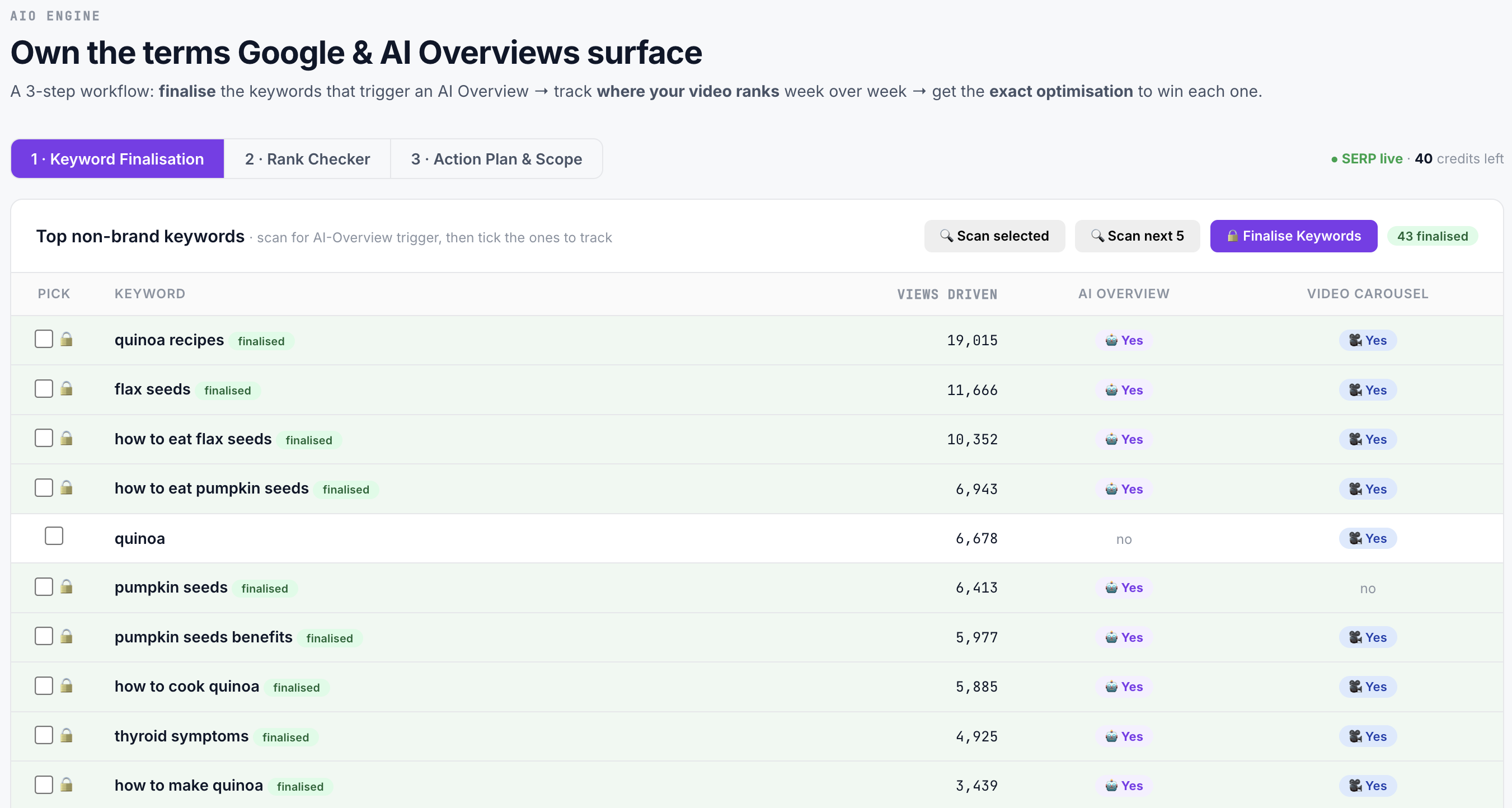
- AIO Lab query list construction. Build a curated 900-1,500 query list across all specialties, weighted by commercial intent and AIO panel frequency. Capture baseline citation state per query in incognito Indian-IP sessions.
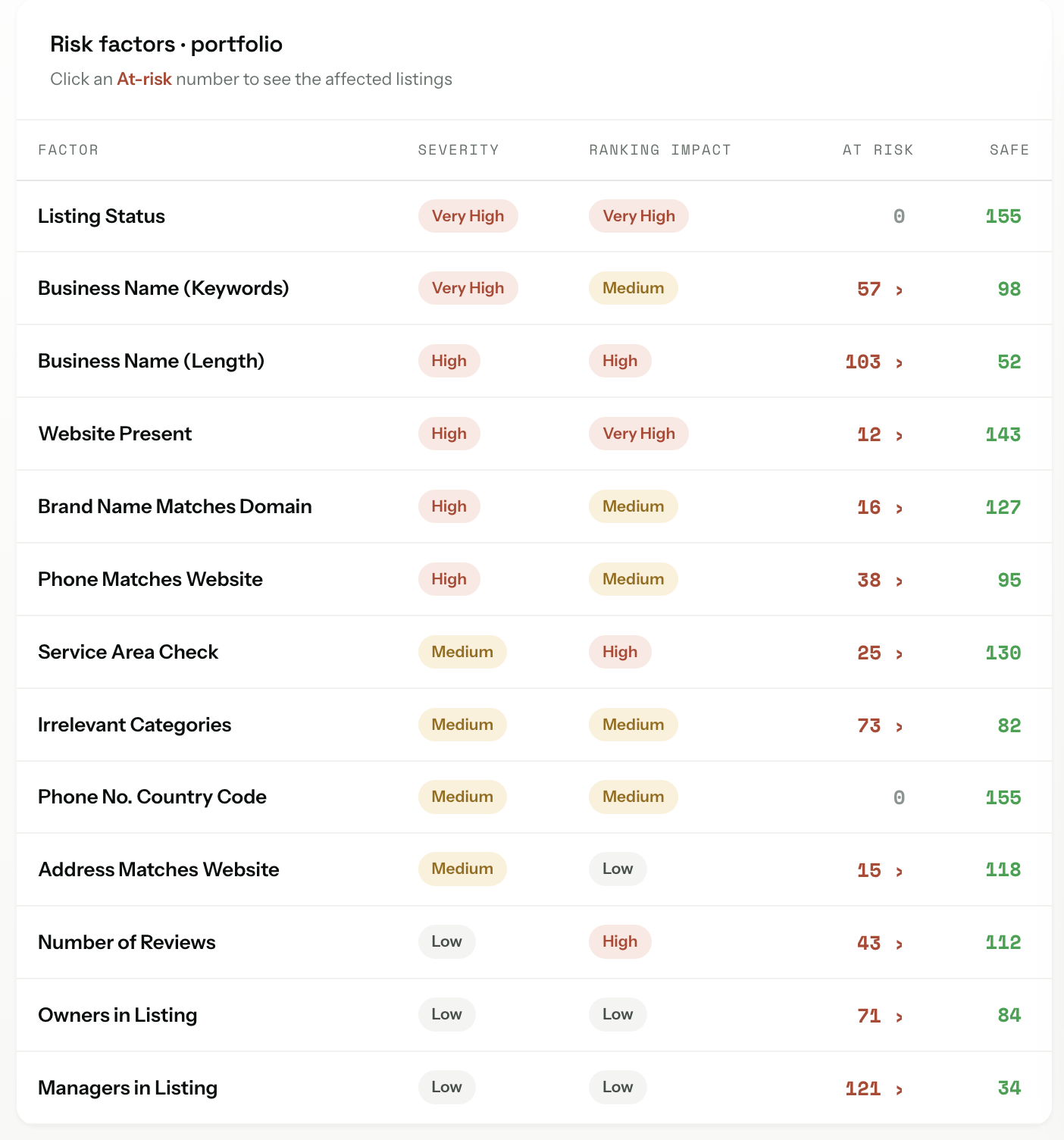
- Structural audit against the eight-signal checklist. Every page scored on definition-first opening, entity clarity, named-author byline, schema match, structured pull-quotes, recency, source anchoring, ASCI cleanliness. Score aggregated by specialty.
- Compliance perimeter check by specialty. IVF pages checked against ART and PC-PNDT. Oncology against DCGI. Paediatric content against consent norms. NABH accreditation signals verified across the site.
- Prioritised remediation plan. Ranked by (AIO opportunity size × structural gap × ease of fix). Central editorial + specialty clinical review takes the top 30-50 pages into the first 60-day sprint.
YODA's AIO Lab at hospital portfolio scale
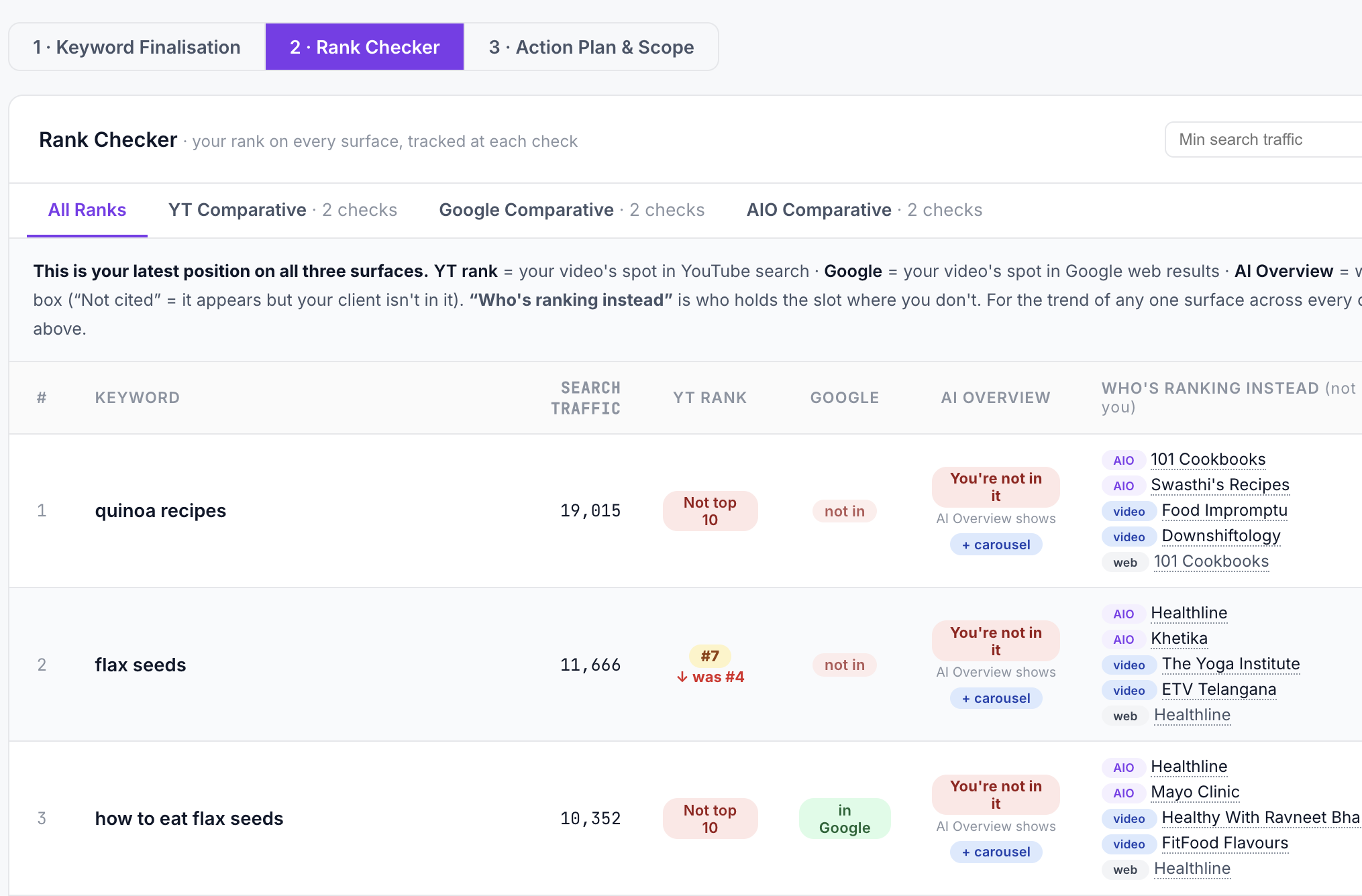
YODA's AIO Lab handles the 900-1,500 query tracking that a multi-specialty hospital needs. The lab captures citations across the full portfolio query list weekly, tags each query by specialty and by intent type (symptom, procedural, cost, comparison, doctor-brand), and produces a per-specialty citation dashboard. When cardiac citation moves week over week, the cardiology HOD sees the change with the specific queries that gained or lost citation. When oncology moves, the oncology HOD sees theirs. Central editorial sees the aggregate portfolio view and the cross-specialty patterns — where a schema deployment lifted citation across multiple specialties simultaneously, where a compliance sweep changed the baseline.
The three rank races inside YODA — YouTube ranking, AIO Lab citation, and general SERP ranking — all run in parallel and feed the same weekly hospital readout. For a multi-specialty hospital running content across specialty YouTube channels, department landing pages, and long-form articles, the three-race view is the closest thing to a unified content performance dashboard India's healthcare marketing has produced.
Powered by YODA, Meta Catalyst IQ, and Angryturtle — the hospital-scale stack at ICG
Every multi-specialty hospital engagement at ICG runs on the same integrated stack. YODA — the AI-native healthcare YouTube platform — handles YouTube ranking, AIO Lab tracking across 900-1,500 queries, and long-form content workflow across three rank races. Meta Catalyst IQ handles paid Meta media at portfolio scale — 23+ accounts optimised, Rs 9.1Cr+ monthly ad spend, 5,784 leads tracked in May 2026 at Rs 1,581 blended CPL. Angryturtle handles Google Business Profile and local search across every hospital branch — 143+ healthcare listings under active management, from Rs 999/- per listing self-serve. PrismSpy tracks every competitor hospital's Meta ad activity — 75+ brands, 2,150+ active ads catalogued — so the multi-specialty media plan is never blind to what regional competitors are running.
For a multi-specialty hospital in India running 15+ departments, the stack replaces four separate vendor relationships (YouTube agency, paid media agency, local SEO vendor, competitor intelligence tool). WhatsApp ICG on 918130226224 for a portfolio AIO audit — Rohit and the healthcare team map the current state and the 90-day plan.
Related reading
- Running a cardiac centre? Read AI Overview optimization for cardiology hospitals.
FAQ — AI Overview for Indian multi-specialty hospitals
How many pages should we optimize for AIO in the first 90 days?
For a 15-department hospital, ICG typically targets 30-50 pages in the first 60 days — the highest-value 2-4 pages per specialty by traffic and commercial intent, plus 5-10 cross-department pages (About, Trust, NABH accreditation, Emergency). This gives the central team and each specialty's clinical reviewer a workable review load. Beyond 50 pages in 60 days, the clinical review bottleneck breaks the workflow.
Do we need every HOD to review every content piece in their specialty?
Not necessarily. A specialty can nominate a designated senior consultant as the AIO content reviewer instead of routing every piece through the HOD. What is not optional: the reviewing doctor must be credentialed in that specialty and named in the byline. Central editorial cannot bypass clinical review without breaking NMC compliance.
How do we handle content for specialties without a full-time HOD?
Common for smaller specialties (endocrinology, rheumatology) in mid-size hospitals. Options: a visiting consultant retained as the AIO content reviewer for that specialty, or a cross-linked byline where a senior general medicine consultant with training in that area attests. What does not work: publishing content in that specialty without any named credentialed reviewer.
Does NABH accreditation actually help AIO citation?
It helps for institutional-authority queries — "accredited multi-specialty hospital Delhi", "NABH-certified cardiac hospital Bangalore" — where AIO's trust filter reads NABH as an institutional quality signal similar to how it reads NMC registration for doctors. NABH does not directly move symptom-query or procedure-query citation, where content structure and clinical byline matter more.
Should each specialty run its own YouTube channel, or one hospital channel?
For AIO video citation, one hospital channel with specialty-tagged playlists tends to outperform 15 separate channels because subscriber and watch-time signals concentrate. For brand and marketing purposes, some hospitals prefer specialty sub-channels. YODA's workflow supports both structures — the AIO Lab tracks citation regardless of channel architecture.
How do we prevent central editorial from overriding a specialty's clinical review?
The workflow ICG runs makes clinical review a hard gate — no publish without the specialty reviewer's sign-off. In the CMS this is a required approval step, not an advisory one. When central and clinical review disagree, the disagreement escalates to the medical director rather than being resolved by editorial preference. Compliance drives the sequence.
What does the weekly readout to hospital leadership look like?
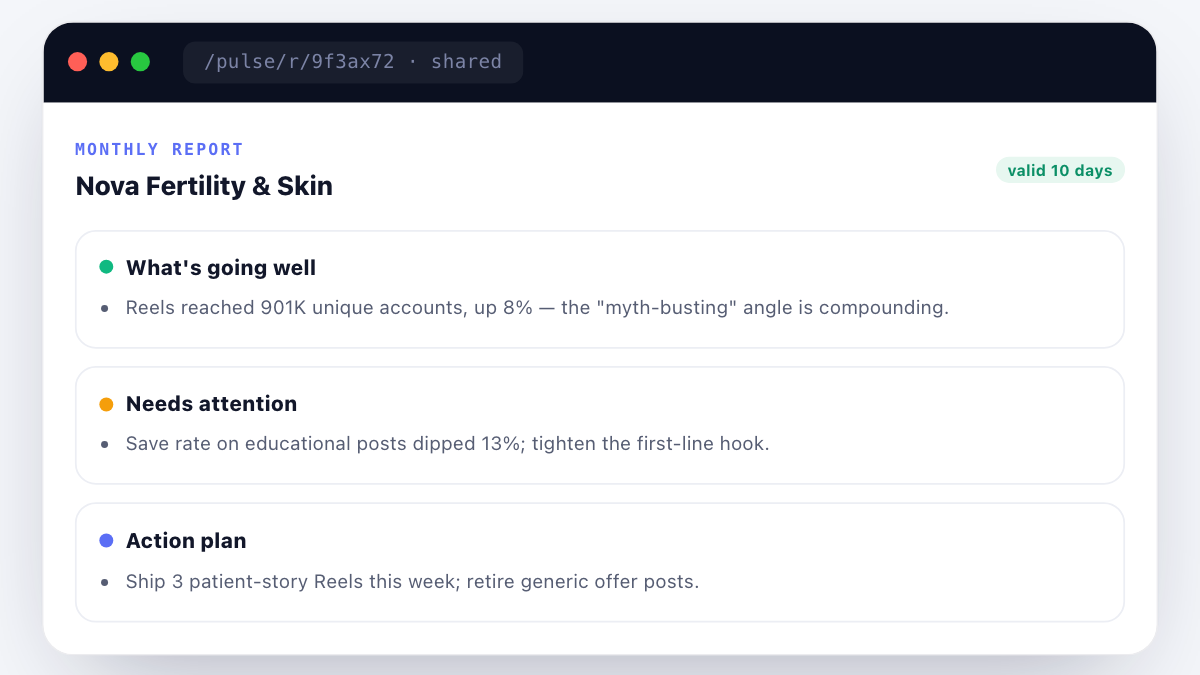
Per-specialty AIO citation count, week-over-week delta, top 5 queries gaining citation, top 5 losing citation, and a 30-60-90 day rolling trend. Central adds a portfolio-level view of citation share and a compliance-check summary (any ASCI or NMC issues surfaced). YODA's AIO Lab produces the raw data; the ICG account team packages it into the readout format the medical director and marketing head can act on.
Related reading
- How to appear in Google AI Overview for healthcare queries in India
- AI Overview optimization for cardiology hospitals in India
- FAQPage schema for healthcare AIO — implementation guide
- HowTo schema for healthcare AIO — implementation guide
- AIO SEO for hospitals in India — the 2026 guide
Reference frameworks — the National Accreditation Board for Hospitals for hospital-level accreditation standards, and the National Medical Commission for practitioner conduct and specialty-level clinical review requirements. For Google's own guidance on AI Overview mechanics, see the Google Search generative AI blog.
Book a free 30-minute Brand & Growth Diagnostic.
It's a working session, not a sales pitch — you leave with a written root-cause analysis you can act on, whether or not you engage ICG.
The three platforms
behind every ICG engagement.
Beacon
CAPI middleware that fixes Event Match Quality, translates CRM statuses to Meta-standard events, dedups across channels.
Agency OS
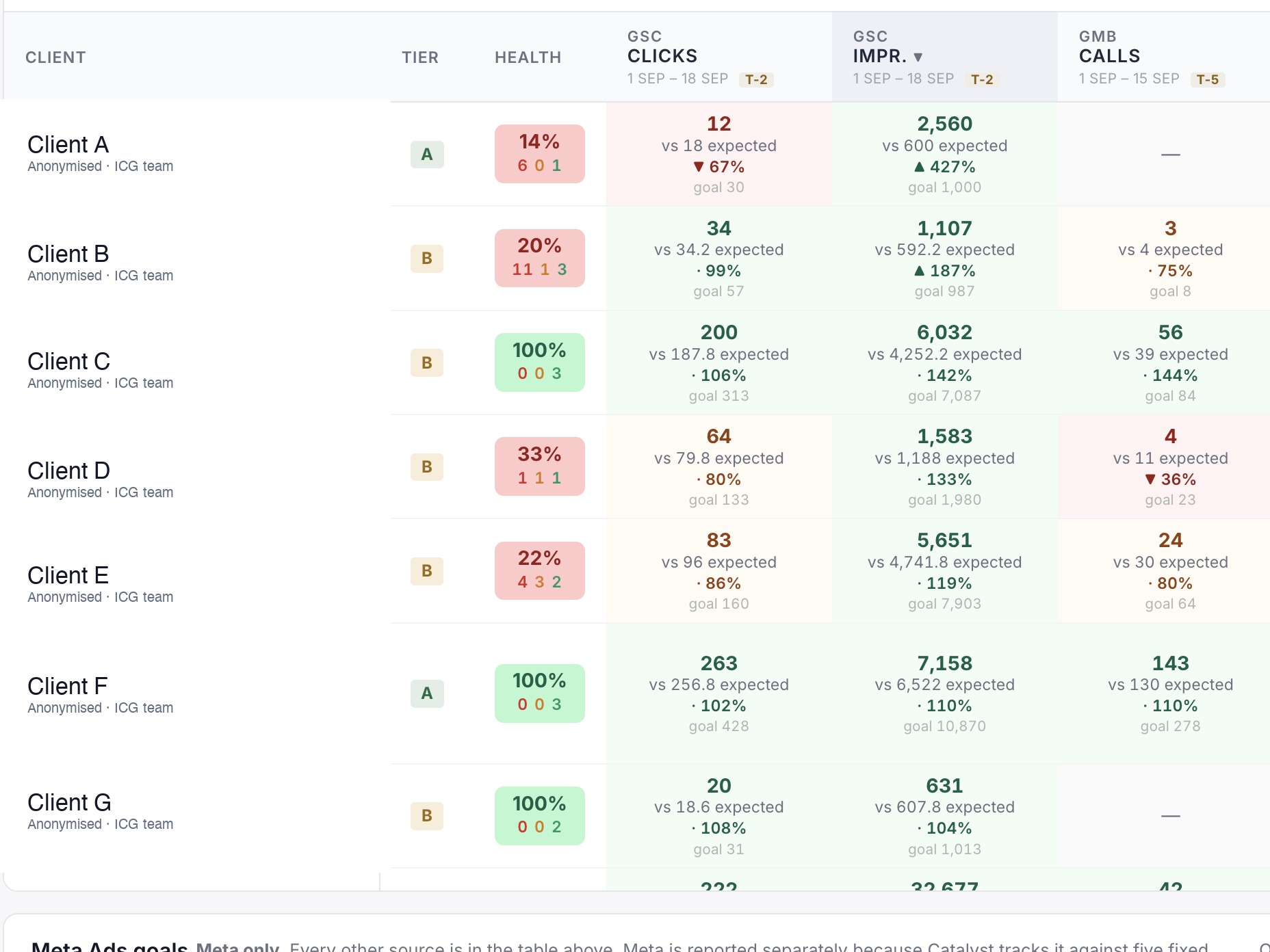
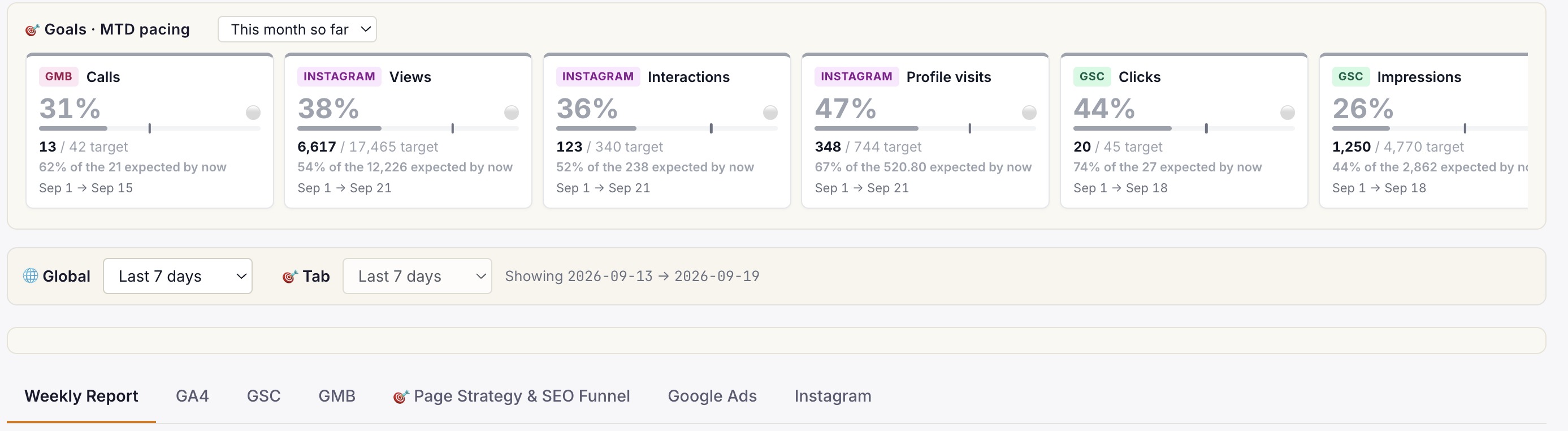
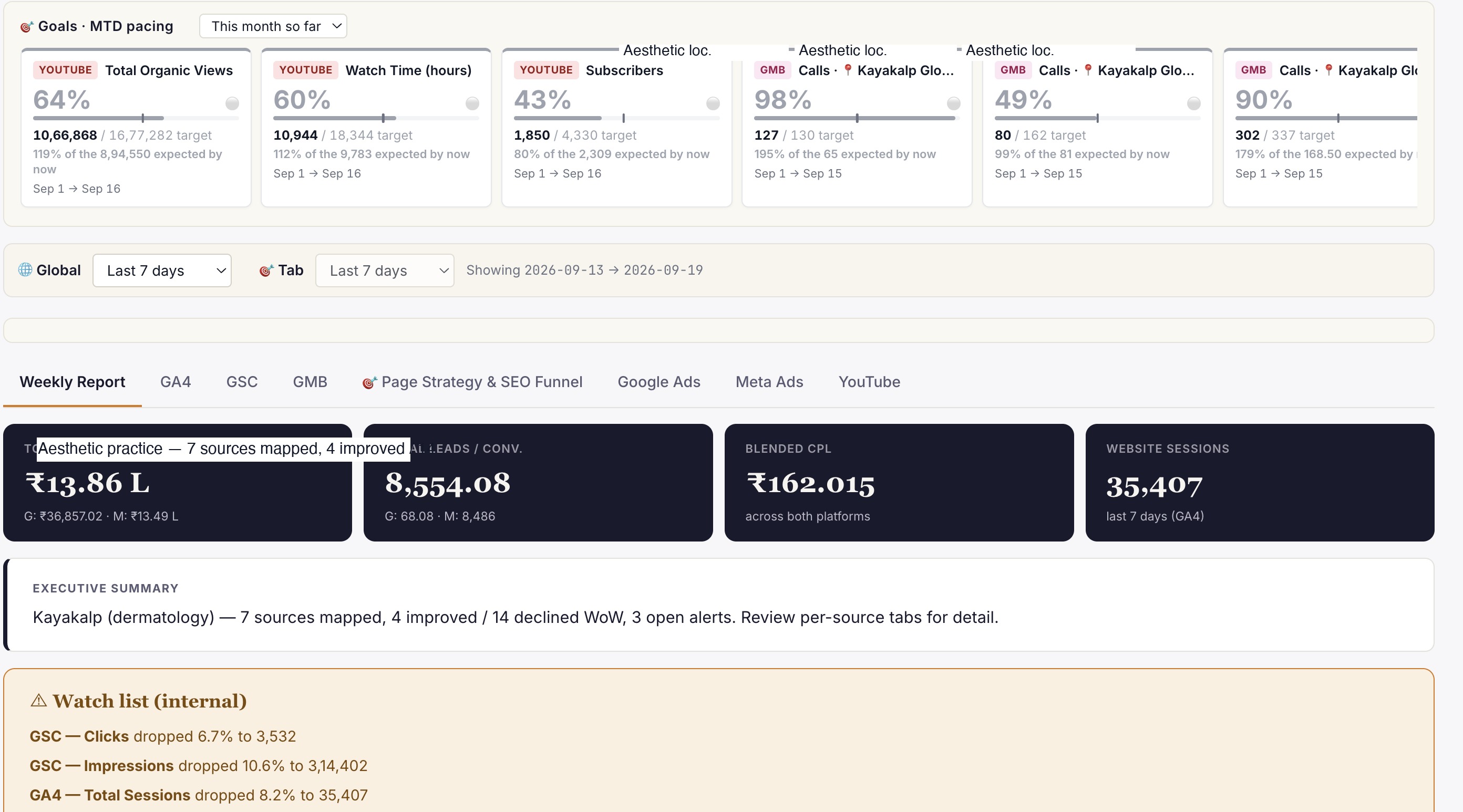
Live client dashboard. GSC, GA4, Google Ads, Meta Ads, IVR calls in one view. Login anytime, not monthly.
Phoenix
Clinic revenue intelligence over your PMS. Daily action queue: Prevent Loss, Maintain & Engage, Grow Revenue. Multi-centre rollout.
Or book a free 30-min audit to see all three in action on your account.
Healthcare brands
that already run on ICG.
A representative slice of the 150+ healthcare brands ICG has delivered for across India. Most engagements remain under NDA.


What ICG clients say · on video.
"Mental health marketing requires a different sensitivity. ICG built compliance-aware campaigns that respect both patients and our..."
"Bariatric surgery patients need a long consideration cycle. ICG built a content + paid system that respects that timeline."
"Working with ICG felt like working with an in-house growth team that happens to specialise in healthcare."
The intelligence stack behind this playbook.
Every ICG engagement runs on the Search Intelligence Trifecta — Angryturtle for GMB, SIE for search and AI Overview, YODA for YouTube. Live product screens below.
Need help operationalising this?
Every ICG service is healthcare-only, NMC + DPDP-aware, and built around the patient-research patterns that drive Indian healthcare growth in 2026.
Every practice welcome — packages from ₹20,000/mo.
Goals-Driven engagements · Performance-Linked Payout Models available
More from
ICG.
Five trends shaping Indian healthcare marketing through 2027: AI-first patient research, Conversions API adoption, ABDM discovery, the AEO w...
Healthcare AIO is the discipline of getting your clinic or hospital cited inside Google AI Overviews, ChatGPT and Perplexity answers — not j...
Conversational-search advertising places brand messages inside AI chat answers — ChatGPT, Perplexity, Copilot — rather than beside a results...
Stop guessing.
Book a Diagnostic.
30 minutes. Free. With the AI-powered healthcare-only marketing agency 150+ brands already run on. No slides, no pitch, no hard close.


