


HowTo schema for healthcare AI Overview citation in India — the 2026 implementation guide with JSON-LD examples
HowTo schema marks procedural content — how to prepare for surgery, how to book a consultation, how to recover after a procedure. In healthcare AIO citation, it wins on procedural queries. Here is the JSON-LD structure and when to use it over FAQPage.
No pitch. Written root-cause diagnosis. AI-powered, healthcare only.
Direct answer
HowTo schema marks procedural content — how to prepare for surgery, how to book a consultation, how to recover after a procedure. In healthcare AIO citation, it wins on procedural queries. Here is the JSON-LD structure and when to use it over FAQPage.
TL;DR
HowTo schema is a structured-data type in the schema.org vocabulary that marks step-by-step procedural content — how to prepare for a colonoscopy, how to book an IVF consultation, how to recover after cataract surgery. In healthcare AI Overview citation for Indian queries, HowTo drives 25 to 35 percent citation lift on procedural queries when it is the clearest step-list among the ranking-eligible pages. It complements FAQPage rather than replacing it.
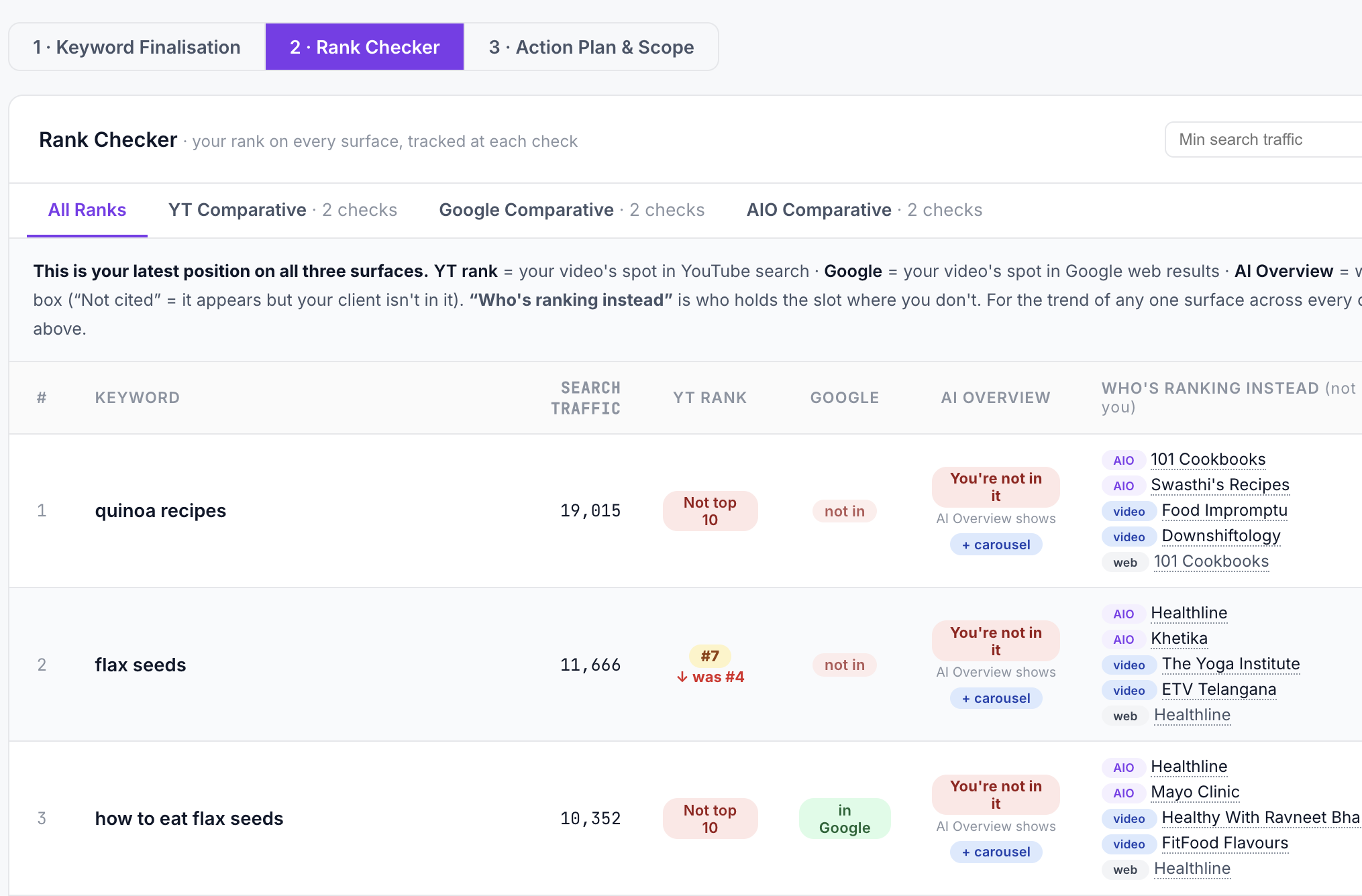
ICG's schema audit for every healthcare content engagement checks both FAQPage and HowTo eligibility per page because the two schemas answer different query intents. FAQPage wins on question-form queries ("what is PCOS", "how much does IVF cost"). HowTo wins on procedural queries ("how to prepare for endoscopy", "how to book a cardiac consultation online"). Getting the choice right is the difference between citation and invisibility. This post walks through the HowTo JSON-LD structure with a working healthcare example, when to use HowTo versus FAQPage, the procedural-language patterns that cite well, Google's Rich Results Test methodology for HowTo, the specific Google policy shift on HowTo rich results in 2023 that healthcare marketers still misunderstand, and how ICG's Turn 20 auto-detection injector identifies HowTo-eligible content across the site.
What HowTo schema actually is
HowTo is a schema.org type in the CreativeWork hierarchy that describes a set of step-by-step instructions to accomplish a specific task. Its core structure: a name (the task), an optional description, an optional totalTime, and — critically — a step array containing HowToStep items, each with a name (the step's label) and text (the step's content). Steps can carry additional properties: image, url (a fragment link to the on-page step anchor), and nested HowToDirection or HowToTip items for granularity.
HowTo is embedded via JSON-LD in a script tag, matched to visible page content by Google's crawler, and treated as both a rich-result eligibility signal (for the small subset of surfaces where HowTo rich results still display) and an AI Overview citation signal on procedural queries.
The 2023 Google policy shift most healthcare marketers still misread: Google announced in September 2023 that HowTo rich-result display was being restricted to desktop only, and later reduced further. HowTo as a display feature in classic SERPs is largely deprecated. But HowTo as a schema signal for the AI Overview retrieval layer is still active and still valuable. The confusion — "HowTo doesn't work anymore" — mixes up two different things. The rich-result display shrank. The AIO citation signal did not.
The JSON-LD structure — a working healthcare example
Below is a working HowTo JSON-LD block for a "how to prepare for a colonoscopy" page. Copy the shape, replace the content.
<script type="application/ld+json">
{
  "@context": "https://schema.org",
  "@type": "HowTo",
  "name": "How to prepare for a colonoscopy",
  "description": "Step-by-step preparation for a colonoscopy procedure in India, covering dietary restrictions, bowel-prep medication, and same-day protocol.",
  "totalTime": "P2D",
  "step": [
    {
      "@type": "HowToStep",
      "name": "Two days before — dietary restrictions",
      "text": "Switch to a low-fibre diet 48 hours before the procedure. Avoid whole grains, raw vegetables, seeds, and nuts. Clear soups, white rice, and lean protein are acceptable."
    },
    {
      "@type": "HowToStep",
      "name": "One day before — clear liquid diet",
      "text": "24 hours before the procedure, switch entirely to clear liquids. Water, clear apple juice, plain tea without milk, and clear broths are permitted. Avoid coloured liquids, especially red or purple."
    },
    {
      "@type": "HowToStep",
      "name": "One day before — bowel preparation",
      "text": "Begin the prescribed bowel-prep medication (polyethylene glycol solution) per the gastroenterologist's schedule, typically starting evening before. Follow the split-dose protocol if instructed — half the evening before, half the morning of."
    },
    {
      "@type": "HowToStep",
      "name": "Procedure day — pre-arrival",
      "text": "Do not eat or drink anything within 6 hours of the scheduled procedure. Arrange a companion to drive you home; sedation prevents driving for 24 hours after."
    }
  ]
}
</script>
Two structural notes. First, totalTime uses ISO 8601 duration format — P2D means 2 days, PT30M means 30 minutes. Get this format wrong and Rich Results Test flags it. Second, each step's text should be complete enough to be read standalone (AIO may pull one step verbatim without the surrounding context) but concise enough to be scannable. 30-70 words per step is the working range.
When to use HowTo versus FAQPage
The choice is intent-driven, not format-driven. This table shows the decision framework ICG uses.
| Content type | Query intent | Correct schema | Why |
|---|---|---|---|
| Step-by-step preparation for a procedure | Procedural — how to do X | HowTo | Sequential steps with a defined end state |
| Step-by-step booking or enquiry flow | Procedural — how to accomplish X | HowTo | Ordered actions |
| Common patient questions about a condition | Informational — question-form | FAQPage | Independent Q&A pairs, not ordered |
| Cost breakdown with multiple factors | Informational — how much | FAQPage | Question-answer pairs, not sequential |
| Recovery timeline with day-by-day milestones | Procedural — what to expect | HowTo | Ordered timeline |
| Symptom checklist (see doctor if X) | Informational — when to | FAQPage | Not sequential; discrete conditions |
| How to check insurance coverage for surgery | Procedural — how to verify | HowTo | Sequential verification steps |
| Differences between two procedures | Informational — comparison | FAQPage or comparison table | Not sequential; comparative |
The two rules that resolve most ambiguity. First — is the content genuinely sequential, where step 2 depends on step 1 being complete? If yes, HowTo. If steps are independent, FAQPage or a plain unordered list. Second — does the content have a defined end state (the procedure completed, the appointment booked, the coverage verified)? If yes, HowTo fits. If the content is an ongoing set of considerations, FAQPage fits better.
Both schemas can coexist on the same page. A pre-surgery page can carry HowTo for the preparation steps and FAQPage for the patient questions block. They are complementary.
Procedural language patterns that cite well
HowTo steps that cite well share four language patterns.
Imperative verb openings. Each step starts with a verb — "Begin", "Switch", "Avoid", "Arrange", "Confirm". Not "You should begin" or "Patients need to". Direct imperatives read as procedural instructions and cite cleanly.
Specific quantities and timings. "48 hours before" not "a couple days before". "6 hours of the scheduled procedure" not "several hours". AIO's citation criteria weigh specificity heavily on procedural content because the panel needs quotable specifics.
Explicit sequence markers. "Two days before", "24 hours before", "morning of the procedure". Sequence markers make the ordering visible to both the reader and the retrieval layer, and they make each step self-contained.
Named substances, medications, or protocols where safe. "Polyethylene glycol solution" not "the medication". "Split-dose protocol" not "as directed". Named specificity signals expertise and cites at a higher rate. Where NMC or ASCI compliance restricts naming specific brand drugs in patient-facing content, name the generic active ingredient instead of the brand.
The pattern that cites poorly: vague procedural language ("prepare well", "follow instructions", "consult your doctor as needed"). AIO reads this as filler and skips.
Google's Rich Results Test methodology for HowTo
Every HowTo deployment should pass Google's Rich Results Test before publish. The test validates JSON-LD syntax, required-property presence, and eligibility for rich-result surfaces. The following are the checks the tool runs and the common failures on healthcare content.
- JSON-LD syntax validity. Missing commas, unclosed braces, incorrect nesting. Rich Results Test flags all syntax issues clearly. Fix and re-test.
- Required properties present. HowTo requires at minimum name and step. Missing either fails eligibility.
- Each step has name and text. HowToStep requires both properties. A step with only text fails; a step with only name fails.
- totalTime in ISO 8601 format. Common failure — writing "2 days" instead of "P2D". The tool flags with a clear error message.
- Step text present in visible on-page content. Rich Results Test does not directly check this, but Google's crawler does after publish. Discrepancy triggers a policy issue in Search Console.
- Image references (if used) are accessible URLs. Broken image URLs fail step-level rich result eligibility.
Rich Results Test does not validate content quality — it validates schema syntax and structural eligibility. Editorial judgement handles the content-quality layer: are the steps genuinely procedural, does the language use imperative openings, are the quantities specific.
The ICG HowTo injector — Turn 20 auto-detection
ICG built an internal HowTo schema injector during Turn 20 of the ICG build (August 2026) that auto-detects HowTo-eligible content across the site and generates the JSON-LD block for approved pages. The detection logic scans the page HTML for procedural signals: numbered ordered-list structures with 3+ steps, headings containing "how to", "steps to", "preparing for", or "recovery from", and imperative-verb openings on list items. When a page scores above the detection threshold, the injector generates a HowTo JSON-LD draft that clinical review can approve or edit before publish.
The injector runs alongside the FAQPage injector (Turn 16-17), the byline schema injector (Person schema for named experts), and the MedicalProcedure / MedicalCondition injectors. Together they handle the mechanical schema deployment at portfolio scale — a multi-specialty hospital with 500+ pages does not deploy schema page by page; it deploys via injectors with clinical review checkpoints.
The auto-detection is a productivity multiplier, not a compliance bypass. Every injected schema block still requires clinical or editorial review before publish because HowTo content on a healthcare site carries clinical liability — a wrong step in a colonoscopy prep guide is a patient-safety issue. The injector proposes; clinical review approves.
How ICG deploys HowTo across YODA and Angryturtle
Inside YODA — ICG's AI-native healthcare YouTube platform — HowTo schema deploys on long-form procedural content and on video description pages where the video content is genuinely step-by-step (surgery prep explainers, recovery-day guides, patient-onboarding walkthroughs). The AIO Lab module tracks which HowTo-marked pages get cited on procedural AIO queries, refreshed weekly across the three rank races.
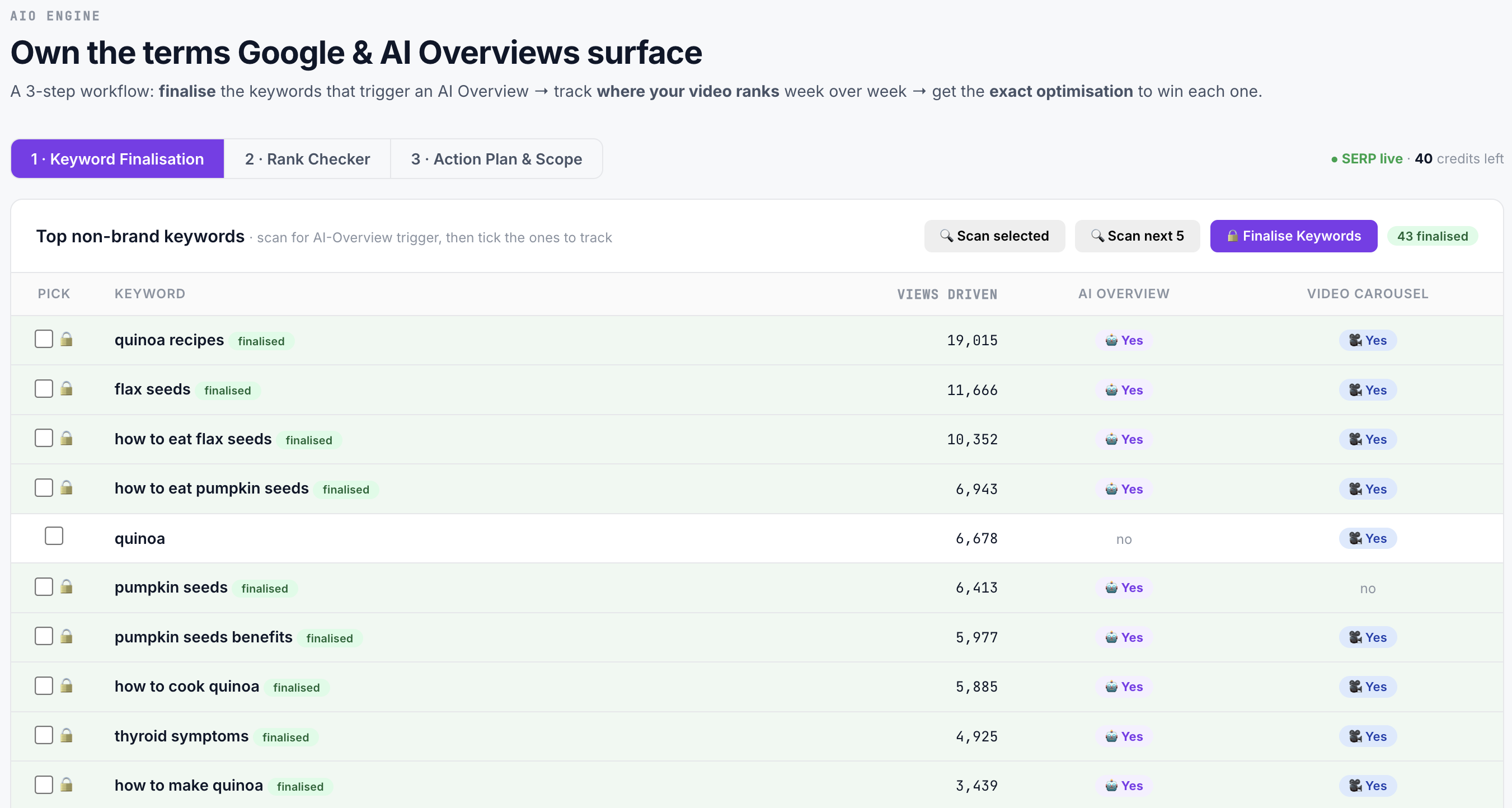
Inside Angryturtle — ICG's AI-native GBP operating system — HowTo schema deploys on GBP-linked service pages where the service involves a genuine procedural flow ("how to book a home-collection lab test", "how to schedule a teleconsultation"). Ask Maps AIO — Angryturtle's parallel AIO Lab for local queries — tracks HowTo citation on Maps and local AIO panels.
The combined effect: procedural healthcare content across web, YouTube, and local surfaces all carrying HowTo where genuinely eligible, tracked weekly for citation performance, and refined based on which step formats and language patterns are earning citation.
Powered by YODA, Meta Catalyst IQ, and Angryturtle — the schema stack at ICG
Every healthcare engagement at ICG runs HowTo schema as part of the broader stack alongside FAQPage, MedicalProcedure, MedicalCondition, and Person / Physician schema. YODA handles YouTube ranking, AIO Lab tracking, and long-form content workflow with automatic HowTo injection across three rank races. Meta Catalyst IQ handles paid Meta media at portfolio scale — 23+ accounts, Rs 9.1Cr+ monthly ad spend, 5,784 leads tracked in May 2026 at Rs 1,581 blended CPL. Angryturtle handles Google Business Profile and local search with HowTo deployment on GBP-linked service pages — 143+ healthcare listings under active management, from Rs 999/- per listing self-serve. PrismSpy tracks competitor Meta ad activity — 75+ Indian healthcare brands, 2,150+ active ads catalogued — so the procedural content plan is informed by what competitors are running on paid.
WhatsApp ICG on 918130226224 for a HowTo and FAQPage schema audit — the healthcare team maps which pages are eligible for each schema type, which procedural queries are firing AIO panels, and the 60-day deployment plan.
FAQ — HowTo schema for healthcare AIO
Is HowTo schema still worth deploying given the 2023 rich-result restrictions?
Yes, for AIO citation. The 2023 restriction was on rich-result display in classic SERPs, not on AIO retrieval-layer signals. HowTo-marked procedural pages still cite at 25 to 35 percent higher rates than the same content without HowTo on procedural AI Overview queries. The signal has shifted surface, not lost value.
Can we deploy HowTo on non-procedural pages to try to catch AIO citation?
No — this is a spam signal. HowTo is for genuinely sequential procedural content with a defined end state. Marking a comparison page or a symptom explainer as HowTo triggers Google's spam filter and can hurt broader rankings. Use HowTo only where the content is truly step-by-step.
How many steps should a HowTo have for optimal citation?
Four to eight steps is the working range for most healthcare procedural content. Under three steps and the process is too simple to warrant HowTo (use a paragraph). Over ten steps and the AIO panel tends to pull only the first 3-4, so the tail steps waste attention. If a procedure genuinely has 15+ steps, break it into phases with a HowTo per phase.
Can HowTo and FAQPage coexist on the same page?
Yes, and they often should. A pre-surgery page can carry HowTo for the preparation steps and FAQPage for the patient questions block. Both are valid schema types on the same page and target different AIO query intents. Deploy both where both fit.
Does HowTo require images for each step?
No, images are optional. Steps with images do gain some additional rich-result eligibility for the surfaces where HowTo still displays visually, but citation lift on AIO panels does not require images. Text-only steps cite just as effectively.
How does the ICG Turn 20 auto-detection injector decide which pages get HowTo?
The detection scans for procedural signals: ordered-list structures with 3+ steps, headings containing "how to" or "steps to" or "preparing for", and imperative-verb openings on list items. Pages scoring above the detection threshold get a proposed HowTo JSON-LD draft that clinical review must approve before publish. The injector proposes; clinical review approves.
How do we track whether our HowTo pages are being cited in AIO?
Scripted incognito capture on the target procedural queries, refreshed weekly. YODA's AIO Lab does this automatically for pages inside the platform, tagged by query intent (procedural vs informational vs cost vs comparison). The weekly readout shows which HowTo-marked pages are gaining or losing procedural-query citation.
Related reading

- How to appear in Google AI Overview for healthcare queries in India
- FAQPage schema for healthcare AIO — implementation guide
- AI Overview optimization for cardiology hospitals in India
- AI Overview optimization for multi-specialty hospitals in India
- Definition-first content structure — the AIO citation pattern
Reference frameworks — Google's own HowTo structured-data documentation for the current eligibility criteria and 2023 policy update, and the schema.org HowTo vocabulary definition for the canonical property list. Test every deployment through Google's Rich Results Test before publish.
Book a free SEO diagnostic.
Hanuman Sihag's team runs a live crawl, checks technical health, cannibalisation, schema coverage and content gaps. 60 minutes, prioritised fix list.
The three platforms
behind every ICG engagement.
Beacon
CAPI middleware that fixes Event Match Quality, translates CRM statuses to Meta-standard events, dedups across channels.
Agency OS
Live client dashboard. GSC, GA4, Google Ads, Meta Ads, IVR calls in one view. Login anytime, not monthly.
Phoenix
Clinic revenue intelligence over your PMS. Daily action queue: Prevent Loss, Maintain & Engage, Grow Revenue. Multi-centre rollout.
Or book a free 30-min audit to see all three in action on your account.
Healthcare brands
that already run on ICG.
A representative slice of the 150+ healthcare brands ICG has delivered for across India. Most engagements remain under NDA.


What ICG clients say · on video.
"Scale up of organic channels and business consulting. ICG has absolute domain authority in their field."
"Working with ICG transformed how we acquire IVF patients in Gurgaon. They understand the fertility journey from inquiry to consult..."
"What Ichelon accomplished — they got all my ideas and worked over 3-4 months to create an amazing, super-customised website."
The intelligence stack behind this playbook.
Every ICG engagement runs on the Search Intelligence Trifecta — Angryturtle for GMB, SIE for search and AI Overview, YODA for YouTube. Live product screens below.
Need help operationalising this?
Every ICG service is healthcare-only, NMC + DPDP-aware, and built around the patient-research patterns that drive Indian healthcare growth in 2026.
Every practice welcome — packages from ₹20,000/mo.
Goals-Driven engagements · Performance-Linked Payout Models available



More from
ICG.
Five trends shaping Indian healthcare marketing through 2027: AI-first patient research, Conversions API adoption, ABDM discovery, the AEO w...
Healthcare AIO is the discipline of getting your clinic or hospital cited inside Google AI Overviews, ChatGPT and Perplexity answers — not j...
Conversational-search advertising places brand messages inside AI chat answers — ChatGPT, Perplexity, Copilot — rather than beside a results...
Stop guessing.
Book a Diagnostic.
30 minutes. Free. With the AI-powered healthcare-only marketing agency 150+ brands already run on. No slides, no pitch, no hard close.


