


ASCI Healthcare Advertising Guidelines 2022 — Explained for Meta Ads (India)
Section 3 of ASCI 2022 healthcare guidelines governs medical claims, testimonials, and misleading imagery. What passes and what gets pulled — with clause references.
No pitch. Written root-cause diagnosis. AI-powered, healthcare only.
Direct answer
Section 3 of ASCI 2022 healthcare guidelines governs medical claims, testimonials, and misleading imagery. What passes and what gets pulled — with clause references.
TL;DR

The Advertising Standards Council of India (ASCI) is not a statutory body, but its code is enforced through Ministry of Information and Broadcasting recognition and, since 2022, through joint enforcement with the Central Consumer Protection Authority (CCPA) under the Consumer Protection Act. What used to be self-regulation is now regulation with teeth. Its 2022 sector-specific guidelines on healthcare advertising — released with a focus on cosmetic, aesthetic, wellness, and OTC categories — govern almost every Meta ad an Indian healthcare brand ships. This piece is a clause-by-clause plain-English read of Section 3 of the 2022 healthcare guidelines, mapped to the specific Meta ad decisions a marketing lead has to make on a Tuesday morning. It is the reference we hand to every new client during onboarding.
What ASCI actually is — and what enforcement looks like now
ASCI is a self-regulatory organisation whose code has been recognised by the Ministry of Information and Broadcasting since 2014 for pre-publication content review, and since 2022 has operational alignment with the CCPA under the Consumer Protection Act 2019. Practically: a complaint to ASCI can lead to an upheld decision requiring modification or withdrawal of the ad, and CCPA can escalate misleading advertisements to statutory penalties. For healthcare specifically, the 2022 guidelines added stricter obligations around substantiation, disclosure, and specific product categories.
Section 3 of the 2022 healthcare guidelines — what it covers
Section 3 addresses medical, cosmetic, and wellness advertising. In plain terms, it requires: substantiation for all efficacy claims by credible clinical evidence; prohibition on misleading claims about outcomes, timelines, or safety; disclosure of material limitations; restriction on using healthcare professionals in a promotional endorsement capacity; specific rules for before-and-after imagery; and specific obligations for weight-loss, hair loss, and cosmetic categories where consumer harm risk is elevated. Every clause maps to a common Meta ad copy decision.
Substantiation — the rule under every rule
Every efficacy claim in a healthcare ad must be substantiable by credible clinical evidence at the time of publication. "Clinically proven," "dermatologist recommended," "restores hair density by 40%" — each of these triggers a substantiation demand if ASCI receives a complaint. The evidence must be current, methodologically sound, and specific to the claim. Marketing copy that generalises from a single small study is a common trigger for adverse decisions. When in doubt, weaken the claim to what your evidence actually supports.
Misleading imagery — a practical map
Section 3 treats imagery with the same weight as text. Common triggers:
- Before-and-after images without disclosure that results vary
- Retouched or manipulated images beyond standard exposure/crop
- Actors depicted as patients without disclosure
- Stock imagery presented as real clinical outcomes
- Weight-loss visuals implying rapid or effortless transformation
- Hair-regrowth visuals implying outcomes not achievable in typical patients
The test ASCI applies is whether a reasonable consumer would be misled. Reasonable, not credulous — but the standard leans consumer-protective in adverse decisions.
Testimonials, endorsements, and celebrity association
Under Section 3 and the parallel ASCI code on endorsements, healthcare testimonials must reflect genuine personal experience, be non-misleading, and — for material connections — disclose the relationship. Celebrities in healthcare endorsements carry heightened due-diligence obligations under CCPA guidelines: the celebrity must have satisfied themselves that the claim is not misleading. Practically: if you feature a celebrity in a Meta ad for a clinic, both the celebrity and the brand carry liability for misleading claims. A cameo is not a legal shield.
The superlative trap — "best", "leading", "#1"
ASCI has an extensive precedent on superlatives. "Best," "leading," "#1," "India's foremost," and similar constructions require documentary substantiation of the claim in the exact market context claimed. Substantiation must be current and objective — self-declared "leading" without market data will not survive complaint. This is the single most common trigger for adverse decisions in healthcare ads we audit for prospective clients. Replace superlatives with specifics: not "leading IVF clinic," but "IVF services in Bengaluru since 2016, 4,100 cycles."
Healthcare professionals in ads — Section 3 and the DCI/DCA overlap
Section 3 restricts healthcare professionals appearing in advertisements in a promotional endorsement capacity for medical products, services, or devices. Where a doctor legitimately educates about a condition, that is generally permitted; where the doctor endorses a specific commercial product, that is generally prohibited. This overlaps with the Drugs and Magic Remedies (Objectionable Advertisements) Act, 1954, and with the parallel NMC Chapter 7 restriction on doctor advertising. When a Meta ad features a doctor, the doctor's exposure runs across three regimes simultaneously — ASCI, NMC, and DMRA — and clearance for one does not clear the others.
Categories with heightened scrutiny — weight loss, hair, cosmetic
The 2022 guidelines specifically address weight-loss, hair-loss, and cosmetic categories where consumer harm risk is elevated. Requirements include: no depiction of rapid or dramatic transformation without robust evidence; clear disclosure of typical outcomes and material limitations; specific warnings for products used with medical devices; and heightened scrutiny of before-and-after imagery. Meta ads in these categories should assume complaint likelihood is higher and pre-review is not optional.
The DMRA overlay — often forgotten, sometimes fatal
The Drugs and Magic Remedies (Objectionable Advertisements) Act, 1954, still applies. It prohibits advertisement of remedies for a listed set of conditions (including menstrual disorders, sexual health conditions, and various other categories in its Schedule). Any Meta ad promising treatment for a Schedule-listed condition risks a DMRA violation, which is a criminal offence — not just an ASCI adverse decision. This is old law, still in force, and enforcement has picked up in the last three years on complaint. Read the DMRA Schedule before writing any ad in gynaecology, sexual health, dermatology, or ART.
How ICG runs a Section 3 pre-publication review
Every Meta ad script for the accounts we manage passes a Section 3 check in addition to NMC and DPDP checks. The reviewer works through a fixed checklist: is there a claim that requires substantiation and do we have the evidence; is any imagery capable of misleading a reasonable consumer; is any healthcare professional presented in an endorsement capacity; do any superlatives appear; do any categories with heightened scrutiny apply; does DMRA overlap on the target condition. Scripts that fail any check are returned to the writer with the specific clause reference. This process adds 24–48 hours to campaign launch and removes almost all of the risk.
Watching competitors for compliance signals
Complaint-driven enforcement means competitor ads are your best training data. If a competitor is running unsubstantiated "best in city" claims and is escalating their spend behind them, they are compounding risk that will eventually surface. If a competitor is running before-and-after without disclosure, they are one complaint away from an adverse decision. Watching this is not schadenfreude — it is calibration. It tells you what your own compliance reviewer should be looking for and where your brand can win by being defensibly conservative.
Powered by PrismSpy — every competitor Meta ad, watched daily
ICG built PrismSpy because Indian healthcare Meta ad competition is invisible without it — including the compliance patterns of competitor copy. 75+ Indian healthcare brands tracked, 2,150+ active ads catalogued, ₹50Cr+ aggregate ad spend visibility per month. Every competitor ad — creative, offer, hook, run-length — refreshed daily. It runs underneath every Meta ads and performance marketing engagement at ICG.
- Watchlist Dashboard — 30–75 competitors per specialty cluster (IVF / dermatology / dental / hair transplant / aesthetic / hospital), daily refresh.
- Comparative Insights — highest-quality ads, longest-running creatives, top hooks, emerging offers — and which competitor copy walks into an ASCI Section 3 problem.
- Offers Intelligence — 1,197 offers tracked, discount intensity by brand, value tier distribution.
- Service Cluster + Inspirations — 419 services tracked, 4,697 searchable ad inspirations by hook / language / format.
Standalone from ₹4,999/- per specialty vertical, or bundled free inside HealthApex OS (₹14,999/- flat, 9 tools). Book a 30-min PrismSpy walkthrough on WhatsApp — Rohit + Hanuman walk you through your specialty's competitive landscape.
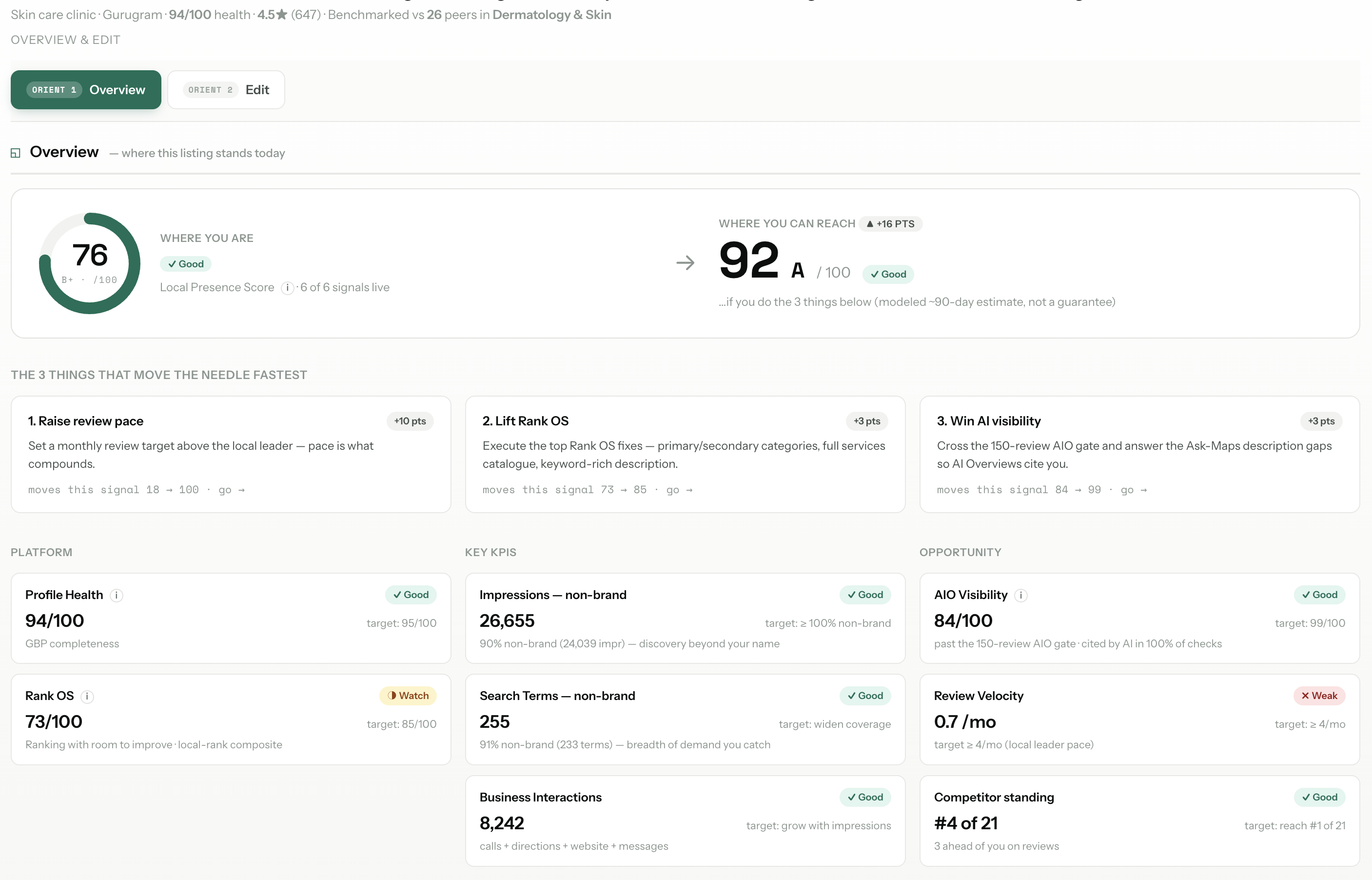


Powered by Meta Catalyst IQ — the decision engine behind every Meta ad ICG runs
ICG built Meta Catalyst IQ because most Indian healthcare brands running Meta ads waste 30–50% of budget without knowing it. It's the diagnosis + decision layer above Ads Manager — Hygiene Factors 12-point checklist, Naming Intelligence, Creative Scoring Matrix, 2-Day Comparative, SLC Framework, Money Wastage column in ₹.


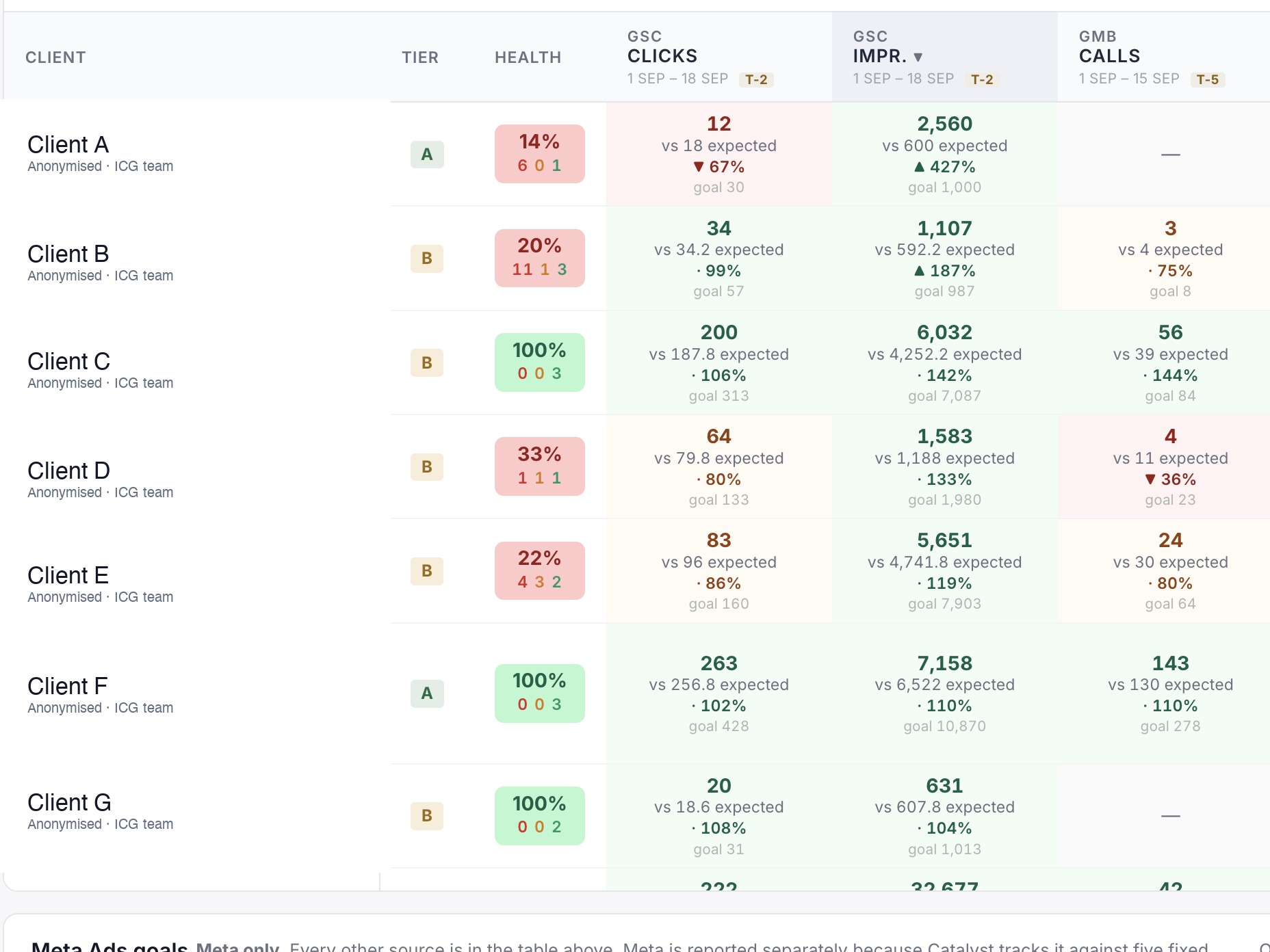
- Master Dashboard — 23+ accounts, ₹9.1Cr+ spend/mo optimised, ₹1,581 blended CPL vs ~₹3,200 market benchmark.
- Diagnose → Optimise → Grow — daily hygiene checks, weekly creative scoring, monthly money wastage cleanup.
- CPQL Engine — cost per qualified lead (not just cost per lead) at ad-set level. Try the interactive CPQL calculator.
- Portfolio benchmarks — IVF ₹632, derm ₹520–1,180, dental ₹620–1,800, aesthetic ₹400–900, hospital cardiac ₹3,200.
Included free with every ICG Meta ads or Performance Marketing engagement (Starter ₹20,000/-/month tier and above). Not sold standalone. Book a free 48-hour Meta ad diagnostic or WhatsApp us.

Frequently asked questions
Is ASCI a legal regulator or a self-regulator?
Formally a self-regulatory organisation. Practically, its code is recognised by the Ministry of Information and Broadcasting and enforcement has operational alignment with the CCPA under the Consumer Protection Act 2019.
What is the biggest single trigger for an ASCI adverse decision in healthcare?
Unsubstantiated superlatives — "best," "leading," "#1." Replace with specific, verifiable claims tied to date, volume, or accreditation.
Can we use before-and-after images in Meta ads?
Sometimes, with informed consent, "results vary" disclosure, no manipulation beyond standard exposure/crop, and no misleading transformation implication. Meta's own policies may still block cosmetic and weight-loss visuals at the algorithm layer.
Are celebrity endorsements safe if we use disclosure?
Only if the celebrity has satisfied themselves that the claim is not misleading, in line with CCPA endorsement guidelines. Both brand and celebrity carry liability for misleading claims.
Does ASCI cover Meta ads specifically?
Yes — the code applies across advertising media including digital and social. Complaints regularly cite Meta and Instagram ads, and ASCI reviews the ad as it ran.
What does the DMRA add beyond ASCI?
The Drugs and Magic Remedies Act 1954 prohibits advertising of treatments for a listed set of conditions. Violation is a criminal offence, not just an adverse decision. Always cross-check the DMRA Schedule for gynaecology, sexual health, dermatology, and ART advertising.
Related reading
- NMC Chapter 7 — what doctors cannot say in ads
- DPDP consent form fields for healthcare Meta lead ads
- PC-PNDT Act — what you cannot say in IVF Meta ads
- The 5-zone creative testing framework
- Hook frameworks for the first 3 seconds
Authority reading: ASCI Code and healthcare-specific 2022 guidelines and Department of Consumer Affairs — CCPA misleading advertisement framework.
Book a free Meta ads account audit.
Raman Soni's team pulls your account, checks CAPI/EMQ, reviews creative for NMC compliance, and shows where CPQL is leaking. 45 minutes, actionable output.
The three platforms
behind every ICG engagement.
Beacon
CAPI middleware that fixes Event Match Quality, translates CRM statuses to Meta-standard events, dedups across channels.
Agency OS
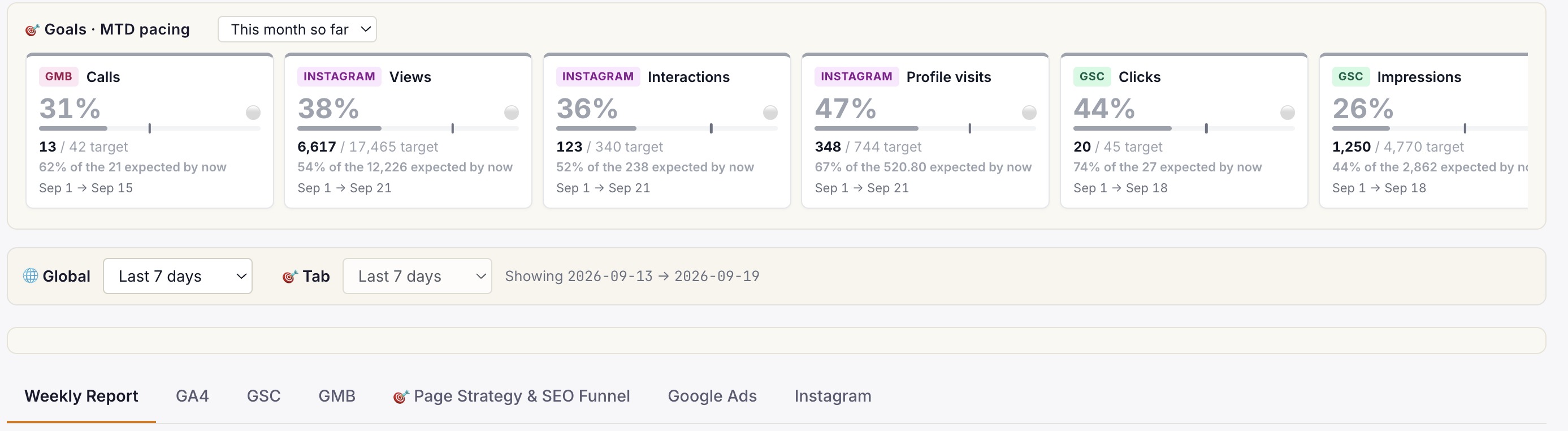
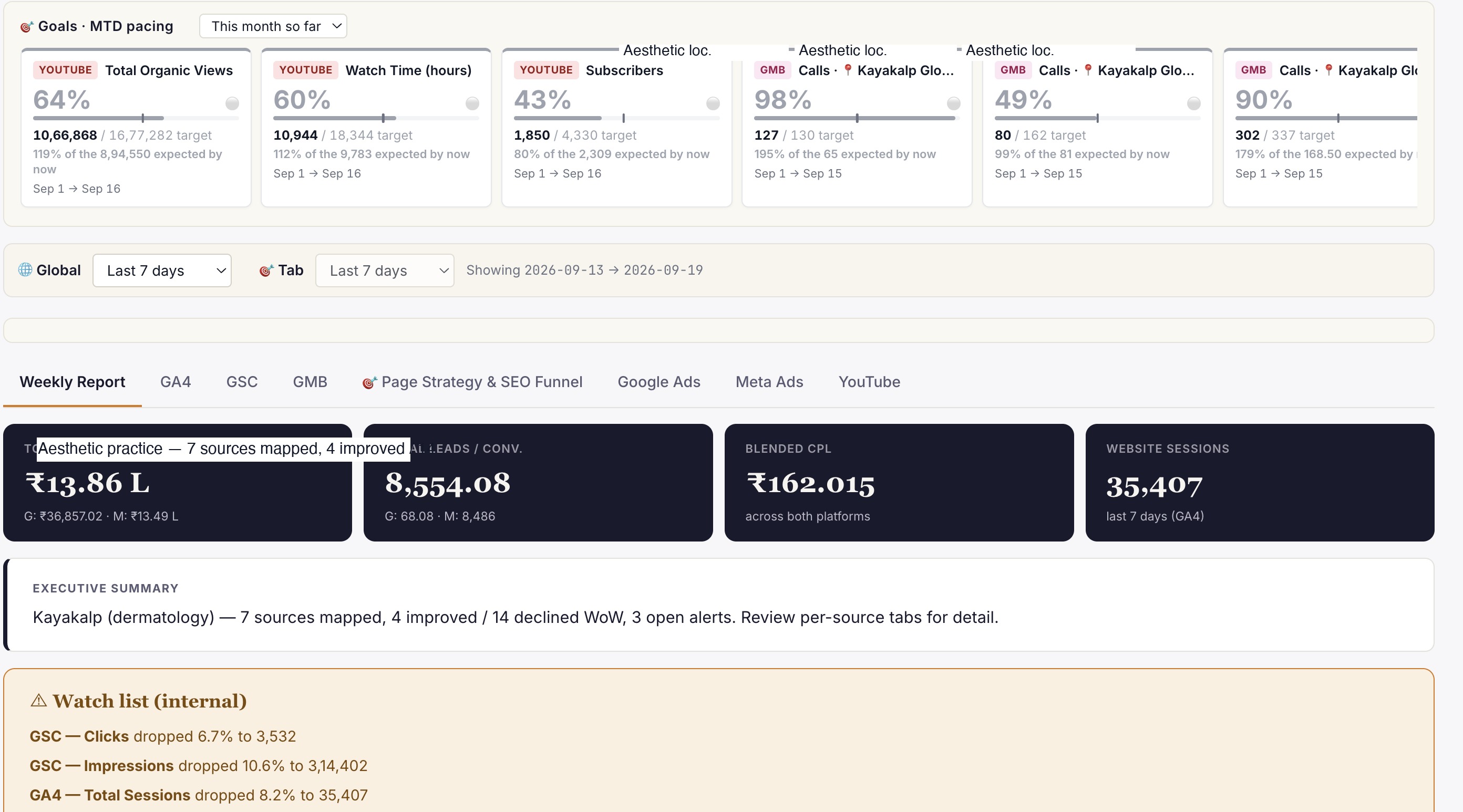
Live client dashboard. GSC, GA4, Google Ads, Meta Ads, IVR calls in one view. Login anytime, not monthly.
Phoenix
Clinic revenue intelligence over your PMS. Daily action queue: Prevent Loss, Maintain & Engage, Grow Revenue. Multi-centre rollout.
Or book a free 30-min audit to see all three in action on your account.
Healthcare brands
that already run on ICG.
A representative slice of the 150+ healthcare brands ICG has delivered for across India. Most engagements remain under NDA.


What ICG clients say · on video.
"Scale up of organic channels and business consulting. ICG has absolute domain authority in their field."
"Working with ICG transformed how we acquire IVF patients in Gurgaon. They understand the fertility journey from inquiry to consult..."
"What Ichelon accomplished — they got all my ideas and worked over 3-4 months to create an amazing, super-customised website."
Need help operationalising this?
Every ICG service is healthcare-only, NMC + DPDP-aware, and built around the patient-research patterns that drive Indian healthcare growth in 2026.
Every practice welcome — packages from ₹20,000/mo.
Goals-Driven engagements · Performance-Linked Payout Models available
More from
ICG.
Five trends shaping Indian healthcare marketing through 2027: AI-first patient research, Conversions API adoption, ABDM discovery, the AEO w...
Healthcare AIO is the discipline of getting your clinic or hospital cited inside Google AI Overviews, ChatGPT and Perplexity answers — not j...
Conversational-search advertising places brand messages inside AI chat answers — ChatGPT, Perplexity, Copilot — rather than beside a results...
Stop guessing.
Book a Diagnostic.
30 minutes. Free. With the AI-powered healthcare-only marketing agency 150+ brands already run on. No slides, no pitch, no hard close.


