


Healthcare Meta Ads Creative Testing Framework (India, 2026): The 5-Zone System ICG Uses Across 23+ Accounts
The exact creative testing framework ICG runs on ₹9.14Cr/mo of healthcare Meta ad spend. 5 zones, refresh cadence by specialty, kill rules — no guesswork.
No pitch. Written root-cause diagnosis. AI-powered, healthcare only.
Direct answer
The exact creative testing framework ICG runs on ₹9.14Cr/mo of healthcare Meta ad spend. 5 zones, refresh cadence by specialty, kill rules — no guesswork.
TL;DR

Most healthcare marketing teams in India run Meta ad creative like a slot machine. Ten creatives get shipped, one wins by accident, the team scales it, and nobody can explain why it worked or why it eventually died. Then the CPL doubles in six weeks and everyone blames iOS or DPDP or the auction. The problem is almost never Meta. The problem is that creative testing was never a framework — it was a hope. This piece is the framework ICG runs across 23+ healthcare Meta ad accounts and ₹9.14Cr of monthly optimised spend. It uses a five-zone scoring model, specialty-specific refresh cadences, and hard kill rules you can copy into your ops doc this week. Nothing here is theoretical. Every rule below has been pressure-tested on IVF, derm, dental, aesthetic, and hospital accounts, and the numbers we cite are portfolio benchmarks from our May 2026 snapshot.
Why most healthcare creative testing fails in India
The first mistake is testing too many things at once. A single ad set gets three headlines, four thumbnails, two video edits, and a fresh audience — then when it wins or loses, nobody can say what caused the movement. The second mistake is defining a winner by CTR or CPL alone. Both are lag metrics that hide creative fatigue, audience mismatch, and consult-conversion drop-offs. The third mistake, and the one that quietly bleeds the most rupees, is the absence of a written kill rule. Ads that should have been paused on day four keep spending until day eleven, and by then you have burned enough to buy back a whole month of gains. A functioning framework fixes all three: one variable per test, a scoring matrix that rolls up multiple signals, and a pre-agreed kill threshold so nobody has to argue at 10 pm.
The five creative zones (borrowed from Meta Catalyst IQ)
Every live creative sits in exactly one of five zones. This is the labelling system inside Meta Catalyst IQ, the tool ICG uses to score creative every 48 hours. You do not need the tool to use the model — you need the discipline of labelling.
- Core Performer. CPL at or below account benchmark, consult-conversion at or above account average, spent more than 3x the daily budget without decay. Protect these. Never edit.
- Scalable. CPL within 15% of benchmark and volume climbing week on week. Duplicate into fresh ad sets, do not stack budget on the same one — auction reset penalty is real.
- Getting Started. Under 3x daily budget spent, signals still noisy. Do not judge. Do not scale. Do not kill. Let it read.
- Review. CPL more than 25% above benchmark or CTR halved from the account rolling median. Investigate — audience mismatch, hook fatigue, offer mismatch. Fix one variable, relaunch.
- Dead. Review zone for more than five days without recovery, or a hard compliance flag. Kill and archive with a written learning.
The five-zone system replaces the binary win/lose habit. It gives your team a shared vocabulary and it gives your CFO a defensible ledger of what happened to every rupee.

One variable per test — and why you must be pedantic
Isolate the variable. If you change the hook, do not also change the offer. If you change the offer, do not also change the CTA. This is boring and it is how learning compounds. A typical monthly test slate for a mid-sized dermatology account looks like fifteen new ads: five hook variants against the current winning body, five offer variants against the winning hook, three CTA button variants, and two format tests (reel vs static). Every ad carries a Naming Intelligence tag so you can query later — service, location, format, content angle, and detail bucket. Without that tag structure, you will never be able to answer questions like "which hook family works for our Bengaluru dermatology client under thirty-fives" in three months.

Refresh cadence by specialty (from the ICG portfolio)
Creative fatigue is not universal. It is a function of audience size, offer distinctness, and how visually saturated the specialty is on Instagram. Hair transplant creatives fatigue fastest because the format has calcified around before-and-after reels; hospital cardiac creatives can sit for months because the audience is larger and less scroll-fatigued. Portfolio cadences we use as defaults:
- Hair transplant — 3-week creative refresh cycle
- Aesthetic (skin, hair, laser) — 4 to 5 weeks
- Dermatology core — 5 to 6 weeks
- IVF — 6 to 8 weeks, offers refresh every 4
- Dental primary care — 6 weeks
- Dental aligners — 4 weeks (offer-heavy category)
- Ortho — 6 to 8 weeks
- Hospital cardiac and oncology — 8 to 10 weeks, refresh triggered by frequency > 3.5
These are floors, not ceilings. If your frequency crosses 3.5 in a metro or 2.8 in a tier-2 city before the cadence is up, refresh anyway.
The 2-day comparative check
Every 48 hours we run a 2-Day Comparative — every live ad against its own 48-hour prior spend, CPL, CTR, thumbstop, and consult-conversion. Not against the account benchmark. Against itself. This surfaces fatigue faster than any monthly report because it catches decay while there is still budget to reallocate. The rule: if any three of the five signals decay more than 20% in the 48-hour window, the ad moves to Review zone. If CPL decays and consult-conversion also drops, it skips Review and goes straight to Dead.
The hard kill rules — no exceptions
Write these into your ops doc. Do not negotiate them at 10 pm.
- Kill any ad that has spent 3x daily budget with CPL more than 40% above account rolling median.
- Kill any ad whose thumbstop drops below 15% for two consecutive days in a video-primary specialty.
- Kill any ad whose consult-conversion rate is below one-third of the account average after 25 form fills.
- Kill any ad with a policy flag before appealing — do not let a rejected ad drag the account learning phase.
- Kill any ad running against an offer you cannot legally honour (NMC, ASCI, PC-PNDT — see the compliance section below).
Kill rules exist because human judgment under pressure defaults to loss aversion. You will always want to give the ad one more day. Don't.
Decomposing the creative — hook, body, offer, CTA
Every ad in the ICG library carries four labelled parts. The hook is the first 3 seconds of video or the top-left corner of a static. The body is the demonstration or proof middle. The offer is the value exchange. The CTA is the friction reducer at the end. Testing at the part level is what makes learning transferable across campaigns. When a hook works on a Chennai IVF audience, that hook family can be tried on a Coimbatore IVF audience with the body swapped. When an offer works for aesthetic in Bengaluru, the same offer can be dressed for dental in Hyderabad. Without part-level decomposition, every account starts from zero every time.
The signal mix used for scoring
CPL alone is a liar. We score a live ad on five signals, weighted:
- CPL vs benchmark — 30% of composite score
- CTR vs account rolling median — 15%
- Thumbstop and hold rate (video only) — 15%
- Consult-conversion downstream — 25%
- Frequency and audience saturation — 15%
The consult-conversion weight is deliberate. A creative that pulls cheap leads that never book is a lit fuse — it looks like a win in Ads Manager and destroys the sales team's week. This is what our QL Engine measures at the ad-set level: cost per qualified lead, not cost per lead. If your reporting stops at CPL, you are optimising for the wrong number.

Weekly and monthly testing slates
A functional healthcare Meta ad account in India ships new creative every week, tests every 48 hours, and hard-refreshes at the specialty cadence above. Practically, on a ₹8–12 lakh monthly spend derm account this looks like six to eight new creatives a week, of which two or three earn Scalable or Core Performer status by end of week two. On smaller accounts, three new creatives a week is the floor — anything less and you cannot beat frequency decay. The teams that under-ship creative are also the teams that complain most loudly about Meta getting "worse." It didn't. They stopped feeding it.
What good looks like in numbers — ICG portfolio
For the May 2026 snapshot across the ICG portfolio: 5,784 leads/month tracked, ₹1,581 blended CPL against a market benchmark near ₹3,200, 52.7% link click rate on scored creatives, ₹86,253 blended CAC. Under the hood, IVF sits at ₹632 CPL across 11 clients on ₹2.6Cr of spend. Derm ranges ₹520–1,180 depending on city and offer. Dental primary is around ₹620; aligners are ₹1,800. Aesthetic is ₹400–900. Hospital cardiac is ₹3,200. Ortho is ₹1,400. These are not stretch numbers — they are the median outcome when the framework is applied for 90 days.
The 90-day implementation arc
Applying the framework end-to-end is a 90-day job, not a week. Week one is measurement setup — Naming Intelligence tags on every existing creative, CPL benchmarks calculated against consult conversion (not just form fills), and the Money Wastage baseline audit. Weeks two and three are consolidation — killing dead creative that has been quietly spending, merging fragmented ad sets, and shipping the first structured slate. Weeks four through eight are the learning loop — 48-hour comparatives, weekly creative scoring, monthly refresh cadence enforcement. Weeks nine through twelve are optimisation — value-based lookalike layering, budget reallocation based on CPQL not CPL, and the first predictable month where the account operates on evidence rather than intuition. Portfolio outcomes show by day 90; day 30 is usually flat as cleanup surfaces waste before returns compound.
Who owns what — the roles that make the framework work
The framework needs three named owners inside the marketing team. The creative lead owns the slate — what ships, what themes, hook variants, and the writing brief. The media buyer owns the ad set architecture — how many ad sets, what budgets, when to consolidate, when to expand. The analyst owns the scoring — running the 2-Day Comparative, moving creatives between zones, and updating the CPQL numbers in the weekly report. In smaller teams one person wears two hats, but nobody wears all three well. The most common team failure we see is a media buyer being asked to also score creative — the same person cannot both bid and judge, and the judging loses.
Powered by Meta Catalyst IQ — the decision engine behind every Meta ad ICG runs
ICG built Meta Catalyst IQ because most Indian healthcare brands running Meta ads waste 30–50% of budget without knowing it. It's the diagnosis + decision layer above Ads Manager — Hygiene Factors 12-point checklist, Naming Intelligence (surfaces conflicts costing ₹50K–₹2L/account/month), Creative Scoring Matrix (Core Performer / Scalable / Getting Started / Review), 2-Day Comparative, SLC Framework, Money Wastage column in ₹.

- Master Dashboard — 23+ accounts, ₹9.1Cr+ spend/mo optimised, ₹1,581 blended CPL vs ~₹3,200 market benchmark.
- Diagnose → Optimise → Grow — daily hygiene checks, weekly creative scoring, monthly money wastage cleanup.
- CPQL Engine — cost per qualified lead (not just cost per lead) at ad-set level. Try the interactive CPQL calculator.
- Portfolio benchmarks — IVF ₹632, derm ₹520–1,180, dental ₹620–1,800, aesthetic ₹400–900, hospital cardiac ₹3,200.
Included free with every ICG Meta ads or Performance Marketing engagement (Starter ₹20,000/-/month tier and above). Not sold standalone. Book a free 48-hour Meta ad diagnostic or WhatsApp us.

Frequently asked questions
How many creatives should a healthcare Meta ad account test per week?
Floor of three, target of six to eight on mid-sized accounts. Under three and you cannot beat frequency decay; above ten a week rarely improves outcomes because your learnings loop cannot keep up.
Is CPL the right primary metric for scoring creative?
No. Weight CPL at about 30% and force consult-conversion into the composite at 25%. Ads that pull cheap unqualified leads look like winners in Ads Manager and quietly damage the sales pipeline.
How soon should we kill a losing ad?
After 3x daily budget spent with CPL over 40% of median, or after two consecutive days of thumbstop below 15% on video-primary specialties. Written kill rules matter more than any single number.
Does the framework work for smaller ₹2–5 lakh/month accounts?
Yes. Shrink the slate to three creatives a week and lengthen the read window to 72 hours instead of 48, but keep the five-zone scoring intact.
How do we prevent audience fatigue while scaling a winner?
Duplicate the winning creative into fresh ad sets with distinct audiences instead of stacking budget on the original ad set. Auction reset penalty is real and it will eat your CPL improvement.
How long before we see CPL move under this framework?
Plan on about 90 days for the full effect when the framework is applied end to end. Under 30 days, expect the account to look worse before it looks better — cleanup phase surfaces waste.
Related reading
- Hook frameworks for the first 3 seconds — Meta ads for healthcare
- Meta ads video length testing for healthcare — what actually converts
- Broad vs narrow targeting for healthcare Meta ads in India
- Server-side events and Meta CAPI for Indian healthcare marketers
- EMQ score optimisation for healthcare — the signal quality guide
Authority reading: Meta's official documentation on creative best practices for Meta ads.
Book a free Meta ads account audit.
Raman Soni's team pulls your account, checks CAPI/EMQ, reviews creative for NMC compliance, and shows where CPQL is leaking. 45 minutes, actionable output.
The three platforms
behind every ICG engagement.
Beacon
CAPI middleware that fixes Event Match Quality, translates CRM statuses to Meta-standard events, dedups across channels.
Agency OS
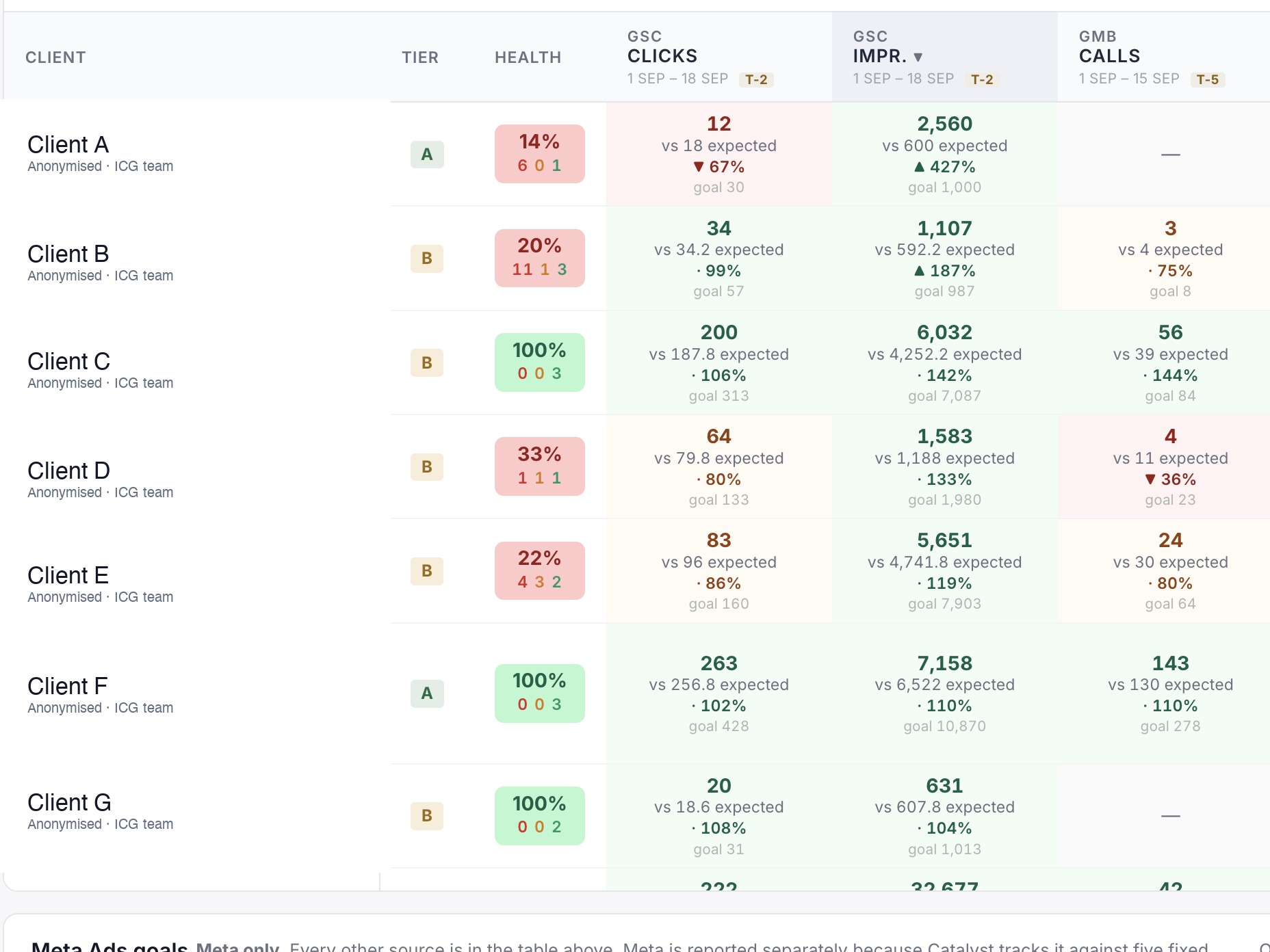
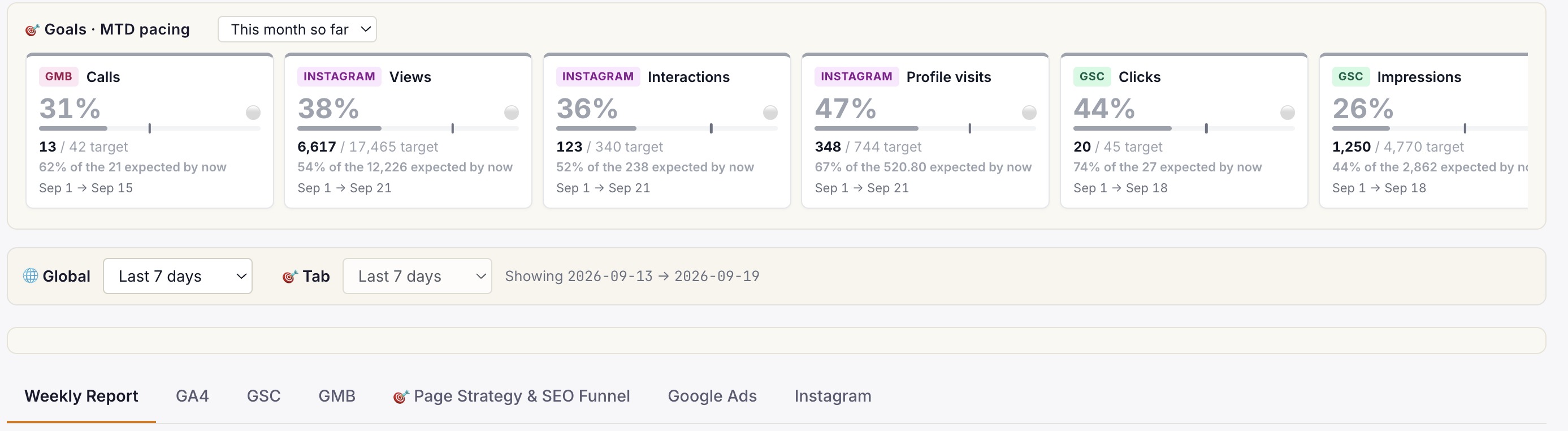
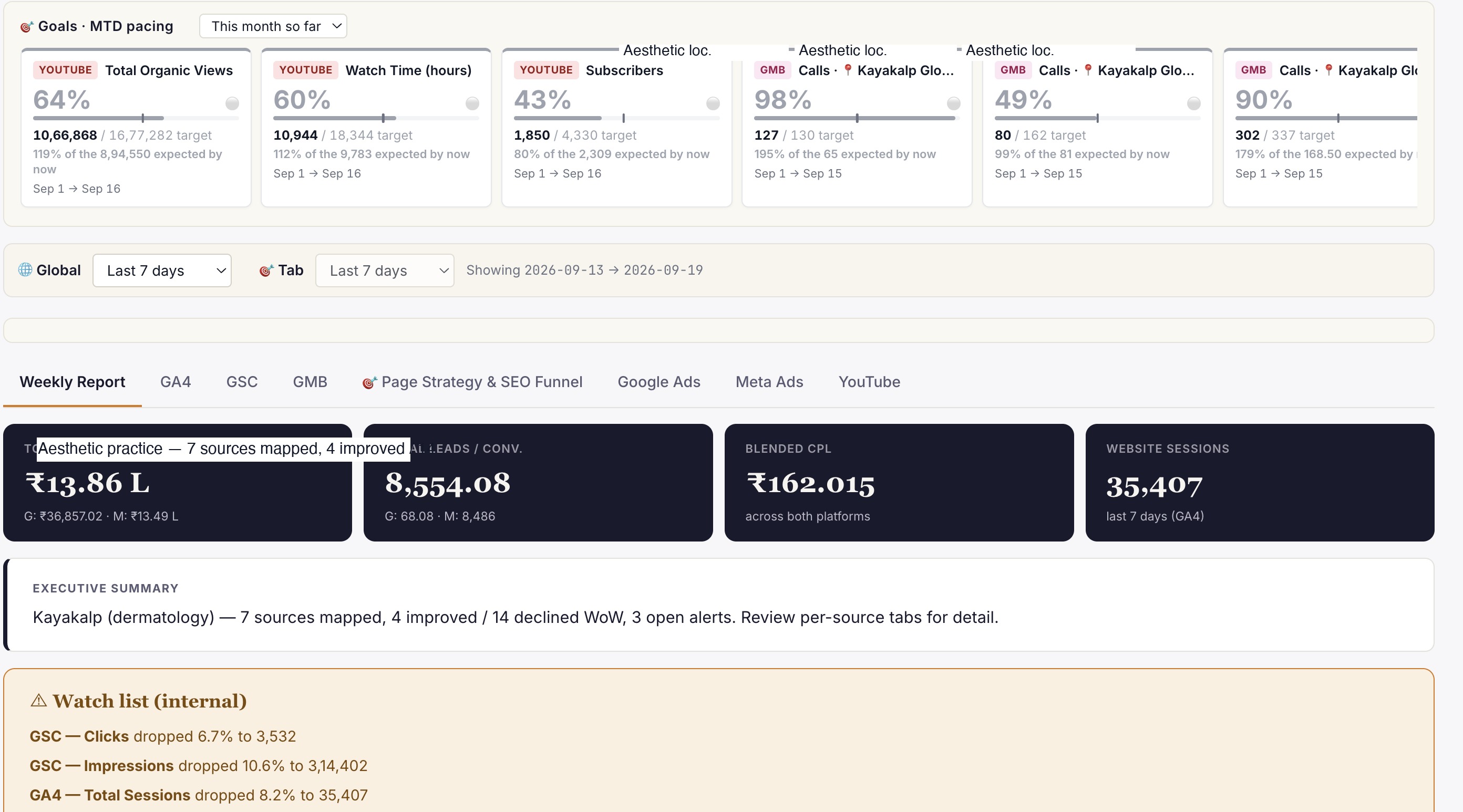
Live client dashboard. GSC, GA4, Google Ads, Meta Ads, IVR calls in one view. Login anytime, not monthly.
Phoenix
Clinic revenue intelligence over your PMS. Daily action queue: Prevent Loss, Maintain & Engage, Grow Revenue. Multi-centre rollout.
Or book a free 30-min audit to see all three in action on your account.
Healthcare brands
that already run on ICG.
A representative slice of the 150+ healthcare brands ICG has delivered for across India. Most engagements remain under NDA.


What ICG clients say · on video.
"Scale up of organic channels and business consulting. ICG has absolute domain authority in their field."
"Working with ICG transformed how we acquire IVF patients in Gurgaon. They understand the fertility journey from inquiry to consult..."
"What Ichelon accomplished — they got all my ideas and worked over 3-4 months to create an amazing, super-customised website."
Need help operationalising this?
Every ICG service is healthcare-only, NMC + DPDP-aware, and built around the patient-research patterns that drive Indian healthcare growth in 2026.
Every practice welcome — packages from ₹20,000/mo.
Goals-Driven engagements · Performance-Linked Payout Models available
More from
ICG.
Five trends shaping Indian healthcare marketing through 2027: AI-first patient research, Conversions API adoption, ABDM discovery, the AEO w...
Healthcare AIO is the discipline of getting your clinic or hospital cited inside Google AI Overviews, ChatGPT and Perplexity answers — not j...
Conversational-search advertising places brand messages inside AI chat answers — ChatGPT, Perplexity, Copilot — rather than beside a results...
Stop guessing.
Book a Diagnostic.
30 minutes. Free. With the AI-powered healthcare-only marketing agency 150+ brands already run on. No slides, no pitch, no hard close.


