


PC-PNDT Act and IVF Meta Ads: What You Cannot Say (India, 2026)
Section 22 of the PC-PNDT Act 1994 prohibits advertisements suggesting prenatal sex determination. What is safe, what is criminal, and how to write IVF Meta ads in a PC-PNDT world.
No pitch. Written root-cause diagnosis. AI-powered, healthcare only.
Direct answer
Section 22 of the PC-PNDT Act 1994 prohibits advertisements suggesting prenatal sex determination. What is safe, what is criminal, and how to write IVF Meta ads in a PC-PNDT world.
TL;DR

Section 22 of the Pre-Conception and Pre-Natal Diagnostic Techniques (Prohibition of Sex Selection) Act, 1994 — PC-PNDT — is one of the few Indian advertising laws that carries criminal penalty for violation, not just an ASCI adverse decision or a departmental warning. It prohibits any advertisement, in any form, that suggests or implies pre-conception or prenatal sex determination or sex selection. It applies to clinics, laboratories, doctors, and — critically — to anyone facilitating the advertisement, which includes the marketing agency. For any Indian IVF, fertility, or ART Meta ad, PC-PNDT is not a compliance checkbox; it is the rule you write around. This piece is a plain-English map of what Section 22 actually prohibits, what the ART Act 2021 adds on top, and the specific language patterns ICG uses on IVF Meta ads to stay unambiguously on the safe side of the line.
What PC-PNDT actually prohibits
The Act prohibits pre-conception and prenatal sex determination — the practice — and its Section 22 prohibits any advertisement related to sex selection or sex determination. Section 22(1) makes it an offence for any person, organisation, genetic counselling centre, genetic laboratory, or genetic clinic to issue, publish, distribute, or communicate any advertisement in any form suggesting the availability of pre-conception or prenatal sex determination facilities. Section 22(3) makes contravention punishable with imprisonment up to three years and fine up to ₹10,000 on first conviction, and up to five years and ₹50,000 on subsequent convictions. Every issuance of a non-compliant ad is a separate offence.
Who is liable — including the marketing agency
Liability under Section 22 extends to any person who issues, publishes, distributes, or communicates the advertisement. This includes the clinic, the doctor named in the ad, the media entity that carries it, and — settled precedent — the advertising agency that placed it. There is no "we were just executing the client's brief" defence. If ICG or any agency ships a PC-PNDT-non-compliant ad, ICG carries liability alongside the clinic. This is why we do not delegate PC-PNDT review — every IVF, fertility, or ART Meta ad script is reviewed against Section 22 before it goes to the medical director.
The language tests — what triggers Section 22
Section 22 is written broadly to capture direct and indirect suggestion. Language patterns that trigger the section:
- Direct: "know the baby's gender before birth," "sex determination available"
- Coded direct: "family completion," "you can choose," "family planning your way"
- Coded indirect: images of a specific-gender baby paired with fertility service messaging in a way that implies selection
- Testimonial-based: "we got the son / daughter we wanted through [service]"
- Comparative: "unlike other clinics, we can help you plan the family you want" (where "plan" is contextually gendered)
- Emoji or symbolic: pink/blue coding, gendered emoji clusters, coded numerals
The test is not the phrase in isolation; it is whether a reasonable reader in the Indian context would understand the ad as suggesting sex determination or selection is available.
Why before-and-after imagery is fraught in IVF ads
Before-and-after imagery — a family with no children, then a family with a child — is common in fertility advertising internationally. In India it is a PC-PNDT risk when the "after" imagery shows a child of a specific gender in a way that could imply the parents chose that gender through the service. The safe practice is to use imagery that does not disclose the child's gender (backs of heads, silhouettes, hands, cribs) or to avoid child imagery entirely and focus on the couple or the process. This is a departure from the emotive fertility ad template used in the US and Europe; India requires a distinct visual grammar.
The ART Act 2021 — what it adds
The Assisted Reproductive Technology (Regulation) Act, 2021 sits alongside PC-PNDT and adds specific obligations for ART clinics and banks. Section 21 of the ART Act prohibits sex selection at any stage — including PGT-A (preimplantation genetic testing) for non-medical sex selection — and Section 32 addresses offences and penalties. Meta ads for ART services must be truthful about what the clinic offers and cannot suggest sex selection is available through PGT or other techniques. If your clinic offers PGT-A for genuine medical indications (chromosomal abnormalities, familial genetic disease), the ad must frame it as a medical indication, not as a family-planning choice.
PC-PNDT-compliant language for IVF Meta ads
Language patterns we routinely use in ICG-run IVF campaigns:
- "IVF services at [Clinic name] — consultation slots this week"
- "Fertility workup and evaluation — [Clinic name]"
- "Understand your IVF options — free educational session at [Clinic name]"
- "Second-opinion consultations for previously failed IVF cycles"
- "Fertility preservation — egg and sperm freezing at [Clinic name]"
- "ART services under ART Act 2021 registration — [Clinic name]"
Notice what is absent: no reference to family type, family completion, choosing, or planning that could be read as gendered.
Visual grammar for IVF ads under PC-PNDT
Visual choices matter as much as copy. Safe visual patterns: the clinician at work, the embryology lab, the couple in consultation, the exterior of the clinic, medical imagery (ultrasound frame without gender disclosure, embryo microscopy). Unsafe visual patterns: babies of specific identifiable gender, gendered nurseries, gender-reveal-adjacent imagery, pink-blue colour coding, thematic combinations of "chosen" with a child of a specific gender. Meta's own ad review sometimes catches the obvious patterns; PC-PNDT will catch the subtle ones.
WhatsApp message templates for IVF — the same rules apply
PC-PNDT does not stop at the ad — it applies to any communication that could be read as advertising. WhatsApp Business message templates used to follow up on IVF leads carry the same obligation. Templates should describe the clinic's services in factual terms, not offer or suggest sex selection or determination in any framing. This includes the automated welcome message when a user clicks a click-to-message ad and the follow-up templates after consultation.
How ICG audits PC-PNDT before launch
Every IVF or ART Meta ad script for the accounts we manage passes a PC-PNDT check separate from the general compliance review. The check works through: does any copy directly reference sex determination or selection; does any copy indirectly imply it via "choose," "plan," "complete"; does any imagery show or code for gender; does the offer or workflow structure suggest selection is available; and does the WhatsApp follow-up template pass the same tests. Scripts that fail return to the writer with the specific Section 22 concern. This adds 24 hours to campaign launch and removes criminal-liability exposure.
What competitors get caught on (and why watching helps)
PC-PNDT enforcement is complaint-driven and — because of the criminal penalty — patients, competitors, and NGOs actively monitor fertility advertising. In the last 18 months we have seen public actions in multiple metros against IVF ads that used coded language ("family completion," "your choice"). Watching competitor IVF ads for Section 22 exposure is not just competitive intelligence; it is an early-warning system for your own compliance posture. If a competitor is running risky copy, they are one complaint away from a criminal referral, and the case will produce enforcement precedent that will inform your own reviewer.
Powered by PrismSpy — every competitor Meta ad, watched daily
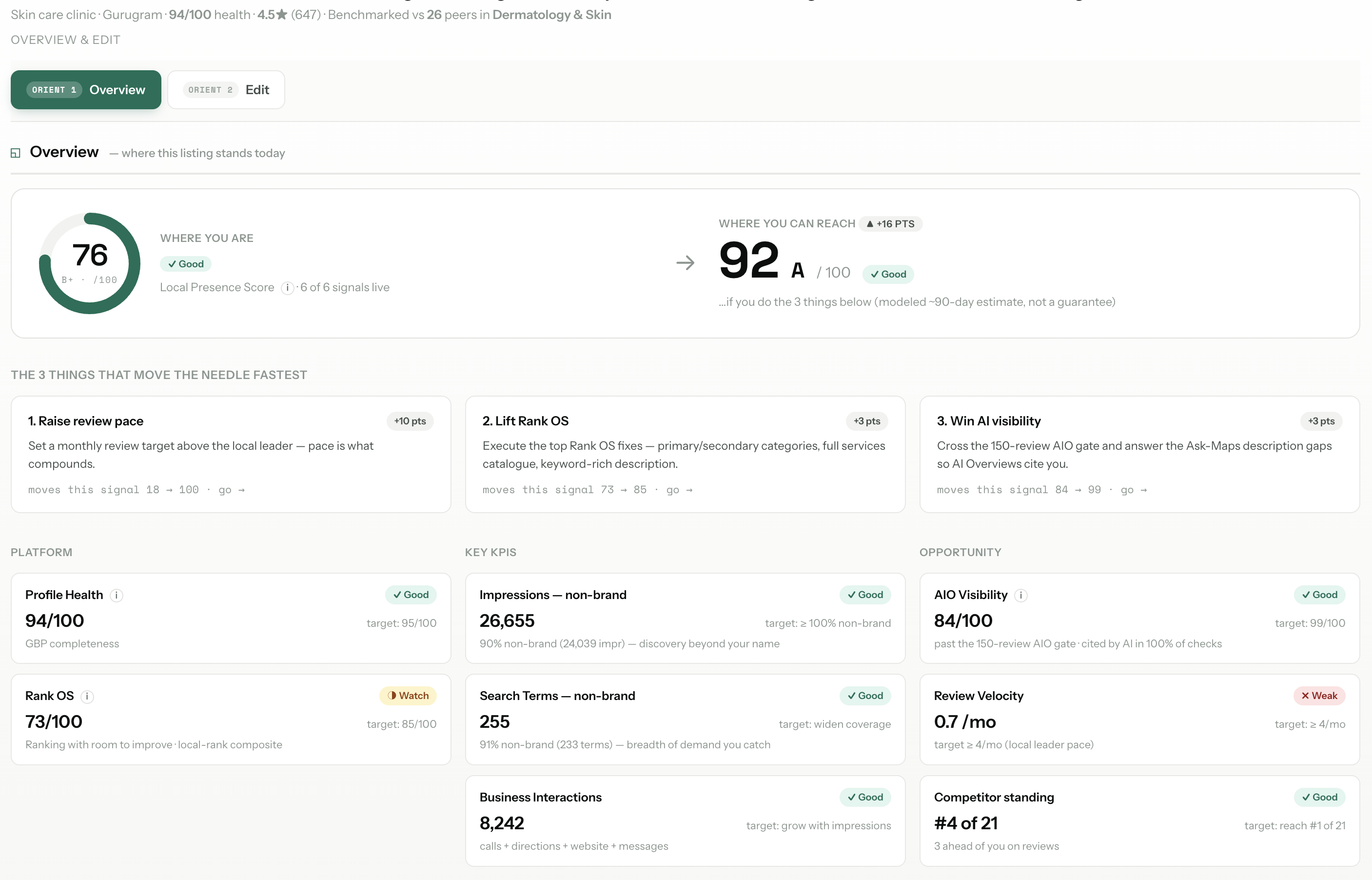
ICG built PrismSpy because Indian healthcare Meta ad competition is invisible without it — including which IVF competitors are quietly walking into Section 22 exposure. 75+ Indian healthcare brands tracked, 2,150+ active ads catalogued, ₹50Cr+ aggregate ad spend visibility per month. Every competitor ad — creative, offer, hook, run-length — refreshed daily. It runs underneath every Meta ads and performance marketing engagement at ICG.
- Watchlist Dashboard — 30–75 competitors per specialty cluster (IVF / dermatology / dental / hair transplant / aesthetic / hospital), daily refresh.
- Comparative Insights — highest-quality ads, longest-running creatives, top hooks, emerging offers — and IVF copy that walks into PC-PNDT risk.
- Offers Intelligence — 1,197 offers tracked, discount intensity by brand, value tier distribution.
- Service Cluster + Inspirations — 419 services tracked, 4,697 searchable ad inspirations by hook / language / format.
Standalone from ₹4,999/- per specialty vertical, or bundled free inside HealthApex OS (₹14,999/- flat, 9 tools). Book a 30-min PrismSpy walkthrough on WhatsApp — Rohit + Hanuman walk you through your specialty's competitive landscape.


Powered by Meta Catalyst IQ — the decision engine behind every Meta ad ICG runs
ICG built Meta Catalyst IQ because most Indian healthcare brands running Meta ads waste 30–50% of budget without knowing it. It's the diagnosis + decision layer above Ads Manager — Hygiene Factors 12-point checklist, Naming Intelligence, Creative Scoring Matrix, 2-Day Comparative, SLC Framework, Money Wastage column in ₹.


- Master Dashboard — 23+ accounts, ₹9.1Cr+ spend/mo optimised, ₹1,581 blended CPL vs ~₹3,200 market benchmark.
- Diagnose → Optimise → Grow — daily hygiene checks, weekly creative scoring, monthly money wastage cleanup.
- CPQL Engine — cost per qualified lead (not just cost per lead) at ad-set level. Try the interactive CPQL calculator.
- Portfolio benchmarks — IVF ₹632, derm ₹520–1,180, dental ₹620–1,800, aesthetic ₹400–900, hospital cardiac ₹3,200.
Included free with every ICG Meta ads or Performance Marketing engagement (Starter ₹20,000/-/month tier and above). Not sold standalone. Book a free 48-hour Meta ad diagnostic or WhatsApp us.

Frequently asked questions
Is PC-PNDT violation a criminal offence?
Yes. Section 22(3) provides imprisonment up to three years and fine up to ₹10,000 on first conviction, and up to five years and ₹50,000 on subsequent convictions.
Does agency liability apply?
Yes. Section 22 extends to any person who issues, publishes, distributes, or communicates the advertisement — including the placement agency.
Can we use before-and-after imagery in IVF Meta ads?
Only with careful visual grammar — no child of identifiable gender, no gender coding, no implication that gender was chosen. Safer to avoid child imagery entirely and focus on the couple, the process, or the clinic.
Does PC-PNDT apply to WhatsApp follow-up templates?
Yes. Any communication that reads as advertising is caught. Templates should describe services factually and avoid any suggestion of sex determination or selection.
What language is safe for an IVF Meta ad?
Factual descriptions of services, consultation offers, educational content, second-opinion invitations, and fertility preservation messaging. Avoid "family completion," "your choice," or any framing that could be read as gendered.
Does ART Act 2021 change the analysis?
It reinforces it. Section 21 of the ART Act prohibits sex selection at any stage including PGT for non-medical indications. Meta ads for PGT services should frame them as medical indications, not family-planning choices.
Related reading
- NMC Chapter 7 — what doctors cannot say in ads
- ASCI Guidelines 2022 explained
- DPDP consent form fields for healthcare lead ads
- The 5-zone creative testing framework
- Hook frameworks for the first 3 seconds
Authority reading: Ministry of Health and Family Welfare — PC-PNDT Act reference and ART Act 2021 information from MoHFW.
Book a free Meta ads account audit.
Raman Soni's team pulls your account, checks CAPI/EMQ, reviews creative for NMC compliance, and shows where CPQL is leaking. 45 minutes, actionable output.
The three platforms
behind every ICG engagement.
Beacon
CAPI middleware that fixes Event Match Quality, translates CRM statuses to Meta-standard events, dedups across channels.
Agency OS
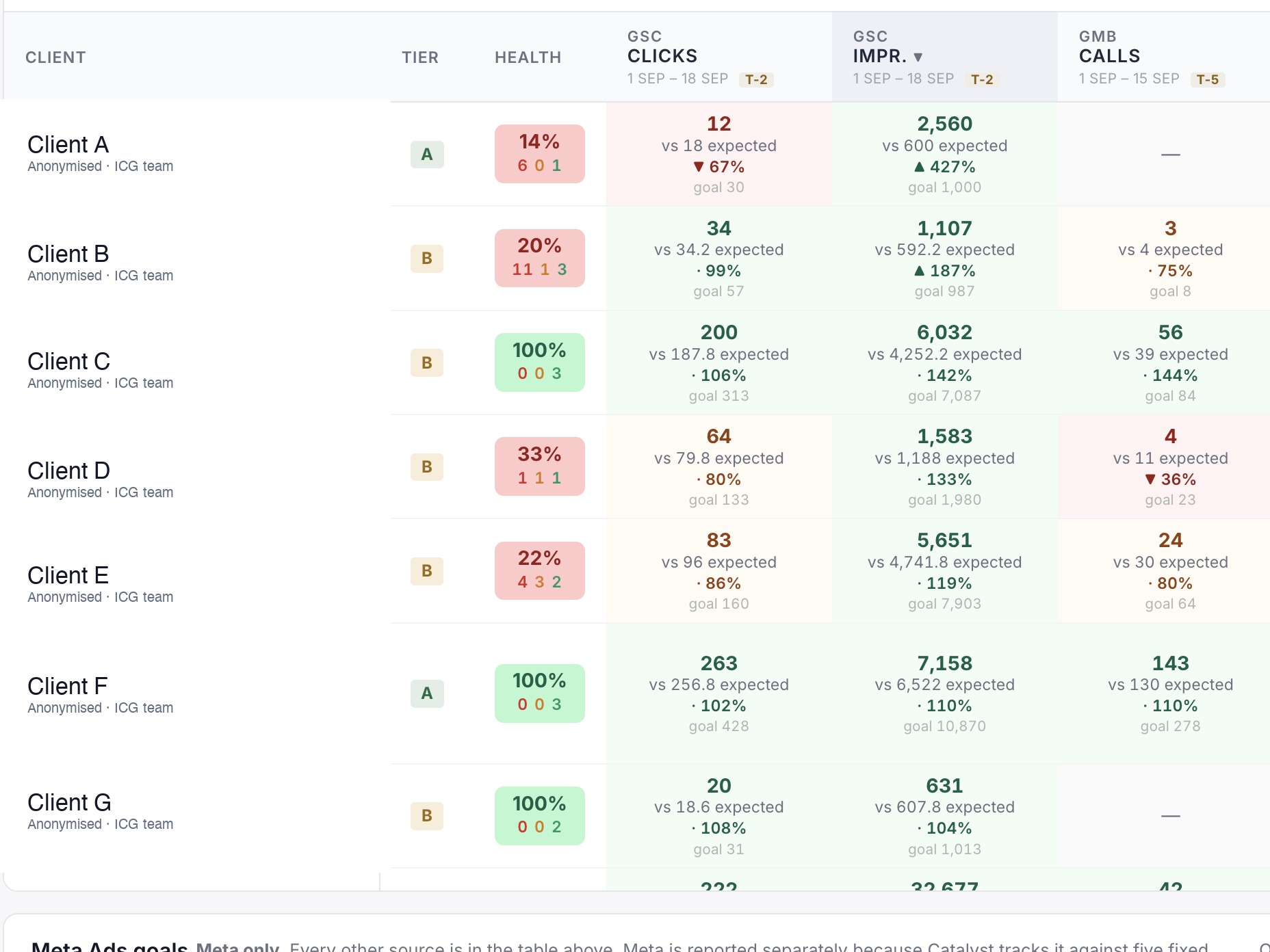
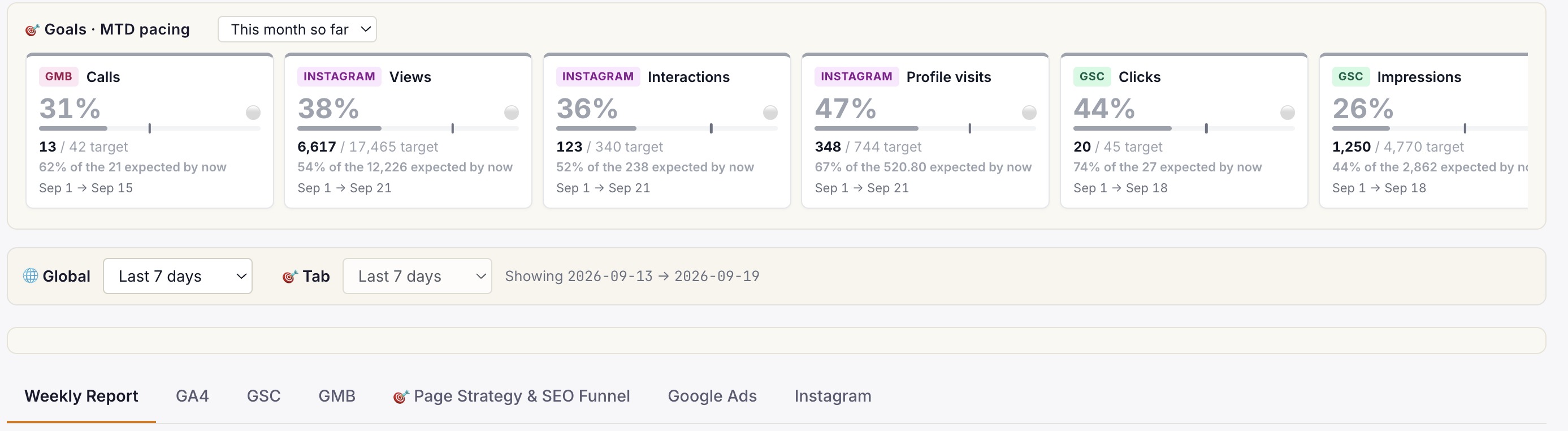
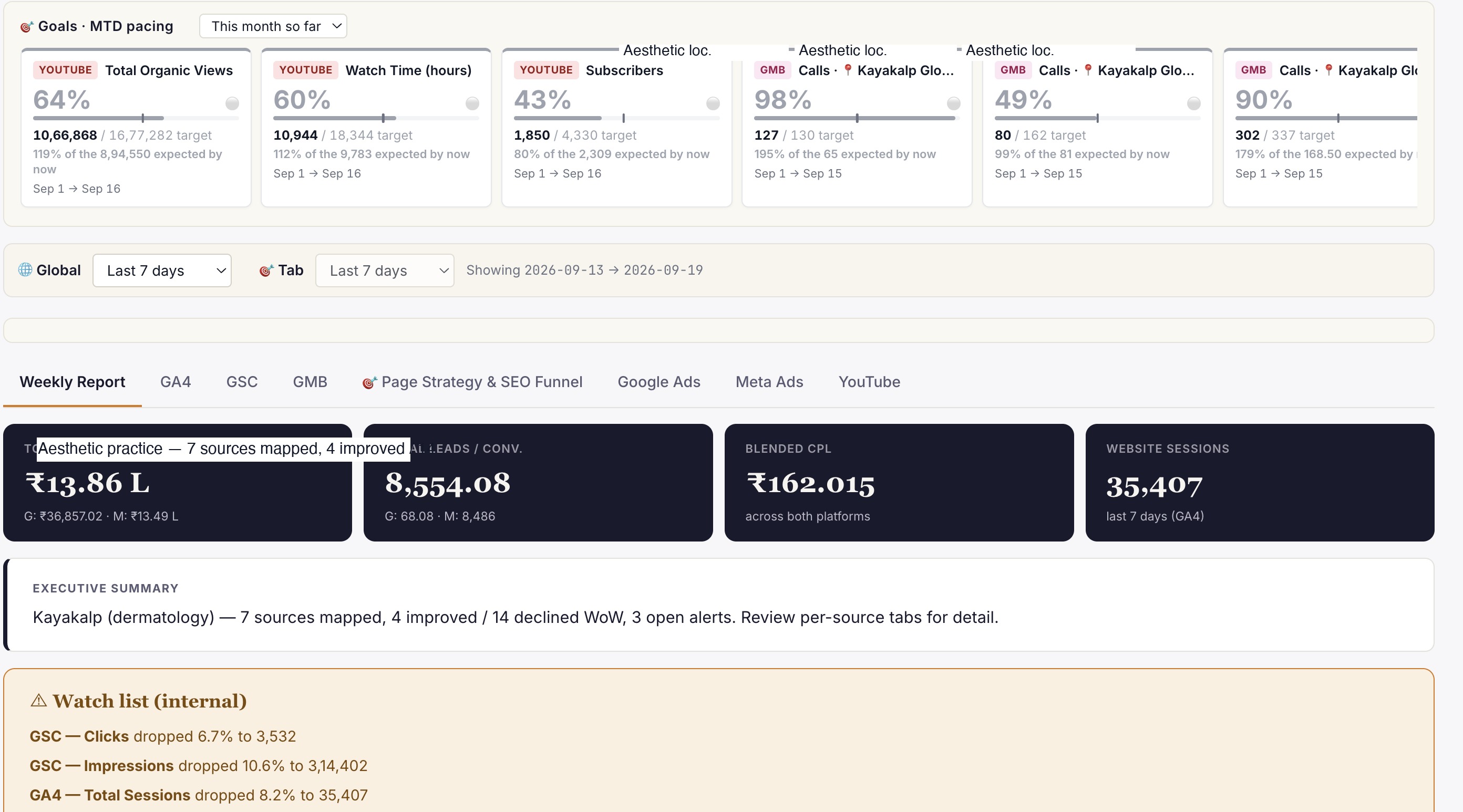
Live client dashboard. GSC, GA4, Google Ads, Meta Ads, IVR calls in one view. Login anytime, not monthly.
Phoenix
Clinic revenue intelligence over your PMS. Daily action queue: Prevent Loss, Maintain & Engage, Grow Revenue. Multi-centre rollout.
Or book a free 30-min audit to see all three in action on your account.
Healthcare brands
that already run on ICG.
A representative slice of the 150+ healthcare brands ICG has delivered for across India. Most engagements remain under NDA.


What ICG clients say · on video.
"Working with ICG transformed how we acquire IVF patients in Gurgaon. They understand the fertility journey from inquiry to consult..."
"ICG built our IVF marketing system from the ground up. The team understands healthcare specifics, not just generic digital marketi..."
Need help operationalising this?
Every ICG service is healthcare-only, NMC + DPDP-aware, and built around the patient-research patterns that drive Indian healthcare growth in 2026.
Every practice welcome — packages from ₹20,000/mo.
Goals-Driven engagements · Performance-Linked Payout Models available
More from
ICG.
Five trends shaping Indian healthcare marketing through 2027: AI-first patient research, Conversions API adoption, ABDM discovery, the AEO w...
Healthcare AIO is the discipline of getting your clinic or hospital cited inside Google AI Overviews, ChatGPT and Perplexity answers — not j...
Conversational-search advertising places brand messages inside AI chat answers — ChatGPT, Perplexity, Copilot — rather than beside a results...
Stop guessing.
Book a Diagnostic.
30 minutes. Free. With the AI-powered healthcare-only marketing agency 150+ brands already run on. No slides, no pitch, no hard close.


