


Combined Local SEO plus YouTube stack for an Indian IVF clinic: why single-surface investment underperforms and how Angryturtle plus YODA cover the 6 to 12 month IVF consideration cycle
A fertility-specific playbook for running Local SEO (Angryturtle) and YouTube (YODA) as a single stack — including why an IVF patient's 6 to 12 month consideration cycle needs both Maps and YouTube presence, the overlapping ART Act, PC-PNDT, NMC, ASCI, and DPDP compliance perimeter that governs both surfaces, and the specific failure mode of single-surface investment for IVF.
No pitch. Written root-cause diagnosis. AI-powered, healthcare only.
Direct answer
A fertility-specific playbook for running Local SEO (Angryturtle) and YouTube (YODA) as a single stack — including why an IVF patient's 6 to 12 month consideration cycle needs both Maps and YouTube presence, the overlapping ART Act, PC-PNDT, NMC, ASCI, and DPDP compliance perimet...
TL;DR

IVF is the healthcare specialty where the combined Local SEO plus YouTube stack is not a growth accelerator — it is a baseline requirement. The reason is the length of the consideration cycle. An IVF patient in India typically takes 6 to 12 months from first fertility concern to first IVF cycle booking, and that duration crosses multiple emotional stages, multiple platforms, multiple providers on the shortlist, and multiple compliance-sensitive claims that both the clinic and the patient are cross-checking. A clinic that shows up on only one surface loses candidates at every stage where the other surface is doing the work. This is a specialty deep-dive on how an IVF clinic runs Angryturtle for Local SEO and YODA for YouTube as one integrated stack, why single-surface investment consistently underperforms in IVF, and how the four-way overlapping compliance perimeter — ART Act 2021, PC-PNDT Act 1994, NMC's 2026 advertising guidelines, ASCI Guidelines 2022, and DPDP Act 2023 — governs both surfaces simultaneously.
Why IVF has the longest consideration cycle in Indian healthcare
Fertility care is uniquely long-cycle for reasons that are both clinical and emotional. Clinically, a couple typically spends the first 6 to 12 months trying naturally after identifying a concern. Only after that do they seek an initial fertility evaluation, which itself often runs 4 to 8 weeks of investigations. Only after investigations do they consider intrauterine insemination (IUI), typically 3 to 6 cycles before escalating to IVF. Only after that consideration do they engage seriously with IVF clinic selection.
Emotionally, IVF is one of the most private decisions in healthcare. Couples typically discuss it with almost no one else — sometimes not even close family. The research they do is almost entirely digital, deep, and private. The clinic they eventually book is a clinic they have often researched for 4 to 8 months without ever calling or visiting. During those months of silent research, the clinic's digital presence is doing the entire selling job with no human contact.
This produces the most demanding content requirement in healthcare. The couple needs to understand IVF at a clinical level (needs YouTube educational content). They need to evaluate multiple clinics operationally (needs Google Business Profile). They need to evaluate individual physicians as trustworthy humans (needs YouTube personality content). They need to check accessibility, hours, physical premises, patient reviews (needs Google Business Profile). They need to check whether the clinic's success rate claims are substantiated (needs both surfaces to be compliant). They need to see the clinic's handling of difficult questions (needs YouTube Q&A content and Google review replies).
No single surface can serve that whole requirement. An IVF clinic that runs only Local SEO catches couples only in the final month of the cycle, competing on price and location. An IVF clinic that runs only YouTube educates well but loses conversion to competitors with better operational profiles.
Why single-surface investment consistently underperforms for IVF
The single-surface failure pattern for IVF is more pronounced than for any other specialty. Documenting the two versions helps a fertility clinic recognise which one their current marketing is producing.
IVF clinic running only Local SEO. Symptoms — the profile ranks in the Local Pack, direction requests are steady, but the intake team reports that patient calls are typically first-time contact patients with almost no prior context, and conversion from consult to IVF cycle booking is materially below industry benchmarks. Root cause — the clinic is only reaching patients at the very bottom of the funnel, competing head-to-head on the criteria patients optimise at that stage (typically price and location), and losing to competitors whose upstream YouTube presence has already built emotional preference before the Local Pack search happened.
IVF clinic running only YouTube. Symptoms — the channel earns healthy view counts, subscribers, and comments; the physician is well-recognised in the specialty; but consult volume does not translate proportionally. Root cause — the couples who research through the channel then search for an IVF provider in their locality and find a competitor with a stronger Google Business Profile. The channel is doing upper-funnel work that a competitor is monetising at the bottom of the funnel.
IVF clinic running neither properly. This is the majority state of Indian IVF marketing today. The clinic has a stale Google Business Profile with outdated photos, a thin review corpus, and no active Q&A. The clinic has either no YouTube channel or a channel with fewer than 15 videos and no consistent publishing rhythm. All acquisition is driven by referrals and word-of-mouth. Growth is capped at what the physician's personal reputation can produce. A competitor that starts the combined stack from zero will overtake within 12 to 18 months.
The four-way compliance perimeter that governs both surfaces
Fertility content in India sits inside a compliance perimeter that is denser and more consequential than any other healthcare specialty. Both Angryturtle and YODA enforce this perimeter before any content publishes.
Assisted Reproductive Technology (Regulation) Act 2021. Prohibits unsubstantiated success rate claims. An IVF clinic cannot advertise "80% success rate" or "highest IVF success rate in India" without documented, per-age-band, per-indication substantiation. Individual videos, Google Posts, review replies, and Q&A entries are all in scope. Both platforms flag success-rate claims for compliance review before publication.
Pre-Conception and Pre-Natal Diagnostic Techniques (PC-PNDT) Act 1994. Prohibits any content that could enable or promote sex selection. Fertility clinic content that discusses gender predetermination, sex-selective techniques, or related topics is a strict prohibition. Even indirect content that could be interpreted as sex-selection adjacent — for example, videos discussing gender predetermination in animals as a scientific topic — carries risk. Both platforms enforce a hard stop on PC-PNDT flagged content.
National Medical Commission Ethics Code 2026. Restricts individual physician self-promotion, requires patient consent for any identifiable content, restricts testimonials from being presented as clinical evidence, and enforces conservative language around outcome claims. Both surfaces enforce these rules on video presenters, review replies, and Q&A content.
Advertising Standards Council of India Guidelines 2022. Prohibits unsubstantiated superiority claims, prohibits fear-based framings ("your fertility window is closing"), and requires evidence for comparative claims. Applies to profile description, service names, video titles and content, and review reply language.
Digital Personal Data Protection Act 2023. Patient identifying content — faces, medical records, IVF cycle specifics tied to identifiable couples — requires explicit consent. Consent handling for IVF is particularly sensitive because patient identity disclosure has social consequences that other specialties do not carry. Both platforms enforce consent verification workflows.
The four-way perimeter is unforgiving. A single non-compliant success rate claim in a description or a review reply can trigger both regulatory attention and platform-level content deprioritisation. The combined stack works because both platforms apply the same perimeter consistently.
What the combined stack actually covers across the IVF consideration cycle
Mapping the stack to the 6 to 12 month IVF consideration cycle shows why single-surface investment fails and combined investment compounds.
Months 1 to 3: fertility concern and initial research. The couple is researching whether their concern warrants a fertility evaluation. Their searches are informational — "how long should we try before seeing a fertility doctor," "signs of low sperm count," "AMH test what is it." YouTube is the dominant surface. Well-structured explainer videos and Myth-vs-Fact videos are how the couple encounters the clinic. Local SEO plays no role at this stage.
Months 4 to 6: fertility evaluation and consideration of intervention. The couple has decided to seek evaluation. Their searches shift to a mix — informational content on specific interventions and initial locality searches for fertility specialists. YouTube continues to drive credibility building; the Google Business Profile begins to matter for the first shortlist. Reviews, physician credentials, and clinic photos all become active decision inputs.
Months 7 to 9: IUI or early IVF consideration. The couple is comparing 3 to 5 clinics seriously. Both surfaces are working in parallel at maximum intensity. Every video the shortlisted clinics have published is watched. Every review is read. Every physician's YouTube presence and Google reviews are cross-checked. This is where the compound effect is at its peak.
Months 10 to 12: IVF cycle booking. The couple has selected a clinic. The final search is branded — the clinic name, the physician name, review checks, and often a specific procedure question. Booking happens via WhatsApp from the Google Business Profile or from the YouTube channel description link. The couple typically continues watching the clinic's YouTube content during the IVF cycle itself.
A clinic present on only one surface loses candidates at every stage where the other surface is doing the work. A clinic present on both surfaces is in the consideration set from month 1 to month 12 and has the highest probability of being the final selection.
The IVF-specific integration points between Angryturtle and YODA
Beyond the general combined-stack integration points, IVF has a few specialty-specific integrations that produce outsized returns.
Success rate substantiation content flows across both surfaces. Every video that references success rate outcomes links to a substantiation page on the clinic's website. The Google Business Profile description references the same substantiation page. Consistency across both surfaces is what protects the ART Act compliance perimeter.
Physician credential surfacing. IVF patients research individual physicians as intensely as they research clinics. YODA's video content builds physician recognition; Angryturtle's profile Q&A and photo module surfaces physician credentials operationally. Cross-links between the two surfaces — video links in the Google Business Profile Posts, profile links in video descriptions — reinforce the same physician entity across both platforms.
Review sentiment feeds video content topics. Angryturtle's review analysis surfaces the specific concerns patients mention in their reviews — cost transparency, wait times, communication clarity, second opinion policies. YODA's Content Planner turns those concerns into video briefs. A video that addresses the top three concerns from the clinic's own review corpus is high-conversion content because it addresses the exact objections future patients are silently carrying.
Comment moderation and DM handling connect to intake. YouTube comments on IVF videos frequently include implicit consult inquiries — "how do I book with Dr X" or "what's the process for booking." YODA's comment moderation workflow ensures these get responded to within the compliance perimeter, routed to WhatsApp for the actual booking conversation, and tracked as attributable to the video that produced them.
The tool ICG uses to run this at scale: Angryturtle
ICG runs local SEO and GBP intelligence for 150+ Indian healthcare brands using Angryturtle — our own AI-native GBP intelligence and management OS. The platform scores every profile 0-100 via a proprietary Rank OS model with five weighted dimensions (Relevance, Review Health, Freshness, Entity Authority, AIO Readiness), publishes edits, Posts, media, and review replies directly to Google, and includes Ask Maps AIO Readiness scoring for Google AI Overviews and ChatGPT visibility.

Available in two shapes: self-serve at ₹999/- per month for solo owners with 1-2 profiles, and ICG's managed service from ₹25,000/- per month where our healthcare specialists execute inside the same platform. Both are anchored in the Healthcare Local SEO Agency India pillar page which has full scope, methodology and pricing.
Book a demo on WhatsApp → or start a free trial at angryturtle.ai →
The platform ICG uses to run this at scale: YODA
ICG runs healthcare YouTube marketing for clinics, hospitals, and specialty groups using YODA — our AI-native healthcare YouTube marketing platform. YODA sits on top of a channel's data and does four things no dashboard does: it separates organic from paid views at every step (so a promoted video can never masquerade as organic growth), it gives decisions not dashboards (every video gets a state + next action), it writes back to YouTube directly (improved titles, tags, descriptions, chapters applied straight to the platform), and it tracks the three rank races — YouTube search, Google web, and Google AI Overview citations.
YODA runs the full 6-step workflow — Overview, Diagnostics, Strategy, Optimisation, Reputation (ORM), and Competitor Intel — with 40+ analysis modules organised under those steps. ICG's managed YouTube service uses YODA end-to-end. See the Healthcare YouTube Marketing pillar guide for the full scope, or the Healthcare YouTube Marketing Agency service page for engagement details.
Book a YODA demo on WhatsApp → or request a free healthcare YouTube channel audit →
Related reading
- YouTube marketing for IVF clinics in India
- Combined stack pillar — Local SEO plus YouTube for Indian healthcare
- Why Google Maps and YouTube compound for clinics in India
- Combined stack for a dermatology clinic — playbook
- IVF video consultation conversion impact
FAQ
How long before a new IVF clinic sees results from starting the combined stack? Local SEO results — Local Pack ranking improvement, direction request lift, WhatsApp click lift — typically appear within 60 to 90 days of consistent Angryturtle-driven weekly work. YouTube results take longer. Meaningful subscriber and view growth typically emerges around month 4 to 6. The compound signal — inbound patient conversations that cite the YouTube channel unprompted — usually becomes reliable around month 8 to 10.
What is the minimum viable YouTube publishing cadence for an IVF clinic? One video per week is the floor. Two per week is the sustainable target most clinics settle into. Below one per week, the channel does not build momentum and does not earn the algorithm's trust for higher-intent surfacing.
Are success rate claims ever safe to make in videos or on the Google Business Profile? Yes, when substantiated. A per-age-band, per-indication success rate that is documentable from the clinic's own audited data can be published with the appropriate disclaimers. Both platforms require the substantiation source to be linked before publication. Generic "high success rate" or "best in India" framings are always non-compliant.
How do we handle patient testimonials for IVF given the privacy sensitivity? Explicit written consent is the first gate. Voice-only or silhouette-only presentations are common to protect identity. The testimonial content must not be presented as clinical evidence — it must be framed as an individual experience, not a typical outcome. Both platforms enforce these framing rules.
What is the largest single mistake IVF clinics make in their digital marketing? Publishing unsubstantiated success rate claims. This is the single mistake most likely to produce both regulatory action and long-term reputational damage. The compound stack helps because the platform-level compliance filter catches these claims before publication, but workflow discipline inside the clinic remains the other half of the safeguard.
Can an IVF clinic run the combined stack in-house without an agency? The Angryturtle self-serve tier at ₹999/- per month is designed for in-house operation. The YouTube publishing workflow requires either a dedicated in-house content producer or a specialised agency. Most IVF clinics choose managed YouTube (through YODA) even when Angryturtle runs in-house, because the compliance perimeter and video production quality are hard to sustain without specialist support.
Does the combined stack work for a multi-location IVF chain? Yes, and this is where the stack produces its highest returns per rupee invested. One brand-level YouTube channel with locality-tagged content serves multiple locations. Each location has its own Angryturtle-managed Google Business Profile. The central channel amplifies every location, and the location profiles convert the amplified demand.
How does the combined stack handle patients travelling from other cities for IVF? Cross-city IVF traffic is a common pattern in India. The combined stack helps because the YouTube channel builds cross-city awareness, and the Google Business Profile handles the operational logistics (hours, contact, first-visit scheduling) that a travelling patient needs. Video content that explicitly addresses travelling patients — accommodation guidance, cycle scheduling around travel — is high-conversion content for this segment.
What is the realistic monthly budget floor for a serious IVF combined stack? For a serious commitment — managed on both surfaces with weekly cadence and specialist compliance support — the floor is typically ₹1,50,000/- to ₹3,50,000/- per month combined depending on channel maturity and location count. Below that, the pace of publishing and the depth of compliance handling does not match what the specialty demands.
How does the compound stack reduce the effective cost per cycle booking? By addressing the entire 6 to 12 month consideration cycle rather than only the final booking moment, the compound stack reduces reliance on paid acquisition at the bottom of the funnel. Clinics running the combined stack for 12+ months typically report that a rising share of new cycle bookings arrive through organic channels attributable to the compound stack, reducing the per-booking cost of paid acquisition proportionately.
Book a free IVF clinic growth diagnostic.
Raman Soni walks through your current channel mix, CPQL vs cost-per-cycle, and where the 90-day patient journey is leaking.
The three platforms
behind every ICG engagement.
Beacon
CAPI middleware that fixes Event Match Quality, translates CRM statuses to Meta-standard events, dedups across channels.
Agency OS
Live client dashboard. GSC, GA4, Google Ads, Meta Ads, IVR calls in one view. Login anytime, not monthly.
Phoenix
Clinic revenue intelligence over your PMS. Daily action queue: Prevent Loss, Maintain & Engage, Grow Revenue. Multi-centre rollout.
Or book a free 30-min audit to see all three in action on your account.
Healthcare brands
that already run on ICG.
A representative slice of the 150+ healthcare brands ICG has delivered for across India. Most engagements remain under NDA.


What ICG clients say · on video.
"Working with ICG transformed how we acquire IVF patients in Gurgaon. They understand the fertility journey from inquiry to consult..."
"ICG built our IVF marketing system from the ground up. The team understands healthcare specifics, not just generic digital marketi..."
The intelligence stack behind this playbook.
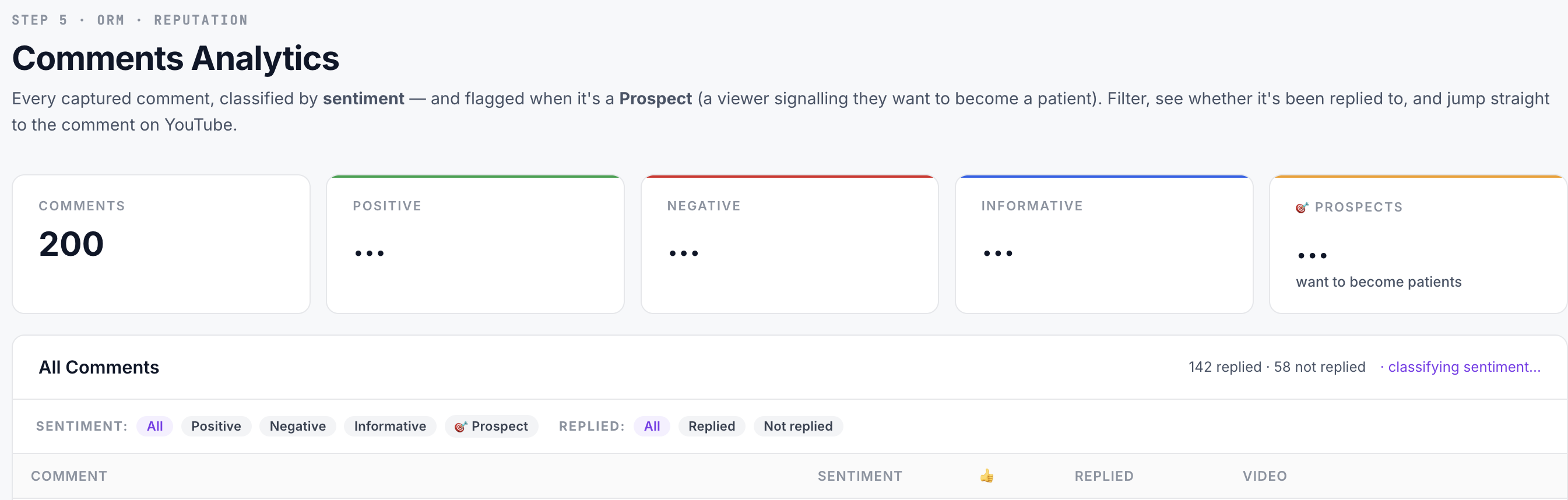
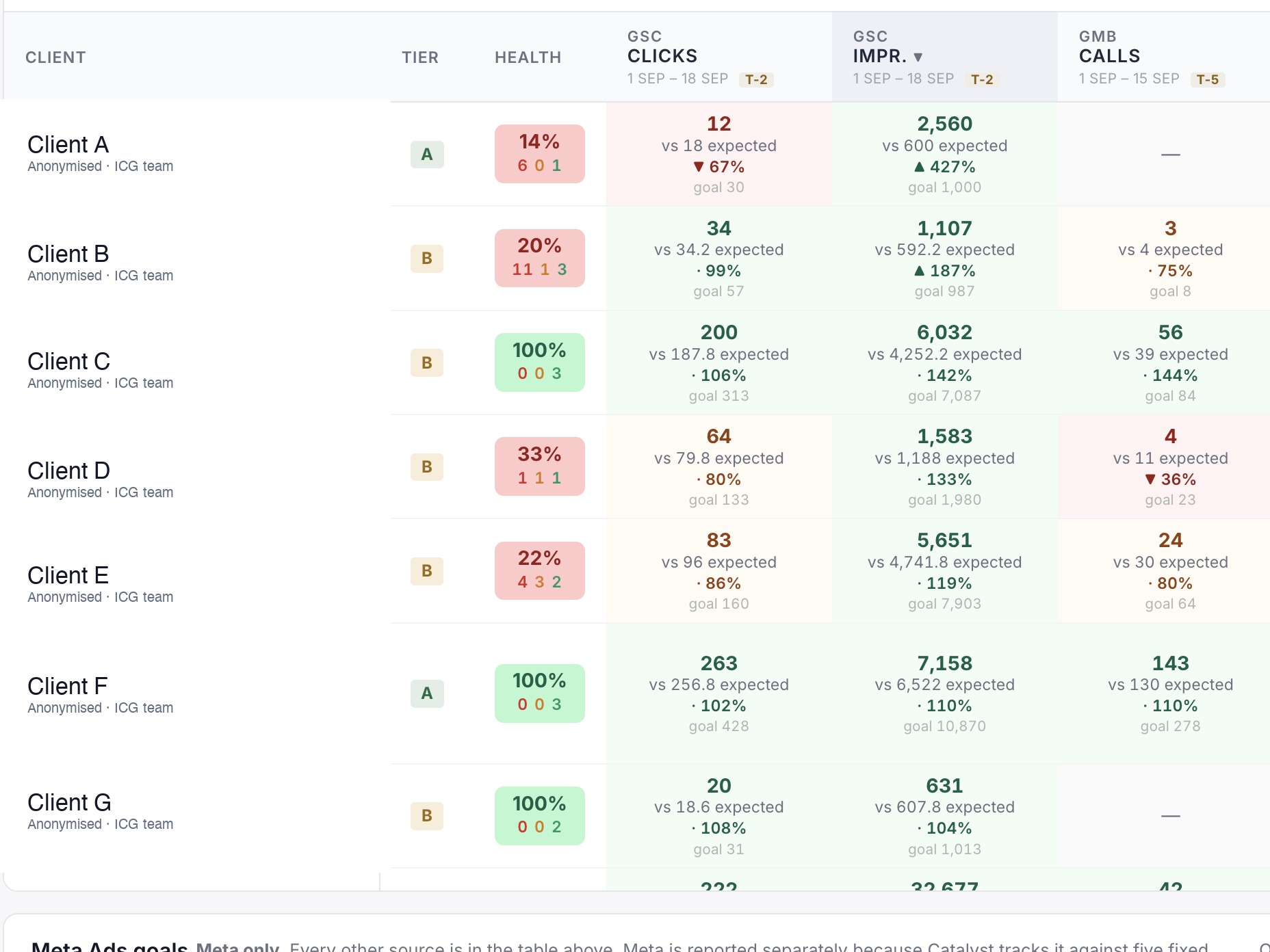
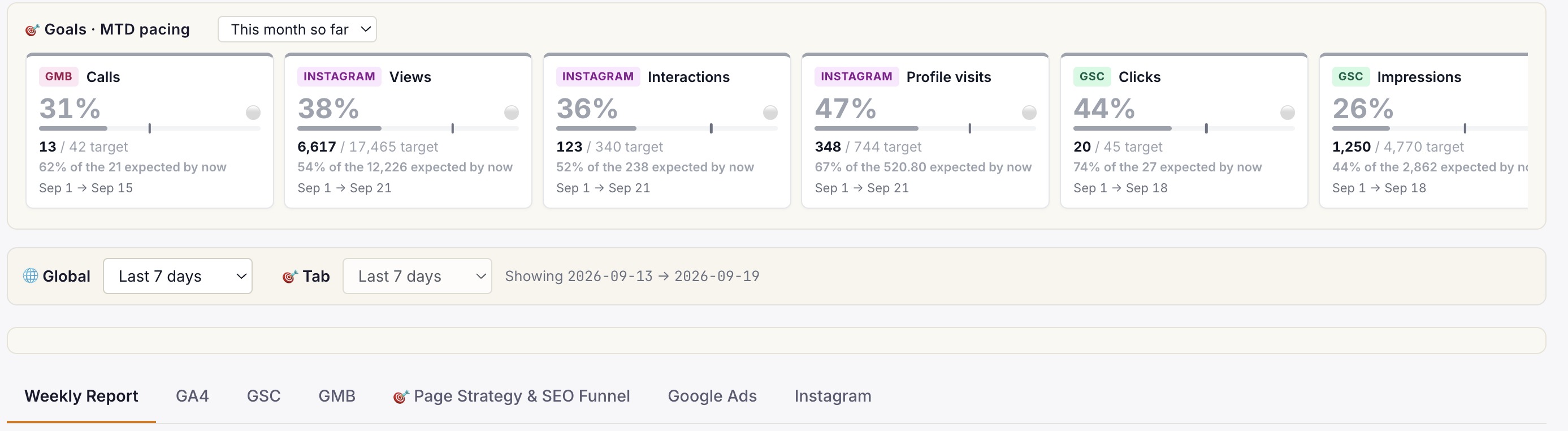
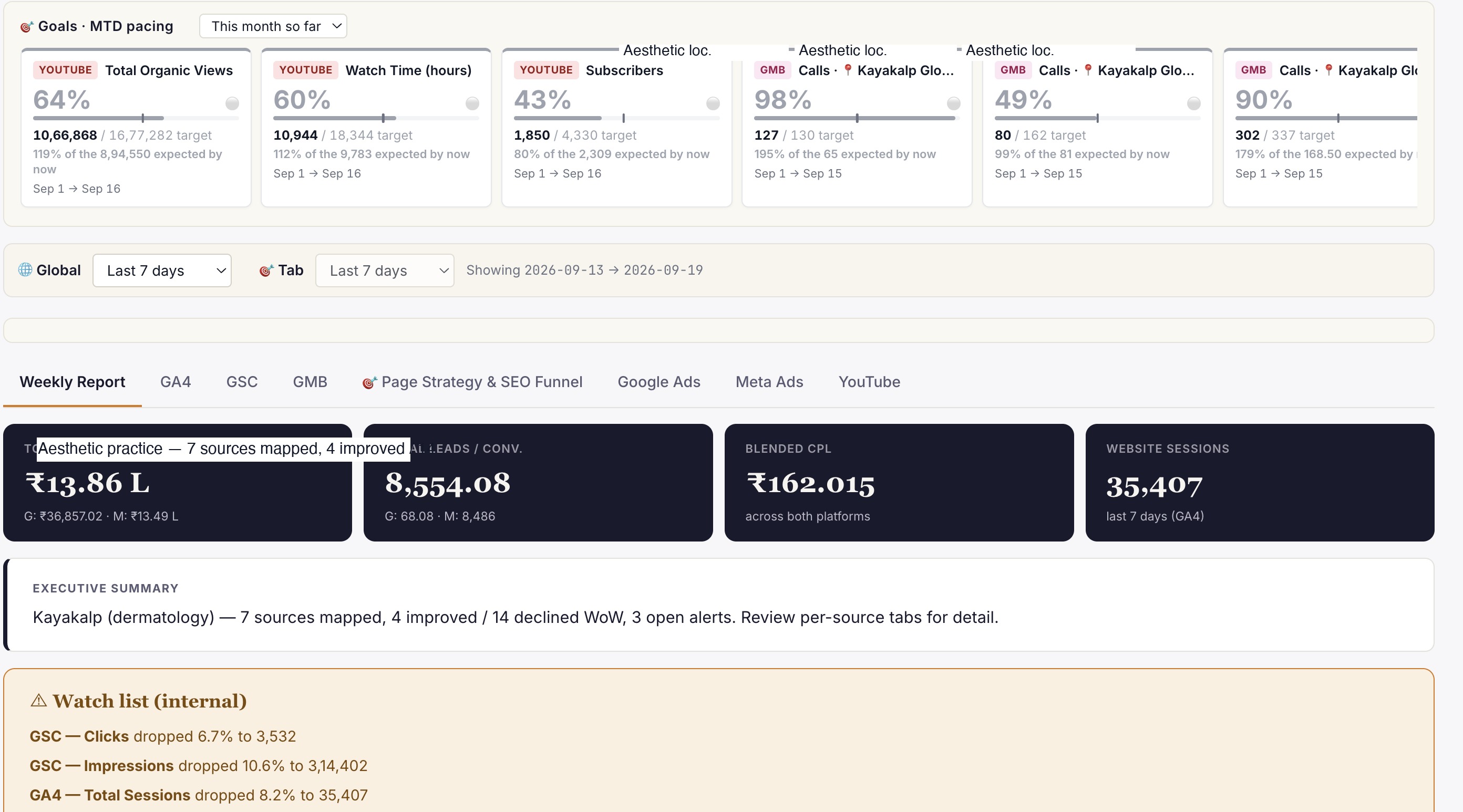
Every ICG engagement runs on the Search Intelligence Trifecta — Angryturtle for GMB, SIE for search and AI Overview, YODA for YouTube. Live product screens below.
Need help operationalising this?
Every ICG service is healthcare-only, NMC + DPDP-aware, and built around the patient-research patterns that drive Indian healthcare growth in 2026.
Every practice welcome — packages from ₹20,000/mo.
Goals-Driven engagements · Performance-Linked Payout Models available
More from
ICG.
Five trends shaping Indian healthcare marketing through 2027: AI-first patient research, Conversions API adoption, ABDM discovery, the AEO w...
Healthcare AIO is the discipline of getting your clinic or hospital cited inside Google AI Overviews, ChatGPT and Perplexity answers — not j...
Conversational-search advertising places brand messages inside AI chat answers — ChatGPT, Perplexity, Copilot — rather than beside a results...
Stop guessing.
Book a Diagnostic.
30 minutes. Free. With the AI-powered healthcare-only marketing agency 150+ brands already run on. No slides, no pitch, no hard close.


