


ART Act 2021 Compliance Checklist for IVF Clinics (2026)
Every ART Act 2021 rule shaping IVF clinic ops, marketing, consent and reporting — checklist, audit timeline, penalty matrix and 2026 amendment notes.
No pitch. Written root-cause diagnosis. AI-powered, healthcare only.
Direct answer
Every ART Act 2021 rule shaping IVF clinic ops, marketing, consent and reporting — checklist, audit timeline, penalty matrix and 2026 amendment notes.
TL;DR
The Assisted Reproductive Technology (Regulation) Act 2021 + Surrogacy (Regulation) Act 2021 transformed Indian IVF clinic operations. Every IVF clinic operating in India must be registered with the National Registry of ART Clinics + Banks by 2026, and the regulatory framework imposes specific requirements on consent management, donor anonymity, surrogacy eligibility, embryo handling, and counselling. Non-compliance penalties: ₹5-15 lakh fines + license suspension + criminal prosecution for serious violations.
What is ART Act 2021?
The Assisted Reproductive Technology (Regulation) Act 2021 came into force in January 2022. It establishes:
- National Registry of ART Clinics — every IVF clinic + ART bank must register
- National Assisted Reproductive Technology and Surrogacy Board — apex regulatory authority
- State Boards — state-level oversight + grievance redressal
- National Surrogacy Board — separate body for surrogacy regulation
- Mandatory ART Clinic Classifications — Level 1A (basic IUI), Level 1B (IVF, ICSI), Level 2 (donor gametes), Level 3 (gestational carriers, surrogacy)
ART Act 2021 — 10 compliance requirements every IVF clinic must meet
1. National Registry registration
Every IVF clinic + ART bank must register with the National Registry within 60 days of commencing operations. Registration is renewable every 5 years. Costs: ₹50K-2 lakh consultant fees + government fees.
2. ART Clinic Classification
Clinics must specify their Level (1A/1B/2/3). Each level has progressively stricter facility + personnel + equipment requirements:
- Level 1A (IUI only): basic facility, andrologist + gynaecologist
- Level 1B (IVF + ICSI): embryology lab + cryopreservation
- Level 2 (donor gametes): additional ART bank registration, donor screening protocols
- Level 3 (gestational carrier + surrogacy): most stringent — separate Surrogacy Board approval required
3. Mandatory pre-IVF counselling
Before any ART procedure, patient + spouse must undergo counselling by qualified counsellor. Topics: success rates, risks, costs, multiple pregnancy risk, OHSS risk, financial planning, emotional/psychological aspects. Counselling must be documented + signed by patient + counsellor.
4. Informed consent — granular + versioned
Separate consents required for: ovarian stimulation, oocyte retrieval, IVF/ICSI, embryo transfer, cryopreservation, donor gamete use (if applicable), embryo disposal, research use of embryos (if any). Each consent must be written, signed, dated, witness-verified, time-versioned (in case patient updates).
5. Donor anonymity + screening
Sperm + oocyte donor identity protected. Donors must undergo: medical history, genetic screening (~50 conditions), infectious disease testing (HIV, HBV, HCV, syphilis, chlamydia), psychological evaluation. Donor data maintained in National Registry. Recipients cannot identify donors. Children born from donor gametes can access non-identifying medical information at age 18.
6. Surrogacy regulation (Surrogacy Act 2021)
Commercial surrogacy banned. Only altruistic surrogacy permitted. Strict eligibility:
- Intending couple: legally married Indian couple, female 23-50, male 26-55, with proven infertility
- Surrogate: married woman 25-35, has at least one child of her own, related to intending couple
- Process requires National Surrogacy Board approval + State Board clearance
- Foreign nationals: prohibited from commissioning surrogacy in India
7. Multiple pregnancy reduction
Maximum 2 embryos can be transferred per IVF cycle. Triplets/quadruplets pregnancies require ethics committee review for foetal reduction.
8. Embryo storage + disposal protocols
Maximum 10-year embryo storage. Patient consent required for: continued storage, donation to another couple, donation to research, disposal. Annual storage fee disclosure required.
9. Record-keeping
All cycle records maintained for 25 years. Includes patient consent, cycle data, embryology records, outcome data. Subject to National Registry audit.
10. Advertising restrictions
ART clinic advertising must comply with NMC Code + ART Act. Prohibited: success rate guarantees, comparative ranking claims, before/after baby images, testimonials promising specific outcomes. Permitted: factual information about procedures, costs, qualifications.
Penalties for ART Act 2021 violations
| Violation | Penalty |
|---|---|
| Operating without National Registry registration | ₹5-10 lakh + closure |
| Commercial surrogacy | ₹5-10 lakh + up to 10 years imprisonment |
| Foreign national surrogacy commissioning | ₹5-10 lakh + criminal prosecution |
| Pre-natal sex determination | ₹50K + criminal prosecution under PCPNDT Act |
| Inadequate consent documentation | ₹2-5 lakh per case |
| Donor anonymity breach | ₹2-5 lakh per case |
ART Act 2021 + technology stack
Manual compliance is impractical for clinics doing 30+ cycles/month. Required tech stack:
- ART Act-compliant CMS: ICG HealthPro 360 ships ART Act 2021 compliant workflows native (consent versioning, IVF cycle modelling, donor screening tracking, embryo storage + disposal protocols, 25-year record retention). Alternative: generic CMS + ₹15-30 lakh custom ART Act compliance development
- Healthcare CRM with ART workflows: ICG AtomCRM ships ART Act 2021 compliant patient acquisition + 60-180 day consideration funnel + cost-anxiety EMI integration + counselling tracking
- National Registry integration: automated reporting to National Registry (annual cycle reports, outcome data, embryo storage updates)
For deeper guidance
See our Healthcare CRM for IVF Clinics India, IVF Marketing Complete Guide, our Cost to Start IVF Clinic Mumbai, our ART regulatory glossary.
For founder-led ART Act 2021 compliance audit (free 48-hour assessment of your clinic's readiness), book here.
Common ART Act compliance gaps we see in IVF clinic audits
Across the diagnostic engagements we run for IVF and fertility groups, the same avoidable gaps appear again and again — usually not in the clinical protocols, but in the paperwork trail that a National Registry inspector or a state ART board will actually ask for. If you are running an internal audit before an inspection, these are the six places to look first.
- Donor and commissioning couple consents stored as scans, not as a searchable register. The Act expects a register the clinic can produce on demand; a folder of PDFs on a shared drive does not qualify.
- Age eligibility not re-verified at each cycle. Female commissioning parents must be 21-50 and male 21-55; clinics often verify once at registration and never again.
- National ART Registry uploads lagging by more than one cycle. Monthly upload discipline is the single most common finding in mock audits.
- Advertising and website copy that implies success-rate guarantees. The Act bars sex selection claims and misleading success language — a copy sweep of the website, Google Business Profile and Meta ads is overdue at most clinics.
- Insurance for the oocyte donor missing or expired. The 12-month coverage window is a hard rule, not a soft one.
- Grievance-cell details not displayed at the clinic entrance and on the website footer. A five-minute fix that inspectors still flag.
Most of these are marketing and operations problems dressed up as compliance problems. If your Google Business Profile, Meta ad library and clinic microsite were pulled into an inspection tomorrow, would the language survive? Our Angryturtle GBP operating system and Meta Catalyst IQ workflows ship with an ART-Act copy filter for exactly this reason, and hospital groups running the Client Elevation Programme get a quarterly compliance sweep bundled in. For deeper NABH-adjacent readiness, see our companion piece on the NABH accreditation checklist for IVF clinics.
Book a free IVF clinic growth diagnostic.
Raman Soni walks through your current channel mix, CPQL vs cost-per-cycle, and where the 90-day patient journey is leaking.
Questions readers ask
about this topic.
The three platforms
behind every ICG engagement.
Beacon
CAPI middleware that fixes Event Match Quality, translates CRM statuses to Meta-standard events, dedups across channels.
Agency OS
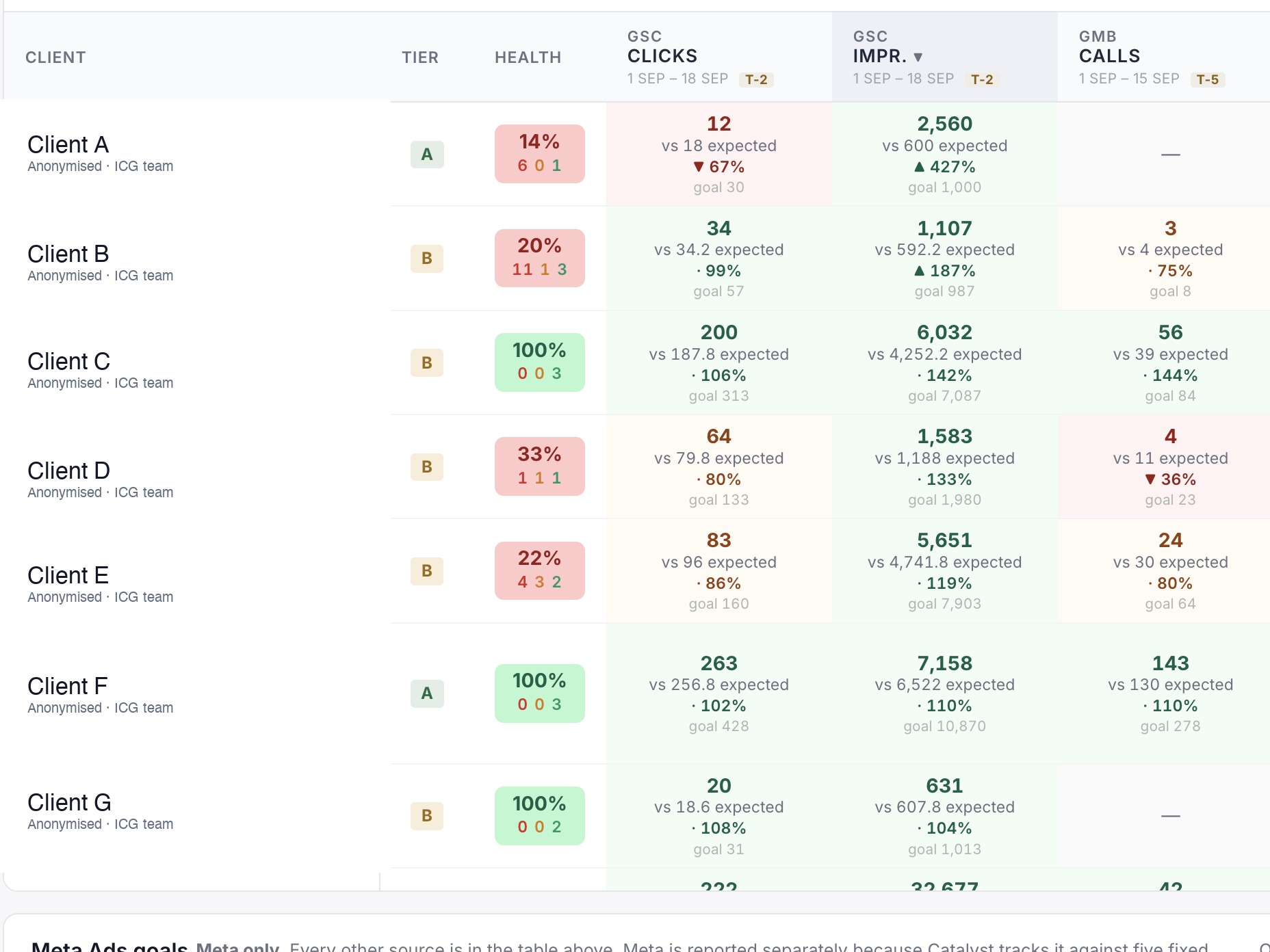
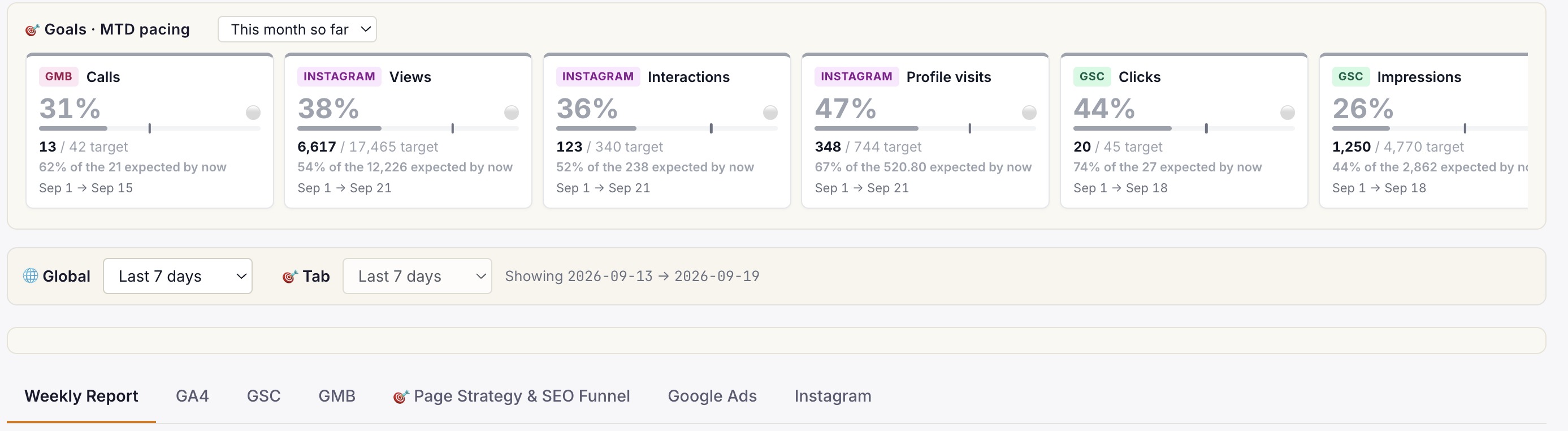
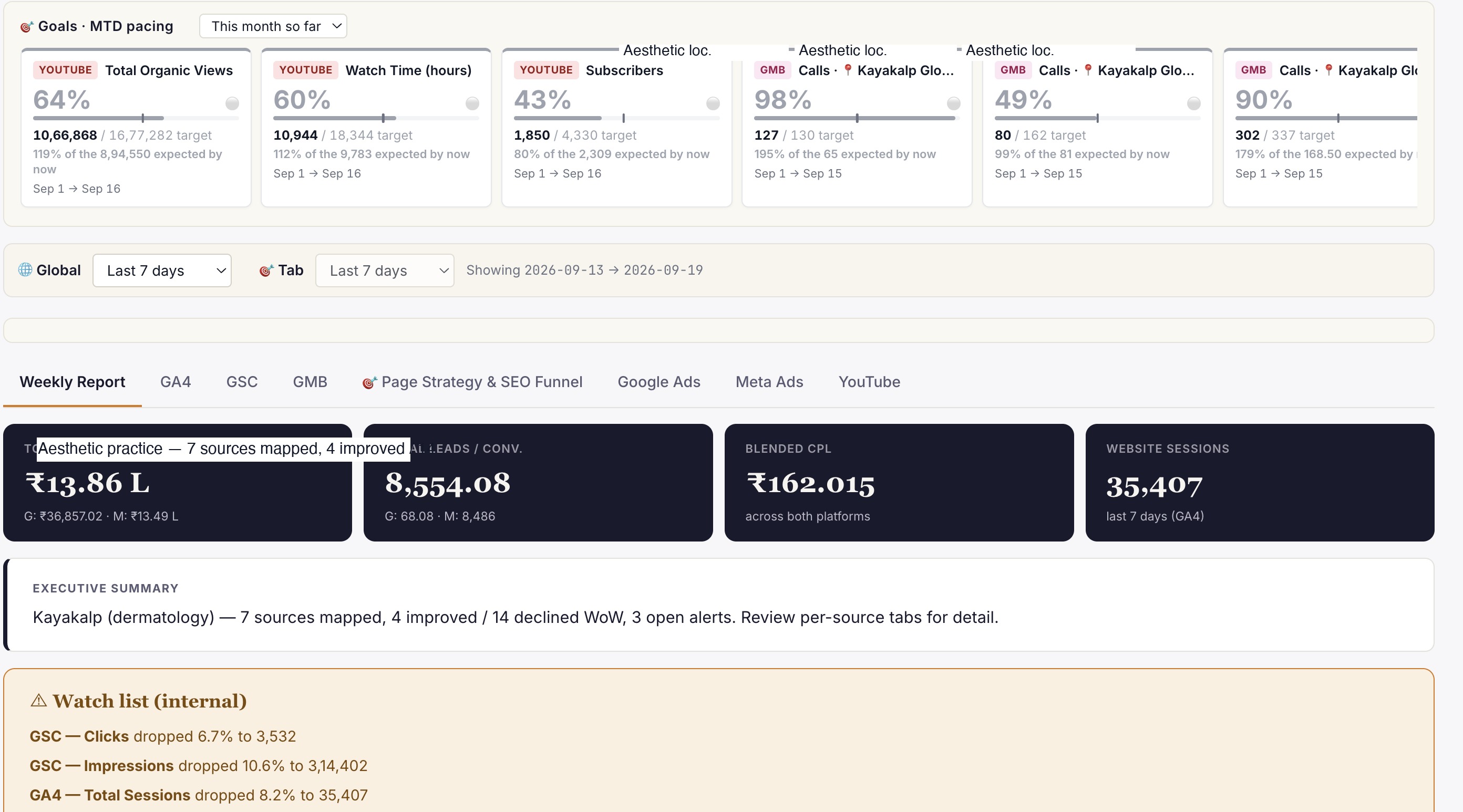
Live client dashboard. GSC, GA4, Google Ads, Meta Ads, IVR calls in one view. Login anytime, not monthly.
Phoenix
Clinic revenue intelligence over your PMS. Daily action queue: Prevent Loss, Maintain & Engage, Grow Revenue. Multi-centre rollout.
Or book a free 30-min audit to see all three in action on your account.
Healthcare brands
that already run on ICG.
A representative slice of the 150+ healthcare brands ICG has delivered for across India. Most engagements remain under NDA.


What ICG clients say · on video.
"Working with ICG transformed how we acquire IVF patients in Gurgaon. They understand the fertility journey from inquiry to consult..."
"ICG built our IVF marketing system from the ground up. The team understands healthcare specifics, not just generic digital marketi..."
Need help operationalising this?
Every ICG service is healthcare-only, NMC + DPDP-aware, and built around the patient-research patterns that drive Indian healthcare growth in 2026.
Every practice welcome — packages from ₹20,000/mo.
Goals-Driven engagements · Performance-Linked Payout Models available
More from
ICG.
Five trends shaping Indian healthcare marketing through 2027: AI-first patient research, Conversions API adoption, ABDM discovery, the AEO w...
Healthcare AIO is the discipline of getting your clinic or hospital cited inside Google AI Overviews, ChatGPT and Perplexity answers — not j...
Conversational-search advertising places brand messages inside AI chat answers — ChatGPT, Perplexity, Copilot — rather than beside a results...
Stop guessing.
Book a Diagnostic.
30 minutes. Free. With the AI-powered healthcare-only marketing agency 150+ brands already run on. No slides, no pitch, no hard close.


