


Healthcare SEO in India 2026: Pillar Playbook for Clinics
Healthcare SEO playbook for Indian clinics and hospital groups: rankings, AEO, local, compliance, a 12-month plan. Built on 400+ audits. Chat with a Co-Founder.
No pitch. Written root-cause diagnosis. AI-powered, healthcare only.
Quick answer
How is SEO used in healthcare?
In healthcare, SEO is used to make hospital, clinic and doctor websites and Google listings appear when people search for treatments, specialists and conditions. It combines technical fixes, medically reviewed service and condition pages, doctor profiles with schema, local listings and reviews. In India it also has to follow NMC rules on doctor advertising, ASCI guidelines and the DPDP Act 2023.
Direct answer
Healthcare SEO playbook for Indian clinics and hospital groups: rankings, AEO, local, compliance, a 12-month plan. Built on 400+ audits. Chat with a Co-Founder.
TL;DR
By Hanuman Sihag — Head of Innovation Chamber & SEO Lead, ICG, and Abhishek Kumar — Sr. Manager, SEO and AIO, ICG.
Reviewed for strategy and compliance accuracy by Abhash Kumar — Co-Founder, Strategy, ICG.
Neither the authors nor the reviewer is a clinician; this is a strategy and compliance review, not a clinical sign-off.
Last substantively updated: 29 July 2026.
Healthcare SEO is the work of making a hospital, clinic, or practitioner's website findable and trustworthy to both search engines and patients searching in genuine distress. In India that work looks different from the US or UK version most guides describe: patients pay out of pocket more often than not, they search "gynaecologist near me" on a phone in the waiting room of a different clinic, and they decide between three OPD options in a single evening rather than working through a referral. This guide covers what actually moves rankings and enquiries for Indian healthcare brands, including how to get visibility across multi-location clinics through local SEO. It also corrects three things about the version of this page that lived at this URL before today: it dropped a deprecated Core Web Vitals metric, it corrected a specialty-playbook count that didn't match what was actually written, and it removed or re-labelled every stat that had no source. That correction is itself part of what a page needs to show to be trusted on a subject like this one. ICG has run healthcare-only SEO programmes since 2018, across 150+ brands and 12 specialties, which is the vantage point this guide is written from.
Table of contents
- What healthcare SEO means in India right now
- The discipline shifts reshaping healthcare SEO
- Technical SEO foundations for healthcare sites
- Local SEO for multi-location clinics and hospitals
- Healthcare content strategy that earns topical authority
- AEO and AI search optimisation
- E-E-A-T that actually holds up on this page
- A measurement framework you can actually run
- The regulatory floor: NMC, ASCI, DPDP, and NABH
- Specialty-specific SEO playbooks
- The 12-month healthcare SEO deployment plan
- Frequently asked questions
What healthcare SEO means in India right now
Healthcare SEO in India means optimising a hospital, clinic, or doctor's digital presence for a patient population that is mostly cash-pay, mostly mobile, and mostly deciding in the moment. Medical SEO and SEO for healthcare providers get used interchangeably in the industry, and functionally they are the same discipline: getting the right site in front of the right search at the right moment, for a category where a wrong answer can genuinely hurt someone.
That last part is why healthcare SEO isn't run like SEO for a SaaS company or an ecommerce brand. Google treats medical content as Your Money or Your Life content, which means the bar for who gets to rank is higher and the penalty for getting it wrong (a factual error, an unqualified author, a page that reads like an ad for a procedure) is steeper. The most useful reference point for what "getting it right" means in Google's own words is the Search Quality Rater Guidelines, and we come back to that document more than once in this guide because it is the actual rubric human quality raters use, not a marketing summary of one.
The India-specific piece most global guides miss: a US healthcare SEO article assumes an insurance-mediated, referral-driven patient journey, a doctor searching on a patient's behalf, a payer somewhere in the loop. Indian healthcare search looks more like retail. "Best dermatologist near me," "IVF cost in Mumbai," "dentist open now Andheri" — these are OPD-hours, price-sensitive, walk-in-adjacent searches, and they run through a different ecosystem than the West's: doctor-listing platform profiles, local-business directory reviews, doctor-directory profiles, and a Google Business Profile that has to work in Hindi and English at once. A full SEO services programme for an Indian healthcare brand has to be built around that reality from the first keyword list, not bolted on as a "localisation" afterthought. That's really what SEO in healthcare comes down to in India: matching search intent shaped by price and immediacy, not textbook keyword volume.
The discipline shifts reshaping healthcare SEO
Four things about healthcare SEO strategy have genuinely changed since the last time most clinics touched their SEO plan. Keyword lists have given way to topical authority: ranking well for "IVF cost Delhi" now depends less on that exact phrase existing on a page and more on whether the whole site demonstrates real depth on IVF as a topic, across cost, process, success-rate framing, and aftercare.
The content production model has shifted too. A blog-post cadence of one loosely related article a week does less for a site than a smaller number of genuinely structured pages, each one built to answer a cluster of real patient questions rather than to hit a word count. Meanwhile, off-page link building has taken a back seat to on-page entity reinforcement — the site telling Google, consistently and in structured data, exactly who the doctors are, what they're qualified in, and how the clinic's locations relate to each other. ICG's own budget-allocation model for this, the DCG Matrix (Demand Capture × Demand Generation), treats a healthcare site's SEO and content assets as the generation side of that ledger rather than a one-off expense; a fuller explanation of how the framework splits and measures each side lives on the frameworks page.
The change getting the most attention right now is AI-assisted search. ChatGPT, Perplexity, Gemini, and Google's AI Overviews are increasingly part of how people research a symptom or a procedure before they ever land on a clinic's website. We don't have an independent, verifiable industry figure for what share of healthcare search this represents in India specifically, and we're not going to invent one. What we can say honestly: across ICG's own healthcare client portfolio, assisted-search referral traffic (visits arriving after a user interacted with an AI answer engine) has become a real, trackable line item where two years ago it barely registered. That's ICG's own observed portfolio pattern, not an external benchmark, and we're flagging it as such rather than dressing it up as one.
Technical SEO foundations for healthcare sites
Google retired First Input Delay as a Core Web Vitals metric in March 2024, replacing it with Interaction to Next Paint. If a healthcare SEO checklist you're using still cites FID, it's working from technical guidance that's more than two years stale — worth flagging, since anyone doing SEO for medical websites tends to inherit that checklist from an old agency template and never revisit it. The current Core Web Vitals thresholds, per Google Search Central, are Largest Contentful Paint under 2.5 seconds, Cumulative Layout Shift under 0.1, and Interaction to Next Paint under 200 milliseconds.
Beyond Core Web Vitals, the technical layer that matters most for healthcare specifically is structured data, because it's how a site tells Google, and increasingly AI answer engines, who its doctors are, what a clinic is, and what services it offers. A basic but effective medical website SEO setup for a multi-doctor clinic combines MedicalOrganization markup at the site level, Physician markup on each doctor's page (name, specialty, credentials, affiliation), and MedicalClinic markup on each location page with its own address and hours. Get that right and a clinic's name, specialty, and location start showing up correctly in the knowledge-panel-style results Google increasingly surfaces for medical queries, instead of the generic listing a site gets by default. Schema.org maintains the canonical reference for these types and their required properties, worth checking a clinic's markup against directly rather than trusting whatever a page builder generated automatically.
Mobile-first indexing and crawl basics still apply the same way they do to any site: a clean URL structure, a working sitemap, no orphaned pages, fast image delivery. A large hospital site with hundreds of department, doctor, and location pages is where this stops being a checklist item and starts being a real crawl-budget problem — this is what ICG's Crawl Budget Optimiser (log-file and GSC crawl-stats analysis, not to be confused with Campaign Budget Optimisation on the paid-media side) is built to find: orphan URLs, low-value programmatic pages eating crawl budget, and redirect chains sitting between Googlebot and a hospital's actual money pages. None of that is healthcare-specific in mechanism, but the reason medical SEO gets treated as its own discipline rather than generic technical SEO is that a slow, poorly structured site doesn't just lose rankings on a hospital site, it loses the trust signal Google is specifically checking for on YMYL content.
Local SEO for multi-location clinics and hospitals
Local SEO for hospitals and multi-location clinic brands is a different animal from local SEO for a single dermatology practice, mostly because the failure mode is different: instead of one Google Business Profile to manage, there are ten or thirty, and instead of one set of reviews, there are enquiries scattered across doctor-listing platforms, local-business directories, doctor directories, and Google itself, often with the doctor's name spelled three different ways across all of them. ICG maps this kind of fragmented demand with the SLC Matrix (Service × Location × Customer) — every service split by location and by patient-intent cohort, so a thirty-location hospital group isn't running one undifferentiated local SEO effort but thirty coordinated ones. More on how the framework applies to campaign and content structure is on the frameworks page.
Google Business Profile is still the anchor. Getting categories right matters more in healthcare than almost any other vertical, since Google offers granular India-specific medical categories (Gynecologist, IVF Clinic, Dental Clinic, Multispecialty Hospital) and picking a generic "Hospital" category when a more specific one exists genuinely costs visibility. NAP (name, address, phone) consistency across every one of a hospital's location pages and every third-party directory listing matters just as much, because Google cross-references it as a trust signal. The clearest evidence we can point to for what disciplined GBP management does at scale is our own Angryturtle portfolio: 143 Google Business Profiles under active management, a 4.76-star average across them, 28,137 reviews managed, 531 risk factors monitored on an ongoing basis, and zero suspensions across the entire portfolio's history. That's a real, current number from Angryturtle, not an industry estimate, and it's the reason ICG treats GBP health as a monitored system rather than a set-and-forget listing.
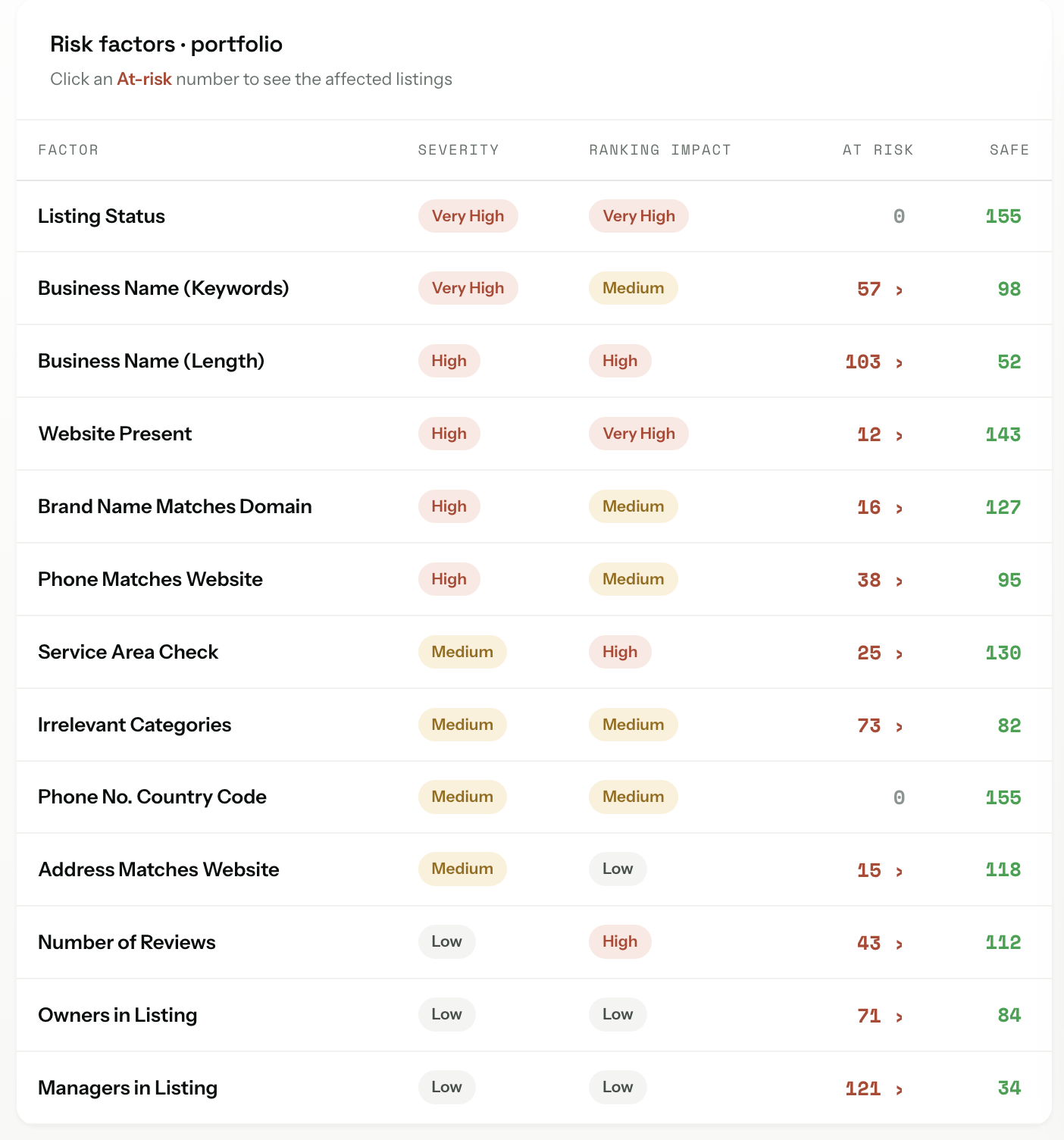
Directory presence beyond Google matters more in India than most global guides acknowledge. The national doctor-listing and booking platform functions as a genuine discovery and booking channel for many specialties, not just a listing. Local-business directories still drive real call volume in tier-2 and tier-3 cities. Doctor Q&A directories round out the picture for consultation-style specialties. None of these substitute for a proper local SEO for healthcare in India programme, but ignoring them because they're not Google is a mistake specific to healthcare clients who copy a generic local SEO template built for a US or UK audience.
Vernacular search deserves its own line here. A meaningful share of Indian healthcare search happens in Hindi or a regional language, or in Hinglish ("doctor ke paas kab jana chahiye"), and most hospital websites have no content strategy for it at all. Even a handful of properly localised location pages, rather than machine-translated ones, can open up search volume a purely English site never touches.
SEO for hospitals and multi-specialty groups is mostly a scale-of-coordination problem, not a different technique: hospital SEO means managing consistent NAP and category data across every department and location simultaneously, and building department-level pages (cardiology, oncology, orthopaedics) that each earn their own topical authority rather than one generic "our specialties" page trying to rank for all of them at once. Hospital SEO fails most often not from lack of effort but from the sheer coordination overhead of keeping thirty listings and fifteen department pages in sync.
Healthcare content strategy that earns topical authority
Picture a 40-bed multi-specialty hospital in Pune that has published forty blog posts in the last two years, one per week roughly, on whatever topic the marketing intern found interesting that month. None of them rank. That's the starting point most healthcare content strategy conversations actually begin from, and the fix isn't more posts, it's structure.
A working model has three layers that reinforce each other rather than sitting as separate content types. The topical authority layer is the hub, a genuinely comprehensive pillar page on a core service line (say, IVF, or joint replacement) that a search engine can point to as the site's best answer on that subject. The patient question layer sits underneath it, answering the specific things real patients search (cost, pain level, recovery time, success rate) each with its own focused page rather than buried as a paragraph inside the hub. The procedure-specific layer goes deeper still, covering the clinical detail a more informed or anxious patient searches once they've moved past the general question.
Concretely, for a dermatology-heavy site: the hub page covers "skin treatments" broadly and links out to procedure-specific pages on acne scarring, pigmentation, and hair loss; each of those pages answers the cost/pain/recovery questions a patient actually types into Google before booking; and a small cluster of deeper clinical pages (specific laser types, specific drug protocols) exists mainly to reinforce the site's overall depth on the topic to Google, even though most patients never read that far in. Build it that way, and forty posts become four properly interlinked structures instead of forty disconnected ones competing with each other. For a deeper look at how to build the keyword layer underneath this model for an Indian healthcare brand, see our YHMT keyword research framework.
AEO and AI search optimisation
Answer engine optimisation is the practice of structuring content so that AI systems (ChatGPT, Perplexity, Gemini, Google's AI Overviews) can extract and cite it accurately when a user asks a health question conversationally instead of typing a search string. The mechanics aren't mysterious: FAQPage and Question schema, clear named-author bylines with real credentials, direct 2-4 sentence answers near the top of a page before the deeper explanation, and consistent entity data (the same doctor name, the same clinic name, spelled the same way everywhere) that lets an AI system connect a claim back to a specific, checkable source.
As of mid-2026, systematic AEO practice among Indian healthcare brands is still uncommon; most hospital and clinic sites we've reviewed have no FAQPage schema at all and no named clinical reviewers on their content. That's a genuine first-mover window, but it's a dated observation, not a permanent one, and a reader coming back to this page in 2028 should assume the gap has narrowed. ICG's own AEO and LLM optimisation work runs on AIO Intel, an internal tool that tracks a client's brand citations across ChatGPT, Perplexity, Google AI Overviews, and Gemini, and surfaces which topic clusters are getting cited and which aren't — a view GSC alone doesn't give you. That's specifically our own measurement approach, worth mentioning because it shapes how we advise clients, not because AIO Intel is the only or the standard way to measure AEO performance. For a fuller treatment of how AEO interacts with traditional healthcare SEO in the Indian market, see our complete AEO and SEO guide.

E-E-A-T that actually holds up on this page
A page that tells readers to show reviewer credentials, a review date, and linked external references, and then shows none of the three, fails its own test. The previous version of this article did exactly that: it prescribed "reviewer name, credential, and review date" in its E-E-A-T section while carrying a generic "ICG Editorial" byline and zero named reviewer anywhere on the page. This version corrects that. The byline block at the top names two actual authors who work on healthcare SEO daily (Hanuman Sihag and Abhishek Kumar) and an actual reviewer (Abhash Kumar), all with real, verifiable job titles, all linked to their own profile pages, and all dated to today. None of us is a clinician, and this review is explicitly a strategy and compliance review, not a clinical sign-off — worth stating plainly rather than letting the word "reviewed" do ambiguous work.
The reason ICG structures reviewer sign-off this way at all traces back to MMT (Marketing × Medicine × Technology), the framework behind every ICG engagement: content built by marketers alone tends to read as superficial, content built by clinicians alone tends to disappear from search, and content built by technologists alone tends to read as cold, so every piece is meant to carry all three disciplines rather than one. The editorial workflow this page was drafted and reviewed through is Content HQ, ICG's own content-operations platform for fact-checking, reviewer sign-off, and AI-tell scoring before publication — the same system ICG runs for client content, described on the Content HQ product page and explained further on the frameworks page.
The other half of the standard is citation discipline: linking out to real, checkable sources rather than asserting things as fact with nothing behind them. Google's own Search Quality Rater Guidelines are the single most useful document here, because healthcare is the guidelines' own canonical example of Your Money or Your Life content, and the standard they describe (named expertise, clear ownership, accurate and current information) is the actual rubric this page is trying to meet, not a paraphrase of one. For a deeper operational breakdown of what E-E-A-T signals actually look like on a per-article basis for a healthcare brand, see our E-E-A-T amplification guide.
A measurement framework you can actually run
The three layers of healthcare SEO measurement only mean something in relation to each other. Visibility (rankings, impressions, share of voice on the terms a hospital actually needs to win) is the leading indicator; it moves first and moves fastest, but it doesn't pay bills on its own. Traffic (organic sessions, by page and by location) is the layer that tells you whether visibility is actually reaching real people, and it's where you catch problems visibility alone hides, like a page ranking well for a term nobody searches. Authority (backlink quality, entity consistency, how often a site gets cited or referenced elsewhere) is the slowest-moving layer, and it's the one that determines whether the first two layers hold up over a full year rather than spiking for a quarter and fading.
A workable monthly cadence: week one, pull ranking and impression data for the priority term list, broken out by location if multi-site; week two, cross-reference that against organic session and enquiry-form data to see where visibility isn't converting; by month's end, do a lighter authority check (new referring domains, any citation or directory inconsistency) and roll all three into one dashboard rather than three separate reports nobody reads together. The number that actually ties this back to a business outcome is cost per qualified lead. Across ICG's healthcare portfolio (46 active client engagements, rolling 12-month window July 2025 to July 2026, across Delhi NCR, Mumbai, Bangalore, Chennai, Hyderabad, and Kolkata, last verified 2026-07-26), ICG's median CPQL sits at ₹1,220 against a ₹2,100 market median, benchmarked by specialty on the benchmarks page. DermaClinix, a Gurgaon dermatology practice, took CPQL from ₹2,800 to ₹1,080 over 28 weeks without increasing media spend, documented in the full case study — that's the kind of number this measurement cadence is meant to surface early rather than discover a year later.
The regulatory floor: NMC, ASCI, DPDP, and NABH
This is the ground a US-focused healthcare SEO guide simply cannot cover, because none of it exists in the US regulatory environment. The National Medical Commission's NMC's 2026 advertising guidelines restricts what registered doctors can say about themselves in advertising, bars solicitation of patients, and constrains how testimonials and outcome claims can be presented on a clinic website or its social channels; getting this wrong isn't just a marketing problem, it's a professional-conduct exposure for the doctor whose name is on the page. (The link above currently resolves to the 2002 regulations text; the client-facing name for the current code is NMC's 2026 advertising guidelines and we haven't been able to verify a separate 2026 URL, so we're naming it correctly while flagging the mismatch rather than inventing a new link.) The ASCI Healthcare Guidelines apply on top of that, governing truthful-claims standards for healthcare and wellness advertising generally, and giving the public (and competitors) a formal complaints route when a clinic's marketing oversteps.
Patient data handling is now a live compliance question too, not a hypothetical one, since the DPDP Act 2023 governs consent, lead-gen forms, and cookie banners on any Indian clinic website that collects patient information, which in practice is nearly all of them. And NABH 6th Edition accreditation, while not an SEO factor in the ranking-algorithm sense, is a genuine trust signal worth surfacing prominently on a hospital's About and Locations pages, since it's a recognisable, checkable credential in a category where patients are actively looking for reasons to trust one hospital over another.
None of the above is legal advice, and this section shouldn't be read as a substitute for it. Advertising and data-protection rules for healthcare in India carry real penalties and genuine grey areas, and any clinic should confirm the specifics of its own marketing copy, its testimonial use, and its consent flows with its own legal counsel before publishing, not rely on a blog post to make that call for them.
Specialty-specific SEO playbooks
The prior version of this page claimed eight specialty-specific playbooks. There are four: IVF, dermatology, dental, and hospital or multi-specialty. That was simply wrong, not a rounding choice, and we're correcting it rather than inventing four more specialties to make the old number true.
A woman in her early thirties searches "IVF success rate age 32" at 11pm, three tabs open against two competing clinics' pricing pages, deciding which consultation to book before her next cycle starts. That search gets decided on trust signals a generic page can't fake: real success-rate framing rather than vague "high success rates" language, a named specialist with real credentials, and cost transparency most Indian IVF clinics still bury three clicks deep. The ART (Regulation) Act 2021 sets real limits on how success rates can be advertised at all, so "cost transparency" content has to be built around what's legally sayable, not around whatever number converts best. Nationally, ICG's IVF clients have seen CPQL move from a market average of ₹2,400 to roughly ₹1,180 (a 51% reduction, same 46-engagement methodology as above, detailed on benchmarks), and a Chandigarh IVF clinic specifically took consultations up 66% over 20 weeks, covered in its own case study. Content built around the actual decision point, cost by protocol, age-adjusted success framing within what the Act allows, what a first consultation involves, converts better than content built around a generic "what is IVF" definition, since by 11pm with three tabs open the definitional question is already answered.
Medical and cosmetic dermatology content need to live in genuinely separate parts of a site, not behind a filter toggle on one page. That split matters for SEO (a cosmetic-procedure page and an eczema-treatment page target different search intent entirely) and for regulatory reasons, since cosmetic procedure marketing sits under tighter ASCI Healthcare Guidelines and outcome-claim scrutiny than clinical dermatology content. A seven-clinic Delhi NCR, Mumbai, and Bangalore aesthetic dermatology group ICG worked with started on a single shared ad account and is covered, at portfolio level, in this multi-location growth case study; the market-wide CPQL figure for dermatology and aesthetic specifically sits around ₹600 down to ₹290 with the same methodology. We've written a full breakdown of exactly how to structure the medical/cosmetic split, including which pages belong on which side of the line, in our medical vs. cosmetic content split guide.
The Dental Council of India restricts how dentists can advertise specific procedures and pricing more tightly than most clinics realise, which is the first thing a dental SEO programme needs to work around, not discover after publishing.
Implant content as its own search cluster
Implant content is driven by cost-comparison searches ("dental implant cost India," "implant vs. bridge") that a generic "our dental services" page never captures. It deserves standalone pages built around those comparisons; market-wide, dental CPQL runs from roughly ₹380 down to ₹170 (a 55% reduction) on the same benchmark methodology.
DCI-compliant framing
The second area is auditing existing pricing and before-after content against Dental Council of India advertising restrictions, since a page that reads as compliant to a general marketer can still cross a line the Council actually enforces.
Hospital and multi-specialty SEO is structurally harder than single-specialty SEO in a way that's easy to underestimate: a 200-bed hospital with fifteen departments has to build topical authority across fifteen subjects at once, and keep NAP and doctor-listing data consistent across all of them without department pages competing against each other for shared terms like "second opinion." A single-specialty dermatology clinic can build one deep content cluster and be done; a hospital effectively runs fifteen of those in parallel, on the same domain. A four-hospital, 580-bed Delhi NCR group facing exactly this coordination problem is covered in this anonymised growth transformation case study; market-wide, multi-specialty hospital CPQL runs ₹1,800 down to ₹780, a 57% reduction, the largest of any specialty in the benchmark set. The fix: treat each department as its own mini-site, with its own hub page, doctor profiles, and patient-question layer, rather than one shared "our specialties" page trying to do all fifteen jobs at once.
The 12-month healthcare SEO deployment plan
Months 1-3 are foundation months: technical SEO fixes (including the INP correction covered above), Google Business Profile and directory cleanup across every location, and structured data deployment for doctors and clinics. Months 4-6 shift into content, building out the topical authority hubs and patient-question layer described earlier, specialty by specialty in priority order. Months 7-9 add AEO structuring (FAQPage schema, named-author reinforcement) once there's enough content depth for it to matter, and start the authority-building layer (citations, directory consistency, genuine backlink-worthy content) in earnest. Months 10-12 are measurement and refinement: the dashboard cadence described above should be running properly by this point, and the plan's priorities for year two get set based on what the data actually shows rather than what was assumed at month one. This sequencing isn't arbitrary — it mirrors ICG's own Three-Level Growth Architecture (execution, then consulting, then AI-driven infrastructure), where each layer has to be working before the next one is built on top of it, explained in full on the frameworks page.
Across ICG's own portfolio, clients that complete all four quarters (not just the foundation phase, which is where most stall) are the ones who show up in the 40–80% CPQL improvement range measured against their own Q4 2025 baseline — a same-specialty, post-onboarding comparison across a 32-client cohort, not an outside industry benchmark, and disclosed as such.
If you want to see how this twelve-month structure applies to a specific specialty rather than in the abstract, book a strategy call or start with a free SEO audit — both routes start from your clinic's actual location count and specialty mix rather than a generic template. For a faster answer, WhatsApp ICG directly at +91 81302 26224.
Is SEO still worth it for hospitals and clinics in 2026?
Yes, though the payoff has shifted from clicks on informational articles to visibility on treatment, location and brand searches. An AI Overview appeared on 27.6% of the Indian healthcare queries we track, and where it did, the zero-click rate rose by 24 percentage points on average. Symptom searches are the most affected.
That changes where to invest, not whether to. Treatment and location pages still earn enquiries, and AI answers draw their citations from the same well-structured pages. A clinic that stops SEO now loses both the remaining clicks and its chance of being quoted in AI answers. The budget question is covered in healthcare SEO cost in India.
Source: Zero-Click Search Rate by Specialty, India Healthcare 2026.
Answer engine optimisation for hospitals and healthcare brands in India
Answer engine optimisation (AEO) means shaping pages so Google's People Also Ask boxes, AI Overviews and chat assistants can lift a clear answer from them. The evidence points to a few structural habits:
| AEO finding (Indian healthcare sites) | Figure |
|---|---|
| PAA answer slots won by ICG-managed content | 15.5% of 12,694 |
| Capture lift when the heading matched the PAA question word for word | +51% |
| Audited pages with valid structured data of any kind | 68.1% |
| Audited pages with Physician schema | 13.7% |
Write question headings in patients' own words, answer in the first sentence below, mark up doctors and departments, and keep pages updated. For hospitals, the department and doctor pages are usually the best AEO candidates. Our healthcare SEO and AEO guide covers implementation, and AEO vs SEO for healthcare explains where they differ.
Sources: People-Also-Ask Capture Report, India Healthcare 2026; AI Overview Citation Study, India Healthcare 2026.
How to choose a healthcare SEO agency in India
Start with fit, not size. The right agency for you is the one that can show work in your specialty and explain how it stays inside Indian medical advertising rules. Ask for anonymised Search Console data from a comparable practice, a sample content page with its medical review trail, and a report that tracks attended consultations. Be wary of guaranteed rankings, fixed timelines for page one, bulk backlink packages and anyone who offers to buy reviews. Check who will actually work on the account and how often a clinician reviews the content. Compare quotes on the scope of work: number of pages, locations covered, reporting depth and contract terms. ICG's own approach is set out on our healthcare SEO agency page.
Frequently asked questions
What does SEO for healthcare providers in India actually involve? It covers technical site health, Google Business Profile and directory management across doctor-listing platforms and local-business directories alongside Google itself, content built around real patient search behaviour, and increasingly, structuring content so AI answer engines can cite it accurately. Healthcare search engine optimisation in India differs from the US or UK version mainly in how cash-pay, walk-in-driven patient journeys change what content and local SEO priorities actually matter.
How is medical SEO different from general SEO? Google treats medical content as Your Money or Your Life content, which raises the bar on named expertise, source citation, and factual accuracy compared to most other categories. A restaurant site with a factual error is a minor inconvenience; a health site with one is a genuine risk to a reader, and Google's own quality guidelines treat it that way.
Is Core Web Vitals still relevant for hospital websites in 2026? Yes, though the specific metrics have changed. Google retired First Input Delay in March 2024 and replaced it with Interaction to Next Paint, so a hospital site should be tracking LCP under 2.5 seconds, CLS under 0.1, and INP under 200 milliseconds, not the older FID threshold some checklists still reference.
How long does healthcare SEO take to show results in India? Foundation work (technical fixes, GBP and directory cleanup) can show local visibility improvements within the first one to two months. Content-driven organic growth typically takes longer to compound, generally becoming clearly visible somewhere in the back half of a twelve-month programme rather than the first quarter.
What NMC or ASCI rules affect what a clinic can say in SEO content? The National Medical Commission's Ethics Code 2026 restricts solicitation, patient testimonials, and self-promotional claims by registered doctors. The ASCI Healthcare Guidelines add a truthful-claims standard on top of that for healthcare and wellness advertising generally. Neither of these is a substitute for a clinic's own legal counsel reviewing specific copy before it goes live.
Does healthcare SEO in India need a different approach for hospitals versus single clinics? Yes. Hospital SEO and multi-location clinic SEO involve coordinating NAP consistency, category accuracy, and topical authority across many departments or locations at once, while a single-specialty clinic can concentrate all of that effort on one topic and one location.
Is health SEO the same thing as medical marketing generally? Not quite. Healthcare marketing and SEO overlap heavily but SEO specifically refers to organic search visibility and technical site health, while healthcare marketing also covers paid channels, referral programmes, and offline reputation work that sit outside SEO's scope.
Healthcare SEO benchmarks Indian clinics should actually aim for in 2026
Most healthcare marketing decks quote generic SEO benchmarks that were built for e-commerce or SaaS. Healthcare buyers behave differently, Google treats YMYL medical queries differently, and the leads that matter for a clinic or hospital group are a fraction of total traffic. Here is what a healthy specialty site looks like after 9-12 months of disciplined SEO work, drawn from ICG's audits of over 400 Indian healthcare websites.
| Specialty | Monthly organic sessions | Qualified leads / month | Avg CPQL from SEO | Top-3 non-brand keywords |
|---|---|---|---|---|
| Multi-branch dental | 8,000-15,000 | 60-120 | Rs. 350-650 | 25-45 |
| IVF and fertility | 12,000-25,000 | 45-90 | Rs. 900-1,800 | 30-60 |
| Aesthetic and skin | 10,000-20,000 | 80-160 | Rs. 400-800 | 40-70 |
| Multi-specialty hospital | 25,000-60,000 | 150-300 | Rs. 550-950 | 80-140 |
| Single-doctor practice | 1,500-4,000 | 15-35 | Rs. 250-500 | 8-18 |
Where most Indian healthcare sites are still losing rankings in 2026
- Location pages built as templates, not decisions. Google's helpful-content system now demotes near-duplicate location pages that only swap the city name. Rebuild them around real operating hours, named doctors, procedure availability, and local trust proof.
- NMC and ASCI language on service pages. Superlatives like 'best', 'no.1', 'painless' trigger both regulatory and algorithmic penalties. Audit every H1 and CTA against the ASCI healthcare rules.
- Video that only lives on YouTube. Testimonials embedded via a plain iframe never accrue on-page authority. YODA ships transcripts, VideoObject schema, and speakable markup automatically so the same asset ranks in Google Video and AI Overviews.
- Meta Ads and SEO managed in silos. The keywords that convert on paid should feed the content roadmap. Prism Spy pulls competitor ad copy and creative angles you can rewrite into blog H2s.
- No accountability layer. If nobody owns weekly rank movement, monthly qualified leads, and quarterly compliance sweeps, the site drifts. That is exactly the beat the Client Elevation Programme was built to run.
Book a free SEO diagnostic.
Hanuman Sihag's team runs a live crawl, checks technical health, cannibalisation, schema coverage and content gaps. 60 minutes, prioritised fix list.
Questions readers ask
about this topic.
The three platforms
behind every ICG engagement.
Beacon
CAPI middleware that fixes Event Match Quality, translates CRM statuses to Meta-standard events, dedups across channels.
Agency OS
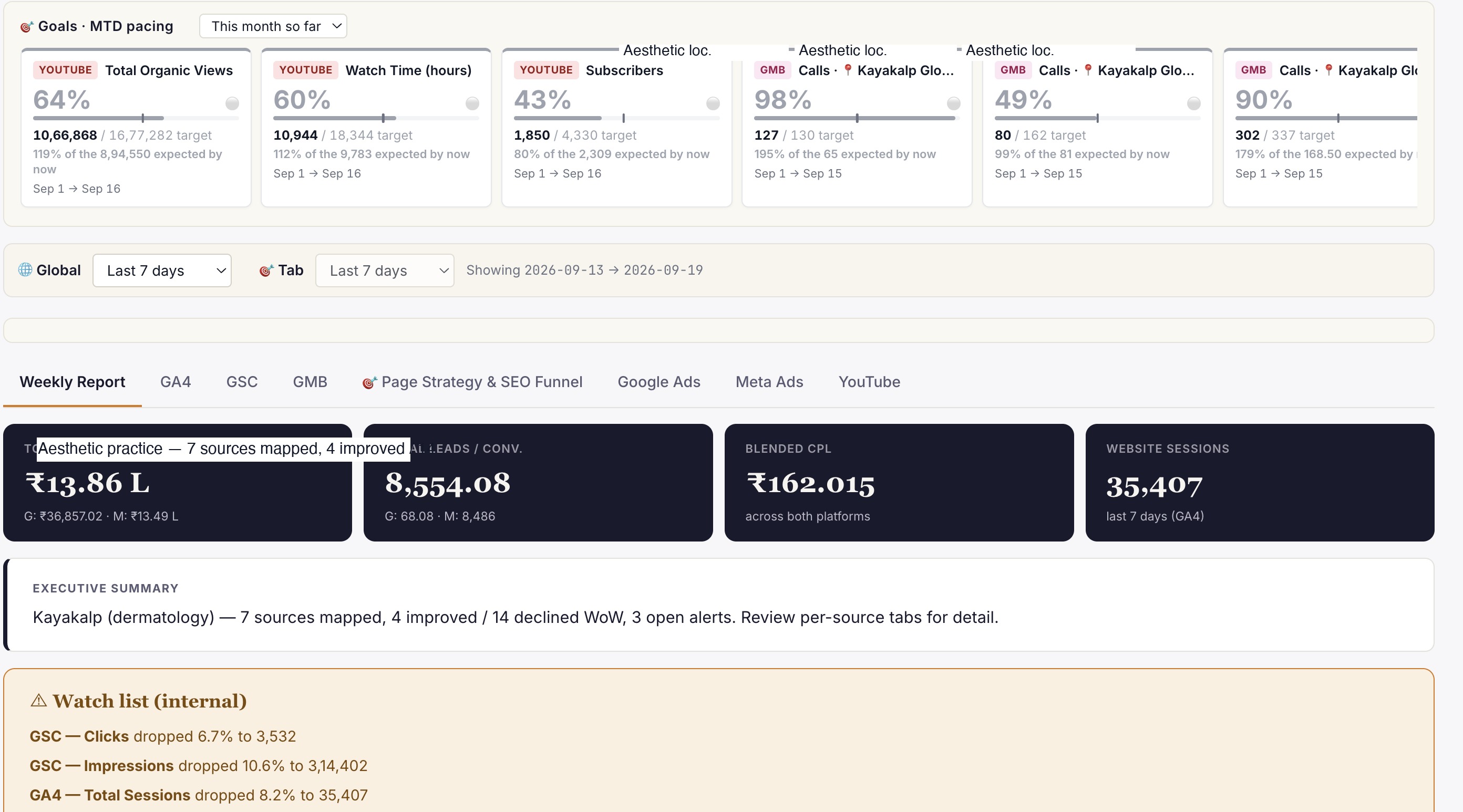
Live client dashboard. GSC, GA4, Google Ads, Meta Ads, IVR calls in one view. Login anytime, not monthly.
Phoenix
Clinic revenue intelligence over your PMS. Daily action queue: Prevent Loss, Maintain & Engage, Grow Revenue. Multi-centre rollout.
Or book a free 30-min audit to see all three in action on your account.
Healthcare brands
that already run on ICG.
A representative slice of the 150+ healthcare brands ICG has delivered for across India. Most engagements remain under NDA.


What ICG clients say · on video.
"Scale up of organic channels and business consulting. ICG has absolute domain authority in their field."
"Working with ICG transformed how we acquire IVF patients in Gurgaon. They understand the fertility journey from inquiry to consult..."
"What Ichelon accomplished — they got all my ideas and worked over 3-4 months to create an amazing, super-customised website."
The intelligence stack behind this playbook.
Every ICG engagement runs on the Search Intelligence Trifecta — Angryturtle for GMB, SIE for search and AI Overview, YODA for YouTube. Live product screens below.
Need help operationalising this?
Every ICG service is healthcare-only, NMC + DPDP-aware, and built around the patient-research patterns that drive Indian healthcare growth in 2026.
Every practice welcome — packages from ₹20,000/mo.
Goals-Driven engagements · Performance-Linked Payout Models available


More from
ICG.
Five trends shaping Indian healthcare marketing through 2027: AI-first patient research, Conversions API adoption, ABDM discovery, the AEO w...
Healthcare AIO is the discipline of getting your clinic or hospital cited inside Google AI Overviews, ChatGPT and Perplexity answers — not j...
Conversational-search advertising places brand messages inside AI chat answers — ChatGPT, Perplexity, Copilot — rather than beside a results...
Stop guessing.
Book a Diagnostic.
30 minutes. Free. With the AI-powered healthcare-only marketing agency 150+ brands already run on. No slides, no pitch, no hard close.


