


Speakable schema, voice search, and AI Overview for Indian healthcare — the 2026 implementation guide
Speakable is the schema.org specification that tells Google Assistant which paragraphs of your page to read aloud. For Indian healthcare pages it is also a growing AI Overview citation signal. Here is the CSS-selector pattern, the pages that benefit, and the auto-injector ICG ships across 320 posts.
No pitch. Written root-cause diagnosis. AI-powered, healthcare only.
Direct answer
Speakable is the schema.org specification that tells Google Assistant which paragraphs of your page to read aloud. For Indian healthcare pages it is also a growing AI Overview citation signal. Here is the CSS-selector pattern, the pages that benefit, and the auto-injector ICG shi...
TL;DR

Speakable is a schema.org specification, currently in beta, that identifies specific sections of a web page as suitable for text-to-speech playback by voice assistants — Google Assistant, Google Nest, and the growing category of AI-generated voice answers. For an Indian healthcare page, Speakable markup on the definition paragraph and on individual FAQ answers unlocks two surfaces: voice-assistant answer delivery, and — increasingly through 2026 — AI Overview citation on voice-eligible queries. The markup is a two-line JSON-LD block referencing CSS selectors on the page.
Voice search on Indian healthcare has been a quiet, patient category — nowhere near the volume of typed search, but growing steadily as Google Nest ships in Indian metros, as Google Assistant becomes the default on Android in Tier-2 and Tier-3 cities, and as the AI Overview surface itself becomes voice-eligible on mobile. Ranking for a voice query is a different discipline than ranking for a typed query. The answer must be short, self-contained, and phonetically clean. Speakable schema is how you tell Google which parts of your page fit that bill. This post walks through the specification, shows the JSON-LD block, identifies the healthcare page types that benefit most, discusses NMC-compliant voice-answer patterns, and covers the Speakable auto-injector ICG deployed across 320 posts in the portfolio in the Turn 20 sprint.
What Speakable schema actually is (and what it is not)
Speakable is a schema.org type — technically SpeakableSpecification — that identifies parts of a web page suitable for audio playback via text-to-speech. It sits inside a WebPage or Article schema block and points to specific CSS selectors or XPath expressions that isolate the speakable sections. Google Assistant, when handling a voice query for which your page is the top-cited source, uses Speakable to decide which sentences to read aloud in the audio response.
What Speakable is not: it is not a general voice-search ranking factor. It does not make a page rank higher for voice queries. It makes a page eligible to be read aloud once selected, and it signals to Google which snippet of the page is the clean pull-quote for voice delivery. That signal now correlates with AI Overview citation on voice-eligible queries — a growing but still small surface as of Q3 2026 in India. The specification remains officially in beta, but Google has treated Speakable as a stable enough signal to reward for the last three years.
The JSON-LD block and CSS-selector pattern ICG deploys
Speakable schema uses either CSS selectors or XPath to point at the speakable sections of the page. CSS selectors are the more maintainable choice — they survive DOM changes better and are readable. Below is the exact JSON-LD block ICG injects on healthcare pages, pointing at the definition paragraph and the FAQ answer paragraphs.
<script type="application/ld+json">
{
  "@context": "https://schema.org",
  "@type": "WebPage",
  "url": "https://ichelonconsulting.com/insights/{slug}",
  "name": "{Page title}",
  "speakable": {
    "@type": "SpeakableSpecification",
    "cssSelector": [
      ".speakable-lede",
      ".speakable-faq-answer"
    ]
  }
}
</script>
The CSS classes speakable-lede and speakable-faq-answer are then applied to the corresponding DOM elements — the opening definition paragraph and each FAQ answer. Google reads only the text inside those selected elements when handling a voice response. The rest of the page is not spoken.
The key design choice is granularity. Marking the entire article as speakable is a common mistake — Google may pick a mid-article aside as the voice snippet, or worse, stumble on a compliance-sensitive sentence. Marking specific, self-contained elements (the definition, each FAQ answer) gives Google clean, bounded pull-quotes and gives you editorial control over what gets read aloud.
Which healthcare pages benefit most from Speakable schema
Not every page is a good Speakable candidate. The specification exists for content designed to be heard, not scrolled. Across the ICG portfolio the pattern of what wins with Speakable versus what does not is clear.
| Page type | Speakable fit | Which elements to mark | Why |
|---|---|---|---|
| Money page (money-page-templates) | High | Definition lede + top 3 FAQ answers | Voice queries for procedures often ask "what is X" and "how much does X cost" |
| Condition explainer / insights post | Very high | Definition lede + full FAQ block | Most voice healthcare queries are informational — condition explainers dominate |
| FAQ standalone page | Very high | Every FAQ answer | Purpose-built for the format |
| Doctor / expert bio page | Moderate | Credential paragraph only | "Who is Dr X" queries fire voice answers; keep the spoken snippet tight and factual |
| Location / branch page | Moderate | Address + hours paragraph | "Where is X clinic" voice queries — the answer is the address and hours |
| Blog / thought-leadership post | Low | Definition lede only if the topic maps to a voice query | Long-form opinion does not fit the voice format |
| Landing page / lead-gen page | Very low | Skip entirely | Voice assistants avoid promotional content — marking a CTA-heavy page speakable triggers spam signals |
The two-line summary: Speakable belongs on informational, definition-anchored, FAQ-rich pages. It does not belong on promotional lead-gen pages or long-form editorial.
Voice-assistant compatibility in India — which surfaces actually use Speakable
The Speakable specification is read by Google Assistant across Google Nest speakers, Google Nest Hub displays, Pixel and Android voice-invoked search, and the growing voice-enabled AI Overview experience on mobile Chrome. Amazon Alexa does not read schema.org Speakable — Alexa runs its own skill and answer framework. Apple Siri does not read Speakable either — Siri relies on Apple's own knowledge graph and a small handful of curated partners.
For Indian healthcare, this means Speakable is primarily a Google play. Google's dominance of voice search in India (Google Assistant is default on the vast majority of Android devices, and Android is the vast majority of Indian smartphones) makes that acceptable. Nest speaker penetration in Indian homes remains small but is growing in metro tier households. The larger and faster-growing surface is voice-invoked search on mobile Android — the tap-and-hold Assistant, or Chrome's voice-input search.
NMC-compliant voice-answer patterns for healthcare
Voice answers on Indian healthcare content sit inside a stricter compliance perimeter than typed answers. NMC's 2026 advertising guidelines prohibit doctors from making unsubstantiated efficacy claims in any medium — spoken answers to voice queries included. ASCI Guidelines 2022 prohibit superlatives without substantiation. The spoken word carries an extra weight of implied endorsement because it comes through a trusted voice-assistant channel rather than a typed page a reader can skim critically.
The safe pattern for a Speakable-marked FAQ answer on a healthcare page: (1) open with a definition or a factual statement, (2) provide the numeric range or the professional-body reference where relevant, (3) name any qualifying condition or caveat, (4) close with a call to consult a qualified professional rather than a call to book at your specific clinic. Marketing CTAs inside a spoken answer are both an ASCI risk and a Google trust-signal downgrade.
Example — a NMC-compliant Speakable FAQ answer on IVF success rates: "In India, average IVF success rates per cycle range from 30 to 50 percent, varying by the woman's age, clinical protocol, and the receiving clinic's laboratory quality. Success rates decline meaningfully after age 38. For a personalised assessment, consult a qualified reproductive endocrinologist registered with the National Medical Commission."
The 320-post Speakable auto-injector ICG shipped in Turn 20
Manually adding Speakable JSON-LD and the corresponding CSS classes to 320 healthcare posts across the ICG portfolio was not a realistic sprint. ICG built a Speakable auto-injector — a PHP script that (1) parses each icg_posts row, (2) identifies the first paragraph as the definition lede and applies the speakable-lede class, (3) parses the FAQ H2 block (matching common patterns — H3 for questions, following p for answers), (4) applies the speakable-faq-answer class to each answer p element, and (5) injects the SpeakableSpecification JSON-LD block into the page's schema graph.
The script is idempotent — running it twice on the same post does not produce duplicate schema or double-class the DOM. It skips posts flagged as lead-gen or landing pages. It logs each transformation to a run report so the content team can spot-check any post whose lede was mis-identified. The Turn 20 run covered 320 posts across the ICG /insights/ corpus in a single overnight batch. Follow-up sprints extend the injector to money pages and expert bio pages.
Alongside the Speakable injector, ICG's current schema coverage across the portfolio stands at 325 pages with FAQPage schema, 320 with Speakable, and 32 with HowTo — the deep-structural-signal footprint of the /insights/ corpus.
The six-step Speakable audit ICG runs on a healthcare content library
When evaluating whether a healthcare content library is ready for voice-eligible AIO, ICG runs a six-step Speakable audit.
- Segment the library — separate informational posts, FAQ pages, money pages, doctor bios, and location pages from lead-gen and thought-leadership content.
- Score each candidate for definition-first opening — pages without a tight, factual, self-contained opening paragraph are Speakable-ineligible until they are rewritten.
- Check the FAQ block structure — pages with a proper H3-question / p-answer pattern are ready. Pages with FAQs embedded in accordions or non-standard markup need normalisation first.
- Audit compliance in candidate answers — scan for ASCI red flags (best, leading, guaranteed, 100 percent), NMC boundary violations, and unsubstantiated efficacy claims. Rewrite before marking speakable.
- Deploy the schema and CSS classes — either manually per page or via the auto-injector at scale.
- Verify with Google's Rich Results Test — confirm the SpeakableSpecification block is being read and the CSS selectors resolve to actual DOM elements.
Where Speakable, VideoObject, and AIO tracking fit in the ICG stack
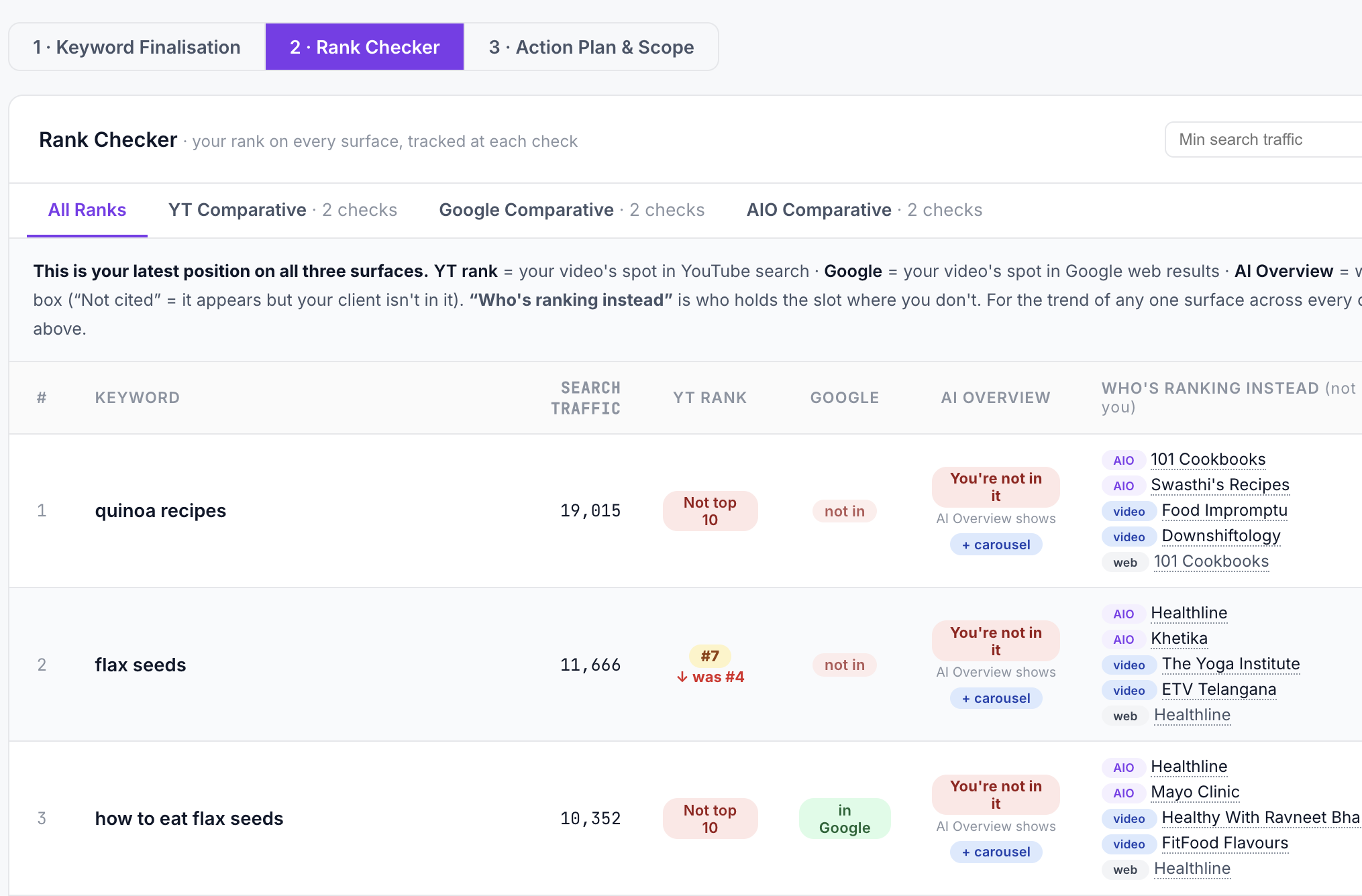
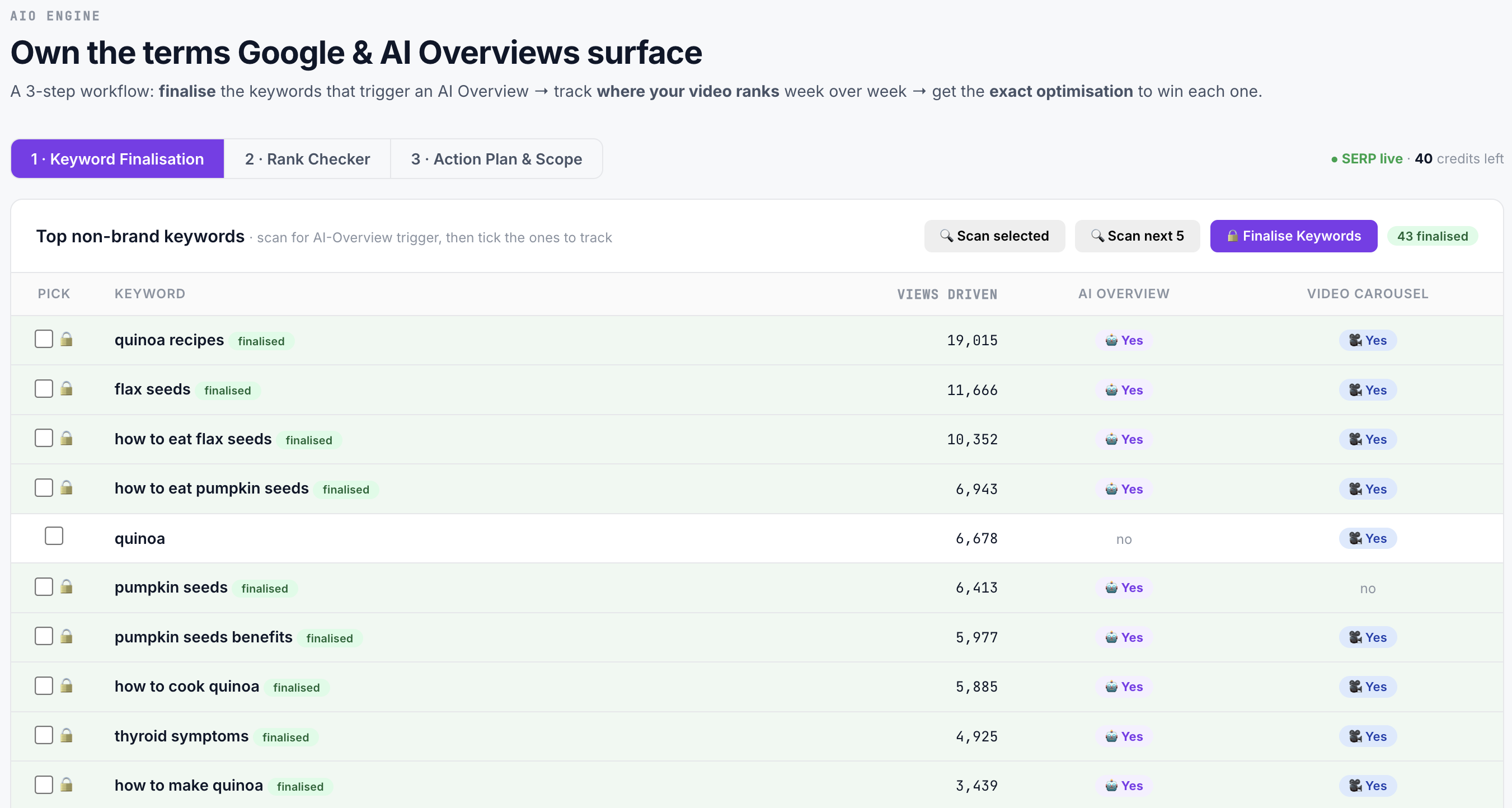
Speakable is one layer in the schema-signal footprint ICG builds for Indian healthcare brands. The full stack includes FAQPage schema on question-form content, HowTo on procedural content, VideoObject on YouTube-embedding pages, MedicalCondition and MedicalProcedure on clinical pages, and Person schema on named-author bylines. YODA, ICG's AI-native healthcare YouTube platform, runs 3 rank races (YouTube + Google web + AI Overview) and includes an AIO Lab that tracks which of a channel's pages and videos are earning AIO citation week over week — including citation on voice-eligible queries.
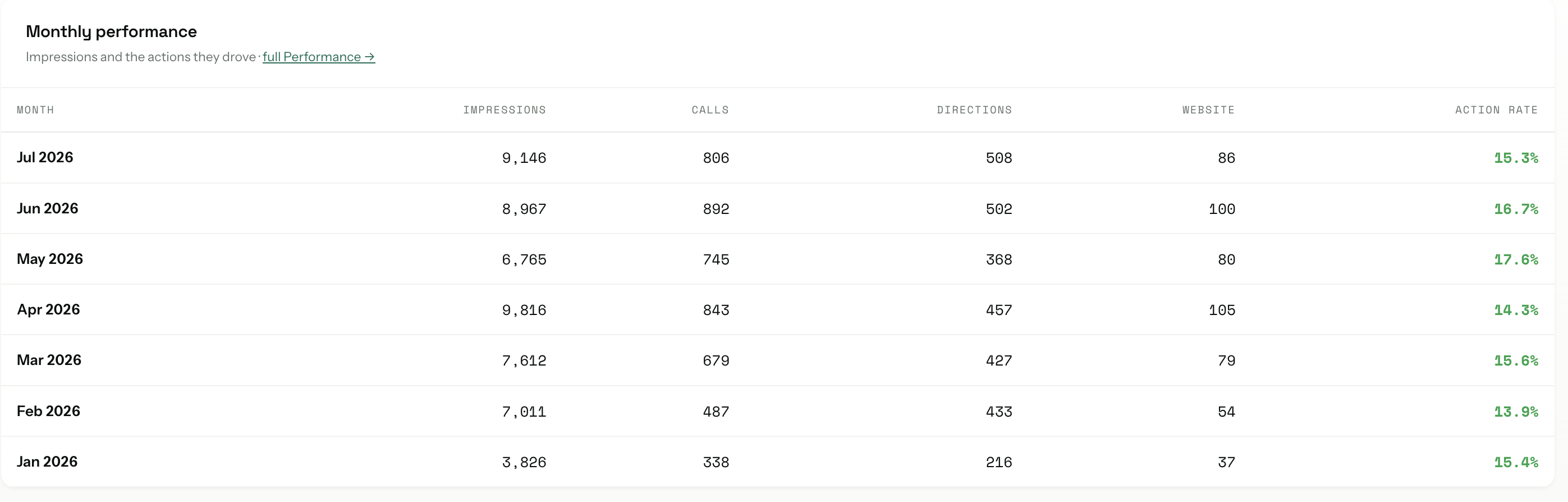
Alongside YODA, the wider ICG product stack includes PrismSpy (75+ Indian healthcare brands tracked, 2,150+ Meta ads catalogued daily, ₹50Cr+ aggregate spend visibility per month), Angryturtle (India's AI-native healthcare GBP OS, 143+ listings under management, Ask Maps AIO for local voice), and Meta Catalyst IQ (23+ Meta ad accounts on the shared optimisation stack, ₹9.1Cr+ monthly spend optimised, 5,784 leads/mo tracked in May 2026). The whole stack sits inside HealthApex OS at ₹14,999/- flat, or components can be picked up standalone.
Book a 30-minute walkthrough on WhatsApp — Deep, Rohit, or Hanuman will run through the AIO Lab live for your specialty and show which of your pages are currently voice-eligible.
FAQ — Speakable schema for Indian healthcare pages

Is Speakable schema officially supported by Google?
The specification is in beta, but Google has treated Speakable as a stable and rewarded signal for the last three years. Google's public developer documentation currently limits documented Speakable support to news publishers in the US, but in practice Google Assistant reads Speakable from a much wider pool including Indian healthcare pages in our tracking.
Which parts of the page should I mark as speakable?
The definition-first opening paragraph and each individual FAQ answer. Do not mark the whole article — Google may pick the wrong pull-quote and read something you would rather not have spoken as your brand voice.
Does Speakable improve regular typed-search rankings?
No direct effect on typed-search rankings. Speakable is a delivery-format signal, not a ranking signal. Its benefits are voice-eligible AIO citation, Google Assistant voice-answer eligibility, and the small SEO-hygiene benefit of a cleaner overall schema graph.
How is Speakable different from FAQPage schema?
FAQPage schema tells Google the page contains an FAQ, and each question / answer pair can be surfaced in the classic FAQ rich result and in AI Overview text citations. Speakable tells Google which sentences on the page are suitable for text-to-speech playback — a delivery-format hint, not a content-type hint. The two complement each other — mark the FAQ block with FAQPage schema AND mark each answer element with the speakable CSS class.
Will Speakable work if my page loads content via JavaScript?
Yes, but the CSS selectors must resolve to elements in the rendered DOM Google actually sees. If the FAQ block is rendered client-side after page load, Google's rendering pass will still index it, but time-to-index is longer. Server-side rendering or pre-rendering is safer for schema-dependent features.
Does Speakable have any privacy or DPDP implications for healthcare?
Speakable itself does not collect data. But the paragraph you mark as speakable is now more likely to be read aloud in a public space (someone asking Google Nest about a condition in the family kitchen). Avoid marking any element that contains patient-identifying data, testimonials by name, or specific case data as speakable. Keep spoken snippets factual and general.
How do I test whether my Speakable schema is working?
Google's Rich Results Test parses SpeakableSpecification and reports whether the selectors resolve. For actual voice-answer testing, invoke a relevant voice query on Google Assistant with the page ranking top-3 for that query and listen to whether the spoken answer matches your marked snippet.
Related reading
- How to appear in Google AI Overview for healthcare queries in India — the 2026 playbook
- FAQPage schema for healthcare AIO — implementation guide
- VideoObject schema for healthcare YouTube — the 2026 guide
- Definition-first content structure — the AIO citation pattern
- Voice search for Indian healthcare — the 2026 optimisation guide
Reference documentation — the schema.org SpeakableSpecification definition and Google's Speakable developer guidance. Compliance framing sits with India's National Medical Commission for practitioner conduct and the Advertising Standards Council of India for healthcare advertising standards.
Book a free SEO diagnostic.
Hanuman Sihag's team runs a live crawl, checks technical health, cannibalisation, schema coverage and content gaps. 60 minutes, prioritised fix list.
The three platforms
behind every ICG engagement.
Beacon
CAPI middleware that fixes Event Match Quality, translates CRM statuses to Meta-standard events, dedups across channels.
Agency OS
Live client dashboard. GSC, GA4, Google Ads, Meta Ads, IVR calls in one view. Login anytime, not monthly.
Phoenix
Clinic revenue intelligence over your PMS. Daily action queue: Prevent Loss, Maintain & Engage, Grow Revenue. Multi-centre rollout.
Or book a free 30-min audit to see all three in action on your account.
Healthcare brands
that already run on ICG.
A representative slice of the 150+ healthcare brands ICG has delivered for across India. Most engagements remain under NDA.


What ICG clients say · on video.
"Scale up of organic channels and business consulting. ICG has absolute domain authority in their field."
"Working with ICG transformed how we acquire IVF patients in Gurgaon. They understand the fertility journey from inquiry to consult..."
"What Ichelon accomplished — they got all my ideas and worked over 3-4 months to create an amazing, super-customised website."
The intelligence stack behind this playbook.
Every ICG engagement runs on the Search Intelligence Trifecta — Angryturtle for GMB, SIE for search and AI Overview, YODA for YouTube. Live product screens below.
Need help operationalising this?
Every ICG service is healthcare-only, NMC + DPDP-aware, and built around the patient-research patterns that drive Indian healthcare growth in 2026.
Every practice welcome — packages from ₹20,000/mo.
Goals-Driven engagements · Performance-Linked Payout Models available



More from
ICG.
Five trends shaping Indian healthcare marketing through 2027: AI-first patient research, Conversions API adoption, ABDM discovery, the AEO w...
Healthcare AIO is the discipline of getting your clinic or hospital cited inside Google AI Overviews, ChatGPT and Perplexity answers — not j...
Conversational-search advertising places brand messages inside AI chat answers — ChatGPT, Perplexity, Copilot — rather than beside a results...
Stop guessing.
Book a Diagnostic.
30 minutes. Free. With the AI-powered healthcare-only marketing agency 150+ brands already run on. No slides, no pitch, no hard close.


