


Plastic Surgery Marketing in India: Compliant 2026 Playbook | ICG
Plastic surgery marketing in India, done inside MCI limits. 2026 CAC benchmarks, YouTube-first authority plays, and the mistakes that kill lead flow.
No pitch. Written root-cause diagnosis. AI-powered, healthcare only.
Quick answer
What should a plastic surgery digital marketing agency in India deliver?
A plastic surgery digital marketing agency in India should deliver procedure-level search pages, compliant Meta and Google campaigns, a surgeon-led video and content programme, and a follow-up system for enquiries that take months to decide. It should keep before-and-after material and claims within NMC and ASCI rules, and report on attended consultations and surgeries rather than cost per lead alone.
Direct answer
Plastic surgery marketing in India, done inside MCI limits. 2026 CAC benchmarks, YouTube-first authority plays, and the mistakes that kill lead flow.
TL;DR
By Raman Soni, Head of Performance Marketing at ICG.
The plastic surgery compliance envelope in India
Plastic surgery marketing in India operates under Indian Medical Council guidelines that are stricter than most practitioners realise. The rules that most frequently trip up plastic surgery marketing campaigns:
Before/after photographs: permitted as clinical documentation but cannot be used in advertising as outcome promises. A surgeon's website can show procedure galleries; paid ads cannot show before/after images as creative.
Success rate claims: "95% of patients are satisfied" is not a permitted advertising claim in India. Testimonials that reference specific outcomes ("I look 10 years younger") are legally problematic. Testimonials that reference the experience ("Dr. X was thorough and the consultation was detailed") are permitted.
Procedure guarantee language: any phrasing that implies a guaranteed cosmetic outcome — "you will look exactly as you want" — is a compliance failure that creates both regulatory and medico-legal risk.
The practical implication for marketing: plastic surgery advertising in India must be based on expertise, trust, and education — not on outcome promises. This is actually a better marketing strategy, because patients are making a significant, irreversible decision and they know it. Education builds the trust that outcome promises cannot.
Doctor brand vs clinic brand: why personal brand wins
In plastic surgery, the doctor is the product. Patients choose a surgeon before they choose a clinic. A rhinoplasty patient in Delhi will travel to a surgeon in Gurgaon, Mumbai, or Bengaluru if they believe that surgeon is the best option for their specific concern. They will not travel to a "clinic" brand without a named surgeon attached to it.
This creates a strategic imperative for plastic surgery marketing: the surgeon's personal brand must be the primary investment, with the clinic brand as the supporting context. A surgeon with 10,000 YouTube subscribers, a well-maintained Instagram presence, and consistent educational content will outperform a clinic with a polished website and no surgeon visibility on every acquisition metric.
YouTube authority strategy for plastic surgeons
YouTube is the single most effective patient acquisition channel for plastic surgery in India in 2026 — because it is where patients spend 4-9 months researching the surgeon they will trust with their appearance. A surgeon who has 50 YouTube videos explaining specific procedures, answering common questions, showing their consultation process, and demonstrating their expertise is effectively pre-qualifying every patient who watches before they enquire.
What works on YouTube for plastic surgeons: procedure explainer videos (3-8 minutes, no script, surgeon on camera in clinic), consultation process walkthroughs (patient sees exactly what to expect), recovery timeline guides (detailed, honest, practical), and Q&A compilation videos (answering the 10 most common questions about a procedure). What does not work: produced brand videos, stock footage, or promotional content that does not feature the surgeon directly.
ICG's data from plastic surgery YouTube campaigns: surgeons who publish 4+ quality YouTube videos per month acquire 30-45% of their new patient enquiries from organic YouTube search within 12 months of consistent publishing, at a CPQL of near-zero for that channel.
SEO architecture for cosmetic procedures
The plastic surgery SEO architecture has 4 tiers: (1) the surgeon's profile page — the primary trust and conversion page, with Physician schema, full credential listing, procedure specialisations, and Google Review integration; (2) procedure-specific pages — one page per major procedure (rhinoplasty, breast augmentation, abdominoplasty, blepharoplasty), each with MedicalProcedure schema, FAQ content, and recovery information; (3) condition pages — for patients searching the problem rather than the procedure ("droopy eyelid surgery", "double chin removal India"); and (4) comparison pages — "rhinoplasty vs septoplasty", "open vs closed rhinoplasty" — these capture patients in the research stage who are educating themselves.
Meta Ads strategy within compliance
Compliant Meta Ads for plastic surgery use four content formats: (1) surgeon-led educational videos (no before/after, no outcome claims — just expert explanation of a procedure), (2) clinic showcase content (the environment, the equipment, the team, the process), (3) patient experience testimonials (focusing on the consultation experience and feeling of care, not clinical outcomes), and (4) FAQ-format carousel ads (5-6 swipes answering common questions about a procedure).
The creative format that ICG finds most effective for plastic surgery Meta Ads: a 60-90 second video of the surgeon answering one specific question a patient commonly asks — "What is recovery from rhinoplasty actually like?" — without any promotional language. This content pre-qualifies viewers by educating them and positions the surgeon as trustworthy before the patient has contacted the clinic.
International patient acquisition: the medical tourism layer
India is one of the world's top medical tourism destinations for cosmetic surgery — primarily because of the cost differential with the UK, US, Middle East, and Southeast Asia. A rhinoplasty that costs ₹3-5 lakh in India costs £8,000-£15,000 in the UK. This creates a significant international patient acquisition opportunity for plastic surgeons with strong digital presence.
ICG's approach to international patient acquisition for plastic surgery: English-language procedure pages with international cost comparisons (explicitly showing the cost advantage), testimonials from international patients (with consent), a "travelling for surgery" guide addressing logistics, accommodation, and recovery planning, and Google Ads targeting high-cost markets (UK, UAE, Singapore, Australia) for the highest-ROI procedure terms.
Lead cost vs cost per attended consultation in plastic surgery
Cost per lead tells you what an enquiry costs; cost per qualified lead tells you what a patient in the consultation room costs, which is the number that decides profitability. In ICG’s national CPQL dataset, plastic surgery has the highest CPQL of all 16 specialties tracked:
| Plastic surgery metric | Value |
|---|---|
| CPQL, ICG-managed accounts | ₹2,200 |
| CPQL, market median | ₹3,500 |
| Enquiries attending a first consultation | 38% |
| Median days from first touch to consultation | 75 |
| Consultations converting to surgery | 55% |
Source: ICG Healthcare CPQL Benchmark Database India 2026, 14 engagements. CPQL = media spend ÷ attended first consultations.
With fewer than four in ten enquiries attending and a 75-day median decision cycle, the leak is usually between the lead and the consultation. Nurture sequences, prompt surgeon-reviewed answers and a clear consultation fee policy close more of that gap than extra media spend. Our explainer on CPQL vs CPL shows how to calculate it for your clinic.
Plastic surgery marketing consultant or full-service agency?
A plastic surgery marketing consultant suits a practice that already has an in-house team or freelancers and needs strategy, audits and oversight. A full-service agency suits a practice that needs the work done: campaigns, content, video, search and reporting under one plan.
- Choose a consultant if you have someone to execute, want an independent check on an existing agency, or are preparing a launch.
- Choose an agency if no one in the practice owns marketing day to day, or if you run several procedures and locations.
- Either way, keep ad accounts, the website and the Google Business Profile in the practice’s name, and agree in writing who checks content against NMC rules before it goes live.
For practices focused on local visibility, our local SEO for plastic surgeons page covers the map-pack side, and the plastic surgeon marketing page outlines a full programme.
Frequently asked questions
Is plastic surgery advertising legal in India?
Yes, with restrictions. The Indian Medical Council guidelines permit advertising that conveys factual information about services, qualifications, and availability. Restrictions: no before/after images in paid ads, no guaranteed outcome claims, no false or exaggerated success statistics. Surgeon-led educational content, procedure descriptions, and credential-based advertising are all compliant.
Can plastic surgeons show before/after photos?
Before/after photos can be shown on the clinic or surgeon's website as documented clinical outcomes, with appropriate disclaimers that results vary. They cannot be used in paid advertising creative as implied outcome promises. The distinction is between clinical documentation (permitted) and advertising guarantee (not permitted). Seek media law review before publishing any before/after content publicly.
How much does plastic surgery marketing cost?
A complete plastic surgery marketing engagement typically ranges from ₹2 lakh to ₹6 lakh per month including agency retainer and ad spend. However, YouTube content production — which is the highest-ROI channel — has a relatively low ongoing cost (one filming day per month, ₹20,000-₹50,000 for production). The asymmetry: the highest-impact channel for plastic surgery is also the most effort-intensive and the least paid-media dependent.
How do plastic surgeons rank on Google?
Plastic surgeons rank on Google through: Physician schema on their profile page (E-E-A-T signal), procedure-specific pages with MedicalProcedure schema and FAQ content, local SEO and Google Business Profile, and backlinks from health publications and medical directories. Competitive city terms ("best rhinoplasty surgeon Delhi") require 9-12 months of content investment. Procedure-specific long-tail terms rank faster.
Should plastic surgeons use Instagram or YouTube?
Both, but for different purposes. Instagram builds ongoing awareness and community — short-form content, before/after galleries, procedure questions and answers. YouTube builds surgical authority and trust — long-form educational content that demonstrates expertise and calibrates patient expectations. YouTube has higher conversion value per view; Instagram has higher reach. Prioritise YouTube if you can only do one.
How long does plastic surgery SEO take?
Long-tail procedure terms ("open rhinoplasty recovery India") typically rank on page 1 within 60-90 days of publishing well-structured procedure pages with correct schema. Competitive city terms ("rhinoplasty surgeon Delhi") require 9-15 months of consistent content and authority building. AEO (AI citation) for procedure questions can appear within 14-30 days of publishing FAQ-structured content.
2026 benchmarks and the five mistakes that quietly kill plastic surgery lead flow
Most plastic surgery clinics in India are not losing revenue to competition. They are losing it to compliance drift, weak intake, and a content calendar that never compounds. Here is what the numbers look like in mid-2026 and where the leak usually is.
What healthy plastic surgery unit economics look like in 2026
| Procedure | Blended CPL (Meta + Google) | Lead-to-consult | Consult-to-surgery |
|---|---|---|---|
| Rhinoplasty | Rs 900 to Rs 1,800 | 28 to 35% | 18 to 24% |
| Gynecomastia | Rs 600 to Rs 1,200 | 32 to 40% | 22 to 28% |
| Liposuction / body | Rs 1,200 to Rs 2,400 | 25 to 30% | 15 to 20% |
| Breast (aesthetic) | Rs 1,800 to Rs 3,200 | 20 to 26% | 12 to 18% |
| Hair transplant | Rs 400 to Rs 900 | 30 to 38% | 25 to 32% |
If your CPL sits inside these bands but revenue does not follow, the leak is downstream. That is where the next list matters more than the ad account.
The five mistakes we find in almost every audit
- Before-after posts on public Meta placements. Even blurred, these breach MCI advisory language and quietly throttle reach. Move them to gated consult decks and long-form YouTube (YODA) educational cuts instead.
- One WhatsApp number, no intake script. The receptionist becomes the funnel. Fix with a shared WhatsApp workflow and a 6-field pre-consult qualifier.
- SEO built around the clinic name, not the procedure. Google is ranking procedure pages, not homepages. Build one authority page per procedure per city, linked from a hub.
- Meta Ads managed without competitor visibility. Creative fatigue is invisible until CPL doubles. Prism Spy surfaces what similar clinics are shipping this week.
- No post-consult nurture. Cosmetic decisions take 30 to 90 days. Clinics without a nurture sequence lose the second half of every cohort.
Every one of these is fixable in a 90-day engagement. If you want the same audit run against your clinic, that is what the Client Elevation Programme is built for.
Book a free 30-minute Brand & Growth Diagnostic.
It's a working session, not a sales pitch — you leave with a written root-cause analysis you can act on, whether or not you engage ICG.
Questions readers ask
about this topic.
The three platforms
behind every ICG engagement.
Beacon
CAPI middleware that fixes Event Match Quality, translates CRM statuses to Meta-standard events, dedups across channels.
Agency OS
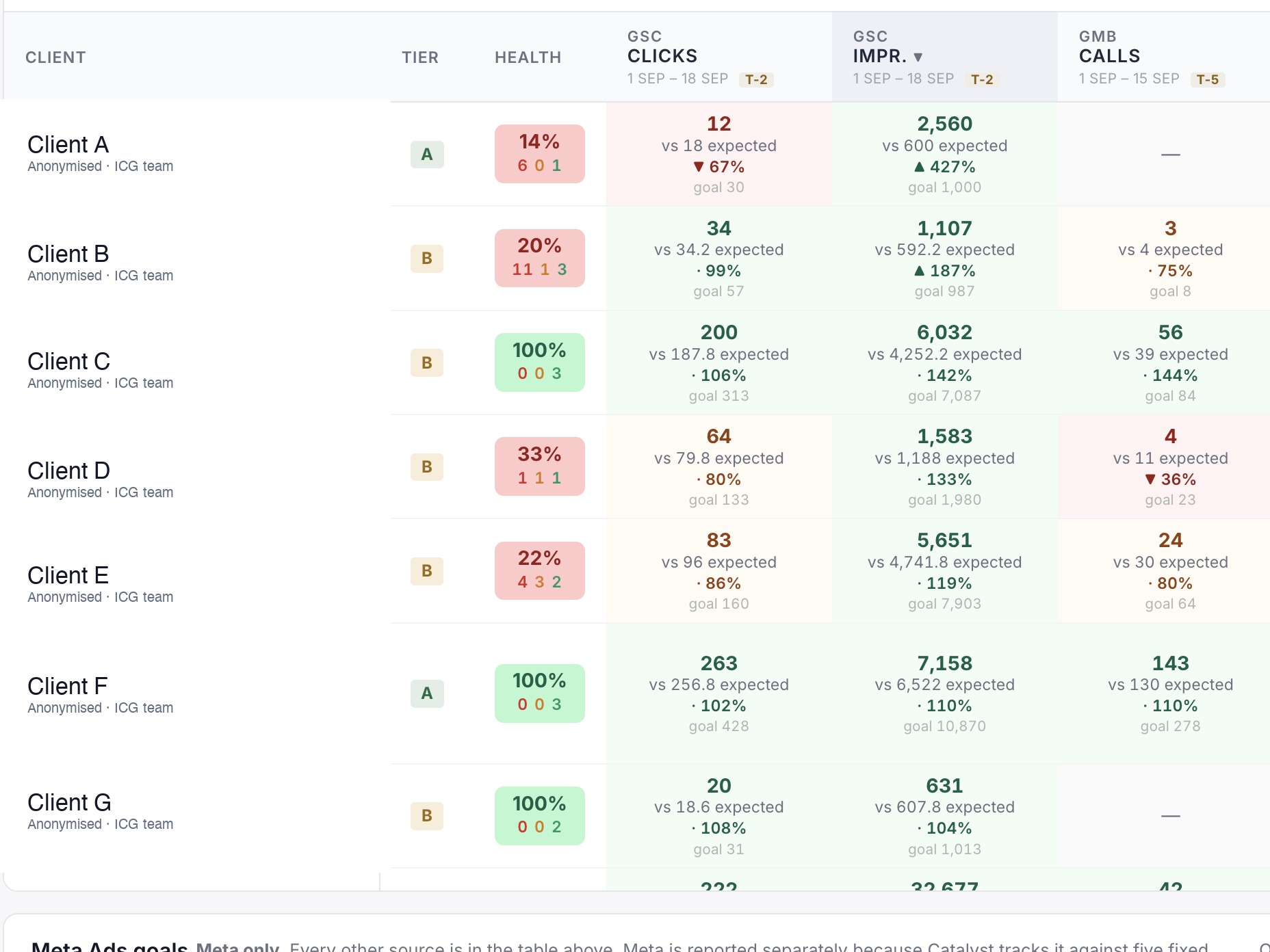
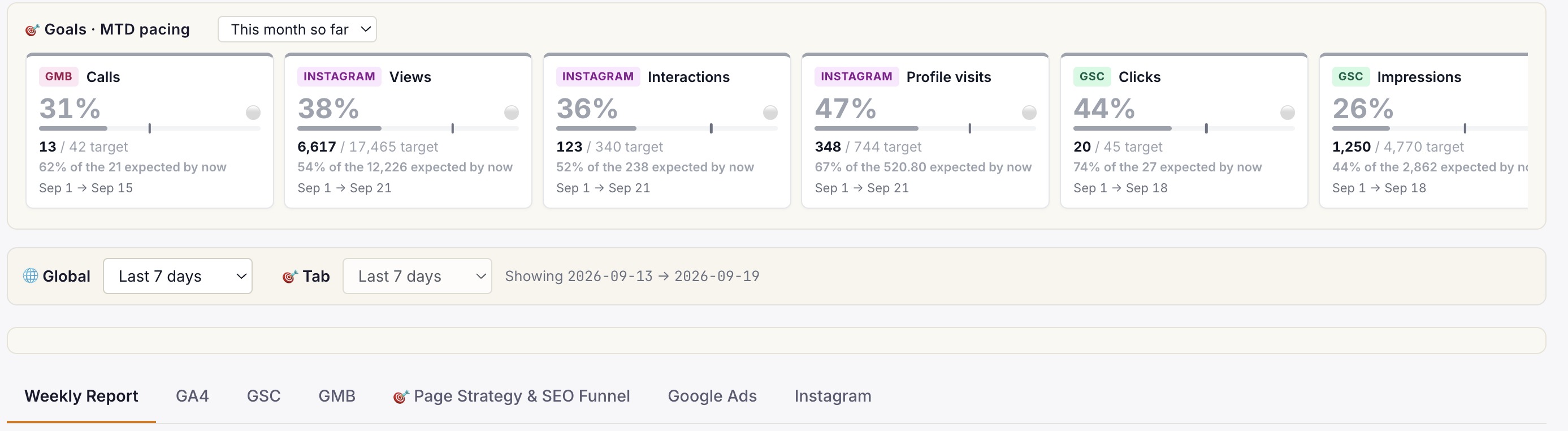
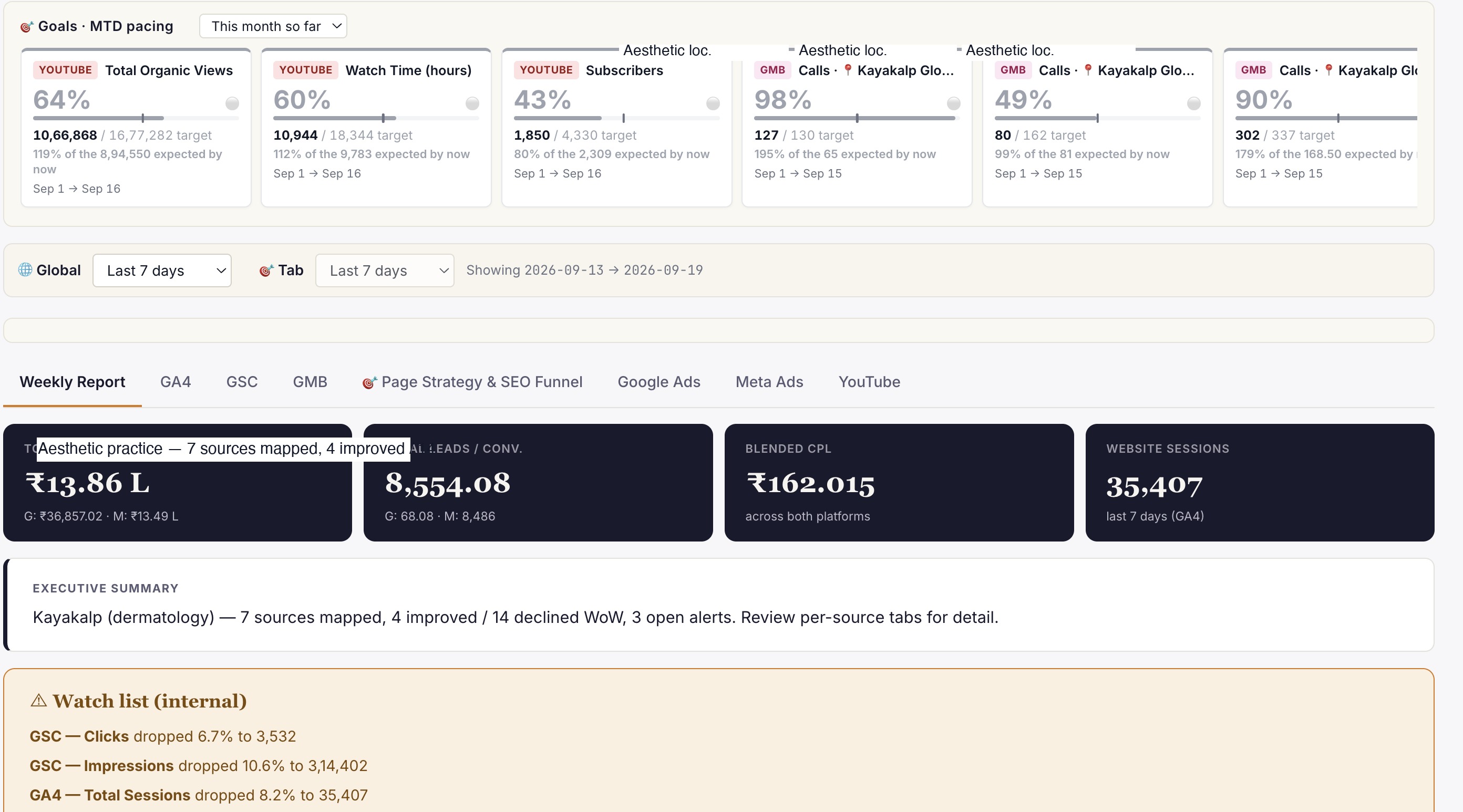
Live client dashboard. GSC, GA4, Google Ads, Meta Ads, IVR calls in one view. Login anytime, not monthly.
Phoenix
Clinic revenue intelligence over your PMS. Daily action queue: Prevent Loss, Maintain & Engage, Grow Revenue. Multi-centre rollout.
Or book a free 30-min audit to see all three in action on your account.
Healthcare brands
that already run on ICG.
A representative slice of the 150+ healthcare brands ICG has delivered for across India. Most engagements remain under NDA.


What ICG clients say · on video.
"ICG runs Google Ads + Meta for our plastic surgery practice. CPQL dropped meaningfully in the first 90 days."
"Hair transplant marketing in Jaipur needed someone who understood Tier-2 patient psychology. ICG built it right."
"ICG's Chandigarh plastic surgery campaigns delivered measurable consultation volume from the first quarter."
Need help operationalising this?
Every ICG service is healthcare-only, NMC + DPDP-aware, and built around the patient-research patterns that drive Indian healthcare growth in 2026.
Every practice welcome — packages from ₹20,000/mo.
Goals-Driven engagements · Performance-Linked Payout Models available
More from
ICG.
Five trends shaping Indian healthcare marketing through 2027: AI-first patient research, Conversions API adoption, ABDM discovery, the AEO w...
Healthcare AIO is the discipline of getting your clinic or hospital cited inside Google AI Overviews, ChatGPT and Perplexity answers — not j...
Conversational-search advertising places brand messages inside AI chat answers — ChatGPT, Perplexity, Copilot — rather than beside a results...
Stop guessing.
Book a Diagnostic.
30 minutes. Free. With the AI-powered healthcare-only marketing agency 150+ brands already run on. No slides, no pitch, no hard close.


