


AI Overview optimisation for dermatology clinics in India — the 2026 playbook for cosmetic vs medical derm queries, ASCI-safe writing and YODA AIO Lab derm workflow
Dermatology splits sharply into medical and cosmetic AIO surfaces. Here is the query taxonomy, the ASCI-safe writing pattern, and the YODA AIO Lab derm workflow.
No pitch. Written root-cause diagnosis. AI-powered, healthcare only.
Direct answer
Dermatology splits sharply into medical and cosmetic AIO surfaces. Here is the query taxonomy, the ASCI-safe writing pattern, and the YODA AIO Lab derm workflow.
TL;DR

AI Overview optimisation for Indian dermatology clinics is the practice of structuring medical-dermatology and cosmetic-dermatology content so Google's generative answer panel cites the clinic's page as an authoritative source. The two sub-verticals behave differently — medical derm (acne, eczema, psoriasis, alopecia) fires AIO at 70 to 85 percent, while cosmetic derm (fillers, botulinum toxin, laser, hair transplant) fires AIO at 40 to 60 percent and sits inside a much tighter ASCI compliance perimeter.
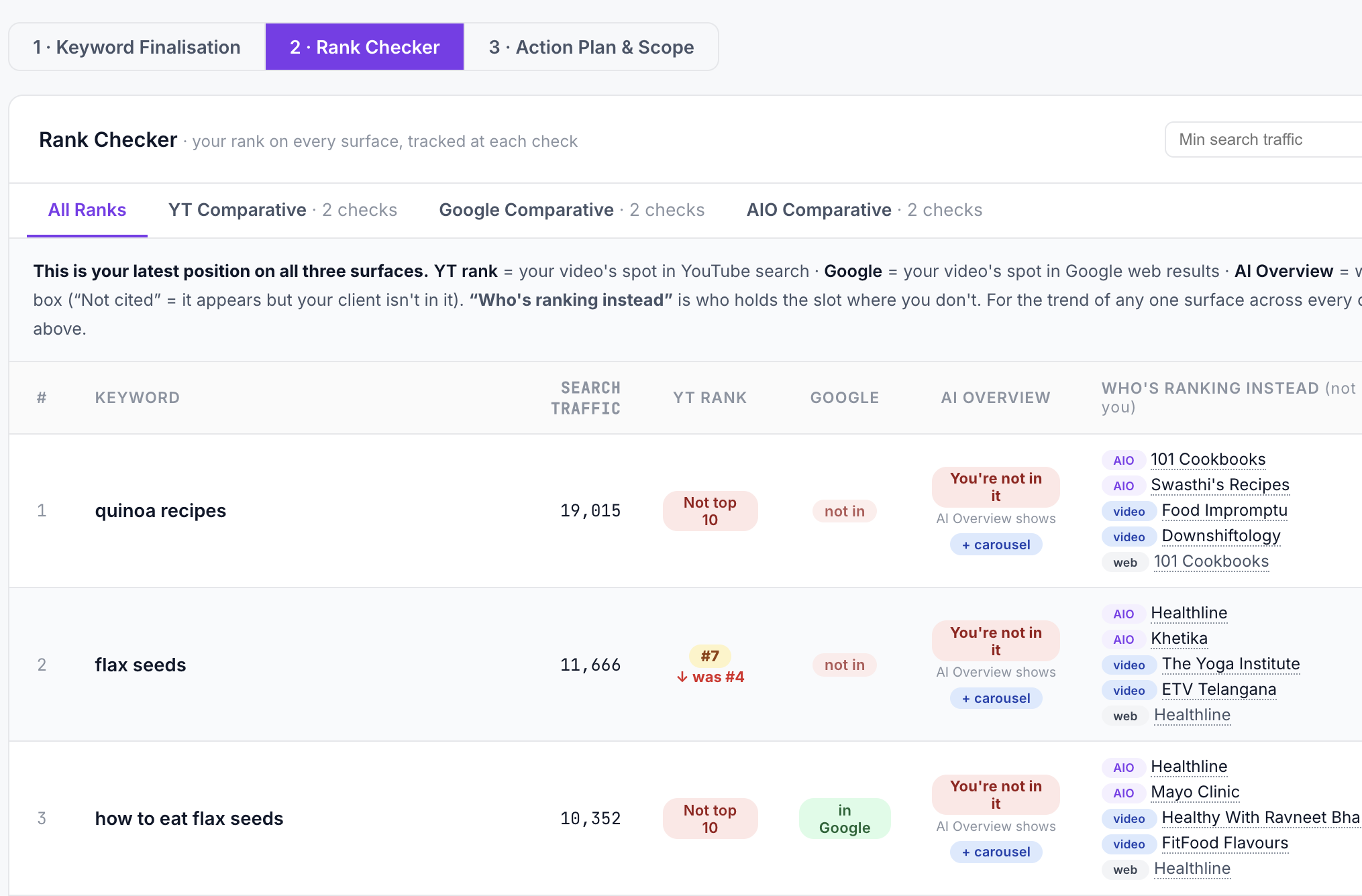
Dermatology is one of the most searched healthcare specialties in India, and it is also one of the most structurally divided. Medical dermatology queries — "how to treat cystic acne", "psoriasis flare triggers", "melasma treatment options" — behave like classic informational YMYL and fire AIO at rates that rival IVF. Cosmetic dermatology queries — "how long do fillers last", "best treatment for under-eye dark circles", "botulinum toxin cost Bangalore" — fire AIO less frequently, are governed by tighter ASCI restrictions on before-after imagery and superlative language, and demand a different content pattern. Clinics that treat the two the same way lose citation share on both. This post walks through the medical-versus-cosmetic split, the ASCI-safe writing pattern that keeps cosmetic derm content AIO-eligible, the schema stack that maps to each query type, and the YODA AIO Lab workflow ICG runs across derm client portfolios.
The medical-versus-cosmetic dermatology split for AIO
Medical dermatology in India is functionally a YMYL informational category. Patients with acne, eczema, psoriasis, vitiligo, or alopecia are researching symptoms, causes, treatment options, and doctor-visit thresholds. The queries are question-form, definition-heavy, and comparison-heavy — the exact combination that fires AIO at high rates. Google trusts government sources (NIH, NHS, dermnetnz), large hospital chains, and named-dermatologist authored pages on medical derm queries.
Cosmetic dermatology behaves differently. Cosmetic queries carry commercial and comparison intent — how much does something cost, how long does it last, does it hurt, what results should I expect. AIO fires less frequently because Google treats a share of these as transactional. Where AIO does fire, the trust filter downgrades pages carrying ASCI red flags — "guaranteed results", "flawless skin", "India's best cosmetologist" — and citation eligibility collapses even for pages that rank organic top 5.
The strategic implication: a derm clinic's content stack needs two content patterns, not one. Medical derm pages structured as classic AIO-eligible informational hubs with definition-first openings and FAQPage schema. Cosmetic derm pages structured for organic conversion with careful ASCI-safe framing that keeps them AIO-eligible where the panel does fire, without leaking compliance risk.
The dermatology query taxonomy that fires AIO in India
Observed AIO fire rate by derm query cluster across the ICG portfolio, Q2 2026, weekly-refreshed inside YODA's AIO Lab.
| Query cluster | Example query | AIO fire rate | Compliance risk |
|---|---|---|---|
| Acne treatment | "how to treat cystic acne India" | 78-88% | Low — medical framing |
| Psoriasis / eczema | "psoriasis flare triggers" | 75-85% | Low — medical framing |
| Melasma / pigmentation | "melasma treatment options" | 72-82% | Moderate — cosmetic overlap |
| Alopecia / hair loss | "male pattern baldness causes" | 70-82% | Low — medical framing |
| Filler explainer | "how long do lip fillers last" | 55-70% | High — ASCI cosmetic perimeter |
| Botulinum toxin explainer | "botulinum toxin for wrinkles duration" | 50-65% | High — ASCI cosmetic perimeter |
| Laser treatment | "laser hair removal side effects" | 60-72% | Moderate — medical device claims |
| Hair transplant | "FUE vs FUT hair transplant" | 55-70% | High — before-after imagery risk |
| Cosmetic cost | "lip filler cost Delhi" | 35-50% | High — pricing + ASCI |
| Local commercial | "dermatologist Bandra" | Under 25% | Low — Maps takes precedence |
The compliance-risk column is the one most Indian derm marketing teams miss when scoping AIO work. Cosmetic clusters fire AIO less frequently and carry higher compliance risk — which sounds like they should be deprioritised. In practice, the citation opportunity on cosmetic queries is disproportionately valuable because the click-through economics from a cited cosmetic explainer to a consultation booking are strong, and few clinics have structured their cosmetic content properly for AIO citation. The gap is wide open for clinics willing to write compliance-clean cosmetic explainers.
ASCI-safe writing for cosmetic derm AIO content
ASCI Guidelines 2022 for healthcare and cosmetic advertising restrict superlatives without substantiation, misleading before-after imagery, guaranteed-result claims, and celebrity endorsements without disclosure. AIO's trust filter flags the same signals. Compliance-clean writing is not a nice-to-have — it is a hard prerequisite for citation on the cosmetic side.
The rules ICG applies on every cosmetic derm page:
- Never claim absolutes. Not "flawless skin", not "guaranteed results", not "India's best dermatologist". Use ranges and qualified outcomes — "typically maintained for 6 to 9 months, varying by product, injection depth, and metabolic rate".
- Never publish before-after imagery without written patient consent and DPDP-compliant framing. Where imagery is used, add a visible disclosure and a consent-verified caption.
- Quote industry outcome ranges rather than clinic-specific outcomes unless the clinic has published, peer-reviewed data to substantiate the specific claim.
- Add a "Reviewed by" byline with the dermatologist's NMC registration number displayed on the page. Person schema with jobTitle, degree, memberOf (IADVL — Indian Association of Dermatologists, Venereologists and Leprologists) plus sameAs to a verifiable profile.
- Add an ASCI compliance disclosure line at the page bottom. "Editorial disclosure — content reviewed for ASCI Guidelines 2022 compliance. Individual outcomes vary."
Pages that follow this pattern retain AIO citation eligibility on cosmetic queries where the panel fires. Pages that skip any one of the five items regularly lose citation even when their organic rank is intact.
The schema stack for dermatology AIO pages
The derm AIO schema stack differs between medical and cosmetic sub-verticals. On medical derm hub pages we deploy MedicalCondition as the primary entity schema, with FAQPage, Physician / Person, and Organization / MedicalBusiness layered on top. MedicalCondition maps cleanly to acne, eczema, psoriasis, vitiligo, alopecia — canonical entities Google recognises.
On cosmetic derm pages we shift to MedicalProcedure as the primary entity schema — for filler, botulinum toxin, laser, hair transplant, chemical peel — with the same FAQPage, Physician, and Organization layers. MedicalProcedure requires bodyLocation, howPerformed, preparation, and followup properties for full citation weight. Cosmetic derm pages that use only Organization or LocalBusiness schema — the classic marketing-page pattern — leave most of the AIO citation lift on the table.
The definition-first opening for dermatology pages
The 40 to 60 word definition-first opening applies to both medical and cosmetic derm pages. The pattern varies slightly by sub-vertical.
Medical example (acne): "Acne vulgaris is a chronic inflammatory skin condition affecting the pilosebaceous units of the face, chest, and back. It is driven by androgen-mediated sebum overproduction, follicular hyperkeratinisation, Cutibacterium acnes colonisation, and inflammation. In India, prevalence is highest between ages 12 and 25, with treatment ranging from topical retinoids to oral isotretinoin depending on severity."
Cosmetic example (fillers): "Dermal fillers are injectable gels — most commonly hyaluronic acid — used to restore volume, smooth wrinkles, and reshape facial contours. Duration ranges from 6 to 18 months depending on the specific product, injection site, and individual metabolic rate. In India, filler procedures fall under ASCI Guidelines 2022 for cosmetic advertising and must be performed by a licensed medical practitioner."
Both openings quote ranges, reference authoritative frameworks, and avoid ASCI-triggering language. Both give the AIO panel a clean pull-quote it can use verbatim.
The YODA AIO Lab workflow ICG runs for derm clients
YODA — ICG's AI-native healthcare YouTube and content platform — runs a derm-specific AIO Lab workflow. The five-step cadence:
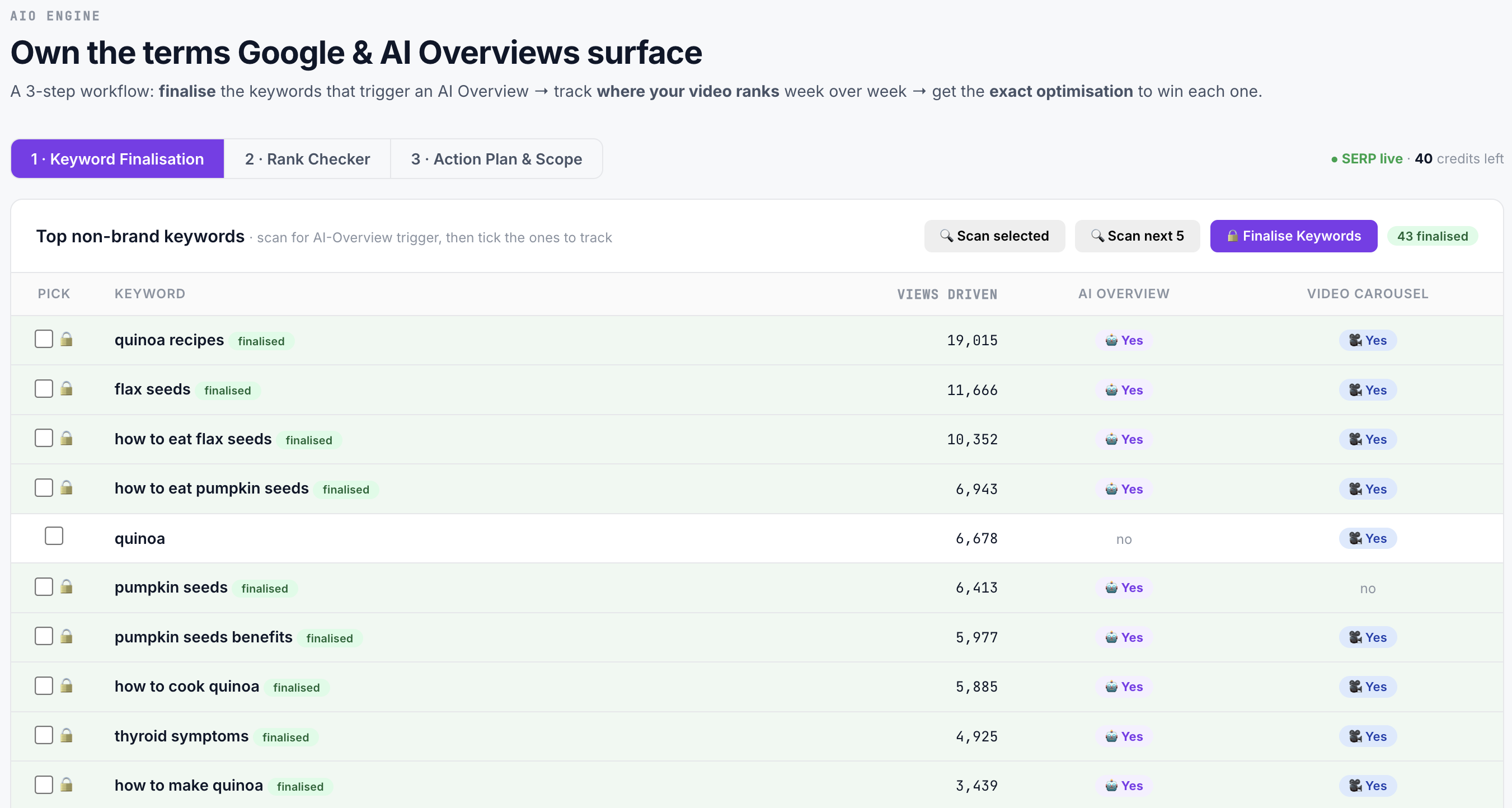
- Split-cluster keyword finalisation. Separate the clinic's target keyword set into medical-derm clusters (acne, eczema, psoriasis, vitiligo, alopecia) and cosmetic-derm clusters (fillers, botulinum toxin, laser, hair transplant, chemical peel). Prioritise medical clusters first for citation velocity, cosmetic clusters second for click-value.
- Weekly rank capture across three races. Automated incognito capture from an Indian IP on 5 to 7 variants per cluster across organic rank, AIO citation, and YouTube search. Weekly cadence catches Google's panel refreshes.
- Compliance sweep every two weeks. ASCI Guidelines 2022 audit across all live pages — catches drift where new marketing copy has crept in and would downgrade the AIO trust filter.
- Structural replication. When a page moves from "not cited" to "cited", document the exact change (definition rewrite, schema deploy, byline update) and replicate across adjacent pages.
- Before-after imagery audit monthly. Verify every before-after image has patient consent, a visible disclosure, and DPDP-compliant framing. Non-compliant imagery is removed or replaced.
Meta Catalyst IQ — the paid derm surface that runs alongside AIO
Cosmetic dermatology in particular runs on short intake windows — a patient considering a filler top-up or a laser package usually decides inside two to four weeks. Meta Catalyst IQ is ICG's Meta ads performance engine and runs the paid side of the derm conversion stack. Derm portfolio CPL sits at ₹520 to ₹1,180 blended, delivered across 23+ active accounts, ₹9.1Cr+ optimised monthly spend, with a typical 38 to 58 percent CPL reduction inside the first 90 days of account handover. Paid Meta handles the short-window intake demand while AIO and organic content build the informational authority that lowers paid CPL over time. Book a 30-minute Meta Catalyst IQ walkthrough on WhatsApp.
FAQ — AI Overview optimisation for dermatology clinics
Should I write separate pages for medical and cosmetic dermatology or combine them?
Separate. The AIO fire rate, compliance risk, and target-reader intent are different enough that a combined page dilutes citation eligibility on both sub-verticals. Medical derm pages should be structured as classic YMYL informational hubs; cosmetic derm pages should be structured as ASCI-safe procedure explainers. Cross-link between the two where clinically relevant but keep them as distinct URLs and distinct entity schemas.
Can before-after imagery be used at all on cosmetic derm pages?
Yes, subject to two constraints. First, every before-after image must have documented patient consent with DPDP-compliant handling of any identifiable data. Second, the imagery must carry a visible disclosure noting that individual outcomes vary. Pages that carry compliant before-after imagery are AIO-eligible; pages that carry uncredited before-after imagery are typically downgraded by both the ASCI regulator and the AIO trust filter.
Does adding a dermatologist byline actually move citation?
Yes, materially. Person schema with jobTitle, degree, memberOf (IADVL) plus NMC registration displayed on the page tips the YMYL trust filter on medical derm content and is often the difference between citation and no citation. On cosmetic derm content the effect is smaller but still positive. A visible reviewedBy byline is the single most reliable signal you can add to a derm page.
Which medical derm queries should be prioritised first?
Acne, eczema, psoriasis, melasma, and alopecia are the five highest-volume medical derm clusters in India and all fire AIO at 70 to 85 percent. Acne alone drives more search volume than most cosmetic clusters combined. A derm clinic building an AIO-eligible content stack from zero should start with a rigorous acne hub, then eczema and psoriasis, then melasma and alopecia in parallel.
How do I write about laser and device-based treatments without triggering DCGI issues?
Reference the device by its regulatory category (Class II or III medical device) rather than by brand claim, cite the FDA or CE clearance where verified, and quote outcome ranges rather than absolutes. Do not claim FDA approval unless the specific device you use is FDA-cleared and you can substantiate the claim. DCGI regulates medical device advertising in India and the AIO trust filter enforces the same standard.
What is the fastest cosmetic derm query to earn AIO citation on?
Filler duration and botulinum toxin duration queries. Both are question-form, both have well-established outcome ranges, both are underserved by structured Indian clinic content, and both fire AIO at 50 to 70 percent. A single compliance-clean explainer page with MedicalProcedure and FAQPage schema, a credentialed byline, and a definition-first opening typically earns citation inside 30 to 45 days of publish.
Should I use VideoObject schema for cosmetic derm content?
Yes, where you have real video content. AIO panels increasingly pull YouTube-hosted explainers with VideoObject schema and full transcripts into the video preview section. YODA's content workflow includes video production and schema deployment specifically for this reason — a well-optimised procedure explainer video with a transcript earns citation across both the AIO web surface and the AIO video surface, doubling the exposure per query.
Related reading

- How to appear in Google AI Overview for healthcare queries in India — the 2026 playbook
- Google AI Overview vs organic position #1 for Indian healthcare — CTR economics
- AI Overview optimisation for IVF clinics in India
- FAQPage schema for healthcare AIO — implementation guide
- Definition-first content structure — the AIO citation pattern
Compliance and regulatory reference — the Advertising Standards Council of India for cosmetic and healthcare advertising rules governing superlatives, before-after imagery and unsubstantiated efficacy claims, and India's National Medical Commission for dermatologist practitioner conduct standards. Both frameworks shape the trust perimeter AIO panels enforce when selecting which dermatology pages to cite.
Book a free 30-minute Brand & Growth Diagnostic.
It's a working session, not a sales pitch — you leave with a written root-cause analysis you can act on, whether or not you engage ICG.
The three platforms
behind every ICG engagement.
Beacon
CAPI middleware that fixes Event Match Quality, translates CRM statuses to Meta-standard events, dedups across channels.
Agency OS
Live client dashboard. GSC, GA4, Google Ads, Meta Ads, IVR calls in one view. Login anytime, not monthly.
Phoenix
Clinic revenue intelligence over your PMS. Daily action queue: Prevent Loss, Maintain & Engage, Grow Revenue. Multi-centre rollout.
Or book a free 30-min audit to see all three in action on your account.
Healthcare brands
that already run on ICG.
A representative slice of the 150+ healthcare brands ICG has delivered for across India. Most engagements remain under NDA.


What ICG clients say · on video.
"Scale up of organic channels and business consulting. ICG has absolute domain authority in their field."
"What Ichelon accomplished — they got all my ideas and worked over 3-4 months to create an amazing, super-customised website."
"Working with ICG felt like working with an in-house growth team that happens to specialise in healthcare."
The intelligence stack behind this playbook.
Every ICG engagement runs on the Search Intelligence Trifecta — Angryturtle for GMB, SIE for search and AI Overview, YODA for YouTube. Live product screens below.
Need help operationalising this?
Every ICG service is healthcare-only, NMC + DPDP-aware, and built around the patient-research patterns that drive Indian healthcare growth in 2026.
Every practice welcome — packages from ₹20,000/mo.
Goals-Driven engagements · Performance-Linked Payout Models available



More from
ICG.
Five trends shaping Indian healthcare marketing through 2027: AI-first patient research, Conversions API adoption, ABDM discovery, the AEO w...
Healthcare AIO is the discipline of getting your clinic or hospital cited inside Google AI Overviews, ChatGPT and Perplexity answers — not j...
Conversational-search advertising places brand messages inside AI chat answers — ChatGPT, Perplexity, Copilot — rather than beside a results...
Stop guessing.
Book a Diagnostic.
30 minutes. Free. With the AI-powered healthcare-only marketing agency 150+ brands already run on. No slides, no pitch, no hard close.


