


NMC-Compliant Instagram Content: A Review Framework for Hospital Marketing Teams
A practical framework for hospital marketing teams reviewing doctor Instagram content under the NMC guidelines of 6 October 2026: institution vs doctor accounts, the disclosure line, five content buckets, a red-flag list and a three-checkpoint review workflow.
No pitch. Written root-cause diagnosis. AI-powered, healthcare only.
Direct answer
A practical framework for hospital marketing teams reviewing doctor Instagram content under the NMC guidelines of 6 October 2026: institution vs doctor accounts, the disclosure line, five content buckets, a red-flag list and a three-checkpoint review workflow.
TL;DR

TL;DR
- The NMC guidelines of 6 October 2026 treat promotional social media posts as advertisements (para 3.2). A hospital's own account may publish factual institutional information (para 8.3); a doctor's account may publish education, but not self-promotion (paras 5.1, 8.1(ii)).
- Every post must show the name, qualifications, registration status and SMR/NMR number of the doctor it features (Explanations III and IV). Testimonials, before-after photos, offers and superlatives are out, and consent does not change that (para 6.2).
- The agency or the marketing team publishing a post does not shift responsibility (para 4.4). That is why the review workflow matters: clinical accuracy, compliance and brand, signed off in that order, with a record kept.
- A workable mix is roughly 60 percent education, 20 percent factual institutional content, 10 percent research and CME, 10 percent public-health commentary.
Updated 8 October 2026 to the National Medical Commission's Guidelines on Ethical Advertising and Public Communication by Hospitals/Medical Institutions and Registered Medical Practitioners (public notice No. R-13014/01/2024-Ethics, dated 6 October 2026, in force immediately). Paragraph numbers in this article refer to those guidelines. General information, not legal advice.
This framework is for marketing teams in hospitals and clinics who review content from, or about, their doctors. The rules themselves are explained in full in NMC guidelines for doctors on social media, and the institution-side rules in hospital and clinic advertising under paras 8.3 and 9.1. The whole framework is in the complete guide to the NMC advertising guidelines 2026.
Table of contents
- What do the NMC guidelines say about Instagram?
- Institution account or doctor account: which rules apply?
- Which Instagram content gets hospitals and doctors into trouble?
- How should a doctor's Instagram bio read?
- What is a safe content framework?
- How do privacy rules apply to patient content?
- How should hospital marketing teams review doctor content?
- What does a compliant Instagram calendar look like?
- How does ICG approach Instagram compliance?
Why this matters for hospital marketing teams
A dermatologist in Bandra, a paediatric dentist in Koramangala, an IVF specialist in Gurugram: many doctors now start the day with a Reel idea in their notes app. In a hospital, those ideas land on the marketing team's desk, often alongside the hospital's own content calendar.
The energy to publish is high. Clarity on what is allowed has been low, and the October 2026 guidelines have now settled most of the questions. They are read with the Indian Medical Council (Professional Conduct, Etiquette and Ethics) Regulations 2002 and the NMC Act 2019 (paras 2.1(f), 4.2), and with the IT Act 2000 and the Digital Personal Data Protection Act 2023 and its 2025 Rules (para 7.6). For how the earlier regulations fit in, see the pillar guide.
We have reviewed the Instagram output of more than 150 clinics and hospital teams over the last two years at ICG. Around four in five accounts had at least one post that a strict reviewer would flag. Not because the doctors were reckless, but because nobody had written down a framework the whole team could apply. This piece is that framework.
What do the NMC guidelines say about Instagram?
Para 3.2 defines an advertisement as any communication that directly or indirectly solicits or promotes, and expressly includes social-media, sponsored, influencer-led, audio-visual and AI-generated communications when they are promotional. Para 3.5 lists media including Facebook, WhatsApp, Telegram, podcasts, sponsored posts and influencer marketing. Instagram is not named on its own, but it is plainly social media.
Information given to the public in the normal course, without promotional intent or commercial benefit, is not an advertisement (Explanation I). So educational and awareness content is safe ground. What becomes a problem is anything that reads like an advertisement dressed up as content: guaranteed outcomes, offers, patient endorsements, comparisons with "other doctors", and fear-driven medical claims.
Institution account or doctor account: which rules apply?
Most hospitals run one institutional account and have several doctors with their own. The rules differ, and the review has to know which account a post is for.
| Hospital or clinic account | Doctor's own account | |
|---|---|---|
| What it may publish | Factual, objective, verifiable information: name, location, contact, departments, facilities, equipment, services, emergency services, accreditation status, charges (para 8.3); doctor directory information (para 9.1); educational content | Educational content that does not promote the doctor's practice, solicit patients or get monetised through promotional marketing (para 5.1); public-health talks in own name and designation (8.2(iii)); research (8.2(i)); formal announcements (8.2(ii)); national-day greetings (8.2(v)) |
| What it may not publish | Solicitation, inducements, superiority claims, cure guarantees, promotional portrayal of an individual doctor (para 8.3); offers, unverifiable superlatives, fake engagement (8.1(ix), (x), (xii)) | All of para 8.1: self-promotion, solicitation, superlatives, testimonials, before-after, offers, endorsements, fake engagement |
| Disclosure | Name, qualifications, registration status and SMR/NMR number of every doctor named in a post (Expl. IV) | The doctor's own name, qualifications, registration status and SMR/NMR number on each post (Expl. III) |
| Who answers for it | The institution, under the Clinical Establishments Act or State Act (para 4.3; Explanation to 10.1) | The doctor, before the State Medical Council (para 10.1), even when someone else posts it (para 4.4) |
Two consequences for the marketing team. First, the hospital account should not become a showcase for one doctor: frequency or medium must not turn facts into solicitation (para 8.3), and a run of "Meet Dr X, our star surgeon" posts is promotional portrayal of an individual. Second, the hospital should not run a doctor's personal account as a marketing channel. Para 8.1(ii) bars a doctor from engaging a third party to market medical services. Help with genuinely educational content in the doctor's own name is fine; promotion is not.
Which Instagram content gets hospitals and doctors into trouble?
In the audits we run for hospital teams across NCR, MMR, Chennai and Hyderabad, the same mistakes keep coming up:
- Patient testimonial Reels where the patient names the doctor and praises the outcome (Explanation V; para 8.1(xi)).
- Before-and-after grids for cosmetic, hair, dental or dermatology work, often with pricing or offer copy attached (paras 8.1(v), 8.1(x)).
- "Limited time" packages for IVF cycles, dental implants or laser eye surgery (para 8.1(x)).
- Comparative content that says or implies "other doctors do it wrong, I do it right" (Explanation II; para 8.1(ix)).
- Guaranteed outcome claims: "100 percent success", "permanent cure", "no side effects" (paras 8.1(iii), 8.1(vi)).
- Screenshots of WhatsApp chats with patients, even with the name blurred (para 7.4).
- Trend Reels that make a patient's condition the punchline of a joke or dance format.
- Posts naming a doctor with no name, qualifications, registration status or registration number (Explanations III and IV).
Each of these is a normal growth tactic in other categories. In healthcare, each one fails review. Name them as a hard "do not publish" list before anyone talks about what to post.
How should a doctor's Instagram bio read?
The bio is the first thing a reviewer opens and often the fastest fix. A sound bio gives the qualification exactly as the medical council register lists it, the registration number, the specialty in neutral language, the city, and one link to a verifiable destination such as the hospital's doctor-directory page.
Bios that get flagged over-claim: "Best gynaecologist in South Delhi", "Top rated IVF specialist", "Award-winning smile designer". Paras 8.1(iii) and 8.1(ix) bar these unless objectively verifiable with a disclosed methodology. A line like "MBBS, MD Dermatology (KEM Mumbai) · Reg. No. [number], Maharashtra Medical Council · Consultant, [Hospital], Powai · DMs are not for consultations" is clear and does more for trust than any superlative.
What is a safe content framework?
The framework we use has five buckets. A post that does not fit one of them does not enter the calendar.
- Condition education. Symptom explainers, myth-busting Reels, prevention content. Written in general terms, not tied to a specific patient.
- Procedure literacy. How a procedure works, who is typically eligible, what recovery and the common risks look like. No pricing as an offer, no guarantee.
- Factual institutional content (hospital account only). Departments, facilities, equipment, timings, emergency services, accreditation status (para 8.3). No patients, no superiority claims, no single-doctor showcases.
- Research and CME. Papers published (8.2(i)), conference talks, and formal announcements such as a new consulting address (8.2(ii)). Factual, without "renowned" or "leading".
- Public-health commentary. Seasonal awareness (dengue in monsoon, air quality in October-November in NCR, heatstroke in April-May), vaccination reminders, women's health month (5.1, 8.2(iii)).
Everything else (offers, endorsements, comparative claims, patient-identifiable content, testimonials) sits outside the framework. A rule this narrow makes the weekly planning meeting shorter. A junior social media executive can hold the line without needing a doctor's approval on every idea.
How do privacy rules apply to patient content?
The guidelines allow patient information or images only where the law permits and with consent (paras 6.1 to 6.3), require identifying features to be blurred or cropped (6.4), and bar identifiable patient data: names, faces, anomalies (7.4). They also bring in the IT Act 2000 and the DPDP Act 2023 with its 2025 Rules (7.6). Under the DPDP Act, consent must be free, specific, informed, unconditional and unambiguous, and it can be withdrawn. A generic form signed at registration does not cover Instagram.
The step most teams miss: consent does not make a prohibited testimonial or before-and-after lawful (para 6.2). So patient material on Instagram is limited to genuinely educational, de-identified cases (para 8.1(v)). For those, use a separate one-page consent form for the specific educational use and platforms, and run a takedown process that removes the post, the archive copy and any repurposed asset when consent is withdrawn.
Blurring is not a shield on its own. If the Reel says "our patient from Andheri came in for a rhinoplasty last Tuesday", a friend or colleague can identify the person. That is still identifiable patient data.
How should hospital marketing teams review doctor content before it goes live?
The workflow that survives real hospital operations has three checkpoints and one shared tracker. Every post moves through clinical accuracy, compliance, and brand fit, in that order, and each reviewer signs off in the tracker before the scheduler queues it.
| Checkpoint | Owner | What they look for |
|---|---|---|
| Clinical accuracy | Treating doctor or department head | Is every clinical claim correct? Are risks and limits stated (8.1(vi))? Is anything oversimplified to the point of being wrong? |
| Compliance | Medico-legal or compliance lead | Which account is it for (institution or doctor)? Disclosure line present (Expl. III/IV)? Any solicitation, superlative, testimonial, before-after, offer or endorsement (8.1)? Any patient data or consent needed (6.x, 7.4)? Any AI-generated element that needs a mark (7.2)? |
| Brand and channel | Marketing head | Does it fit the grid, the tone of voice, the campaign theme and the platform format? Does the call to action inform ("Learn more") rather than solicit ("Book now")? |
The tracker holds the draft caption, the visual, the target account, the consent status and the three sign-offs. A post missing any sign-off does not go live. Keep the tracker: under para 4.4 the institution and the doctor answer for content they authorised or knowingly permitted, and a dated record of who approved what is the first thing you will want if a complaint arrives.
Larger hospitals we work with in Bengaluru and Pune run this as a weekly 30-minute review board. In the accounts we handle, this one change has cut compliance escalations by around 70 to 80 percent.
Two more rules for the board. Doctors' own accounts get the same review as the hospital's when the hospital helps produce the content. And comments are part of the post: staff should not reply with prices, availability or "DM us" prompts, and praise should not be pinned.
What does a compliant Instagram calendar look like in practice?
A workable weekly rhythm for a hospital account, or a specialty clinic with one to three consulting doctors: four to six posts a week across the five buckets, with Reels making up around 60 percent. That is enough to stay visible without turning content into a second full-time job for the doctors.
The shape most of our clients settle into after the first quarter:
- Monday: condition education Reel (30 to 45 seconds) or a short carousel.
- Tuesday: factual institutional post on the hospital account (a department, a facility, new OPD timings).
- Wednesday: procedure literacy carousel, with risks, without pricing offers.
- Friday: myth-busting Reel tied to a current health topic.
- Saturday: public-health commentary or a research/CME update.
The gaps matter as much as the posts. Thursday off gives the review board time to clear the following week. Four to six steady posts beat a burst of ten followed by silence, for the algorithm and for the reviewers.
How does ICG approach Instagram compliance for healthcare clients?
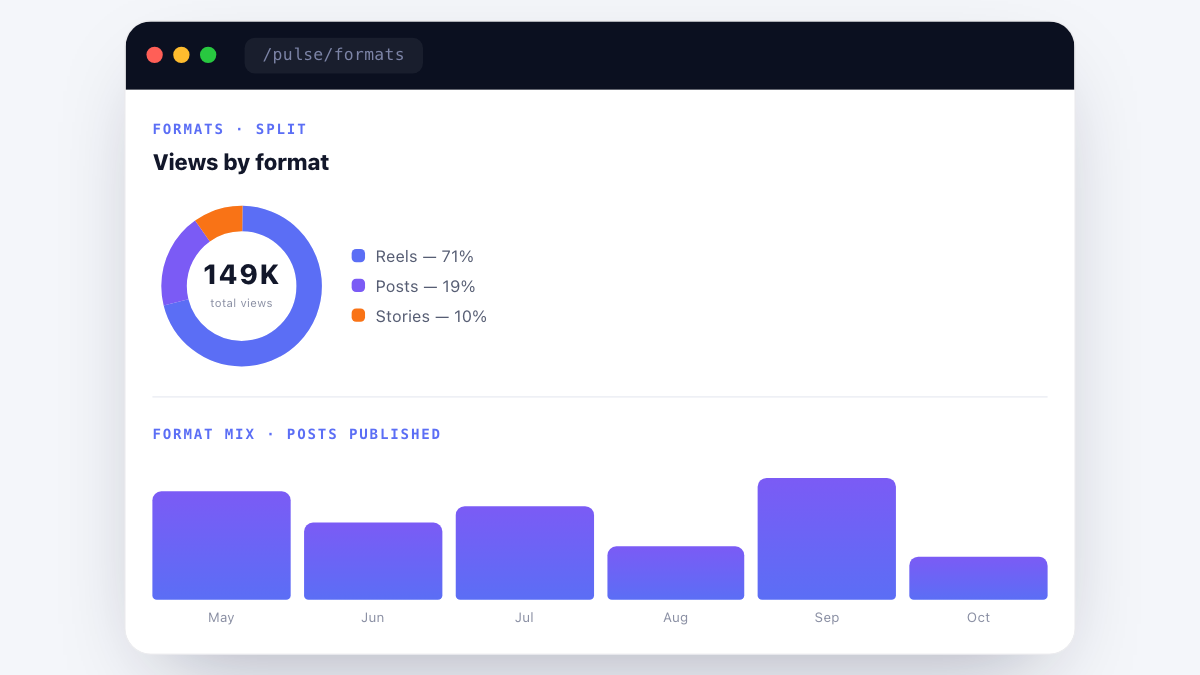
Our clients are hospitals, clinics and medical institutions. For individual doctors we support only educational content in the doctor's own name and designation (para 8.2(iii)). Every engagement starts with an audit of the last 90 days of posts against the guidelines, then a framework rebuild (the five buckets, the red-flag list, bio rewrites, the consent template and the review tracker). Prism Pulse then shows which educational formats earn saves, shares and profile visits, so the team repeats what teaches well.
The 70-30 model behind ICG's healthcare marketing engagements
ICG bills healthcare marketing retainers on a 70-30 fixed-variable model. Seventy percent of the fee is fixed and covers the always-on work — strategy, content, compliance review, publishing, analytics. Thirty percent is variable and tied to outcomes agreed at the start of the engagement, usually qualified consult bookings or verified pipeline. Retainers start from Rs 20,000 a month and are custom-scoped across Foundation, Growth and Scale scopes, with Ads and YouTube available as add-ons under the same Performance-Linked Payout Model. For most clinics running Instagram as their primary organic channel, Growth is the natural fit because it includes weekly compliance review and Prism Pulse reporting inside the fixed portion.
Closing note


Instagram is not the problem for hospitals and their doctors. The absence of a shared, written framework is. Once it is in place (two account types, five buckets, a red-flag list, the disclosure line, three-checkpoint review, consent that knows its limits, a bio that survives a screenshot), compliance stops being a brake and becomes a filter. What comes through is content that teaches patients something and does not expose the doctor or the hospital to a complaint.
How ICG works within these guidelines
ICG is a healthcare marketing agency. Our clients are hospitals, clinics and medical institutions, which may publish factual, objective and verifiable information about themselves (paras 8.3 and 9.1). For individual doctors, ICG supports only genuinely educational content in the doctor's own name and designation (para 8.2(iii)). For doctors and their practices, we run patient-education-driven campaigns: awareness content that helps patients understand their condition and their options, published in the doctor's own name and designation (para 8.2(iii)) and kept free of the self-promotion that para 8.1(ii) bars.
The work is education-first and runs across six channels:
- Awareness content on YouTube. Doctor-led educational videos on public health and disease awareness, in the doctor's own name and designation, without promoting the employer organisation (para 8.2(iii)). See YODA and YouTube marketing for healthcare.
- Research articles and blogs that help patients understand their options: information shared in the normal course, not promotion (para 3.2, Explanation I). See healthcare content marketing, ICG research reports and healthcare SEO.
- Expert answers on Reddit and Quora from named, disclosed accounts. No anonymous or fake posts, no undisclosed commercial relationships and no manufactured engagement (paras 8.1(xi) and 8.1(xii)). See Reddit and Quora programmes.
- Awareness campaigns on Meta, run from the hospital's or clinic's own page, with no discounts, offers, free procedures or other inducements (paras 8.1(x) and 8.3). See Meta advertising for hospitals and clinics.
- NMC-compliant Google Ads landing pages: factual departments, services and facilities, with no "best", "No.1", "100% success", "painless" or "guaranteed" claims (paras 8.1(iii) and 8.1(ix)). See Google Ads for hospitals and clinics.
- "Learn More" instead of "Book Now" on patient-facing pages, so that a page informs rather than solicits (paras 8.1(ii) and 8.3(ii)).
All six rest on three kinds of content: scientific (evidence-based, checked by a qualified clinician), persona-based (written for the questions a specific patient group asks) and consumer-based (built from how people search, compare and decide). AI-assisted drafts go through human medical review, and AI-generated content that is published carries an AI source mark (para 7.2). We do not publish patient testimonials, before-and-after images or superiority claims, and we never buy, incentivise or gate reviews.
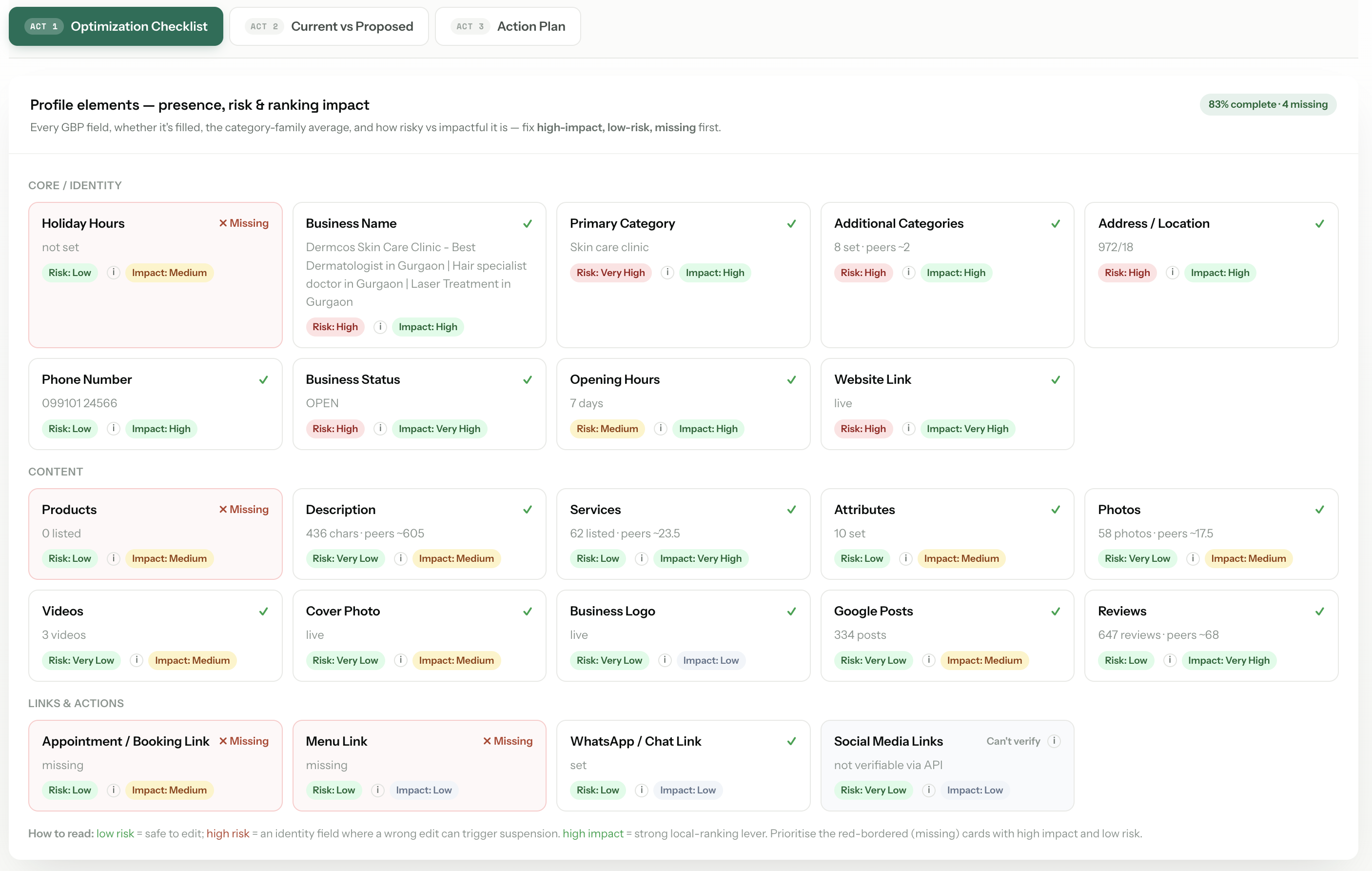
Free NMC compliance check. We review a hospital's or clinic's website, Google Business Profile and social channels against the October 2026 guidelines and send back a written list of fixes.
See what the check covers · Request the check · Book a 30-minute call
General information, not legal advice. Source: NMC public notice No. R-13014/01/2024-Ethics, 6 October 2026.
Book a free Meta ads account audit.
Raman Soni's team pulls your account, checks CAPI/EMQ, reviews creative for NMC compliance, and shows where CPQL is leaking. 45 minutes, actionable output.
Questions readers ask
about this topic.
The three platforms
behind every ICG engagement.
Beacon
CAPI middleware that fixes Event Match Quality, translates CRM statuses to Meta-standard events, dedups across channels.
Agency OS
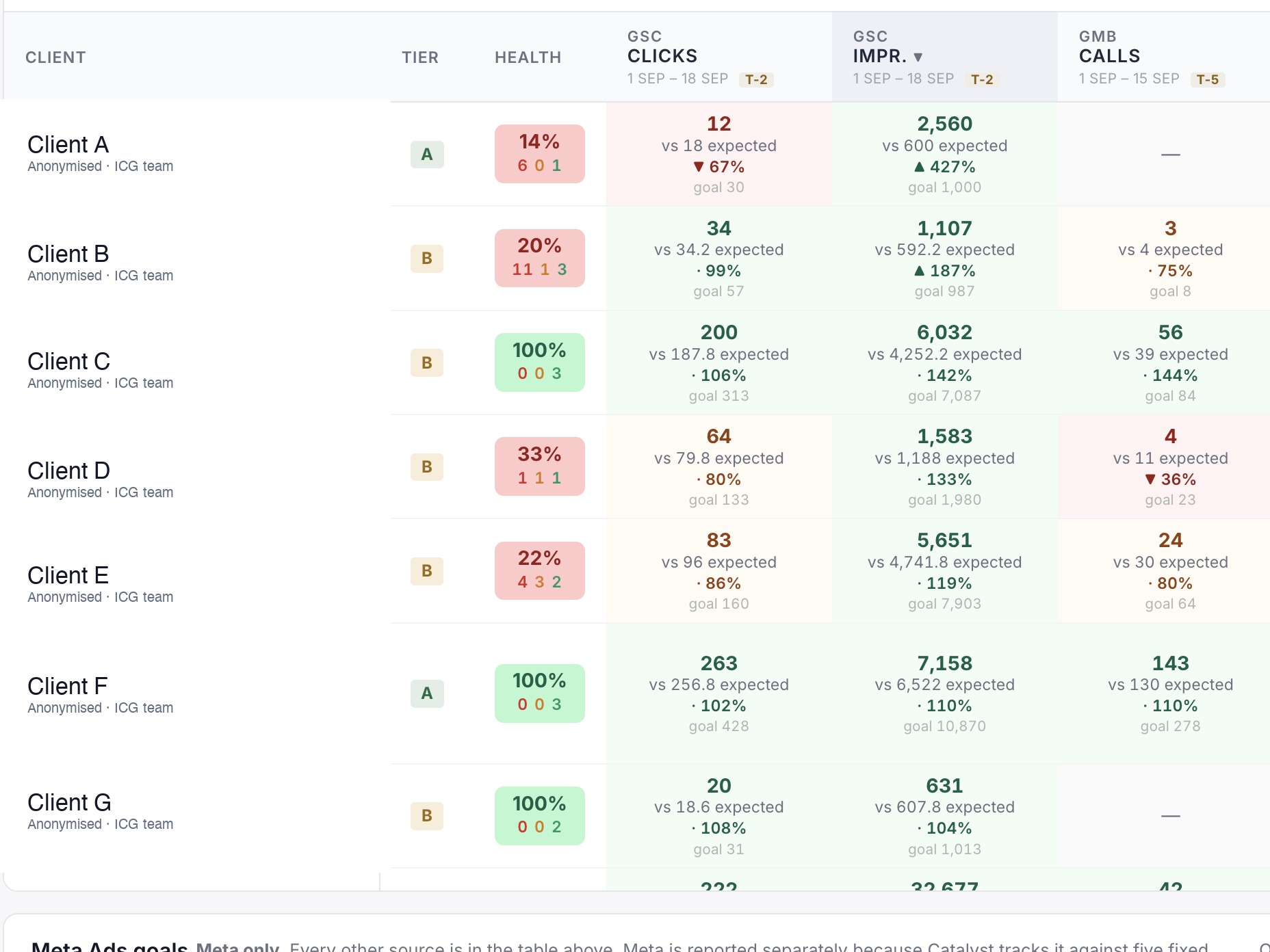
Live client dashboard. GSC, GA4, Google Ads, Meta Ads, IVR calls in one view. Login anytime, not monthly.
Phoenix
Clinic revenue intelligence over your PMS. Daily action queue: Prevent Loss, Maintain & Engage, Grow Revenue. Multi-centre rollout.
Or book a free 30-min audit to see all three in action on your account.
Healthcare brands
that already run on ICG.
A representative slice of the 150+ healthcare brands ICG has delivered for across India. Most engagements remain under NDA.


What ICG clients say · on video.
"Scale up of organic channels and business consulting. ICG has absolute domain authority in their field."
"Working with ICG transformed how we acquire IVF patients in Gurgaon. They understand the fertility journey from inquiry to consult..."
"What Ichelon accomplished — they got all my ideas and worked over 3-4 months to create an amazing, super-customised website."
Need help operationalising this?
Every ICG service is healthcare-only, NMC + DPDP-aware, and built around the patient-research patterns that drive Indian healthcare growth in 2026.
Every practice welcome — packages from ₹20,000/mo.
Goals-Driven engagements · Performance-Linked Payout Models available
More from
ICG.
Five trends shaping Indian healthcare marketing through 2027: AI-first patient research, Conversions API adoption, ABDM discovery, the AEO w...
Healthcare AIO is the discipline of getting your clinic or hospital cited inside Google AI Overviews, ChatGPT and Perplexity answers — not j...
Conversational-search advertising places brand messages inside AI chat answers — ChatGPT, Perplexity, Copilot — rather than beside a results...
Stop guessing.
Book a Diagnostic.
30 minutes. Free. With the AI-powered healthcare-only marketing agency 150+ brands already run on. No slides, no pitch, no hard close.


