


NMC's October 2026 advertising guidelines: what clinics and hospitals must change now
Hospitals and clinics in India can still advertise after the NMC's 6 October 2026 guidelines, but only with factual, verifiable information. Doctors are limited to educational content with their registration number. Testimonials, before/after images, inducements and superiority claims must go. Here is what to change, asset by asset.
No pitch. Written root-cause diagnosis. AI-powered, healthcare only.
Direct answer
Hospitals and clinics in India can still advertise after the NMC's 6 October 2026 guidelines, but only with factual, verifiable information. Doctors are limited to educational content with their registration number. Testimonials, before/after images, inducements and superiority c...
TL;DR
Clinics and hospitals must now limit their advertising to factual, verifiable information and remove testimonials, before/after images, inducement offers and "best" or "No.1" claims. Individual doctors are limited to genuinely educational content in their own name, showing their qualifications and registration number. These are the core of the National Medical Commission (NMC) "Guidelines on Ethical Advertising and Public Communication", dated 6 October 2026 and in force on issue. This article explains what changed, as of October 2026, and what to change this month.
What exactly did the NMC issue in October 2026?
The NMC published guidelines that apply to registered medical practitioners and to hospitals and medical institutions. They sit alongside the Indian Medical Council (Professional Conduct, Etiquette and Ethics) Regulations, 2002. They define "advertisement" widely, covering digital, social, sponsored, targeted, influencer, search and AI-generated promotional communication.
The guidelines were issued in the context of a Supreme Court writ petition on medical advertising. You can read the full text in the NMC guidelines document on the NMC website. It is a scanned document, so read it carefully rather than relying on summaries, including this one.
Three things make this round different from earlier advice:
- Digital is named explicitly. Social posts, sponsored content, search ads and influencer tie-ups all count as advertisement.
- AI is addressed. AI-generated promotional campaigns for commercial interest are prohibited. Permitted AI content must be marked as AI-generated.
- Money flows are covered. Payments to marketing agencies, influencers or platforms must not be linked to the procurement or referral of individual patients.
Penalties are graded and are applied by State Medical Councils. They range from a warning up to suspension or removal of a doctor's name from the register for serious cases. Nothing here is legal advice. Confirm how the guidelines apply to you with your counsel or your State Medical Council.
Can doctors advertise in India?
Individual doctors in India cannot promote themselves or solicit patients. Under the October 2026 NMC guidelines, a doctor may publish genuinely educational content in their own name, showing name, qualifications and State Medical Council or National Medical Register number. Self-promotional photos, testimonials and superiority claims are not permitted.
The guidelines say a practitioner shall not solicit patients or self-promote. They also restrict a doctor from allowing their name, image or endorsement to be used to promote services or products. This is the part that changes "doctor branding" campaigns the most.
What a doctor can still do
- Write or record educational content: how a condition is diagnosed, when to see a specialist, what questions to ask before a procedure.
- Show their name, qualifications and registration number on that content.
- Answer questions in public forums with clinical accuracy and without soliciting patients.
- Be listed in their hospital's or clinic's factual doctor directory.
What a doctor should stop
- Paid posts that push "book with me" offers.
- Personal photos used as self-advertisement.
- Sharing or requesting patient reviews and testimonials for promotion.
- Calling themselves "best", "top" or "No.1" unless independently verifiable, and even then with caution.
If you run a practice under your own name, the safest route is to market the clinic as an institution and keep your personal channels strictly educational. ICG's marketing for doctors in India is now built on that split.
Are hospitals allowed to advertise?
Yes. Hospitals and clinics may disseminate factual, verifiable information about themselves: departments, facilities, accreditations, charges and a directory of their doctors. What they cannot do is solicit patients through superiority claims, inducements or promotional portrayal of an individual doctor. The test is whether every claim can be checked.
This is a meaningful freedom. A hospital can run Google Ads for a cardiology department. It can publish a page listing its imaging equipment and visiting hours. It can share charges for a health check-up package. It cannot say "the city's top cardiac surgeon" or run a "first consultation free" hook as an inducement.
The NMC also expects platforms that host doctors to avoid paid ranking of doctors. If your hospital lists doctors on its own app or site, sort them by department or alphabetically, not by who pays or performs most.
One practical point for multi-doctor clinics: the line between "the clinic" and "the doctor" blurs when the clinic carries the founder's name. In that case, keep promotional material about services, facilities and timings. Avoid copy that praises the founder personally, and avoid using the founder's photo as the face of an ad. A neutral building, equipment or department visual is the lower-risk choice.
For a question-by-question view, see our short answer on advertising rules for hospitals and clinics.
Can doctors advertise on social media?
Doctors cannot use social media to advertise themselves under the 2026 NMC guidelines. They can post educational content in their own name with qualifications and registration number. Clinics and hospitals can run social media ads with factual information. Testimonials, before/after images and reviews shared for promotion are not allowed on either.
The guidelines also say a practitioner shall not request or share patient testimonials or reviews for promotion on social media. Fake or paid reviews are prohibited outright. That affects common habits such as reposting a thank-you message from a patient on Instagram stories.
Social media is still useful. The shift is from "persuade" to "inform". A clinic page that explains when knee pain needs imaging, or how to prepare for a fertility consultation, builds trust without crossing the line. We go deeper on paid social in our piece on Meta ads for clinics after the NMC 2026 guidelines.
What must clinics and hospitals change right now?
Start with five assets: your website, your Google Business Profile, your social handles, your ad accounts and your agency contracts. On each, remove testimonials and before/after images, strip superiority claims and inducement offers, add registration details to doctor content, label AI content and check how agency fees are calculated.
| Asset | Common pattern before October 2026 | What to change |
|---|---|---|
| Website home and service pages | "Best hospital in the city", success stories, patient video stories | Replace with verifiable facts: departments, equipment, accreditations, timings, charges |
| Doctor profile pages | Promotional bios, glamour photos, star ratings | Factual directory entry: qualifications, registration number, department, OPD timings |
| Google Business Profile | Owner posts with offers, review requests tied to discounts | Factual posts, no incentives for reviews, no fake or bought reviews |
| Instagram and Facebook | Before/after carousels, testimonial reels, "limited period" offers | Educational reels and posts from the institution's handle |
| Google Ads and Meta ads | "No.1", "painless", "guaranteed results", free consultation hooks | Plain service descriptions, "Learn more" over pushy calls to action |
| AI-made creatives | AI-written ad campaigns, synthetic patient faces | Stop AI promotional campaigns; mark any permitted AI content as AI-generated |
| Agency contract | Fees per appointment or per patient | Fees not linked to individual patients; review with counsel |
A full line-by-line version of this list lives in our NMC 2026 compliance checklist for websites, Google profiles and social pages.
How should agency contracts and fees change?
Any arrangement with a marketing agency, influencer or platform must not be structured so that payment is linked to procuring or referring individual patients. Lead-generation commissions tied to patient referrals are also ruled out. Review your contracts now, and ask counsel to confirm the fee model you use is acceptable.
In practice, look for clauses that pay per booked appointment, per admitted patient or per procedure. Those are the clauses most exposed. Retainers and fees tied to scope of work are simpler to defend. Ask your agency in writing how their fee is calculated and keep the answer on file.
Also check who controls the accounts. The ad account, the Google Business Profile and the social handles should sit with the institution, not a consultant's personal login. That makes it easier to show the communication comes from the hospital or clinic.
How to do marketing as a doctor under the new rules?
Market the clinic, educate as the doctor. Put paid promotion, Google Business Profile and website service pages under the clinic's name with factual information. Keep the doctor's own channels for educational content with qualifications and registration number. Measure enquiries from search and education, not from offers.
- Fix search first. Patients search Google for a condition or service plus a locality. A clear, factual website and a complete Google Business Profile do most of the work. Our SEO services for doctors focus on this.
- Publish answers, not offers. Write the questions patients actually ask, in English and in Hindi or the regional language your patients search in. These answers are also what AI Overviews and ChatGPT quote.
- Use video for explanation. A short explainer from the doctor, with name and registration number on screen, is educational. A video that ends "book now for a free consult" is not.
- Handle enquiries well. Fast responses on calls and WhatsApp matter more than clever creative. Record consent for follow-up messages under the DPDP Act, 2023.
- Keep a review log. Note who approved each post and why it is factual. If a State Medical Council asks, you can show your process.
Tier-2 and Tier-3 city clinics often worry they will lose ground. In our work across ICG, education-led content holds up in smaller cities too, because patients everywhere search before they visit.
A 30-day plan for clinics and hospitals
You do not need to rebuild everything at once. Use the first week to remove the highest-risk items, the second week to fix doctor profiles and registration details, the third to rewrite ads, and the fourth to put a sign-off process in place. Then audit monthly.
| Week | Focus | Output |
|---|---|---|
| Week 1 | Take down testimonials, before/after images, inducement offers and superiority claims | Clean website, social grids and active ads |
| Week 2 | Doctor profiles and registration numbers; doctor directory set-up | Factual profiles across site and Google Business Profile |
| Week 3 | Rewrite ad copy and landing pages; label any AI content | New ads in review; "Learn more" landing pages |
| Week 4 | Agency contract review; approval workflow; staff briefing | Signed-off process and a monthly audit date |
If you would like a second pair of eyes, request ICG's free NMC compliance audit of your website and handles. For the wider background on the 2002 Regulations and the new guidelines together, read our complete guide to the NMC advertising guidelines.
What happens if a clinic ignores the guidelines?
Complaints usually go to the State Medical Council, which acts against the registered practitioner. As of October 2026, the guidelines set out graded penalties. They run from a warning or censure up to suspension and, for serious or repeated cases, removal from the register for a period. Confirm how they apply to you with counsel. Other laws, such as the Drugs and Magic Remedies Act and consumer law, can apply too.
The bigger day-to-day risk is reputational. A competitor or an unhappy patient can screenshot an old before/after post. Clean up archived content as well as current campaigns. Instagram highlights, old blog posts and pinned YouTube comments are easy to miss.
ICG has worked only in healthcare since 2018, across 150+ healthcare and life-sciences brands. We run patient-education-driven campaigns for hospitals and clinics, on retainers from ₹20,000/month, custom-scoped. You can book a call to talk through your situation.
Book a free 30-minute Brand & Growth Diagnostic.
It's a working session, not a sales pitch — you leave with a written root-cause analysis you can act on, whether or not you engage ICG.
Questions readers ask
about this topic.
The three platforms
behind every ICG engagement.
Beacon
CAPI middleware that fixes Event Match Quality, translates CRM statuses to Meta-standard events, dedups across channels.
Agency OS
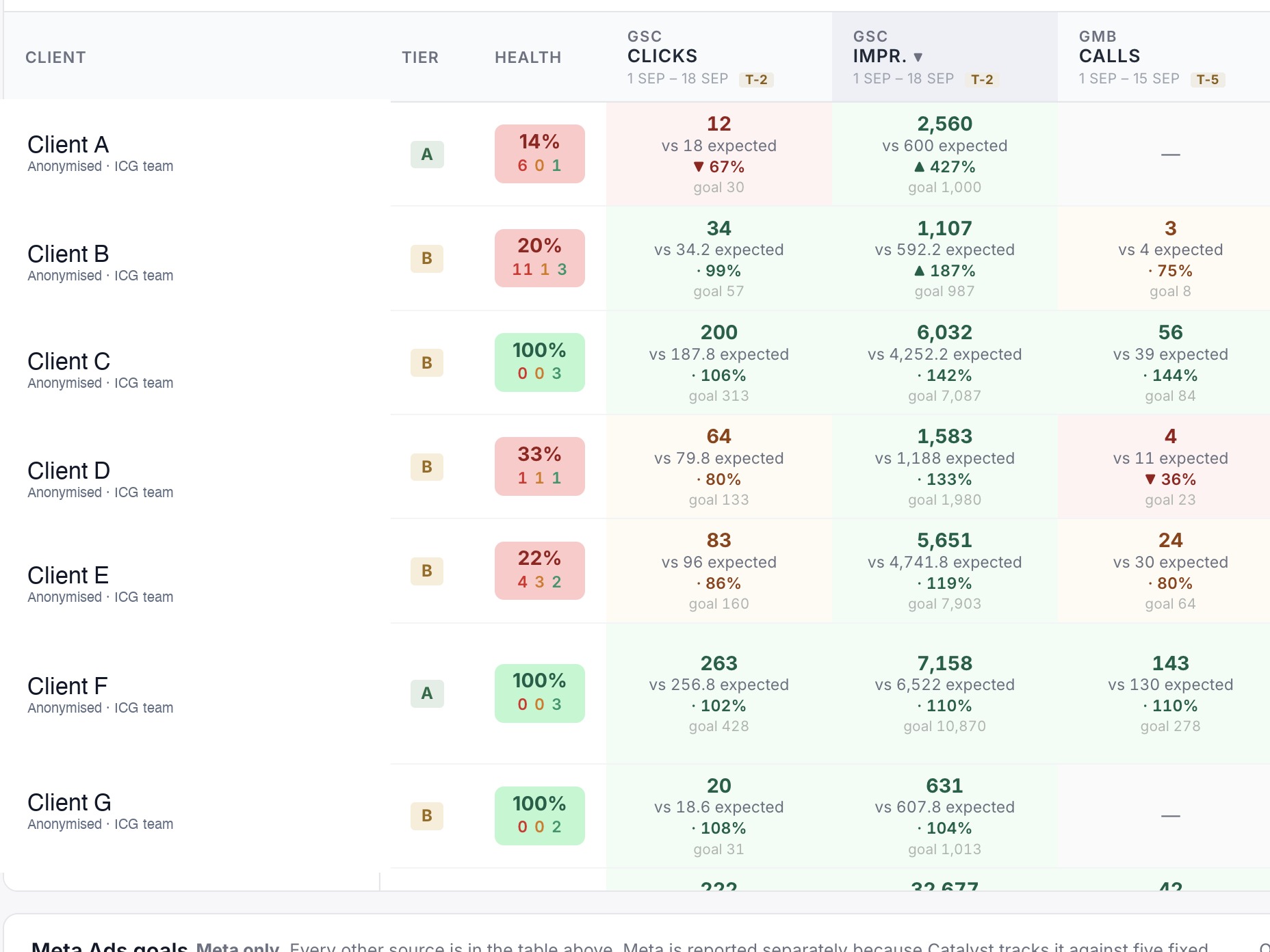
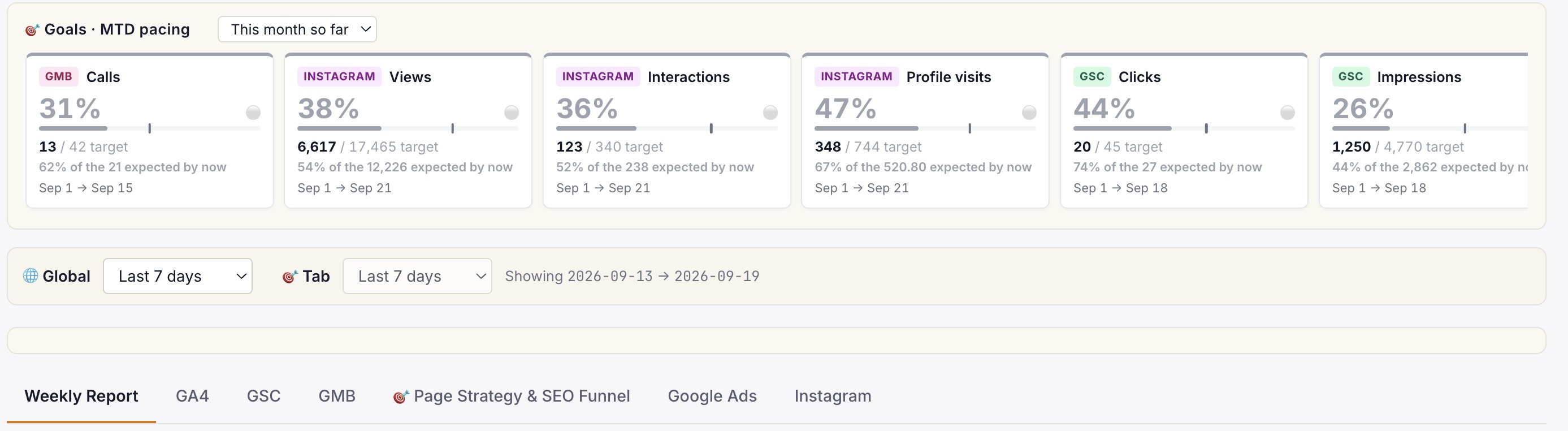
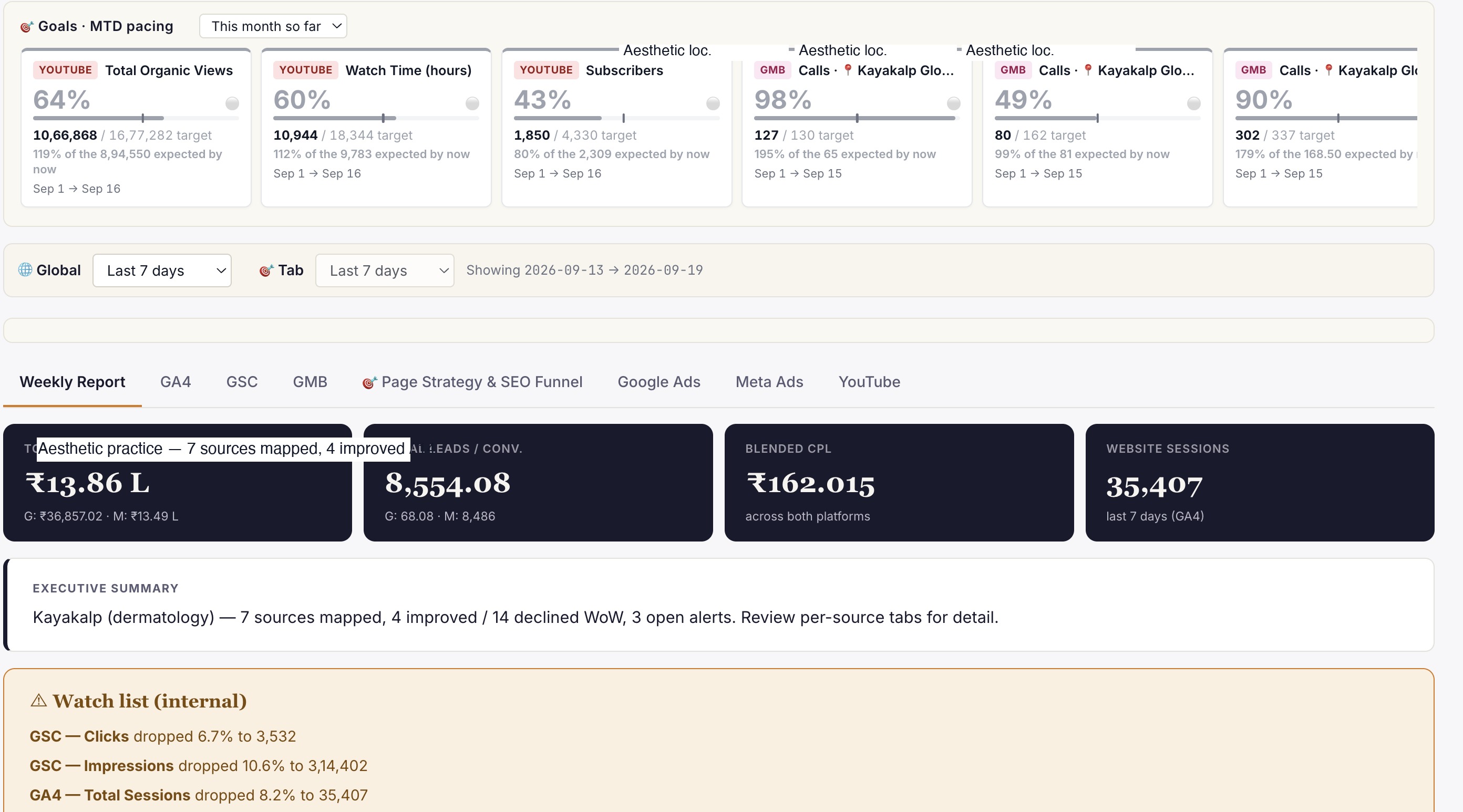
Live client dashboard. GSC, GA4, Google Ads, Meta Ads, IVR calls in one view. Login anytime, not monthly.
Phoenix
Clinic revenue intelligence over your PMS. Daily action queue: Prevent Loss, Maintain & Engage, Grow Revenue. Multi-centre rollout.
Or book a free 30-min audit to see all three in action on your account.
Healthcare brands
that already run on ICG.
A representative slice of the 150+ healthcare brands ICG has delivered for across India. Most engagements remain under NDA.


What ICG clients say · on video.
"Scale up of organic channels and business consulting. ICG has absolute domain authority in their field."
"Working with ICG transformed how we acquire IVF patients in Gurgaon. They understand the fertility journey from inquiry to consult..."
"What Ichelon accomplished — they got all my ideas and worked over 3-4 months to create an amazing, super-customised website."
Need help operationalising this?
Every ICG service is healthcare-only, NMC + DPDP-aware, and built around the patient-research patterns that drive Indian healthcare growth in 2026.
Every practice welcome — packages from ₹20,000/mo.
Goals-Driven engagements · Performance-Linked Payout Models available
More from
ICG.
Hindi and regional-language SEO means publishing proper pages in the languages your patients search in, on their own URLs and linked with hr...
A new pharma brand in India should start digital work before launch, built around who it may legally address. This six-month plan covers pro...
Check your website, Google Business Profile and social pages one by one. Keep factual information and educational content with each doctor's...
Stop guessing.
Book a Diagnostic.
30 minutes. Free. With the AI-powered healthcare-only marketing agency 150+ brands already run on. No slides, no pitch, no hard close.


