


Hindi and regional-language SEO for Indian clinics and hospitals
Hindi and regional-language SEO means publishing proper pages in the languages your patients search in, on their own URLs and linked with hreflang, so Google shows each person the right version. For many Indian clinics and hospitals outside the metros, it reaches families English pages miss. Here is how to set it up and measure it.
No pitch. Written root-cause diagnosis. AI-powered, healthcare only.
Direct answer
Hindi and regional-language SEO means publishing proper pages in the languages your patients search in, on their own URLs and linked with hreflang, so Google shows each person the right version. For many Indian clinics and hospitals outside the metros, it reaches families English...
TL;DR
Hindi and regional-language SEO means building proper pages in the languages your patients actually search in, such as Hindi, Marathi, Tamil, Telugu, Kannada, Bengali or Gujarati, and linking them correctly to your English pages so Google shows the right version to the right person. For many Indian clinics and hospitals, especially outside the metros, it is a cost-effective way to reach families who rarely search in English.
This guide is for doctors who run practices, clinic owners, hospital marketing heads and healthcare founders. It covers when regional-language pages are worth it, how to set them up technically, what to write, how it affects Google Business Profile and AI answers, and where the compliance lines sit.
How is SEO used in healthcare, and where do regional languages fit?
In healthcare, SEO is used to make a clinic or hospital's pages appear when people search for a specialty, a procedure or a doctor in their area, and to make that information clear enough for Google AI Overviews and assistants to quote. Regional languages extend the same work to people who search in Hindi or their mother tongue rather than English.
Search behaviour in India is mixed. Many people type in English but think in another language. Some type Hindi words in Roman script, such as "daant ka doctor" or "pathri ka ilaj". Others type in Devanagari, Tamil or Telugu script, and voice search adds more of this. A clinic that only publishes in English misses a large part of that demand, often the part with fewer competitors.
Three ways people search in Indian languages
| Search style | Example pattern | What it needs on your site |
|---|---|---|
| Native script | A query typed fully in Devanagari, Tamil or another script | Proper pages written in that script |
| Transliterated (Roman script) | Hindi words typed in English letters | Natural phrases in headings and FAQs on your English or Hindi pages |
| Mixed or code-switched | English medical terms with Hindi or local words around them | Pages that use the medical term people actually say, alongside the local phrase |
| Voice | A spoken question in a regional language | Clear question-and-answer sections in that language |
Is regional-language SEO worth it for your clinic or hospital?
It is worth it when a meaningful share of your patients prefer a language other than English, when your English pages already face heavy competition, or when you serve Tier-2 and Tier-3 towns and nearby rural areas. It is less useful for a metro clinic whose patients mostly search and decide in English. Check your own data before translating anything.
Signs that it will pay off:
- Front-desk staff report that many callers prefer Hindi or the local language.
- Search Console shows transliterated or native-script queries already reaching your site.
- Your catchment includes smaller towns and villages around the city.
- Your specialty serves older patients or families who research on behalf of them.
- Competitors in your city have English pages but little or nothing in the local language.
Fertility, orthopaedics, urology, gynaecology and general surgery often fit this pattern in smaller cities. Our note on IVF marketing in Tier-2 and Tier-3 cities shows how language and trust interact in those markets.
How should you set up Hindi and regional-language pages technically?
Give each language its own URLs, usually in a folder such as /hi/ or /ta/, with fully translated content, not an automatic translation widget. Link each page to its English equivalent using hreflang tags, set the html lang attribute correctly, and add language switchers people can see. Google then understands which version to show to which searcher.
- Use separate URLs per language. Subfolders are simplest to manage and keep authority on one domain.
- Avoid browser-side translation widgets. Text translated in the browser after the page loads is generally not indexed as separate pages.
- Add hreflang annotations. Each language version should reference itself and its alternates, so Google can connect them.
- Translate titles, meta descriptions, headings and image alt text. Not just the body copy.
- Use proper Unicode fonts. Test rendering on low-cost Android phones, which many of your visitors will use.
- Keep URLs readable. Roman-script slugs are easier to share and less likely to break than encoded native-script slugs.
- Add structured data in each language. Medical organisation, physician, FAQ and breadcrumb markup should match the visible language.
- List each language version in your XML sitemap.
Start small. Translate the pages that bring enquiries first: the homepage, the main specialty pages, top procedure pages, doctor profiles and the contact page. A blog archive can wait.
Common technical mistakes to avoid
- Mixed-language pages. A Hindi heading over English body text confuses both readers and search engines. Keep each page in one main language.
- Automatic redirects by location or browser language. Forcing people to a language version stops them, and Google's crawler, from reaching the others. Offer a visible switcher instead.
- Missing return links. Hreflang only works when the English page points to the Hindi page and the Hindi page points back.
- Untranslated forms and buttons. A Tamil page whose booking form and consent text stay in English loses trust at the last step.
- Thin copies. Short, partial translations of long English pages rarely rank. Translate the full substance or leave the page out for now.
What should regional-language healthcare content actually say?
It should answer the same questions your English pages answer, in the words local patients use, reviewed by a native speaker who knows the medical terms. Literal translation sounds stiff and sometimes wrong. Good regional content keeps common English medical words where people say them in English, and explains them simply in the local language.
Practical rules we follow:
- Write, don't just translate. Start from the patient's question in that language, then build the page.
- Keep familiar English terms. Many people say "IVF", "MRI" or "knee replacement" in English even when speaking Hindi or Tamil. Use them, with a simple local explanation.
- Get clinical review. The treating doctor, or a bilingual colleague, should check meaning, not just grammar.
- Answer family questions. Cost drivers, insurance and cashless options, recovery time, how to reach the clinic and who to call.
- Add an FAQ block in the language. Short, self-contained answers help both voice search and AI answers.
- Match your phone and WhatsApp handling. If the page is in Marathi, the person who answers the call should speak Marathi.
Machine translation can help produce a first draft, but treat it as a draft. Under the NMC's October 2026 guidelines, permitted AI content must be disclosed and AI-generated promotional campaigns are restricted, so human review and authorship matter here.
What is local SEO for doctors, and how do languages change it?
Local SEO for doctors is the work that makes a clinic or doctor appear in Google Maps and local search results for nearby patients: a complete Google Business Profile, consistent name, address and phone details, location pages on the website, reviews and local links. Languages matter because many map searches use local words for the specialty or the area.
Google Business Profile does not let you run separate profiles per language for the same location. You can still make the profile work for regional searchers:
- Keep the business name exactly as it appears on signage; do not stuff local-language keywords into it.
- Write the description so the services are clear, and mention that consultations are available in the local language if they are.
- Answer questions in the language they were asked.
- Reply to reviews in the reviewer's language, without sharing any medical details.
- Link the profile to the relevant language page where your main audience prefers it, or to the English page with a clear language switcher.
Our guide to healthcare local SEO and Google Business Profile optimisation covers the rest of the profile work in detail.
How do regional-language pages help with AI Overviews and ChatGPT answers?
AI Overviews and assistants such as ChatGPT, Gemini and Perplexity increasingly answer questions asked in Hindi and other Indian languages. When your site has clear, well-structured content in that language, with direct answers and proper markup, it becomes a source those systems can draw on. With few competing healthcare pages in some languages, the opening is real.
The same principles apply as in English. Put a direct answer in the first sentence under each heading. Use question-style headings that mirror how people ask. Keep facts consistent across languages, so an assistant never finds two different sets of timings or services. Make doctor qualifications and the clinic's address easy to find. Our answer engine optimisation team works on this layer for clinics and hospitals.
How do you increase patients in a clinic in India using regional-language SEO?
Regional-language SEO increases patients by reaching people your English pages never meet, and by making them comfortable enough to call. It works best combined with fast, local-language phone and WhatsApp handling, a complete Google Business Profile and a clear booking path. Measure it by enquiries from language pages, not just traffic.
| Step | What to do | How to measure it |
|---|---|---|
| Find the demand | Review Search Console queries, front-desk feedback and keyword research in each language | List of target phrases per language |
| Build priority pages | Homepage, top specialties, doctor profiles, contact page in the chosen language | Pages indexed and ranking |
| Connect the profile | Align Google Business Profile description, Q&A and review replies | Calls and direction requests |
| Match the front desk | Staff who speak the language answer calls and messages | Enquiry-to-appointment conversion by language |
| Expand | Add procedure pages and FAQs where enquiries come in | Qualified enquiries from language pages |
Language is one lever among several. For the others, see our answer on how to increase patients in a private practice in India.
What compliance rules apply to regional-language healthcare content?
The same rules apply in every language. As of October 2026, the National Medical Commission's guidelines on ethical advertising bar testimonials, before-and-after images, inducements and "best" or "No.1" claims in promotion, and limit individual doctors to genuinely educational content. Translated pages are often checked less carefully, so review them with equal care and confirm specifics with your counsel.
- Remove any claim of a cure or guaranteed result; the Drugs and Magic Remedies (Objectionable Advertisements) Act, 1954 restricts these too.
- Keep doctor qualifications and registration numbers identical across languages.
- Collect consent for enquiry forms in the page's language, in line with the DPDP Act, 2023.
- Disclose permitted AI-assisted content where the guidelines require it.
ICG's NMC compliance audit can review your English and regional pages together. ICG has worked only in healthcare since 2018, with 150+ healthcare and life-sciences brands and 100+ specialists. As a medical SEO agency, we build regional-language pages with clinical review built in. Retainers start from ₹20,000 a month, custom-scoped. To see whether language pages make sense for your city and specialty, book a call.
Book a free SEO diagnostic.
Hanuman Sihag's team runs a live crawl, checks technical health, cannibalisation, schema coverage and content gaps. 60 minutes, prioritised fix list.
Questions readers ask
about this topic.
The three platforms
behind every ICG engagement.
Beacon
CAPI middleware that fixes Event Match Quality, translates CRM statuses to Meta-standard events, dedups across channels.
Agency OS
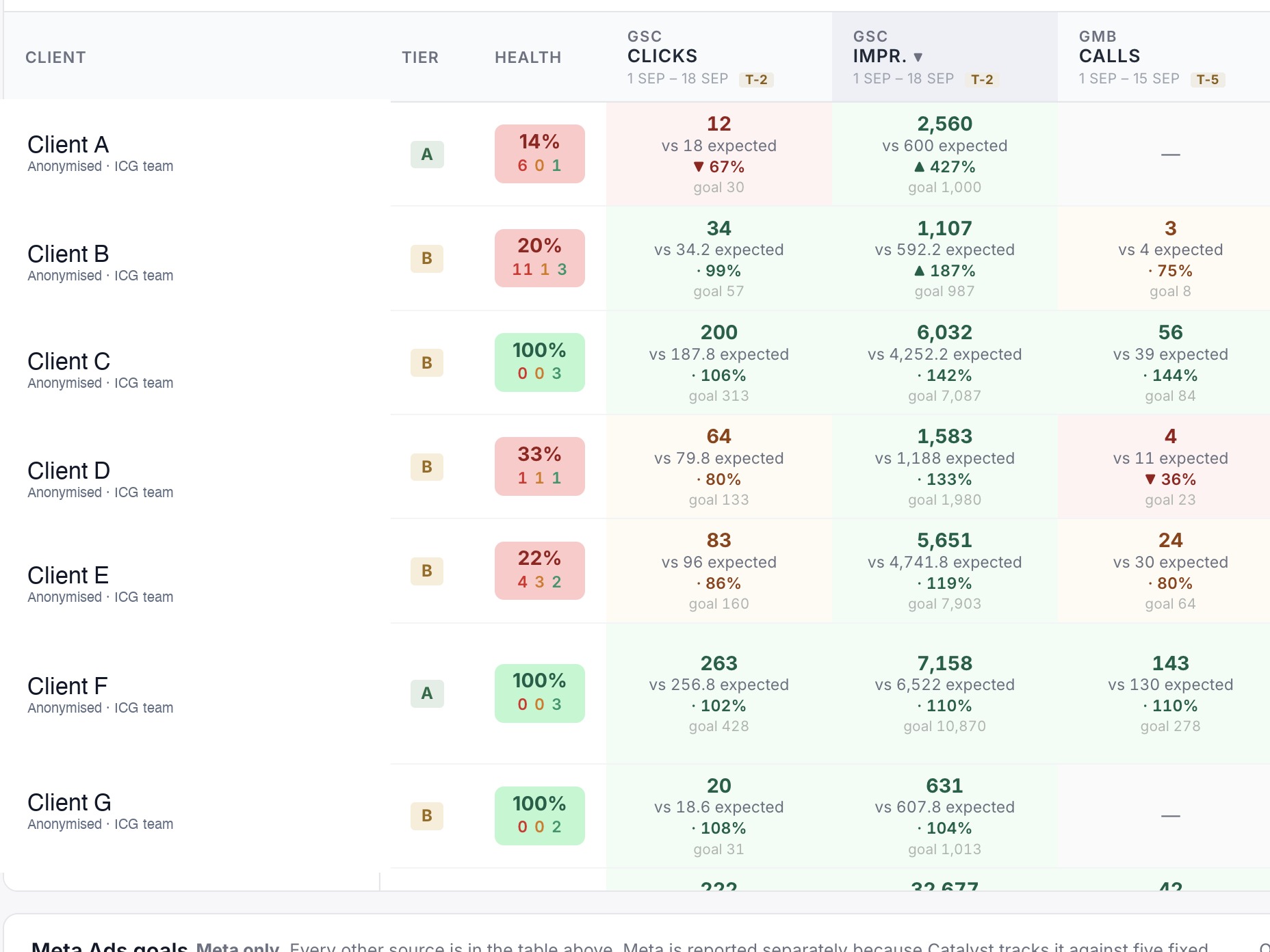
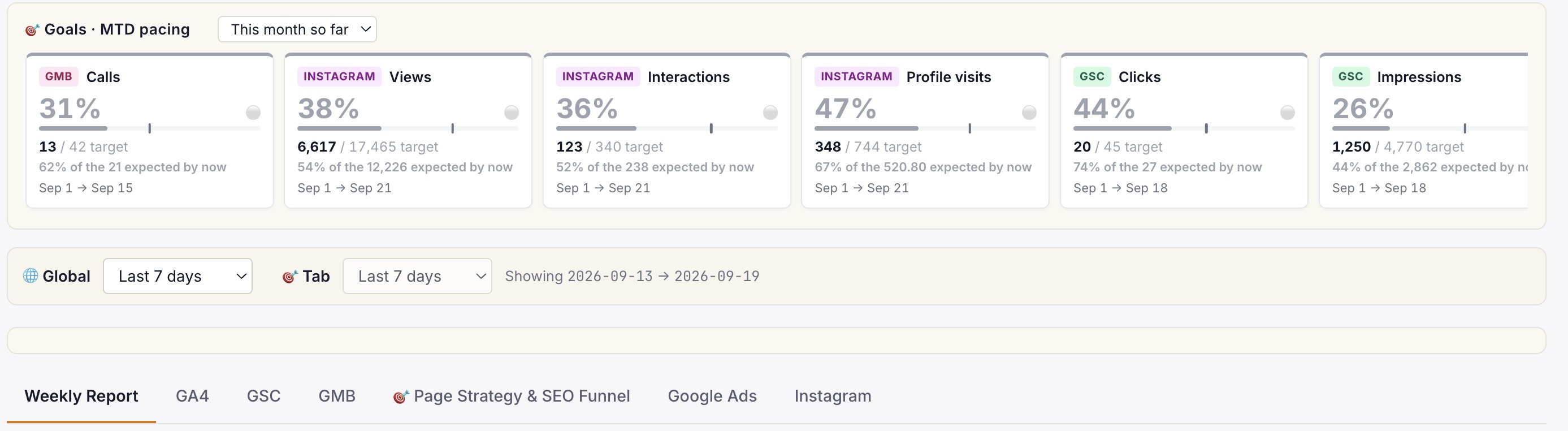
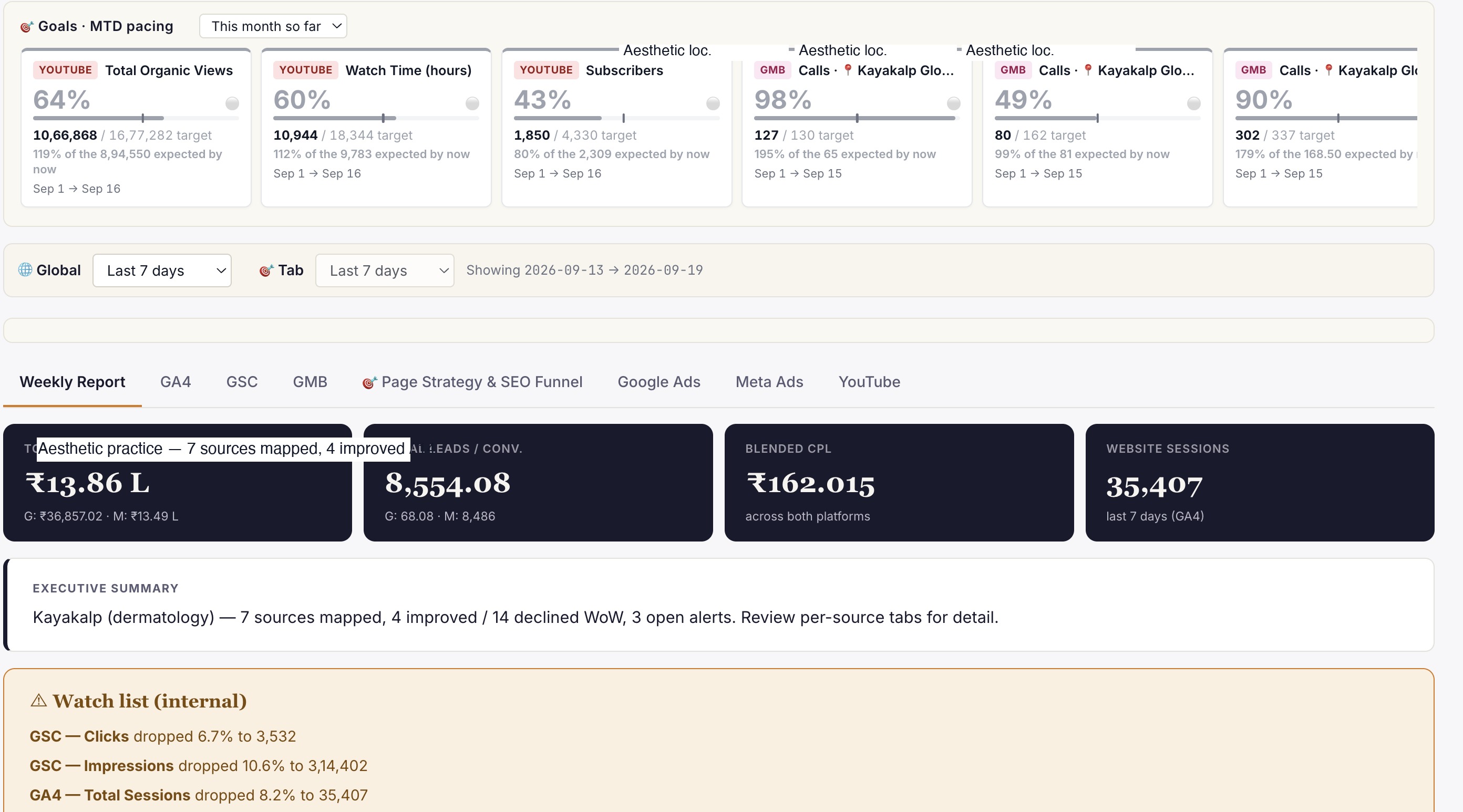
Live client dashboard. GSC, GA4, Google Ads, Meta Ads, IVR calls in one view. Login anytime, not monthly.
Phoenix
Clinic revenue intelligence over your PMS. Daily action queue: Prevent Loss, Maintain & Engage, Grow Revenue. Multi-centre rollout.
Or book a free 30-min audit to see all three in action on your account.
Healthcare brands
that already run on ICG.
A representative slice of the 150+ healthcare brands ICG has delivered for across India. Most engagements remain under NDA.


What ICG clients say · on video.
"Scale up of organic channels and business consulting. ICG has absolute domain authority in their field."
"Working with ICG transformed how we acquire IVF patients in Gurgaon. They understand the fertility journey from inquiry to consult..."
"What Ichelon accomplished — they got all my ideas and worked over 3-4 months to create an amazing, super-customised website."
The intelligence stack behind this playbook.
Every ICG engagement runs on the Search Intelligence Trifecta — Angryturtle for GMB, SIE for search and AI Overview, YODA for YouTube. Live product screens below.
Need help operationalising this?
Every ICG service is healthcare-only, NMC + DPDP-aware, and built around the patient-research patterns that drive Indian healthcare growth in 2026.
Every practice welcome — packages from ₹20,000/mo.
Goals-Driven engagements · Performance-Linked Payout Models available
More from
ICG.
A new pharma brand in India should start digital work before launch, built around who it may legally address. This six-month plan covers pro...
Hospitals and clinics in India can still advertise after the NMC's 6 October 2026 guidelines, but only with factual, verifiable information....
Check your website, Google Business Profile and social pages one by one. Keep factual information and educational content with each doctor's...
Stop guessing.
Book a Diagnostic.
30 minutes. Free. With the AI-powered healthcare-only marketing agency 150+ brands already run on. No slides, no pitch, no hard close.


