


Launching a new pharma brand in India: a six-month digital plan
A new pharma brand in India should start digital work before launch, built around who it may legally address. This six-month plan covers product classification, UCPMP 2024 and advertising rules, a month-by-month launch sequence, the channels that matter for doctors and consumers, and the KPIs to report.
No pitch. Written root-cause diagnosis. AI-powered, healthcare only.
Direct answer
A new pharma brand in India should start digital work before launch, built around who it may legally address. This six-month plan covers product classification, UCPMP 2024 and advertising rules, a month-by-month launch sequence, the channels that matter for doctors and consumers,...
TL;DR
A new pharma brand in India needs a six-month digital plan that starts before launch and is built around who is allowed to hear what. Prescription brands speak mainly to doctors and pharmacists; consumer, wellness and nutraceutical brands can speak to the public within stricter claim rules. The plan sequences compliance review, owned assets, doctor-facing digital, field-force enablement, search and content, then paid media and optimisation, so every channel is ready when the sales team starts calling.
This guide is for brand managers, marketing heads and founders at Indian pharma, nutraceutical and consumer-health companies. It sets out the rules that shape a launch, a month-by-month plan, channel choices and the metrics to report to leadership.
How to start pharma marketing for a new brand?
Start pharma marketing by classifying the product correctly, because the classification decides your audience and your allowed claims. Then write a single approved claims sheet, map the doctor and pharmacy segments that matter, build the owned assets, and only then switch on outreach and media. Starting with ads before claims and audiences are settled causes rework and compliance risk.
| Product type | Primary audience | Can you advertise to the public? | Main rules to check |
|---|---|---|---|
| Prescription medicine | Registered doctors, pharmacists | Generally no; promotion is directed at healthcare professionals | Drugs and Cosmetics Act, 1940 and Rules; UCPMP 2024 |
| Non-prescription medicine | Consumers, pharmacists, doctors | Yes, within claim limits | Drugs and Magic Remedies Act, 1954; ASCI code |
| Nutraceutical or health supplement | Consumers, nutrition-focused doctors | Yes, within food-law claim limits | Food Safety and Standards (Health Supplements, Nutraceuticals and others) Regulations, 2022; ASCI code |
| Medical device or diagnostic kit | Depends on class: clinicians, hospitals, sometimes consumers | Depends on class and claims | Medical Devices Rules, 2017; ASCI code |
India has long lacked a formally defined "OTC" category in its drug law, although proposals to create one have been discussed, so the term is used loosely in the industry. Check the position as of October 2026 and confirm your product's status with regulatory counsel before you write a single ad.
What are ads in pharma, and what can a new brand run?
Ads in pharma are paid messages that promote a medicine, supplement, device or the company behind them, across print, TV, search, social, programmatic and medical publications. What a new brand can run depends on the product type: prescription brands mostly use doctor-facing channels and disease-awareness content, while consumer brands can run product ads within claim limits.
The rules that shape every pharma ad
- UCPMP 2024. The Department of Pharmaceuticals notified the Uniform Code for Pharmaceutical Marketing Practices in March 2024. It covers promotional claims, samples, gifts, travel and hospitality for healthcare professionals, and continuing medical education. Claims must be balanced, current and supportable.
- Drugs and Magic Remedies (Objectionable Advertisements) Act, 1954. It prohibits advertisements of drugs for the diagnosis, cure, mitigation, treatment or prevention of the diseases and conditions listed in its Schedule. Our short explainer on banned claims under the Act lists the practical red lines.
- Drugs and Cosmetics Act, 1940 and Rules. Administered through CDSCO and state drug controllers, they govern labelling and set limits on promoting prescription medicines to the public.
- Platform policies. Google and Meta have their own healthcare and medicines policies, which restrict prescription-drug promotion and may need certification. Plan for review delays.
- Patient data. Any patient-support programme collecting personal data must follow the Digital Personal Data Protection Act, 2023.
This is a high-level summary as of October 2026. Run every claim and campaign through medical, legal and regulatory review, and confirm with counsel.
What does the six-month launch plan look like?
The six-month plan runs in three phases: two months of foundation (claims, assets, data, doctor lists), two months of launch (field enablement, doctor-facing digital, search and content), and two months of scale and optimisation (paid media expansion, retargeting, refining by territory). Month zero, before launch, is where most of the work happens.
| Month | Focus | Key outputs | Owner |
|---|---|---|---|
| Month 0 (pre-launch) | Claims and compliance | Approved claims sheet, references, MLR process, brand guidelines | Medical, regulatory, brand team |
| Month 1 | Owned assets | Brand or disease-awareness website, HCP-gated section, product monograph PDFs, video scripts, consent-ready forms | Brand team with agency |
| Month 2 | Field and doctor enablement | Digital detailing aids, WhatsApp-ready content for representatives (approved), webinar plan, doctor segment lists | Sales excellence, brand team |
| Month 3 | Launch | Launch webinar or CME (UCPMP-aligned), doctor email and WhatsApp to opted-in lists, LinkedIn for HCPs, search campaigns where permitted | Brand team, medical affairs |
| Month 4 | Content and search | Disease-awareness articles, doctor-voice videos, pharmacist education, SEO on condition and molecule questions | Content team, agency |
| Month 5 | Scale | Paid social for consumer brands, programmatic to HCP audiences, territory-level tests | Media team |
| Month 6 | Optimise and review | Channel-level report against goals, cut weak channels, plan the next two quarters | Brand team, leadership |
Why month zero matters most
Most launch delays we see come from claims that were never fully approved, content written before the claims sheet existed, and doctor lists without consent records. Fixing these in month zero saves weeks later. It also makes content production faster, because writers and designers work from one approved source instead of re-checking every line.
What goes into the claims sheet
The claims sheet is a single document listing every statement the brand may make, the exact approved wording, the supporting reference, the audience it is approved for (doctors, pharmacists or public) and the date it was approved. It should also list statements the brand must not make. Writers, designers, the field force and the agency all work from this one sheet. When a claim changes, it changes here first, and every asset using it gets flagged for update or withdrawal.
Pharma company digital marketing in India: which channels work?
For Indian pharma launches, the channels that consistently matter are doctor-facing digital (webinars, medical content, WhatsApp and email to opted-in HCPs), field-force enablement, search and content around conditions and molecules, LinkedIn for clinicians, and, for consumer brands, Instagram, YouTube and e-pharmacy listings. Television and print still play a role for large consumer brands.
| Channel | Best for | Watch-outs |
|---|---|---|
| HCP webinars and CME | Prescription brands building scientific credibility | UCPMP rules on hospitality, speaker fees and sponsorship |
| WhatsApp and email to HCPs | Follow-up after representative visits | Opt-in records; only approved content |
| Digital detailing tools | Consistent messaging across a field force | Version control; withdrawn content must be removed |
| SEO and content | Disease awareness, molecule education, pharmacist queries | No product claims on public pages for prescription brands |
| YouTube | Doctor-voice explainers, consumer brand storytelling | Comments moderation; adverse-event monitoring |
| Meta (Instagram, Facebook) | Consumer and nutraceutical brands | Claim limits and platform health policies |
| Reaching doctors, hospital pharmacists and procurement | Keep it scientific and non-promotional for prescription brands |
Our guide to doctor-facing digital marketing for pharma goes deeper into HCP channels. For the wider landscape, see digital marketing for the pharmaceutical industry in India.
How should content be planned for a launch?
Plan launch content in three streams: scientific content for doctors, practical content for pharmacists and representatives, and awareness content for patients or consumers where the product type allows. Each stream should draw from the same approved claims sheet and pass the same review process before anything is published or shared.
A content stack for the first six months
- For doctors: mechanism and evidence summaries, dosing and interaction quick-references, short expert videos, case-discussion webinars.
- For pharmacists: product identification, storage, counselling points and substitution guidance where relevant.
- For representatives: approved WhatsApp messages and short videos so field teams do not create their own versions.
- For the public (where allowed): disease-awareness pages, myth-correction content, lifestyle guidance and "speak to your doctor" calls to action.
Public content should be written to answer the questions people actually ask on Google and AI assistants such as ChatGPT and Gemini, and in Hindi or regional languages if your volume sits in Tier-2 and Tier-3 markets. Our pharma content marketing team builds this kind of review-ready content.
Keep a simple content register: each asset, its claims, its audience, its approval date and its review date. When a claim is updated or a reference changes, the register shows exactly which assets need to be revised or withdrawn.
What should a pharma launch measure?
Measure reach and engagement among the right doctors, not just impressions. Track HCP webinar attendance and repeat attendance, content opens by specialty and territory, representative usage of digital aids, prescription or secondary-sales movement by territory where data is available, and, for consumer brands, search demand and conversion on e-pharmacy listings.
| KPI | Definition | What it tells you |
|---|---|---|
| Target HCP reach | Unique doctors in your priority segments who engaged with any asset | Whether digital is reaching the right prescribers |
| Content depth | Repeat views, webinar dwell time, downloads by specialty | Whether the science is landing |
| Field adoption | Share of representatives using approved digital aids each week | Whether the field force trusts the content |
| Territory movement | Secondary sales or prescription audit trend by territory | Whether digital activity correlates with business |
| Branded and condition search | Search volume trend for brand and condition terms | Whether awareness is building |
Set these goals at the start of month one, agree the data sources with sales, and review them monthly. A launch report that only shows likes will not survive a leadership review.
What mistakes derail a pharma digital launch?
The mistakes that most often derail a launch are avoidable: content produced before claims are approved, field teams sharing their own unapproved WhatsApp forwards, doctor databases without consent records, consumer-style ads for a prescription product, and reports that measure impressions instead of prescriber engagement. Each one costs time, and some create regulatory exposure.
- Treating digital as an afterthought. If the website and detailing aids arrive after representatives start calling, the first impression is a printed leave-behind and nothing to follow up with.
- Buying doctor lists. Purchased contact data is a consent problem under the DPDP Act, and doctors ignore messages from senders they never agreed to hear from.
- One message for every specialty. A cardiologist and a general physician need different evidence and different formats.
- No adverse-event process for social channels. Comments and messages can contain reportable events. Agree who monitors them and how they are escalated before you open comments.
- No withdrawal plan. Old claims keep circulating unless someone owns the job of removing them.
Should you run the launch in-house or with an agency?
Most new brands run strategy, claims and medical review in-house and bring in a specialist agency for content production, digital detailing, websites, search and media. The split works when the agency understands UCPMP and Indian advertising law, accepts your review process and reports against business goals, not vanity metrics.
When you compare partners, ask how they handle medical-legal review, how they version and withdraw content, and how they report by territory. A pharma marketing agency that works only in healthcare will usually need less hand-holding on compliance. ICG has worked only in healthcare since 2018, with 150+ healthcare and life-sciences brands across its practices; see our pharma industry page for scope. Retainers start at ₹20,000 per month and are scoped to the work. Book a call to discuss a launch plan.
Book a free 30-minute Brand & Growth Diagnostic.
It's a working session, not a sales pitch — you leave with a written root-cause analysis you can act on, whether or not you engage ICG.
Questions readers ask
about this topic.
The three platforms
behind every ICG engagement.
Beacon
CAPI middleware that fixes Event Match Quality, translates CRM statuses to Meta-standard events, dedups across channels.
Agency OS
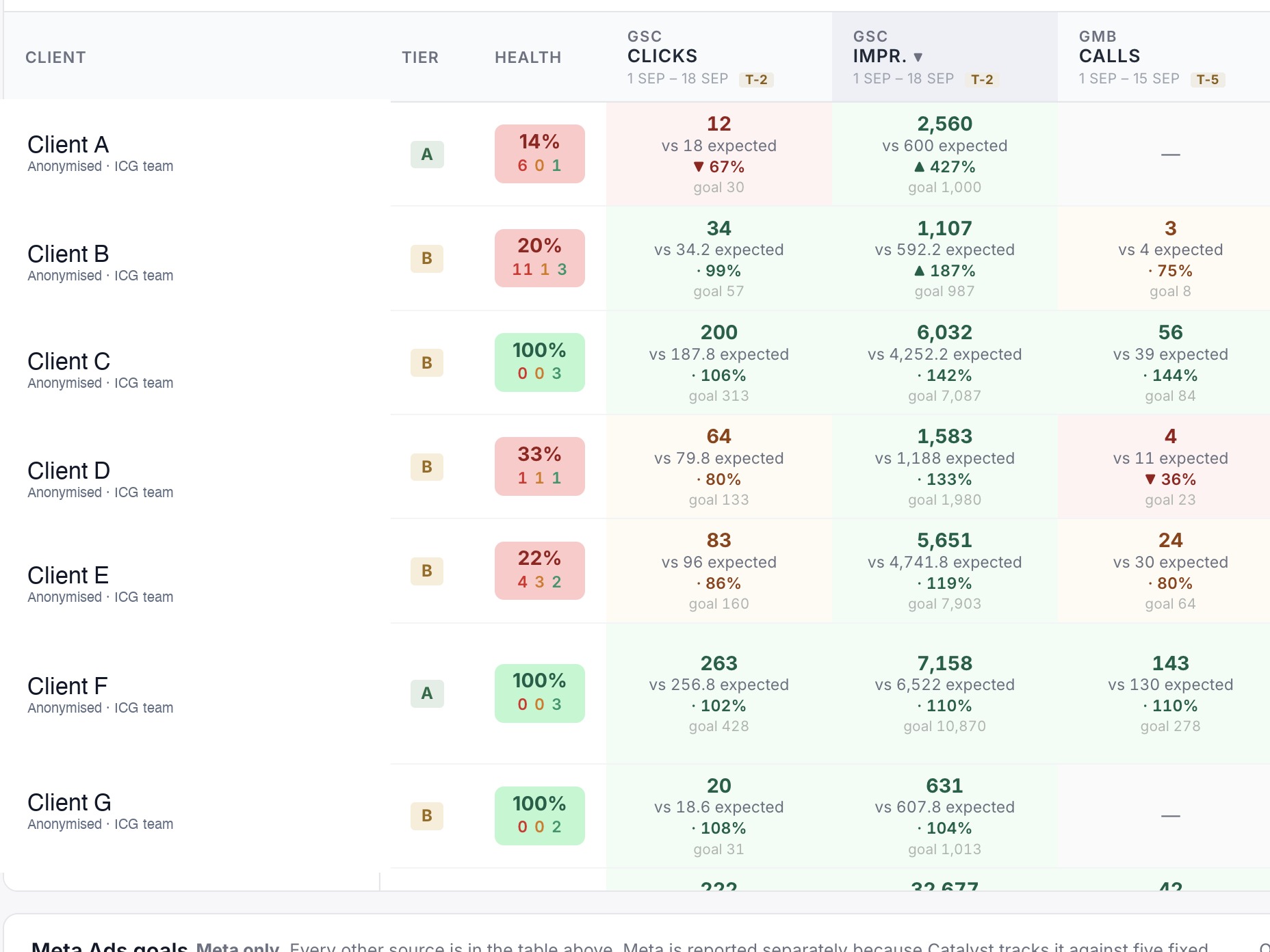
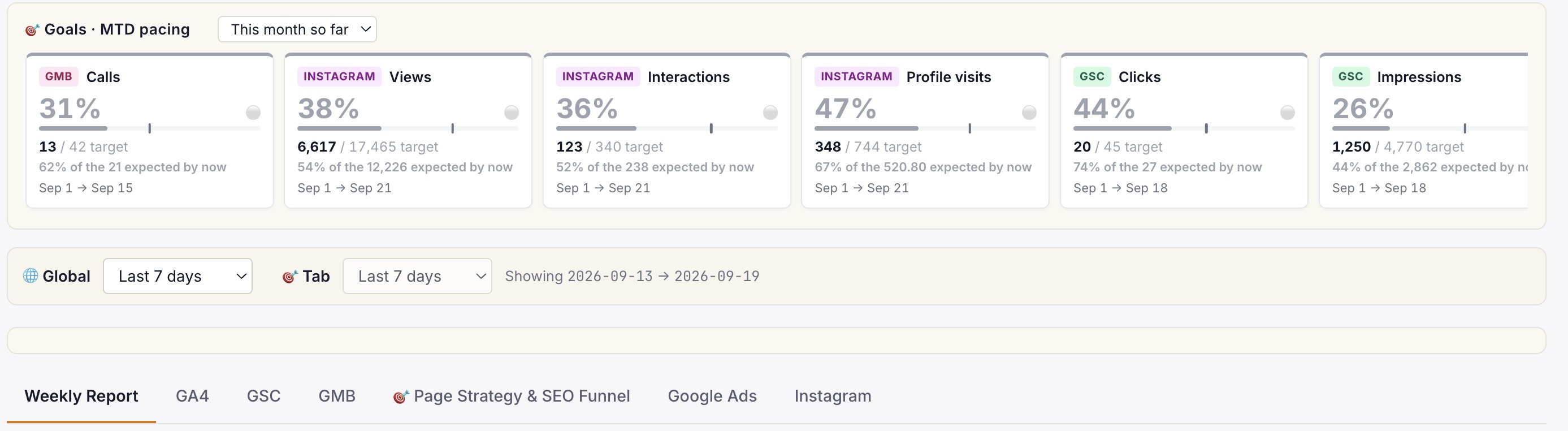
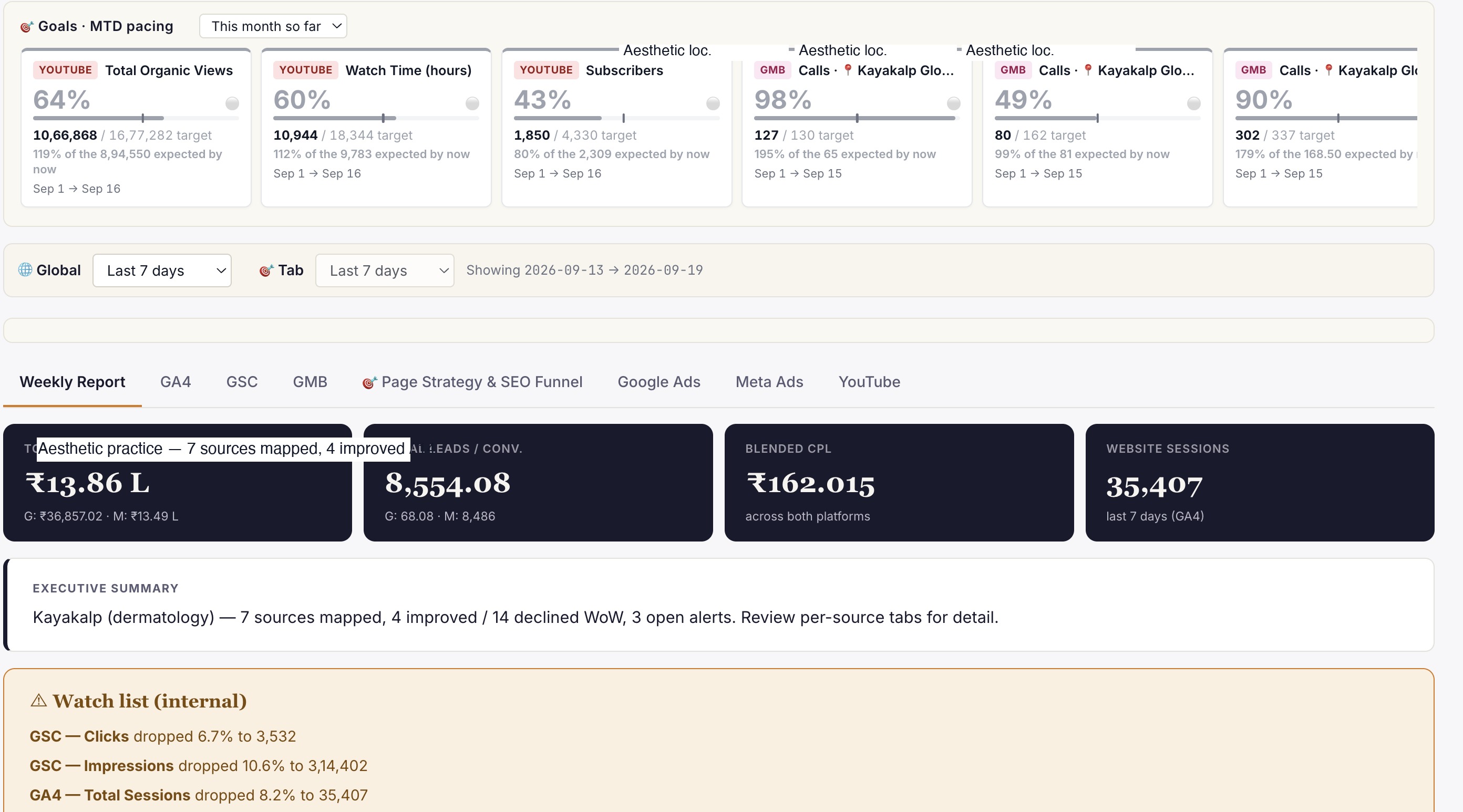
Live client dashboard. GSC, GA4, Google Ads, Meta Ads, IVR calls in one view. Login anytime, not monthly.
Phoenix
Clinic revenue intelligence over your PMS. Daily action queue: Prevent Loss, Maintain & Engage, Grow Revenue. Multi-centre rollout.
Or book a free 30-min audit to see all three in action on your account.
Healthcare brands
that already run on ICG.
A representative slice of the 150+ healthcare brands ICG has delivered for across India. Most engagements remain under NDA.


What ICG clients say · on video.
"ICG's strategic clarity helped us position Lil Chunks for both consumer trust and healthcare credibility."
"Scale up of organic channels and business consulting. ICG has absolute domain authority in their field."
"Working with ICG transformed how we acquire IVF patients in Gurgaon. They understand the fertility journey from inquiry to consult..."
Need help operationalising this?
Every ICG service is healthcare-only, NMC + DPDP-aware, and built around the patient-research patterns that drive Indian healthcare growth in 2026.
Every practice welcome — packages from ₹20,000/mo.
Goals-Driven engagements · Performance-Linked Payout Models available
More from
ICG.
Hindi and regional-language SEO means publishing proper pages in the languages your patients search in, on their own URLs and linked with hr...
Hospitals and clinics in India can still advertise after the NMC's 6 October 2026 guidelines, but only with factual, verifiable information....
Check your website, Google Business Profile and social pages one by one. Keep factual information and educational content with each doctor's...
Stop guessing.
Book a Diagnostic.
30 minutes. Free. With the AI-powered healthcare-only marketing agency 150+ brands already run on. No slides, no pitch, no hard close.


