


Healthcare PPC Budget Allocation Framework India 2026
A working framework for healthcare PPC budget allocation in India 2026 — channel split, CPQL benchmarks by specialty, DPDP and NMC compliance costs, metro vs tier-2 shifts, and the 70-30 agency fee model most hospitals should be running.
No pitch. Written root-cause diagnosis. AI-powered, healthcare only.
Direct answer
A working framework for healthcare PPC budget allocation in India 2026 — channel split, CPQL benchmarks by specialty, DPDP and NMC compliance costs, metro vs tier-2 shifts, and the 70-30 agency fee model most hospitals should be running.
TL;DR

TL;DR
- Most Indian hospitals overspend on Google Search and underspend on Meta retargeting. A healthy 2026 split for a multi-specialty clinic looks like 45 percent Google, 30 percent Meta, 15 percent YouTube, and 10 percent for WhatsApp plus Google Business Profile.
- Realistic monthly PPC budgets in India: single-clinic setups start at Rs 60,000 to Rs 1,20,000. Multi-city chains sit between Rs 4 and 15 lakh. Pharma brand campaigns run Rs 8 to 40 lakh a month.
- DPDP Act 2023 and NMC advertising rules quietly changed the maths. Consent-first tracking, hashed audiences, no before-and-after ads. Budget your legal review time too.
- Agency fees should follow a 70-30 fixed-variable model. If a partner quotes a flat retainer with no outcome tie, they are not underwriting your growth.
Table of contents
- Why healthcare PPC budgets look different in India
- What is the right healthcare PPC budget for an Indian hospital in 2026?
- How should you split PPC spend across Google, Meta, YouTube, and WhatsApp?
- What CPQL benchmarks should Indian healthcare brands plan for by specialty?
- How do DPDP Act and NMC advertising rules affect PPC budgeting?
- How should PPC budget shift between metro and tier-2 city clinics?
- What is the right agency fee model for healthcare PPC in India?
- How should a hospital sequence PPC investment across the first 12 months?
- How ICG approaches healthcare PPC budgeting
- FAQs
Why healthcare PPC budgets look different in India
Indian healthcare PPC is not American healthcare PPC with the currency changed. The channel mix is different. The compliance load is different. The buyer journey is different.
A Bengaluru IVF clinic pulls half its enquiries from WhatsApp. A Faridabad multi-specialty runs on Google Business Profile calls. A Mumbai aesthetic chain gets its best leads from Instagram Reels. Take a Western budget template and drop it on any of them, and you will burn cash on the wrong quadrant.
Then there is the regulator. The National Medical Commission's Professional Conduct Regulations restrict what a registered practitioner can and cannot advertise. The Digital Personal Data Protection Act, 2023, has changed how you can retarget past enquirers. The Ayushman Bharat Digital Mission is quietly reshaping how patients search for verified providers. Every one of these has a line-item impact on your PPC budget, even if you have never spoken to your data protection officer.
What is the right healthcare PPC budget for an Indian hospital in 2026?
The right healthcare PPC budget for an Indian hospital in 2026 is roughly 6 to 12 percent of the incremental revenue you want to generate from paid media over the next 12 months. Single-location clinic: Rs 60,000 to Rs 1,20,000 a month. 4-5 location chain: Rs 4 to 15 lakh. Pharma brand campaigns: Rs 8 to 40 lakh.
Work it backwards. A Gurgaon dental practice wants Rs 1.5 crore in incremental revenue from paid channels in FY26-27. Their patient average bill value is Rs 22,000. That means roughly 680 new patients from PPC. At an all-in cost per acquired patient of Rs 5,500 (media plus creative plus agency plus tools), you get Rs 37 lakh over the year, or around Rs 3 lakh a month once you smooth for seasonality.
Most clinics we onboard through the Ichelon Consulting Group intake process are already spending in this range. They just have no idea what percentage of that spend is being lost to broad-match Google keywords, unrestricted geo-targeting, or Meta placements that will never convert for a Kanpur diagnostic centre.
How should you split PPC spend across Google, Meta, YouTube, and WhatsApp?
For a multi-specialty Indian hospital in 2026, a working channel split is 45 percent Google (Search plus Performance Max plus Local Services), 30 percent Meta (Facebook, Instagram, WhatsApp click-to-chat), 15 percent YouTube, and 10 percent Google Business Profile boosting plus WhatsApp broadcast tooling. Specialty clinics skew heavier on Meta.
The split matters more than the total number:
| Channel | Multi-specialty % | IVF clinic % | Dental chain % | Aesthetic clinic % |
|---|---|---|---|---|
| Google Search | 35 | 40 | 30 | 15 |
| Google Performance Max | 10 | 10 | 10 | 10 |
| Meta (FB, IG, WA) | 30 | 20 | 35 | 50 |
| YouTube | 15 | 25 | 15 | 15 |
| GBP and local | 10 | 5 | 10 | 10 |
Aesthetic clinics live on Instagram. IVF is a research-heavy decision, which means YouTube long-form and comparison searches on Google both matter. Dental chains rely on Google Business Profile for last-mile intent and Meta for family-decision reach. If your current split does not look roughly like your specialty column, that is the first thing to fix, often before adding a single rupee to the total.
ICG's Meta Catalyst IQ engine builds the Meta side of this split by pulling live competitor spend signals through Prism Spy and matching bid strategy to what is actually working in your city. For YouTube, YODA runs the AI-native production and channel ops. For Google Business Profile, Angryturtle handles the review generation, GBP posts, and Q&A optimisation that turn map-pack impressions into calls.
What CPQL benchmarks should Indian healthcare brands plan for by specialty?


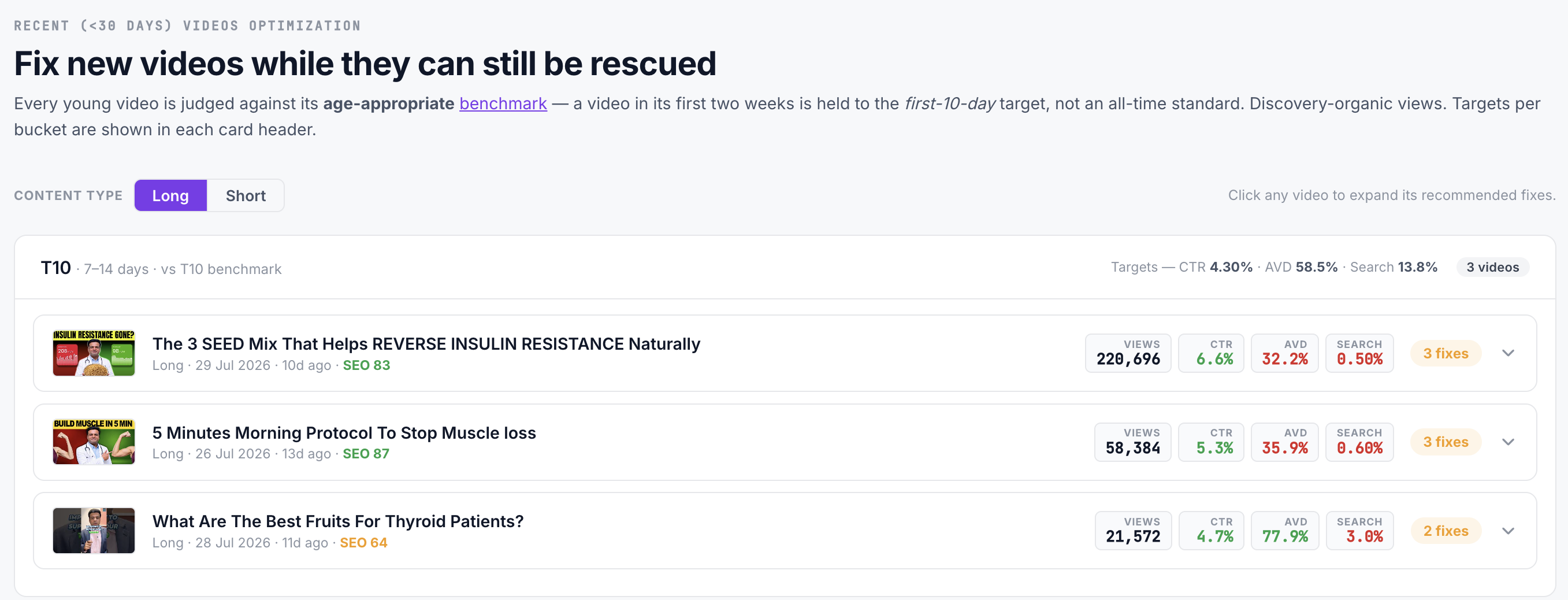
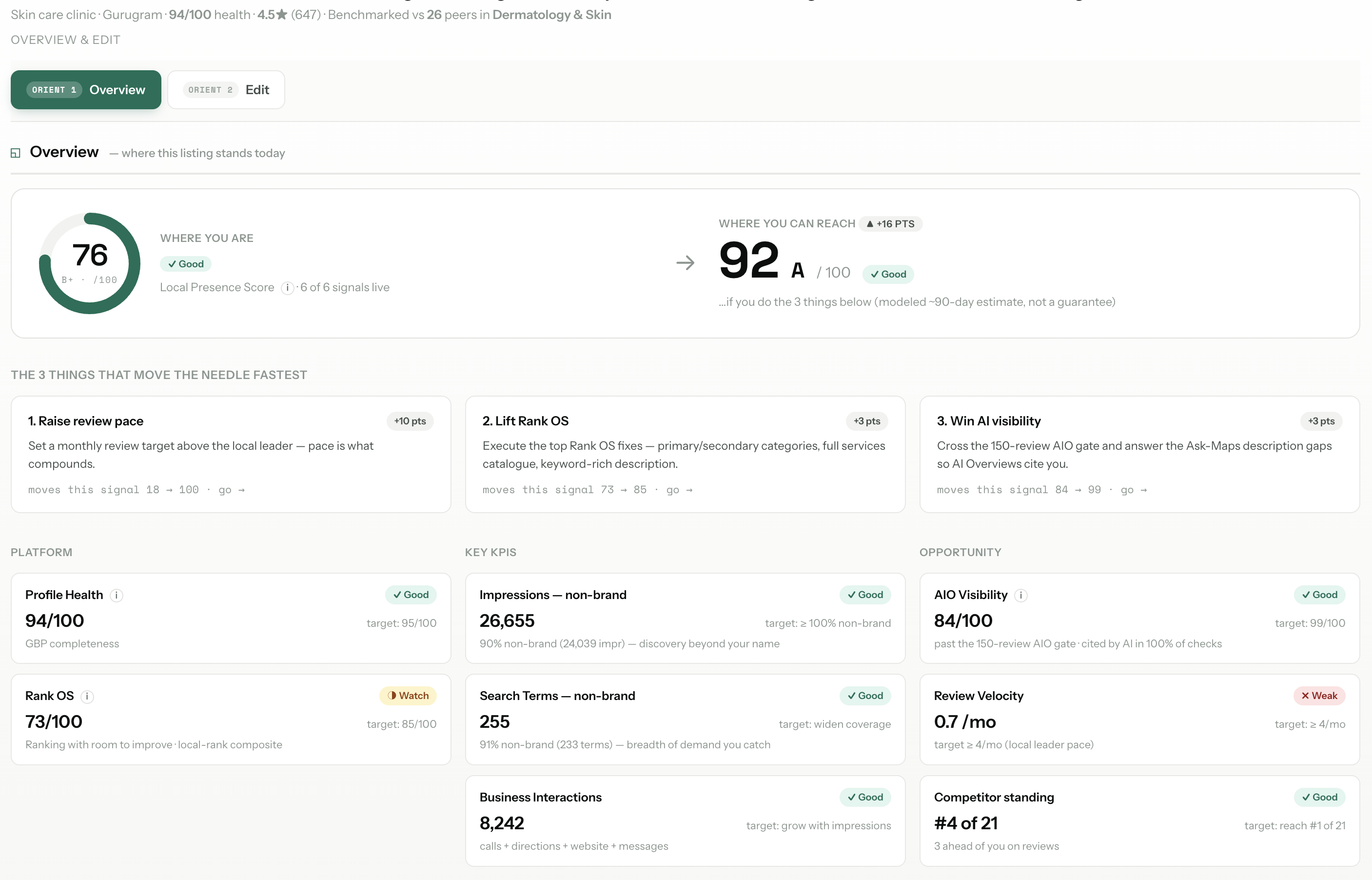
Cost per qualified lead (CPQL) in Indian healthcare varies more by specialty than by city. 2026 planning ranges: dental Rs 350 to Rs 800, general physician OPD Rs 200 to Rs 500, dermatology and aesthetics Rs 600 to Rs 1,800, IVF Rs 1,200 to Rs 3,500, oncology second opinion Rs 2,000 to Rs 6,000, cardiac diagnostics Rs 900 to Rs 2,400.
Qualified here means a form submission or WhatsApp enquiry where the prospect has confirmed city, procedure interest, and a rough intent window. Raw form fills are cheaper. Booked consultations are more expensive.
Three benchmarks worth knowing:
- A Mumbai IVF centre we track internally holds CPQL at Rs 1,850 blended across Google Search and Meta. That is possible because their creative rotation is disciplined and their landing pages ask for cycle history upfront.
- A Hyderabad dental chain with 6 locations sits at Rs 480 blended CPQL. Their weapon is Google Business Profile. Sixty-two percent of their enquiries begin as a call from the map pack, not a paid ad.
- A pharma OTC brand running a nationwide awareness plus DTC push touches Rs 12 per landing page visit and Rs 340 per completed lead form. The gap between those two numbers tells you how much creative optimisation is still on the table.
Use these as sanity checks, not targets. If your agency's CPQL number is triple what your specialty says it should be, you have either a creative problem, a targeting problem, or a measurement problem. Rarely all three at once.
How do DPDP Act and NMC advertising rules affect PPC budgeting?
The Digital Personal Data Protection Act, 2023, requires explicit consent before you process personal data, including retargeting pixels and lookalike audiences built from patient enquiry lists. The NMC's Professional Conduct Regulations restrict testimonial-based and outcome-promising advertising for registered practitioners. Together they add roughly 5 to 8 percent of your gross PPC budget to compliance, creative rework, and consent tooling.
Where this hits your line items:
- Consent management: You need a consent management platform on your website. Budget Rs 1,500 to Rs 8,000 a month depending on traffic. Meta and Google's consent mode v2 both need this hooked up correctly, or your conversion tracking will underreport by 25 to 40 percent.
- Creative constraints: NMC does not allow doctor-name testimonials that promise specific outcomes. That kills your "Dr Sharma cured my back pain" ad creative overnight. Rework budget: assume 20 percent of your creative pool needs rebuilding.
- Retargeting audiences: Customer-list uploads to Meta and Google must come from consented enquirers. If your CRM does not capture DPDP-compliant consent at form fill, you cannot legally build those audiences. AtomCRM, ICG's healthcare CRM at Rs 50,000/- setup + Rs 799/- per telecaller, is set up for this out of the box.
- Sensitive category ads: Google and Meta both restrict targeting for fertility, addiction, and mental health. Your CPMs go up 20 to 60 percent on these categories. Plan for it.
The DPDP Board is expected to publish sectoral rules for healthcare through 2026. Keep a monthly retainer with a data protection lawyer, or work with a compliance-aware agency. This is not a cost centre you can defer.
How should PPC budget shift between metro and tier-2 city clinics?
Metro PPC in Indian healthcare costs 2 to 3.5 times more per lead than tier-2 city PPC. But tier-2 patients also convert at lower average revenue per patient. The right shift is not "spend more in metros." It is "match channel weighting to how people actually search in that city."
Patterns we see repeatedly across the 150+ healthcare brands running on ICG systems:
- In Mumbai, Delhi, and Bengaluru, Google Search dominates. Patients research heavily. Your Google budget should be higher.
- In Jaipur, Lucknow, Coimbatore, and Nagpur, Google Business Profile plus WhatsApp click-to-chat pulls in a disproportionate share of enquiries. Your GBP and Meta budget should be higher.
- In Patna, Bhopal, Ranchi, and Guwahati, YouTube search on regional-language queries is a fast-growing entry point. Your YouTube budget should be higher, and your creative needs to be in Hindi, Bhojpuri, or the relevant regional language.
A Chennai fertility centre and a Ludhiana fertility centre serving similar patient volumes may have completely different optimal splits. The Chennai centre might run 50 percent Google, 25 percent YouTube long-form on Tamil creator collaborations, and 25 percent Meta. The Ludhiana centre might run 30 percent Google, 15 percent YouTube, 40 percent Meta with Punjabi Reels creative, and 15 percent GBP plus WhatsApp. Same specialty. Different city. Different budget shape.
What is the right agency fee model for healthcare PPC in India?
The right agency fee model for healthcare PPC in India is a 70-30 fixed-variable retainer. Seventy percent is a fixed monthly for the work that must happen regardless of outcome. Thirty percent is tied to a 12-month qualified lead or revenue target on a sliding-scale slab. Any agency quoting 100 percent flat retainer is not underwriting your growth.
ICG's own package structure follows this model. Retainers start from Rs 20,000 per month and are custom-scoped; three typical scopes:
- Foundation — suitable for a single clinic doing Rs 40 lakh to Rs 1.5 crore annual revenue. Seventy percent fixed on media management, 30 percent tied to a 12-month qualified lead target.
- Growth — suitable for a 2-5 location chain doing Rs 1.5 to 6 crore annual revenue. Adds Prism Pulse Instagram analytics and Meta Catalyst IQ.
- Scale — suitable for 6+ location chains, pharma brands, and hospital groups. Adds full YODA YouTube ops and integration with HealthPro 360 for RCM overlay reporting.
For Google Ads, Meta, YouTube SEO and AIO engagements, the 70-30 model extends, with the variable slab tied to your specific outcome metric. Some brands prefer to tie the variable to first-appointment bookings. Others tie it to insurance-processed cases. The point is that some of your agency fee should only be earned when your revenue moves.
How should a hospital sequence PPC investment across the first 12 months?
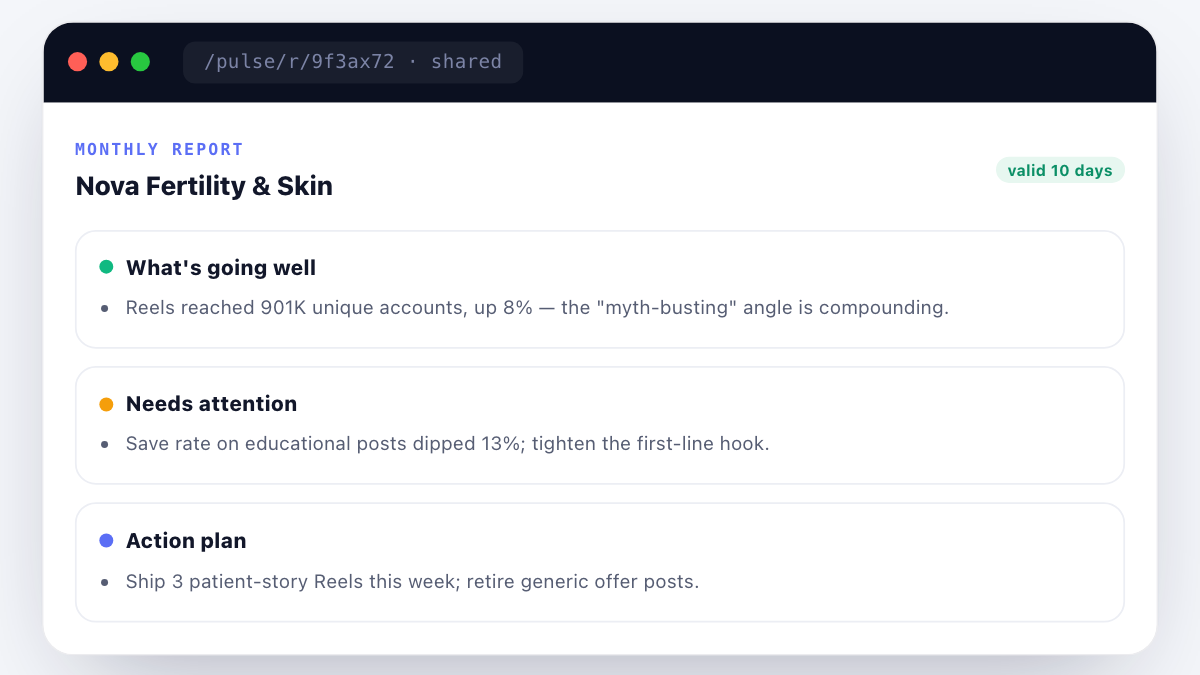
Sequence PPC investment in three phases: months 1-3 for infrastructure and baseline (30 percent of annual budget), months 4-8 for scale and optimisation (45 percent), months 9-12 for compounding and channel expansion (25 percent). Do not front-load spend before your tracking, CRM, and landing pages are ready.
Months 1-3: Set up conversion tracking end to end. Get consent mode working. Build 3 landing pages per specialty. Launch Google Search on your top 10 intent keywords. Launch Meta on your 2 strongest specialties only. Wire your CRM to WhatsApp. Get Google Business Profile in production shape across every location. This is a build phase with 20 percent of media running to generate learning data.
Months 4-8: Scale what worked. Cut what did not. Add YouTube. Add Performance Max. Introduce competitor conquesting with Prism Spy intel. Move to full creative rotation, 4 concepts per specialty refreshed every 3 weeks. Your CPQL should stabilise 15 to 30 percent below your month 3 baseline.
Months 9-12: Add channels you deferred. Test regional-language YouTube. Expand into new cities if unit economics support it. Feed your CRM data back into Meta and Google as consented custom audiences. This is where compounding kicks in. CPQL typically drops another 10 to 20 percent because creative, audiences, and landing pages are all working together.
The mistake most Indian hospitals make is skipping months 1-3. They hand the agency Rs 8 lakh in month one and expect leads by day 14. Tracking is broken, landing pages are generic, the CRM cannot route the leads. Six months later they blame PPC.
How ICG approaches healthcare PPC budgeting
ICG treats a PPC budget as a multi-product operating system, not a media plan. Every clinic or brand we onboard gets a shared dashboard combining Meta Catalyst IQ (paid ad engine), Prism Spy (competitor Meta Ads intel), Prism Pulse (Instagram organic analytics), YODA (YouTube), Angryturtle (Google Business Profile), and AtomCRM (lead routing and consented audience management). Budget conversations happen with all six data streams on one screen, not in six separate weekly reports.
This matters because the interesting decisions in healthcare PPC are cross-channel. Should you cut Google Search on branded terms because Prism Pulse shows your Instagram is already driving branded volume? Should you push YouTube spend because YODA is showing a 12 percent view-through conversion on second-opinion queries? Should AtomCRM push a hot lead segment back to Meta as a lookalike seed? These are budget decisions dressed up as tool decisions. Most agencies cannot see them because their tools do not talk to each other.
For hospitals that also want RCM and EHR overlay reporting tied into the same PPC ROI view, HealthPro 360 at Rs 14,999 per month closes the loop from ad click to first insurance-processed case. That is what "budget allocation" actually means once your operation is large enough.
FAQs
What is a realistic healthcare PPC budget for a single clinic in India?
Between Rs 60,000 and Rs 1,20,000 a month for a single-location clinic doing Rs 40 lakh to Rs 1.5 crore in annual revenue. Below Rs 60,000 you cannot buy meaningful learning data. Above Rs 1,20,000 for a single clinic usually indicates poor targeting rather than genuine demand.
How does the DPDP Act affect Google and Meta Ads for hospitals?
DPDP requires explicit consent before you upload customer lists to build lookalikes, retarget past enquirers, or track behaviour beyond essential website function. You need consent mode v2 wired up, a consent management platform on your site, and CRM fields that capture consent at form submission.
Should Indian hospitals spend more on Google or Meta?
For research-heavy specialties like IVF, oncology, or cardiac, Google should carry 45 to 60 percent of PPC spend. For visual and lifestyle specialties like aesthetics, dermatology, and cosmetic dentistry, Meta should carry 45 to 55 percent. Multi-specialty hospitals split closer to 45/30.
What is the healthcare CPQL for dental clinics in India in 2026?
Rs 350 to Rs 800 for a qualified dental lead in India, blended across Google and Meta. Aesthetic dentistry runs higher at Rs 700 to Rs 1,400. General family dentistry runs lower at Rs 250 to Rs 500. Tier-2 city CPQLs are 30 to 50 percent below metro CPQLs.
Can NMC-registered doctors advertise on Google and Meta?
Yes, within the boundaries of the NMC Professional Conduct Regulations. You cannot make specific outcome claims, use before-and-after photos in ways that promise similar results, or run testimonial-style ads that name treating doctors and claim cures. Institutional and educational advertising is allowed.
How much should an agency charge for healthcare PPC management?
A healthcare PPC agency retainer in India should be 70 percent fixed for the work that happens regardless of outcome, and 30 percent tied to a 12-month qualified lead or revenue slab. ICG's Foundation, Growth and Scale packages are custom-scoped around this split.
How long before healthcare PPC starts producing consistent leads?
Weeks 3-6 for baseline lead volume. Months 4-8 for an optimised CPQL that is 15 to 30 percent below your day-one benchmark. Months 9-12 for compounding gains from consented audience reuse and creative maturity. Anyone promising consistent leads in week one is either lying or burning your budget.
Book a free Google Ads account audit.
Raman Soni's team pulls your account, reviews campaign structure, keyword intent tiering, landing pages, and CPQL attribution. 45 minutes, actionable.
Questions readers ask
about this topic.
The three platforms
behind every ICG engagement.
Beacon
CAPI middleware that fixes Event Match Quality, translates CRM statuses to Meta-standard events, dedups across channels.
Agency OS
Live client dashboard. GSC, GA4, Google Ads, Meta Ads, IVR calls in one view. Login anytime, not monthly.
Phoenix
Clinic revenue intelligence over your PMS. Daily action queue: Prevent Loss, Maintain & Engage, Grow Revenue. Multi-centre rollout.
Or book a free 30-min audit to see all three in action on your account.
Healthcare brands
that already run on ICG.
A representative slice of the 150+ healthcare brands ICG has delivered for across India. Most engagements remain under NDA.


What ICG clients say · on video.
"Scale up of organic channels and business consulting. ICG has absolute domain authority in their field."
"Working with ICG transformed how we acquire IVF patients in Gurgaon. They understand the fertility journey from inquiry to consult..."
"What Ichelon accomplished — they got all my ideas and worked over 3-4 months to create an amazing, super-customised website."
The intelligence stack behind this playbook.
Every ICG engagement runs on the Search Intelligence Trifecta — Angryturtle for GMB, SIE for search and AI Overview, YODA for YouTube. Live product screens below.
Need help operationalising this?
Every ICG service is healthcare-only, NMC + DPDP-aware, and built around the patient-research patterns that drive Indian healthcare growth in 2026.
Every practice welcome — packages from ₹20,000/mo.
Goals-Driven engagements · Performance-Linked Payout Models available


More from
ICG.
Five trends shaping Indian healthcare marketing through 2027: AI-first patient research, Conversions API adoption, ABDM discovery, the AEO w...
Healthcare AIO is the discipline of getting your clinic or hospital cited inside Google AI Overviews, ChatGPT and Perplexity answers — not j...
Conversational-search advertising places brand messages inside AI chat answers — ChatGPT, Perplexity, Copilot — rather than beside a results...
Stop guessing.
Book a Diagnostic.
30 minutes. Free. With the AI-powered healthcare-only marketing agency 150+ brands already run on. No slides, no pitch, no hard close.


