


AIO SEO for hospitals in India — the 2026 guide to earning AI Overview citation across brand, branch, specialty and condition pages at multi-location scale
A working guide for multi-location hospital groups optimising for Google AI Overview: how brand, branch, specialty and condition pages behave differently in AIO, the schema stack per page type, and the 10-signal audit ICG runs for chain clients.
No pitch. Written root-cause diagnosis. AI-powered, healthcare only.
Direct answer
A working guide for multi-location hospital groups optimising for Google AI Overview: how brand, branch, specialty and condition pages behave differently in AIO, the schema stack per page type, and the 10-signal audit ICG runs for chain clients.
TL;DR

AIO SEO for hospitals is the practice of earning Google AI Overview citation across the four page types a hospital website carries — the brand page, branch pages, specialty pages, and condition or procedure pages. Each page type maps to a different query family, requires a distinct schema stack, and competes against a different pool of cited sources. For Indian multi-location hospitals, AIO SEO is a corpus-level programme, not a page-level tweak.
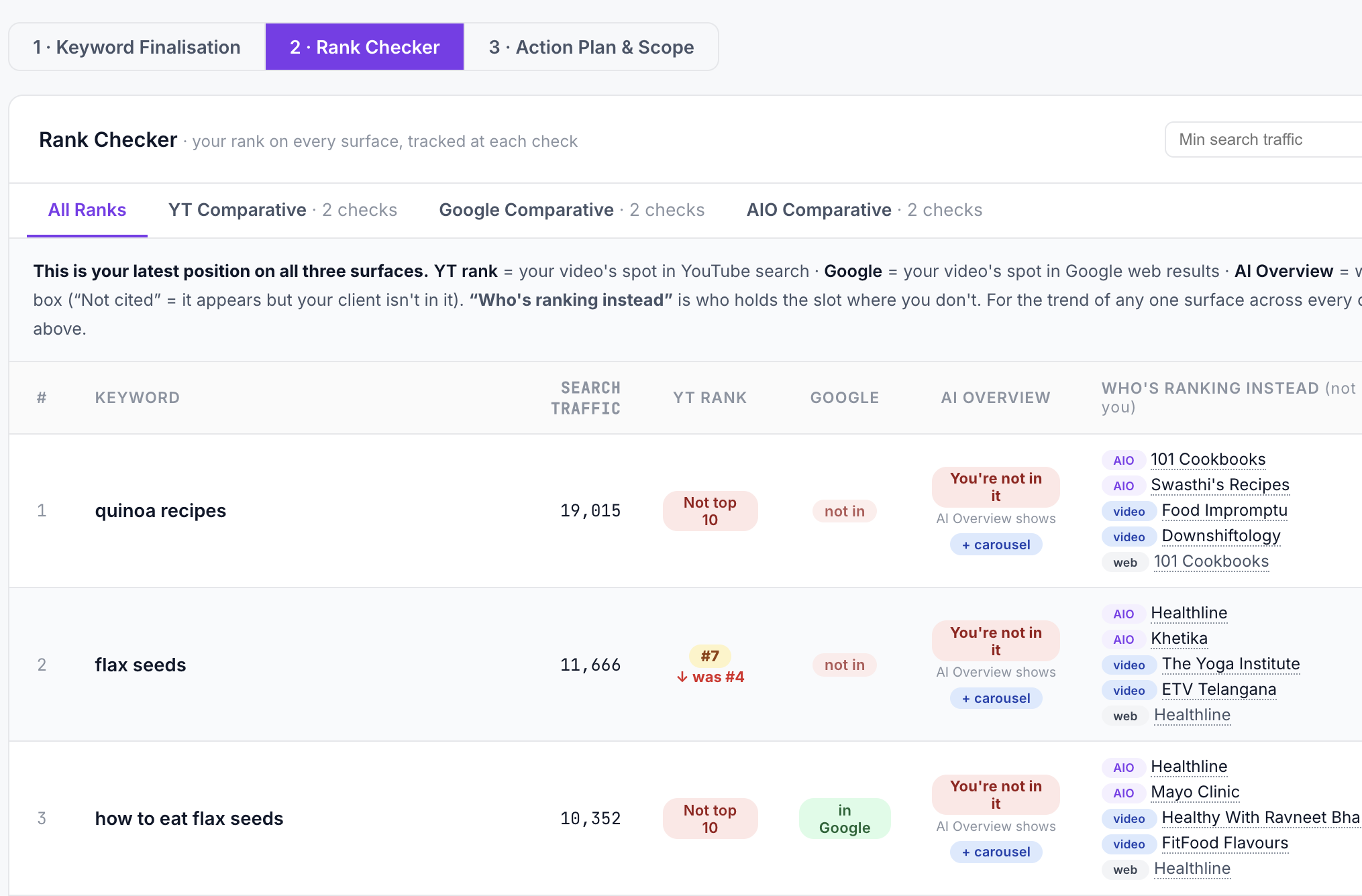
Hospital marketing teams in India have inherited a decade of SEO logic built for the classic organic era. Rank the brand for the branded query. Rank each branch for the local intent query. Rank the specialty pages for procedure queries. Publish a condition library for the long tail. That logic still holds — but AI Overview has added a second, parallel ranking pool that behaves differently. Where classic organic rewards authority, backlinks, and topical depth at the domain level, AIO citation rewards page-level structural clarity, schema-to-query fit, and E-E-A-T signals credentialed to individual authors. This guide walks through how a multi-location Indian hospital should think about AIO SEO across the four page types, the schema stacks each type needs, and the 10-signal audit ICG runs on hospital chain clients.
The four page types a hospital website runs — and how each behaves in AIO
Every serious Indian hospital website has four page-type layers. The brand page (the site homepage plus About and Trust pages) targets branded queries and institutional trust signals. Branch pages target local intent queries per city, area, or facility. Specialty pages target procedure and department queries ("cardiology in Chennai", "IVF centre Mumbai"). Condition pages target the long tail of patient-education queries ("what causes AFib", "symptoms of PCOS").
In classic organic, all four page types compete against similar sources: other hospitals, aggregators, doctor-listing platforms, and news outlets. In AIO, the competitive pool splits sharply. Brand pages compete against the hospital's own knowledge graph entity and third-party institutional profiles. Branch pages compete against Maps AIO results and Google Business Profile listings. Specialty pages compete against academic centres, Tier-1 hospital chains, and specialty society pages. Condition pages compete against Mayo Clinic, WebMD, NHS, and government health portals — the toughest AIO pool in healthcare.
Why condition pages are the hardest hospital AIO surface (and how to compete anyway)
Condition and symptom pages face the most crowded AIO pool in Indian healthcare. Mayo Clinic and WebMD carry global domain authority. NHS and MOHFW carry institutional trust. Indian hospital condition pages rarely beat any of them on classic organic and almost never break into AIO citation without a specific structural angle.
The angle that works: India-specific data, India-specific practice patterns, and India-specific expert commentary. A condition page authored by an Indian consultant, citing Indian epidemiology data (ICMR, NFHS-5, NCDIR), quoting Indian clinical practice guidelines (national society position papers), and framed around the Indian patient journey (cost, access, insurance) can out-cite Mayo Clinic on India-context queries even when it loses to Mayo Clinic on global queries. That is the structural angle Indian hospitals should own.
The schema stack per hospital page type
Different page types need different schema stacks. The mistake most hospital sites make is applying one generic template — usually MedicalBusiness plus BreadcrumbList — across every page. The table below shows the schema stack ICG configures per page type for hospital chain clients.
| Page type | Primary schema | Supporting schema | Common miss |
|---|---|---|---|
| Brand / Homepage | Hospital + Organization | WebSite, SearchAction, sameAs across knowledge graph | Missing sameAs to LinkedIn, Wikipedia, Wikidata |
| Branch page | Hospital + LocalBusiness | PostalAddress, geo, openingHoursSpecification, hasMap | Duplicate content across branches, no schema differentiation |
| Specialty / Department page | MedicalSpecialty | MedicalWebPage, Physician (department heads), availableService | MedicalSpecialty with no linked physicians |
| Procedure page | MedicalProcedure | bodyLocation, howPerformed, preparation, cost, followup | Missing required fields; treating as marketing page |
| Condition page | MedicalCondition | MedicalWebPage, associatedAnatomy, riskFactor, signOrSymptom | Consumer-facing article with no schema markup |
| Doctor / Consultant page | Physician + Person | hasCredential, memberOf, worksFor, alumniOf, sameAs | Bio with no schema at all |
| FAQ / patient-education page | FAQPage | MedicalWebPage, dateModified, reviewedBy (Physician) | Marketing FAQs marked as FAQPage — trust downgrade |
| Video (procedure explainer) | VideoObject | transcript, thumbnailUrl, uploadDate, contentUrl, embedUrl | Missing transcript |
Every schema block should be reviewed by someone who understands both the schema.org specification and the Indian regulatory context. A MedicalCondition schema block claiming a procedure "cures" a chronic condition will trip both Google's trust filter and ASCI compliance. Schema is not decoration; it is a structured claim.
The 10-signal audit ICG runs on hospital chain sites for AIO
- Corpus-level entity graph. Is the hospital brand entity linked to its branches, specialties, and consultants via schema? Or does each page float independently?
- Branch differentiation. Do branch pages carry unique content, unique local schema, and unique doctor lists? Or is it templated boilerplate?
- Specialty depth. Do specialty pages carry substantive department content, or are they thin landing pages with a booking form?
- Condition-page authorship. Are condition articles authored by named consultants with byline schema, or unattributed?
- Definition-first opening on every content page. Do first paragraphs read as tight definitions, or as marketing intros?
- Schema fit-to-page-type. Does each page type carry the correct schema stack from the table above?
- Recency signal. Does every content page carry a "last reviewed" date within 12 months?
- Compliance-clean writing. Are ASCI red flags absent from H1, meta title, and lede?
- Cross-linking to internal experts. Do condition pages link to the relevant consultant's bio page? Do specialty pages link to the relevant conditions treated?
- Local Maps AIO parity. For branch queries, does the Maps AIO panel also cite the branch page? Does the branch page mirror the GBP profile signals?
The brand page as the institutional trust anchor
The hospital brand page (usually the homepage plus About, Leadership, and Trust pages) does the entity-anchor work for the entire domain. AIO uses brand page signals to calibrate how much trust to extend to the individual condition, specialty, and branch pages. A brand page that credibly establishes the institution — accreditations (NABH, NABL, JCI where applicable), founding date, scale (bed count, footfall, doctor count), leadership team with named-person schema, and links to Wikipedia and Wikidata entries — raises the trust ceiling for every deeper page.
The mistake most Indian hospital brand pages make is optimising for marketing conversion (book appointment, lead form) at the expense of institutional signalling. A brand page can and should do both — the trust signals live in structured data and About sections; the conversion signals live in the visible hero and CTAs. Both need to be present.
Branch page differentiation at multi-location scale
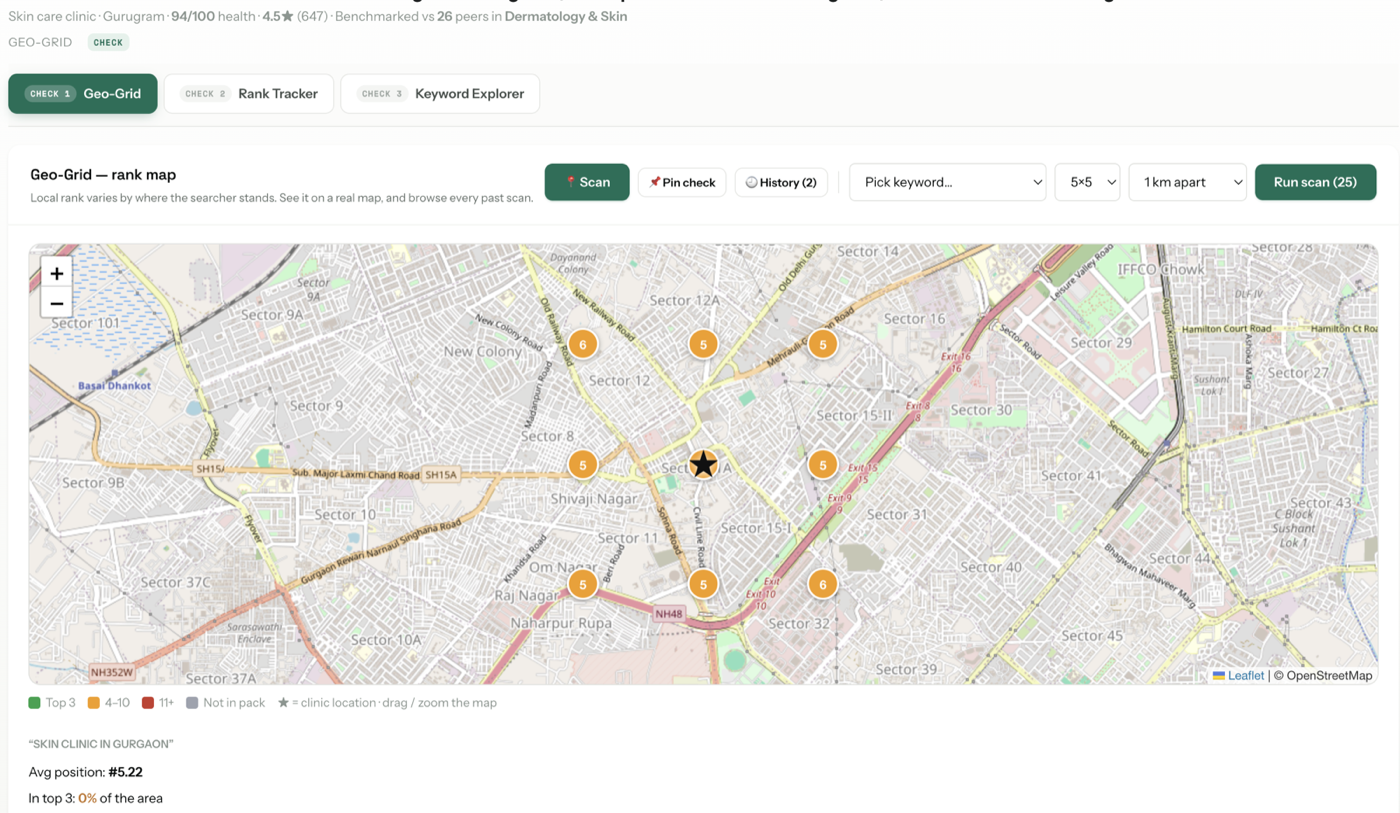
Multi-location hospital chains routinely publish 20 to 100+ branch pages, and 90 percent of them are templated boilerplate — same content, same photos, only the address and phone number differ. That template pattern hurts AIO citation on branch queries because the panel treats duplicated content as low-differentiation and prefers the single most-differentiated source.
The differentiation that matters at branch level: unique facility description (specific equipment, ward count, ICU beds, specific accreditations), unique consultant list with linked bios, unique specialty coverage (not every branch runs every specialty), unique local reviews block, and unique local content (nearby transit, parking, insurance panels accepted at this branch specifically). This is content work, not schema work. The schema is easy; the content is where most hospital chains cut corners.
Specialty and procedure pages as dual conversion and AIO citation drivers
Specialty and procedure pages are the highest-value AIO surfaces for a hospital because they map to high-intent commercial queries ("cardiology hospital Delhi", "IVF cost Chennai", "knee replacement surgery Bangalore"). They also convert commercially. The AIO-optimised specialty page carries: definition-first opening (what the specialty covers, canonical scope), MedicalSpecialty schema with linked availableService, named department head with Physician schema, procedure-list linking to individual procedure pages, patient journey walk-through, cost or cost-range framing, insurance and TPA panels, appointment CTA, and FAQ block with FAQPage schema.
The commercial and citation objectives converge here. A specialty page that earns AIO citation is a page that also converts — because both audiences (the AIO panel and the patient decision-maker) reward the same signals: clarity, credentialed authority, substantive detail, and honest framing.
The condition-page library and named-author authorship programme
The condition-page library is where most hospital chains have a choice to make. Build 200-500 condition articles authored by named consultants — high investment, high AIO citation ceiling, high patient-education value. Or publish an unattributed condition-glossary and never break into AIO on condition queries. There is no low-investment middle path that also earns citation.
The recommended architecture: 30-80 anchor conditions per major specialty, each authored by the department's consultant, each 1200-2500 words, each carrying MedicalCondition schema plus a Physician reviewedBy field. The named-author programme is a hospital-wide editorial commitment that takes 12-18 months to build out but compounds heavily once established. This is how Tier-1 Indian hospital chains have started to break into condition-page AIO citation against Mayo and NHS.
How YODA's AIO Lab and Angryturtle's Ask Maps AIO support hospital AIO programmes
ICG runs two complementary tools for hospital AIO programmes. YODA's AIO Lab tracks web-and-YouTube AIO citation across the client's curated query list per specialty per city. For a hospital chain with 20 branches and 12 specialties, that is a 240-cell citation matrix refreshed weekly. Angryturtle's Ask Maps AIO tracks the Maps and local surface AIO for the same query matrix at the branch level — because branch-query AIO increasingly resolves on the Maps panel rather than the Web panel. Together they give a hospital chain marketing team the first true corpus-level view of "where are we cited, where are we invisible, and where are we losing ground week-over-week." For hospital chains running the full ICG stack, this AIO citation dashboard is refreshed alongside the classic GA4 / GSC reporting.
FAQ — AIO SEO for Indian hospital chains
How long does it take a hospital chain to see AIO citation lift?
For pages already ranking organic top-10 that receive a definition-first rewrite plus correct schema, median time-to-first-citation is 21 to 45 days. For a full corpus overhaul across 100+ pages, expect 6 to 9 months for the citation footprint to compound. AIO refresh is not instantaneous and hospital chains should plan the programme as a 12-month roadmap, not a quarterly campaign.
Do we need to build separate branch websites or is one master site better?
One master site with strongly differentiated branch pages is almost always better than a separate site per branch. Domain authority consolidates on one root, entity graph is easier to maintain, and cross-linking between branches, specialties, and consultants strengthens the whole corpus. Separate branch websites fragment authority and multiply maintenance cost.
Should our condition pages target Indian queries or global queries?
Both, but with different tactics. Global condition queries ("symptoms of PCOS") are heavily contested by Mayo, WebMD, and NHS — hard to win in AIO. India-context queries ("PCOS treatment cost in India", "PCOS specialist near me") are winnable with the India-context authorship pattern. Prioritise India-context queries first; global queries are a stretch target.
Do NABH or JCI accreditations show up in AIO citation logic?
Yes, indirectly. Accreditations are trust signals in schema (hasCredential on the Hospital node, or as accreditingBody). AIO does not cite accreditations directly but the trust filter weighs credentialed institutions higher. Accreditation display should be schema-marked, not just an image on the footer.
Can doctor-listing platform or local directory listings hurt our AIO citation?
Not directly, but they compete with your branch pages for the same local-intent queries and often out-cite you on Maps AIO. The response is not to fight the aggregators for citation — it is to strengthen your own branch pages so they are the more differentiated source when the panel chooses.
How do we prioritise which pages to audit first?
Rank pages by combined organic traffic and commercial value. Start with the top 20 pages by revenue attribution (usually specialty and procedure pages at flagship branches). Run the 10-signal audit. Fix. Move to the next 20. This is a rolling 6-month programme, not a one-time sprint.
Does adding videos to condition pages help AIO?
Yes, when the video carries VideoObject schema with transcript, thumbnailUrl, uploadDate, and is hosted on the hospital's own YouTube channel (or embedded from it). AIO increasingly surfaces video previews in the panel. Un-transcribed videos underperform. YODA's video production workflow includes transcript generation and schema markup by default.
Related reading
- How to appear in Google AI Overview for healthcare queries in India
- AI Overview optimisation for multi-specialty hospitals in India
- The eight AI Overview ranking signals for Indian healthcare
- FAQPage schema for healthcare AIO — implementation guide
- VideoObject schema for healthcare YouTube AIO citation
Reference frameworks — India's National Medical Commission, the Advertising Standards Council of India, DPDP Act 2023, and Meta's Business Help for healthcare advertising context. Schema.org authoritative references at schema.org/Hospital and schema.org/MedicalCondition.
Book a free SEO diagnostic.
Hanuman Sihag's team runs a live crawl, checks technical health, cannibalisation, schema coverage and content gaps. 60 minutes, prioritised fix list.
The three platforms
behind every ICG engagement.
Beacon
CAPI middleware that fixes Event Match Quality, translates CRM statuses to Meta-standard events, dedups across channels.
Agency OS
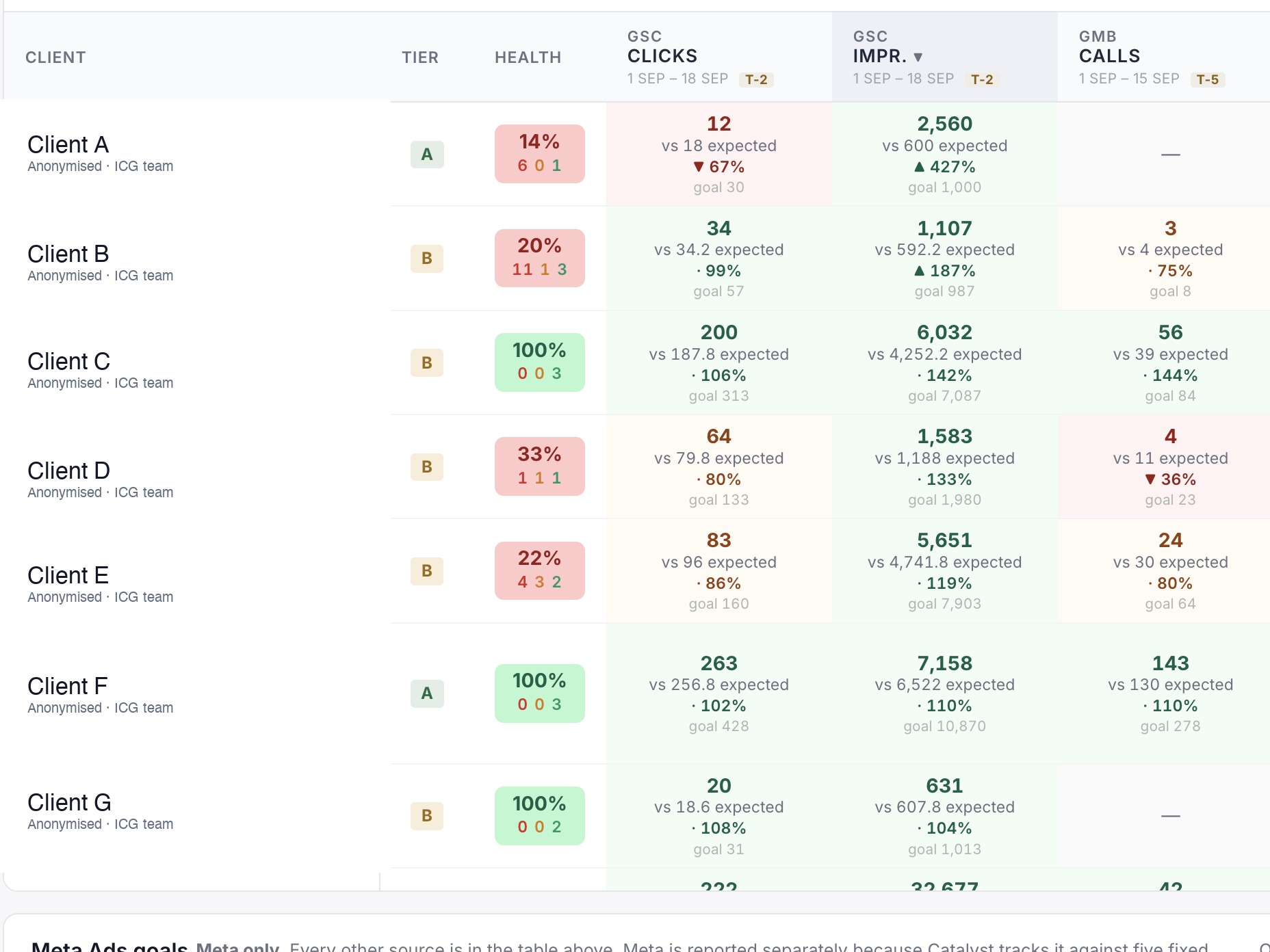
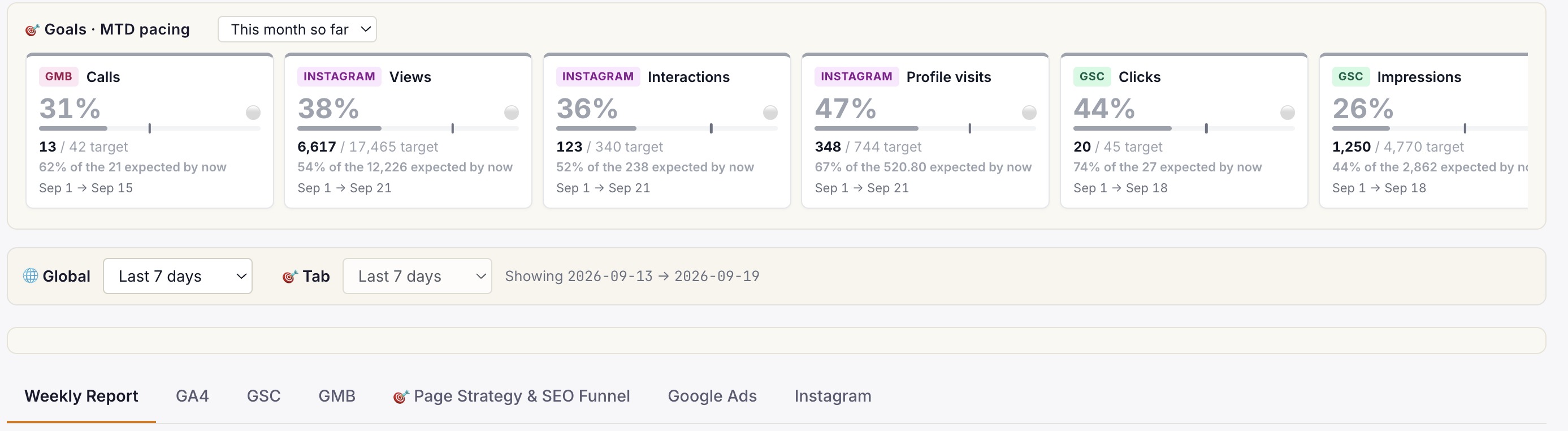
Live client dashboard. GSC, GA4, Google Ads, Meta Ads, IVR calls in one view. Login anytime, not monthly.
Phoenix
Clinic revenue intelligence over your PMS. Daily action queue: Prevent Loss, Maintain & Engage, Grow Revenue. Multi-centre rollout.
Or book a free 30-min audit to see all three in action on your account.
Healthcare brands
that already run on ICG.
A representative slice of the 150+ healthcare brands ICG has delivered for across India. Most engagements remain under NDA.


What ICG clients say · on video.
"Mental health marketing requires a different sensitivity. ICG built compliance-aware campaigns that respect both patients and our..."
"Bariatric surgery patients need a long consideration cycle. ICG built a content + paid system that respects that timeline."
"Working with ICG felt like working with an in-house growth team that happens to specialise in healthcare."
The intelligence stack behind this playbook.
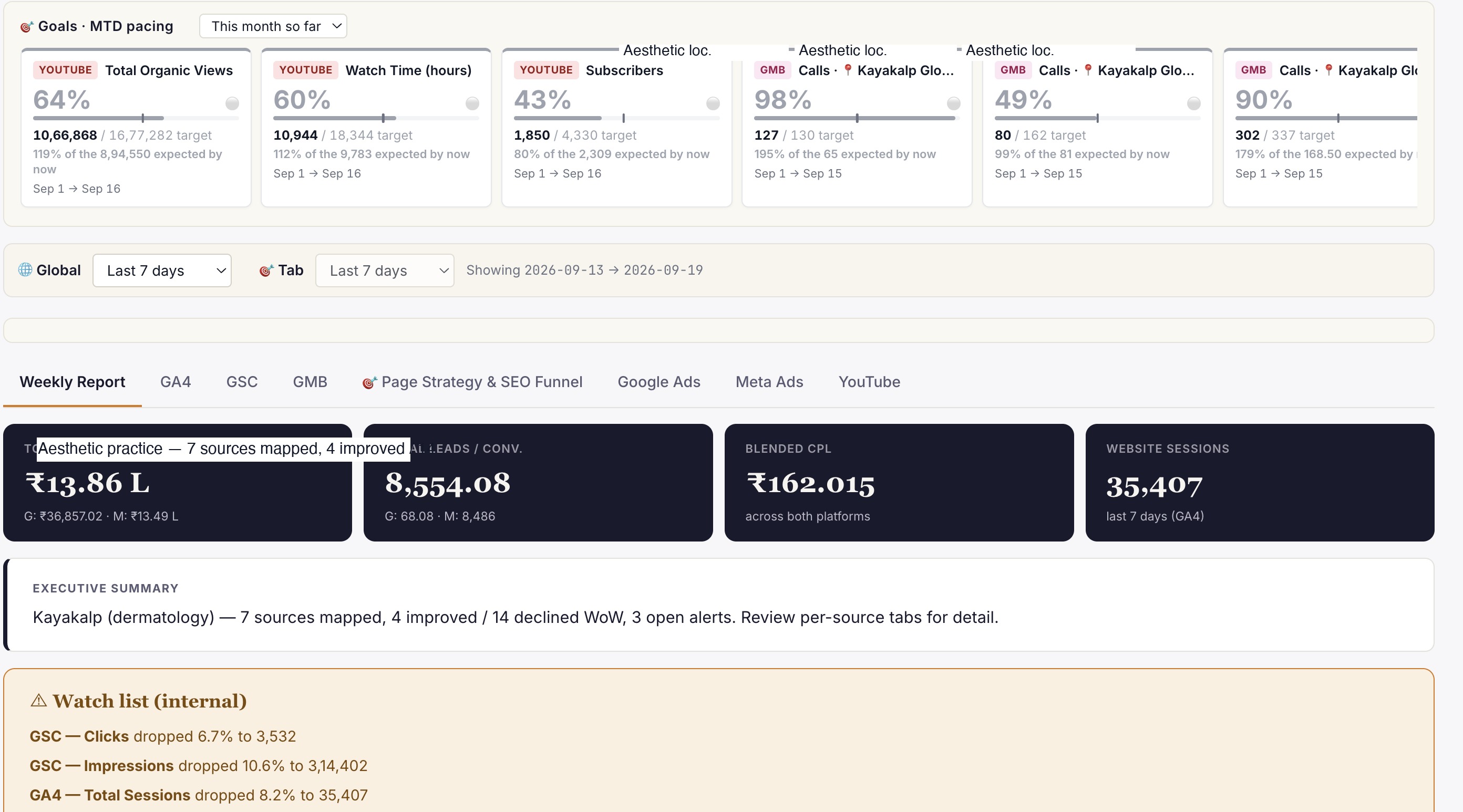
Every ICG engagement runs on the Search Intelligence Trifecta — Angryturtle for GMB, SIE for search and AI Overview, YODA for YouTube. Live product screens below.
Need help operationalising this?
Every ICG service is healthcare-only, NMC + DPDP-aware, and built around the patient-research patterns that drive Indian healthcare growth in 2026.
Every practice welcome — packages from ₹20,000/mo.
Goals-Driven engagements · Performance-Linked Payout Models available
More from
ICG.
Five trends shaping Indian healthcare marketing through 2027: AI-first patient research, Conversions API adoption, ABDM discovery, the AEO w...
Healthcare AIO is the discipline of getting your clinic or hospital cited inside Google AI Overviews, ChatGPT and Perplexity answers — not j...
Conversational-search advertising places brand messages inside AI chat answers — ChatGPT, Perplexity, Copilot — rather than beside a results...
Stop guessing.
Book a Diagnostic.
30 minutes. Free. With the AI-powered healthcare-only marketing agency 150+ brands already run on. No slides, no pitch, no hard close.


