


Dental Clinic Marketing India: The 2026 Master Guide
A founder's guide to marketing a dental clinic in India in 2026 — local search, GBP, WhatsApp funnels, AI-answer optimisation, retention economics, and the 70-30 spend model. Written for owners running one to fifteen chairs across Tier-1 and Tier-2 cities.
No pitch. Written root-cause diagnosis. AI-powered, healthcare only.
Direct answer
A founder's guide to marketing a dental clinic in India in 2026 — local search, GBP, WhatsApp funnels, AI-answer optimisation, retention economics, and the 70-30 spend model. Written for owners running one to fifteen chairs across Tier-1 and Tier-2 cities.
TL;DR

A founder's guide to building predictable patient flow for a dental clinic in India — written for owners running one to fifteen chairs across Tier-1, Tier-2 and emerging Tier-3 cities. Everything in this pillar draws on ICG's live work with 150+ healthcare brands.
TL;DR
- Discovery has moved to three surfaces at once — Google Maps, Instagram/WhatsApp, and AI answer engines. A 2026 dental clinic that shows up in only one is quietly leaking twenty to forty percent of its addressable demand every month.
- Google Business Profile is the highest-ROI asset a dental clinic owns — higher than a paid ad account, higher than the website in most cases. Fix the profile first, then spend on ads.
- WhatsApp is the real CRM for Indian dental clinics. Enquiry-to-consult conversion typically jumps from 18-22 percent to 34-40 percent when the funnel moves from missed-call and IVR into a structured WhatsApp flow.
- AI Overviews and answer engines (ChatGPT, Perplexity, Google's AI mode) now influence 15-25 percent of high-intent dental searches. Clinics that don't produce citable, structured content will lose share here first.
- Retention is where the margin lives. In ICG's dental portfolio, six-monthly recall programmes lift twelve-month revenue per patient by 1.8x to 2.4x — cheaper than any acquisition channel.
- The 70-30 model — 70 percent of monthly spend on the always-on stack (SEO, GBP, content, review generation), 30 percent on paid acceleration — is what separates clinics that grow calmly from those that stall every time they pause ads.
- NMC advertising rules and DPDP Act 2023 both reshape what you can say and what data you can store. This guide bakes both in.
Table of contents
- Why dental clinic marketing looks different in India in 2026
- Foundation: six things every clinic must own before spending on ads
- Local dominance: Google Business Profile, maps stack and hyperlocal SEO
- Acquisition funnels: Meta, Google Ads and the WhatsApp loop
- AI-answer optimisation: getting cited by ChatGPT, Perplexity and Google AI
- Content and video: earning trust before the first phone call
- Retention economics: recall systems, referrals and lifetime value
- Numbers and benchmarks from India's dental market
- Four buyer archetypes and the right playbook for each
- Eight expensive mistakes we see every quarter
- The 70-30 spend model
- Your 12-month execution roadmap
- Key takeaways
- Frequently asked questions
Why dental clinic marketing looks different in India in 2026
Ask any dentist who opened a clinic in 2015 what marketing meant back then. The answer is usually a variant of the same three things: a listing on a couple of aggregator sites, a hoarding at the metro station, and word of mouth from the first hundred patients. That world is finished.
Three big shifts have compressed into the last thirty months. First, patient search behaviour has fragmented — Google Maps for "who is near me", Instagram Reels for "who looks trustworthy", AI answer engines for "what treatment do I even need". A twenty-eight-year-old in Bengaluru evaluating aligners will touch all three before she books, often within the same hour.
Second, cost of acquisition has climbed steadily. CPQL for aligners in metro India has risen from roughly Rs 380 in early 2024 to Rs 720-950 in the clinics we work with today. Root canal and implant CPQLs have moved similarly. The clinics still profitable are not the ones who bid harder — they're the ones who built organic assets that compound.
Third, the regulatory frame is different. The National Medical Commission's advertising code and the Dental Council of India's professional conduct guidelines have both been re-emphasised in circulars over the last eighteen months. The DPDP Act 2023 makes patient data a board-level issue, not an IT afterthought. ABDM's Health ID adoption is quietly changing what a patient record looks like. Marketing has to work inside all of this without becoming defensive.
This pillar is written for the founder or marketing lead who has to make sense of that world and produce a real plan by the end of the week — not a slide deck, a plan. Everything below has been tested inside ICG's dental portfolio, spanning single-chair boutique clinics in Kochi to fifteen-branch chains across Delhi NCR.
Section takeaway: Dental marketing in India in 2026 is a three-surface problem — Maps, social, AI — inside a stricter regulatory frame. A "just get me leads" brief will overspend and under-convert.
Foundation: the six things every clinic must own before spending on ads
In our audits of new clients, roughly seven in ten dental clinics are spending on paid ads before their foundation is stable. It's the single most expensive mistake in this industry. If any of the six items below is missing, fix it before you increase paid spend by a rupee.
1. A verified, complete Google Business Profile
Not "claimed" — verified, with all attributes filled, service list mapped to your actual treatment menu, photos updated in the last thirty days, and a review count that reflects your true patient flow. This one asset drives more high-intent enquiries than any other single thing a clinic does. Our internal product, Angryturtle, exists precisely because most clinics lose 40-60 percent of their local search value here.
2. A conversion-first website (not a brochure)
A dental site does one job — take a curious visitor and make it easy to book. That means a mobile-first layout, treatment pages structured around real search queries ("aligners cost in Gurgaon", "single tooth implant Bengaluru"), transparent pricing bands, clear CTAs to WhatsApp and phone, and page-speed under 2.5 seconds on 4G. A six-second site is a site quietly paying to send traffic to a competitor.
3. A working WhatsApp Business setup with routed replies
Not a personal WhatsApp on the front-desk phone. A WhatsApp Business API instance (or at minimum a Business App) with saved replies, an out-of-office message, and a defined SLA — first response inside three minutes during clinic hours, fifteen minutes after. This one change moves conversion rates more than doubling ad spend.
4. A minimum viable review generation system
Twenty to thirty reviews per month, generated from real patients, distributed across Google, the main Indian healthcare aggregators (without depending on any one), and increasingly video testimonials for Instagram. The system needs to be a mechanical routine, not a "we'll ask when we remember" thing. Reviews are what unlock the map pack; the map pack is what fills your chairs.
5. A single source of truth for every enquiry
Whether it's a spreadsheet in the first three months or a proper healthcare CRM later, every enquiry — phone, WhatsApp, walk-in, form, Instagram DM — has to land in one place with a source tag and a status. Without this, you cannot compute cost per lead, you cannot compute conversion by channel, and you cannot make budget decisions. ICG's AtomCRM (Rs 50,000/- setup + Rs 799/- per telecaller) exists to solve exactly this, but a well-run Google Sheet is a legitimate starting point.
6. A basic consent and data flow that respects DPDP 2023
Every form on your site needs a clear consent line, every WhatsApp opt-in has to be logged, and patient data has to be stored in a place a Data Protection Officer would be comfortable defending. This isn't a marketing nice-to-have any more; it's the price of running a healthcare brand in India.
Section takeaway: Foundation isn't glamorous, but it's what makes ad spend behave. A verified GBP, a fast website, WhatsApp routing, a review system, one enquiry inbox, and DPDP-clean consent — do not spend on Meta until these six are in place.
Local dominance: Google Business Profile, the maps stack and hyperlocal SEO
The single most under-invested asset in Indian dental marketing is the Google Business Profile. It's free, it dominates high-intent search, and roughly two-thirds of clinics we audit have it in a state that actively hurts them. This section is the how-to.
Anatomy of a high-performing dental GBP
A dental profile that ranks and converts has seven consistent traits. The clinic name matches the sign board (no keyword stuffing — this violates guidelines and gets profiles suspended). The primary category is set to "Dental clinic" and secondary categories cover the sub-specialties you actually offer (orthodontist, cosmetic dentist, endodontist). All operational hours, including holiday hours, are accurate. Service attributes match the treatments you deliver, priced where honest. At least forty photos live on the profile, refreshed monthly. Weekly Google Posts run — offers, treatment explainers, patient stories with consent. Reviews land at a steady clip with owner replies inside twenty-four hours.
The "steady clip" number matters. Ten reviews in one week followed by zero for two months looks like a paid burst to Google's ranking systems. Two to three per week, forever, looks like a real clinic.
The map pack: what actually moves rankings
Proximity, relevance, prominence — Google's own words. Proximity you cannot change (your clinic is where it is). Relevance you fix with categories, service list and website content. Prominence is the compounding asset: review volume and velocity, review sentiment, citation consistency across directories, backlinks from local media, and behavioural signals (calls, direction requests, website clicks from the profile).
What we see repeatedly in our portfolio: a well-run GBP will out-perform a mediocre paid campaign at a fraction of the cost. A clinic in Indiranagar with a 4.7-star profile, 340 reviews, weekly posts and clean photos will consistently take call volume from a competitor spending Rs 80,000 a month on Google Ads with a 4.1-star, 60-review profile.
Hyperlocal SEO beyond the profile
Location pages on your website — one per branch, or one per micro-market if you're a single-branch clinic (South Delhi, Gurgaon Sector 56, Golf Course Extension) — with genuinely local content: directions from landmarks, parking notes, area-specific FAQs, patient stories from that catchment. Structured data marked up as Dentist or MedicalBusiness with correct geo-coordinates. Directory listings on Indian healthcare aggregators, matched exactly in name, address and phone. Local media mentions — a quarterly quote in a city newspaper's health column — feed the "prominence" signal Google uses.
Section takeaway: Fix the Google Business Profile before anything else. In most Indian dental catchments, a top-three map pack position is worth more than a first-page organic ranking or a paid ad campaign.
Acquisition funnels: Meta, Google Ads and the WhatsApp loop
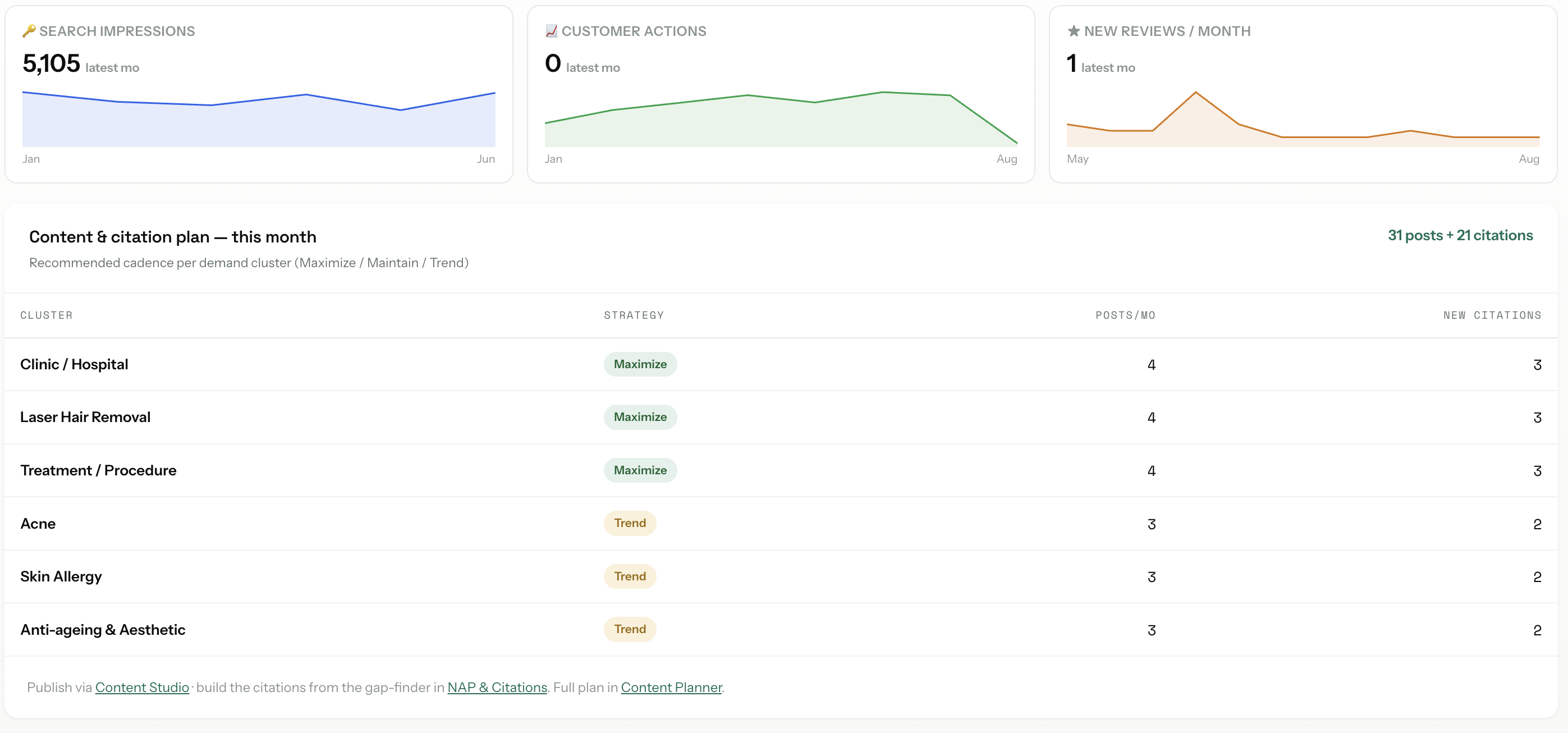
Once the foundation and local layer are in place, paid acquisition earns its keep. But paid without foundation is just a leaky bucket at higher pressure.
Meta (Instagram + Facebook) for aligners, cosmetic and paediatric
Aligners, veneers, teeth whitening, smile makeovers, paediatric dentistry — Meta beats Google here because the demand is latent, not stated. Nobody wakes up Googling "veneers Mumbai" the way they Google "root canal Delhi" at 11 pm with a toothache. You have to create the intent, and Meta's creative-driven discovery is where that happens.
What works in 2026: short-form video (Reels), first-person patient stories with consent, before-and-after content that respects DCI guidelines, and messenger-first campaigns that route straight into WhatsApp. Static image ads are largely done for dental in Tier-1 cities. Video ads with clear CTAs are producing lead costs 30-50 percent lower than static equivalents in our portfolio. ICG's Meta Catalyst IQ keeps this creative machine running for clinic clients without the founder having to think about it weekly.
Google Ads for high-intent, high-ticket treatments
Google Search Ads earn their keep on treatments where the patient already knows what they need — root canal, extraction, implants, wisdom tooth removal, emergency dental care. Bid strategy: manual CPC or target CPA (never maximise clicks). Ad extensions on: sitelinks, callouts, location, call. Landing pages: treatment-specific, not the homepage. Call tracking on: without it you can't compute cost per booked consult, only cost per click, and those are wildly different numbers.
Two structural mistakes to avoid: broad-match keywords (they'll burn a month's budget in a week), and geo-targeting the whole state (target a 6-12 km radius unless you're a destination clinic).
The WhatsApp loop that actually converts
Here is where most Indian dental funnels break. An ad generates a click, the click lands on a form, the form generates a lead, the lead sits in a CRM for four hours, and the front desk calls back the next morning. By then, three competitors have replied on WhatsApp and one has booked the consult.
The fix is a WhatsApp-first funnel. Ad copy leads with "Message us on WhatsApp for a free consult". Click-to-WhatsApp buttons on every ad and landing page. A structured first message from the clinic inside three minutes with three questions — treatment interest, preferred date, area — and a follow-up template that guides the patient to a booking. Standard reply templates for the ten most common enquiries. A daily check on unread threads by a named person.
This one change routinely moves enquiry-to-consult conversion from 18-22 percent (call-back model) to 34-40 percent (WhatsApp-first model) in our client base. Same ad spend, roughly double the consultations.
Section takeaway: Meta for elective and cosmetic treatments, Google Search for acute high-intent care, and WhatsApp as the connective tissue. If the WhatsApp loop is broken, no amount of ad spend will produce sustainable growth.
AI-answer optimisation: getting cited by ChatGPT, Perplexity and Google AI
Something quietly big has happened to Indian search in the last twelve months. A meaningful and growing share of dental research — especially in Tier-1 cities and among under-forty patients — now happens inside an AI answer engine before any traditional search. Someone asks Perplexity "what's the difference between metal braces and clear aligners" or asks ChatGPT "how much do dental implants cost in Mumbai in 2026" and reads a synthesised answer with citations.
Google's AI Overviews and AI mode do the same on the search results page itself. If your clinic isn't in the citations, you are invisible to that patient — they will never scroll to a blue link. This is not a 2028 problem; it's happening now.
What "gets cited" actually means
AI answer engines rank content on three things: how directly the content answers a specific question, how structurally clean the content is (clear headings, factual sentences, no burying the answer under five paragraphs of preamble), and how much the source domain looks like a real expert-authored entity to the model. That last point is where a dentist-authored article beats a generic content-agency article ten times out of ten.
The content pattern that works
Question-shaped titles ("How much do aligners cost in India in 2026?"), with the direct answer in the first sentence of the first paragraph. Structured H2s that map to sub-questions. Bulleted or table-form data where useful. Named author with real credentials in the byline. Schema markup — MedicalWebPage, FAQPage, Article — implemented cleanly. Fresh dates. Original photography or clinical images (with consent), because models increasingly weight originality.
Article length is not the point. A tight 900-word piece that answers a question directly will out-cite a 3000-word piece that meanders. Depth matters where it earns its keep; padding gets penalised.
What we're doing inside ICG's portfolio
Clinics on Growth or Scale plans produce 6-12 pieces of AI-optimised content per month, aimed at the questions their treatment cohort actually asks. We measure share of AI citation using tracked prompt sets — thirty questions per specialty, run monthly against ChatGPT, Perplexity and Google AI, citations logged. A clinic starting at zero citations in January typically reaches 15-25 percent share of voice in its city within six months if the cadence is honest. YODA, our AI-native YouTube programme, does the video equivalent — optimised for both YouTube search and AI-answer extraction from transcripts.
Section takeaway: AI answer engines are a real, measurable acquisition channel in 2026. Clinics that produce direct-answer content with real author credentials and clean schema are already taking share here.
Content and video: earning trust before the first phone call

The Indian dental patient in 2026 does not book cold. They watch. They read. They compare. By the time they land on your website or send a WhatsApp message, they've usually already consumed six to eight pieces of content — some yours, some competitors', some from creators. Content is not a nice-to-have; it's the pre-consultation.
The content stack that earns bookings
At the top: educational content that answers what patients actually ask ("Is a root canal painful?", "How long do dental implants last in India?"). In the middle: treatment-comparison content ("Metal braces vs clear aligners: honest cost and time comparison"). Near the booking decision: transparent pricing content, case studies with consent, and clinic-specific FAQs. Every piece needs a named author — the treating dentist or the clinical head — with real credentials, a real photo, and a real bio. Anonymous content ranks poorly in AI answers, and it converts poorly with Indian patients who increasingly want to know who the expert is before they walk in.
Video: where the real trust gets built
Two formats matter for dental in India in 2026. Short-form (Reels, Shorts) for reach and top-of-funnel discovery. Long-form (YouTube 4-10 minute videos) for the deep trust-building that converts consideration into a booking.
Short-form playbook: three to five Reels per week per branch, produced from treatment moments with consent, with a real dentist on camera — not the marketing coordinator, not stock footage. Speaking in the language of the catchment (Hindi/English for Delhi NCR, Kannada/English for Bengaluru, Tamil/English for Chennai). Long-form playbook: one to two YouTube videos per week, structured as treatment explainers or "what to expect" walkthroughs. These become the highest-converting piece of pre-consultation content in the funnel.
Editorial calendar and cadence
Twelve pieces of written content per month, six to ten Reels per week, one to two YouTube videos per week. That's the minimum viable cadence for a clinic serious about growth in a competitive Tier-1 catchment. Below this, content compounds too slowly to defend against competitors doing the same thing.
Section takeaway: Content is the pre-consultation. Named-author writing, real-dentist video, and honest treatment comparisons produce warmer patients and shorter close cycles than any paid channel.
Retention economics: recall systems, referrals and lifetime value
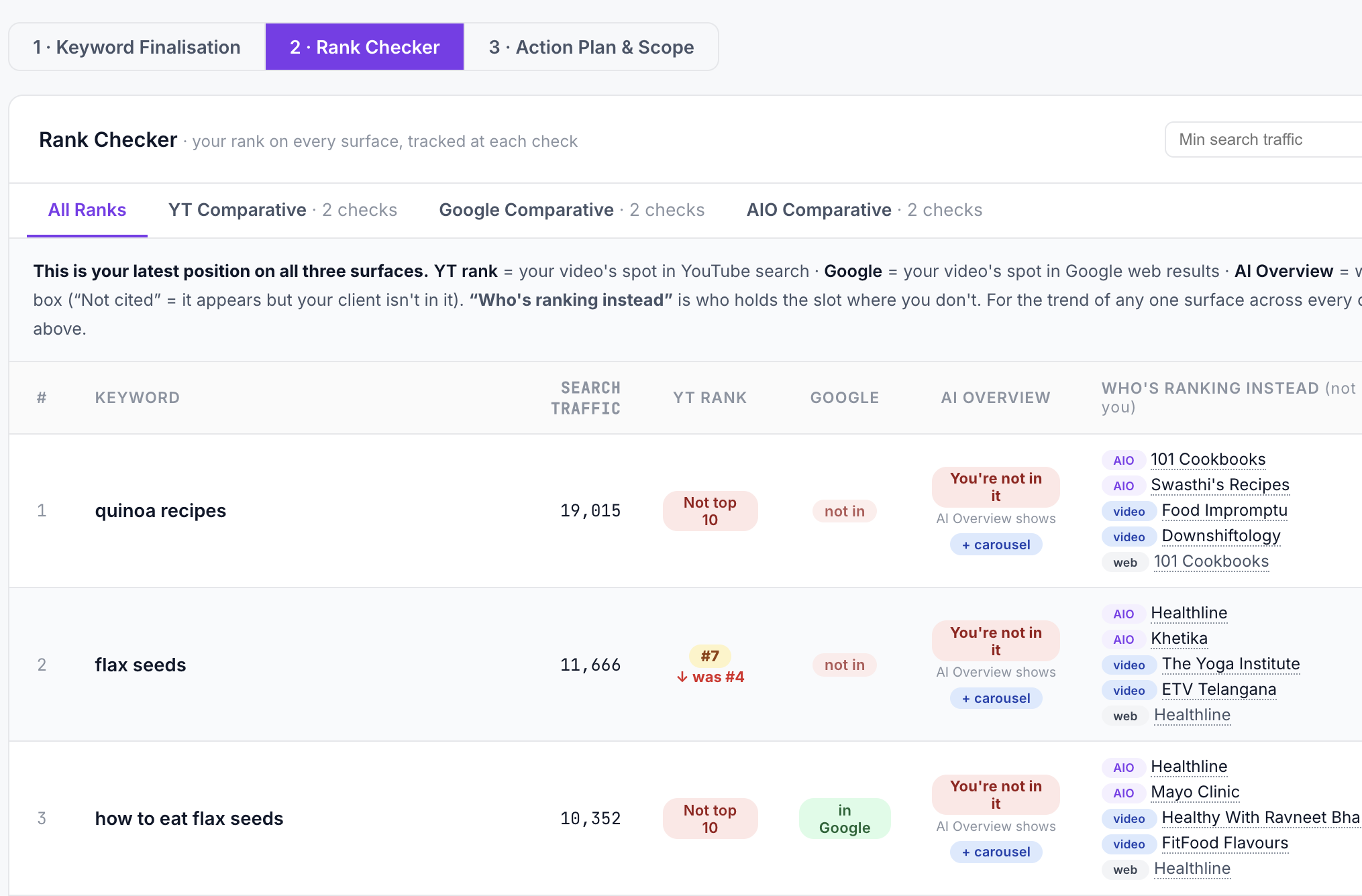
The most under-invested growth lever in Indian dental is retention. Founders spend nine parts of their marketing brain on acquisition and one on retention, and this is exactly upside-down for the economics of a real clinic.
The recall system that actually works
A dental patient who comes in for a cleaning today needs to come back in six months. Between 60 and 75 percent of clinics we audit have no functioning recall system — no reminder cadence, no template, no accountable owner. The opportunity just disappears into the calendar.
A working recall system has four parts. A CRM record with the next-recall date auto-set on every treatment. An automated WhatsApp reminder at T-14 days, T-7 days, and T-1 day. A named team member (usually the treatment coordinator) whose weekly KPI is recall bookings closed. A monthly report to the founder on recall-driven revenue vs new-patient revenue. Clinics that run this system convert 55-70 percent of due recalls into a booked visit, versus the industry norm of 15-25 percent.
The referral engine most clinics never build
Every happy dental patient has three to five people in their circle who need dental care. Almost no Indian clinic has a structured way to unlock that. A referral engine is a mechanical system: a post-treatment WhatsApp with a shareable link, a tracked referral code, a defined benefit for both referrer and referred, and a monthly report on referral volume by originating patient.
Lifetime value is the number that changes decisions
Cost per lead is a vanity metric. Cost per acquired patient is directionally useful. Lifetime value over a 36-month horizon determines whether a clinic is a sustainable business. In ICG's dental portfolio, a well-run clinic averages Rs 22,000-38,000 in three-year LTV per general-dentistry patient, and Rs 65,000-1,20,000 for aligner/implant patients. HealthPro 360, our hospital RCM/EHR overlay at Rs 14,999/mo, exists to make this visible without a data team.
Section takeaway: Retention isn't a nice-to-have; it's where the margin is. A working recall system alone can lift a clinic's twelve-month revenue per patient by 1.8x-2.4x. Build this before you scale acquisition.
Numbers and benchmarks from India's dental market
Every benchmark below is drawn from live client data across ICG's 150-plus clinic portfolio, spanning single-chair boutique setups to fifteen-branch chains. Your numbers will vary — treat these as a directional starting point, not a target.
| Metric | Tier-1 metro | Tier-2 city | Comment |
|---|---|---|---|
| Cost per qualified lead (aligners) | Rs 720-950 | Rs 420-620 | Meta-led, WhatsApp-routed |
| Cost per qualified lead (implants) | Rs 850-1,300 | Rs 550-780 | Google Search + Meta mix |
| Cost per qualified lead (general dentistry) | Rs 180-320 | Rs 110-210 | Largely GBP-driven |
| Enquiry-to-consult conversion | 34-42% | 38-48% | WhatsApp-first funnel |
| Consult-to-treatment conversion | 40-58% | 45-62% | Depends on treatment coordinator |
| Google Business Profile views/month | 8,000-24,000 | 3,500-11,000 | Well-run profile |
| Reviews per month (steady state) | 18-35 | 10-22 | With review system |
| 36-month LTV, general dentistry patient | Rs 28,000-38,000 | Rs 22,000-30,000 | Recall system live |
| 36-month LTV, aligner/implant patient | Rs 85,000-1,20,000 | Rs 65,000-95,000 | Depends on cross-sell |
Section takeaway: Use benchmarks to sanity-check your numbers, not to set targets. A clinic 30 percent off portfolio median on any of these lines has a specific fixable problem — that's the value of the reference.
Four buyer archetypes and the right playbook for each
Not every clinic needs the same plan. Below are the four buyer profiles we see most often in the Indian dental market, and the shape of the right first-year plan for each.
Archetype 1: The single-chair founder, Tier-2 city
Usually a dentist five to ten years post-BDS, running a Rs 8-25 lakh/year clinic in a Tier-2 city (Nashik, Coimbatore, Vijayawada, Bhubaneswar). Marketing budget under Rs 25,000/month realistic.
Playbook: All focus on GBP dominance, review generation, and WhatsApp routing. Meta on aligners once GBP hits 150-plus reviews. No Google Search Ads until year two. Content: two written pieces per month, three Reels per week produced on the founder's phone. This clinic doesn't need an agency retainer — it needs a disciplined founder-hour weekly and a lightweight toolkit like Angryturtle for the GBP operating system.
Archetype 2: The three-to-five chair clinic, Tier-1 metro
Founder-couple or two-partner setup, 3-5 chairs in a metro (Bengaluru, Hyderabad, Pune, Mumbai). Revenue Rs 1.2-3 crore/year. Marketing budget Rs 60,000-1,50,000/month.
Playbook: The sweet spot for the 70-30 model. Foundation and Growth plan territory. Meta on cosmetic and aligners, Google Search on high-intent acute, GBP fully optimised across branches, YouTube channel with two videos a week, recall system live in AtomCRM.
Archetype 3: The multi-branch chain, 6-15 chairs
Founder plus a marketing lead, 6-15 chairs across a metro cluster. Revenue Rs 5-25 crore/year. Marketing budget Rs 3-10 lakh/month.
Playbook: Scale plan or custom. Branch-level GBP management, city-level content and video, structured Meta and Google campaigns measured branch-by-branch, HealthPro 360 for the RCM overlay, and a monthly review cadence with real dashboards. The failure mode at this scale is running all branches from one central playbook that ignores catchment differences.
Archetype 4: The specialty destination clinic
Draws patients from across the country or internationally — advanced implants, full-mouth rehabilitation, dental tourism serving overseas patients.
Playbook: Very different from the local-catchment playbook. National and international SEO, LinkedIn presence for the lead surgeon, published case work, AI-answer optimisation as a first-class channel, high-production video content, and a slower, brand-led acquisition funnel. Paid ads play a much smaller role here than for a general-dentistry clinic.
Section takeaway: Don't buy someone else's dental marketing plan. Pick the archetype closest to your reality and adapt the playbook — the failure mode is running a metro chain's plan at a single-chair clinic, or vice versa.
Eight expensive mistakes we see every quarter
- Spending on ads before the GBP is fixed. The single most common expensive mistake. You're paying to send traffic past a broken storefront.
- Running Meta and Google as separate silos. If your ad manager can't tell you, in one dashboard, cost per booked consult by channel and by treatment, you don't have a marketing programme — you have two agencies.
- Treating WhatsApp like a personal chat. No SLAs, no templates, no owner, no dashboard. This is where most of the ad spend actually leaks.
- Anonymous content. Blogs and pages without a named author don't rank in AI answers and don't convert Indian patients in 2026. Every piece needs a real dentist byline.
- No recall system. Losing 40-60 percent of the recall opportunity every month is the most expensive silent leak in dental. Fix this before you spend another rupee on acquisition.
- Bidding on brand keywords of other clinics. Tempting, occasionally violates DCI conduct expectations, and rarely worth it. Focus your spend on treatment-intent keywords.
- Ignoring DPDP 2023. No consent capture, no audit trail on WhatsApp opt-ins, no data-retention policy. This is a compliance risk that gets more expensive every quarter.
- Chasing a "viral" Reel instead of a working cadence. Ten well-produced Reels per week for 52 weeks beats one viral hit. Build the machine, not the moment.
Section takeaway: Fixing three of these eight typically produces a 25-40 percent lift in booked consults within 90 days at the same ad spend.
The 70-30 spend model
Marketing budgets that grow calmly follow a predictable shape: 70 percent of monthly spend on the always-on organic and infrastructure stack, 30 percent on paid acceleration. Clinics that invert this — 70 percent paid, 30 percent organic — grow only when they spend, and stall the moment they pause.
The 70 percent (always-on) side covers: SEO and content production, GBP management and posting, review generation, WhatsApp and CRM ops, video production and channel management, AI-answer optimisation, and reporting. The 30 percent side covers: Meta ads, Google Search ads, retargeting, and periodic paid amplification.
ICG's three plan brackets
Retainers start from Rs 20,000 per month and are custom-scoped, Goals-Driven, with Performance-Linked Payout Models available. Three typical scopes:
| Plan | Best fit | What's included (70 side) |
|---|---|---|
| Foundation | Single-branch clinics, Tier-2 metros, first-time marketing engagement | GBP OS via Angryturtle, 6 content pieces/month, review generation, WhatsApp setup, monthly reporting |
| Growth | 3-5 chair clinics, Tier-1 metros, established brands scaling | Everything in Foundation + 12 content pieces/month, YouTube via YODA, Meta creative via Catalyst IQ, AtomCRM, AI-answer tracking |
| Scale | Multi-branch chains, high-ticket destination clinics | Everything in Growth + branch-level GBP management, HealthPro 360 overlay, Prism Spy competitor intel, Prism Pulse Instagram analytics, weekly reviews |
Paid media (Google Ads, Meta) sits outside these retainers as the 30 side, typically Rs 40,000-3,00,000/month depending on the archetype and catchment. That separation is deliberate — it keeps the always-on machine honest and stops paid from becoming the whole strategy.
Section takeaway: Choose the plan that matches your archetype, not your ambition. Foundation done well beats Scale done sloppily.
Your 12-month execution roadmap
Below is the shape of a real 12-month plan we would build for a three-chair Tier-1 clinic on the Growth plan. Adjust ambition to archetype.
Months 1-3: Foundation and repair
Audit and rebuild the Google Business Profile. Fix the website — mobile-first, sub-2.5-second load, WhatsApp CTAs on every page, treatment pages structured to real search queries. Install WhatsApp Business API with routed replies and templates. Set up review generation loop. Get one enquiry inbox live (spreadsheet or AtomCRM). Complete DPDP consent audit. Launch first six pieces of named-author content. Baseline all metrics.
Months 4-6: Amplify and acquire
Turn on Meta campaigns for aligners and cosmetic treatments. Turn on Google Search Ads for high-intent acute treatments. Start YouTube channel with two videos per week. Start Reels cadence at three per week. Cross-post to Google Posts weekly. Begin AI-answer optimisation content pass — thirty targeted question pieces mapped to the specialty. Recall system goes live with owner. First quarterly review, adjust budget allocation based on cost-per-consult by channel.
Months 7-9: Compound and expand
Content compounds — organic traffic starts to overtake paid for informational queries. GBP review count crosses 200. WhatsApp funnel is producing consistent 34-40 percent enquiry-to-consult. Second location page or expanded catchment map launched. Referral engine live. AI-answer citation share crosses 15 percent for tracked prompt set. Consider adding a treatment coordinator if consults per week regularly exceed 25.
Months 10-12: Optimise and scale
All channel economics understood at the cost-per-booked-consult level. Retention now producing 40 percent of monthly revenue. Cross-sell playbook active (general dentistry patients moving to aligners, whitening). Ready to consider a second branch, or if already multi-branch, ready to replicate the playbook at a new location. Marketing spend is 8-12 percent of revenue, compounding organically.
Section takeaway: Twelve months is enough to move a clinic from ad-dependent to organically compounding, provided the first three months are spent on foundation not campaigns.
Key takeaways

- Discovery has fragmented across Google Maps, Instagram/WhatsApp, and AI answer engines. A 2026 dental clinic needs a presence on all three surfaces.
- Google Business Profile is the highest-ROI asset a dental clinic owns. Fix it before you spend a rupee on ads.
- WhatsApp is the connective tissue that turns enquiries into consults — a WhatsApp-first funnel typically doubles conversion versus a call-back model.
- AI answer engines are a real channel now, not a future one. Named-author content with clean schema takes share.
- Retention systems (recall + referral) are where the margin lives. Most clinics leak 40-60 percent of the recall opportunity every month.
- The 70-30 model — 70 percent on always-on organic and infrastructure, 30 percent on paid — is what separates clinics that grow calmly from those that stall when they pause spend.
- Regulatory context matters: NMC and DCI advertising rules and DPDP Act 2023 shape what you can say and how you handle data.
- Pick the archetype closest to your reality — single-chair, multi-chair metro, multi-branch chain, specialty destination — and adapt the playbook. Don't buy someone else's plan.
Frequently asked questions
How much should a dental clinic spend on marketing in India in 2026?
Between 6 and 12 percent of top-line revenue is the healthy range once foundation is in place. A clinic doing Rs 2 crore a year should be spending Rs 12-24 lakh annually, roughly Rs 1-2 lakh a month. Clinics in the first six months of a serious engagement often spend closer to 15 percent, then normalise.
Is Google Business Profile really more important than a website?
For most single-branch and multi-branch clinics under fifteen locations — yes. In our audits, GBP drives 55-70 percent of high-intent local enquiries. The website matters, but as the destination the GBP sends people to, not as the acquisition channel itself.
How long before I see results from SEO and content?
Six to nine months for meaningful organic traffic on treatment queries, three to four months for GBP-driven local ranking improvements, and 90-120 days for AI-answer citations if the content cadence is honest. Anyone promising thirty-day results is either lying or planning to buy paid traffic and call it SEO.
What's the right number of reviews for my clinic?
Ahead of the top competitor in your 5-km catchment. In Tier-1 metros, that usually means 300-plus reviews at 4.6-plus stars, growing by 20-30 per month. In Tier-2 cities, 150-plus reviews at similar quality is often enough to dominate.
Should I do my own social media or hire an agency?
The founder-dentist should be visible on camera for Reels and YouTube — non-delegable. The production — scripting, editing, posting, reporting — is agency work. Clinics that fail at social are the ones where the founder outsources their own face, not the ones who outsource the machinery.
How do NMC and DCI advertising rules affect what I can post?
You cannot claim guaranteed outcomes, cannot use misleading before-and-after imagery, cannot compare yourself unfavourably to named competitors, and cannot use inducements that violate professional conduct. What you can do: educational content, patient stories with informed consent, transparent treatment explainers. A quarterly compliance review with your marketing partner is a healthy discipline.
Do I need a CRM or is a spreadsheet enough?
For the first three to six months at a single-chair clinic, a well-structured Google Sheet works. Once you cross 40-50 enquiries a month, a proper CRM — AtomCRM at Rs 50,000/- setup + Rs 799/- per telecaller or equivalent — pays for itself inside a quarter.
How is AI answer optimisation different from traditional SEO?
Traditional SEO optimises for a search results page ranking. AI answer optimisation optimises for being cited inside a synthesised answer. Overlap is meaningful — clean structure, named authors, strong schema — but the tactics differ: direct-answer paragraphs, question-shaped H2s, and citation-worthy original content.
How do I measure whether my marketing is actually working?
Four numbers, monthly, on one page. Cost per booked consult by channel. Consult-to-treatment conversion by treatment. Twelve-month lifetime value per patient. Percentage of monthly revenue from recall vs new-patient acquisition. If your partner can't produce this dashboard, you're paying for activity not outcomes.
When is the right time to open a second branch?
When the first branch is running above 75 percent chair utilisation, the recall system produces 40-plus percent of monthly revenue, cost per booked consult is stable for two consecutive quarters, and you have a treatment coordinator you trust enough to leave the first branch with. Opening a second branch to fix a first-branch problem is the most common expensive mistake in this category.
Book a free 30-minute Brand & Growth Diagnostic.
It's a working session, not a sales pitch — you leave with a written root-cause analysis you can act on, whether or not you engage ICG.
Questions readers ask
about this topic.
The three platforms
behind every ICG engagement.
Beacon
CAPI middleware that fixes Event Match Quality, translates CRM statuses to Meta-standard events, dedups across channels.
Agency OS
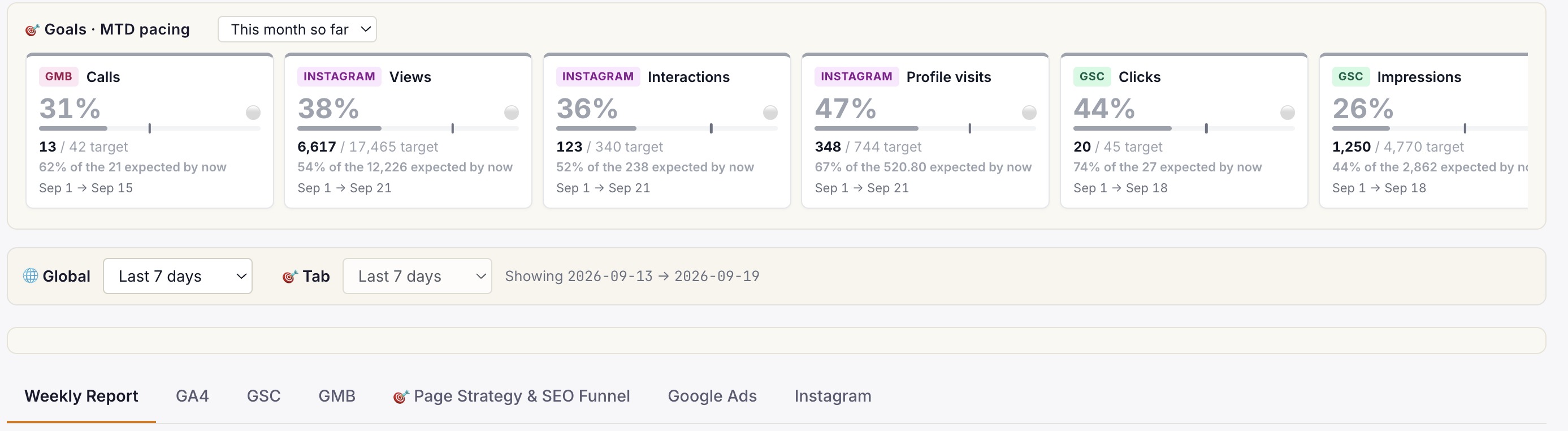
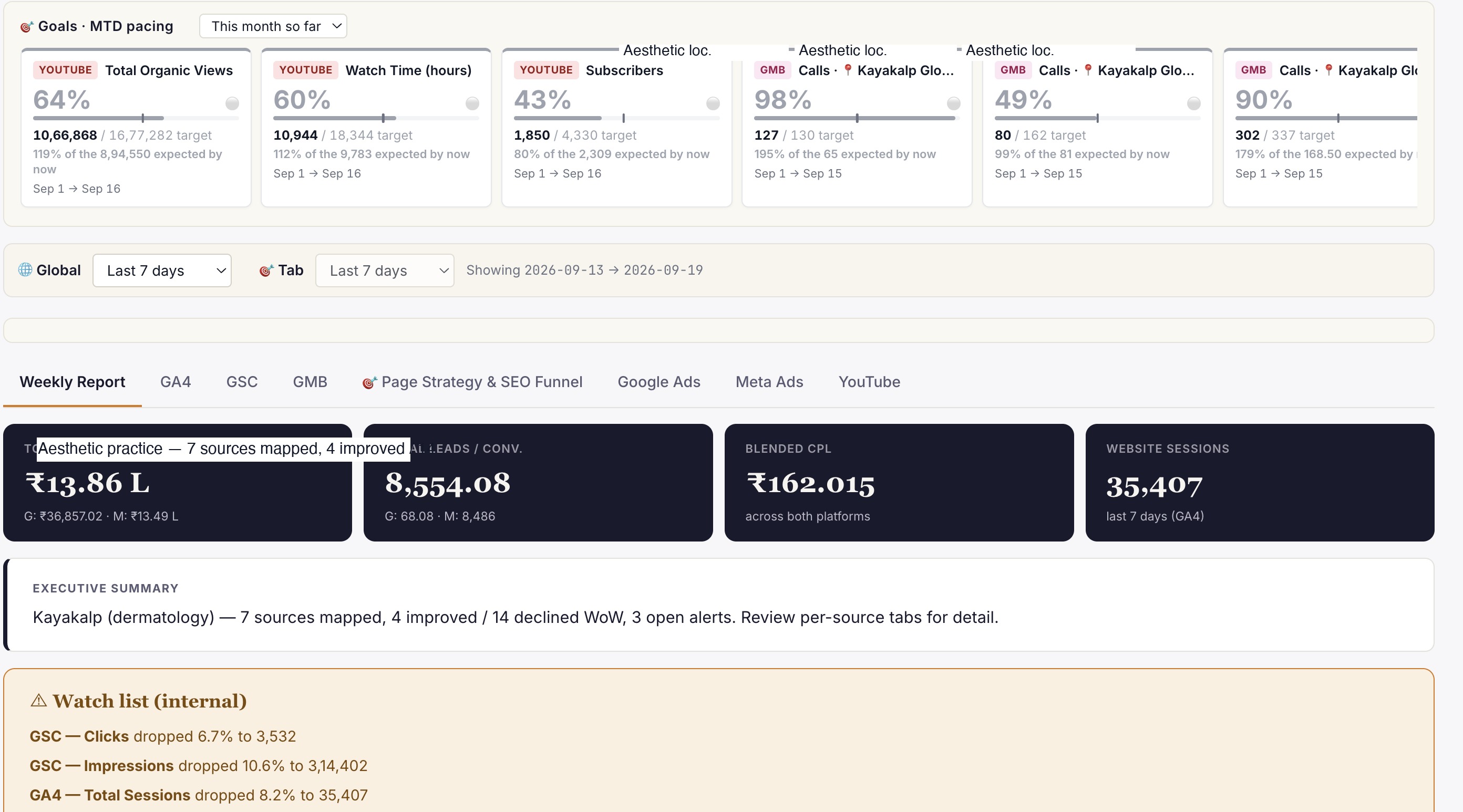
Live client dashboard. GSC, GA4, Google Ads, Meta Ads, IVR calls in one view. Login anytime, not monthly.
Phoenix
Clinic revenue intelligence over your PMS. Daily action queue: Prevent Loss, Maintain & Engage, Grow Revenue. Multi-centre rollout.
Or book a free 30-min audit to see all three in action on your account.
Healthcare brands
that already run on ICG.
A representative slice of the 150+ healthcare brands ICG has delivered for across India. Most engagements remain under NDA.


What ICG clients say · on video.
"Dental marketing in Delhi is brutally competitive. ICG's local SEO + Google Ads stack moved the needle steadily."
"Scale up of organic channels and business consulting. ICG has absolute domain authority in their field."
Need help operationalising this?
Every ICG service is healthcare-only, NMC + DPDP-aware, and built around the patient-research patterns that drive Indian healthcare growth in 2026.
Every practice welcome — packages from ₹20,000/mo.
Goals-Driven engagements · Performance-Linked Payout Models available
More from
ICG.
Five trends shaping Indian healthcare marketing through 2027: AI-first patient research, Conversions API adoption, ABDM discovery, the AEO w...
Healthcare AIO is the discipline of getting your clinic or hospital cited inside Google AI Overviews, ChatGPT and Perplexity answers — not j...
Conversational-search advertising places brand messages inside AI chat answers — ChatGPT, Perplexity, Copilot — rather than beside a results...
Stop guessing.
Book a Diagnostic.
30 minutes. Free. With the AI-powered healthcare-only marketing agency 150+ brands already run on. No slides, no pitch, no hard close.


