


AI is Changing Healthcare Marketing in India — What CMOs Should Do About It
The AI shift in healthcare marketing between 2024 and 2026 is bigger than the mobile-first shift of 2013-2015. Not because the technology is more transformative but because the pace is faster and compliance stakes are higher. This is what CMOs and marketing directors should actually do.
No pitch. Written root-cause diagnosis. AI-powered, healthcare only.
Direct answer
The AI shift in healthcare marketing between 2024 and 2026 is bigger than the mobile-first shift of 2013-2015. Not because the technology is more transformative but because the pace is faster and compliance stakes are higher. This is what CMOs and marketing directors should actua...
TL;DR
The AI shift in healthcare marketing between 2024 and 2026 is bigger than the mobile-first shift of 2013-2015 and bigger than the digital-first shift of 2005-2010. Not because the technology is more transformative — but because the pace of change is faster and the compliance stakes are higher. Marketing leaders at Indian hospitals, IVF chains, and specialty clinics who don't have a clear position on AI by end of 2026 will be measurably behind. This article breaks down what has actually changed, what CMOs and marketing directors should be doing about it, and where the traps are.
What actually changed in 2024-2026
Five specific shifts define the AI transition in healthcare marketing:
- Patient search moved partially to LLMs. Between 2024 and 2026, an estimated 30-45% of high-intent healthcare queries in India (fertility, cardiology, oncology, aesthetic surgery) began routing through ChatGPT, Perplexity, Claude, and Gemini before or instead of Google. Hospitals invisible in AI answers are increasingly invisible to a large portion of high-intent patients.
- Google AI Overview (AIO) became meaningful. Google AIO now cites specific hospital and clinic sources in health queries. Getting cited in AIO drives measurable click-through even without ranking #1 organically.
- Content velocity increased significantly. Hospitals and clinics using AI-assisted content workflows produce 3-5x more content than they did in 2023 — with editorial-quality maintained by fact-check layers. This has created a compounding SEO advantage for AI-adopted marketing teams.
- Compliance risks concentrated. LLMs generate content that violates NMC Section 6 (testimonial claims, before/after implications, cure statements) unless explicitly guardrailed. Hospitals that let their marketing teams use ChatGPT without compliance training have created NMC exposure.
- Attribution measurement got harder. AI-answer-driven traffic is often self-attributed as "direct" traffic in analytics because there is no referrer. This has broken standard attribution models until CMOs adopt new frameworks.
What CMOs should be doing
1. Establish AI use policy for the marketing team
Every marketing leader should publish an internal AI use policy that specifies: which AI tools are approved (ChatGPT Enterprise, Claude for Enterprise, Gemini for Business); what categories of content AI can be used for (first drafts of blog posts, social captions, email drafts) vs where AI cannot be used (NMC-sensitive claims, patient testimonials, before/after language); who fact-checks AI-generated content before publication; how AI use is disclosed (if at all) in the content itself. Without this policy, individual marketing team members improvise, which is where compliance exposure comes from.
2. Optimise for AIO citation, not just SEO ranking
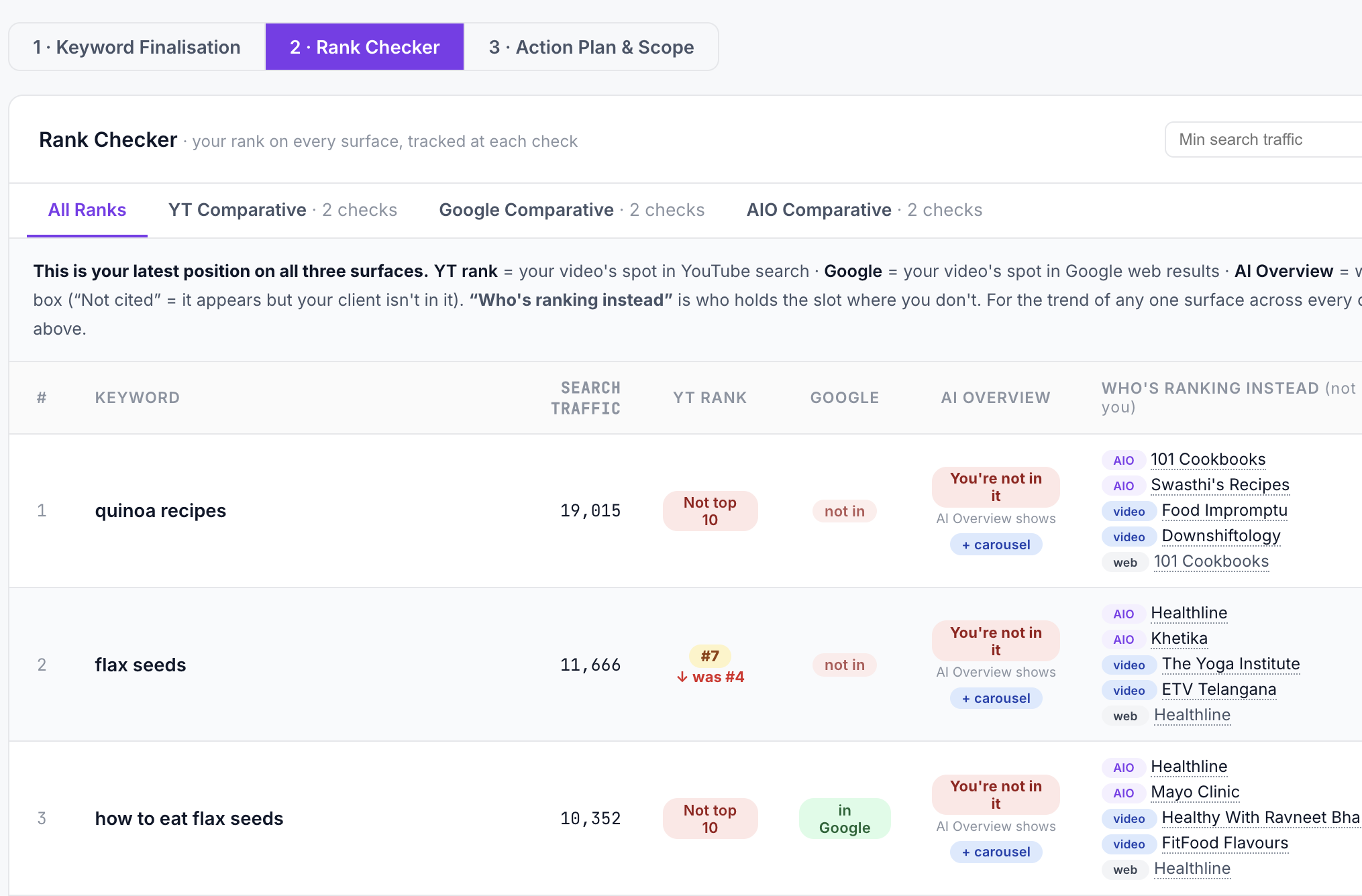
Being cited in Google AI Overview is a distinct SEO objective from ranking organically. Optimisation involves: adding FAQPage schema with 40-60 word answers to specific questions; using reviewedBy schema with named healthcare professional reviewers; structuring content with clear Q-format H2s; ensuring high-quality external citations to your content from authoritative healthcare publications. This is a specific workstream, not a byproduct of standard SEO.
3. Build the fact-check layer
AI-generated healthcare content requires medical fact-check before publication. Two options: (1) engage an in-house or external medical professional as fact-checker; (2) use a structured fact-check workflow with your senior clinicians reviewing weekly batches. Without this layer, publishing AI-generated content in healthcare is professional malpractice risk.
4. Train the team on AI-compliant prompting
The single highest-leverage training investment for a healthcare marketing team in 2026 is on AI-compliant prompting — how to structure prompts that produce NMC-compliant output, how to reject AI suggestions that violate compliance guardrails, how to fact-check specific claim categories. ICG Training Academy's AI Training programme covers this in depth across 3 levels (frontline, managers, executive briefing).
5. Rebuild attribution measurement
Standard Google Analytics attribution breaks under AI-answer-driven traffic patterns. Marketing leaders should implement: server-side event tracking; UTM parameter discipline on every AI-adjacent campaign touchpoint; CRM-side attribution to actual patient consultations (not just form fills); AI-referral tracking where LLM providers offer it (limited but growing). This is a multi-quarter workstream, not a one-time fix.
Where the traps are
- "AI content mill" trap. Producing 20 low-quality AI blog posts per month damages your domain authority faster than it helps. Quality gates matter more than volume.
- "NMC-compliant looking but not actually compliant" trap. AI-generated content often uses language that sounds compliant but implies testimonials, cure claims, or outcome guarantees. Fact-check must specifically look for this.
- "AI stack lock-in" trap. Using multiple AI tools without integration creates operational debt. Standardise on 1-2 primary AI tools per workflow.
- "Ignoring AI Overview" trap. Many CMOs are focused on ChatGPT and missing the fact that Google AIO is where their existing SEO investment can compound in 2026.
ICG Training Academy's AI programme
ICG's AI Training is delivered across 3 levels: AI-1 for frontline marketing teams (₹65K per batch), AI-2 for managers and growth teams (₹95K per batch), AI-3 executive briefing delivered by Co-Founders Rohit or Deep (₹1.75L per batch). Content is built from ICG's own AI deployment across 150+ healthcare clients. We teach what we use.
Related reading
Book a free 30-minute Brand & Growth Diagnostic.
It's a working session, not a sales pitch — you leave with a written root-cause analysis you can act on, whether or not you engage ICG.
Questions readers ask
about this topic.
The three platforms
behind every ICG engagement.
Beacon
CAPI middleware that fixes Event Match Quality, translates CRM statuses to Meta-standard events, dedups across channels.
Agency OS
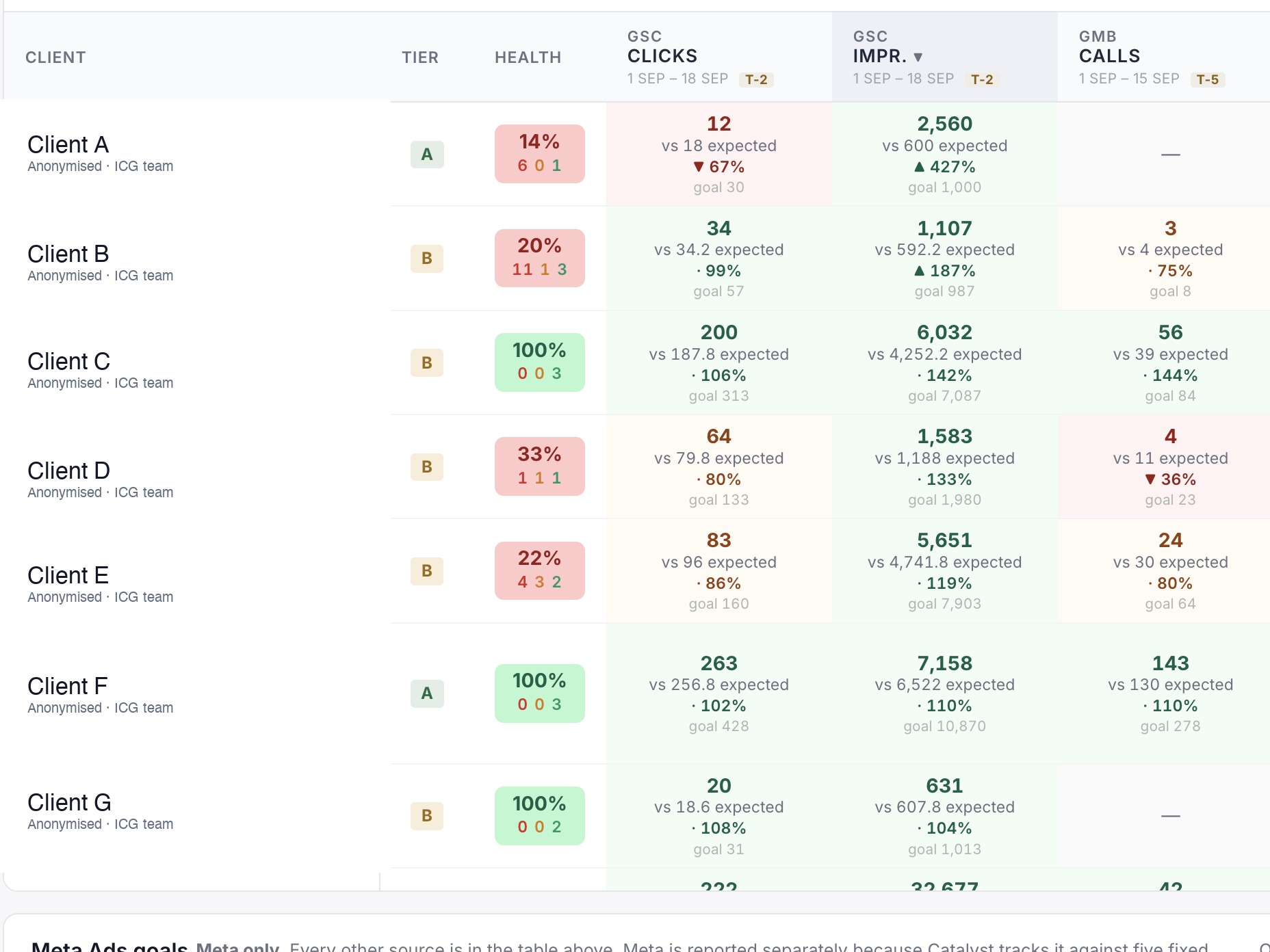
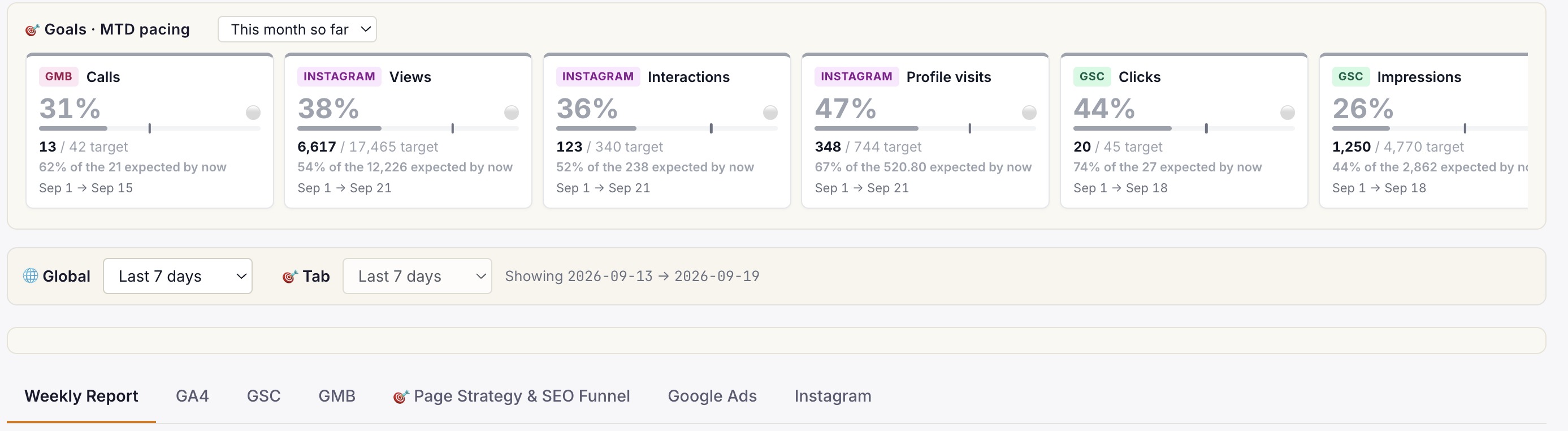
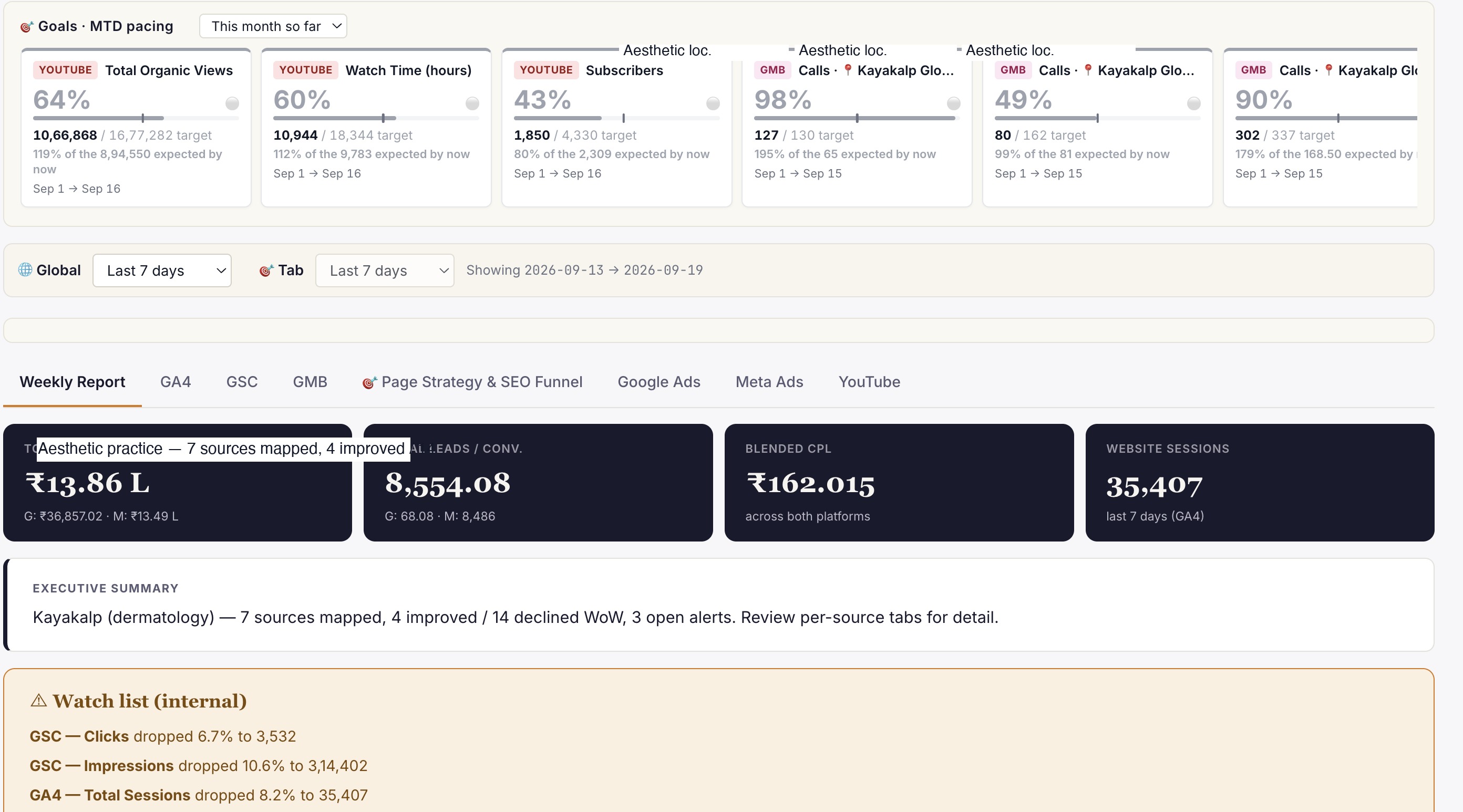
Live client dashboard. GSC, GA4, Google Ads, Meta Ads, IVR calls in one view. Login anytime, not monthly.
Phoenix
Clinic revenue intelligence over your PMS. Daily action queue: Prevent Loss, Maintain & Engage, Grow Revenue. Multi-centre rollout.
Or book a free 30-min audit to see all three in action on your account.
Healthcare brands
that already run on ICG.
A representative slice of the 150+ healthcare brands ICG has delivered for across India. Most engagements remain under NDA.


What ICG clients say · on video.
"Scale up of organic channels and business consulting. ICG has absolute domain authority in their field."
"Working with ICG transformed how we acquire IVF patients in Gurgaon. They understand the fertility journey from inquiry to consult..."
"What Ichelon accomplished — they got all my ideas and worked over 3-4 months to create an amazing, super-customised website."
Need help operationalising this?
Every ICG service is healthcare-only, NMC + DPDP-aware, and built around the patient-research patterns that drive Indian healthcare growth in 2026.
Every practice welcome — packages from ₹20,000/mo.
Goals-Driven engagements · Performance-Linked Payout Models available
More from
ICG.
Five trends shaping Indian healthcare marketing through 2027: AI-first patient research, Conversions API adoption, ABDM discovery, the AEO w...
Healthcare AIO is the discipline of getting your clinic or hospital cited inside Google AI Overviews, ChatGPT and Perplexity answers — not j...
Conversational-search advertising places brand messages inside AI chat answers — ChatGPT, Perplexity, Copilot — rather than beside a results...
Stop guessing.
Book a Diagnostic.
30 minutes. Free. With the AI-powered healthcare-only marketing agency 150+ brands already run on. No slides, no pitch, no hard close.


