


Angryturtle review recovery workflow for negative review response in Indian healthcare (2026): alert, sentiment classification, NMC-safe reply drafting, offline invitation, clinic ops escalation, resolution tracking
Angryturtle review recovery workflow for negative review response: alert to sentiment classification to NMC-safe reply drafting to offline invitation to escalation to clinic ops to resolution tracking, with a sample end-to-end scenario for a 4-star clinic that receives a 1-star review.
No pitch. Written root-cause diagnosis. AI-powered, healthcare only.
Direct answer
Angryturtle review recovery workflow for negative review response: alert to sentiment classification to NMC-safe reply drafting to offline invitation to escalation to clinic ops to resolution tracking, with a sample end-to-end scenario for a 4-star clinic that receives a 1-star r...
TL;DR

Angryturtle's review recovery workflow for negative review response is the operational sequence a healthcare business runs when a 1-star or 2-star review lands on a Google Business Profile. Getting this workflow right matters more than most owners realise — a poorly-handled negative review does more damage than the review itself, because prospective patients read the reply and judge the clinic by how it responds. This piece is the detailed walk-through of how the workflow runs inside Angryturtle, why each step matters, and a sample end-to-end scenario for a 4-star clinic that received a 1-star review after a genuinely unhappy visit. ICG built this workflow as part of the Healthcare Local SEO Agency India service stack we run for 150+ Indian healthcare brands.

Why review recovery is different from review response
Review response is the general-purpose function — every review, positive or negative, gets a reply. Review recovery is the specialised subset that kicks in when the review carries meaningful negative signal: a 1-star or 2-star rating, or a 3-4-star rating with clearly negative narrative content. The recovery workflow is different because the goals are different.
A positive review reply is a signal amplifier — the reply thanks the reviewer, reinforces the specific praised behaviour, and leaves a warm public trace for future readers. A negative review reply is a damage-limitation and relationship-repair intervention — the reply has to acknowledge the reviewer without capitulating, take the conversation offline where actual resolution can happen, and demonstrate to future readers that the business handles complaints with maturity.
Doing negative review response poorly is worse than not doing it at all. Defensive replies, replies that argue with the reviewer, replies that dispute specific claims without evidence, and replies that reveal patient identity all cause more damage than the original 1-star. Angryturtle's recovery workflow exists specifically to prevent these failure modes.
Step 1: alert (within minutes of the review appearing)
The workflow starts with detection. Angryturtle polls Google Business Profile for new reviews on a short interval and detects negative reviews within a few minutes of the review going live on Google. The moment a negative review is detected, the platform generates a multi-channel alert.
Alert routing depends on the account setup: for a solo owner, the alert is a WhatsApp push and an email to the primary user; for a clinic team, the alert routes to a nominated review-response lead plus the clinic manager; for a chain, the alert routes to the location lead for the affected clinic plus the chain marketing director. The alert includes the review star count, the review text, the reviewer's public display name, and a direct link to draft the reply inside Angryturtle.
The alert SLA is critical. Negative reviews that sit unresponded for 24-48 hours accumulate reader damage — every prospective patient who lands on the profile in that window sees an unanswered negative review, which reads as "the clinic doesn't care." A negative review with a thoughtful reply within a few hours reads very differently — as "the clinic handles concerns seriously." Angryturtle's alert is deliberately fast so the response window is preserved.
Step 2: sentiment classification and categorisation
Before a reply is drafted, the platform classifies the review by sentiment and by concern category. Sentiment classification distinguishes between a review that is negative-but-fixable (a specific complaint about waiting time, a specific dissatisfaction with a staff member's behaviour, a specific issue with billing) versus negative-and-structural (a complaint about clinical outcome, a legal-adjacent complaint, a defamation-risk complaint, a compliance-flagged complaint).
Concern category classification identifies the specific dimension the reviewer is unhappy about: waiting time, receptionist behaviour, doctor communication, clinical outcome, billing dispute, appointment cancellation experience, facility hygiene, follow-up communication. Different concern categories route through different reply patterns and different offline resolution paths — a waiting-time complaint is a receptionist-workflow issue, a clinical-outcome complaint is a doctor-conversation issue, a billing complaint is a finance-team issue.
Structural or legal-adjacent complaints bypass the automated reply drafter entirely and route directly to human review at the clinic ops or chain marketing level. Automated drafting for these categories creates ASCI or NMC risk that no algorithm can safely handle — a human with clinic context has to decide the response. The classification decision is transparent inside the platform so the reviewer knows why their draft is or is not appearing automatically.
Step 3: NMC-safe compliant reply drafting
For reviews cleared for automated drafting (negative-but-fixable, non-structural, non-legal-adjacent), Angryturtle drafts a reply that respects the compliance perimeter for Indian healthcare. The drafting rules the platform follows:
No patient identification. The reply does not use the reviewer's name if the review used a pseudonym or partial name. The reply does not reference specific medical details, treatment specifics, or any patient identifier that would make the person recognisable to anyone who wasn't already the patient. DPDP Act 2023 makes patient identification in public content a real risk; NMC's 2026 advertising guidelines reinforces the same restriction from the doctor-conduct angle.
No outcome claims. The reply does not claim the clinical outcome was correct or that the patient was mistaken about their experience. Even where the clinic believes the reviewer's clinical claim is wrong, disputing the claim publicly is a legal risk and reads badly to prospective patients. The reply acknowledges the concern without conceding to the specific claim.
No comparative claims. The reply does not claim the clinic is better than any alternative or that similar complaints have never happened. ASCI Guidelines 2022 restrict comparative advertising, and public review replies are advertising for the purposes of the code.
Acknowledgement + invitation. The reply acknowledges the reviewer's dissatisfaction with a human tone, does not argue any specific point, and invites the reviewer to a private channel to resolve the underlying concern. The invitation is specific ("Please reach us on WhatsApp at [chain WhatsApp number] or email [chain email] so we can look into this properly for you") rather than vague ("please contact us").
Tone consistency. The reply matches the clinic's captured tone from onboarding — a warmer clinic's reply reads warmer, a more clinical clinic's reply reads more measured. Tone consistency is what makes the reply feel authentic rather than templated.
Step 4: offline invitation and channel routing
The invitation-to-take-offline is the operational hinge of the whole workflow. The public reply invites the reviewer to a private channel; the private channel is where actual resolution can happen without the constraint of public visibility. Angryturtle routes the invitation through the channel the clinic operates best on — typically WhatsApp for Indian healthcare, sometimes email, occasionally a callback request.
The invitation has to be genuinely actionable. A clinic that publishes an invitation to "reach us on WhatsApp" and then does not have a monitored WhatsApp number to respond on generates a second layer of frustration for the reviewer, who now feels ignored twice. The workflow includes a channel-verification step at onboarding to make sure the offered channel is actually staffed.
When the reviewer takes up the offline invitation, the conversation moves out of Google Reviews and into the clinic's private communication — WhatsApp, email, or phone. Angryturtle records that the offline conversation has been initiated (via manual mark-as-engaged in the platform) so the recovery status can be tracked.
Step 5: escalation to clinic ops for underlying resolution
The public reply and the offline conversation cover the reputation side of the workflow. The underlying issue that caused the review still needs to be resolved operationally — the waiting time problem needs a receptionist workflow fix, the staff behaviour issue needs a coaching conversation, the billing dispute needs a finance-team review, and so on.
Angryturtle's workflow routes the operational escalation based on the concern category from step 2. A waiting-time complaint generates an operational note routed to the clinic manager. A staff-behaviour complaint routes to HR or the clinic head. A clinical complaint routes to the medical director. A billing complaint routes to the finance team. The routing is configured at chain or clinic level during onboarding; the platform doesn't assume the routing, it uses the configuration the business set up.
Escalations track through resolution — the operational owner marks the underlying issue as investigated, acted upon, and resolved. If a pattern emerges (three waiting-time complaints in a month at one clinic, for example), the platform surfaces the pattern to the chain marketing director because the pattern is a signal about a systemic operational issue rather than a one-off incident.
Step 6: resolution tracking and outcomes
The final step is closing the loop. Angryturtle tracks each negative-review recovery to an outcome: reviewer went offline and confirmed resolution (best case), reviewer went offline and remained unhappy (partial resolution), reviewer did not respond to the offline invitation (contained but not resolved), reviewer updated the review upward (rare but valuable), reviewer added additional negative content (worst case, requires further intervention).
The tracked outcomes feed into quarterly review analytics — what percentage of negative reviews were fully resolved, what percentage stayed contained, what percentage escalated further. These numbers are diagnostic for the clinic ops team and the marketing team; they surface whether the workflow is working or whether specific concern categories need workflow refinement.
Where a reviewer updates their review upward after resolution, the platform captures the update automatically and includes it in the "recovered" bucket. Where a reviewer does not update but leaves the offline conversation satisfied, the recovery is still marked successful even though the public review remains — the goal is resolution and containment, not always public update.
Sample workflow: a 4-star clinic that got a 1-star review
Illustrative scenario. A dermatology clinic in Chennai with 187 reviews at 4.4-star average receives a 1-star review at 2:17 PM on a Tuesday. Reviewer name: "Priya S." Review text (illustrative): "Waited 90 minutes past my appointment time. When I finally went in, the doctor spent 4 minutes with me and dismissed my concern about a persistent rash. Receptionist was rude when I asked how much longer. Very disappointing experience, especially for the price. Won't be going back."
2:23 PM (6 min after review). Angryturtle detects the review, classifies as negative, sends WhatsApp and email alert to the clinic manager and the marketing head. Concern categories flagged: waiting time (primary), doctor communication (secondary), receptionist behaviour (tertiary), price sensitivity (contextual).
2:41 PM (24 min after review). Clinic manager opens Angryturtle, reviews the AI-drafted reply. Draft reads roughly: "Thank you for sharing your feedback. We are genuinely sorry that your visit did not meet the standard we aim for, and we understand how frustrating a long wait combined with a rushed consultation can be. This is not the experience we want any patient to have. We would really like to look into what happened for you specifically and address the underlying issues. Please reach us on WhatsApp at 91-XXXXX-XXXXX or email us at care@[clinic-domain] so we can discuss this properly." Manager reviews, makes one small edit (adds the clinic manager's name to the sign-off), approves and publishes.
2:43 PM. Reply is live on Google. Angryturtle routes operational escalations: waiting-time note to reception scheduling review, doctor-communication note to the treating dermatologist's consultation-review folder, receptionist-behaviour note to HR for coaching conversation. Recovery status: engaged, awaiting reviewer response.
Same day, 5:15 PM. Reviewer messages the clinic on WhatsApp. Clinic manager responds within 20 minutes, acknowledges specifics, apologises for the waiting time (which was caused by a same-day emergency that ran long — explained honestly), invites the reviewer to a complimentary follow-up consultation with a different dermatologist, and offers a partial refund of the original consultation fee. Reviewer accepts the follow-up but declines the refund.
Day 8. Follow-up consultation happens. Reviewer receives a proper consultation, treatment plan for the rash is prescribed, follow-up scheduled at 3 weeks. Angryturtle marked as "in-progress recovery" pending outcome.
Day 22. Reviewer follows up on WhatsApp to say treatment is working well. Manager thanks her, does not ask her to update the Google review (asking for review updates is often experienced as pushy and can undo the goodwill). Recovery marked "resolved offline, review unchanged."
Day 45. Reviewer voluntarily updates the Google review to 4 stars with a text update acknowledging the follow-up experience was excellent. Angryturtle captures the update, marks the recovery as "resolved with public update."
Operationally, the clinic also actioned three underlying fixes across the same 45 days: revised scheduling buffer to reduce probability of 90-minute overruns, coaching conversation with the receptionist about tone under pressure, and a broader review of same-day emergency handling protocols. The one review generated an operational learning cycle that improved the experience for future patients.
The compliance perimeter for negative review response
Public negative-review response sits inside the same compliance perimeter as any other public statement by a healthcare business. NMC's 2026 advertising guidelines restricts what any doctor associated with the clinic can claim in a public reply — no defence of outcomes with clinical detail, no assertions about the reviewer's medical condition. ASCI Guidelines 2022 apply — no comparative or superlative claims, no unsubstantiable statements. DPDP Act 2023 applies specifically to any patient-identifiable content in the reply — the reply cannot confirm the person was a patient, cannot reference their treatment, cannot use identifying details from clinic records. Consumer Protection Act 2019 is relevant because healthcare complaints can escalate to consumer forums; public replies that appear to accept liability without proper process can weaken a clinic's legal position. Cross-reference the ASCI code text for the current advertising restrictions and the NMC Ethics Code for the practitioner-conduct restrictions.
The tool ICG uses to run this at scale: Angryturtle
ICG runs local SEO and GBP intelligence for 150+ Indian healthcare brands using Angryturtle — our own AI-native GBP intelligence and management OS. The platform scores every profile 0-100 via a proprietary Rank OS model with five weighted dimensions (Relevance, Review Health, Freshness, Entity Authority, AIO Readiness), publishes edits, Posts, media, and review replies directly to Google, and includes Ask Maps AIO Readiness scoring for Google AI Overviews and ChatGPT visibility.

The review recovery workflow described above is a native module inside the platform, available on both the self-serve tier (with owner-driven approval before every reply publishes) and the managed tier (with ICG healthcare specialists driving the workflow end to end).
Available in two shapes: self-serve at ₹999/- per month for solo owners with 1-2 profiles, and ICG's managed service from ₹25,000/- per month where our healthcare specialists execute inside the same platform. Both are anchored in the Healthcare Local SEO Agency India pillar page which has full scope, methodology and pricing.
Book a demo on WhatsApp → or start a free trial at angryturtle.ai →
Related reading
- Healthcare Local SEO Agency India — the pillar service page
- NMC-safe review response templates for Indian healthcare — the reply pattern library
- Google review strategy for Indian healthcare (NMC compliant) — the strategic frame around review velocity and quality
- Fake review removal on Google for Indian healthcare — the escalation path when a review is genuinely fake
- Review velocity for healthcare local SEO in India — the underlying compounding metric
FAQ

How fast should a negative review be responded to? Ideally within 2-6 hours, and never later than 24 hours. Longer response windows accumulate reader damage from prospective patients who see an unanswered negative review on the profile.
Should we ever ask a reviewer to remove a negative review after resolution? Occasionally, and only if the offline resolution was clearly successful and the relationship is warm. Asking for review removal or update is often experienced as pushy and can undo goodwill. The better practice is to invite the reviewer to update the review if they feel differently now, without asking them to remove it.
What if the negative review is factually false — should we say so publicly? Only in narrow, well-substantiated cases where the clinic can prove the reviewer was never a patient (bot review, competitor sabotage, mistaken clinic identity). Public disputes of factual claims by real dissatisfied patients almost always look worse than a measured acknowledgement, even when the clinic is factually right.
Can Angryturtle flag reviews that are genuinely fake for Google removal? Yes. The platform includes fake-review flagging as a workflow step. Fake reviews (paid, competitor-generated, or clearly not describing real patient experience) can be reported to Google via the platform's reporting flow with the required evidence packaged for review.
Should the clinic doctor personally reply to a review about their own consultation? Almost never. Doctor-authored public replies risk revealing clinical detail that violates NMC and DPDP restrictions. The clinic manager or a designated review-response lead should own the reply, with the doctor consulted privately for context that shapes the reply.
What happens if the same reviewer leaves multiple negative reviews across our chain? The pattern is flagged as potentially non-genuine (a single genuinely dissatisfied patient does not typically visit multiple chain clinics and leave a review at each). The recovery workflow treats the pattern as a chain-level escalation rather than a per-clinic incident, and the fake-review flagging path becomes relevant.
How do we handle a review that mentions a specific staff member by name? The public reply does not name the staff member (protects staff privacy and avoids amplifying the specific accusation). Offline, the staff member is involved in the coaching or investigation conversation. If the accusation is serious, HR ownership takes precedence over marketing ownership.
Can Angryturtle handle review recovery for reviews on doctor-listing platforms, general business directories or other platforms? The workflow is Google Business Profile focused because Google reviews carry the biggest local search signal. Reviews on doctor-listing platforms, general business directories and similar platforms are tracked in the competitor and reputation monitor but require platform-native tools for reply publishing. See Doctor-listing platform vs Google reviews for the platform-level comparison.
What is the biggest mistake healthcare businesses make with negative review response? Defensive replies that argue with the reviewer, or ignoring the review altogether. Both damage prospective-patient trust more than the original review did. The measured-acknowledgement-plus-offline-invitation pattern is the safest default and works across almost all concern categories.
Book a free 30-minute Brand & Growth Diagnostic.
It's a working session, not a sales pitch — you leave with a written root-cause analysis you can act on, whether or not you engage ICG.
The three platforms
behind every ICG engagement.
Beacon
CAPI middleware that fixes Event Match Quality, translates CRM statuses to Meta-standard events, dedups across channels.
Agency OS
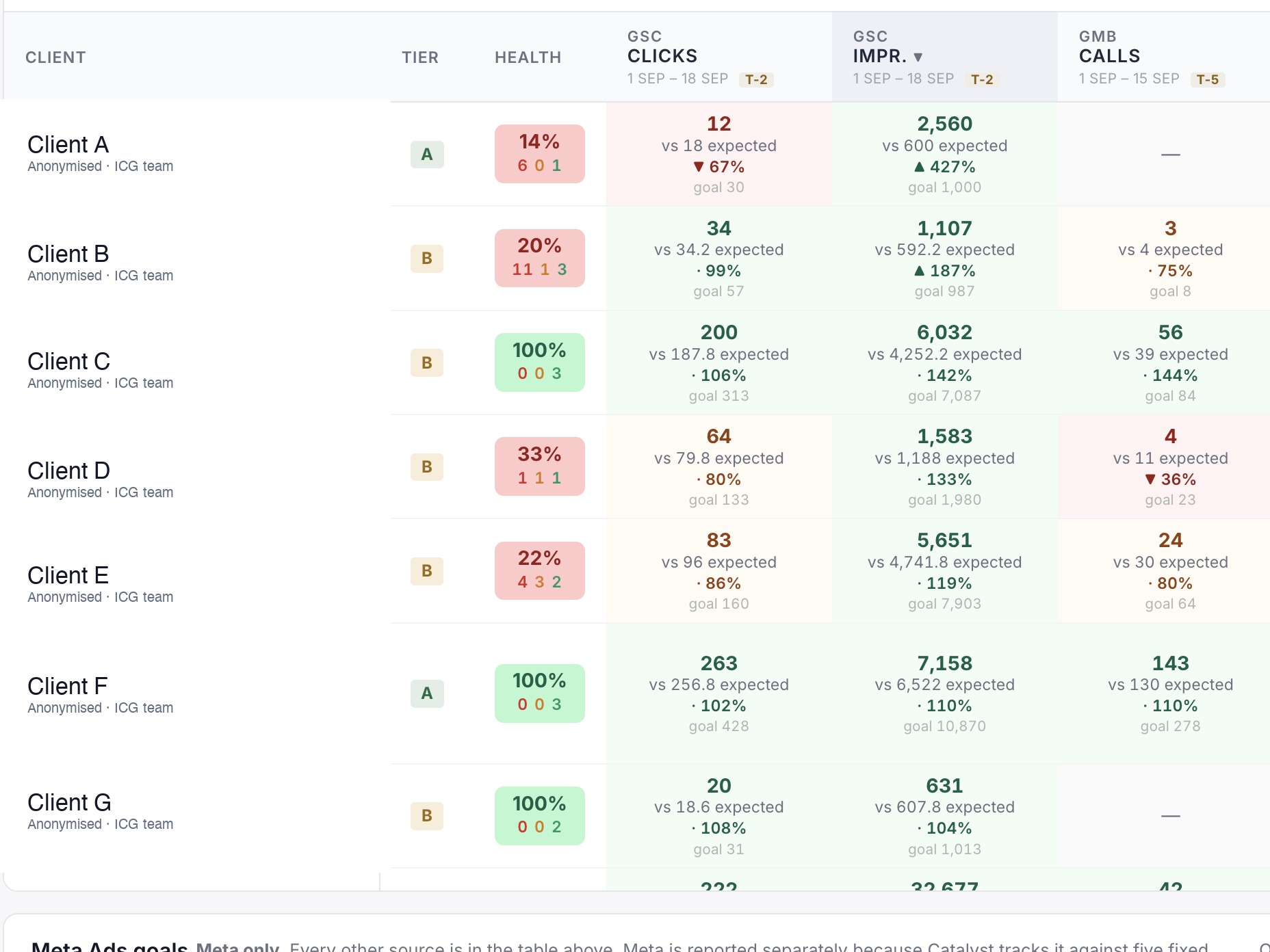
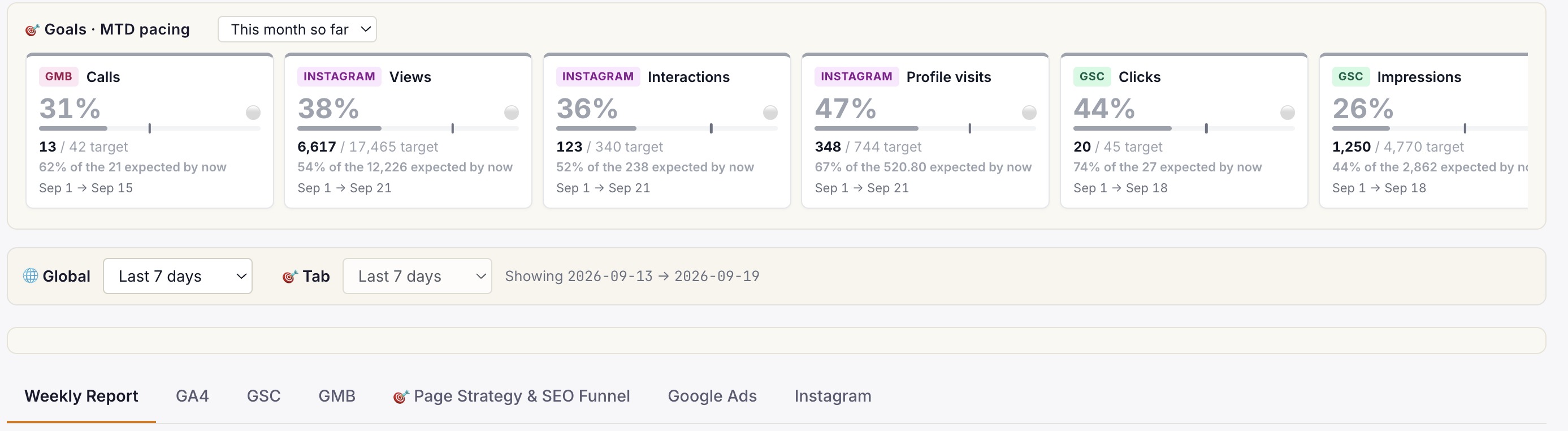
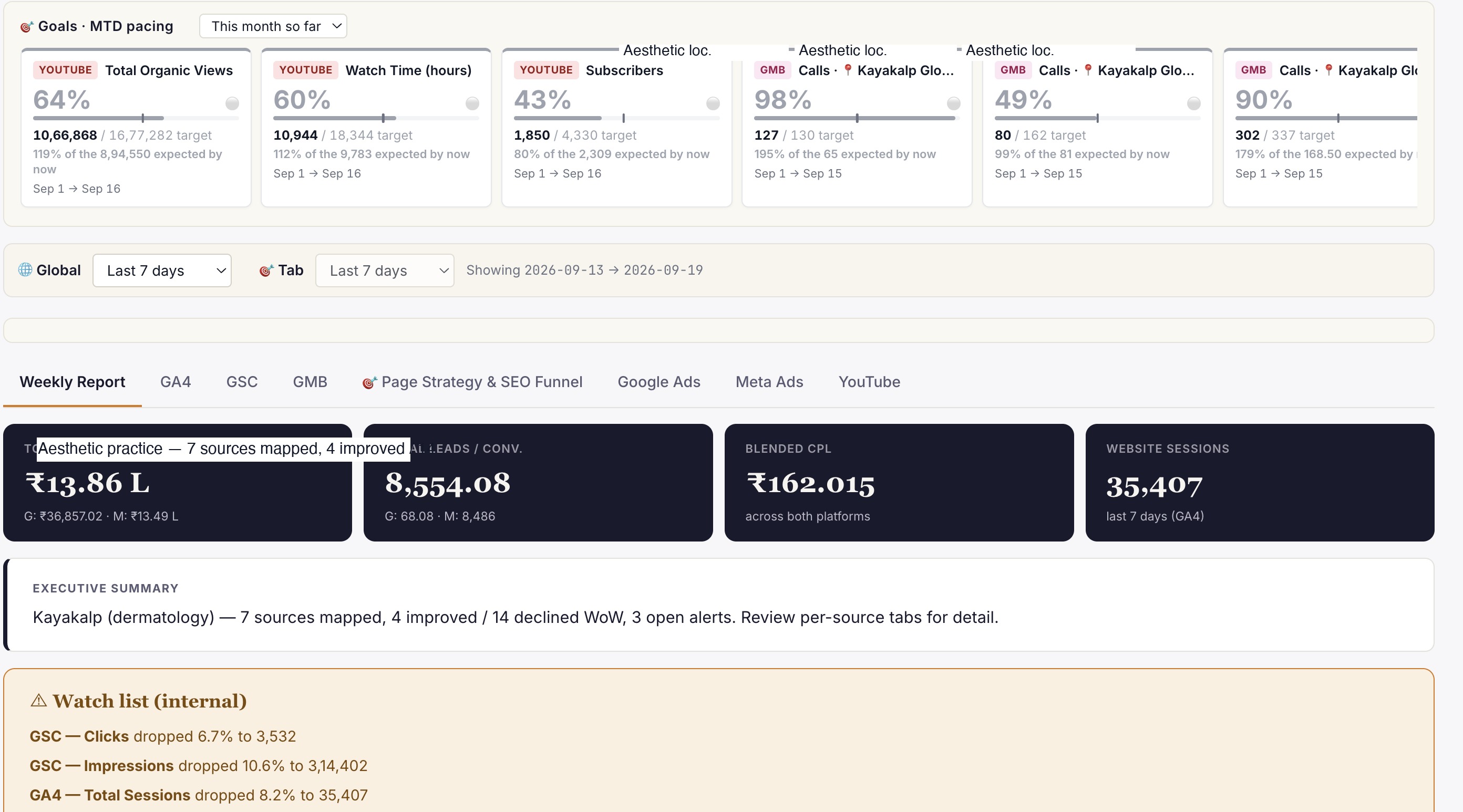
Live client dashboard. GSC, GA4, Google Ads, Meta Ads, IVR calls in one view. Login anytime, not monthly.
Phoenix
Clinic revenue intelligence over your PMS. Daily action queue: Prevent Loss, Maintain & Engage, Grow Revenue. Multi-centre rollout.
Or book a free 30-min audit to see all three in action on your account.
Healthcare brands
that already run on ICG.
A representative slice of the 150+ healthcare brands ICG has delivered for across India. Most engagements remain under NDA.


What ICG clients say · on video.
"Scale up of organic channels and business consulting. ICG has absolute domain authority in their field."
"Working with ICG transformed how we acquire IVF patients in Gurgaon. They understand the fertility journey from inquiry to consult..."
"What Ichelon accomplished — they got all my ideas and worked over 3-4 months to create an amazing, super-customised website."
Need help operationalising this?
Every ICG service is healthcare-only, NMC + DPDP-aware, and built around the patient-research patterns that drive Indian healthcare growth in 2026.
Every practice welcome — packages from ₹20,000/mo.
Goals-Driven engagements · Performance-Linked Payout Models available
More from
ICG.
Five trends shaping Indian healthcare marketing through 2027: AI-first patient research, Conversions API adoption, ABDM discovery, the AEO w...
Healthcare AIO is the discipline of getting your clinic or hospital cited inside Google AI Overviews, ChatGPT and Perplexity answers — not j...
Conversational-search advertising places brand messages inside AI chat answers — ChatGPT, Perplexity, Copilot — rather than beside a results...
Stop guessing.
Book a Diagnostic.
30 minutes. Free. With the AI-powered healthcare-only marketing agency 150+ brands already run on. No slides, no pitch, no hard close.


