


Can Doctors Advertise in India? What a Doctor May Say vs What a Hospital May Say
Not promotionally: under the NMC's October 2026 guidelines a doctor may not solicit patients or hire anyone to market their practice (8.1(ii)), but may publish education in their own name. Hospitals may publish factual information (8.3).
No pitch. Written root-cause diagnosis. AI-powered, healthcare only.
Direct answer
Not promotionally: under the NMC's October 2026 guidelines a doctor may not solicit patients or hire anyone to market their practice (8.1(ii)), but may publish education in their own name. Hospitals may publish factual information (8.3).
TL;DR
Author: Rohit Gupta — Co-Founder, Business & Growth Reviewed by: Abhash Kumar — Co-Founder, Strategy
Neither the author nor the reviewer is a clinician; this is a strategy and compliance review, not a clinical sign-off.
Can doctors advertise in India? Not in the promotional sense. Under the National Medical Commission's Guidelines on Ethical Advertising and Public Communication of 6 October 2026, a registered medical practitioner (RMP) may not solicit patients directly or indirectly, may not self-promote and may not engage a third party to market medical services (para 8.1(ii)). A hospital or medical institution, on the other hand, may publish factual, objective and verifiable information about itself (para 8.3). That split between the individual and the institution decides almost every practical question, and it is what this piece is about: what an RMP may say, what a hospital may say, and how that plays out on Google Ads, Meta, listings, websites and personal social media. For the complete clause-by-clause guide, see the pillar: NMC advertising guidelines 2026: what doctors and hospitals can and can't do.
This article explains publicly available advertising-compliance frameworks for general awareness. It is not legal advice. Confirm specifics with your own counsel or your State Medical Council before running a campaign.
Updated 8 October 2026 to the National Medical Commission's Guidelines on Ethical Advertising and Public Communication by Hospitals/Medical Institutions and Registered Medical Practitioners (public notice No. R-13014/01/2024-Ethics, dated 6 October 2026, in force immediately). Paragraph numbers in this article refer to those guidelines. General information, not legal advice.
Table of contents
- What an individual doctor may say
- What a hospital or clinic may say
- What's restricted or prohibited
- The distinction that changes everything: doctor vs. clinic/hospital brand
- Channel by channel: what's workable and what isn't
- Safer alternatives to the claims you can't make
What an individual doctor may say
The space for an individual doctor is narrower than most marketing advice assumes, but it is real. The guidelines, read with the 2002 Code of Ethics, leave an RMP four kinds of public communication:
- Educational content in their own name and designation. Lectures or talks on public health through TV, radio and electronic media, without promoting the employer organisation (8.2(iii)), and awareness content that does not promote the practice, does not solicit patients and is not monetised through promotional marketing (5.1).
- Formal announcements. Starting practice, a change in the type of practice, a change of address, temporary absence, resumption, succession, and a declaration of charges (8.2(ii), 9.3).
- Health-education material in the clinic, with no cure guarantee and no superiority claim (8.2(iv)).
- Research in reputed journals (8.2(i)).
Whatever the doctor posts electronically must show their name, qualifications, registration status and State or National Medical Register number (3.2, Explanation III). A signboard and letterhead follow the 2002 rules: name, recognised qualifications, specialty and registration number, and no self-photograph (2002 Regulations 6.1.1 and 6.1.2, cited in para 9.2).
The pattern across everything permitted is simple: information a patient needs, or education a patient can use, never a claim designed to persuade by comparison or emotion. A line such as "MBBS, MD (Dermatology), registration no. X, consultations Tuesday–Saturday, 11am–6pm, Hindi and English spoken" is factual. "The city's best dermatologist" is not.
What a hospital or clinic may say
Hospitals and medical institutions have more room, as long as everything they say is factual, objective and verifiable. Para 8.3 lists the categories:
- name, location and contact details
- departments and services
- facilities and equipment
- emergency services
- accreditation status, for example NABH 6th Edition accreditation of the facility, which is a verifiable, third-party-audited fact checked by NABH
- charges, stated factually
A hospital website may also carry a doctor directory with names, recognised qualifications, specialties, registration details and availability; the guidelines treat this as patient information, materially distinct from paid promotion (9.1). What a hospital may not include is solicitation, inducement, superiority claims, cure guarantees or promotional portrayal of an individual RMP (8.3), and the frequency or medium of communication must not turn facts into solicitation. Hospitals are dealt with under the Clinical Establishments Act or the State Act that applies (4.3). For the institutional side in depth, see hospital and clinic advertising under paras 8.3 and 9.1.
What's restricted or prohibited
Most of what's above is safe precisely because it's factual and checkable against a register or a public document. The line moves the moment a claim stops being verifiable and starts persuading on its own terms: a comparative judgment, an outcome promise, or a story designed to stand in for evidence.
Self-laudatory and comparative claims sit right at that line. "Best doctor", "No.1", "100% success" and "painless" claims are barred for doctors (8.1(iii)), and "best", "leading", "most trusted", "top" or "unmatched" are barred for doctors and hospitals alike unless objectively verifiable through a disclosed methodology (8.1(ix)). Even factual information about equipment or services may not carry superiority, guaranteed-outcome or comparative claims (3.2, Explanation II). The ASCI Healthcare Guidelines treat implied-guarantee language as misleading advertising independently, so a claim can fail two frameworks at once.
Testimonials, before-and-after images and reviews
No RMP or institution may solicit, buy, procure or manipulate fake, paid or misleading reviews, ratings or testimonials, and an RMP may not request or share patient testimonials or reviews for professional promotion on social media (3.2, Explanation V). Before-and-after photographs, promotional case reports, celebrity patients and success stories are barred except for scientific or educational use with anonymised consent (8.1(v)), and patient consent does not make a prohibited testimonial or before-and-after depiction lawful (6.2). This is one of the most commonly missed rules, because a testimonial feels like the most human form of proof available. Under the guidelines it is not available for promotion, for a doctor or a hospital. See patient testimonials and before-after photos.
Outcome and success-rate claims
Success-rate and cure claims fall under 8.1(iii) and 8.1(vi), and para 10.1 lists misleading cure claims among the serious violations. Fertility clinics carry a second layer: the ART (Regulation) Act, 2021 applies on top of the guidelines. A "70% success rate" banner is exactly the kind of number a marketing team unfamiliar with Indian healthcare regulation reaches for, because it sounds concrete. It is also exactly the kind of claim to leave out.
Offers and third parties
Discounts, coupons, cashback and free procedures used as inducements are barred for doctors and hospitals (8.1(x)). An RMP may not engage a third party to market medical services (8.1(ii)), and no one may use a third party to do indirectly what is prohibited directly (8.1(xi)). Publishing through an agency, platform or influencer does not shift responsibility (4.4).
The distinction that changes everything: doctor vs. clinic/hospital brand
The guidelines bind the registered practitioner personally and bind the institution separately. That is why a hospital's institutional communication and a named doctor's own communication follow genuinely different rules, even when they concern the same service line.
For the doctor whose registration number sits on the creative, the distinction is not academic. A hospital can describe its departments, accreditation, equipment and emergency services, because that is the institution describing itself (8.3). The same hospital may not build a campaign around one doctor as a promotional figure (8.3), and the doctor may not run their own promotional campaign at all (8.1(ii)).
Social media follows the same split, and it's the part doctors most often get wrong. A hospital's official account posting facility information or health-awareness content is the institution informing the public. A doctor's personal account posting a patient's thank-you note, or reposting a review, is a registered individual using patient testimony for promotion, which Explanation V bars. The platform doesn't distinguish between the two; the guidelines do. For a fuller breakdown, see the guide to doctors on social media.
A related question comes up constantly: what about "Dr. X now consulting at Y Hospital"? A factual announcement and a directory entry with the doctor's recognised qualifications, specialty, registration details and availability are fine (8.2(ii), 9.1). If the copy attached to the doctor's name drifts into comparative or self-laudatory territory, such as "India's leading joint-replacement surgeon" next to a photograph, it becomes promotional portrayal of an individual RMP (8.3), and the doctor's own exposure doesn't disappear because the hospital wrote the copy and paid for the media (4.4). Doctors should ask to see any copy that names them before it runs.
The line gets harder to draw when the doctor is also the clinic's owner, which is common in India's single-practitioner and small-group practices. There, the "institution" and the "practitioner" are effectively the same person wearing two hats, and the extra latitude an institution enjoys mostly evaporates. A solo practitioner's clinic Instagram page doesn't become an arm's-length institutional account just because it carries the clinic's name; what matters is who controls the content and whose registration is exposed by it. Keep such accounts factual and educational.
None of this means a doctor should be invisible. Patients want to know who is treating them. It means a doctor's public presence should come from factual, verifiable information and genuine education, and the institution should carry its own facts without turning any doctor into an advertisement.
Channel by channel: what's workable and what isn't
Picture a clinic manager with two options on a Tuesday afternoon: boost a glowing Google review as a Meta post, or spend the same time making the clinic's listings accurate and complete. Under the guidelines only the second is open. What is fine on a listing profile can become a problem the moment it turns into a promotional creative.
Google Ads
Search-engine promotion counts as advertising when it is promotional (3.2). An individual doctor buying search ads to promote their own practice is hard to reconcile with 8.1(ii). A hospital or clinic can run factual search ads that lead to factual pages: departments, services, hours and charges. A compliant headline reads like "Dermatology Department, Koramangala: Hours and Fees". A non-compliant one reads "Bangalore's #1 Dermatologist" or "Guaranteed Clear Skin in 3 Sessions" (8.1(iii), 8.1(ix)). Google's own healthcare and medicines policies add a separate layer, so an ad can clear the guidelines and still be disapproved at the platform level, or the reverse.
Meta
Meta ads are riskier because the creative is public and shareable in a way search ads aren't, and targeted promotion is expressly covered (3.2). Run awareness and factual facility content from the hospital's or clinic's own page, with no offers (8.1(x)) and no promotional portrayal of a doctor (8.3). Testimonial-style creative and before-and-after imagery do not belong on this channel at all. Meta's own policies restrict personal-health targeting and certain before-and-after formats independently, so platform approval does not equal compliance.
Doctor-directory and local business directory listings
Listing profiles are closer to a directory entry than an ad. Keeping the profile factual (services, timings, fees, a clinic's Google Business Profile and listings accurate and current) does most of the useful work. Platforms that host doctors must themselves follow the guidelines, must not run paid rankings of doctors and must keep listings transparent (9.4). What a practice should not do is solicit, buy or gate reviews (Explanation V, 8.1(xii)). A clinic or hospital may ask all of its patients for genuine feedback, with no incentive and no screening of who is asked; a doctor should not request reviews for promotion. See Google reviews and the NMC guidelines.
The doctor's own website
A website is the one channel where a practice has full control and the most room to be thorough: qualifications with registration details, factual service pages, accreditation, charges, and genuine patient-education content can all live there at length (8.2(ii), 8.3, 9.1). Keep superiority wording, testimonials and offers off it. Where the site collects a patient's name, phone number or health information through a form, the DPDP Act 2023 requires clear consent language before the data is captured (7.6).
Personal social media
This is the channel doctors most often treat casually and shouldn't. A personal account is judged as an extension of the registered practitioner. Educational posts in the doctor's own name and designation are allowed (8.2(iii)) and must show qualifications and registration number (Explanation III). Case outcomes, review reposts, patient thank-you notes and self-promotional photographs are not (Explanation V, 8.1(v), 9.2). The practical difference between a personal account and a hospital page isn't the platform or the follower count; it's whose professional conduct the post is attributed to. For video, see educational YouTube for doctors under 8.2(iii).
Safer alternatives to the claims you can't make
| The claim you can't make | Why (para) | Safer alternative | Who can use it |
|---|---|---|---|
| "Best", "No.1", "leading", "top" doctor or hospital | 8.1(iii), 8.1(ix) | Recognised qualifications, specialty, registration details, years in practice, fellowship training | Doctor and hospital |
| Patient testimonial or thank-you note | 3.2 Expl. V; 8.1(xi); 6.2 | Process transparency: what a consultation and treatment pathway involve, step by step | Doctor (educational) and hospital |
| Reposted Google review | 3.2 Expl. V | An accurate, complete listing where patients' own reviews sit untouched; the clinic asks all patients for genuine feedback | Hospital or clinic |
| Before-and-after photographs | 8.1(v); 6.2 | Educational explanation of the procedure, recovery and risks, with no patient images | Doctor (educational) and hospital |
| "70% success rate" or "guaranteed result" | 8.1(iii), 8.1(vi); ART Act for IVF | The factors that change outcomes, and how the plan is chosen for a patient | Doctor (educational) and hospital |
| "Free consultation this week" or package discount | 8.1(x) | Charges stated factually, with what they include | Hospital; doctor via a formal declaration of charges (8.2(ii)) |
| "Book now with Dr X" campaign | 8.1(ii); 8.3 | A factual department page and a doctor directory entry (9.1), with "Learn more" rather than a hard sell | Hospital |
| Doctor's photograph on a promotional banner | 9.2 | Directory photograph alongside factual details | Hospital |
Process transparency, in practice, means describing what actually happens at each stage of treatment rather than promising an endpoint. A fertility clinic can explain how a protocol is chosen for a given patient profile, what monitoring looks like cycle to cycle, and what factors change the plan, without quoting a percentage. Credential depth means going further than listing a degree: fellowship training, years of specific practice and professional-body memberships, all facts, all checkable, none of them a comparative claim. Patient-education content does double duty: it answers a real informational need and quietly demonstrates expertise. A page explaining how a diagnosis is reached, or what recovery from a procedure involves, tells a prospective patient more about competence than any adjective could. The education-first approach to search is set out in the education-first medical SEO framework.
For a summary of what changed on 6 October 2026, see NMC 2026 guidelines for doctors: what changed. If you want a second read on a hospital or clinic ad or landing page before it goes live, ICG offers a free NMC compliance check.
Reviewed against ICG's editorial standards. Neither the author nor the reviewer is a clinician; this is a strategy and compliance review, not a clinical sign-off. This article is not legal advice — confirm specifics with your own counsel or your State Medical Council before running a campaign.
If you want a second read on a specific ad or landing page before it goes live, ICG offers a free audit. If you are building an advertising programme for your practice, see how ICG approaches doctor marketing, and Prism Pulse for Instagram reporting. For displaying patient feedback, read patient reviews for doctors in India.
How ICG works within these guidelines
ICG is a healthcare marketing agency. Our clients are hospitals, clinics and medical institutions, which may publish factual, objective and verifiable information about themselves (paras 8.3 and 9.1). For individual doctors, ICG supports only genuinely educational content in the doctor's own name and designation (para 8.2(iii)). For doctors and their practices, we run patient-education-driven campaigns: awareness content that helps patients understand their condition and their options, published in the doctor's own name and designation (para 8.2(iii)) and kept free of the self-promotion that para 8.1(ii) bars.
The work is education-first and runs across six channels:
- Awareness content on YouTube. Doctor-led educational videos on public health and disease awareness, in the doctor's own name and designation, without promoting the employer organisation (para 8.2(iii)). See YODA and YouTube marketing for healthcare.
- Research articles and blogs that help patients understand their options: information shared in the normal course, not promotion (para 3.2, Explanation I). See healthcare content marketing, ICG research reports and healthcare SEO.
- Expert answers on Reddit and Quora from named, disclosed accounts. No anonymous or fake posts, no undisclosed commercial relationships and no manufactured engagement (paras 8.1(xi) and 8.1(xii)). See Reddit and Quora programmes.
- Awareness campaigns on Meta, run from the hospital's or clinic's own page, with no discounts, offers, free procedures or other inducements (paras 8.1(x) and 8.3). See Meta advertising for hospitals and clinics.
- NMC-compliant Google Ads landing pages: factual departments, services and facilities, with no "best", "No.1", "100% success", "painless" or "guaranteed" claims (paras 8.1(iii) and 8.1(ix)). See Google Ads for hospitals and clinics.
- "Learn More" instead of "Book Now" on patient-facing pages, so that a page informs rather than solicits (paras 8.1(ii) and 8.3(ii)).
All six rest on three kinds of content: scientific (evidence-based, checked by a qualified clinician), persona-based (written for the questions a specific patient group asks) and consumer-based (built from how people search, compare and decide). AI-assisted drafts go through human medical review, and AI-generated content that is published carries an AI source mark (para 7.2). We do not publish patient testimonials, before-and-after images or superiority claims, and we never buy, incentivise or gate reviews.
Free NMC compliance check. We review a hospital's or clinic's website, Google Business Profile and social channels against the October 2026 guidelines and send back a written list of fixes.
See what the check covers · Request the check · Book a 30-minute call
General information, not legal advice. Source: NMC public notice No. R-13014/01/2024-Ethics, 6 October 2026.
Book a free 30-minute Brand & Growth Diagnostic.
It's a working session, not a sales pitch — you leave with a written root-cause analysis you can act on, whether or not you engage ICG.
Questions readers ask
about this topic.
The three platforms
behind every ICG engagement.
Beacon
CAPI middleware that fixes Event Match Quality, translates CRM statuses to Meta-standard events, dedups across channels.
Agency OS
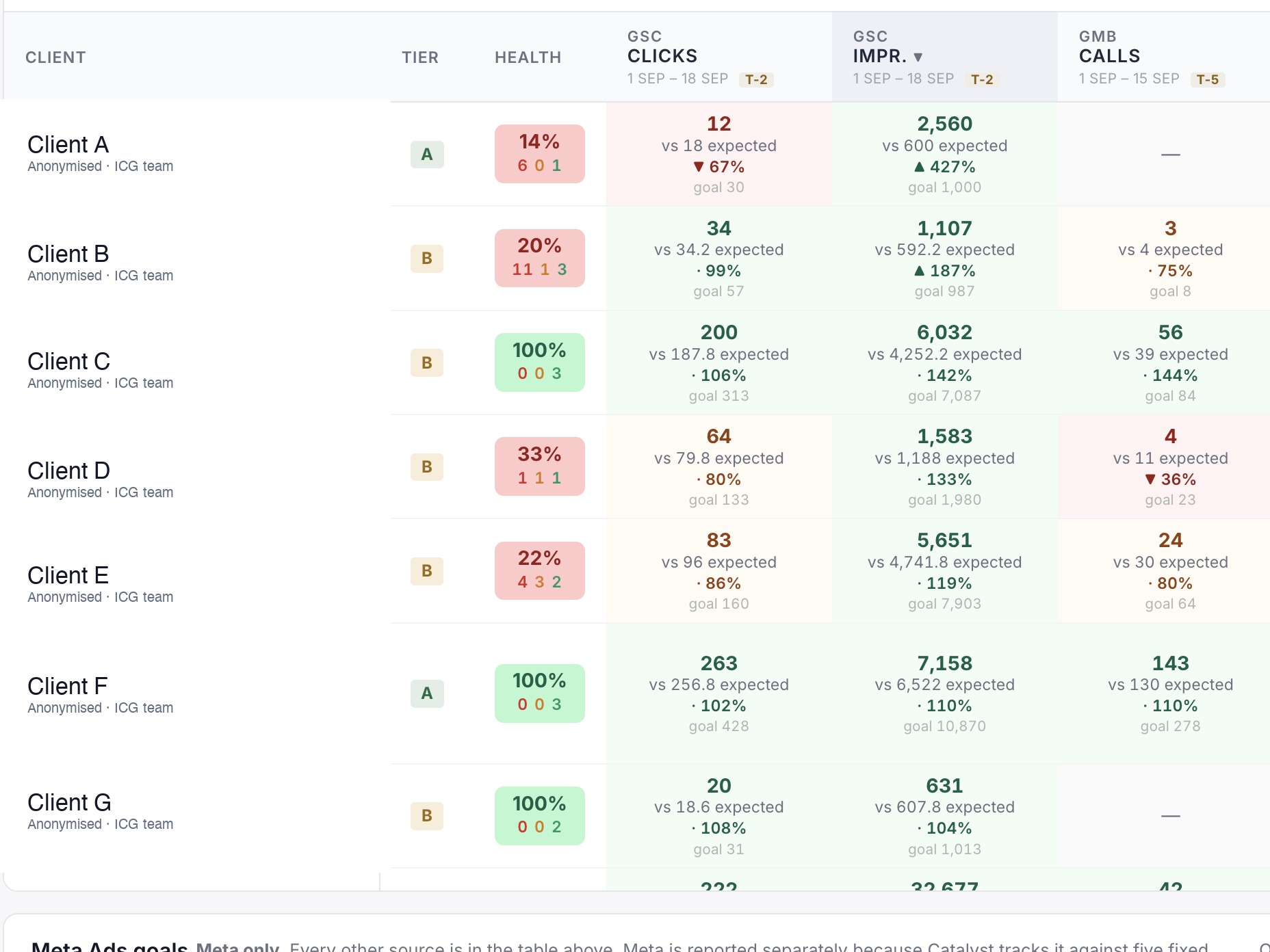
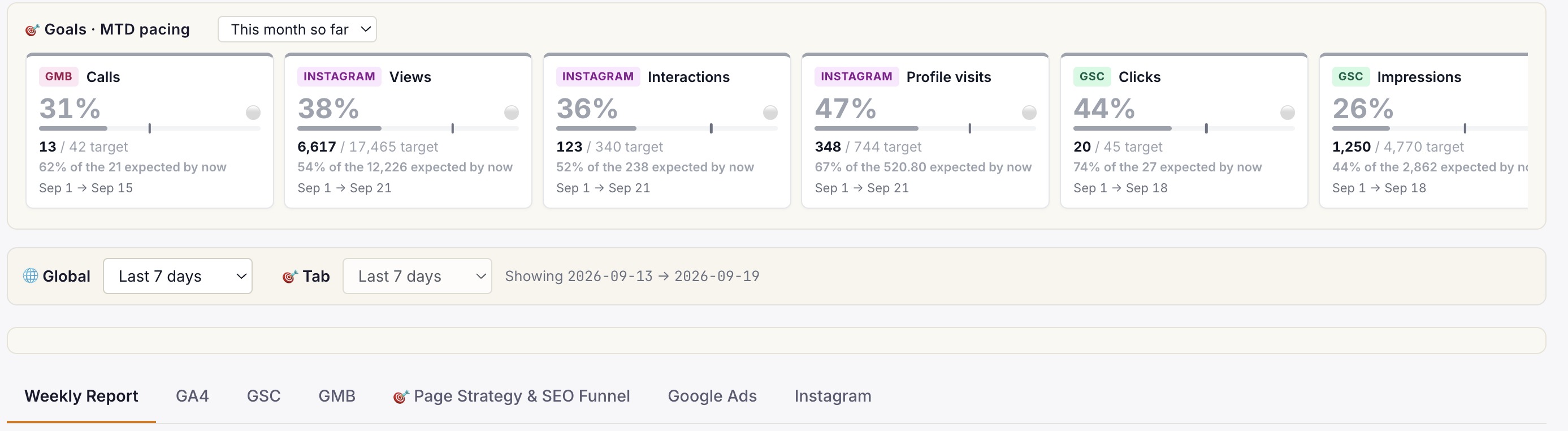
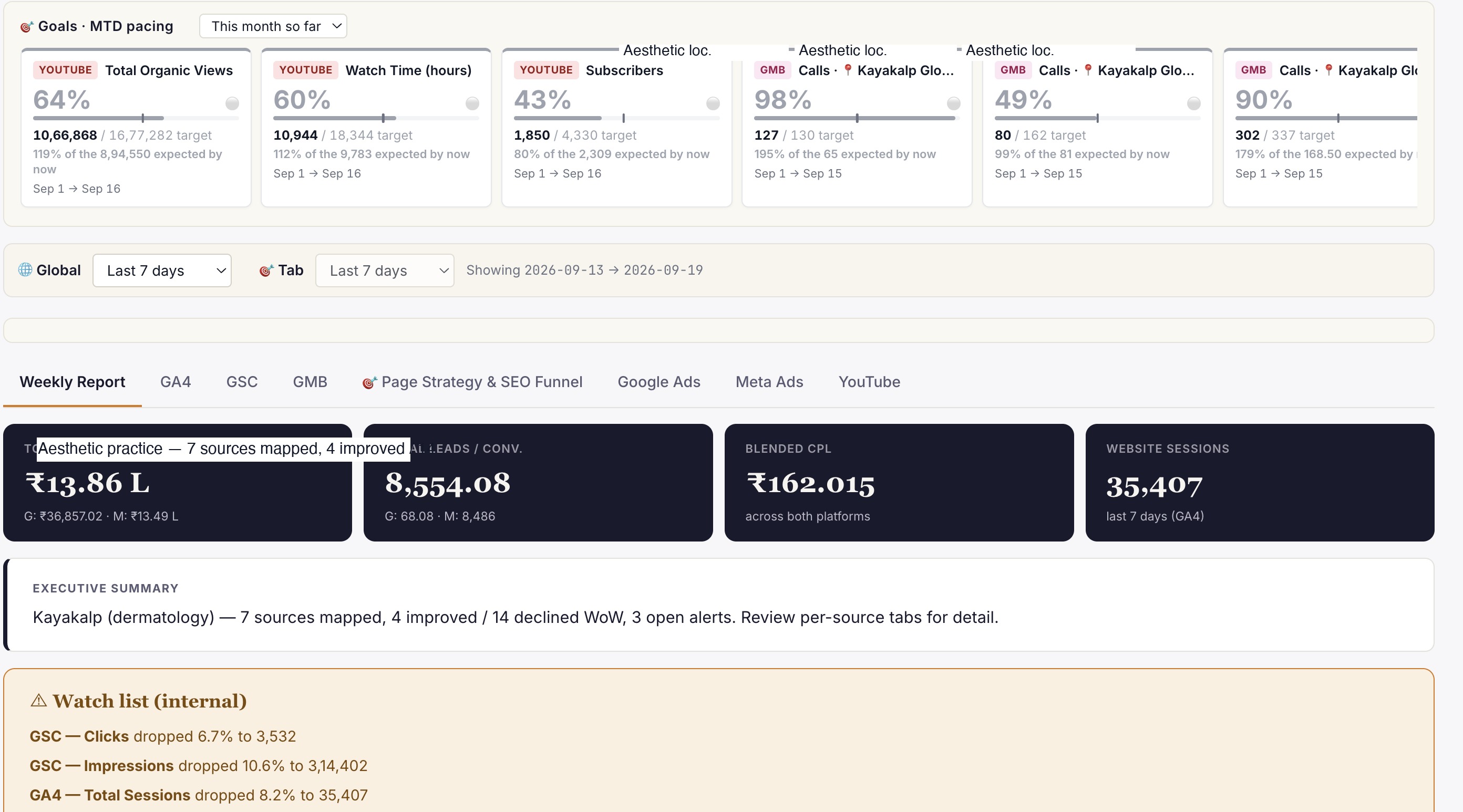
Live client dashboard. GSC, GA4, Google Ads, Meta Ads, IVR calls in one view. Login anytime, not monthly.
Phoenix
Clinic revenue intelligence over your PMS. Daily action queue: Prevent Loss, Maintain & Engage, Grow Revenue. Multi-centre rollout.
Or book a free 30-min audit to see all three in action on your account.
Healthcare brands
that already run on ICG.
A representative slice of the 150+ healthcare brands ICG has delivered for across India. Most engagements remain under NDA.


What ICG clients say · on video.
"Scale up of organic channels and business consulting. ICG has absolute domain authority in their field."
"Working with ICG transformed how we acquire IVF patients in Gurgaon. They understand the fertility journey from inquiry to consult..."
"What Ichelon accomplished — they got all my ideas and worked over 3-4 months to create an amazing, super-customised website."
Need help operationalising this?
Every ICG service is healthcare-only, NMC + DPDP-aware, and built around the patient-research patterns that drive Indian healthcare growth in 2026.
Every practice welcome — packages from ₹20,000/mo.
Goals-Driven engagements · Performance-Linked Payout Models available
More from
ICG.
Five trends shaping Indian healthcare marketing through 2027: AI-first patient research, Conversions API adoption, ABDM discovery, the AEO w...
Healthcare AIO is the discipline of getting your clinic or hospital cited inside Google AI Overviews, ChatGPT and Perplexity answers — not j...
Conversational-search advertising places brand messages inside AI chat answers — ChatGPT, Perplexity, Copilot — rather than beside a results...
Stop guessing.
Book a Diagnostic.
30 minutes. Free. With the AI-powered healthcare-only marketing agency 150+ brands already run on. No slides, no pitch, no hard close.


